
In American schools, 7.3 million students receive specialized educational support through formal accommodation frameworks. This represents 15% of K-12 students. Many parents and educators are unsure which support mechanism best serves individual student needs.
Education plans for disabilities involve legal mandates, institutional practices, and individualized interventions. Two primary frameworks dominate the American educational system. Each serves distinct purposes and is governed by separate federal legislation.
The 504 plan vs IEP distinction confuses families entering special education services. These mechanisms differ in scope, legal foundation, and implementation requirements. Section 504 removes barriers, while the IDEA mandates specialized instruction.
European nations have developed similar systems for inclusive education. Terminology varies across jurisdictions. However, the commitment to educational equity remains consistent.
This analysis examines how different systems support students with disabilities. It provides guidance for families, educators, and policymakers navigating these frameworks.
Key Takeaways
- Section 504 plans provide accommodations under anti-discrimination law, while IEPs deliver specialized instruction through federal special education mandates
- Approximately 7.3 million American students receive formal educational support through structured accommodation frameworks
- European educational systems employ parallel mechanisms with different terminology but similar philosophical commitments to inclusion
- Understanding the legal distinctions between accommodation-based and service-based interventions is essential for appropriate placement decisions
- Both American and European frameworks require individualized assessment and documented implementation strategies
- Educational equity depends on matching student needs with appropriate support mechanisms rather than applying one-size-fits-all solutions
Understanding Educational Support Plans in the United States
Special needs education plans bridge federal disability rights laws and classroom practices in American schools. These documents outline supports, services, and accommodations for students with disabilities. The U.S. system protects educational rights while providing schools with structured implementation frameworks.
These plans translate civil rights principles into concrete educational interventions. Schools use them to directly impact student learning and development.
What Are Educational Accommodation Plans?
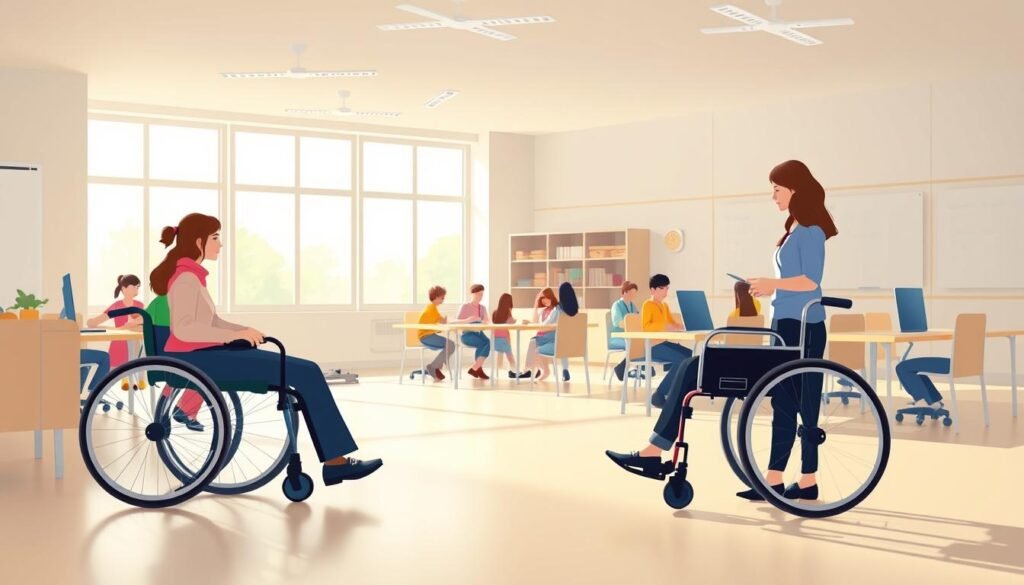
Educational accommodation plans are agreements between schools and families for students with disabilities. They detail necessary supports for full educational participation. These plans outline modifications to learning environments, teaching methods, and assessment procedures.
The plans guide teachers on implementation strategies and establish accountability for student progress. They document the school’s commitment to reasonable accommodation.
These plans ensure students with disabilities have equal educational access. The accommodations level the playing field rather than provide unfair advantages.
The Legal Framework Behind Student Support Services
Section 504 of the Rehabilitation Act of 1973 protects against disability discrimination in federally funded programs. It requires schools to provide reasonable accommodations for equal educational access.
Section 501 prohibits federal employers from discriminating against qualified individuals with disabilities. It requires reasonable accommodation in federal employment contexts.
The Individuals with Disabilities Education Act (IDEA) mandates specialized instruction for students needing intensive support. These laws create a comprehensive system of disability support in schools.
The Americans with Disabilities Act extended civil rights guarantees beyond federally funded programs. This shows America’s commitment to inclusive education and equal opportunity.
Why These Plans Matter for Students with Disabilities
Special needs education plans turn legal rights into real educational experiences. They can determine academic success or frustration for students with disabilities.
These plans impact long-term outcomes like college access, employment, and independent living skills. Students with appropriate accommodations achieve better academic outcomes and higher graduation rates.
These plans help students learn self-advocacy and disclosure practices for their future careers. Students participate in developing their support plans, learning to articulate needs and understand rights.
These agreements protect families from arbitrary decisions about evaluation and service provision. They ensure schools fulfill legal obligations and provide families with recourse when services fall short.
What Is a 504 Plan?
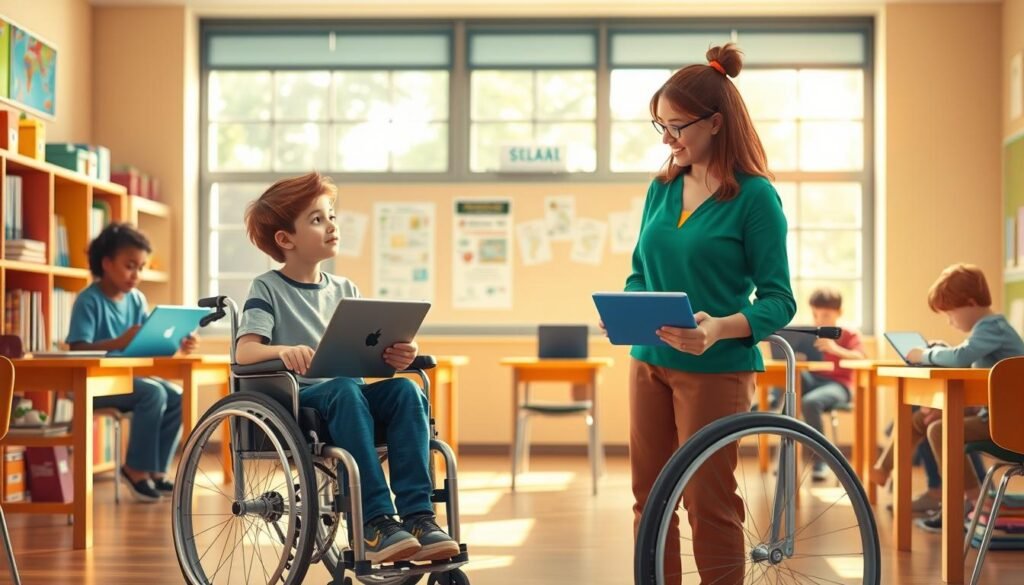
504 plans stem from civil rights legislation that changed how schools support students with disabilities. These plans require schools to provide equal education access through reasonable accommodations. 504 plans work within general education while removing learning barriers.
The Rehabilitation Act and Its Educational Impact
Section 504 of the 1973 Rehabilitation Act protects against disability discrimination in federally funded programs. It stops schools from limiting opportunities for students based on disability. The law broadly defines disability as any impairment that limits major life activities.
Section 504 eligibility criteria differ from special education laws. Students who don’t qualify for special education can still get support through 504 plans. This helps students who need adjustments without specialized instruction.
Purpose and Scope of Section 504 Accommodations
Section 504 accommodations level the educational playing field without lowering academic standards. These changes remove barriers while keeping curriculum intact. Students show their knowledge through methods that bypass their specific challenges.
Common accommodations include extra test time, preferential seating, and frequent breaks. Schools may also provide assistive tech, modified assignments, or reduced distractions. Section 504 accommodations allow teams to create unique solutions for each student’s needs.
School Personnel and 504 Plan Management
Principals usually oversee 504 plan implementation and compliance. Large districts often have 504 coordinators who manage documentation and team meetings. These coordinators help families navigate the accommodation process.
Multidisciplinary teams include parents, teachers, counselors, and administrators. Medical pros may provide documentation but don’t develop plans. Parents can request meetings by contacting the principal about new needs.
Teachers implement daily accommodations and check their effectiveness. Yearly meetings review supports and adjust plans based on student progress. This teamwork ensures practical support that grows with student needs throughout their education.
What Is an IEP (Individualized Education Program)?
An individualized education program is a legal document that creates personalized learning plans for eligible students. It helps schools provide specialized instruction and support for children with learning-impacting disabilities. An IEP sets specific, measurable goals tailored to each student’s unique educational needs.
The document sets clear expectations for student progress. It outlines services schools must provide to help students succeed academically and functionally.
IDEA Legislation and IEP Requirements
The Individuals with Disabilities Education Act (IDEA) is the legal basis for individualized education program services. This law requires schools to provide free appropriate public education to students with disabilities. IDEA establishes six core principles for special education.
To get an IEP, students must meet specific iep requirements. Their disability must fall into one of 13 categories. It must also affect their performance in general education classes.
Schools conduct comprehensive testing to identify weaknesses and determine eligibility. This includes academic assessments and psychological evaluations.
The Purpose of Individualized Education Programs
An IEP creates a custom educational experience addressing each student’s learning challenges. It documents current academic achievement and functional performance. This establishes a baseline for measuring progress.
The IEP team develops specific, achievable annual goals targeting areas needing improvement. These goals help the student advance in the general education curriculum.
The plan also specifies how students will participate with nondisabled peers. This promotes inclusion while ensuring appropriate support.
The IEP team comprises several essential members who collaborate to design and implement the plan:
- Parents or guardians who provide insight into the child’s needs and preferences
- General education teachers who understand curriculum demands and classroom dynamics
- Special education teachers who bring expertise in specialized instruction methods
- School administrators who ensure resource allocation and legal compliance
- School psychologists who interpret evaluation results and recommend interventions
- Related service providers such as speech-language pathologists or occupational therapists when relevant
Special Education Services Under IEPs
IEPs provide access to various special education services for complex learning needs. Specially designed instruction is the core service. It modifies content, methods, or delivery to address the student’s disability.
IEPs may include related services like speech therapy, occupational therapy, and counseling. The plan must detail which services the school will provide. It also specifies how often, for how long, and who will deliver them.
IEPs are legally binding, creating obligations for schools and rights for families. Schools must implement all components as written. Families can use dispute resolution if disagreements arise.
Annual meetings review progress toward goals. Reevaluations occur every three years to check eligibility and service needs.
504 Plan vs IEP: Key Differences Explained
504 plans and IEPs are distinct support mechanisms for students with disabilities. They differ in legal foundation, scope, and implementation. Understanding these differences is crucial for effective advocacy.
Both plans address disability-related needs in educational settings. However, the difference between 504 and iep goes beyond surface-level distinctions. They have unique legislative origins, funding mechanisms, and service delivery models.
Legal Foundations: Section 504 vs IDEA
The iep vs 504 plan comparison starts with their legislative origins. Section 504 is broad civil rights legislation. It prohibits discrimination against individuals with disabilities in federally funded programs.
IDEA is education-specific legislation. It creates legal entitlements to specialized instruction. IDEA mandates schools provide a free appropriate public education through specially designed instruction.
Scope of Services and Support Levels
504 plans provide accommodations and modifications for accessing the general education curriculum. These might include extended test time, preferential seating, or modified assignments.
IEPs require specially designed instruction that changes how content is taught. They include direct special education services from certified teachers. IEPs must document measurable goals and provide related services when necessary.
Funding and Resource Allocation Differences
IDEA provides dedicated federal special education funding. States and districts receive additional resources for implementing IEPs. Section 504 compliance must be achieved within general education budgets.
Schools receive no extra financial support for 504 plans. This creates different resource implications. It may explain why some districts resist 504 plan requests despite legal obligations.
Documentation and Monitoring Requirements
504 plans involve relatively informal procedures. Parents can initiate them by contacting school administrators, usually with medical documentation. These plans may be simple accommodation lists reviewed annually.
IEPs require comprehensive formal documentation addressing multiple regulatory components. The process involves extensive written documents. Schools must conduct formal annual reviews and complete triennial reevaluations with comprehensive assessments.
Eligibility Requirements for 504 Plans
Section 504 accommodations use a three-part legal definition. It looks at how impairments affect major life activities. This approach is broader than special education programs. It focuses on functional limits, not just diagnoses.
This model ensures students with various conditions get proper support. It helps them access education equally with their peers. The process is comprehensive yet individualized.
Schools check if a student’s condition limits their educational activities. Parents often start this by meeting the principal. They may bring a doctor’s note describing the disability and suggesting accommodations.
Section 504 Eligibility Criteria
There are three ways to qualify for Section 504 protections. First, students with current impairments that limit major life activities. Second, those with a history of such impairment.
Third, students seen as having such an impairment. Major life activities include learning, reading, and thinking. They also cover bodily functions like neurological and immune system operations.
The “substantially limits” standard needs careful analysis. Schools compare how the impairment affects the student to most people. They look at the condition’s nature, severity, duration, and long-term impact.
Documentation and Assessment Process
Section 504 doesn’t require specific evaluation procedures like IDEA. Schools must gather sufficient information from various sources. This flexible approach allows for streamlined processes while maintaining thorough analysis.
The assessment uses multiple data points. These include medical docs, teacher observations, and test results. Schools may do extra assessments if needed.
Parents are crucial in this phase. They provide medical records and explain the condition’s impact. They also suggest accommodations based on their child’s needs.
Common Disabilities and Conditions Covered Under 504
Section 504 plans cover more than traditional special education categories. Attention-deficit/hyperactivity disorder (ADHD) is often accommodated. Students with ADHD usually need environmental changes, not specialized curriculum.
Chronic health conditions are another big category. These include diabetes, severe allergies, asthma, and epilepsy. These conditions limit bodily functions and need school-based accommodations.
Mental health conditions like anxiety and depression can qualify. These students may need extended time or modified attendance policies. Temporary disabilities from injury or illness also get 504 protections.
| Condition Category | Example Conditions | Typical Functional Limitations | Common Accommodations |
|---|---|---|---|
| Attention Disorders | ADHD, Executive Function Deficits | Concentration, task completion, organization | Preferential seating, extended time, breaks |
| Chronic Health Conditions | Diabetes, severe allergies, asthma, epilepsy | Physical stamina, medication management | Medication access, nurse visits, schedule flexibility |
| Mental Health Conditions | Anxiety, depression, trauma-related disorders | Emotional regulation, attendance, social interaction | Counseling access, modified deadlines, quiet space |
| Learning Differences | Dyslexia, dyscalculia (without specialized instruction need) | Reading, writing, mathematical processing | Audiobooks, assistive technology, alternative formats |
| Temporary Disabilities | Injury recovery, medical procedures, short-term illness | Mobility, attendance, physical participation | Elevator access, homebound instruction, physical education modifications |
The functional analysis approach focuses on individual circumstances. Two students with the same diagnosis may get different 504 decisions. This is based on how their impairments affect educational access.
This case-by-case evaluation ensures 504 plan eligibility reflects actual functional limitations. It avoids assumptions about disability categories.
Eligibility Requirements for IEPs
IEP eligibility is more complex than 504 qualification. It requires identifying a disability and its educational impact. IDEA establishes a two-pronged framework that goes beyond recognizing a disability. It ensures specialized instruction reaches students who truly need it.
This standard ensures resources go to students requiring more than accommodations. It helps identify those who need specialized services beyond typical special education support.
IEP Requirements and Qualifying Conditions
Students must meet two criteria for an IEP under federal law. They must have a disability from one of thirteen IDEA categories. The disability must also create an adverse educational impact requiring specialized instruction.
This impact requirement sets IEP eligibility apart from Section 504 qualification. A student may have a disability but not qualify if they succeed with accommodations.
Schools evaluate if students struggle despite regular classroom interventions. They look at test scores, performance records, and teacher observations.
The Comprehensive Evaluation Process for Special Education
IDEA requires a thorough assessment using valid tools. These tools must not discriminate and should be in the child’s native language. This process protects students from misidentification and ensures accurate disability determination.
Assessments must examine all areas related to the suspected disability. Evaluators look at academic performance, cognitive functioning, and social-emotional development. Schools must use multiple measures, not just one test score.
Parents have important rights during evaluation. They can request independent evaluations if they disagree with school assessments. Reevaluation occurs every three years to check eligibility and identify current needs.
13 Disability Categories Under IDEA
IDEA defines thirteen disability categories for IEP eligibility. Understanding these helps identify students who may need specialized services:
- Specific Learning Disability: Disorders in basic psychological processes affecting reading, writing, math, or language comprehension
- Other Health Impairment: Chronic conditions including ADHD, diabetes, epilepsy, or heart conditions limiting educational performance
- Autism Spectrum Disorder: Developmental disability affecting social communication, interaction patterns, and behavioral flexibility
- Emotional Disturbance: Persistent, pervasive emotional or behavioral difficulties affecting educational performance over extended periods
- Speech and Language Impairment: Communication disorders including stuttering, articulation problems, or language processing difficulties
- Visual Impairment: Vision loss that adversely affects educational performance even with correction
- Deafness: Severe hearing impairment preventing auditory processing of linguistic information
- Hearing Impairment: Permanent or fluctuating hearing loss not classified as deafness
- Orthopedic Impairment: Physical disabilities including cerebral palsy, amputations, or conditions affecting mobility
- Intellectual Disability: Significant limitations in intellectual functioning and adaptive behavior manifesting during developmental periods
- Traumatic Brain Injury: Acquired brain injury from external physical force causing educational difficulties
- Multiple Disabilities: Concurrent impairments creating complex educational needs requiring intensive support
- Deaf-Blindness: Combined hearing and visual impairments causing severe communication and developmental challenges
Categorical eligibility alone proves insufficient for IEP qualification; evaluation teams must document that general education with accommodations cannot adequately address the student’s needs for meaningful progress in the curriculum.
Having a disability doesn’t always mean needing specialized instruction. Some students succeed with 504 plans. Others need the intensive services only IEPs provide.
IEPs are for students whose disabilities create major barriers to learning. These students require specialized instruction and related services to access the curriculum.
Accommodations vs. Modifications: Understanding the Distinction
Effective disability support in education hinges on understanding accommodations and modifications. This distinction shapes how educators support students with disabilities. Many practitioners still confuse these approaches, despite their different impacts on learning outcomes.
The accommodations vs. modifications debate isn’t just about words. It determines how schools maintain standards while providing necessary support.
What Are Educational Accommodations?
Educational accommodations change how students access information without altering content or standards. These adjustments remove disability-related barriers while maintaining the same expectations for mastery.
Accommodations remove obstacles but don’t change the learning destination. Students still need to master the same grade-level content as their peers.
Educational accommodation options preserve learning goals while addressing individual needs. They ensure fair access, not preferential treatment.
What Are Educational Modifications?
Modifications change what students are expected to learn. They alter curriculum content, reduce learning objectives’ complexity, or change performance standards.
Unlike accommodations, modifications create different expectations for mastery than those for general education peers. This difference affects diploma options and future opportunities.
Modifications change the destination itself, not just the path to get there.
Examples of Accommodations and Modifications in Practice
Clear examples show the practical differences between these approaches. These distinctions help educators make appropriate support decisions.
Common accommodation examples include:
- Extended test time without changing content or difficulty
- Use of calculators, spell-checkers, or text-to-speech technology
- Preferential seating and frequent breaks during instruction
- Provision of filled-in notes or audiobooks for content access
- Alternative response formats such as oral instead of written answers
Typical modification examples include:
- Reduced number of problems or questions on assignments
- Simplified reading materials at lower grade levels
- Alternative assignments addressing different learning objectives
- Grading based on different standards or expectations
- Curriculum addressing functional skills rather than academic standards
When to Use Each Approach
Decision-making frameworks guide educators in choosing appropriate interventions. Accommodations work when students can master grade-level content with barrier removal alone.
Modifications are necessary when disability severity prevents access to grade-level curriculum despite accommodations. This decision requires careful consideration of long-term consequences.
Modifications may limit future opportunities and affect diploma options. Teams must balance current needs against future prospects when choosing the best support approach.
Types of Special Education Accommodations and Services
Families and educators need to know about various support mechanisms. These help identify suitable interventions for each student’s unique challenges. School disability services range from simple adjustments to comprehensive therapeutic interventions.
Schools organize supports by delivery system and specific functional barriers. They implement these interventions based on documented needs and evidence-based practices.
Common 504 Plan Accommodations
Section 504 accommodations change how students access the curriculum. They don’t alter academic standards. These supports address different aspects of the learning environment.
Presentation accommodations change how information reaches students. Teachers may provide audiobooks for reading disabilities or large print for visual impairments. They might give verbal instructions alongside written directions.
Response accommodations modify how students show their knowledge. A student might give oral responses instead of written ones. They could use dictation software or type assignments on a computer.
Timing accommodations adjust time parameters. These include extended test time, frequent breaks, or flexible scheduling for medication. Setting accommodations change the physical environment.
Organizational accommodations provide structural supports. These include color-coded materials, assignment notebooks, and electronic reminders. They also break large tasks into manageable segments.
IEP Services and Specialized Instruction
IEP services include specially designed instruction that changes teaching methods. This core component involves systematic, intensive, and explicit instruction. It uses evidence-based techniques tailored to disability-related learning needs.
Schools deliver specialized instruction through various service models. Co-teaching puts special education teachers alongside general education teachers. Resource rooms provide targeted support in separate settings for specific skills.
Separate classes serve students needing more intensive intervention. Specialized schools address needs of students with significant disabilities. The least restrictive environment principle guides all placement decisions.
“The goal of special education is not to separate students but to provide the specialized support necessary for them to succeed in the most inclusive environment possible.”
Related Services: Therapy and Support Options
Related services help students benefit from special education. They address developmental and functional needs. These special needs services complement academic instruction and target specific skill deficits.
Speech-language pathology addresses communication disorders. It helps with articulation, language comprehension, and social communication. Occupational therapy develops fine motor skills, sensory processing, and daily living skills.
Physical therapy supports students with gross motor and mobility challenges. Counseling services address mental health concerns and social-emotional development. Orientation services help visually impaired students navigate school independently.
Transportation is a related service when disabilities prevent use of regular school transport. Schools must provide these supports at no cost when documented in the IEP.
Assistive Technology and Learning Disability Services
Technology removes access barriers across the spectrum. The key principle for assistive technology decisions is individual need alignment. This matters more than availability or novelty.
Low-tech solutions include pencil grips and highlighted text. Mid-tech options include audio recorders and calculators with large displays. High-tech tools offer more sophisticated support.
Federal law requires schools to consider assistive technology for every IEP student. The evaluation process examines which tools reduce barriers effectively. It ensures they don’t replace skill development or create dependence.
Effective technology integration requires training for students and educators. This ensures consistent implementation across educational settings. It helps students make the most of their tools.
The Process of Obtaining a 504 Plan or IEP
Getting educational help starts with knowing the available options. 504 Plans and IEPs follow different processes to help students. These frameworks have distinct rules, timelines, and paperwork.
Knowing the steps helps parents support their children better. Schools must follow federal laws while addressing individual needs. The process balances legal rules with practical application.
Step 1: Initial Request and Referral
Parents can ask for help in different ways. For 504 Plans, they can talk to the principal or 504 coordinator. This can be done verbally or in writing.
IEP referrals need written proof. Parents should write to the special education director asking for an evaluation. Schools must also check for disabilities even if parents don’t ask.
Step 2: Assessment and Evaluation Timeline
The law sets specific times for IEP evaluations. Schools must finish these within sixty days after getting parent approval. These tests look at all areas related to the possible disability.
504 evaluations don’t have set federal timelines. Schools often review existing data like medical records and grades. IDEA 2004 requires new evaluations every three years unless parents and schools agree otherwise.
Parents can ask for an independent evaluation if they disagree with results. They may request the school to pay for this extra assessment.
Step 3: Plan Development and Team Meetings
Team makeup and meeting rules differ between the two plans. 504 meetings have flexible teams focused on deciding accommodations. Parents, teachers, and an admin usually attend.
IEP meetings need specific people by law. The team must include parents, teachers, an admin, and someone to explain test results. The student should join when appropriate.
| Procedural Step | 504 Plan Process | IEP Process | Timeline Requirements |
|---|---|---|---|
| Initial Request | Oral or written contact with principal or 504 coordinator | Written letter to special education director requesting evaluation | No federal deadline for initial response |
| Evaluation | Review of existing data, medical records, and observations | Comprehensive assessment in all areas of suspected disability | 60 days from parental consent (IEP) |
| Team Meeting | Flexible team focused on accommodations | Required participants including parents, teachers, administrator | Must occur before implementation |
| Reevaluation | Annual review recommended | Every three years (triennial) unless waived | Three-year cycle for IEPs |
Step 4: Implementation and Annual Reviews
After making plans, ongoing checks ensure they still work well. 504 Plans need yearly reviews with regular progress checks. Schools see if current help is enough or needs changes.
IEPs require thorough yearly reviews. These look at goal progress and if special education services are still right. Parents can ask for reviews anytime if they’re worried about progress.
When students change schools, the new school may offer similar help until new tests are done. This keeps support going during moves. Regular reviews keep everyone accountable while allowing changes as needed.
Educational Support Systems in Europe: An Overview
European educational support differs from American approaches. It’s rooted in social perspectives on disability. The european support systems overview emphasizes environmental barriers and systemic solutions. This shapes how schools design support services for diverse learners.
European systems favor collaborative processes over legalistic procedures. They focus on creating universally accessible learning environments. Support plans exist but function differently than in America.
How European Schools Approach Disability Support in Schools
European schools adopt a social model perspective on disability. They see it as resulting from environmental and attitudinal barriers. This leads to emphasis on universal design for learning and whole-school inclusion strategies.
Teachers are trained to differentiate instruction for diverse learners. Pull-out services and separate special education classrooms are less common. Support staff work with teachers to adapt materials and methods.
This integrated approach reflects the belief that inclusive environments benefit all students. Differences are normalized rather than segregated.
Legal Framework for Special Needs Education in Europe
Education is mainly a national competency within EU member states. This creates varied implementation across countries. However, overarching principles emerge from EU directives and international commitments.
The UN Convention on Rights of Persons with Disabilities sets fundamental requirements. The European Court of Human Rights reinforces disability rights education as a fundamental right.
These protections create baseline standards while allowing national flexibility. The result is less uniform than the U.S. system but more adaptable.
Inclusive Education Policies Across the European Union
EU policies frame inclusive education as a fundamental right. The European Agency for Special Needs and Inclusive Education coordinates information exchange. It promotes evidence-based practices among member states.
Implementation varies based on national histories, resources, and educational philosophies. Some countries maintain parallel special education systems. Others have moved toward fully inclusive models.
Despite differences, shared commitments to disability rights education create common ground. Accessible learning environments are a priority across European jurisdictions.
United Kingdom: Special Educational Needs (SEN) Support
The UK protects educational rights for disabilities through a two-tiered system. It offers mainstream support and comprehensive planning for students with significant needs. The Children and Families Act 2014 created more integrated approaches.
The UK framework emphasizes person-centered planning and collaborative problem-solving. Schools and families work together to identify needs and develop appropriate interventions. This approach differs from American systems by integrating multiple service sectors.
Education, Health and Care Plans (EHCPs)
EHCPs are legally binding documents for children and young people aged 0-25. They coordinate services across education, health, and social care through a single assessment process. These plans extend beyond what schools typically provide.
The EHCP process involves detailed assessment of needs and outcome specification. Local authorities identify required services to meet documented needs. Annual reviews ensure plans remain appropriate as circumstances change.
Parents can appeal to the Special Educational Needs and Disability Tribunal when disagreements arise. This process provides legal recourse for families seeking appropriate support.
SEN Support in Mainstream Schools
SEN Support is the graduated response preceding EHCP consideration in mainstream settings. Schools identify students through ongoing assessment and classroom observation. Teachers provide additional support through a cycle of assess-plan-do-review.
This approach involves parents as partners in planning and reviewing interventions. Schools maintain detailed records of strategies and outcomes. External specialists join when school-based interventions prove insufficient.
The SEN Code of Practice guides identifying needs across four broad categories. These include communication, cognition, social-emotional, and sensory or physical needs. Schools adapt their approach based on individual student requirements.
Comparison with U.S. 504 Plans and IEPs
The UK system shares similarities with American educational support structures. Understanding these parallels helps clarify how educational rights function across different frameworks. The table below illustrates key comparisons.
| Feature | UK EHCPs | U.S. IEPs | UK SEN Support | U.S. 504 Plans |
|---|---|---|---|---|
| Legal Status | Legally binding statutory document | Legally enforceable under IDEA | School-level intervention without legal force | Legal protections under Section 504 |
| Service Integration | Coordinates education, health, and social care | Primarily educational services focus | Educational support within mainstream provision | Accommodations in educational settings |
| Age Range | Birth through age 25 | Ages 3-21 (varies by state) | Throughout school years | All ages in educational programs |
| Review Process | Annual reviews with collaborative approach | Annual IEP meetings required | Termly reviews through assess-plan-do-review | Periodic reviews as needed |
EHCPs function similarly to IEPs as comprehensive plans for students with significant needs. Both provide legally enforceable frameworks that guarantee specific services and accommodations. The documentation and review processes share common elements across systems.
SEN Support resembles 504 plans in providing accommodations within mainstream education. However, educational rights under SEN Support lack the legal enforceability of 504 plans. The UK approach emphasizes collaborative problem-solving rather than adversarial processes.
The British system integrates health and social care services more than American special education. This holistic approach addresses needs beyond the classroom. Person-centered planning receives stronger emphasis in UK frameworks compared to American implementation.
Germany: Inclusive Education and Support Systems
Germany’s approach to supporting students with disabilities is complex. It balances traditional special education with modern inclusive reforms. Each of the 16 Länder (states) implements national laws differently, creating regional variations.
The German system differs from American frameworks like IDEA and Section 504. It reflects ongoing tensions between separate schooling and inclusive education. Implementation rates and practices vary widely across states.
Special Educational Needs Determination
Germany uses sonderpädagogischer Förderbedarf to identify students needing extra help. This process involves comprehensive assessments to determine if specialized teaching approaches are necessary.
The Förderbedarf system categorizes student needs into eight main areas. These categories guide the type and level of support provided to students.
- Learning difficulties and cognitive development
- Language and communication challenges
- Emotional and social development needs
- Mental development considerations
- Physical and motor development requirements
- Hearing impairments
- Visual impairments
- Long-term illness accommodations
German determinations rely more on professional judgment than detailed documentation. The process has fewer procedural requirements and less parental involvement than U.S. systems.
Integration Helpers and Disability Services
Integrationshelfer or Schulbegleiter are unique to the German system. These paraprofessionals support individual students with non-pedagogical needs to enable school participation.
Integration helpers assist with physical care, behavior, organization, and social integration. They bridge the gap between classroom teachers and specialized service providers.
Funding for integration helpers comes from youth or social assistance agencies, not education budgets. This allows students with significant needs to attend mainstream schools but requires cross-sector coordination.
Comparing Educational Interventions Across Systems
German and American approaches to special education differ in philosophy and implementation. Germany traditionally maintained separate Sonderschulen alongside mainstream schools. Inclusive education has developed more slowly and unevenly than in the U.S.
Germany’s 2009 ratification of the UN disability rights convention boosted inclusive education. However, inclusion rates remain lower than in many countries. Some states still have high rates of separate special school placement.
| Feature | German System | U.S. IDEA/504 System |
|---|---|---|
| Legal Framework | Federal framework with state implementation variation | Federal laws (IDEA, Section 504) with consistent national requirements |
| Planning Process | Professional judgment emphasis with limited parental involvement | Detailed IEP/504 plans with mandated parent participation |
| Support Personnel | Integration helpers funded through social services | Paraprofessionals and specialists funded through education budgets |
| Documentation | Less detailed individualized planning records | Comprehensive written IEPs with specific goals and accommodations |
| School Placement | Higher rates of separate special schools (Sonderschulen) | Presumption of least restrictive environment in mainstream settings |
German systems are less prescriptive than American frameworks. They rely more on educator expertise than standardized procedures. The integration helper model provides intensive individual support without comprehensive service coordination.
These differences reflect distinct cultural approaches to disability support. They also show varying views on professional autonomy and educational governance between the two nations.
France, Netherlands, and Scandinavian Models
European nations have unique ways to support students with disabilities in schools. France, the Netherlands, and Scandinavian countries show different approaches to disability services in schools. These systems reflect each country’s values and educational goals.
Each system offers new ways to address special educational needs. Looking at these international approaches helps us understand the differences between 504 and IEP in the U.S.
France’s Projet Personnalisé de Scolarisation (PPS)
France uses the Projet Personnalisé de Scolarisation, or Personalized Schooling Project. This plan coordinates education, therapy, and social support for students with disabilities. The Maison Départementale des Personnes Handicapées oversees these plans.
Parents help create the PPS through meetings. Yearly reviews keep the plan up-to-date. The plan includes special helpers, adapted teaching methods, and special equipment.
The French system focuses on mainstreaming when possible. This approach balances integration with access to special resources when needed.
Dutch Special Education System and Learning Disability Plans
The Netherlands has separate special education alongside mainstream schools. About five percent of Dutch students go to specialized schools for specific disabilities. These schools offer targeted support for learning challenges.
New policies focus on “appropriate education” based on individual needs. Mainstream schools must now provide extra support for students with special needs. Schools create plans that list learning goals and needed accommodations.
This system lets families choose between special and inclusive settings. It balances expert help with chances for integration.
Nordic Inclusive Education Approach
Scandinavian countries strongly support inclusive education. Sweden, Norway, and Denmark have high inclusion rates for students with disabilities. These countries focus on teaching all students in mainstream schools with in-class help.
Nordic schools use team teaching and resource groups. They design flexible classrooms to fit all students’ needs. This approach reduces the need for individual plans.
Extensive support services make this high-inclusion model work. Teachers get special training, and schools have therapists working in classrooms.
Key Features and Student Outcomes
European systems are less legal than American ones. Professionals have more say in choosing supports. These countries combine health and education services more smoothly.
Studies show higher inclusion rates in some European countries than in the U.S. But questions remain about support quality. Debates continue about what’s best for students with significant disabilities.
Comparing U.S. and European Disability Rights in Education
Different countries protect educational rights for disabled students in unique ways. The Atlantic divide shows contrasting philosophies about supporting diverse learners. These differences impact millions of students and families in educational systems.
Legal Protections and Educational Rights for Disabilities
The United States bases disability rights on specific federal legislation. Laws like IDEA and ADA set detailed requirements with enforcement mechanisms. This legalistic approach emphasizes compliance through complaints and litigation.
European nations use human rights frameworks from international conventions. Their laws provide broader principles with less prescriptive procedures. Administrative discretion plays a bigger role, with fewer adversarial enforcement mechanisms.
The American model sets clear expectations for special education. However, it can create compliance-focused cultures. European approaches offer flexibility but may lack strong accountability structures.
Implementation Approaches and Resource Allocation
IDEA provides dedicated federal funding for special education in the U.S. This categorical funding comes with specific spending requirements. It also requires extensive data reporting from schools.
European systems integrate learning disability support into general education budgets. This reduces separation between mainstream and specialized services. However, it can decrease visibility for disability-related spending.
In the U.S., resource decisions follow standardized IEPs and 504 Plans. European countries make these choices at local levels. The American approach ensures consistency but requires more paperwork.
Outcomes and Effectiveness Across Systems
Some European countries achieve higher inclusion rates than the U.S. for students with significant disabilities. Physical placement in mainstream classrooms happens more often in Italy, Norway, and Portugal.
Yet, physical inclusion doesn’t always mean meaningful academic and social integration. Research shows that local implementation quality matters more than system design.
Both systems have strengths and weaknesses. American legal protections safeguard individual rights well. European integrated approaches may better normalize diversity in schools.
Best Practices from Both Continents
We can learn valuable lessons from both traditions. Here are some practices worth examining:
- Clear legal entitlements: American systems show how specific rights create accountability and empower families
- Detailed individualized planning: IEPs and 504 Plans provide comprehensive documentation of student progress
- Universal design approaches: European schools often build accessibility into general classroom design
- Collaborative processes: Many European systems focus on partnership between schools and families
- Whole-school inclusion strategies: Nordic countries excel at normalizing support in mainstream education
The best approach might combine American protections with European inclusive philosophies. Neither system is perfect, but both offer valuable insights. Policymakers can use these perspectives to improve special education services.
Conclusion
Special needs education plans vary by location, affecting families and educators differently. The IEP vs 504 plan comparison shows how American systems categorize accommodation and specialized instruction. European approaches often use more flexible, graduated support structures.
No system is universally superior. Each framework resolves educational policy tensions differently. The U.S. focuses on legal clarity and individual entitlements. European nations often emphasize professional judgment and integrated support in mainstream settings.
International transitions pose unique challenges for families. Documentation requirements and eligibility criteria differ across jurisdictions. Securing continuous support requires careful planning and persistent advocacy.
Understanding these differences is crucial for parents seeking accommodations. They must know how systems define eligibility, allocate resources, and protect educational rights. Educators benefit from recognizing alternative approaches to supporting students with disabilities.
Global dialogue improves educational support systems worldwide. Comparative research reveals effective practices across jurisdictions. Sharing successful strategies helps achieve the common goal: supporting students with disabilities.
This shared commitment to equity and access remains constant. It persists despite varying implementation approaches in American and European contexts. The aim is to help students develop their abilities and fully participate in educational communities.