
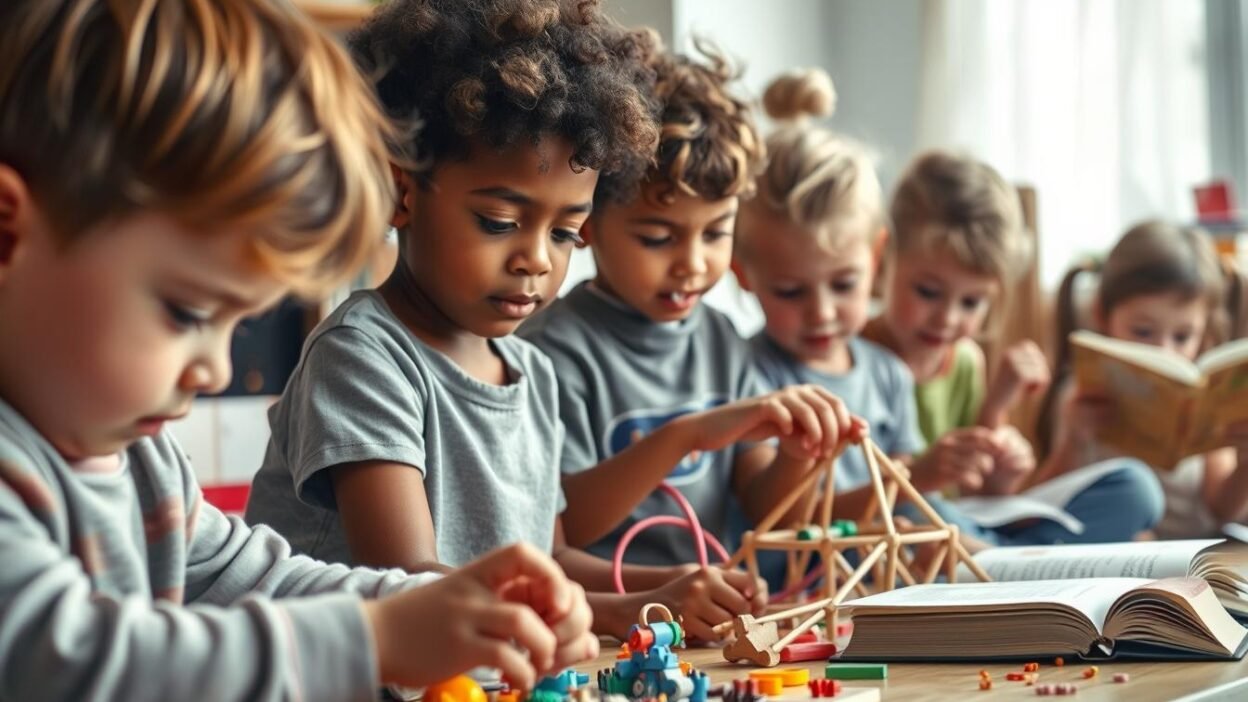
No two young minds process information the same way. Even identical twins with 100% genetic similarity develop unique learning preferences. This remarkable diversity is the natural state of human development, not a challenge to overcome.
Modern neuroscience, developmental psychology, and genetics reach a powerful conclusion. Brain development unfolds through complex interactions between hereditary factors, environmental influences, and individual experiences. These elements combine uniquely in each person, creating distinct pathways for learning.
Research from the Jacobs Center for Productive Youth Development shows something fascinating. Children exhibit diverse reactions, interests, and learning capabilities from remarkably early ages. This educational diversity reflects the intricate interplay between genetic predispositions and neurological development patterns.
Understanding this variability helps us move beyond one-size-fits-all educational models. Recognition of these inherent differences becomes scientifically essential for effective teaching.
Key Takeaways
- Identical twins with the same genes still develop unique learning preferences and cognitive processing styles
- Brain development results from complex interactions between genetics, environment, and individual experiences
- Learning diversity represents the natural state of human cognitive development, not an educational anomaly
- Scientific research from multiple disciplines confirms that uniform learning approaches contradict biological realities
- Recognizing cognitive differences is scientifically essential for effective educational practices
- Contemporary education must honor neurocognitive diversity rather than impose standardized learning models
Understanding the Concept of Learning Styles
The concept of learning styles came from decades of research. Scientists wanted to explain why traditional instruction fails many students. Educational psychology studied how individuals process and retain information through different cognitive pathways.
Researchers developed various frameworks to categorize these differences. Each model attempts to identify patterns in how learners interact with new material. The goal was to create instructional approaches that honor individual cognitive strengths.
Learning styles remain widely adopted in classrooms today. The theoretical foundations continue to generate scholarly discussion. Some educators view these frameworks as transformative tools for differentiation.
Others question whether matching instruction to preferences actually improves outcomes. Despite ongoing debates, understanding these theories provides valuable insights. These insights reveal the diversity of human cognition.
The Theoretical Foundations of Learning Preference Models
Learning styles theory represents a significant shift in educational psychology. This shift occurred during the late twentieth century. Early researchers observed that students struggled with conventional teaching methods.
These same students often thrived when information was presented differently. These observations led to systematic investigations into cognitive processing differences.
The VARK model emerged as one of the most recognized frameworks. Neil Fleming developed this system for categorizing learning preferences. This system identifies four primary learning modalities: Visual, Auditory, Reading/Writing, and Kinesthetic.
Visual learners retain information best through spatial and pictorial representations. They benefit from charts, diagrams, maps, and other graphic organizers. Their cognitive processing shows enhanced activation in brain regions associated with visual-spatial reasoning.
Auditory learners prefer to process information through listening and verbal discussion. Lectures, group conversations, and audio recordings align with their natural cognitive strengths. These individuals often benefit from reading aloud or participating in verbal repetition exercises.
Reading/Write learners excel when interacting with text-based materials. They demonstrate strong preferences for written assignments, note-taking, and textbook learning. This group processes information most effectively through the written word.
Kinesthetic learners comprehend concepts through physical experience and hands-on manipulation. They thrive in laboratory settings, field experiences, and activities that engage multiple senses. Movement and tactile exploration enhance their information retention.
The theoretical premise suggests that matching instructional methods to individual preferences should improve learning outcomes. However, recent meta-analyses have found limited empirical support for this matching hypothesis. Researchers continue to investigate whether these categories represent genuine cognitive differences.
Characteristics of Visual, Auditory, and Kinesthetic Learners
Understanding the distinct characteristics of different learning modalities helps educators recognize diverse student needs. Each sensory preference corresponds to specific behaviors, strengths, and challenges. These patterns reflect underlying neurological variations in how individuals process sensory input.
Visual learners demonstrate exceptional ability to recall images, spatial relationships, and patterns. They frequently use phrases like “I see what you mean.” They prefer written directions over verbal instructions.
In classroom settings, these students benefit from color-coding systems, mind maps, and video demonstrations. They often struggle when forced to rely solely on auditory information. Visual support becomes essential for their learning success.
Auditory learners excel in environments rich with verbal interaction and discussion. They remember names easily but may forget faces. These individuals often talk through problems aloud.
They benefit from mnemonic devices that use rhythm or melody. Traditional lecture-based instruction often suits their natural processing style. They may struggle with purely visual or text-heavy materials presented without verbal explanation.
Kinesthetic learners require physical engagement to fully grasp new concepts. They frequently gesture while speaking and struggle to sit still during lengthy lectures. These students genuinely need to move in order to process information effectively.
Hands-on experiments, role-playing activities, and field trips provide ideal learning conditions. This group thrives through physical interaction with materials.
The following table illustrates key distinctions among these three primary learning modalities:
| Learning Modality | Information Processing Strength | Preferred Learning Activities | Common Challenges |
|---|---|---|---|
| Visual Learners | Spatial relationships, patterns, and graphic representations | Charts, diagrams, videos, color-coding, written instructions | Lecture-only formats, verbal directions without visual aids |
| Auditory Learners | Spoken language, verbal explanations, rhythmic patterns | Discussions, lectures, audio recordings, verbal repetition | Silent reading, purely visual materials, independent work |
| Kinesthetic Learners | Physical experience, hands-on manipulation, movement-based learning | Experiments, building models, field trips, role-playing | Extended sitting, lecture-based instruction, abstract concepts without concrete application |
Neurological research has identified distinct activation patterns associated with each modality. Visual learners show heightened activity in occipital and parietal cortices when processing pictorial information. Auditory learners demonstrate increased temporal lobe engagement during verbal tasks.
Kinesthetic learners exhibit stronger sensorimotor integration, connecting cognitive processing with physical movement. Most individuals display a combination of preferences rather than fitting exclusively into one category.
Recognizing these patterns allows educators to incorporate varied instructional approaches. These approaches engage multiple sensory pathways simultaneously. This multimodal approach often proves more effective than attempting to match instruction exclusively to one supposed preference.
Howard Gardner’s Multiple Intelligences Framework
Howard Gardner’s theory of multiple intelligences revolutionized educational thinking. It challenged narrow definitions of cognitive ability. Published in his groundbreaking 1983 work Frames of Mind, this framework proposed that human intelligence encompasses far more.
Traditional IQ tests measure only linguistic and mathematical capabilities. Gardner identified eight distinct intelligences. Each represents a separate cognitive processing system supported by specific neural networks.
Linguistic intelligence involves sensitivity to spoken and written language. Individuals with this strength excel in reading, writing, storytelling, and memorizing words. They often become successful writers, lawyers, and public speakers.
Logical-mathematical intelligence encompasses the capacity for logical analysis, mathematical operations, and scientific investigation. People with this strength demonstrate exceptional problem-solving abilities and pattern recognition skills. They frequently pursue careers in mathematics, computer programming, and scientific research.
Bodily-kinesthetic intelligence refers to the ability to use one’s body skillfully to express ideas or create products. Athletes, dancers, surgeons, and craftspeople typically exhibit high levels of this intelligence. They demonstrate exceptional mind-body coordination and fine motor control.
Musical intelligence involves sensitivity to rhythm, pitch, melody, and timbre. Individuals with this strength easily recognize musical patterns and may possess perfect pitch. They often become musicians, composers, or sound engineers.
Spatial intelligence encompasses the capacity to perceive and manipulate spatial relationships accurately. Architects, pilots, sculptors, and chess players typically display high spatial intelligence. They excel at mental rotation tasks and navigation.
Naturalist intelligence represents the ability to recognize and classify patterns in nature. Biologists, environmentalists, and farmers demonstrate this cognitive strength. They notice subtle distinctions among plants, animals, and natural phenomena that others overlook.
Interpersonal intelligence involves the capacity to understand others’ intentions, motivations, and desires. Teachers, therapists, salespeople, and politicians often possess high interpersonal intelligence. They read social cues effectively and navigate complex group dynamics skillfully.
Intrapersonal intelligence refers to the capacity for self-understanding and emotional regulation. Individuals with this strength possess accurate self-awareness. They use this knowledge to guide their decisions.
Philosophers, psychologists, and spiritual leaders frequently demonstrate high intrapersonal intelligence.
Gardner’s multiple intelligences theory fundamentally differs from learning styles frameworks in several important ways. Rather than describing preferred sensory input channels, this model identifies distinct cognitive capabilities. Each intelligence represents not merely a preference but a genuine cognitive processing system with neurological foundations.
The theory opened educational practice to value diverse forms of cognitive excellence. Schools implementing multiple intelligences approaches design curricula that allow students to demonstrate understanding through various media.
A student struggling with written essays might excel at explaining the same concept through visual art. They could also demonstrate understanding through physical demonstration or musical composition.
Critics of the theory argue that Gardner’s categories lack empirical validation. They also overlap considerably with personality traits rather than representing distinct cognitive abilities. Despite these criticisms, the framework has profoundly influenced educational practice worldwide.
Nearly two decades after its introduction, educators continue using multiple intelligences to recognize and nurture diverse student strengths.
Both learning styles and multiple intelligences frameworks converge on a fundamental principle. Cognitive diversity reflects genuine variation rather than deficiency. Students who struggle in traditional educational settings may possess cognitive strengths that conventional instruction fails to engage.
Understanding these theoretical frameworks equips educators to design more inclusive, responsive learning environments. These environments honor the full spectrum of human cognitive capability.
The Impact of Individual Differences
Individual differences in learning represent one of education’s most fascinating challenges. These variations emerge from multiple sources working together in complex ways. Understanding these differences helps educators create more effective teaching strategies.
Cognitive differences among children reflect an interaction between biology, psychology, and environment. No single factor determines how a child learns. These elements combine to create remarkable diversity in classrooms across the country.
Our unique selves are already apparent at a very early age. Children who grow up in the same family or who even have the same genes, as identical twins do, can be quite different in their reactions, likes, and dislikes.
This observation underscores an essential truth about child development. Even children sharing the same home show distinct learning patterns and preferences.
How Heredity Shapes Learning Capacity
Genetic influences play a significant role in shaping cognitive abilities and learning potential. Research reveals that hereditary factors contribute substantially to variations in intelligence and memory. Twin studies show certain cognitive abilities have heritability coefficients ranging from 40% to 80%.
However, genetic predispositions create tendencies rather than fixed destinies. The relationship between genes and learning operates probabilistically. Inherited traits establish a range of possibilities rather than predetermined outcomes.
Specific genetic variations affect neurotransmitter systems that regulate attention and motivation. Dopaminergic pathways influence reward sensitivity and sustained focus. Serotonergic systems modulate emotional regulation and stress responses.
These biological mechanisms directly impact how children engage with learning tasks. They also affect how students persist through challenges.
Neuroplasticity represents another critical genetic factor in child development. Some children inherit greater capacity for forming synaptic connections in response to experience. This biological flexibility allows the brain to adapt more readily to new information.
Epigenetic mechanisms further complicate the picture of genetic influences. Environmental factors can activate or suppress gene expression without changing DNA. Early childhood experiences literally shape which genes get expressed throughout development.
The key insight is that genes load the gun, but environment pulls the trigger. Genetic inheritance establishes potential ranges. Experiences determine where within those ranges a child’s abilities ultimately develop.
Temperament and Learning Preferences
Personality dimensions significantly influence how children approach learning tasks and educational challenges. The Big Five personality traits provide a useful framework for understanding these differences. They help explain academic behaviors in school settings.
Children high in openness to experience demonstrate greater intellectual curiosity and creative problem-solving abilities. They typically enjoy exploring new concepts and making novel connections between ideas. These learners often thrive in discovery-based educational environments.
The following personality characteristics shape learning behaviors in distinct ways:
- Conscientiousness correlates with superior self-regulation, organizational skills, and sustained effort toward long-term goals
- Extraversion predicts preference for collaborative learning environments and verbal processing of information
- Agreeableness influences cooperative behaviors and responsiveness to teacher feedback
- Neuroticism affects anxiety levels and stress responses that can either motivate or inhibit learning
Temperamental characteristics observable in infancy continue influencing learning approaches throughout development. Behavioral inhibition affects how children respond to novel situations and unfamiliar people. Some children approach new experiences with enthusiasm, while others require extended warm-up periods.
Sensory processing sensitivity creates cognitive differences in how children perceive environmental stimuli. Highly sensitive children may become overwhelmed in busy, noisy classrooms. They often perform better in calm, structured settings with reduced sensory input.
Effortful control varies considerably among children. This is the ability to regulate attention and inhibit impulses. This temperamental quality directly impacts classroom behavior and task completion.
Children with strong effortful control can maintain focus despite distractions. They resist immediate gratification for larger rewards.
Understanding these personality-learning interactions enables educators to scaffold experiences that accommodate rather than contradict temperamental predispositions. A one-size-fits-all approach inevitably frustrates some children while under-challenging others.
Economic Circumstances and Educational Opportunity
Socioeconomic factors profoundly influence learning opportunities and outcomes through multiple interconnected pathways. These systemic influences operate independently of a child’s innate abilities or motivation levels.
Access to educational resources varies dramatically across socioeconomic levels. Children from higher-income families typically have greater exposure to books and educational technology. These advantages accumulate over time, creating significant achievement gaps.
The impact of socioeconomic status on child development operates through several key mechanisms:
- Cognitive stimulation – Higher-income households typically provide more language-rich environments with extensive vocabulary exposure
- Parental involvement capacity – Economic security allows parents more time and energy for educational engagement
- Nutritional quality – Access to nutrient-dense foods supports optimal brain development during critical growth periods
- Healthcare access – Regular medical care addresses developmental concerns early and prevents learning disruptions
- Stress exposure – Financial instability creates chronic stress that compromises executive function development
Research consistently demonstrates that children from lower socioeconomic backgrounds experience reduced access to literacy experiences. They often enter kindergarten having heard millions fewer words than their more affluent peers. This vocabulary gap represents just one manifestation of broader opportunity disparities.
Adverse childhood experiences occur more frequently in economically stressed households. Exposure to violence, instability, and family disruption creates toxic stress that impairs cognitive functioning. The developing brain literally changes structure in response to chronic adversity.
However, socioeconomic disadvantage represents a systemic barrier rather than an individual limitation. Children from all economic backgrounds possess remarkable learning potential. The differences we observe reflect unequal access to resources rather than differences in capability.
Appropriately designed interventions can substantially mitigate these disparities. High-quality early childhood education demonstrates powerful effects in closing achievement gaps. Comprehensive family support services and enrichment programs show similar results.
The interplay between biological inheritance, psychological characteristics, and social circumstances creates remarkable cognitive diversity. Each dimension contributes uniquely to individual differences in learning patterns and outcomes. Recognizing this complexity allows educators to design more responsive learning environments.
The Influence of Environment on Learning
Learning never happens in isolation. It unfolds within complex environmental frameworks that either support or hinder intellectual growth. The spaces children occupy daily shape their cognitive development in powerful ways.
These learning environments create conditions that influence attention, motivation, and information processing. Their impact extends far beyond simple physical comfort.
Understanding how environmental factors impact educational outcomes requires examining both physical contexts and broader social systems. Research shows that thoughtfully designed educational settings can compensate for individual challenges while amplifying natural strengths. The interplay between physical space, social dynamics, and available resources creates unique learning ecologies for every student.
Such unique personalities and brains develop because each child has different experiences – spending time with their friends, having different teachers, or participating in different sports. These non-shared environmental influences combined with individual personality traits can mean that even children growing up in the same family differ.
This recognition that environmental experiences shape development even among siblings highlights the profound role that learning environments play. The contexts children navigate daily contribute substantially to their emerging cognitive patterns and academic identities.
Physical Space Design and Cognitive Engagement
The arrangement of classroom furniture, lighting quality, and acoustic properties directly affect how students process information. Traditional educational settings often prioritize uniformity, yet research reveals that diverse learning styles require varied spatial configurations.
Classroom layouts communicate implicit messages about acceptable learning behaviors and interaction patterns. Row-based seating arrangements facilitate direct instruction and individual focus but may suppress collaborative exploration. Students who thrive through discussion and peer interaction often struggle in environments designed primarily for passive listening.
Conversely, clustered seating configurations support cooperative learning and social construction of knowledge. These arrangements benefit students whose learning styles emphasize verbal exchange and shared problem-solving.
However, the same layout may challenge students requiring minimal sensory stimulation for concentration. This tension illustrates why flexible classroom designs increasingly incorporate multiple zones serving different cognitive needs simultaneously.
Environmental factors extend beyond furniture placement to encompass sensory dimensions that profoundly impact learning capacity. Lighting quality affects visual processing speed and reading comprehension. Natural light exposure correlates with improved attention spans and reduced behavioral disruptions.
Acoustic properties similarly shape learning experiences across diverse student populations. Background noise levels that some students filter effortlessly create overwhelming sensory interference for others. Classroom environments incorporating sound-absorbing materials and designated quiet zones acknowledge these processing differences while supporting varied learning preferences.
| Classroom Element | Traditional Approach | Flexible Design | Primary Benefits |
|---|---|---|---|
| Seating Arrangement | Fixed rows facing front | Multiple zones with movable furniture | Accommodates different learning styles and activities |
| Lighting System | Uniform overhead fluorescent | Natural light with adjustable task lighting | Reduces eye strain and improves focus |
| Acoustic Design | Hard surfaces without treatment | Sound-absorbing panels and quiet zones | Minimizes distractions for sensitive learners |
| Learning Materials | Teacher’s desk storage only | Accessible stations with varied resources | Encourages exploration and independence |
The presence of manipulatives, technology tools, and varied learning materials signals that multiple pathways to understanding exist. Classrooms displaying student work across ability levels communicate that diverse contributions hold value. These environmental messages shape students’ perceptions of their own learning potential and willingness to engage with challenging material.
Universal design principles in educational settings benefit all learners, not exclusively those with identified needs. Environments that incorporate movement opportunities, sensory breaks, and varied workspaces support the full spectrum of learning styles. They also reduce stigmatization of individual accommodations.
Home Foundations and Support Networks
Before children enter formal educational settings, their home environments establish foundational patterns that influence lifelong learning trajectories. The quality of early home learning environments predicts academic outcomes more reliably than many individual characteristics.
After birth, a baby’s brain is exposed to a multitude of different stimuli in their new environment outside the womb. The brain rapidly learns new things, helping the infant understand their surroundings and allowing them to interact with it. Caregivers are crucial role models, guiding an infant’s first steps as they learn about the world through the caregivers’ actions and reactions.
This early environmental exposure demonstrates that learning begins in relationship, not through isolated skill acquisition. The home literacy environment directly correlates with vocabulary development and reading achievement throughout elementary years.
Families create cognitive stimulation through everyday interactions rather than requiring expensive materials or formal instruction. Conversations during meals, collaborative cooking experiences, and shared problem-solving around household tasks all contribute to intellectual development. These informal learning opportunities help children develop executive function skills, causal reasoning, and flexible thinking patterns.
The presence of diverse learning materials supports development across multiple intelligence domains. Puzzles strengthen spatial reasoning, musical instruments develop auditory processing and pattern recognition, and construction toys build engineering thinking.
Access to varied materials matters less than how families encourage exploration and sustained engagement with available resources.
Family routines and organizational structures create predictable frameworks that support learning habits. Consistent homework times, designated study spaces, and clear expectations regarding academic effort help children develop self-regulation capacities. These environmental structures prove particularly crucial for students whose learning styles require external organization to compensate for attention challenges.
Support systems extending beyond immediate family significantly influence learning outcomes. Parental involvement characterized by autonomy support fosters intrinsic motivation. This approach contrasts sharply with controlling involvement focused primarily on performance outcomes and grades.
Sibling relationships create unique learning environments through modeling, tutoring, and collaborative play. Older siblings often serve as cognitive scaffolds, demonstrating skills slightly beyond younger children’s current capabilities. Extended family members, community mentors, and peer groups similarly expand the social learning environment beyond nuclear family boundaries.
- Home literacy practices including shared reading and storytelling traditions
- Availability of age-appropriate learning materials across content domains
- Consistent routines supporting homework completion and study habits
- Parent-child conversations emphasizing curiosity over correct answers
- Extended family and community connections providing diverse role models
Critically, effective home learning environments reflect relational quality and emotional support rather than material abundance. Families facing resource constraints can still provide rich cognitive stimulation through conversation, shared experiences, and genuine engagement. The emotional security enabling intellectual risk-taking emerges from responsive caregiving, not household income.
However, we must acknowledge that families vary tremendously in their capacity to provide optimal learning environments. Work schedules, educational backgrounds, language barriers, and resource limitations create unequal access to enriching home experiences.
This reality underscores the essential role of schools in providing compensatory supports ensuring all children access stimulating learning environments.
Educational equity requires recognizing that environmental factors powerfully shape learning differences. Schools that provide extended learning time, summer programs, mentorship opportunities, and family engagement support help level environmental advantages. Understanding environmental influences on learning compels educators to design systems that compensate for, rather than compound, existing inequalities.
Technology’s Role in Modern Education
Technology has become a powerful tool for personalizing education for all learners. The digital revolution has changed what’s possible in schools today. These innovations help each student learn at their own pace.
Educational technology includes many digital tools designed to improve teaching and learning. Simple apps present information in multiple formats. Advanced platforms analyze student performance continuously.
These resources expand what teachers can do in the classroom. The integration of such tools requires thoughtful planning. They should amplify teacher expertise rather than replace human connection.
Modern classrooms blend traditional instruction with digital capabilities to create richer learning environments. This integration helps educators address diverse needs while maintaining personal relationships. The challenge lies in selecting appropriate tools and using them strategically.
Adaptive Systems and Customized Pathways
Personalized learning platforms represent a major advance in addressing individual differences. These systems use sophisticated algorithms that continuously assess student responses. The software adjusts content difficulty, format, and sequence based on ongoing analysis.
Adaptive learning platforms provide individualized education by accelerating students who demonstrate mastery. They offer additional support for those requiring more practice. The system introduces more challenging material for students who consistently answer questions correctly.
Errors indicate incomplete understanding, so the platform provides alternative explanations. It offers additional examples or prerequisite content review. This helps students build a stronger foundation.
These digital systems excel at presenting information through multiple modalities. Visual learners access graphic representations and diagrams. Auditory learners receive verbal explanations and narrated content.
Kinesthetic learners engage with interactive simulations that require active manipulation of variables. They observe results immediately. This hands-on approach helps them understand concepts better.
Learning management systems extend personalization by enabling student choice regarding assignment formats. Students might create videos, write essays, develop presentations, or build models. This autonomy supports intrinsic motivation while accommodating diverse strengths and interests.
The table below illustrates how different technological tools address various learning needs:
| Technology Type | Primary Function | Learning Needs Addressed | Implementation Considerations |
|---|---|---|---|
| Adaptive Learning Platforms | Adjust content difficulty and pacing based on performance | Varied skill levels, different processing speeds, mastery-based progression | Requires initial assessment, regular progress monitoring, teacher oversight for accuracy |
| Assistive Technology Tools | Remove barriers through text-to-speech, speech recognition, graphic organizers | Learning disabilities, reading difficulties, organizational challenges, physical limitations | Student training needed, compatible with existing systems, individualized configuration |
| Multimedia Creation Software | Enable expression through various formats including video, audio, graphics | Different communication preferences, creative strengths, alternative demonstration methods | Instruction in tool usage, clear assessment criteria, technical support availability |
| Virtual Simulation Environments | Provide interactive experiences for concept exploration and skill practice | Kinesthetic learning preferences, need for safe practice space, abstract concept visualization | Integration with curriculum goals, guided reflection activities, accessibility features |
Assistive technologies deserve particular attention for their capacity to remove learning barriers. Text-to-speech software helps students with reading difficulties access grade-level content. It also supports auditory learners and students learning English.
Speech recognition systems enable students with writing challenges to compose text. They offer an alternative input method that some students find more natural. This technology opens new possibilities for expression.
Graphic organizers in digital formats provide visual structure for thinking processes. They benefit students who struggle with organization while enhancing comprehension for visual learners. These tools can be customized, saved, and revised easily compared to paper versions.
Multimedia creation tools allow students to demonstrate knowledge through videos, podcasts, or interactive presentations. They don’t have to rely exclusively on written text. This flexibility helps students showcase their understanding in different ways.
Despite these promising capabilities, technology-mediated personalization has inherent limitations. Digital systems cannot fully replicate the relational understanding that experienced teachers provide. They also can’t offer the emotional support and nuanced feedback that teachers give.
Algorithms detect patterns in responses but cannot perceive subtle indicators of confusion or frustration. They miss signs of disengagement that inform expert instruction. Human observation remains essential for effective teaching.
Effective technology integration recognizes these limitations by positioning digital tools within comprehensive instructional frameworks. Teachers use data from adaptive platforms to inform their instructional decisions. The human element remains central, with technology serving to extend teacher capabilities.
Expanding Access Through Digital Resources
The proliferation of online resources has dramatically expanded learning opportunities beyond traditional classroom constraints. Students now access video tutorials, interactive simulations, and educational games. They can use virtual laboratories and receive expert instruction regardless of geographical location.
This abundance creates unprecedented possibilities for pursuing interests and reviewing difficult concepts. Students encounter diverse perspectives. They can explore topics at their own pace.
Digital learning resources enable students to engage with content at times optimal for their circumstances. The asynchronous nature of recorded content accommodates different circadian rhythms and schedule constraints. Students can pause, rewind, and replay explanations as many times as needed.
Video tutorials provide step-by-step demonstrations of procedures and processes. They are particularly valuable for visual learners and students who need to see concepts applied. High-quality educational videos incorporate animations, graphics, and real-world examples that enhance understanding.
Students control playback speed, enabling faster viewing for quick processors. They can also use slower speeds for those requiring more processing time. This flexibility supports different learning paces.
Interactive simulations allow students to manipulate variables and observe outcomes in virtual environments. Science students conduct experiments impossible in typical classrooms due to cost or safety concerns. Mathematics students visualize abstract relationships by adjusting parameters and seeing immediate graphical representations.
These experiences engage kinesthetic learners while providing visual feedback. They support conceptual understanding. Students learn by doing rather than just reading or listening.
Research on online resource effectiveness reveals that outcomes depend significantly on several factors. Resource quality varies widely, with well-designed materials incorporating sound pedagogical principles. Student self-regulation capacity influences effectiveness, as online learning requires greater independence.
Integration with guided instruction proves essential for maximizing online resource benefits. Passive consumption of digital content produces minimal learning gains. Active engagement combined with opportunities for application generates substantial knowledge acquisition.
Teachers who strategically assign online resources and provide context for their use see better outcomes. They create opportunities to apply new knowledge. This approach significantly improves student learning.
The concept of flipped classrooms illustrates effective integration of online resources with face-to-face instruction. Students watch video lectures or complete online tutorials before class. They then use classroom time for discussion, problem-solving, and collaborative activities.
This approach allows differentiation through resource selection while preserving valuable direct interaction. Students engage in deeper learning activities. Teachers can provide more personalized support during class time.
Massive open online courses (MOOCs) and specialized learning platforms provide access to expert instruction. They offer advanced content beyond local availability. Talented students in schools with limited advanced offerings can pursue subjects matching their interests.
Students requiring remediation access targeted instruction without scheduling conflicts. They avoid stigma associated with remedial classes. This creates more equitable learning opportunities.
However, digital equity concerns significantly constrain technology’s potential for personalization. Differential access to devices and reliable internet connectivity creates disparities. Digital literacy skills also vary widely among students.
Students without home internet access cannot complete online assignments or access resources outside school hours. This places them at substantial disadvantage. Addressing these equity issues requires deliberate strategies and resource allocation.
School-based device lending programs ensure all students have necessary hardware. Community partnerships provide internet access through libraries and community centers. Subsidized home connections reduce connectivity barriers.
Explicit instruction in digital learning strategies helps students develop skills for effective online resource use. Students need guidance on how to navigate digital platforms. They also need to learn how to evaluate online information critically.
Schools must also consider accessibility features when selecting digital resources and platforms. Content must be perceivable, operable, and understandable for students with disabilities. Closed captions support deaf and hard-of-hearing students while also benefiting English learners.
Keyboard navigation accommodates students with motor difficulties. Screen reader compatibility serves visually impaired learners. These features benefit many students beyond those with diagnosed disabilities.
The effectiveness of educational technology ultimately depends on implementation within comprehensive instructional frameworks. Technology serves as a powerful tool for accommodating learning diversity when selected thoughtfully. Digital capabilities expand possibilities for personalized learning while teacher expertise remains irreplaceable.
Cognitive Development Across Ages
The human brain changes dramatically from birth through adolescence. These changes affect how children process information and learn new skills. Different ages require different teaching methods.
Brain development follows predictable patterns. These patterns combine with personal experiences to shape learning. This creates unique learning needs at each age.
The Foundation Years: Early Childhood Learning Patterns
Early childhood shows amazing cognitive development. From birth to age eight, brains form connections faster than ever. This rapid growth builds the foundation for all future learning.
The environment after birth shapes neural pathways. Research shows how crucial this period is:
After birth, a baby’s brain is exposed to a multitude of different stimuli in their new environment outside the womb. The brain rapidly learns new things, helping the infant understand their surroundings and allowing them to interact with it. Caregivers are crucial role models, guiding an infant’s first steps as they learn about the world through the caregivers’ actions and reactions. When confronted with something new, children often direct their attention to their parents to see how they react.
This process is called social referencing. Young children actively interpret experiences through caregiver responses. They build mental models by watching reactions and interactions.
Language learning shows the power of young minds. Children master complex grammar through pattern recognition, not formal instruction. At peak times, they learn about ten new words daily.
Early childhood learning has special characteristics. Young children rely on sensory and hands-on processing. They learn best through concrete experiences that engage multiple senses.
Play is the primary way young children learn. They explore concepts and practice skills through play. This isn’t random—it matches optimal brain development for this age.
The brain first creates many neural connections. Then it keeps the ones used most often. Early experiences have lasting effects on brain structure.
Children develop at different rates for several reasons. Sensory processing affects how they interpret information. Temperament influences which learning environments feel comfortable. Language exposure varies widely across families.
Assessment should focus on progress and engagement. Wide variations are normal during early child development. Different learning patterns often reflect individual timelines, not problems.
Navigating Transformation: Adolescent Brain Reorganization and Learning
Adolescence brings major brain changes. The prefrontal cortex continues developing, improving processing speed. This maturation continues into the mid-twenties.
Three main changes affect adolescent learning. First, reward circuits become more sensitive to new experiences. Second, unused brain connections get pruned away. Third, emotional regulation systems continue developing.
These changes create both opportunities and challenges. Abstract reasoning improves dramatically during this developmental stage. Adolescents can solve complex problems and consider multiple viewpoints.
However, reward sensitivity affects motivation. Interesting material engages teens more easily. Tasks with delayed rewards become harder to sustain.
| Developmental Domain | Early Childhood (Ages 0-8) | Adolescence (Ages 12-18) | Educational Implications |
|---|---|---|---|
| Neural Processes | Rapid synaptogenesis, experience-expectant development, sensorimotor integration | Selective pruning, myelination of prefrontal regions, dopaminergic intensification | Age-appropriate complexity and abstraction levels essential |
| Primary Learning Mode | Concrete, hands-on experiences; imitation and social referencing | Abstract reasoning, metacognitive reflection, hypothesis testing | Instructional methods must align with cognitive capacity |
| Social Orientation | Caregiver-focused, seeking adult approval and guidance | Peer-focused, heightened sensitivity to social evaluation | Collaborative structures vary by developmental appropriateness |
| Optimal Teaching Approaches | Play-based learning, multisensory activities, immediate feedback, emotional security | Autonomy support, real-world applications, identity-relevant content, low-stakes risk-taking | Differentiation requires age-specific strategies beyond difficulty level |
Research shows how experiences shape the adolescent brain:
As children learn to speak, ride a bike, or play the violin, major changes take place in their brains. Learning and novel experiences can lead to changes in the activity of corresponding brain regions. This way, repeated experiences may even lead to differences in the structure of the corresponding brain regions or the network of regions involved.
Challenging experiences during adolescence create lasting brain changes. Skills and knowledge become embedded through repeated practice. This shapes expertise development.
Sleep patterns illustrate biological challenges in adolescent cognitive development. Puberty naturally shifts sleep schedules later. Early school start times create misalignment that compromises learning.
Adolescents benefit from instruction that matches their developing abilities. Meaningful choices increase engagement through appropriate reward activation. Low-stakes exploration allows learning without overwhelming anxiety.
Learning varies both within and across age groups. Educational approaches must address both types of variation. Recognizing developmental patterns helps educators choose appropriate methods.
Understanding age-related patterns provides context for individual differences. A seven-year-old struggling with abstract concepts may be developmentally on track. An unmotivated teen may be responding to normal brain changes.
Emotional and Psychological Factors
A child’s emotions create invisible barriers or bridges to learning. These feelings often matter more than cognitive ability alone. Educational psychology shows that thinking and emotions cannot be separated.
A child’s emotional state acts as a gatekeeper to learning. Safe, supported students open their minds to new challenges. Anxious or fearful students close off, even with brilliant teaching strategies.
Understanding emotions reveals why children learn differently. Some differences reflect emotional obstacles rather than intellectual limits. A struggling reader might flourish when anxiety decreases and safety increases.
How Anxiety Disrupts the Learning Process
Anxiety represents one of the most common obstacles to learning. Moderate anxiety actually helps attention and performance. High anxiety undermines the cognitive functions needed for learning.
Anxiety impairs learning through physical mechanisms in the brain. Stress hormones compromise the hippocampus, which handles memory. Students literally cannot access information they already learned.
Anxiety also consumes working memory resources. Worried thoughts fill the mind, leaving less room for lessons. Mental energy managing anxiety cannot be used for math or reading.
- Test anxiety selectively impairs performance during evaluations despite adequate knowledge, creating gaps between capability and achievement
- Social anxiety inhibits participation in discussions and group work, preventing students from peer learning opportunities
- Generalized anxiety creates pervasive learning interference, affecting concentration, memory, and motivation consistently
- Performance anxiety emerges when students focus on appearing competent rather than learning, leading to surface-level engagement
Anxiety can create false appearances of learning differences. A child avoiding reading may seem non-linguistic. Anxiety about reading performance actually represents the obstacle.
Evidence-based interventions include cognitive-behavioral strategies that challenge catastrophic thoughts. Students learn to reframe “I’m terrible at math” more accurately. Mindfulness practices improve attention and reduce stress reactivity.
Environmental changes that reduce pressure while maintaining expectations prove effective. Teachers emphasizing learning over performance help students take intellectual risks. Graduated exposure builds confidence through successful experiences with challenging tasks.
The Transformative Power of Believing in Growth
Growth mindset means believing abilities develop through effort and learning. Psychologist Carol Dweck shows these students exhibit greater resilience. They invest more effort and achieve higher mastery.
Growth mindset frames challenges as opportunities rather than threats. Students believe their abilities can expand with practice. Difficult material signals learning is occurring, not inadequacy.
Mistakes transform from shameful failures into informative feedback. This reorientation sustains motivation during effortful practice periods. Growth mindset students willingly seek help, recognizing assistance as strategy.
| Characteristic | Fixed Mindset Approach | Growth Mindset Approach |
|---|---|---|
| Response to Challenge | Avoids difficult tasks to protect self-image | Embraces challenges as growth opportunities |
| Interpretation of Effort | Views effort as evidence of inadequate ability | Understands effort as pathway to mastery |
| Reaction to Failure | Experiences failure as identity-defining judgment | Treats failure as temporary setback requiring strategy adjustment |
| Response to Others’ Success | Feels threatened by peers’ achievements | Finds inspiration and learning opportunities in others’ success |
Mindset beliefs develop through patterns of feedback children receive. Praise focused on effort promotes growth mindset. “You worked hard and tried different approaches” works better.
Praise focused on ability paradoxically undermines resilience. “You’re so smart at math” creates performance anxiety. Children fear future challenges might reveal they lack the praised trait.
Fixed mindset beliefs cause students to avoid unfamiliar approaches. This leads to statements like “I’m not a math person.” Growth mindset encourages strategic flexibility across multiple domains.
Authentic cultivation of growth mindset extends beyond superficial encouragement. Genuine approaches provide specific strategies for improvement. Students need concrete evidence that their efforts produce results.
Despite this diversity, caregivers typically do a great job. It isn’t easy sifting through the vast amount of information out there about raising children – whether it comes from experts citing studies or from parents-in-law with well-intended opinions. How can you give children everything they need for a ‘successful’ life? How can you make sure not to mess up? It can be confusing, but at the same time rather simple: Being sensitive and showing love, warmth, and care are probably more important than any expert advice.
This wisdom applies directly to supporting children as learners. Creating psychologically safe learning environments is essential. Safety, encouragement, and positive regard matter more than technical knowledge.
Prioritizing emotional support alongside academic instruction addresses the complete learner. This holistic approach recognizes that cognitive differences often reflect emotional obstacles. Once addressed, these reveal capabilities previously hidden behind psychological defenses.
Cultural Factors that Shape Learning
Every child brings a unique cultural lens to their educational experience. This affects how they process information and engage with knowledge. The cultural context shapes fundamental cognitive processes and communication patterns.
Cultural influences create diverse pathways for acquiring and demonstrating knowledge. These differences represent distinct traditions passed down through generations. Learning differences often stem from cultural-educational mismatches rather than individual deficits.
How Cultural Background Shapes Learning Preferences
Different cultural traditions emphasize distinct pedagogical values that shape learning styles. Some cultures prioritize collaborative learning and group harmony. Children from these backgrounds excel in cooperative learning environments.
Other cultural frameworks emphasize individual achievement and competition. These traditions structure learning as personal accomplishment. Still other cultures stress observational learning and apprenticeship models.
Cultural communication styles profoundly affect classroom interaction patterns. Cultures emphasizing indirect communication may produce students who rarely volunteer answers. This behavior stems from cultural norms regarding appropriate student-teacher interaction.
Cultures valuing debate may produce students who appear contentious in traditional classrooms. These contrasting styles create misunderstandings. Educators often interpret cultural communication patterns through their own cultural frameworks.
| Cultural Learning Approach | Core Values | Classroom Manifestation | Common Misinterpretation |
|---|---|---|---|
| Collectivist Collaboration | Group harmony, shared knowledge construction | Preference for group work, consensus-building | Dependence or lack of independence |
| Individualistic Achievement | Personal distinction, competitive excellence | Volunteering answers, self-advocacy | Overly assertive or aggressive |
| Observational Apprenticeship | Learning through modeling, implicit instruction | Watching before doing, limited verbal participation | Passive learning or disengagement |
| Dialogic Argumentation | Knowledge through debate, questioning authority | Challenging ideas, public disagreement | Disrespectful or confrontational |
Cultural epistemologies are beliefs about the nature and sources of knowledge. Cultures emphasizing empirical observation may produce students who distrust abstract theorizing. Cultures valuing received wisdom may produce students who prioritize authoritative sources.
Culturally responsive pedagogy recognizes and builds upon students’ cultural learning strengths. This requires incorporating collaborative structures for students from collectivist cultures. It also means providing observational learning opportunities before requiring independent performance.
Effective cultural responsiveness involves making explicit the cultural assumptions embedded in educational practices. Educators must create multiple pathways for demonstrating competence. This approach fundamentally reimagines curriculum and instruction.
Bilingualism and Enhanced Cognitive Abilities
Bilingual learning represents a powerful influence on child development. Children growing up with multiple languages develop unique cognitive advantages. These benefits include enhanced attention control, cognitive flexibility, and working memory.
Research from the Jacobs Center reveals fascinating insights about bilingual children’s cognitive development:
Bilingual children adopt the perspective of other people more readily, are more empathetic, are better able to focus their attention, and use more informative gestures. We have shown that children who grow up speaking two languages are better than monolinguals at detecting and repairing misunderstandings. Children who grow up speaking two closely related dialects, German and Swiss German, are similarly adept at noticing and resolving misunderstandings.
Bilingual children must continuously manage language selection. They inhibit the non-target language while activating the appropriate language for context. This constant executive control exercise strengthens general cognitive control capabilities.
These cognitive advantages manifest in several key areas. Bilingual individuals exhibit superior perspective-taking abilities. They develop heightened awareness of what information their conversation partner possesses.
Bilingual children often demonstrate enhanced metalinguistic awareness. They recognize language as a symbolic system subject to analysis. They exhibit greater comfort with ambiguity and multiple representations of concepts.
However, differences exist within bilingual populations. Simultaneous bilinguals are exposed to both languages from birth. Sequential bilinguals acquire a second language after establishing their first.
Bilingual children whose languages differ substantially face different cognitive demands. The degree of linguistic difference influences the executive control benefits that develop. Greater structural differences typically produce stronger cognitive advantages.
Societal attitudes toward bilingualism profoundly affect outcomes. Additive bilingual contexts value both languages equally. Subtractive contexts devalue heritage languages, often leading to language loss.
Schools can support bilingual learners’ unique cognitive strengths while addressing linguistic development needs. Translanguaging pedagogies leverage students’ full linguistic repertoires. This approach recognizes that bilingual individuals naturally draw on their complete language resources.
Understanding cultural factors in learning reveals that diversity represents fundamental differences in cognitive development. These variations demand educational approaches grounded in cultural humility. Recognizing cultural and linguistic diversity as cognitive assets transforms how educators support all learners.
Teaching Strategies for Diverse Learners
Turning knowledge about learning differences into classroom strategies is a critical skill for today’s educators. Recognizing that children learn differently demands more than theory; it requires concrete teaching strategies. Effective instruction moves beyond traditional whole-class delivery toward flexible approaches that honor individual differences.
These changes challenge educators to develop practices that balance common learning goals with individualized pathways to achievement. Implementation requires continuous professional development and commitment to understanding each student’s unique strengths. Modern classrooms depend on educators who can design instruction that reaches every learner effectively.
Differentiated Instruction Techniques
Differentiated instruction provides a framework for tailoring teaching to individual differences while ensuring all students access rigorous content. This approach operates across four distinct instructional elements that create responsive learning experiences. Understanding these components enables educators to design lessons that accommodate diversity systematically.
Content differentiation addresses what students learn by providing materials at varied complexity levels. Teachers might offer texts addressing identical concepts but written at different reading levels. They can provide supplementary resources for students requiring additional background knowledge. Extension materials serve learners ready for greater conceptual depth.
This approach ensures all students engage with grade-level standards while receiving appropriately calibrated support.
Process differentiation focuses on how students engage with material. Learners require different pathways for understanding. Some students process information effectively through reading and individual reflection.
Others benefit from discussion and verbal processing with peers. Still others require hands-on experimentation to construct understanding.
Product differentiation allows students to demonstrate learning through varied formats rather than single assessment methods. Written reports, oral presentations, artistic representations, multimedia projects, and practical demonstrations each provide valid windows into understanding. This flexibility enables students to showcase mastery through strength areas while developing capacity in less-developed domains.
Environmental differentiation recognizes that physical and social contexts significantly impact learning effectiveness. Flexible grouping varies between individual work, partner collaboration, and larger group projects based on learning objectives. Workspace options might include traditional seating at tables, standing at elevated surfaces, or sitting on floors.
Activity structures alternate between teacher-directed lessons, independent work periods, and collaborative projects to maintain engagement.
Differentiated instruction differs fundamentally from fully individualized education. Creating entirely separate lessons for each student proves practically impossible and socially isolating. Instead, differentiation provides structured choices within common learning objectives.
| Differentiation Element | Implementation Strategy | Example Application | Primary Benefit |
|---|---|---|---|
| Content | Tiered texts and resources | Same topic articles at three reading levels | Accessible challenge for all students |
| Process | Multiple engagement pathways | Choose between reading, discussing, or experimenting | Matches learning preferences and strengths |
| Product | Varied demonstration formats | Essay, presentation, poster, or video | Showcases understanding through strengths |
| Environment | Flexible grouping and workspace | Individual, partner, or group work options | Optimizes social and physical learning conditions |
Implementing differentiation effectively requires continuous formative assessment to understand students’ current knowledge and needs. Teachers must employ flexible instructional grouping based on specific learning objectives rather than fixed ability categorizations. Explicit strategy instruction helps students understand their own learning processes.
Practical frameworks make differentiation manageable within realistic teaching constraints. Learning stations provide activity variety where students rotate through different tasks addressing common objectives. Choice boards offer structured options for demonstrating learning while ensuring coverage of essential content.
Compacting strategies allow students demonstrating early mastery to pursue extension activities rather than repetitive practice.
Collaborative Learning Approaches
Collaborative learning harnesses peer interaction and distributed expertise to support diverse learners through structured group work. This approach includes think-pair-share activities, jigsaw methods, reciprocal teaching protocols, and project-based learning initiatives. Each structure positions students as both teachers and learners within carefully designed peer groups.
Well-designed collaborative learning offers multiple benefits for addressing learning diversity. Students contribute different strengths to group success: one learner might excel at visual representation. Another demonstrates facility with verbal explanation. A third shows talent for logical organization.
This distribution of expertise ensures every student brings valuable capabilities to collaborative work.
Peer explanation often resonates more effectively than teacher instruction because students share similar knowledge frameworks. Student teachers can identify conceptual obstacles that adults might overlook. They provide explanations using language and examples that connect with peer understanding.
This process benefits both the student providing explanation and the student receiving it.
Collaborative contexts reduce performance anxiety that inhibits learning in whole-class or individual assessment situations. Many students who hesitate to speak in large group settings contribute actively in small peer groups. Heterogeneous grouping exposes all students to diverse perspectives and approaches.
However, collaborative learning involves considerable complexity that educators must address intentionally. Simply placing students in groups does not guarantee productive interaction or equitable participation. Effective collaboration requires several critical components.
Teachers must provide explicit instruction in collaboration skills including active listening, respectful disagreement, and shared decision-making. Structured roles and accountability mechanisms ensure all group members contribute meaningfully. Tasks must be designed to require genuine interdependence.
- Sentence frames and discussion protocols support students requiring language assistance by providing linguistic structures for participation
- Multimodal representation options enable students with different processing strengths to contribute through varied formats
- Individual accountability measures within group projects support students who struggle in collaborative contexts by ensuring personal responsibility
- Conflict resolution instruction equips students with skills necessary for navigating disagreements productively
Monitoring systems allow teachers to identify and intervene when groups dysfunction. Observation protocols help educators recognize productive versus unproductive patterns. This responsive facilitation transforms collaborative learning into sophisticated instructional orchestration.
Encouraging self-discovery remains essential within both differentiated and collaborative approaches. Students benefit from opportunities to explore various learning methods. Providing varied resources enables students to identify personally effective strategies.
Incorporating multiple modes of learning ensures comprehensive understanding. Teachers might present information visually through diagrams, aurally through explanation, and kinesthetically through hands-on activities. This multimodal presentation reaches diverse learners while strengthening less-developed processing channels.
Creating supportive learning atmospheres where students feel safe exploring different approaches proves foundational to effective implementation. Open communication and explicit appreciation of learning differences normalize diversity. Educators model acceptance and adaptability by adjusting techniques to meet emerging needs.
These teaching strategies establish that effectively educating diverse learners requires moving beyond uniform instruction toward sophisticated approaches. Differentiated instruction and collaborative learning provide evidence-based frameworks that maintain high expectations while honoring individual differences. Implementation demands ongoing professional development as educators refine practices through continuous assessment.
The Role of Educators in Supporting Different Learners
Teachers have the power to turn learning differences into bridges for success. Teaching quality is the biggest school factor that affects student outcomes. Teachers who understand how students learn create spaces where all learners thrive.
Supporting different learning styles takes more than good intentions. It requires deep knowledge about how kids develop and learn. Teachers need skills in assessment, teaching methods, and classroom management.
Cultural competence helps teachers connect with students from all backgrounds. These skills grow through ongoing training, not just natural talent.
Building Expertise Through Ongoing Professional Development
Good teacher training changes how educators teach through meaningful learning experiences. One-day workshops rarely create lasting change. Teachers develop skills through ongoing professional development in their daily work.
Quality professional learning has several key features. It happens continuously over long periods, not in isolated sessions. Learning occurs in teachers’ actual classrooms, allowing immediate practice of new strategies.
Student learning evidence drives the focus. This connects teaching practices to real results.
Working together boosts professional growth significantly. Teachers who learn with colleagues share observations about students. Collaborative professional learning communities provide structures for ongoing dialogue about student progress.
These communities help teachers analyze learning patterns together. They develop responsive interventions as a team.
Active learning opportunities are essential for skill development. Teachers need chances to practice new techniques and receive feedback. Passive lectures rarely change classroom practice.
Educators benefit from hands-on experiences with coaching support. Peer observation opportunities also help teachers grow.
Specific professional learning focuses support teaching diverse learners effectively:
- Differentiated instruction design: Creating lessons that address multiple learning styles simultaneously through varied activities and materials
- Formative assessment practices: Using ongoing checks to reveal student thinking and adjust instruction responsively
- Universal Design for Learning principles: Building accessibility into initial instructional design rather than retrofitting accommodations
- Culturally responsive pedagogy: Connecting instruction to students’ cultural knowledge and lived experiences
- Trauma-informed practices: Recognizing how adverse experiences affect learning capacity and providing appropriate supports
Using advanced teaching methods is challenging with competing demands. Teachers face limited resources, accountability pressures, and time constraints. These conditions may push narrower teaching approaches focused only on tested content.
Schools must provide support beyond professional development sessions. Teachers require planning time to design differentiated lessons. Instructional coaching offers personalized support for implementing new strategies.
Administrative backing for innovation creates safety for taking instructional risks. Without these structural supports, even excellent training produces minimal classroom change.
| Effective Professional Development | Ineffective Professional Development | Impact on Teaching Practice |
|---|---|---|
| Sustained and ongoing over months or years | One-time workshops or isolated sessions | Deep practice change versus surface-level awareness |
| Job-embedded in actual classroom contexts | Decontextualized training in external settings | Immediate application versus delayed or absent transfer |
| Focused on student learning evidence | Generic strategies without outcome connections | Data-driven refinement versus guesswork implementation |
| Collaborative with peer learning opportunities | Individual participation without colleague interaction | Collective expertise building versus isolated practice |
| Active practice with coaching and feedback | Passive lecture-based information delivery | Skill mastery versus theoretical knowledge only |
Teaching diverse learners effectively is an ongoing professional journey. As student populations evolve and research advances, teachers must continually adapt. Professional growth becomes a career-long commitment rather than a checkbox to complete.
Designing Classrooms Where All Students Belong
Inclusive education environments combine belief and practical action. These classrooms operate from the belief that all students belong. Diversity represents an asset bringing varied perspectives and strengths.
Barriers to learning exist in instructional design, not within students themselves. Multiple pathways to success receive equal validation.
Creating genuinely inclusive classrooms requires specific, intentional practices. Teachers establish clear behavioral and academic expectations. They provide varied supports for meeting those standards.
They build classroom communities characterized by mutual respect and psychological safety. Students feel valued for their unique contributions.
Universal Design for Learning frameworks guide inclusive instructional design. These approaches provide multiple ways to present information. They offer multiple means of engagement, connecting learning to diverse interests.
They incorporate multiple means of expression. This allows students to demonstrate understanding through different formats.
Flexible grouping strategies prevent the formation of fixed ability tracks. Students work with varied peers across different activities. This approach exposes all learners to diverse perspectives and prevents stigmatization.
It also allows teachers to address learning styles dynamically. Needs change across content areas and tasks.
Student voice and choice increase investment and autonomy. Learners who participate in decisions about their education develop ownership. Teachers might offer choices in project topics, presentation formats, or reading selections.
This flexibility honors different learning styles while maintaining rigorous standards.
Collaboration with families strengthens inclusive practices significantly. Parents possess expert knowledge about their children that informs effective teaching. Educators should build strong relationships with parents and collaborate to share information.
These partnerships create consistency between home and school environments.
Parent collaboration extends beyond formal conferences. Teachers might use regular communication channels to share observations. They can learn about successful strategies families employ at home.
This bidirectional information flow enriches understanding of each student’s needs. Families and educators become partners in supporting learning.
Teacher attitudes prove equally important as technical skills for inclusive practice. Educators must genuinely believe all students can achieve at high levels. They need commitment to educational equity that drives persistent effort.
Willingness to examine personal biases and assumptions enables growth. Effective teachers seek alternative approaches rather than lowering expectations.
Multi-tiered systems of support provide frameworks for inclusive education. These structures offer increasingly intensive interventions. Students receive additional support within inclusive contexts.
This approach prevents the isolation that often accompanies traditional special education models.
Celebrating diverse forms of excellence expands achievement definitions. Inclusive classrooms recognize academic accomplishment alongside artistic, athletic, social, and practical talents. Students see themselves reflected in what the community values.
The research foundation is clear: educator quality represents the most significant school-based factor influencing student outcomes. Teachers equipped with deep professional knowledge create environments where learning differences become sources of richness. Their work requires sophisticated expertise developed through sustained professional learning.
Success in supporting diverse learners comes from sensitivity and showing love, warmth, and care. The combination of pedagogical knowledge and genuine commitment creates classrooms where every child finds pathways. This integration of skill and disposition defines excellent teaching for diverse learners.
Measuring Learning Success and Progress
Educational systems face ongoing challenges in measuring outcomes. Children demonstrate knowledge through varied pathways. Understanding different assessment methods requires examining traditional and innovative approaches to evaluation.
Traditional vs. Alternative Assessment Methods
Standardized tests offer efficiency and objectivity in measuring specific knowledge. These assessment methods excel at evaluating fact recall and procedural understanding. Performance-based evaluations provide deeper insights into authentic application abilities.
Portfolio assessments reveal learning progress over time through compiled work samples. Project demonstrations allow students to showcase capabilities through multiple modalities. The multiple intelligence theory offers parents many options for different learning styles.
Examining the home environment and routine helps identify which approaches work best. Each child learns naturally in their own unique way.
The Importance of Feedback in Learning
Timely, specific feedback transforms assessment from measurement into genuine learning opportunities. Effective feedback identifies concrete strengths while providing actionable suggestions for improvement. Information focused on learning strategies promotes achievement more effectively than comments about innate ability.
Students need opportunities to apply feedback through revision processes. This positions learning as iterative development. Peer and self-assessment develop metacognitive capacity while helping children internalize quality standards.
Individualized education succeeds when evaluation systems employ multiple measures. These measures honor varied excellences and generate information guiding ongoing growth. This approach supports diverse developmental pathways.
Building awareness around special needs begins with understanding early signs, developmental differences, and the importance of timely intervention. The Special Needs Awareness section on SpecialNeedsForU provides clear, accessible guidance to help parents and educators identify concerns early and respond with confidence. To explore how a child’s growth unfolds across age levels, readers can also visit the Developmental Milestones resources, which offer practical benchmarks and red-flag indicators. For families seeking deeper insights into behavioural patterns, cognitive differences, or emotional wellbeing, PsyForU.com offers expert-backed psychological explanations and mental-health strategies. Additionally, for parents looking to build stronger routines, enhance family communication, or reduce stress at home, articles on IntentMerchant.com can support intentional living and caregiving. Together, these platforms empower families to create environments where every child feels understood, supported, and valued.