


Nearly 248 million students are enrolled across India. Only 2.1 million children were registered as having special needs in 2023-2024. This 0.85% prevalence rate shows a huge gap between actual cases and official recognition.
The numbers don’t tell the full story. Cultural stigma stops families from seeking help. Limited diagnostic access and widespread illiteracy hide countless unidentified cases.
The landscape of neurodevelopmental disorders awareness remains deeply fragmented. Urban centers have developed strong support systems. Rural communities often lack basic knowledge about dyslexia, ADHD, and dyscalculia.
Boys carry a 14.6% higher burden than girls. Specific conditions affect 271,642 registered children. These figures represent only documented cases, leaving millions undiagnosed and unsupported.
Recognition patterns vary dramatically across socioeconomic lines. Educational professionals, healthcare providers, and policymakers understand these conditions differently. Special needs awareness has evolved from near-complete absence to today’s inconsistent implementation.
Legislative frameworks exist to protect affected children. Implementation remains uneven across different regions and communities.
Understanding learning disabilities requires a balanced approach that blends awareness, assessment, and long-term support. The Learning Disabilities section on SpecialNeedsForU provides parents and teachers with clear explanations of dyslexia, dysgraphia, dyscalculia, and related challenges, along with proven strategies to support learning. Readers can strengthen their understanding by visiting the Developmental Milestones category, where early indicators of cognitive or academic struggles become easier to recognize. Families seeking emotional and behavioural guidance can explore PsyForU.com, which offers expert-written content on anxiety, attention issues, self-esteem, and neurodevelopmental conditions. And for building consistent habits, focus routines, or stress-free study environments, IntentMerchant.com provides actionable techniques based on productivity science and behavioural psychology. Together, these resources help families create a supportive learning ecosystem that empowers every child to thrive academically and emotionally.
Key Takeaways
- Only 0.85% of enrolled students are registered with special needs, indicating significant underreporting across the country
- Boys experience 14.6% higher rates of registered neurodevelopmental conditions compared to girls
- Cultural stigma, illiteracy, and limited healthcare access create major barriers to proper diagnosis and support
- Urban-rural divides create vastly different recognition patterns and support availability for affected children
- Specific conditions like dyslexia and ADHD account for 271,642 documented cases among 2.1 million registered children
- Legislative frameworks exist but implementation remains inconsistent across different regions and communities
Understanding Learning Disabilities in the Indian Context
Understanding learning disabilities in India requires connecting global neuroscience research with local educational realities. Recognition of neurodevelopmental conditions within Indian society has grown significantly over the past two decades. Yet considerable gaps remain between clinical definitions and public understanding of these conditions.
The 2016 Rights of Persons with Disabilities Act marks a watershed moment for developmental disorders awareness in India. This legislation classifies disabilities into five broad categories: physical, intellectual, mental, neurological and hematological, and multiple disabilities. This framework provides legal acknowledgment that has advanced support mechanisms across educational and social systems.

Defining Learning Disabilities and Neurodevelopmental Disorders
Learning disabilities represent specific difficulties in acquiring and using academic skills despite adequate intelligence and appropriate educational opportunities. These neurodevelopmental disorders affect how the brain processes, stores, and retrieves information. The manifestations appear in difficulties with reading, writing, mathematics, or other academic domains.
The neurobiological foundation of these conditions distinguishes them from motivational deficits or inadequate instruction. Research demonstrates that differences in brain structure and function underlie these learning challenges. The contemporary neurodevelopmental framework emphasizes that these are inherent cognitive variations rather than educational failures.
Within Indian legislative contexts, specific learning disabilities gained formal recognition as a distinct category under the 2016 Act. This legal acknowledgment created pathways for specialized educational interventions. The definition encompasses conditions that affect academic performance while preserving overall cognitive capacity.
Understanding these conditions requires distinguishing between neurological processing differences and environmental factors. While cultural disadvantage or insufficient schooling may worsen symptoms, neurodevelopmental conditions have biological origins. Environmental factors can improve or worsen manifestations, but they do not cause the underlying condition.
Prevalence Rates and Statistical Overview in India
Official registration data from the 2023-2024 academic year indicates that 271,642 children are identified with specific learning disabilities nationwide. This figure represents 12.9% of all registered children with special needs. However, researchers emphasize these statistics likely constitute substantial underestimates given diagnostic barriers and awareness gaps.
According to the JAMA study analyzing disability patterns, intellectual disabilities accounted for 390,746 cases (18.5%). The National Trust estimates approximately 30 million people in India have intellectual disabilities. These figures highlight the scale of developmental disorders awareness challenges facing the nation.
Geographic variability in learning disorder diagnosis presents significant epidemiological complexity. The study examined 733 districts across India and found specific learning disabilities showing the highest median counts. This suggests substantial regional disparities in identification and reporting mechanisms.
Several factors contribute to underreporting of neurodevelopmental disorders in India:
- Limited access to qualified diagnostic professionals in rural and semi-urban areas
- Cultural stigma preventing families from seeking formal assessments
- Insufficient teacher training to recognize early warning signs
- Economic barriers to comprehensive psychological evaluations
- Linguistic diversity complicating standardized assessment implementation
The prevalence data reveals not just the scope of need but also the substantial gap between actual incidence and formal identification. International prevalence estimates suggest 5-15% of school-age children experience some form of learning disability. India’s official figures falling below this range indicate significant underdiagnosis rather than lower actual prevalence.
Distinguishing Learning Disabilities from Intellectual Disabilities
The distinction between learning disabilities and intellectual disabilities constitutes a critical conceptual clarification for educational planning. Intellectual disabilities involve generalized limitations in cognitive functioning and adaptive behavior across multiple domains. In contrast, learning disabilities are characterized by specific deficits in particular academic areas despite average or above-average overall intelligence.
This differentiation carries profound implications for intervention design and expectation-setting. Children with learning disabilities possess the cognitive capacity for grade-level academic achievement when appropriate accommodations are provided. The learning disorder diagnosis focuses on targeted support rather than comprehensive curriculum modifications.
Intellectual disabilities typically manifest across developmental domains including communication, self-care, social skills, and academic learning. These conditions require more extensive adaptations across educational and daily living contexts. The support needs extend beyond academic accommodations to encompass functional skill development.
Understanding this distinction prevents both over-identification and under-support. Misclassifying a child with dyslexia as having intellectual disability may lead to inappropriately lowered expectations and missed opportunities for grade-level achievement. Conversely, failing to recognize intellectual disability may result in inadequate comprehensive support.
The assessment process for differentiating these conditions examines multiple dimensions:
- Overall cognitive ability through standardized intelligence testing
- Specific academic skill assessment in reading, writing, and mathematics
- Adaptive behavior evaluation across life domains
- Developmental history and milestone achievement patterns
- Response to educational interventions and support strategies
In practice, some individuals may present with both learning disabilities and intellectual disabilities, complicating the diagnostic picture. These co-occurring conditions require nuanced educational planning that addresses both generalized and specific learning needs.
For families and educators, understanding this distinction enables appropriate advocacy and support-seeking. A child with dyslexia should receive targeted reading interventions while maintaining grade-level expectations in other subjects. This approach differs fundamentally from the comprehensive curriculum adaptations appropriate for intellectual disabilities, demonstrating why accurate learning disorder diagnosis matters profoundly.
Learning Disabilities in India: Awareness Status
India stands between old beliefs and new science about learning disabilities. Awareness levels differ greatly across regions, schools, and communities. These gaps affect how children with learning differences get identified and supported.
Many cases go unreported across India for several reasons. Low literacy, limited healthcare access, and few diagnostic centers mean many children never get identified. Cultural stigma makes families hide their children’s struggles instead of seeking help.
Current State of Public Awareness
Understanding of learning disabilities varies widely across India today. Education level, money, and location shape how communities view these differences. The knowledge gap between cities and villages creates major challenges for awareness programs.
Urban Centers and Metropolitan Areas
Cities like Mumbai, Delhi, Bangalore, and Chennai have grown in special needs awareness. These areas have psychologists, special educators, and remedial specialists for children with learning difficulties. Middle-class families now understand that academic struggles may signal underlying conditions.
Specialized diagnostic centers have improved identification in cities. Private and international schools often hire trained counselors who spot early warning signs. Parent support groups share information, resources, and emotional support in these areas.
Yet even in cities, awareness remains unevenly distributed. Government schools serving poorer families often lack trained staff to identify learning disabilities. Teachers may mistake academic difficulties for behavior problems or lack of home support.
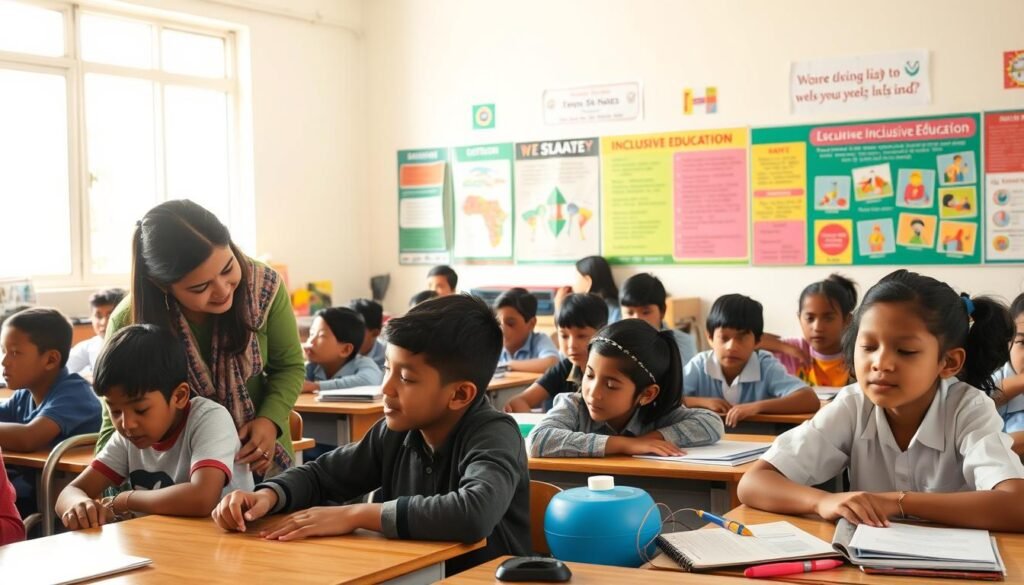
Rural areas face bigger challenges for indian special needs education. Limited diagnostic services create barriers to identification and support. Few trained professionals mean many children never get assessed or receive proper accommodations.
Lower literacy among rural parents reduces recognition of learning difficulties. Families may blame poor grades on low intelligence rather than specific learning differences. Limited information about learning disabilities keeps misconceptions alive and delays help.
Distance makes these challenges worse. Rural schools lack basic resources, making specialized support seem impossible. Teachers get minimal training on inclusive education, leaving them unprepared for diverse learning needs.
| Awareness Dimension | Urban Metropolitan Areas | Semi-Urban Towns | Rural Villages |
|---|---|---|---|
| Access to Diagnostic Centers | Multiple specialized facilities with trained psychologists | Limited centers, often require travel to nearby cities | Minimal to no access; nearest facility may be 100+ km away |
| Teacher Training Level | Growing number with special education exposure and workshops | Basic awareness through occasional government programs | Virtually no specialized training or awareness |
| Parental Understanding | Increasing recognition through media, internet, support groups | Moderate awareness among educated families | Limited knowledge; reliance on traditional interpretations |
| Resource Availability | Remedial programs, assistive technology, educational materials | Some private tutoring; limited specialized resources | Minimal resources beyond standard classroom instruction |
| Stigma Level | Decreasing but still present in certain communities | Moderate to high; concerns about social perception | High stigma; disabilities often hidden from community |
Societal Perceptions and Cultural Stigma
Social stigma blocks special needs awareness across India. Traditional beliefs often explain learning difficulties through karma or divine will. These views clash with modern science and discourage families from seeking medical help.
Families often hide children with disabilities to avoid rejection. Marriage prospects for the child and siblings may suffer if learning disabilities become known. This fear drives families to conceal their children’s difficulties rather than get support.
Many people confuse learning disabilities with intellectual disabilities. They don’t realize that children with dyslexia, ADHD, or dyscalculia often have average or high intelligence. These misunderstandings lead to isolation and fewer opportunities for affected individuals.
People with disabilities are often seen as charity cases rather than rights holders. This view undermines dignity and creates dependency instead of independence. Shifting to a rights-based approach marks critical progress in indian special needs education.
Disability in India is significantly underreported due to illiteracy, limited awareness, cultural stigma, and restricted access to healthcare and diagnostic services, creating a substantial gap between actual prevalence and documented cases.
Impact of Advocacy Organizations and Media Campaigns
Growing numbers of NGOs have improved special needs advocacy across India. Organizations like Sankalp, Enable India, and The National Association for the Blind raise awareness and promote inclusion. They provide education and support for individuals with learning differences.
These groups run awareness workshops for teachers and parents in cities and villages. They create educational materials in regional languages to overcome language barriers. Workshop participants learn about identification strategies, common myths, and available resources.
Social media has become powerful for special needs advocacy, reaching broader audiences with targeted messages. Facebook groups, YouTube channels, and Instagram accounts share success stories and practical guidance. Digital platforms work especially well for younger parents seeking information online.
Traditional media has helped normalize learning disabilities. TV programs, newspaper articles, and online content share stories of individuals with learning differences. These narratives challenge stereotypes and show that learning disabilities don’t prevent success.
Corporate involvement in special needs advocacy has grown significantly. Companies now promote inclusive practices within their organizations and society. Corporate social responsibility programs fund awareness campaigns, scholarships, and assistive technology development.
Despite progress, much work remains to achieve full public understanding. Advocacy efforts face challenges including limited funding, distance barriers, and cultural resistance. The gap between urban and rural awareness requires strategies tailored to regional differences.
Media campaigns must balance sensitivity with directness when addressing stigma. Messages challenging deep beliefs need careful framing to avoid defensive reactions. Successful campaigns feature relatable stories, medical expertise, and actionable steps for families.
Common Types of Learning Disabilities Recognized in India
Learning disabilities in Indian classrooms include reading difficulties and motor coordination challenges. Each condition needs specialized understanding and support. Recognition levels vary widely, with some conditions getting more attention than others.
Specific learning disabilities affect 271,642 children in India. This represents 12.9% of children with special needs. Identification and support begin with understanding each condition’s distinct characteristics.
Teachers trained under National Education Policy 2020 guidelines can now recognize these differences better. However, identification rates vary significantly across regions. School types and socioeconomic contexts also affect these rates.
Dyslexia: Recognition and Educational Impact
Dyslexia is the most widely recognized learning disability in India. It causes persistent difficulties with accurate and fluent word recognition. The condition affects how the brain processes written language.
Dyslexia recognition has improved significantly over the past decade. However, considerable gaps remain in systematic identification protocols. Students with dyslexia experience cumulative academic difficulties as reading demands increase.
These challenges extend beyond simple reading errors. They impact comprehension, writing, and overall academic performance. Delayed identification and intervention create profound educational consequences.
Symptoms and Identification Markers
Identifying dyslexia requires attention to multiple behavioral and academic indicators. These emerge consistently across various learning contexts. Early recognition significantly improves outcomes through timely intervention.
Key identification markers include the following observable characteristics:
- Letter reversals and confusion between visually similar characters like ‘b’ and ‘d’ or ‘p’ and ‘q’
- Difficulty connecting sounds to symbols, affecting phonological awareness and decoding skills
- Significantly slow reading speed compared to age-appropriate expectations
- Problems with reading comprehension despite adequate listening comprehension
- Challenges in learning and remembering sight words that most peers acquire easily
- Poor spelling abilities that persist despite repeated instruction and practice
- Avoidance of reading activities and increasing anxiety around text-based tasks
These symptoms must appear persistently and cause functional impairment across multiple academic contexts. A single symptom does not constitute dyslexia. Professionals look for clusters of difficulties that interfere with educational progress.
Dyslexia Prevalence in Indian Schools
Dyslexia prevalence in India remains inadequately documented through systematic research. This creates challenges for resource allocation and policy planning. Clinical observations suggest rates comparable to international estimates.
Most research indicates between 5% and 15% of students experience dyslexia. The variation in identification rates reflects significant differences in awareness. Diagnostic capacity also varies across regions and school types.
Urban schools identify cases more frequently than rural institutions. Private schools often demonstrate higher identification rates compared to government schools. This disparity may reflect diagnostic access rather than actual prevalence differences.
Unidentified dyslexia creates emotional and behavioral consequences. These include anxiety, depression, and school avoidance. Students face substantially elevated dropout risks without understanding the underlying neurological basis.
ADHD: Understanding Attention Deficit Hyperactivity Disorder
Attention Deficit Hyperactivity Disorder significantly affects learning outcomes in Indian classrooms. ADHD awareness in India has increased substantially. However, recognition and acceptance remain complicated by pervasive misconceptions.
The condition affects 23,449 documented cases. A pronounced gender difference shows 73.3% boys versus 26.7% girls. This neurodevelopmental disorder involves neurobiological differences in brain structure and neurotransmitter function.
ADHD affects attention regulation, impulse control, and activity level. The condition manifests across three primary presentations: predominantly inattentive, predominantly hyperactive-impulsive, and combined presentation. Each subtype presents distinct challenges for academic performance and social functioning.
Common Misconceptions About ADHD
Widespread misunderstandings about ADHD create barriers to appropriate identification and treatment. These misconceptions delay diagnosis and prevent families from seeking help. Dispelling these myths represents a critical component of improving support systems nationwide.
Prevalent misconceptions include beliefs that contradict established scientific evidence:
- Poor parenting causes ADHD: Research demonstrates that ADHD results from neurobiological differences, not parenting style or discipline approaches
- Excessive sugar consumption triggers symptoms: Scientific studies have found no causal relationship between dietary sugar and ADHD symptoms
- Children outgrow ADHD naturally: While symptoms may change with age, ADHD typically persists into adolescence and adulthood without appropriate intervention
- ADHD only affects boys: Girls experience ADHD frequently but often present with predominantly inattentive symptoms that go unrecognized
- Medication represents the only treatment: Comprehensive ADHD treatment in India includes behavioral interventions, educational accommodations, and family support alongside potential medication
Correcting these misconceptions requires sustained public education efforts. Professional training initiatives also need accurate information. Teachers, healthcare providers, and families must support effective identification and intervention strategies.
Behavioral Characteristics and Diagnosis
ADHD diagnosis in India follows comprehensive evaluation protocols. These document symptoms across multiple settings and timeframes. Diagnosis requires that symptoms cause functional impairment in academic, social, or occupational domains.
The evaluation process involves gathering information from multiple sources. These include parents, teachers, and direct observation. Behavioral characteristics vary by presentation type but commonly include:
- Difficulty sustaining attention on tasks, particularly those requiring sustained mental effort
- Tendency toward careless mistakes due to insufficient attention to details
- Problems with organization, time management, and completing multi-step tasks
- Excessive fidgeting, restlessness, or inability to remain seated when expected
- Interrupting others during conversations or activities
- Difficulty waiting turns in games, conversations, or structured activities
- Forgetfulness in daily activities and difficulty following through on instructions
Comprehensive assessment ensures that symptoms cannot be better explained by other conditions. These include anxiety, learning disabilities, or environmental stressors. The diagnostic process typically involves standardized rating scales and clinical interviews.
Dyscalculia and Mathematical Learning Difficulties
Dyscalculia involves specific difficulties with number sense, mathematical reasoning, and calculation procedures. These occur despite adequate instruction and intelligence. Dyscalculia recognition remains considerably lower than dyslexia awareness throughout India.
The condition affects an estimated 3% to 7% of students. This recognition gap leaves many students struggling without appropriate support. Affected individuals struggle with understanding numerical quantities and relationships between numbers.
They experience difficulties memorizing arithmetic facts such as multiplication tables. Executing calculation procedures remains problematic even with extensive practice. Applying mathematical concepts to problem-solving situations presents particular challenges.
Students may understand concepts when explained verbally. However, they cannot translate this understanding to numerical operations. The condition significantly impacts performance across subjects requiring mathematical reasoning.
Educational interventions require specialized approaches focusing on building fundamental number sense. Visual representations, manipulatives, and systematic instruction prove more effective than repetitive practice alone. Early identification and targeted support prevent the accumulation of knowledge gaps.
Dyspraxia and Motor Coordination Challenges
Dyspraxia represents one of the least recognized learning disabilities in India. It is characterized by motor coordination challenges affecting both gross and fine motor skills. Dyspraxia awareness in India remains limited.
Many affected children are simply labeled as clumsy or careless. They rarely receive appropriate evaluation and support. This lack of recognition prevents access to beneficial occupational therapy and educational accommodations.
Gross motor difficulties affect activities requiring whole-body coordination. These include running, jumping, maintaining balance, and participating in sports. Fine motor challenges impact handwriting, buttoning clothes, using utensils, and manipulating small objects.
These difficulties persist despite typical intelligence. They continue even with adequate opportunities for skill development. The educational impact extends beyond physical education classes to affect academic performance significantly.
Poor handwriting makes written assignments laborious and often illegible. Slow writing speed prevents students from completing timed assessments adequately. Organizational challenges arise from difficulties managing materials and navigating physical spaces efficiently.
Social and emotional consequences emerge as children with dyspraxia struggle to participate in age-appropriate activities. Peer relationships suffer when coordination difficulties prevent participation in group games. Self-esteem declines as repeated experiences of physical awkwardness accumulate.
| Learning Disability | Primary Areas Affected | Estimated Prevalence | Recognition Level in India |
|---|---|---|---|
| Dyslexia | Reading fluency, spelling, decoding, phonological processing | 5-15% of students | High awareness with growing identification protocols |
| ADHD | Attention regulation, impulse control, activity level, executive functions | 3-7% of children | Moderate awareness with significant misconceptions |
| Dyscalculia | Number sense, mathematical reasoning, calculation procedures | 3-7% of students | Low awareness with limited diagnostic resources |
| Dyspraxia | Motor coordination, handwriting, physical organization, spatial awareness | 2-6% of children | Very low awareness with minimal recognition systems |
The differential recognition levels across these learning disabilities reflect historical attention patterns. They also reflect the visibility of symptoms in traditional academic contexts. Reading difficulties become immediately apparent in text-centered educational environments.
Motor coordination challenges may be attributed to individual variation. They are rarely recognized as a diagnosable condition requiring intervention. Advancing comprehensive awareness requires systematic professional training and public education campaigns.
Improved diagnostic infrastructure across all regions of India is essential. Each learning disability demands specialized understanding and appropriate assessment tools. Tailored intervention strategies support affected students effectively.
Legislative Framework and Policy Support
India’s legal landscape for learning disabilities includes three key legislative instruments. These laws shape inclusive education policies and student entitlements. The indian special education legislation framework has grown through successive reforms.
These laws establish fundamental rights and practical mechanisms for educational access. The framework creates a comprehensive system of protections and mandates.
Disability rights legislation in India has evolved significantly over time. The shift moved from welfare-based approaches to rights-based frameworks. Each new law has broadened protections and refined implementation mechanisms.
This progression shows growing recognition of learning disabilities. These challenges now receive systematic support as legitimate educational needs.
The Persons with Disabilities Act and Its Provisions
The persons with disabilities act india underwent major revision in 2016. The Rights of Persons with Disabilities (RPWD) Act replaced the 1995 legislation. This landmark law expanded recognized disability categories from seven to twenty-one.
Specific learning disabilities gained explicit recognition as a separate category. This marked a significant milestone for educational advocacy.
The RPWD Act introduced benchmark disabilities as a concept. These disabilities have at least 40% impairment. This classification determines eligibility for various benefits and accommodations.
The Act mandates accessibility standards across physical environments and educational materials. This ensures barrier-free access for students with diverse learning needs.
Reasonable accommodation forms a central principle of the legislation. Educational institutions must provide necessary modifications without undue burden. This approach balances student rights with institutional capacities.
The RPWD Act establishes comprehensive rights for students with learning disabilities. The fundamental right to education without discrimination forms the cornerstone. Schools cannot deny admission based solely on disability status.
Students receive guaranteed access to free education until age eighteen. This applies to government and government-aided institutions. The Act extends beyond the compulsory education period defined in other legislation.
Students with learning disabilities may need additional years to complete milestones. The Act recognizes this extended timeline as legitimate.
Physical and curricular accessibility constitute essential rights under the framework. Educational materials must be available in accessible formats. This includes digital versions compatible with assistive technologies.
Classroom environments require modifications to accommodate sensory and processing differences. These changes address characteristics of various learning disabilities.
The legislation mandates individualized support services tailored to specific student needs. Schools must allocate trained special educators and support personnel. Learning disabilities manifest differently across individuals, requiring personalized intervention strategies.
Educational Entitlements Under the Law
The RPWD Act specifies concrete entitlements beyond fundamental rights. Reservation of seats in government institutions ensures higher education access. Specific percentages are allocated for students with benchmark disabilities.
Financial support mechanisms include scholarship provisions for students. These scholarships offset additional costs associated with learning disabilities. They cover educational expenses and may extend to assistive devices.
The government maintains a National Fund for Persons with Disabilities. This fund supports these initiatives.
Examination accommodations represent critical entitlements under inclusive education policies. Students may request extended time allowances, typically 20 minutes per hour. Scribe services enable students with writing difficulties to demonstrate knowledge verbally.
Alternative assessment formats accommodate diverse learning profiles.
The Act requires supply of assistive devices at government expense. These tools range from text-to-speech software to specialized learning applications. Technological support bridges gaps between learning potential and traditional educational methods.
Right to Education Act and Inclusive Education Mandates
The Right to Education Act of 2009 established education as a fundamental right. This applies to children aged six to fourteen. The legislation incorporates specific provisions for children with disabilities.
The RTE Act embeds inclusive education policy india within the broader framework. It prohibits discrimination and mandates enrollment in neighborhood schools.
The Act’s neighborhood school provision carries particular significance for inclusive education. Children with disabilities must attend schools closest to their residence. This prevents segregation into distant special facilities.
Geographical integration promotes social inclusion alongside academic participation.
Schools operating under RTE mandates cannot screen or reject students based on disability. Admission procedures must be non-discriminatory and accessible. This prohibition prevents exclusionary practices that historically limited educational access.
The RTE Act contains provisions for children with severe disabilities. These children may receive home-based education. Critics argue this provides an escape clause for schools to avoid challenging cases.
Supporters contend it offers flexibility for genuinely severe impairments.
The Act mandates appropriate training for teachers working with children with disabilities. Professional development must include understanding of diverse learning needs. This training requirement acknowledges that inclusive education requires educator competencies.
National Education Policy 2020 Guidelines for Special Needs
The National Education Policy 2020 represents India’s most recent inclusive education vision. NEP 2020 explicitly recognizes RPWD Act provisions while expanding implementation strategies. The policy envisions equal participation for children with disabilities across all levels.
NEP 2020 emphasizes cross-disability training for special educators. This approach reflects understanding that learning disabilities often co-occur. Teachers trained across disability categories can address complex, overlapping needs more effectively.
The policy mandates disability awareness within general teacher education programs. All educators, not only specialists, must understand learning disabilities and inclusive practices. This universal competency approach distributes responsibility for inclusion across the educational workforce.
Resource centers within school complexes represent a key structural innovation. These centers provide specialized assessment, intervention, and support services. The model balances specialized expertise with inclusive placement.
Assistive technologies and digital learning tools receive prominent emphasis. NEP 2020 recognizes technology’s potential to customize learning experiences. The policy calls for investment in accessible digital content and adaptive learning platforms.
Implementation of individualized education plans becomes a policy priority. These plans document specific goals, accommodations, and support services. Regular review ensures interventions remain responsive to changing needs and developmental progress.
| Legislative Framework | Year Enacted | Primary Focus | Key Provisions for Learning Disabilities | Implementation Mechanism |
|---|---|---|---|---|
| Rights of Persons with Disabilities Act | 2016 | Comprehensive disability rights across all life domains | Recognition of specific learning disabilities; reasonable accommodations; examination modifications; free education until age 18 | State and District Level Committees; Chief Commissioner for Persons with Disabilities |
| Right to Education Act | 2009 | Universal elementary education as fundamental right | Non-discrimination in admissions; neighborhood school enrollment; prohibition of screening; teacher training requirements | School Management Committees; Local authorities; Annual monitoring |
| National Education Policy | 2020 | Comprehensive educational reform and modernization | Cross-disability educator training; resource centers; assistive technology integration; individualized education plans | National and State Curriculum Frameworks; Institutional accreditation standards |
| Integrated Framework | 2009-2020 | Synergistic implementation of inclusive education | Legal rights combined with pedagogical strategies and technological support for holistic inclusion | Multi-level governance involving education, social welfare, and disability departments |
The legislative framework establishes aspirational principles and operational requirements. These laws create legal obligations from national government through state administrations to individual schools. Each level bears specific responsibilities for translating statutory provisions into educational realities.
Significant implementation gaps persist between legislative mandates and ground-level practice. Resource constraints, inadequate professional capacity, and limited awareness hinder full realization. The indian special education legislation provides a strong foundation despite systemic challenges.
Understanding this legislative architecture remains essential for parents, educators, and advocates. Knowledge of legal rights empowers stakeholders to demand appropriate services. The framework provides legitimate basis for advocacy and systemic reform efforts.
Diagnostic Process and Assessment Tools
Accurate identification of neurodevelopmental disorders depends on a structured diagnostic framework. This framework combines initial observations with comprehensive professional evaluation. The diagnostic journey in India involves multiple stakeholders, from concerned parents to specialized psychologists.
This systematic approach ensures children receive appropriate identification and access to necessary interventions. However, significant barriers continue to affect equitable access across geographic and socioeconomic contexts.
Understanding the full spectrum of diagnostic procedures empowers families to navigate the assessment process more effectively. The National Education Policy 2020 emphasizes training teachers to recognize and identify disabilities. This establishes a foundation for earlier intervention.
However, practical implementation faces considerable challenges. Block-level special educators often cover children across 150 schools while traveling long distances. This limits their capacity for thorough individual assessment.
Step-by-Step Diagnostic Procedure
The learning disability diagnosis process follows a sequential pathway designed to systematically gather evidence. This multi-stage approach ensures comprehensive evaluation while differentiating specific learning challenges from other concerns. Each stage builds upon previous findings, creating an increasingly detailed picture of the child’s unique profile.
Initial Screening by Parents and Teachers
The recognition of potential learning difficulties typically begins in home and classroom environments. Parents may notice developmental delays in language acquisition, such as difficulty learning nursery rhymes. These early indicators often emerge during preschool years when children engage with pre-literacy activities.
Teachers play an equally critical role in neurodevelopmental disorders recognition through systematic classroom observation. They identify patterns such as significant discrepancies between oral comprehension and written performance. Behavioral difficulties may also mask underlying learning struggles.
Common warning signs that prompt initial screening include:
- Persistent difficulties with letter or number recognition beyond typical developmental timelines
- Struggles with sound manipulation and phonological awareness tasks
- Disproportionate homework battles that seem excessive relative to the child’s abilities
- Avoidance behaviors specifically targeting reading or mathematics activities
- Inconsistent performance across different subject areas or assessment formats
The JAMA study highlights important limitations in this initial identification stage. Voluntary surveys completed by school officials such as principals may lack clinical accuracy. These administrators typically do not receive clinical training.
This limitation affects the validity and consistency of reported disability types. It potentially leads to both underreporting and misclassification of learning difficulties.
Professional Evaluation and Testing
Once initial concerns are identified, families seek comprehensive assessment from qualified psychologists or special educators. This professional evaluation phase employs learning disability assessment tools to measure multiple dimensions of functioning. The diagnostic evaluation typically spans several sessions.
Intelligence testing establishes baseline cognitive abilities, documenting that overall intellectual functioning falls within average ranges. This distinction remains crucial for learning disability diagnosis. Standardized cognitive assessments examine reasoning abilities, problem-solving skills, and general intellectual capacity.
Achievement testing documents specific academic skill levels across reading, mathematics, and written expression domains. These assessments compare the child’s current performance against grade-level expectations and age-based norms. Significant discrepancies between cognitive potential and academic achievement provide key diagnostic evidence.
Processing assessments identify underlying cognitive weaknesses that interfere with learning. These specialized evaluations examine:
- Phonological awareness: The ability to recognize and manipulate sound structures in spoken language
- Working memory: The capacity to hold and manipulate information temporarily while completing cognitive tasks
- Processing speed: The efficiency with which the brain processes visual and auditory information
- Visual-spatial skills: The ability to understand and remember spatial relationships among objects
Comprehensive Assessment Report
The diagnostic process culminates in a comprehensive assessment report that synthesizes findings from multiple data sources. This document integrates test scores, behavioral observations, developmental history, teacher reports, and work samples. The report determines whether the pattern meets established diagnostic criteria for specific learning disabilities.
Beyond diagnosis, the assessment report provides actionable recommendations for educational interventions, classroom accommodations, and therapeutic services. These recommendations form the foundation for developing individualized education plans and securing appropriate school-based supports. The report serves as a critical advocacy tool for families.
Available Assessment Centers and Qualified Professionals
Access to educational assessment for disabilities remains highly concentrated in urban centers. This creates significant geographic disparities in diagnostic services. Metropolitan cities host specialized clinics, hospital-based assessment centers, and private practitioners offering comprehensive evaluations.
These facilities employ multidisciplinary teams including clinical psychologists, educational psychologists, special educators, and developmental pediatricians. Major cities such as Delhi, Mumbai, Bangalore, and Chennai maintain established networks of assessment centers. These facilities often provide sliding-scale fees or subsidized services for families facing economic barriers.
Government-run District Early Intervention Centers also offer diagnostic services, though capacity constraints frequently result in extended waiting periods. Rural and semi-urban regions face severe shortages of trained diagnosticians. This forces families to travel considerable distances for evaluation.
This geographic disparity creates a two-tier system where urban families access timely, comprehensive assessments. Rural families either forgo formal evaluation entirely or experience significant delays. The shortage of qualified professionals represents one of the most pressing challenges nationwide.
Standardized Testing Tools Used in India
Assessment professionals in India utilize both internationally-developed instruments and indigenously-developed assessments. The selection of appropriate learning disability assessment tools depends on the child’s age and presenting concerns. Cultural validity and normative appropriateness remain ongoing concerns for many instruments originally developed in Western contexts.
| Assessment Tool | Primary Purpose | Age Range | Cultural Adaptation Status |
|---|---|---|---|
| Wechsler Intelligence Scale for Children (WISC) | Comprehensive cognitive ability measurement | 6-16 years | Indian norms available; ongoing validation studies |
| Developmental Assessment Scales for Indian Infants (DASII) | Early developmental screening and assessment | 0-30 months | Indigenously developed with Indian norms |
| Dyslexia Assessment for Languages of India (DALI) | Specific assessment for reading disabilities | 6-12 years | Developed specifically for Indian languages |
| NIMHANS Index for Specific Learning Disabilities | Comprehensive learning disability screening | 6-11 years | Standardized on Indian population |
Internationally-recognized instruments such as the Wechsler scales provide comprehensive cognitive assessment but require careful interpretation. Translation and adaptation efforts attempt to address linguistic and cultural differences. Yet questions persist regarding the appropriateness of content, task formats, and normative comparisons.
Achievement tests face similar challenges, as reading and mathematics curricula vary significantly between Western and Indian systems. Indigenously-developed assessment tools address some cultural validity concerns by incorporating content and norms specific to Indian contexts. The Dyslexia Assessment for Languages of India (DALI) was specifically designed to assess reading difficulties across multiple Indian languages.
Such culturally-grounded instruments represent important advances in educational assessment for disabilities.
Challenges in Early Identification and Cultural Adaptation
Multiple systemic barriers impede early identification of learning disabilities in India, resulting in delayed diagnosis and intervention. Limited awareness among primary caregivers and educators represents a foundational challenge. Many adults lack knowledge about developmental milestones and warning signs for learning difficulties.
This awareness gap extends the period during which children struggle without appropriate support. It potentially compounds academic and emotional difficulties.
The shortage of trained professionals creates assessment bottlenecks, particularly in underserved regions. Even when families recognize concerns, accessing diagnostic evaluation may require months-long waiting periods or prohibitive travel distances. Economic barriers further restrict access, as comprehensive private assessments often cost between ₹5,000 and ₹25,000.
Cultural factors influence both help-seeking behaviors and interpretation of learning difficulties. Traditional explanations for academic struggles may attribute difficulties to lack of effort or insufficient discipline. These alternative frameworks can delay or prevent families from pursuing formal assessment.
The cultural adaptation of learning disability assessment tools presents ongoing technical challenges. Many standardized instruments incorporate content, language structures, and task formats that may not be culturally relevant. Visual stimuli may depict unfamiliar objects or scenarios.
Verbal items may use idioms or references lacking cultural equivalence. Task demands may assume educational experiences not universally available. These validity concerns risk both false positives and false negatives.
Linguistic diversity compounds assessment challenges, as children educated in regional languages require evaluation in their language of instruction. While English and Hindi assessment tools are relatively available, instruments for other Indian languages remain limited. Translation alone proves insufficient, as direct linguistic conversion fails to account for differences in orthographic complexity.
Effective assessment demands culturally and linguistically appropriate tools developed through rigorous validation processes with representative populations.
Educational Interventions and Support Systems
Educational interventions include diverse service delivery models designed to address specific learning needs. These systems range from inclusive classroom settings to specialized instructional environments. The effectiveness depends on implementation quality, available resources, and educator preparedness.
The National Education Policy 2020 establishes guidelines for indian inclusive education. This policy mandates that mainstream schools provide appropriate accommodations and support structures. However, significant gaps exist between policy aspirations and ground-level realities.
Current statistics reveal concerning gaps in educational access across India. Only 62.9% of individuals with disabilities between ages 3 and 35 have attended regular schools. This substantial exclusion underscores the urgency of developing comprehensive educational intervention programs.
Implementing Inclusive Education Models
Inclusive education represents a commitment to educating students with learning disabilities alongside their peers. This approach challenges traditional segregation models and emphasizes belonging, participation, and academic achievement. Successful implementation requires systemic transformation across multiple organizational levels.
The inclusive education framework operates on several core principles. These include presuming competence in all learners and providing least restrictive environments. The framework also emphasizes delivering specialized support within natural contexts and fostering authentic peer relationships.
Inclusive education is not just about placement; it is about belonging, participation, and achievement for every student, with appropriate supports that recognize individual learning profiles and developmental trajectories.
Integration in Mainstream Schools
Integration in mainstream schools involves collaborative planning between general and special educators. This model emphasizes differentiated instruction that addresses diverse learning needs within heterogeneous classroom settings. Teachers employ various strategies including flexible grouping, multi-sensory instruction, and scaffolded learning experiences.
Successful integration depends on several critical factors. These include administrative commitment to inclusion, adequate staffing ratios, and availability of specialized materials. Schools implementing integration effectively establish collaborative teaching arrangements where special educators co-teach alongside general education teachers.
However, teachers in India frequently report feeling unprepared for inclusive classrooms. Many educators do not rate themselves competent to teach diverse learners. They cite inadequate training, insufficient infrastructure, and limited institutional support as significant barriers.
Resource room support provides a hybrid service delivery model. Students spend most instructional time in general education classrooms but receive targeted intervention separately. This pull-out support typically focuses on foundational competencies in reading, mathematics, or written expression.
The resource room model addresses specific learning disability intervention programs through concentrated skill-building sessions. These specialized environments allow for reduced distractions, individualized pacing, and focused attention on deficit areas. Students typically attend resource room sessions for 30-90 minutes daily, depending on individual needs.
Effective resource room programs maintain strong coordination with general education classrooms. Resource teachers communicate regularly with classroom teachers about student progress and upcoming content demands. This ensures skill generalization and curricular alignment.
Special Education Programs and Schools
Special education programs and schools represent more segregated service delivery options. These settings offer specialized curricula, substantially reduced student-teacher ratios, and comprehensive therapeutic services. Staff in these programs typically possess advanced training in disability-specific instructional methodologies.
Specialized schools provide intensive intervention environments where every aspect addresses disability-related learning challenges. Class sizes rarely exceed 10-12 students, allowing for extensive individualization. Curricula emphasize functional academics, life skills development, and transition planning alongside traditional academic content.
However, segregated settings present certain limitations that education planners must carefully consider. Students in separate special education programs experience reduced exposure to age-appropriate academic content. They may face challenges transitioning to less restrictive environments or mainstream settings later.
The decision regarding appropriate educational placement requires thoughtful analysis of individual student needs. Placement determinations should prioritize least restrictive environments while ensuring access to necessary specialized instruction. Available resources and potential outcomes across different service delivery models must be considered.
Teacher Training and Professional Development
Teacher training and professional development constitute critical infrastructure elements. The competency level of educators directly impacts student outcomes. Yet substantial gaps exist in both pre-service preparation and ongoing professional learning opportunities.
Research consistently demonstrates that teachers in India often lack awareness of policy provisions. This knowledge gap undermines implementation of even well-designed intervention frameworks. Addressing these competency deficits requires systematic investment in both initial teacher preparation and continuous development.
Pre-Service Training Programs
Pre-service training programs for general education teachers increasingly incorporate coursework on inclusive education. The National Education Policy 2020 specifically provides for modules on teaching children with disabilities. These foundational courses introduce prospective teachers to disability categories, legal frameworks, and instructional modifications.
However, the depth and practical emphasis of this preparation varies substantially across institutions. Some programs offer comprehensive disability-focused coursework with extensive field experiences in inclusive classrooms. Others provide only superficial coverage through single survey courses.
Specialized pre-service programs leading to degrees or diplomas in special education prepare educators specifically. These intensive programs cover disability-specific instructional methodologies, behavior management techniques, and assistive technology applications. They also address collaborative consultation models for educational intervention programs.
In-Service Workshops and Certifications
In-service workshops and certifications provide ongoing professional learning opportunities for practicing educators. These programs cover diverse topics including identification procedures and evidence-based instructional strategies. Short-term specialization courses, as outlined in NEP 2020, offer focused skill development.
Certification programs prepare special educators to work specifically with students with learning disabilities. These credentials validate specialized expertise and often lead to improved instructional outcomes. Students receiving services from certified professionals typically show better progress.
District-level professional development initiatives frequently address implementation of specific intervention programs. These contextualized learning experiences prove particularly valuable. They connect directly to educators’ immediate classroom challenges and available resources.
Despite these offerings, access to high-quality professional development remains uneven across India’s regions. Rural areas and smaller districts often lack adequate training infrastructure. This perpetuates disparities in educator preparedness and ultimately affects the quality of learning disability intervention programs.
Individualized Education Plans Development and Implementation
Individualized Education Plans (IEPs) represent legally-mandated documents that articulate comprehensive intervention frameworks. These formalized plans specify present levels of academic performance and measurable annual goals. The IEP serves as both a planning tool and an accountability mechanism.
Effective IEP development requires collaborative participation from multiple stakeholders. This team collectively analyzes assessment data, identifies priority intervention areas, and establishes realistic yet ambitious goals. The participatory process honors diverse perspectives and expertise while centering student and family preferences.
Key components of comprehensive IEPs include detailed descriptions of current functioning levels. Goals must be specific, measurable, achievable, relevant, and time-bound (SMART). Accommodation sections specify exactly what environmental or instructional modifications the student requires.
Implementation quality determines whether IEPs function as meaningful intervention frameworks or merely compliance documents. Regular progress monitoring enables teams to assess goal attainment and make data-driven adjustments. IEP review meetings, typically conducted annually, provide opportunities to evaluate overall program effectiveness.
Substantial challenges affect IEP implementation across Indian educational contexts. Large class sizes impede the individualized attention these plans envision. Limited availability of specialized materials and technologies restricts accommodation options.
Systemic accountability mechanisms rarely adequately monitor the quality of services actually delivered. This creates gaps between documented plans and lived educational experiences. Greater monitoring is needed to ensure students receive the support outlined in their IEPs.
The policy framework establishes that teachers should receive greater autonomy in selecting pedagogical tools. This flexibility proves essential for responsive IEP implementation. However, this autonomy requires substantial professional knowledge and judgment that many teachers report lacking.
School Accommodations and Classroom Modifications
Implementing meaningful school accommodations requires understanding student needs and available support mechanisms. These modifications help students with learning disabilities access curriculum content effectively. They can demonstrate their knowledge and participate fully in educational experiences.
Accommodations change how students learn without altering content expectations. Modifications may adjust what students are expected to learn. The distinction between these two approaches is important for proper implementation.
The Rights of Persons with Disabilities (RPWD) Act provides the legal framework for reasonable accommodations. The National Education Policy 2020 addresses accessible assessment guidelines through the proposed PARAKH assessment center. However, implementation challenges persist across the country, particularly regarding infrastructure and resource availability.
Examination Accommodations and Modifications
Traditional assessment formats often fail to capture the knowledge of students with learning disabilities. Processing speed limitations, reading difficulties, and motor challenges can significantly impact performance. Examination accommodations level the playing field by removing barriers unrelated to content being assessed.
These special education resources india provides ensure that assessments measure actual knowledge. They help remove disability-related limitations from the testing process. This creates fairer evaluation opportunities for all students.
Extended time represents one of the most common accommodations available to students with learning disabilities. Students with dyslexia benefit from additional time to decode text accurately. Those with ADHD require extra time to maintain focus and review their work carefully.
Students experiencing dysgraphia need extended periods to formulate ideas and transcribe written responses. Research demonstrates that extended time substantially reduces the disadvantage faced by students with learning disabilities. This accommodation does not provide unfair advantage to students who receive it.
Extended time enables more accurate assessment of knowledge rather than simply measuring processing efficiency. Typical time extensions range from 25% to 100% additional time, depending on individual needs. Schools must establish clear protocols for implementing these provisions during both classroom tests and board examinations.
Scribe and Reader Services
Scribe and reader services provide essential human assistance during the assessment process. Scribes transcribe students’ oral responses when handwriting difficulties would otherwise prevent adequate expression of knowledge. This accommodation proves particularly valuable for students with dysgraphia or motor coordination challenges.
Reader services present test items orally for students with significant reading disabilities. This ensures that assessments measure content knowledge in subjects like science, social studies, or mathematics. The reader maintains a neutral tone and may repeat items as needed.
Both services require trained personnel who understand their role boundaries. Scribes must record responses verbatim without editing or suggesting changes. Readers must present material without inadvertently providing hints through emphasis or inflection.
Alternative Assessment Methods
Alternative assessment methods offer different formats for demonstrating knowledge and skills. These approaches recognize that traditional written examinations may not represent the best measure of learning. Oral examinations allow verbal demonstration of knowledge for students with significant writing difficulties.
Project-based assessments enable practical application over extended periods. Portfolio assessments document growth and learning over time through collected work samples. This method reduces the pressure of single-occasion testing and provides multiple opportunities to demonstrate mastery.
Modified response formats, such as multiple-choice questions instead of essays, may be appropriate alternatives. Performance-based assessments allow students to show competency through hands-on demonstrations, presentations, or creative products. These methods align with diverse learning strengths and provide authentic assessment opportunities.
Classroom Teaching Strategies and Adjustments
Effective indian school accommodations extend beyond examination settings into daily classroom instruction. Teaching strategies and adjustments make learning more accessible across all subject areas and grade levels. These modifications support diverse learning needs while maintaining educational standards and expectations.
Multisensory instruction engages visual, auditory, and kinesthetic-tactile modalities simultaneously. This approach benefits students with various learning disabilities by providing multiple pathways for processing information. Teaching letter sounds while students see, hear, trace, and manipulate creates stronger neural connections.
Explicit, systematic teaching breaks complex skills into component parts with clear models and guided practice. This structured approach particularly benefits students with learning disabilities who may struggle with implicit learning. Teachers provide step-by-step instruction with immediate feedback and frequent opportunities for review.
Visual supports including graphic organizers, charts, and color-coding systems make abstract concepts more concrete. Preferential seating minimizes distractions for students with attention difficulties by positioning them strategically. Modified assignment length maintains learning objectives while reducing volume.
Collaborative learning structures provide peer support and alternative modes of participation. Partner work and small group activities allow students to contribute their strengths. These structures reduce anxiety associated with whole-class participation and build social connections.
Assistive Technology and Digital Learning Tools
Assistive technology and digital learning tools offer powerful supports when infrastructure permits their implementation. These special education resources india includes range from simple low-tech solutions to sophisticated software applications. However, only 59% of schools across the country have access to electricity.
Text-to-speech software enables students with reading disabilities to access grade-level content through auditory presentation. Speech-to-text applications support students with written expression difficulties by allowing them to dictate their ideas. These tools remove mechanical barriers while preserving cognitive engagement with content and composition.
Graphic organizer software helps students structure ideas visually before and during writing. Digital concept mapping tools support planning, organization, and relationship identification across subject areas. Audiobooks provide alternative text access for students who struggle with traditional reading.
Mathematics software offers visual representations and immediate feedback that support conceptual understanding. Interactive manipulatives help students visualize abstract operations and relationships. Organizational applications support planning and time management through digital calendars and reminder systems.
| Technology Type | Primary Function | Disabilities Addressed | Implementation Requirements |
|---|---|---|---|
| Text-to-Speech Software | Converts written text to audible speech | Dyslexia, reading disabilities | Computer/tablet access, internet connectivity |
| Speech-to-Text Applications | Transcribes spoken words into written text | Dysgraphia, writing disabilities | Microphone-enabled device, quiet environment |
| Graphic Organizer Tools | Creates visual maps for organizing ideas | Executive function challenges, writing disabilities | Basic computer skills, software access |
| Mathematics Software | Provides visual representations and practice | Dyscalculia, mathematical learning difficulties | Device access, internet for some programs |
Implementation challenges in the Indian context extend beyond electricity access. Limited availability of appropriate technologies creates barriers for many schools. Inadequate teacher training in technology integration and insufficient devices per student compound these difficulties.
Economic factors prevent many schools and families from acquiring necessary tools and software. This is particularly true in rural areas where infrastructure deficits are most pronounced. Less than 40% of school buildings have ramps, and approximately 17% have accessible toilets.
These physical accessibility limitations intersect with digital access barriers. They create compounded disadvantages for students with disabilities. Incremental progress continues through targeted initiatives and increasing awareness of technology’s potential.
Schools with adequate infrastructure demonstrate the transformative impact of assistive technology. Proper implementation requires trained staff and appropriate student support. These elements are essential for maximizing the benefits of digital learning tools.
Treatment and Therapeutic Approaches
Therapeutic interventions for learning disabilities go beyond traditional classroom instruction. They include specialized programs that target specific developmental and processing deficits. These programs work within a multidisciplinary framework.
Educational specialists, therapists, and medical professionals come together to address complex student needs. Treatment effectiveness depends on early identification and consistent implementation. Coordination across home, school, and clinical settings is essential.
Students with learning difficulties require individualized support that acknowledges their unique strengths. This support must systematically address skill gaps. The therapeutic landscape in India shows significant variation in service availability and quality.
Urban centers offer comprehensive programs while rural regions face substantial access barriers. Block-level special educators often support approximately 150 schools across vast geographic areas. This creates inevitable gaps in service delivery and follow-through.
Remedial Education and Learning Support Programs
Remedial education forms the cornerstone of intervention for students with learning disabilities. It provides systematic instruction that targets specific academic skill deficits. These programs employ explicit teaching strategies that break complex skills into manageable components.
Students receive repeated practice with immediate corrective feedback. Specialized centers in metropolitan areas deliver structured literacy programs for dyslexia. These programs use approaches such as Orton-Gillingham or Wilson Reading System.
The programs emphasize phonemic awareness and phonics patterns. They also focus on fluency development, vocabulary expansion, and reading comprehension strategies.
Mathematics interventions for students with dyscalculia build conceptual understanding of numerical relationships. Trained remedial educators teach calculation strategies systematically. Students grasp underlying mathematical principles before advancing to more complex operations.
These sessions typically occur several times weekly in small group or individual formats. They extend over months or years to achieve meaningful academic progress.
The shortage of trained special education professionals significantly limits program availability. This is particularly true in tier-2 and tier-3 cities where qualified remedial educators remain scarce. Economic barriers compound these access challenges.
Private remedial centers charge fees beyond the reach of many families. Government schools theoretically provide remedial support through resource rooms. Implementation quality varies considerably based on teacher training, resource availability, and administrative commitment.
“Remedial education must address not only academic skill deficits but also the emotional and motivational consequences of repeated academic failure that erode student confidence and engagement.”
Occupational Therapy and Sensory Integration
Occupational therapy addresses motor coordination difficulties and sensory processing challenges. It also focuses on functional skill development that frequently accompanies learning disabilities. These issues impact academic performance significantly.
Occupational therapists work with students to strengthen fine motor skills essential for handwriting legibility. They develop organizational and study strategies supporting academic success. Therapists also teach sensory regulation techniques helping maintain optimal arousal levels for learning.
These interventions prove particularly valuable for students with dysgraphia or dyspraxia. These students struggle with written output despite adequate content knowledge.
Sensory integration therapy specifically targets how the nervous system receives and processes sensory information. Children demonstrating sensory over-responsivity, under-responsivity, or seeking behaviors benefit from structured activities. These activities are designed to improve sensory processing efficiency.
Therapists create individualized programs incorporating vestibular, proprioceptive, and tactile activities. These gradually challenge the sensory system while maintaining a therapeutic zone. This promotes integration rather than overwhelm.
Adaptive strategies compensate for persistent difficulties by modifying task demands or teaching alternative approaches. Students might use pencil grips, slant boards, or alternative seating to optimize positioning. Occupational therapists collaborate with teachers to implement classroom accommodations.
These accommodations reduce the functional impact of motor and sensory challenges. Access to qualified occupational therapists remains concentrated in urban centers. Limited availability in smaller cities and rural regions creates significant service gaps.
Speech and Language Therapy Services
Speech and language therapy proves essential for children whose learning disabilities involve oral language processing. It also helps with reading development and written expression challenges. Speech-language pathologists address phonological awareness deficits that underlie dyslexia.
They work systematically on sound discrimination, segmentation, and blending skills foundational to decoding and spelling. These professionals employ structured activities with explicit teaching and systematic practice. This develops language competencies supporting academic learning across content areas.
Vocabulary and grammar weaknesses impact reading comprehension and written expression. These receive targeted intervention through language therapy. Students learn strategies for understanding complex sentence structures.
They also learn to derive word meanings from context. Students practice organizing verbal information for retention and retrieval. Pragmatic language difficulties affecting social communication also fall within the speech therapist’s scope.
This addresses conversational skills, perspective-taking, and interpretation of nonliteral language. These skills influence peer relationships and classroom participation.
Oral expression challenges may mask underlying verbal abilities in some students with learning disabilities. These students struggle to formulate and articulate thoughts despite adequate comprehension. Speech-language pathologists teach organizational frameworks, transition language, and elaboration strategies.
These strategies improve verbal expression quality. Collaborative practice between speech therapists, special educators, and classroom teachers reinforces therapeutic targets. This maximizes generalization of skills to functional contexts.
| Therapeutic Approach | Primary Focus Areas | Delivery Format | Availability in India |
|---|---|---|---|
| Remedial Education | Academic skill instruction, reading intervention, mathematics support | Individual or small group sessions 2-4 times weekly | Specialized centers in urban areas; limited rural access |
| Occupational Therapy | Fine motor skills, sensory processing, organizational strategies | Individual therapy sessions with classroom consultation | Metropolitan hospitals and private clinics; significant rural shortage |
| Speech-Language Therapy | Phonological awareness, language development, oral expression | Individual or paired sessions with collaborative consultation | Available in larger cities; minimal presence in smaller towns |
| Behavioral Interventions | Attention regulation, impulse control, organizational skills | Parent training, teacher consultation, individual coaching | Growing availability in metros; limited trained professionals elsewhere |
Behavioral Interventions and ADHD Management
Behavioral interventions and ADHD treatment in India encompass both psychosocial strategies and pharmacological approaches. These address attention, impulse control, and hyperactivity symptoms that substantially interfere with learning. Psychosocial interventions include establishing structured routines with clear expectations.
They also implement positive reinforcement systems rewarding desired behaviors. These interventions provide organizational supports and external cueing systems. They teach self-monitoring and metacognitive strategies.
Training parents and teachers in effective management techniques is also crucial. These behavioral strategies form the foundation of intervention. They are particularly important for younger children and situations where medication proves inappropriate or unavailable.
Parent training programs teach caregivers to implement consistent behavior management strategies at home. This reinforces skills targeted in school and therapeutic settings. Effective programs provide education about ADHD neurobiology.
They teach specific behavioral techniques and offer opportunities to practice skills with feedback. Ongoing consultation is provided as challenges arise. Teacher training similarly equips educators with classroom management strategies.
This includes environmental modifications and instructional adaptations benefiting students with attention difficulties.
Pharmacological interventions, primarily stimulant medications such as methylphenidate, demonstrate strong research evidence for symptom reduction. These medications enhance neurotransmitter activity in brain regions governing attention, impulse control, and executive functions. Appropriate medical management requires careful diagnosis by qualified professionals.
This typically involves developmental pediatricians or child psychiatrists. It is followed by dose optimization and ongoing monitoring for effectiveness and side effects.
Access to appropriate ADHD treatment in India faces multiple barriers. These include shortage of trained prescribers capable of diagnosing and managing medication. Cost considerations make ongoing treatment unaffordable for many families.
Persistent stigma surrounding psychiatric medication deters families from pursuing pharmacological options. Misinformation about medication safety and effectiveness circulates widely. This leads some families to reject evidence-based treatments in favor of unproven alternatives.
Public awareness campaigns emphasizing ADHD as a neurobiological condition requiring medical intervention gradually shift community attitudes. These campaigns compare ADHD to conditions like diabetes or asthma. This promotes greater acceptance of treatment options.
Comprehensive treatment recognizes that learning disabilities and associated conditions require sustained, coordinated intervention. This must occur across multiple domains and settings to maximize student outcomes. The multidisciplinary team model, though ideal, remains difficult to implement consistently.
This is due to professional shortages, geographic barriers, and coordination challenges. Families frequently navigate fragmented service systems independently. They piece together interventions from multiple providers without central coordination.
Strengthening integrated service delivery models represents a critical priority. This will improve treatment access and effectiveness across India’s diverse landscape.
Major Challenges Hindering Awareness and Support
India faces big obstacles in providing learning disability support. These barriers include not enough trained teachers, high costs, and unequal access across regions. Understanding these problems shows how complex it is to help students with neurodevelopmental disorders.
Students with special education needs face challenges beyond their classrooms. These issues come from deeper problems in education and healthcare systems. Fixing these problems requires addressing the basic constraints that limit awareness and help.
Shortage of Trained Special Education Professionals
India desperately needs more qualified special educators. Over 248 million students attend school across the country. Block-level special educators often manage 150 or more schools, making personal attention nearly impossible.
This shortage affects all parts of educational support. Schools struggle to find students who need help. Diagnostic services have long waiting lists. Intervention programs lack qualified teachers.
Poor working conditions make the problem worse. Many special educators work on temporary contracts instead of permanent jobs. Low pay, few training opportunities, and weak support cause many teachers to leave the field.
Training programs often fall short. Many educators don’t learn enough about the variety of learning disabilities. Teacher training schools lack specialized instructors, updated courses, and hands-on practice opportunities.
Economic and Financial Barriers to Diagnosis
Money problems create huge barriers to getting help for learning disabilities. Private clinic evaluations typically cost several thousand rupees. These costs put professional testing out of reach for millions of families.
Government assessment centers exist but can’t meet demand. Families wait months for appointments. Most facilities are in cities only.
Ongoing treatment costs add up quickly. Remedial education, occupational therapy, speech therapy, and assistive technology require steady investment. Multiple weekly sessions over long periods become too expensive for most families.
- Diagnostic evaluations range from ₹3,000 to ₹15,000 in private settings
- Monthly remedial education costs average ₹5,000 to ₹20,000
- Therapeutic services require ₹800 to ₹2,500 per session
- Assistive technology devices cost ₹5,000 to ₹50,000
Insurance rarely covers learning disability services. Most health plans exclude educational help and developmental testing. Families must pay all costs themselves.
Geographic Disparities in Service Availability
Where you live determines what help you can get. Big cities have many diagnostic centers, special schools, and therapy services. Small cities, towns, and rural areas may have no local access to qualified professionals.
These gaps reflect broader healthcare and education patterns. About two-thirds of Indians live in rural areas. Yet specialized services cluster in cities.
Rural areas lack basic infrastructure for addressing neurodevelopmental disorders in indian schools. Schools may not have counselors or special educators. District hospitals often lack developmental doctors or psychologists.
Transportation creates additional problems. Families need regular therapy or follow-up visits. They must arrange travel, lodging, and time off work. These burdens make sustained treatment nearly impossible for rural families.
Implementation Gap Between Policy and Practice
The biggest frustration is the gap between good laws and actual practice. Laws promising comprehensive rights remain mostly unrealized in classrooms. The disconnect between central policy and local action creates widespread failures.
School staff often don’t know about legal requirements. The Persons with Disabilities Act and Right to Education Act require accommodations and inclusive practices. Yet many educators never learn about these obligations.
| Challenge Area | Policy Mandate | Implementation Reality | Primary Obstacle |
|---|---|---|---|
| Teacher Training | Comprehensive special education preparation required | Minimal or absent training in most teacher education programs | Curriculum gaps and faculty shortages |
| Classroom Accommodations | Individualized support and examination modifications | Inconsistent application across schools and boards | Lack of awareness and resource constraints |
| Resource Allocation | Funding designated for inclusive education infrastructure | Budget releases delayed or diverted to other priorities | Competing demands and weak accountability |
| Monitoring Systems | Regular evaluation of compliance and outcomes | Weak enforcement mechanisms with limited consequences | Insufficient political will and administrative capacity |
Funding doesn’t match policy promises. Budgets approved for inclusive education often go unspent or get redirected. Without adequate money reaching schools, good policies can’t create real support.
Monitoring and enforcement prove weak. Schools face few consequences for not providing required accommodations. Without accountability, widespread non-compliance continues despite clear legal frameworks.
Other factors complicate progress. Social stigma discourages families from seeking help. Limited awareness campaigns don’t reach beyond educated city populations. India’s linguistic and cultural diversity makes it hard to create materials that work everywhere.
Progress and Positive Developments
India’s journey toward comprehensive support for learning disabilities has accelerated notably. Expanding networks of specialized services and heightened awareness initiatives are reshaping education. Growing institutional commitment creates meaningful change despite persistent challenges affecting many families.
Improved infrastructure and enhanced professional capacity drive these changes. Evolving social attitudes and strengthened policy frameworks also play key roles. Together, these factors create new opportunities for individuals with special education needs to access support and achieve their potential.
These developments represent collaborative efforts involving multiple stakeholders. Government agencies, educational institutions, and advocacy organizations work toward common goals. Corporate entities and affected communities also contribute to this progress.
Progress remains uneven across regions and populations. Yet the overall trajectory demonstrates increased recognition of learning disabilities. These conditions require systematic responses rather than individual accommodations alone.
Expanding Network of Special Education Schools and Centers
The infrastructure supporting special education needs india has grown substantially over the past decade. Urban and metropolitan regions now have more specialized schools and assessment centers. These facilities offer multidisciplinary services that address diverse learning challenges through coordinated interventions.
Diagnostic evaluations, remedial education programs, and therapeutic services are increasingly available. Family counseling also reaches more people through dedicated centers. These centers employ trained professionals across relevant disciplines.
Metropolitan cities have established specialized schools focusing on specific disabilities. Some provide comprehensive services for students with varied learning profiles. Resource centers in urban areas conduct psychological assessments and educational evaluations.
Some state governments have invested in developing district-level assessment and support centers to improve access. These centers aim to reach areas beyond major cities. However, rural penetration remains limited.
Mainstream schools increasingly establish dedicated special education departments or resource rooms. Trained educators staff these spaces and provide essential support services. These professionals offer pull-out instruction for students requiring intensive intervention.
They also provide consultation to general education teachers implementing accommodations. Coordination of individualized education plans is another key responsibility. This infrastructure development reflects growing recognition among inclusive schools india.
Effective inclusion requires specialized expertise rather than simple classroom placement. Children with disabilities need additional support structures to succeed. Simply placing them in regular classrooms without support is insufficient.
Increased Parent and Teacher Awareness Initiatives
Awareness initiatives targeting parents and teachers have contributed significantly to earlier identification. More appropriate responses now emerge when learning challenges appear. Workshops and training sessions organized by NGOs provide practical information about recognizing warning signs.
Educational institutions and government departments also offer these programs. Participants learn about accessing diagnostic services and implementing classroom accommodations. They discover strategies for supporting children at home.
These programs empower families who might otherwise navigate complex systems in isolation. Without adequate guidance, many parents struggle to find appropriate help. These initiatives provide crucial information and support.
Parent support groups have emerged as valuable resources. They create spaces for information exchange, emotional support, and collective advocacy. These networks connect families facing similar challenges.
Such connections reduce the isolation that often accompanies learning disability diagnoses. Experienced parents share strategies and recommend professionals and services. They provide encouragement to those newly confronting these issues.
Teacher awareness has gradually improved through professional development opportunities. Pre-service training programs now incorporate inclusive education content. Education departments and voluntary organizations disseminate practical resources.
These resources help classroom teachers recognize learning difficulties and modify instructional approaches. They also facilitate collaboration with special education professionals. Significant gaps persist requiring sustained attention.
Yet the baseline understanding among educators has improved measurably. This represents substantial progress compared to previous decades. Learning disabilities received minimal recognition in teacher preparation programs then.
Corporate and NGO Involvement in Advocacy
Non-governmental organizations and corporate entities have substantially augmented government efforts. They address special education needs by creating a more robust ecosystem. Support services and advocacy initiatives have expanded significantly.
Prominent NGOs such as Enable India, the National Association for the Blind, and Sankalp have pioneered innovative programs. These organizations demonstrate effective approaches to identification, intervention, and inclusion. They develop educational materials and provide training to schools and families.
Technical assistance and advocacy for policy improvements are also key activities. These organizations work at local and national levels. Their efforts create meaningful change across multiple domains.
Corporate social responsibility initiatives have directed substantial resources toward inclusive education projects. These projects might otherwise lack funding. Companies sponsor scholarship programs for students with disabilities.
Technology access initiatives provide assistive devices to those who need them. Employment programs create pathways to economic participation for adults with learning disabilities. These employment opportunities represent particularly significant developments.
Individuals with learning disabilities historically faced discrimination and exclusion from workforce participation. This occurred despite possessing relevant skills and capabilities. Corporate programs are changing this reality.
Partnerships between corporations, NGOs, and educational institutions have created internship programs. Mentorship initiatives and workplace accommodations also result from these collaborations. They demonstrate the economic contributions individuals with learning disabilities can make.
These collaborations challenge deficit-focused narratives about disability. They illustrate the business case for disability inclusion. Models emerge that other organizations can replicate as awareness spreads throughout India’s corporate sector.
Success Stories and Positive Outcomes
Individual success stories provide powerful counter-narratives to deficit-focused perspectives. These perspectives have historically dominated discourse around disability in Indian society. Individuals with learning disabilities who have achieved academic success demonstrate important possibilities.
Many have pursued higher education and established careers in diverse fields. They contribute meaningfully to their communities. These examples demonstrate that learning disabilities need not limit potential.
Appropriate supports and opportunities make success possible. These success stories increasingly appear in media coverage. Social media platforms and advocacy campaigns also feature them.
Such narratives serve multiple important functions. They challenge stigma by illustrating capabilities rather than deficits. They inspire families facing similar challenges by demonstrating possible positive outcomes.
They also illustrate to educators and policymakers the importance of investment. Appropriate identification and intervention create opportunities for success. Personal accounts from successful adults with learning disabilities provide hope to parents.
Parents may initially respond to diagnoses with fear or denial. Seeing concrete examples of positive life trajectories helps them envision better futures. These stories demonstrate what is possible.
Technological advances have created new possibilities for supporting students with special education needs. Smartphones, tablets, and computers become increasingly accessible even in middle-class households. Text-to-speech applications and educational software offer valuable support.
Organizational tools and communication aids can substantially level the playing field. Appropriate integration into educational practice is essential. These technological solutions demonstrate that learning disabilities represent differences in information processing rather than inherent limitations.
Appropriate tools enable individuals to demonstrate their knowledge and capabilities through alternative means. Technology creates pathways that were previously unavailable. This represents significant progress for students with learning disabilities.
| Progress Indicator | Previous Status (2010-2015) | Current Status (2020-2024) | Key Contributing Factors |
|---|---|---|---|
| Special Education Centers | Primarily concentrated in major metropolitan areas with limited services | Expanded to tier-2 cities with multidisciplinary assessment and intervention services | State government investment, NGO establishment of regional centers, private sector growth |
| Trained Special Educators | Severe shortage with most states having fewer than 100 certified professionals | Growing pool of professionals with specialized training programs in multiple institutions | University program expansion, government scholarships, professional development initiatives |
| Inclusive School Adoption | Limited implementation with few mainstream schools providing accommodations | Increasing number of schools establishing resource rooms and inclusive practices | Policy mandates, awareness campaigns, teacher training programs, parental advocacy |
| Corporate Employment Programs | Minimal workplace inclusion with widespread discrimination | Growing CSR initiatives offering internships, accommodations, and career pathways | Disability rights legislation, corporate awareness, successful pilot programs demonstrating value |
Policy evolution represents another significant area of progress. The comprehensive Rights of Persons with Disabilities Act 2016 establishes legal frameworks for disability rights. National Education Policy 2020 articulates an inclusive vision for educational entitlements.
Implementation challenges limit practical impact in many contexts. Yet these policy advances represent significant progress in official recognition of disability rights. They create foundations upon which continued advocacy and system improvement can build.
These policies provide legal grounds for demanding services and accommodations. Previously, such provisions were discretionary rather than mandatory. This represents a fundamental shift in how disability rights are understood and protected.
Resources and Support Organizations
Navigating learning disability support requires understanding the diverse organizations and resources available across India. Families seeking help encounter national bodies, regional groups, digital platforms, and community networks. These resources provide information, advocacy, therapeutic services, and emotional support that supplement formal educational interventions.
The availability and quality of special education resources India offers vary significantly across regions. This reflects disparities in infrastructure, funding, and policy implementation.
National and Regional Support Groups for Learning Disabilities
The National Trust for the Welfare of Persons with Autism, Cerebral Palsy, Mental Retardation, and Multiple Disabilities operates under the Ministry of Social Justice. This organization provides information about legal rights and coordinates service delivery. The National Trust maintains regional offices that connect families with local resources.
Enable India focuses on disability inclusion within education and employment sectors. The organization provides skills training programs, career counseling services, and workplace accommodation consultation. Enable India’s technology solutions help individuals access educational opportunities through assistive devices.
Organizations such as Sankalp and the National Association for the Blind deliver specialized support services. Regional organizations at state and city levels provide localized assistance attuned to linguistic and cultural contexts. These groups conduct awareness workshops, facilitate support meetings, and advocate with local authorities.
| Organization | Primary Focus | Key Services | Geographic Reach |
|---|---|---|---|
| National Trust | Developmental Disabilities | Legal rights information, service coordination, government schemes | National with regional offices |
| Enable India | Education and Employment Inclusion | Skills training, career counseling, assistive technology | Multiple cities across India |
| Sankalp | Learning Disabilities Support | Assessment, remedial education, parent counseling | Regional (primarily urban centers) |
| Regional Support Groups | Localized Community Support | Awareness workshops, provider directories, advocacy | State and city level |
Online Resources and Educational Platforms
Digital platforms have dramatically expanded access to information and support. This particularly benefits families in underserved regions. Comprehensive websites provide detailed explanations of specific learning disabilities, identification procedures, and intervention strategies.
Online forums and social media groups enable parents to connect across geographic boundaries. These virtual communities exchange practical advice and share personal experiences. The anonymity of digital spaces often encourages more open discussions about difficulties.
Educational platforms offer structured resources for teachers working with students who have learning disabilities. These include instructional materials, classroom modification strategies, and assessment tools. Some platforms provide online remedial programs that students can access remotely.
However, effectiveness depends on reliable internet connectivity and sufficient digital literacy. Both educators and families need these capabilities.
Government Helplines and Advisory Services
The Rights of Persons with Disabilities Act mandates creation of advisory services at national and state levels. This aspect of indian education policy for learning disabilities theoretically ensures accessible guidance for families. Some states have established dedicated helplines staffed by trained counselors.
Implementation of government advisory services remains inconsistent across India’s diverse states and territories. Metropolitan areas typically offer more functional helplines with better service quality. Rural and smaller urban areas often lack accessible government support channels.
State-level education departments maintain varying levels of advisory infrastructure. Progressive states have developed comprehensive portals listing service providers and explaining accommodation procedures. Other regions provide minimal online presence, requiring families to navigate bureaucratic processes without adequate support.
Parent Support Networks and Community Organizations
Parent support networks create crucial spaces for mutual learning and emotional encouragement. Support groups organized around specific conditions meet regularly to discuss challenges. These gatherings provide validation and reduce isolation that families often experience.
Many parent networks evolve into advocacy bodies engaging directly with schools and education departments. Collective action by organized parent groups has successfully pressured institutions to implement legal accommodations. This grassroots advocacy reinforces indian education policy for learning disabilities implementation at local levels.
Community organizations at neighborhood levels organize awareness events and facilitate connections between families and service providers. Children with learning disabilities often face exclusion from typical social activities. Some groups provide small-scale financial assistance for diagnostic assessments or therapeutic interventions.
The landscape of special education resources India currently offers remains unevenly developed across the nation. Metropolitan centers provide relatively rich networks of organizations, digital platforms, and support services. Smaller cities and rural areas depend more heavily on informal networks and remote access.
Conclusion
India stands at a turning point between recognizing learning disabilities and truly addressing them. Laws like the RPWD Act 2016 and National Education Policy 2020 protect rights on paper. However, a wide gap exists between what policies promise and what students actually experience.
The numbers tell a troubling story about special needs education in India. Out of 2.1 million children registered with special needs, only 271,642 have identified learning disabilities. This low number shows massive underidentification, not the true number of affected children.
Educational outcomes reveal deep systemic problems that must be addressed. Only 62.9% of disabled individuals ages 3-35 have attended regular schools. Even worse, just 9% complete secondary education.
Raising awareness about neurodevelopmental disorders requires action on multiple fronts. The professional workforce needs growth through better training programs. Existing mandates need stronger accountability and more resources. Public awareness campaigns must reach beyond cities into rural and underserved communities.
Moving forward depends on everyone working together toward common goals. Policymakers must turn legislation into funded programs that actually work. Educators need training in inclusive practices that support all learners.
Healthcare providers should improve their ability to diagnose learning disabilities accurately. Families must speak up while fighting stigma in their communities. Communities can create spaces where cognitive diversity is accepted and supported.
Awareness has grown from where it once was, but much work remains. All affected children deserve proper identification, proven interventions, and real inclusion opportunities.