


Research shows that 73% of families with autistic children face a lot of stress in the morning. This stress can make the whole day tough for everyone.
Creating a structured morning routine can change everything. It turns a chaotic morning into a predictable one. This helps autistic individuals feel more stable and less anxious.
Studies support the use of autism morning routine strategies. They help with executive functioning, sensory processing, and emotional control. When done right, these routines help all day long.
This guide combines the latest research with easy-to-use tips. It shows how to start the day off right for autistic individuals. It helps caregivers and professionals make mornings better for everyone.
Parenting a child with unique developmental or learning needs can feel overwhelming, but informed guidance can make the journey more empowering. The Parenting & Family section provides practical strategies for communication, behavioural support, emotional connection, and building a calm home environment. Parents can explore related insights in the Special Needs Awareness category to better identify early signs and understand underlying needs. For clarity about developmental progress, the Developmental Milestones resources offer age-specific benchmarks that help caregivers set realistic expectations. When learning challenges arise, the Learning Disabilities category provides targeted support strategies for school and homework. For emotional wellbeing—both for children and parents—PsyForU.com offers mental-health tools rooted in psychology. Those wanting to build stronger routines, reduce stress, or cultivate intentional family habits can enhance their journey with guidance from IntentMerchant.com. These connected platforms ensure that parents never feel alone and always have trusted support at every step.
Key Takeaways
- Structured routines reduce anxiety and provide essential predictability for autistic individuals
- Evidence-based strategies support executive functioning and sensory processing needs
- Well-designed frameworks extend benefits throughout the entire day
- Systematic implementation approaches help caregivers create successful interventions
- Research-backed techniques transform challenging starts into manageable experiences
- Regulatory frameworks serve as cornerstone self-care practices for daily success
Understanding Morning Challenges for Autistic Individuals
Autistic individuals face unique morning challenges. These come from how they process senses and manage tasks. The morning is hard because they need to handle many things at once.
Sensory overload is a big problem in the morning. Too much light, sound, and touch can upset them. Their brains need more time to handle these inputs.

Executive functioning issues are also big in the morning. They have to keep track of time, order tasks, and navigate their surroundings. All these tasks can be too much for them.
The brain differences behind these challenges are key. Research shows autistic brains work differently. They need a structured morning routine to function well.
Knowing these challenges helps caregivers and professionals create better plans. Instead of just fixing symptoms, they tackle the root causes. This leads to lasting solutions for autistic individuals.
Essential Components of a Successful Autism Morning Routine
Research shows that morning routines for autism have five key parts. These parts make mornings predictable and manageable. They meet the unique needs of autistic individuals. By understanding these parts, families can create structured morning routines for autistic children that help them feel independent and less stressed.
Predictability is the base of good morning routines. It means having a set schedule and environment. This reduces stress and helps autistic individuals feel secure as they start their day.
Visual supports help with planning and staying on track. Things like schedules and checklists make mornings easier. They help autistic individuals focus and complete tasks on their own.
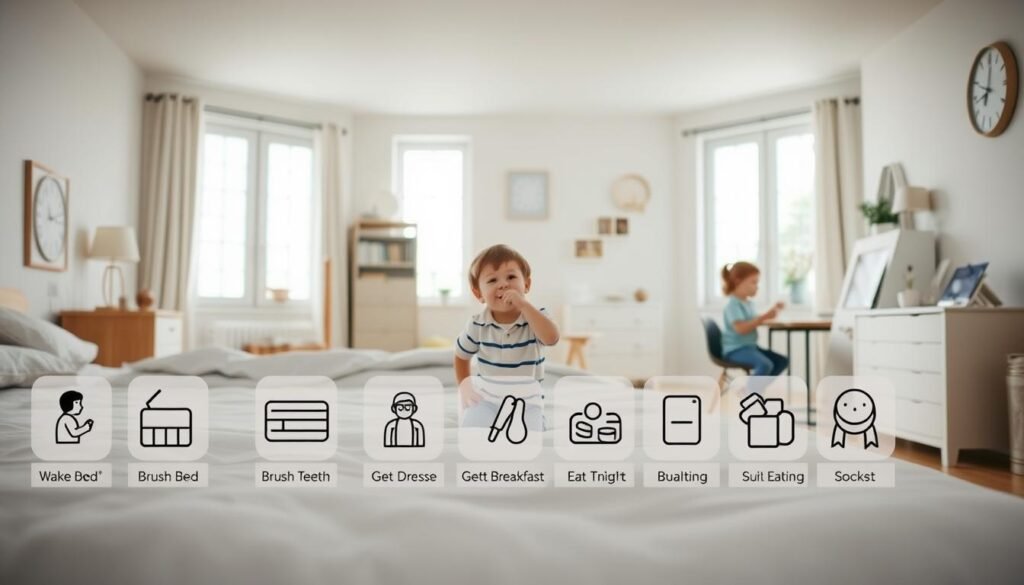
Sensory considerations are also key. The environment must match each person’s needs. Things like light, sound, and temperature affect how well someone can function. Getting ready the night before helps avoid surprises and makes mornings smoother.
Skill-building opportunities make routines more than just tasks. They help autistic individuals learn important skills like self-care and communication. Each part of an autism daily schedule can help with different skills.
Flexibility within structure is the last but not least part. Good routines can adapt to each person’s needs while keeping some things the same. This balance keeps routines helpful without being too strict.
| Component | Primary Function | Implementation Strategy | Expected Outcome |
|---|---|---|---|
| Predictability | Reduces anxiety and cognitive load | Consistent timing and sequencing | Increased confidence and security |
| Visual Supports | Scaffolds executive functioning | Schedules and environmental cues | Enhanced independence and focus |
| Sensory Considerations | Optimizes environmental conditions | Calibrated lighting, sound, texture | Improved sensory regulation |
| Skill-Building | Develops functional abilities | Embedded learning opportunities | Increased self-care competence |
| Flexible Structure | Balances consistency with adaptation | Core routines with modification options | Maintained benefits without rigidity |
Step 1: Creating Visual Schedules That Work
Visual schedules help people with autism turn morning plans into real steps. They act as tools that help with planning and doing things on their own. This makes mornings easier and helps them feel more in control.
Creating good visual schedules for autism needs careful thought. It’s about knowing how each person learns and what they can handle. Studies show that good visual aids lower stress and help people do more in the morning.
It’s important to place visual schedules where they’re easy to see and use. They should be part of the morning setup, not something extra that adds stress.
Choosing the Right Visual Format for Your Child
Picking the right visual format is key. It depends on how your child learns and thinks. Photographic schedules work best for those who like real pictures and familiar scenes.
For those who think abstractly, symbolic or pictographic systems are better. Digital formats are great for kids who love tech. They can change things and get instant feedback.
Think about your child’s age when choosing how simple or detailed the pictures should be. Young kids like simple images with not too much going on. Older kids might like more detailed pictures that show what their day will be like.
Building Your Custom Morning Schedule
Start by breaking down the morning into smaller steps. Each step should be clear and easy to follow. This helps your child do things on their own and succeed.
A good asd morning routine chart shows a clear order of things. It also lets your child check off what they’ve done. This helps them feel proud and motivated in the morning.
Get everything ready the night before. This saves time and makes sure everything is where it should be. Organize things well to help your child move smoothly through their morning routine.
Step 2: Designing a Sensory-Friendly Morning Environment
The physical environment greatly affects how autistic individuals start their day. Environmental modifications are key in reducing stress and helping them follow their routines. Studies show that well-designed spaces make morning tasks easier.
Creating a sensory-friendly morning routine starts with assessing and changing the environment. These changes help with different senses at once. The aim is to make spaces that are predictable, comfortable, and support independence.
“Environmental design is not just about comfort—it’s about creating the conditions where learning and growth can naturally occur.”
Controlling Lighting and Sound
Lighting should change slowly to match our natural day-night cycle. Dimmer switches and natural light help avoid sudden bright changes. Stay away from fluorescent lights, as they can upset many autistic people.
Sound control means removing unexpected sounds and adding favorite ones. White noise machines or soft music can block out sudden noises. Think about how different materials in a room affect sound.
Managing Textures and Temperature
Touch is important, not just in clothes but also in bedding and surfaces. Keeping the room at a steady temperature is vital for comfort. Aim for a room temperature between 68-72 degrees Fahrenheit.
Choosing the right textures is personal. Some like smooth, others prefer rough. Sensory-friendly morning activities are easier when the environment supports, not overloads, the senses.
It’s important to keep checking the environment. This ensures it stays right for the person’s changing needs and growth.
Step 3: Mastering the Wake-Up Process Without Meltdowns
The wake-up phase is key to calm mornings for autistic individuals. It needs careful attention to their brain processing and senses. Waking up without meltdowns is possible with the right approach that respects their needs.
Studies show autistic brains need more time to wake up fully. They need special strategies to move from sleep to being active. These strategies must fit their unique brain rhythms and how they process senses.
Gradual Wake-Up Techniques
Starting with gentle touch or soft fabrics is a good way to wake up. Gradually add more intensity, watching how they react. This helps them feel comfortable.
For some, soft sounds like music or nature sounds work well. Start with quiet sounds and slowly get louder. Consistency in timing and approach helps reduce anxiety.
Light therapy is also helpful. Use dimmer switches or sunrise clocks to mimic dawn. This helps regulate their body clock and provides gentle input.
Creating Predictable Morning Signals
Environmental anchors help autistic individuals know what to expect. These signals are like communication tools that help with planning. Calming morning routines for autism rely on these consistent cues.
Visual signals include specific lighting or color-coded schedules. Auditory signals might be certain music or chimes. The goal is to keep these signals the same everywhere and with everyone.
| Wake-Up Technique | Sensory Input Type | Implementation Strategy | Individual Benefits |
|---|---|---|---|
| Progressive Light | Visual | Gradual brightness increase over 15-30 minutes | Supports natural circadian rhythms |
| Gentle Touch | Tactile | Light pressure starting at extremities | Provides proprioceptive input |
| Soft Sounds | Auditory | Familiar music at increasing volume | Creates predictable auditory environment |
| Aromatherapy | Olfactory | Consistent scents released before wake time | Triggers positive associations |
Step 4: Streamlining Clothing and Dressing Routines
Effective dressing strategies combine sensory awareness with organizational systems to promote independence. The morning clothing selection process can become a source of stress when sensory sensitivities and executive functioning challenges intersect. Implementing targeted clothing and dressing hacks transforms this daily challenge into a manageable routine that supports overall success.
Research shows that systematic approaches to clothing selection and environmental organization significantly reduce morning stress. These strategies form essential components of a comprehensive autism self-care routine that builds independence over time.
Selecting Sensory-Friendly Clothing Options
Fabric texture, seam placement, and garment construction directly impact comfort and compliance during dressing routines. Sensory-friendly clothing choices prioritize soft, breathable materials without irritating tags or raised seams. Cotton blends, bamboo fabrics, and seamless construction options provide optimal comfort for sensitive individuals.
Temperature regulation features become key for maintaining comfort throughout the day. Layering systems allow for easy adjustments as sensory needs change. Adaptive clothing features such as magnetic closures, elastic waistbands, and easy-grip zippers reduce fine motor demands while promoting independence.
Organizing for Independent Dressing
Visual organization systems support executive functioning by reducing decision-making demands and providing clear structure. Color-coded storage solutions and labeled compartments create predictable locations for specific clothing items. Weekly outfit preparation eliminates daily decision fatigue while maintaining routine consistency.
Sequential organization mirrors the natural dressing process, with undergarments positioned before outer clothing. Visual schedules posted near dressing areas provide step-by-step guidance for complex dressing sequences. These environmental modifications scaffold independence while reducing caregiver assistance needs.
| Clothing Feature | Sensory Benefit | Independence Support | Recommended Materials |
|---|---|---|---|
| Seamless Construction | Reduces tactile irritation | Eliminates adjustment needs | Bamboo, modal blends |
| Magnetic Closures | Minimizes fine motor stress | Enables self-dressing | Adaptive clothing lines |
| Elastic Waistbands | Provides comfortable fit | Simplifies dressing process | Cotton-spandex blends |
| Tagless Labels | Prevents neck irritation | Reduces sensory distractions | Heat-transfer printing |
Step 5: Planning Breakfast for Focus and Success
The morning meal is key for focus and success for those with autism. Effective breakfast planning links nutrition to attention, learning, and behavior. Studies show that breakfast boosts cognitive performance, making it a must for autism parent strategies.
Planning meals together with families, nutritionists, and autism experts is smart. This team ensures breakfast meets nutritional needs and sensory preferences.
Choosing Sensory-Appropriate Foods
Choosing the right foods for breakfast is all about understanding what each person likes. Texture, temperature, flavor intensity, and how it looks matter a lot. These factors affect how much someone enjoys their breakfast.
Parents need to see things from their child’s perspective when picking breakfast foods. Some kids like smooth foods like yogurt, while others prefer crunchy cereals. The temperature of the food is also important, with some kids liking it warm or cold.
Using visual aids like picture schedules and choice boards helps kids make their own breakfast choices. These tools help them express their preferences and develop breakfast habits for focus that meet their needs.
Establishing Consistent Meal Patterns
Having a regular breakfast time helps kids feel more secure and focused. Regular breakfast timing helps kids follow a daily routine. This routine reduces anxiety and improves their day.
Keeping track of what works best for breakfast is important. Families should monitor which foods and times help with focus and behavior in the morning.
Step 6: Implementing Smooth Transition Strategies
Effective autism transition strategies make morning changes easier and less stressful. They help autistic individuals smoothly move between activities or places. It’s important to consider each person’s sensory needs and how they like to communicate.
Clear, consistent signals are key to smooth transitions. They help reduce anxiety and improve skills needed for mornings.
Using Visual and Auditory Transition Cues
Using both visual and auditory cues helps everyone, as people learn in different ways. Visual cues like countdown timers and color signals tell us what’s next. They give clear information about time and what’s coming.
Auditory signals, like music or chimes, also help signal changes. The goal is to keep these cues consistent every time.
Building Time Awareness Skills
Learning about time is important for autistic individuals. It helps them feel more independent and less anxious during transitions. Teaching them to read clocks and understand time helps a lot.
Using visual timers and practicing routines are good ways to learn about time. These autism transition techniques help them get ready for changes on their own.
Starting with simple transitions and gradually getting harder helps them learn. They get the support they need as they grow.
Creating Morning Social Stories for Routine Success
Social stories are powerful tools that make morning routines clear for autistic individuals. They turn complex routines into simple steps. This helps with autism executive functioning by making things predictable.
Studies show that good social stories lower anxiety and boost independence. They help people get ready for the day by practicing what to do. This way, they learn how to handle social situations better.
Writing Personalized Morning Stories
Creating morning routine social stories needs careful thought about what each person can read and like. You should use three types of sentences: descriptive, perspective, and directive. This helps explain situations, feelings, and what to do.
Stories should match the morning challenges each person faces. Think about their likes, how they communicate, and their age. Use easy words and positive messages to help them feel confident and understand better.
Using Stories to Prepare for Changes
Social stories are great for getting ready for changes or surprises. Make extra stories for things like schedule changes or new places. These preparation stories help build flexible thinking.
It’s important to practice these stories often before changes happen. Use pictures and words together to help people understand better. This way, they can handle changes better and improve their autism executive functioning.
Supporting Executive Functioning in Morning Routines
Helping with autism executive functioning in the morning is key. It involves planning, organizing, and starting tasks. These skills are the base for living independently.
When we support these skills, autistic people can handle morning routines better. They feel more confident and successful.
Supporting executive functioning means looking at what each person can do well and what they need help with. Changing the environment and teaching in a systematic way can really help. Tools like planning templates and checklists help develop skills.
Breaking Down Complex Morning Tasks
Breaking down morning tasks into smaller parts is important. We look at each step, like getting dressed or eating breakfast. This helps us see what skills are needed.
First, we watch how the person does these tasks. Then, we break them down into simpler steps. This makes it easier to finish tasks and helps follow a daily routine.
Building Planning and Memory Skills
Teaching planning and memory skills is essential. Tools like visual schedules and reminders help. They support the person as they learn to plan on their own.
Memory skills are about remembering tasks and important details. Self-monitoring helps track progress. This way, we meet both immediate needs and long-term goals.
Building Self-Care Skills and Independence
Learning self-care is key for people with autism to become more independent. It’s very important in morning routines. An effective autism self-care routine boosts confidence and teaches important life skills.
Teaching self-care needs a method that fits each person’s learning style and sensory needs. Using visual aids and step-by-step guides helps autistic individuals learn complex tasks. This makes hard tasks easier in any special needs morning routine.
Teaching Hygiene Task Sequences
Breaking down hygiene tasks into simple steps helps a lot. Each step is taught clearly, allowing for gradual learning. Visual instruction cards help and make people feel more independent and less anxious.
Using self-monitoring systems helps track progress and builds pride in accomplishments. These tools make sure everyone knows what they’ve done. This method is great because autistic individuals often need clear teaching.
| Hygiene Task | Key Steps | Visual Support Type | Independence Level |
|---|---|---|---|
| Tooth Brushing | Apply paste, brush technique, rinse, clean up | Step-by-step cards | Full independence |
| Hair Care | Wet hair, apply product, brush/comb, style | Mirror prompts | Minimal assistance |
| Face Washing | Wet face, apply cleanser, scrub, rinse, dry | Sequence chart | Full independence |
| Hand Washing | Water temperature, soap application, scrubbing, drying | Timer and checklist | Full independence |
Developing Self-Advocacy Abilities
Self-advocacy skills let people express their needs and preferences. They learn to ask for help when needed. Practice opportunities in morning routines help develop these skills.
Teaching people to express their preferences builds confidence. It also respects their choices. Learning problem-solving strategies helps them deal with unexpected situations.
Troubleshooting Common Morning Routine Struggles
Morning routine problems are common, but we can solve them. Autism morning struggles often come from sudden changes or too much sensory input. Studies show that solving problems ahead of time helps a lot.
To fix morning issues, we need to collect data first. We must understand what triggers problems and how the environment affects them. This way, we can create specific solutions that really work.
Managing Unexpected Schedule Changes
Changes in the schedule can upset people with autism who like things the same. Flexibility training helps by slowly introducing small changes. This makes it easier to handle bigger changes later.
Visual aids are key when the schedule changes. They show what’s different and what stays the same. Calming morning routines for autism should have backup plans for when things don’t go as expected.
Addressing Sensory Overload Situations
Sensory overload is a big problem in the morning. Things like loud noises or bright lights can cause big issues. Spotting these problems early and making quick changes helps a lot.
We need easy ways to calm down during these moments. Things like sensory tools, quiet areas, and ways to communicate help. Planning for these situations ahead of time makes mornings smoother.
Adapting Routines for Different Ages and Abilities
The need for structured morning routines for autistic children changes as they grow. It’s important to adjust routines based on their development, not just their age. This ensures they get the right support at the right time.
Changing routines needs regular checks on how a child is doing and what they need. Successful implementation means getting ready for new challenges while keeping key support elements the same.
Early Childhood Foundations
Young kids need lots of help and fun ways to learn. Autism parent strategies for them include using play and sensory tools to help them get ready for the day.
Key parts of early routines include:
- Visual supports with simple, concrete images
- Shortened routine sequences with frequent breaks
- Sensory preparation activities before transitions
- Immediate reinforcement for participation attempts
These steps help kids learn and grow, setting the stage for more independence and skills later on.
Adolescent and Adult Adaptations
For teens and adults, routines get more complex. They focus on skills like working, living on their own, and speaking up for themselves. Age-appropriate goals help them prepare for life’s challenges.
Advanced routines include:
- Technology-based scheduling and reminder systems
- Multi-step task sequences with built-in flexibility
- Self-monitoring and reflection components
- Integration of personal interests and preferences
When kids move from one stage to another, it’s important to plan carefully. Structured morning routines for autistic children should grow with them, keeping up with their needs and abilities.
Support Strategies for Parents and Caregivers
Creating lasting morning routines for autistic individuals needs support for parents and caregivers. Autism parent strategies show that routines work best with a well-coordinated support team. Without the right support, even the best routines can cause stress.
Good caregiver support starts with understanding family needs and resources. Getting professional help offers ongoing advice and support. Training programs should focus on both skills and emotional strength to avoid burnout.
Maintaining Consistency Across All Caregivers
Keeping routines the same for all caregivers is key. Everyone should follow the same steps and communication style. This makes mornings predictable, no matter who is there.
Having clear communication helps everyone stay on the same page. Keeping a routine guide and meeting regularly helps make adjustments and solve problems.
Managing Your Own Morning Stress
Stress in caregivers can hurt morning routines and family happiness. Self-care strategies for parents include having personal time and stress-reduction methods. Knowing your limits helps avoid overwhelming situations.
Having a support network through groups and resources is vital. Caregiver well-being is key to success and teaches autistic individuals self-regulation.
| Support Strategy | Implementation Method | Expected Outcome | Maintenance Frequency |
|---|---|---|---|
| Caregiver Training | Structured workshops and hands-on practice | Consistent routine execution | Monthly refreshers |
| Communication Protocols | Written guides and regular meetings | Coordinated approach across settings | Weekly check-ins |
| Stress Management | Self-care planning and support groups | Reduced caregiver burnout | Daily practice |
| Professional Consultation | Regular expert guidance sessions | Ongoing strategy refinement | Bi-weekly sessions |
Conclusion
Creating a good autism morning routine takes patience and planning. This guide shows how small changes can make mornings better. It turns tough mornings into successful days.
Every autism daily schedule should fit the family and child’s needs. Start with small steps that match your child’s challenges. Some families find visual aids helpful, while others prefer sensory changes. The goal is to make changes slowly.
Studies show that a good morning routine helps all day. Kids who have a predictable morning do better in school and with friends. They also feel more in control.
It’s important for all caregivers to follow the same routine. Regular checks help families adjust as kids grow and change. The aim is to help kids become more independent and self-assured.
These morning routines are key to helping kids grow and thrive. They make life better for autistic kids and their families. By investing in a structured morning, families see less stress and more confidence. This improves how kids do in school and with friends.
FAQ
How long does it typically take to establish a successful morning routine for an autistic child?
The time it takes to set up a morning routine for an autistic child varies. Most families see improvements in 2-4 weeks. It takes 6-12 weeks to master the routine fully. The key factors include the child’s challenges, consistency, and developmental level.
What should I do if my autistic child has a meltdown during the morning routine?
If your child has a meltdown, focus on safety and emotional calm. Use sensory strategies and reduce distractions. After it’s over, look at what caused it to avoid it next time.
How can I make mornings less stressful when we’re running late?
Create a backup plan for mornings. Use visual schedules for quick mornings. Prepare things the night before and focus on what’s most important. Adding buffer time and teaching flexibility can help.
What type of visual schedule works best for different ages and developmental levels?
Choose a visual schedule based on how your child learns, not just their age. Some like pictures, while others prefer symbols or apps. Young kids like simple images, while teens and adults might like text or apps.
How do I handle resistance to wearing certain clothing textures or styles?
Start by figuring out what your child doesn’t like about clothes. Then, find other clothes that feel better but look good. Let them choose and use gradual exposure to help them get used to new clothes.
What breakfast options work well for autistic children with limited food preferences?
Offer foods they like but also try to introduce new things slowly. Yogurt smoothies, certain cereals, or familiar foods in new ways can be good. Work with a nutritionist to make sure they get enough nutrients.
How can I help my autistic child develop better time awareness for morning routines?
Use visual timers and countdowns to help them understand time. Explain time in simple ways, like “after breakfast, before getting dressed.” Practice with time-based schedules and activities.
Should morning routines be exactly the same every day, or is some flexibility okay?
Mix predictability with flexibility in morning routines. Keep the main parts the same but allow for small changes. Teach them to adapt to changes with social stories and practice.
How do I maintain consistency when multiple caregivers are involved in morning routines?
Write down clear rules for everyone to follow. Train all caregivers and use visual reminders. Hold meetings to keep everyone on the same page and document what works.
What should I do if my autistic teenager resists morning routine supports they used as a child?
Work with your teen to update supports to fit their age and needs. Use apps and let them help plan the routine. Respect their wish for independence while keeping necessary supports.
How can I tell if sensory issues are affecting my child’s morning routine performance?
Look for signs like covering ears or avoiding certain textures. Increased irritability or skill regression can also indicate sensory issues. Keep a record of when these happen and consider occupational therapy.
What role do social stories play in morning routine success?
Social stories help reduce anxiety and teach how to handle mornings. They explain what to expect and how to solve problems. Make them interesting and relevant to your child’s life.
How do I adapt morning routines for different seasons or schedule changes?
Start changing routines slowly and use social stories and visual aids. Update schedules for different seasons and adjust for weather. Keep the core of the routine the same but make small changes.
When should I seek professional help for morning routine challenges?
Get help if morning routines are hard and don’t get better, if safety is a concern, or if it’s stressing the family. Occupational therapists and behavior analysts can help with specific challenges.
How can I reduce my own stress as a caregiver during challenging mornings?
Take care of yourself with enough sleep and planning ahead. Set realistic goals and build a support network. Remember, it’s a process that takes time and patience.