

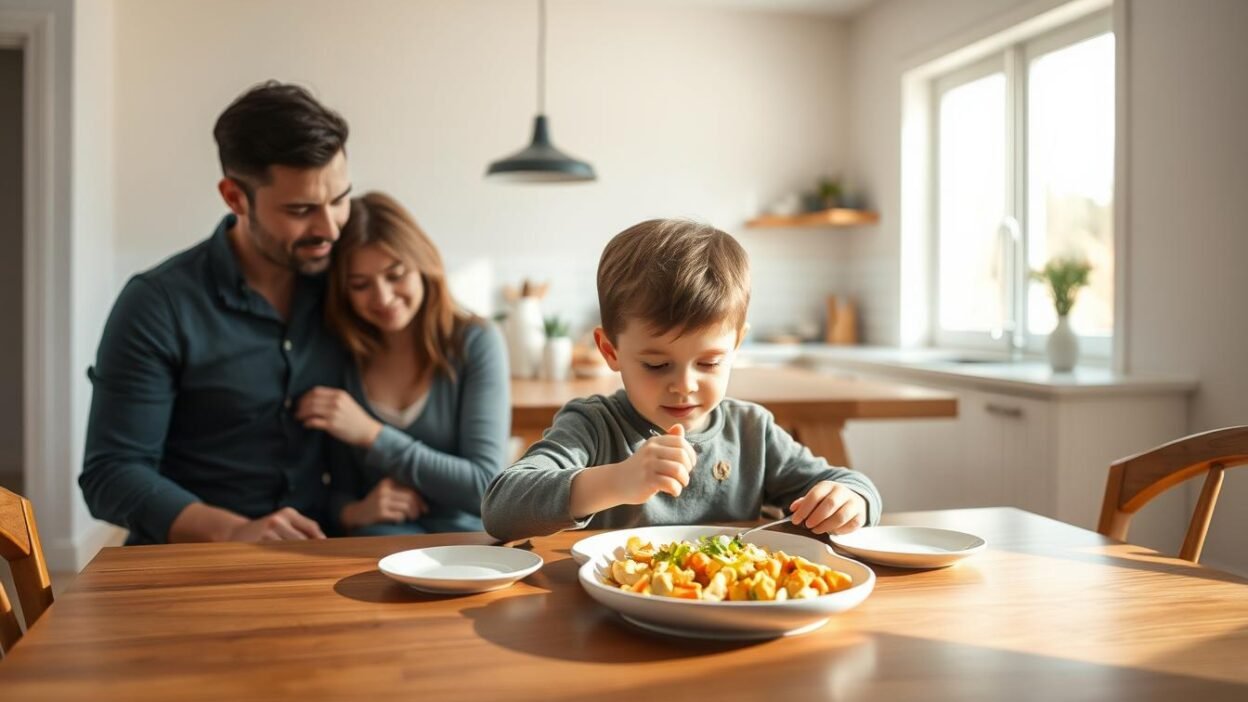
The dinner table can turn into a battlefield when your child refuses food. You see other families enjoying meals peacefully, while your own are filled with struggles. These challenges are not about being stubborn or bad parenting. They are complex issues that mix sensory processing, communication, and developmental differences.
Many parents feel alone in their mealtime battles, wondering if they’re the only ones dealing with food refusals and meltdowns. The truth is, up to 89% of children with autism face feeding challenges. These issues are more than just picky eating and need special approaches that respect each child’s unique needs.
Teaching functional skills for autism starts with seeing mealtimes as more than just eating. They’re chances for socializing, exploring senses, and growing independent. Emily Jellinek-Russo, PhD, suggests using structured interventions that cover these areas.
Creating peaceful mealtimes takes patience, creativity, and proven strategies. Resources like the Pediatric Eating and Swallowing video series from Alberta Health Services offer helpful advice. These tools can turn tough meals into chances for autism life skills training, leading to independence and family peace.
Parenting a child with unique developmental or learning needs can feel overwhelming, but informed guidance can make the journey more empowering. The Parenting & Family section provides practical strategies for communication, behavioural support, emotional connection, and building a calm home environment. Parents can explore related insights in the Special Needs Awareness category to better identify early signs and understand underlying needs. For clarity about developmental progress, the Developmental Milestones resources offer age-specific benchmarks that help caregivers set realistic expectations. When learning challenges arise, the Learning Disabilities category provides targeted support strategies for school and homework. For emotional wellbeing—both for children and parents—PsyForU.com offers mental-health tools rooted in psychology. Those wanting to build stronger routines, reduce stress, or cultivate intentional family habits can enhance their journey with guidance from IntentMerchant.com. These connected platforms ensure that parents never feel alone and always have trusted support at every step.
Key Takeaways
- Feeding difficulties affect up to 89% of children on the autism spectrum and require specialized approaches beyond typical picky eating strategies
- Mealtime challenges involve complex interactions between sensory processing, communication needs, and developmental differences
- Successful mealtime strategies integrate nutrition goals with opportunities for social skill development and independence building
- Evidence-based resources from professionals like Emily Jellinek-Russo provide structured frameworks for addressing feeding challenges
- The Pediatric Eating and Swallowing video series offers practical tools for caregivers of children aged 6 months to 8 years
- Transforming mealtimes requires patience and recognition that each child’s sensory profile and developmental needs are unique
- Structured interventions can turn challenging meals into valuable opportunities for developing lifelong functional skills
Understanding Mealtime Challenges for Children with Autism
Mealtimes can be tough for kids with autism. It’s not just about what they like to eat. It’s also about how they feel and interact with food. Knowing this helps parents and caregivers find ways to help their kids eat better and grow.
Common Feeding Difficulties and Sensory Issues
Kids with autism might be very sensitive to food. This can make eating hard for them. They might not like certain textures, smells, or even the look of food.
- Texture aversions to foods that feel mushy, crunchy, or mixed
- Strong reactions to food temperatures
- Overwhelming responses to certain smells or visual presentations
- Difficulty tolerating foods touching each other on the plate
- Oral motor challenges affecting chewing and swallowing

The Connection Between Autism and Picky Eating
About 70% of kids with autism are picky eaters. This is because of how their brains work. They might only like certain foods or how they’re prepared. They might also get anxious about trying new things, including food.
Why Mealtime Structure Matters for Autism Spectrum
Having a set routine at mealtime is key for kids with autism. It makes them feel safe and in control. It helps them know when to eat and how to behave. It also makes mealtime less overwhelming.
Creating Consistent Mealtime Routines
Building autism daily living skills begins with setting up regular meal times. Kids with autism feel secure when they know what’s next. This helps them eat better and feel more independent.
It’s important to keep routines the same but also be ready to change if needed. This balance helps everyone.
Establishing Regular Eating Schedules
Having a set meal schedule is key for adaptive skills for autism. Eating at the same times every day helps kids feel hungry at the right times. It also makes them feel more in control.
- Breakfast between 7-8 AM
- Mid-morning snack around 10 AM
- Lunch at noon
- Afternoon snack at 3 PM
- Dinner between 5-6 PM
- Optional bedtime snack
Using Visual Schedules and Timers
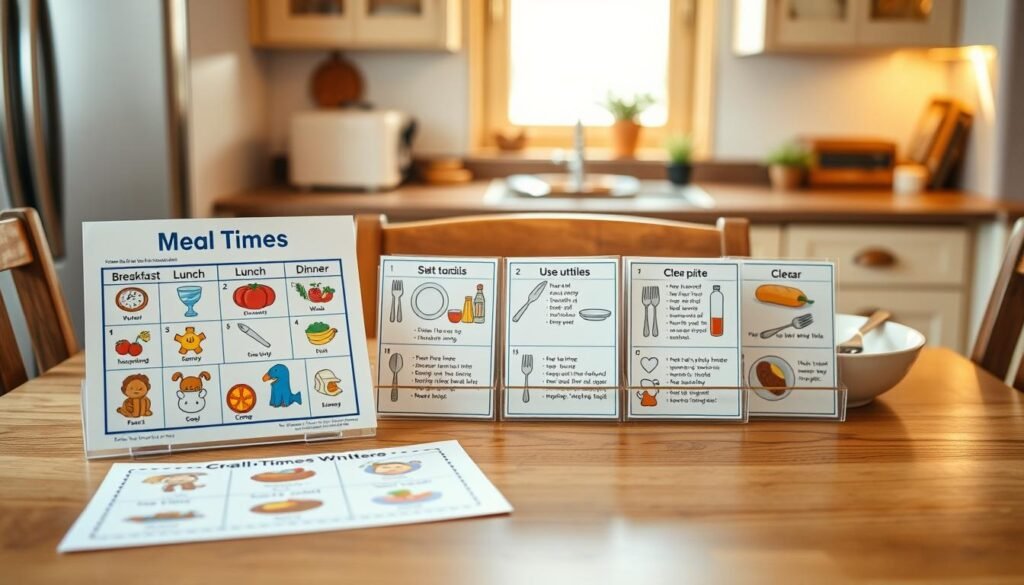
Visual aids make time easier for kids to understand. Picture cards show what happens next. Timers help them know when to stop.
These tools are great for learning autism household skills. They teach kids about time and following routines.
Maintaining Predictable Meal Patterns
Being consistent is not just about when you eat. It’s also about where and how you eat. Using the same chair and eating the same foods helps kids feel safe.
Adding new foods slowly helps kids get used to change. This way, they can enjoy new foods without feeling overwhelmed.
Setting Up the Ideal Mealtime Environment
Creating a structured eating space is key for kids with autism. The right environment makes them feel comfortable and eager to eat. Parents can make mealtime better by setting up the space carefully.
Changes in the environment help manage messiness during meals. Using consistent seating and timing makes routines predictable. This helps kids feel secure and know what to expect.
Getting ready for meals can make things easier for everyone. Use plastic sheets or mats to catch spills. Have old clothes or aprons for messy times. Keep cleaning supplies nearby but don’t interrupt meals. This helps with autism hygiene management without ruining the meal.
| Environmental Setup | Purpose | Materials Needed |
|---|---|---|
| Designated Seating Area | Creates predictable routine | Same chair, cushion, or booster seat |
| Floor Protection | Easy cleanup after meals | Plastic sheets, washable mats |
| Clothing Protection | Reduces laundry stress | Aprons, bibs, old shirts |
| Cleanup Station | Quick post-meal cleaning | Wet wipes, paper towels, spray bottle |
These strategies help kids with autism learn about personal hygiene. A well-prepared space lets them explore food and practice eating without constant help. This makes mealtime a positive experience.
Developing Autism Daily Living Skills Through Mealtimes
Mealtimes are more than just eating. They are chances to learn important life skills in a real way. Kids can grow more independent while doing things they do every day.
Building Independence with Self-Feeding
Learning to feed yourself is a big step towards being independent. It starts with small steps that help build confidence. First, kids learn to sit at the table and handle food on their plate.
Then, they practice using utensils, bringing food to their mouth, and eating whole meals by themselves. It’s all about taking it one step at a time.
Start with simple tasks like scooping food during snacks. This makes it easier to handle full meals later. Always celebrate their efforts to be independent.
Teaching Table Manners and Social Skills
Mealtimes are perfect for learning social skills. Kids learn to wait, pass dishes, and talk the right way. These skills are useful in school, restaurants, and with friends.
Use visual aids like cards to remind them of good manners. This helps them remember without needing to be told all the time.
Incorporating Functional Skills Training During Meals
Meals are full of chances to learn. Kids work on fine motor skills, patience, and talking. These skills grow with regular practice in a supportive place.
Strategies for Dealing with Picky Eating
Managing selective eating patterns needs patience and understanding. Kids with autism face food challenges differently. Creating positive food experiences helps with autism activities of daily living and lowers mealtime stress for everyone.
Gradual Food Introduction Techniques
Introducing new foods works best in small steps. Start by placing new items on the table without expecting anything. Let kids watch others enjoy these foods naturally. This way, they build curiosity without feeling forced.
- Place new foods alongside familiar favorites
- Allow touching and smelling before tasting
- Celebrate small victories like tolerating foods on the plate
- Keep portions tiny to reduce overwhelm
Making Food Exploration Fun and Stress-Free
Turn food discovery into fun activities. Kids learn best when they’re relaxed and engaged. Making food a positive part of autism household management routines is key.
| Activity Type | Example | Benefit |
|---|---|---|
| Sensory Play | Sorting colorful vegetables | Reduces food anxiety |
| Art Projects | Vegetable stamping | Builds familiarity |
| Story Time | Books about healthy eating | Creates positive associations |
| Garden Activities | Growing cherry tomatoes | Increases food interest |
Working with Food Preferences and Sensory Needs
Respect existing preferences while gently expanding options. Many kids prefer certain textures, temperatures, or colors. Understanding these patterns helps families develop effective strategies for dealing with picky eating that honor sensory needs.
Using Consistent Seating and Timing Approaches
Creating predictable mealtime frameworks through using consistent seating and timing helps kids on the autism spectrum learn to eat better. This structured method is key in autism life skills training. It helps reduce anxiety and makes dining successful.
Having set seating is important for daily routines for autism spectrum kids. Great Ormond Street Hospital suggests keeping the same seats for everyone. Even when adults aren’t eating, they should sit nearby. This makes kids feel secure and know what to expect.
Being consistent with meal times is also vital. Having three main meals and two to three snacks a day helps kids feel secure. It gives them chances to practice eating skills without feeling rushed.
Alberta Health Services offers training on these methods. Their team made video modules for mealtime strategies. The Introduction and Connections parts focus on the benefits of using consistent seating and timing.
These routines make meal times better for kids. They learn to associate certain times and places with eating. This helps them feel more secure and supports their daily routines.
Reducing Stress at Family Meals
Family meals can become enjoyable when parents focus on positive moments, not just nutrition. Research from Great Ormond Street Hospital shows that changing how we approach meals helps kids with autism. Small changes can make a big difference in how meals feel.
Creating Calm and Positive Dining Experiences
Starting with specific praise for good behavior is key. Say “Great sitting!” or “I love how you’re holding your spoon.” when a child acts well. This encourages them to keep up the good work.
To set the stage for calm meals, consider:
- Dimming bright lights if needed
- Playing soft background music
- Keeping decorations simple
- Using familiar plates and utensils
Managing Expectations and Avoiding Food Battles
Parents should not expect perfect meals. Autism skills grow slowly. Ignore behaviors like spitting out food or playing with it. This reduces the behavior over time.
Involving Siblings and Family Members
Brothers and sisters can be great role models at meals. Praise them for trying new foods or using napkins. This encourages kids with autism to do the same. Family members can help by enjoying the meal and keeping the conversation going.
Practical Tools for Mealtime Success
Creating positive mealtime experiences for children with autism needs the right tools and preparation. Using special equipment and making environmental changes helps. It develops adaptive skills for autism and makes meals less stressful. The right approach turns tough meal times into chances for growth and learning.
Adaptive Equipment and Utensils
Special eating tools help kids be independent and feel confident at meals. Weighted utensils give sensory feedback, helping kids keep a good grip. Non-slip bowls and plates with raised edges stop spills and encourage self-feeding.
Curved spoons and angled forks fit different grip patterns and motor planning challenges.
| Equipment Type | Benefits | Best For |
|---|---|---|
| Weighted Utensils | Improved grip control | Children with tremors |
| Non-slip Plates | Prevents sliding | Limited motor control |
| Adaptive Cups | Reduces spills | Drinking difficulties |
Visual Supports and Communication Aids
Picture cards and visual schedules help kids follow mealtime routines. These tools support functional skills for autism by breaking down tasks into simple steps. First-then boards show meal sequences clearly. Choice boards let non-verbal kids show food preferences.
Preparing for Mess and Sensory Exploration
Getting ready for meals supports autism hygiene management. Use plastic floor coverings under eating areas for easy clean-up. Keep wet wipes and paper towels handy. Use aprons or “messy clothes” to lessen anxiety about spills.
Setting up these supports ahead of time lets families enjoy meals without worrying about clean-up.
Building Positive Mealtime Behaviors
Learning to enjoy meals is a slow but rewarding journey for kids with autism. It helps them grow in autism daily living skills with patience and careful steps. Every child moves at their own speed, gaining confidence and independence at mealtime.
The journey starts with small, easy steps. Kids first learn to accept food on their plates without getting upset. This basic skill is a big step towards exploring new foods safely. Parents and caregivers celebrate these small wins, seeing them as big steps towards autism self-sufficiency.
As kids get more comfortable, they start using utensils to try different foods. They learn to handle various textures and shapes. Each small success is celebrated:
- Touching food with utensils
- Bringing food near the mouth
- Placing food inside the mouth
- Tasting without swallowing
- Taking single bites
- Chewing and swallowing pieces
- Consuming multiple bites independently
Speech and language therapists say it’s important to celebrate each small win. This helps kids feel less anxious and builds important autism activities of daily living. When kids feel supported and recognized, they start to enjoy meals more.
Success comes from sticking to routines that respect each child’s pace. Families see amazing changes when they focus on progress, not perfection. This creates a space where kids naturally learn to eat well, leading to independence for life.
Incorporating Play and Learning Into Meals
Turning mealtimes into fun learning experiences helps kids feel good about food. It also teaches them important autism life skills training. By playing with food, kids get used to it without feeling forced to eat.
This way, they learn new skills in a fun way. It helps them become more independent over time.
Food-Based Games and Activities
Fun food activities use all our senses and teach important lessons. Kids can sort fruits by color, count crackers, or make patterns with food shapes. These games help them learn autism household skills in a fun way.
Some easy games include:
- Building towers with sandwich pieces
- Making faces on plates with vegetables
- Creating rainbow arrangements with colorful foods
- Playing “grocery store” with real food items
Cooking and Meal Preparation Skills
Getting involved in the kitchen teaches kids real autism functional skills. Start with simple tasks like washing veggies, stirring, or measuring. Each task makes kids feel proud and confident.
As they get better, they can do more. This could be spreading peanut butter or making simple dishes with help.
Role-Playing with Pretend Food and Tea Parties
Imaginative play helps kids feel less anxious about food. It also helps them practice social skills. Setting up a restaurant where kids take orders and serve family members is a great way to practice.
Tea parties with dolls or stuffed animals are also great. They help kids learn table manners and how to talk in a relaxed setting. These activities help kids feel more comfortable around food and improve their social skills.
Supporting Autism Self-Care Routines During Meals
Mealtimes are great for teaching kids important life skills. They can learn while eating, becoming more independent. This is done through activities that feel natural and useful.
Teaching kids about personal hygiene during meals helps them connect cleanliness to daily life. They learn to wash hands before eating, wipe their faces after each bite, and clean up spills right away. These actions become habits that help them in other parts of their day.
Managing autism hygiene means breaking tasks into simple steps. Parents and caregivers can use visual guides to show the steps for hygiene during meals. This method helps reduce anxiety and builds confidence in self-care.
| Self-Care Skill | Mealtime Practice | Visual Support |
|---|---|---|
| Hand washing | Before and after eating | Picture cards showing soap, water, towel |
| Face wiping | Using napkin independently | Mirror placement for self-checking |
| Clothing protection | Putting on/removing bib or apron | Step-by-step dressing sequence |
| Table cleaning | Wiping spills immediately | Color-coded cleaning supplies |
By adding these skills to mealtime, kids see self-care as part of eating. Patience and consistency are key as they learn at their own pace.
Transitioning to Independent Living with Autism
Learning to live independently starts with simple tasks, like planning meals. These early steps help build self-reliance. They also lay the groundwork for managing life’s many tasks, essential for adulthood.
Teaching Meal Planning and Preparation
Begin with small tasks during grocery shopping. Let them pick out fruits and veggies, compare prices, and check expiration dates. This helps develop decision-making skills, key for managing a household.
Break down meal prep into easy steps. Start with simple foods like sandwiches, then move to hot dishes. Use pictures to guide them through each step. This helps build confidence and reinforces learning.
Developing Kitchen Safety Skills
Teaching kitchen safety is critical for cooking independence. Start with basic tools like plastic knives for spreading. Gradually introduce sharper tools as they become more confident.
| Safety Skill | Teaching Method | Practice Activity |
|---|---|---|
| Hot Surface Awareness | Visual markers on stove | Touch test with cool surfaces first |
| Sharp Tool Handling | Hand-over-hand guidance | Cut soft foods with butter knife |
| Appliance Operation | Step-by-step picture guides | Use microwave for simple tasks |
Building Long-Term Eating Independence
Establish routines for meal planning and grocery shopping. This predictability helps manage household tasks and reduces anxiety. It’s a key part of independent living.
Involve them in family meal planning. Let them suggest dishes and help plan menus. This builds communication skills and helps them feel more in control of their diet.
Conclusion
Creating a good mealtime for kids with autism needs careful thought. It’s about food, feelings, social skills, and growing up. Great Ormond Street Hospital and Alberta Health Services have tips to make eating better. They help parents and caregivers make mealtime positive.
Emily Jellinek-Russo, PhD, found that structured meals help kids with autism a lot. Using pictures, routines, and play makes learning food skills easier. Kids get better at trying new foods and helping in the kitchen. This builds their confidence and independence.
Planning for kids to be independent is key. These strategies help them learn to plan meals, stay safe in the kitchen, and take care of themselves. Parents see less stress and more peace at mealtime. It’s a big step in teaching life skills.
Mastering mealtime is just the start. It helps kids with autism in many areas of life. Each good mealtime moment helps them learn more for other daily tasks. With patience and consistency, kids get better at eating, socializing, and doing things on their own. Families that use these tips help their kids grow strong and capable.
FAQ
What are the most effective autism practical skills development strategies for mealtimes?
Effective strategies include having regular meals and snacks, using the same seating, and learning skills step by step. Emily Jellinek-Russo, PhD, from Nationwide Children’s Hospital, says to link feeding programs with other developmental goals. Great Ormond Street Hospital suggests starting with small steps, like tolerating food on plates, and keeping environments calm for learning.
How can parents address autism hygiene management during messy mealtimes?
Great Ormond Street Hospital advises preparing by placing plastic sheets under eating areas and using old clothes for meals. It’s important to clean up after meals to keep the focus on enjoying food. This method teaches self-care and reduces anxiety about being clean.
What autism activities of daily living can be developed through mealtime routines?
Mealtimes help develop skills like self-feeding, using utensils, and socializing. Great Ormond Street Hospital says to start with simple steps, like sitting at a table, and gradually move to eating alone. Helping with meal prep and grocery shopping also builds important skills for living on your own.
How should families approach autism household skills training during meal preparation?
Families should involve kids in cooking, shopping, and organizing food. Great Ormond Street Hospital suggests using play to learn about food, like cooking and having tea parties. This helps kids feel comfortable with food and develops useful skills.
What autism personal hygiene skills can be reinforced during mealtimes?
Mealtimes naturally teach hand washing, using napkins, and managing spills. Great Ormond Street Hospital uses routines and positive feedback to teach these skills. This helps kids develop good hygiene habits that are important for health and social acceptance.
How can parents support autism self-sufficiency through structured meal schedules?
Parents can support self-sufficiency by keeping to a regular meal schedule. Using visual schedules and timers helps kids get ready for meals on their own. Alberta Health Services offers support for setting up these routines, which are key for managing time and planning as an adult.
What adaptive skills for autism should be prioritized during family meals?
Important skills include trying new foods, using utensils, and communicating needs. Great Ormond Street Hospital advises focusing on positive reinforcement and avoiding stress about food. These skills are important for socializing, managing emotions, and communicating, all essential for fitting into the community.
How do autism life skills training and mealtime interventions connect to long-term independence?
Mealtime interventions lay the groundwork for managing life. They help kids move from needing supervision to managing meals on their own. Emily Jellinek-Russo, PhD, says feeding programs are part of broader developmental goals. Early training in structured environments leads to confident independence in adulthood.