


“The most important thing in communication is hearing what isn’t said,” said Peter Drucker, a famous management consultant. This idea is key to understanding the challenges of joint attention in autism. It shows how important silent connections between parents and children are for learning and growing socially.
Joint attention means a child can share experiences with others by looking, pointing, and showing. This skill starts to show up around 9 to 12 months old. It helps kids learn language and bond with others as they explore the world together.
For kids with autism, learning joint attention is hard. It’s not just about asking for things. It’s about sharing moments for the joy of being together. For example, a child might point at an airplane because they want to share the excitement with you.
Studies show that trouble with shared attention is an early sign of autism. This trouble makes it hard for kids to learn language and social skills like others do easily. Helping kids with autism develop joint attention is key to building stronger connections with their world.
Parenting a child with unique developmental or learning needs can feel overwhelming, but informed guidance can make the journey more empowering. The Parenting & Family section provides practical strategies for communication, behavioural support, emotional connection, and building a calm home environment. Parents can explore related insights in the Special Needs Awareness category to better identify early signs and understand underlying needs. For clarity about developmental progress, the Developmental Milestones resources offer age-specific benchmarks that help caregivers set realistic expectations. When learning challenges arise, the Learning Disabilities category provides targeted support strategies for school and homework. For emotional wellbeing—both for children and parents—PsyForU.com offers mental-health tools rooted in psychology. Those wanting to build stronger routines, reduce stress, or cultivate intentional family habits can enhance their journey with guidance from IntentMerchant.com. These connected platforms ensure that parents never feel alone and always have trusted support at every step.
Key Takeaways
- Joint attention involves sharing experiences about objects and events through coordinated looking and gestures
- This skill typically emerges between 9-12 months and forms the foundation for language development
- Children with autism spectrum disorder show significant challenges in developing shared attention skills
- Joint attention differs from requesting as it focuses on social sharing instead of getting objects
- Early intervention targeting these skills can improve communication and social outcomes
- Deficits in joint attention often serve as one of the earliest indicators of autism
Understanding Joint Attention in Child Development
Joint attention is a key skill in early childhood. It happens when kids and adults focus on the same thing together. This skill starts around 9-12 months old in babies.
This skill is important for learning language, social skills, and bonding with others.
What is Joint Engagement?
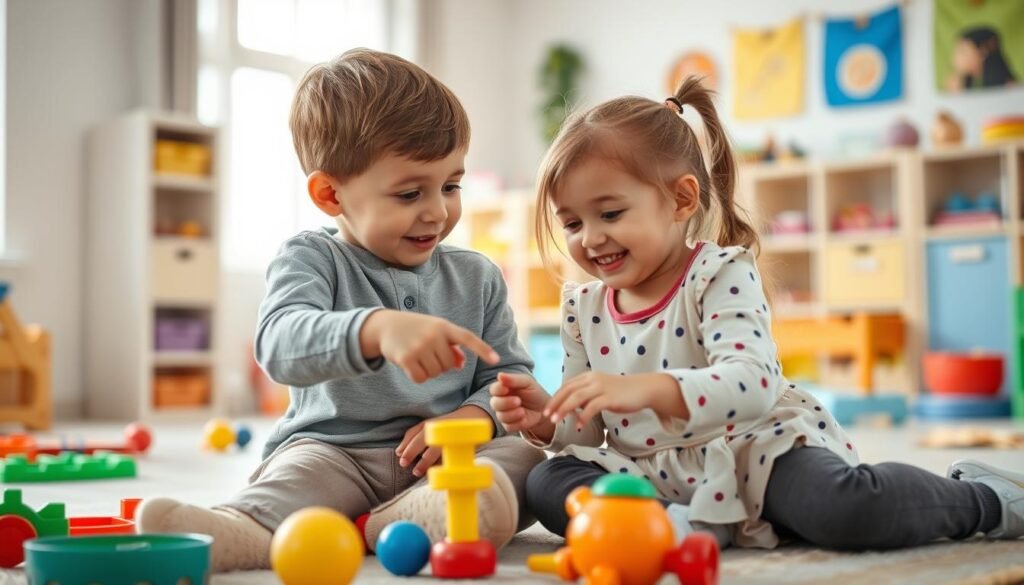
Research on autism shows joint engagement is about two people focusing on something together. Imagine a toddler pointing at an airplane and looking at their parent. This shows they want to share the experience.
Strong joint engagement skills mean kids:
- Follow an adult’s pointing or gaze
- Show toys or interesting objects to others
- Check back with caregivers during play
- Share emotional reactions about experiences
The Difference Between Joint Attention and Requesting
Knowing the difference between joint attention and requesting is important. Joint attention is about sharing experiences. Requesting is about getting something specific or changing behavior.
| Joint Attention | Requesting |
|---|---|
| Pointing to share interest in a butterfly | Pointing to get a cookie from the shelf |
| Showing a drawing to receive praise | Bringing shoes to go outside |
| Looking between toy and parent while playing | Taking parent’s hand to open a door |
Why Joint Attention is a Foundation Skill
Joint attention is the base for many skills. Without it, kids miss out on learning. Studies show kids with strong joint attention skills by age two do better in school.
Helping kids with joint engagement early can greatly improve their development.
Joint Attention Autism: Core Challenges and Deficits
Children with autism spectrum disorder (ASD) have trouble with joint attention. This makes it hard for them to share experiences and learn from others. Knowing these challenges helps parents and experts find better ways to support them.
How Autism Affects Shared Attention
Children with autism use fewer gestures like pointing. They often miss moments of connection that typical kids enjoy. They also spend less time with others in activities that need both to focus.
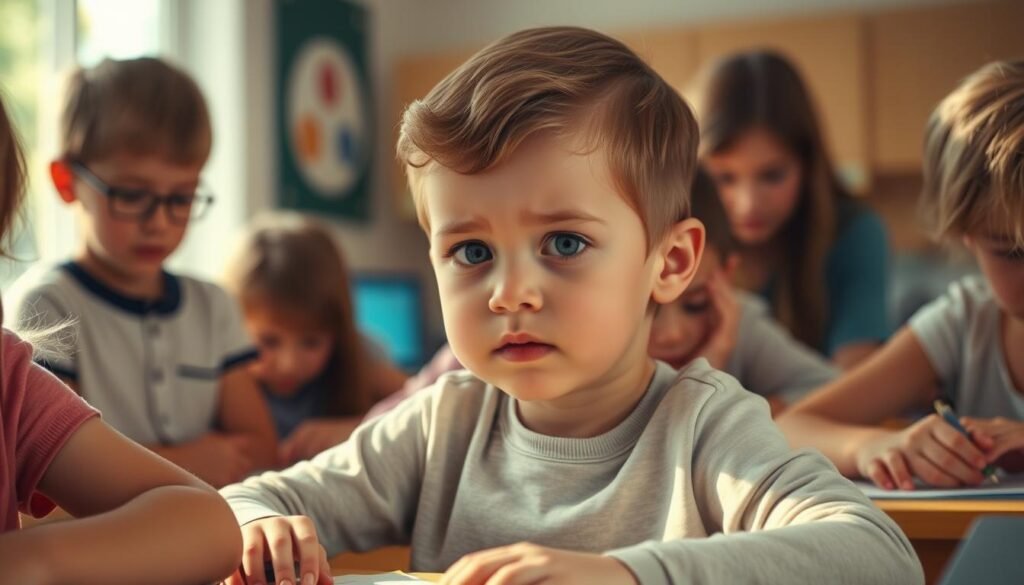
Research shows kids with autism rarely start shared experiences. They might play alone instead of showing toys to caregivers. This limits their chance to learn from others.
Social Communication Deficits in ASD
Children with autism struggle with nonverbal communication. They may not:
- Follow another person’s pointed finger
- Look where someone else is looking
- Share enjoyment through eye contact
- Use gestures to communicate needs
The Impact on Language Development
Joint attention skills are key for learning to speak. Early use of gestures helps grow vocabulary. Without these skills, kids with ASD might have trouble understanding and using words.
Recognizing Joint Attention Difficulties
Parents and caregivers are key in spotting social interaction challenges that might mean joint attention issues. Finding these signs early can help get a timely autism diagnosis and the right support. Kids learn joint attention skills at their own pace. But, some patterns need a closer look and advice from experts.
Early Warning Signs
There are certain behaviors that might show joint attention problems in young kids. Look out for these signs in everyday moments:
- Not noticing when other kids play nearby or do activities
- Not responding when adults call their name, even if they can hear fine
- Seeming disconnected or “tuned out” in social settings
- Showing little interest in sharing experiences with others
- Rarely pointing to things to share interest
- Not following when someone points at something
Assessment Through Play Observation
Experts use play sessions to check joint attention skills. They watch eye gaze patterns and see how long kids stay engaged with others. The Early Social Communication Scales (ESCS) helps standardize these checks.
They look at two kinds of engagement. Supported engagement is when adults keep the child’s attention through play. Coordinated engagement is when kids start shared attention on their own. Both give clues for early intervention autism plans. They note things like following points, tracking gaze, and sharing objects during play.
The Importance of Eye Contact and Nonverbal Communication
Eye contact is hard for kids with autism. They might find it too much or uncomfortable. This makes it tough for them to focus with others.
Nonverbal communication is more than just eye contact. Kids use silent ways to connect and share:
- Facial expressions that show interest or emotion
- Hand gestures like pointing or waving
- Body positioning that indicates engagement
- Head turns toward objects or people
There are two levels of nonverbal behaviors in joint attention. Lower-level behaviors are basic eye contact and looks at objects and people. Higher-level behaviors are intentional gestures like pointing to share interest. Kids with autism might find both hard.
| Nonverbal Skill | Typical Development | Common Autism Patterns |
|---|---|---|
| Eye Contact | Frequent, natural gaze | Brief or absent looks |
| Pointing | Emerges by 12 months | Delayed or missing |
| Showing Objects | Regular sharing behavior | Rare spontaneous showing |
| Following Gaze | Consistent by 18 months | Inconsistent responses |
These differences affect language learning and social connections. Building these skills needs patience and practice. It’s important to tailor it to each child’s comfort level.
Evidence-Based Intervention Strategies
Studies from 2004 to 2014 found several effective ways to help children with autism. These methods fall into three main groups. Each group has its own benefits for families looking for early help.
Knowing about these methods helps parents and professionals choose the best one for each child. This choice depends on the child’s specific needs.
Developmental Approaches
Developmental methods focus on natural interactions between parents and kids. Parent-Mediated Communication-Focused Treatment (PACT) teaches parents how to be more responsive. It uses biweekly sessions for six months.
Focused Playtime Intervention (FPI) involves structured play that follows the child’s interests. Joint Attention-Mediated Learning (JAML) combines coaching for parents with activities for the child.
Behavioral Methods
Behavioral interventions use structured teaching to build specific skills. They break down playing together with shared focus into small steps. Sessions can last from 30 minutes daily to several times a week.
These methods use clear prompts, systematic practice, and immediate rewards for success. This helps children learn to focus together.
Combined Intervention Techniques
The best programs mix developmental and behavioral strategies. Joint Attention Symbolic Play/Engagement Regulation Treatment (JASPER) has shown great results in eight studies. Reciprocal Imitation Training (RIT) teaches children to copy others and build social connections.
Interpersonal Synchrony (IS) focuses on matching rhythms and movements during play. These combined methods offer flexible, adaptable frameworks. They fit each child’s learning style while keeping teaching structured.
Playing Together with Shared Focus
Playing together is key to building strong bonds between parents and children with autism. When parents join in activities that grab their child’s interest, they open up new ways to talk and learn. This shared fun builds trust and helps kids develop social skills naturally.
Creating Opportunities for Joint Engagement
Starting joint activities with autism requires careful watching. Parents should sit at their child’s level to see their expressions better. Being close makes it easier for kids to notice and react to social signs.
Instead of taking toys away, use duplicates to join in. If a child is building with blocks, bring your own and do the same. This way, play can grow into shared fun without breaking the child’s concentration.
Following Your Child’s Lead
Being responsive means quickly reacting to what your child says or does. This makes them more likely to keep playing. After you respond, wait for them to take their turn. These pauses often encourage kids to start talking.
Building on Your Child’s Interests
Finding out what your child likes takes some watching. Show them two things at a time to see what they prefer. Once you know what they enjoy, use those interests to connect. Playing together with shared focus works best when it matches the child’s interests. This turns regular play into chances to learn and grow closer together.
Parent-Child Interaction Techniques
Effective parent-child interactions are key to improving autism social communication skills. Studies show that when parents engage with their child’s activities, it helps build a strong bond. This approach also opens up chances for learning.
The Parent-Child Autism Communication Therapy (PACT) has shown great results. It teaches parents to understand and respond to their child’s subtle signals. By doing so, parents create a nurturing space for their child’s communication to grow naturally.
- Using action routines with familiar, repetitive language
- Creating strategic pauses to allow child response time
- Following the child’s choice of activities and interests
- Joining the child’s focus without redirecting attention
- Building interaction through nondirective play
Research by Siller and Sigman followed children for 10-16 years. They found that responsive parenting during play greatly improved language skills. Daily practice of 30 minutes helps parents get better at these techniques. Video feedback is also helpful, allowing parents to see how they support their child’s social communication.
| Technique | Application | Expected Outcome |
|---|---|---|
| Contingent Language | Narrate child’s actions as they occur | Increased verbal attempts |
| Strategic Pausing | Wait 5-10 seconds after speaking | More child-initiated communication |
| Action Routines | Repeat familiar play sequences | Enhanced predictability and participation |
These proven methods turn everyday moments into chances for ASD social development progress.
Copy and Imitate: The First Step to Connection
Imitation is a strong tool for kids facing social challenges. By mirroring a child’s actions, caregivers build a quick bond. This bond doesn’t need words or complex skills. It’s the start of helping kids with autism and opens doors to real connection.
Mirroring Your Child’s Actions
First, watch what your child loves. If they’re stacking blocks, do the same. If they line up toy cars, make your own line. This quiet copying is great for building attention because it meets kids where they are.
Start quietly, without expecting anything. Sit where your child can see you but don’t push for talk. Many kids will notice someone mirroring them and get curious about this new friend.
When and How to Add Commentary
When your child notices you, start adding simple words to their play. Say things like “Red car goes fast” or “Big tower falling down.” This helps kids link words to their world without feeling overwhelmed.
It’s important to know when to add words. Wait for a pause in play or when they seem open to more. A smile or a glance can mean they’re ready to talk more. Be excited but only as much as your child is comfortable.
Games That Build Attention
Structured play activities are great for helping kids with autism improve their shared attention skills. These games are designed to encourage interaction and keep kids interested. They use items kids like and follow a pattern, helping them learn through fun.
Turn-Taking Activities
Turn-taking is key for social skills and communication. Begin by mirroring your child’s actions to grab their attention. If they roll a ball, roll one back. If they stack blocks, build with them.
These activities help kids feel safe and engaged:
- Rolling cars back and forth on a track
- Taking turns pressing buttons on musical toys
- Alternating placing pieces in shape sorters
- Building towers together, adding one block at a time
Interactive Play with Preferred Toys
Using toys kids love can really get them involved. Fill a special container with their favorite toys. Use wind-up or light-up toys to get their interest, then wait for them to join in.
| Toy Type | Engagement Strategy | Attention Building Goal |
|---|---|---|
| Bubbles | Blow bubbles, pause, wait for eye contact | Requesting through gaze |
| Musical instruments | Play rhythm, stop, wait for child’s turn | Turn-taking awareness |
| Light-up toys | Activate briefly, share visual focus | Sustained joint looking |
Book Reading for Joint Engagement
Books are perfect for improving games that build attention. Start with picture books about things kids like. Hold a toy they love while showing them pictures. Give them the toy after they look at a picture.
As they get better, show them more pictures before giving the toy. This makes them look at more pictures together.
Using Reinforcement to Encourage Shared Attention
Reinforcement strategies are key for kids with autism to learn joint attention. Using their favorite things and activities, parents and therapists can help. This creates chances for them to share and learn important skills.
The proximity method is a simple but effective way to start. Stand a few feet away from your child with their favorite toy. Turn on the toy to get their attention. When they come closer, say “You see my truck!” or name the item.
Let them play for a bit, then take your turn and move away. This teaches them that coming closer leads to fun interactions.
For kids who love physical play like tickling or swinging, the same idea works. Start the activity, then step back and wait. When they come for more, you’re building joint attention.
This method follows early intervention autism practices that focus on following the child’s lead.
Make reinforcement tubs with new items to keep things exciting. Change the toys often and keep some hidden for a few days. This keeps them interesting. Find out what your child likes most through preference assessments. These items and activities will help them share attention and learn more complex social skills.
Gradually Increasing Engagement Expectations
Teaching nonverbal communication skills to kids needs a step-by-step plan. It starts with simple steps and gets more complex. This way, kids build confidence and learn to engage better.
Understanding how to move from basic steps to more advanced ones is key. Parents and therapists can help kids with shared attention deficits by creating a supportive path.
From Proximity to Eye Gaze
It all starts with being close to your child. Sit or stand near them when they’re doing something they like. Once they’re okay with being near, ask them to look in your general direction.
Then, move through these steps:
- Sitting or standing near the adult
- Turning body toward the speaker
- Looking in the general direction
- Making brief eye contact
Use interesting objects near your face to catch their eye. This shows them that faces are important. Say “look at me” or “look over here” and gently guide them if needed.
Building Pointing and Showing Skills
Pointing is a big step in eye gaze patterns. Start by encouraging them to reach for things they want. When they reach well, help them point by moving the object further away.
| Skill Level | Child’s Action | Adult Support |
|---|---|---|
| Beginning | Reaches for object | Place object within reach |
| Intermediate | Points at object alone | Model pointing behavior |
| Advanced | Points while looking at adult | Wait for eye contact before responding |
Extending Duration of Joint Focus
When kids get better at basic skills, work on keeping them engaged longer. Wait a bit before giving them what they want. Say “look at this” or “wow, that’s cool!” before giving them something.
“The goal isn’t reaching a specific time duration but achieving genuine shared enjoyment and understanding between child and adult.”
For activities, keep talking and make fun comments. Stop only when they look, smile, or show interest. Every child learns at their own pace, so adjust your expectations.
Early Intervention Strategies for Autism
Early treatment is key for kids with autism. Studies show that early programs focusing on basic skills like joint attention are most effective. Speech therapists and caregivers are vital in helping kids develop these skills.
The Role of Speech Therapy
Speech therapists know that joint attention is the first step to learning. They start by getting the child’s attention before teaching words or sounds. This is the foundation for language growth.
Therapists use special methods to improve joint attention skills:
- Positioning themselves at the child’s eye level
- Using animated facial expressions and gestures
- Incorporating the child’s preferred toys and activities
- Creating predictable routines that encourage looking and sharing
Caregiver-Mediated Approaches
Parents and caregivers are the biggest supporters for kids with autism. Research backs several programs that teach families how to help early on:
| Program | Duration | Format |
|---|---|---|
| Preschool Autism Communication Trial (PACT) | 18 sessions plus boosters | Biweekly meetings with video feedback |
| Focused Playtime Intervention (FPI) | 12 weeks | 90 minutes weekly training |
| Joint Attention Mediated Learning (JAML) | 30 weeks average | Weekly parent coaching sessions |
These programs help parents use therapy in daily life. Meal times, bath routines, and play become chances to build joint attention. This method offers intensive intervention all day and strengthens the bond between parent and child.
Tracking Progress in Joint Attention Development
Measuring joint engagement autism progress needs careful watching and recording. Parents and therapists use special tools to track small changes in how kids share attention. This helps see if they’re getting better at connecting with others.
Experts use tests like the Early Social Communication Scales and the Communication and Symbolic Behavior Scales Developmental Profile. These tools show where kids are improving in social development ASD. They also point out where kids need more help.
- Increased duration of shared attention during play activities
- More frequent pointing or showing objects to others
- Better responses when adults point to items
- Growing use of coordinated eye gaze between people and objects
Watching kids play gives us clues about how they use their skills in real life. Therapists note if kids start sharing attention on their own or if they need help. This helps teams make their plans better to help kids catch up.
“Progress in joint attention rarely follows a straight line. Some weeks show dramatic improvements, while others reveal plateaus that test everyone’s patience.”
Studies show early, intense help can lead to big steps forward in social skills in just a few months. But, how fast language skills grow can vary a lot. Regular checks help make sure help plans stay right on track with each child’s growth.
Overcoming Common Challenges
Working with children who have autism spectrum disorder (ASD) can be tough. Parents often face big challenges that feel overwhelming. But, knowing these challenges and having good strategies can really help.
These issues are part of the social communication deficits seen in autism. To tackle them, we need patience and consistent efforts.
When Your Child Won’t Respond to Their Name
Many children with ASD don’t turn when called, even if they can hear well. This isn’t because they’re being stubborn. It’s because they process attention differently.
Start by getting their attention first before expecting them to respond to their name. Stand near something they love when you call their name. Hold their favorite toy or snack at eye level and say their name clearly.
As they start to respond more, slowly move further away and use fewer visual cues.
Dealing with Limited Eye Contact
Eye contact is a big challenge for kids with autism. Start by holding something they like near your face to get them to look. Move the object slowly to help them look back and forth.
Some kids need to get used to looking at you from the side before they can look directly. But, don’t force eye contact. It can make them more anxious and slow down progress.
Maintaining Motivation During Practice
Keeping your child engaged needs careful planning. Here are some key strategies:
- Change the rewards often to keep things interesting
- Keep the first sessions short (5-10 minutes)
- Follow their energy levels throughout the day
- Be excited about small wins
Don’t move too fast or add things they don’t like too soon. If progress slows, go back to what worked before. Make sure everyone uses the same approach to keep things consistent.
Conclusion
Helping children with autism develop shared attention skills is very important. This skill is key for learning language, making friends, and doing well in school. Without it, kids miss out on lots of chances to learn and grow.
Teaching joint attention autism interventions needs patience and a plan. Studies show that mixing developmental and behavioral methods works best. Starting with simple actions and moving to more complex ones helps kids learn to share attention.
Early help makes a big difference for kids with joint attention problems. Starting in preschool, kids can learn more about talking, socializing, and growing. This guide offers a step-by-step way to build these skills.
Working hard on joint attention skills pays off. Kids who get better at this skill learn more from everyday life. They make better friends, do better in school, and talk more easily. By focusing on this skill, families can help kids with autism reach their highest level of development.
FAQ
What exactly is joint attention and why is it so important for child development?
Joint attention is when people share experiences and interests about things together. It’s like when you and your child laugh at the zoo animals or play with toys. This skill is key for learning and talking because it helps kids learn new words and understand social interactions.
FAQ
What exactly is joint attention and why is it so important for child development?
Joint attention is when people share experiences and interests about things together. It’s like when you and your child laugh at the zoo animals or play with toys. This skill is key for learning and talking because it helps kids learn new words and understand social interactions.
How can I tell if my child has difficulties with joint attention?
FAQ
What exactly is joint attention and why is it so important for child development?
Joint attention is when people share experiences and interests about things together. It’s like when you and your child laugh at the zoo animals or play with toys. This skill is key for learning and talking because it helps kids learn new words and understand social interactions.
FAQ
What exactly is joint attention and why is it so important for child development?
Joint attention is when people share experiences and interests about things together. It’s like when you and your child laugh at the zoo animals or play with toys. This skill is key for learning and talking because it helps kids learn new words and understand social interactions.
What’s the difference between joint attention for sharing and requesting behaviors?
FAQ
What exactly is joint attention and why is it so important for child development?
Joint attention is when people share experiences and interests about things together. It’s like when you and your child laugh at the zoo animals or play with toys. This skill is key for learning and talking because it helps kids learn new words and understand social interactions.
FAQ
What exactly is joint attention and why is it so important for child development?
Joint attention is when people share experiences and interests about things together. It’s like when you and your child laugh at the zoo animals or play with toys. This skill is key for learning and talking because it helps kids learn new words and understand social interactions.
What are the most effective intervention strategies for improving joint attention?
FAQ
What exactly is joint attention and why is it so important for child development?
Joint attention is when people share experiences and interests about things together. It’s like when you and your child laugh at the zoo animals or play with toys. This skill is key for learning and talking because it helps kids learn new words and understand social interactions.
FAQ
What exactly is joint attention and why is it so important for child development?
Joint attention is when people share experiences and interests about things together. It’s like when you and your child laugh at the zoo animals or play with toys. This skill is key for learning and talking because it helps kids learn new words and understand social interactions.
How do I start building joint attention with my child who shows minimal interest in interaction?
FAQ
What exactly is joint attention and why is it so important for child development?
Joint attention is when people share experiences and interests about things together. It’s like when you and your child laugh at the zoo animals or play with toys. This skill is key for learning and talking because it helps kids learn new words and understand social interactions.
FAQ
What exactly is joint attention and why is it so important for child development?
Joint attention is when people share experiences and interests about things together. It’s like when you and your child laugh at the zoo animals or play with toys. This skill is key for learning and talking because it helps kids learn new words and understand social interactions.
What role does eye contact play in joint attention, and how can I encourage it?
FAQ
What exactly is joint attention and why is it so important for child development?
Joint attention is when people share experiences and interests about things together. It’s like when you and your child laugh at the zoo animals or play with toys. This skill is key for learning and talking because it helps kids learn new words and understand social interactions.
FAQ
What exactly is joint attention and why is it so important for child development?
Joint attention is when people share experiences and interests about things together. It’s like when you and your child laugh at the zoo animals or play with toys. This skill is key for learning and talking because it helps kids learn new words and understand social interactions.
How long does it typically take to see improvements in joint attention skills?
FAQ
What exactly is joint attention and why is it so important for child development?
Joint attention is when people share experiences and interests about things together. It’s like when you and your child laugh at the zoo animals or play with toys. This skill is key for learning and talking because it helps kids learn new words and understand social interactions.
FAQ
What exactly is joint attention and why is it so important for child development?
Joint attention is when people share experiences and interests about things together. It’s like when you and your child laugh at the zoo animals or play with toys. This skill is key for learning and talking because it helps kids learn new words and understand social interactions.
My child won’t respond to their name but has normal hearing – how is this related to joint attention?
FAQ
What exactly is joint attention and why is it so important for child development?
Joint attention is when people share experiences and interests about things together. It’s like when you and your child laugh at the zoo animals or play with toys. This skill is key for learning and talking because it helps kids learn new words and understand social interactions.
FAQ
What exactly is joint attention and why is it so important for child development?
Joint attention is when people share experiences and interests about things together. It’s like when you and your child laugh at the zoo animals or play with toys. This skill is key for learning and talking because it helps kids learn new words and understand social interactions.