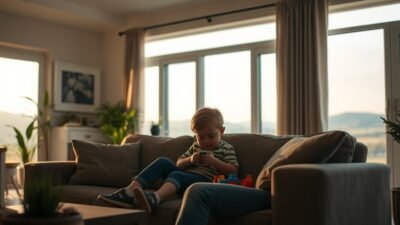


Families face challenges in public places with a child who has neurodevelopmental differences. Grocery stores, restaurants, and parks can trigger sensory overload. These situations require special strategies for successful outings.
Public settings are more stressful than home environments. People with social anxiety feel watched and judged by others. For families managing autism, community spaces bring extra hurdles.
These include unpredictable sensory input and unfamiliar social rules. Families have less control over their surroundings in public places.
This guide offers proven methods for thriving in community settings. It blends therapy concepts with practical tips you can use right away. Our approach focuses on planning ahead and changing environments.
Every child has unique abilities and sensitivities. Understanding these differences helps caregivers create personalized support plans. This approach respects individual needs while encouraging public engagement.
Parenting a child with unique developmental or learning needs can feel overwhelming, but informed guidance can make the journey more empowering. The Parenting & Family section provides practical strategies for communication, behavioural support, emotional connection, and building a calm home environment. Parents can explore related insights in the Special Needs Awareness category to better identify early signs and understand underlying needs. For clarity about developmental progress, the Developmental Milestones resources offer age-specific benchmarks that help caregivers set realistic expectations. When learning challenges arise, the Learning Disabilities category provides targeted support strategies for school and homework. For emotional wellbeing—both for children and parents—PsyForU.com offers mental-health tools rooted in psychology. Those wanting to build stronger routines, reduce stress, or cultivate intentional family habits can enhance their journey with guidance from IntentMerchant.com. These connected platforms ensure that parents never feel alone and always have trusted support at every step.
Key Takeaways
- Public environments present distinct sensory and social demands that require specialized preparation strategies
- Evidence-based approaches prioritize proactive planning over reactive intervention when managing meltdowns outside home
- Successful community participation depends on understanding individual neurological differences and sensitivities
- Environmental modification and skill-building form the foundation of effective autism behavior management
- Strength-based frameworks honor neurodiversity while developing practical coping mechanisms
- Systematic preparation techniques empower families to navigate diverse public situations confidently
Understanding Autism Child Behavior in Public Settings
Public settings challenge children with autism due to differences between home and community spaces. These environments trigger anxiety responses because of unpredictable stimuli and unfamiliar contexts. Sensory processing issues and social communication challenges compound these effects.
Autism spectrum disorder symptoms intensify in community settings due to environmental factors. Recognizing this helps caregivers develop effective strategies that address root causes. These approaches focus on underlying issues rather than just managing surface behaviors.

How Public Environments Differ from Home
Home environments provide children with autism a carefully calibrated sensory ecosystem. These spaces offer predictable auditory input, controlled lighting, and established routines. Familiar surroundings help reduce anxiety and support regulation.
Public spaces introduce variables that exceed many children’s regulatory capacity. Grocery stores have fluorescent lighting that can distress children with autism. Complex sounds from various sources create a demanding auditory landscape.
Temperature changes, different flooring textures, and proximity to strangers add to sensory overload. Smells from cleaning products and food areas further increase processing demands.
The difference between home and public environments for a child with autism is not merely quantitative but qualitative; what appears as ordinary background stimulation to neurotypical individuals represents a bombardment of competing sensory channels requiring active management.
Social expectations add to sensory challenges in public spaces. Children must quickly assess social situations and understand implicit behavioral norms. They also need to navigate unfamiliar social hierarchies, which can be overwhelming.
Common Behavioral Responses to Public Spaces
Children with autism show diverse behaviors in public, each trying to manage overwhelming input. These responses are communication, not misbehavior. Understanding this shifts how we approach interventions.
Sensory-seeking behaviors help children regulate their nervous systems. These may include touching items, jumping, or seeking pressure. Such actions provide organizing feedback to counteract environmental stress.
Avoidance responses show that autism symptoms have triggered protective mechanisms. Covering ears signals auditory overload. Refusing to enter spaces suggests visual or smell aversion. Hiding or closing eyes are ways to reduce sensory input.
When environmental demands exceed coping capacity, dysregulated responses may emerge, including:
- Meltdowns—neurological responses to system overload rather than tantrums
- Aggressive behaviors—desperate attempts to create space or escape unbearable stimulation
- Self-injurious behaviors—paradoxical attempts to provide organizing pain sensations that override chaotic sensory input
- Elopement—flight responses driven by overwhelming environmental stress
Communication often breaks down in public settings. Verbal children may become selectively mute. Echolalia might increase as children seek familiar language patterns. Scripted phrases may replace spontaneous speech as cognitive resources shift to sensory management.
Viewing these behaviors as adaptive responses helps caregivers address underlying sensory issues. This approach is more effective than focusing solely on behavior modification.
The Role of Sensory Processing Issues
Sensory processing issues underlie many public behavior challenges for children with autism. These differences affect how the nervous system handles sensory information across all modalities. This includes touch, balance, body awareness, hearing, sight, smell, and taste.
Sensory modulation difficulties prevent children from filtering out background stimuli. Everyday sounds, textures, or smells demand active attention and processing. This constant input can be overwhelming for children with autism.
Some children experience hyper-responsivity, reacting intensely to mild stimuli. A hand dryer might cause pain-level noise. A stranger’s touch may feel like an assault. These reactions are real neurological experiences.
Hypo-responsivity leads children to seek intense sensory input. They might crash into objects or crave extremely spicy foods. This behavior serves sensory-seeking purposes rather than being aggressive.
Sensory processing differences create a fundamentally different perceptual reality; what constitutes comfortable environmental conditions for neurotypical individuals may represent either understimulation or overwhelming bombardment for children with autism.
Sensory discrimination challenges affect the ability to filter relevant stimuli. In noisy places, children struggle to focus on specific sounds. This creates constant cognitive load as the brain processes all input equally.
Integrating sensory information across modalities is also challenging. Conflicting visual and balance cues can confuse the nervous system. This difficulty contributes to exhaustion after brief public outings.
Understanding sensory processing issues helps develop better coping strategies. Caregivers can create environmental modifications that address neurological realities. This approach transforms public outings into opportunities for supported skill development.
Preparing Your Child Before Leaving Home
Pre-departure planning is key for autistic children’s positive community experiences. It addresses uncertainty and builds understanding. Research shows these strategies reduce stress by setting clear expectations before challenging situations.
This approach is valuable for autistic child development. It helps with social learning and unpredictability challenges. Preparation turns future events into manageable sequences, aligning with visual processing strengths in autism.
Systematic pre-departure routines provide cognitive scaffolding. They reduce anxiety, clarify expectations, and build confidence for real-world navigation.
Using Visual Schedules and Social Stories
Visual schedules and social stories are proven early intervention strategies. They cater to visual learning preferences of many autistic children. These tools address temporal uncertainty by showing upcoming events and expected behaviors.
Unlike verbal instructions, visual supports remain accessible throughout the outing. Social stories teach social norms and appropriate responses for specific situations. They use descriptive, perspective, and directive sentences to guide behavior.
Creating Effective Visual Schedules
Effective schedules match the child’s comprehension level. They use clear photos, drawings, or words without overwhelming detail. The schedule should show the complete outing sequence from preparation to return home.
Parents can create schedules using printed photos, digital slideshows, or hand-drawn illustrations. Each image represents a single activity or transition. The schedule follows standard reading patterns, reinforcing directional concepts.

Including sensory considerations in the schedule is valuable. For example, showing sunglasses for bright store lighting prepares the child. This creates a roadmap addressing both logistical and sensory aspects of the outing.
Writing Social Stories for Specific Outings
Social stories should match the child’s developmental level and challenges. They use first-person language to help the child identify with the narrative. Stories typically establish the situation, identify difficulties, present responses, and affirm positive outcomes.
A grocery store story might read: “I go to the store with Mom. It has many people and bright lights. I can wear my special headphones. I’ll walk next to Mom’s cart.”
“Staying close makes Mom happy and proud. After shopping, we go home and I play with my toys.” This addresses communication challenges and provides specific guidance.
Setting Clear Expectations and Boundaries
Autistic children benefit from explicit behavioral expectations before entering public spaces. This reduces cognitive load by eliminating the need to interpret social cues. Clear expectations should use positive, instructional language rather than prohibitive statements.
For example, say “At the park, stay where I can see you” instead of “Don’t run away”. This provides concrete parameters and identifies permitted activities, offering guidance rather than restriction.
Boundaries should address physical and behavioral dimensions. Physical boundaries might include designated areas or specific routes. Behavioral boundaries clarify voice volume, appropriate contact, and interaction protocols. Consistent language and visual supports create a predictable framework.
Practicing with Role-Play Scenarios
Role-play provides safe, controlled rehearsal for real-world situations. It builds muscle memory for appropriate responses and reduces cognitive demands. The familiarity gained through repetition creates confidence that applies to similar real-world contexts.
Effective role-play mirrors the target setting. For restaurant prep, practice ordering, waiting, and using table manners at home. This allows children to experience the event sequence in a low-stakes environment.
Provide immediate, specific feedback during role-play. Highlight successes and gently correct areas needing improvement. Gradually increase complexity to build adaptive skills for unexpected variations.
Identifying and Avoiding Meltdown Triggers
Most meltdowns follow predictable sequences triggered by identifiable environmental stressors. Understanding these meltdown triggers helps caregivers implement proactive strategies. Meltdown prevention recognizes that children with autism experience cumulative stress during outings.
Social anxiety research identifies specific factors that create heightened responses in vulnerable populations. Crowded spaces, unfamiliar environments, and situations involving perceived scrutiny contribute to stress accumulation. Children with autism process these elements with heightened sensitivity.
Successful public experiences rely on environmental engineering, not expecting children to adapt to overwhelming conditions. Parents can develop personalized prevention strategies by identifying patterns specific to each child.
Recognizing Environmental Triggers
Environmental triggers rarely work alone. They build up, overwhelming a child’s ability to self-regulate. A single trigger might be manageable, but multiple stressors can lead to behavioral problems.
The meltdown triggers framework helps caregivers analyze public environments before issues arise. This approach turns abstract anxiety into concrete factors that can be managed.
Auditory stimulation is a common cause of sensory meltdowns. Public spaces have many sound sources that can overwhelm children with auditory sensitivities.
- High-pitched or sudden sounds: Fire alarms, hand dryers, announcement systems, and children crying trigger immediate distress responses
- Background noise accumulation: Conversations, shopping cart wheels, refrigerator units, and music systems combine to create sensory chaos
- Unexpected auditory events: Dropped objects, door slams, or vehicle horns disrupt predictability and create startle responses
Visual triggers come from complex environments in commercial spaces. Fluorescent lighting can flicker at frequencies some children notice, causing irritation. Visual clutter from displays, signs, and moving crowds can be overwhelming.
Olfactory triggers are challenging in food-related areas. Food court aromas mix multiple scents. Cleaning products, perfumes, and personal care displays can create nauseating olfactory overload.
Tactile sensitivities go beyond direct touch. They include temperature changes, humidity levels, and personal space. Children may react to air conditioning, crowded aisles, or unusual floor textures.
Navigating crowded spaces can challenge balance and spatial awareness. Escalators, elevators, and uneven surfaces add extra demands on already strained sensory systems.
Social and Communication Triggers
Social communication difficulties create unique stressors beyond sensory challenges. Social demands build up even when children seem to handle individual interactions well.
Direct communication can trigger anxiety when strangers address children. Appropriate responses, facial expressions, and eye contact require effort that drains regulatory resources. Well-meaning adults often persist despite visible discomfort.
- Unexpected social approaches: Store employees, other shoppers, or children initiating contact without warning
- Personal space violations: Crowded checkout lines, narrow aisles, or waiting areas where maintaining distance becomes impossible
- Routine disruptions: Out-of-stock items, closed sections, or layout changes that violate anticipated sequences
- Demands for flexibility: Situations requiring rapid plan adjustments or perspective-taking exceed available cognitive resources
Unpredictable environments compound social communication difficulties. Children must process sensory input and navigate social expectations at once. This cognitive load often leads to behavioral problems.
Understanding Sensory Overload Signals
Recognizing early warning signs allows intervention before meltdowns happen. Children show observable changes as they approach their limits. These signals provide crucial opportunities for calming strategies.
Stress indicators include increased stimming like hand-flapping, rocking, or vocal sounds. These are self-regulation attempts. Caregivers should see them as signs of rising stress levels.
Withdrawal behaviors show the child is trying to reduce sensory input. Covering ears or eyes, hiding, or seeking isolation indicate overwhelming stimulation. Verbal protests or asking to leave directly communicate distress.
Physical aggression toward objects often aims to create grounding sensations. Pushing carts forcefully, hitting walls, or throwing items can provide intense feedback that temporarily helps.
Physical signs offer objective stress measures. Flushing, sweating, rapid breathing, or dilated pupils reflect nervous system activation. These occur even when children can’t express distress verbally.
| Warning Signal Category | Early Indicators | Critical Threshold Signs | Recommended Response |
|---|---|---|---|
| Behavioral Changes | Increased stimming, restlessness, decreased verbal communication | Hiding, aggressive gestures, complete communication shutdown | Reduce demands, offer sensory tools, prepare for exit |
| Verbal Expression | Repetitive questions, scripting, requests to leave | Shouting, crying, verbal protests escalating in volume | Acknowledge feelings, implement calming strategies |
| Physical Indicators | Tension in posture, facial expressions showing discomfort | Flushing, sweating, hyperventilation, rigid body posture | Immediate sensory reduction, consider location change |
| Engagement Level | Decreased interest in preferred activities, shortened attention span | Complete disengagement, unresponsive to usual motivators | End outing promptly, provide recovery time |
Timing Your Outings Strategically
Strategic scheduling is a powerful meltdown prevention tool. Timing affects both environmental conditions and the child’s ability to cope.
Crowds follow predictable patterns in public places. Grocery stores are busiest after work and on weekends. Shopping centers peak at lunch and early evening. Plan outings during quieter times to reduce stress.
Mornings often offer the best conditions before crowds gather. Early weekday mornings are especially good, with fresh stock and less stressed staff.
Never schedule challenging outings when the child is hungry or tired. These factors greatly increase the risk of sensory meltdowns. Even children who don’t nap struggle during their old nap times.
Keep initial visits to new places short to build positive associations. Gradually increase exposure to build tolerance more effectively. End outings before the child reaches their limit.
Allow enough time between activities to prevent rushing. This reduces stress from time pressure. Build in buffer time for unexpected delays to avoid creating extra challenges.
Identifying meltdown triggers and planning to minimize exposure is key. This proactive approach acknowledges sensory and social challenges while enabling successful public outings.
Creating a Personalized Emergency Kit
An emergency kit is a portable support system. It offers quick access to calming resources during stressful public encounters. This approach is key to emergency calming strategies, addressing the unpredictable nature of public spaces.
Each kit must reflect the child’s unique sensory profile. What calms one child may distress another. Building this kit requires observing which tools support regulation in different contexts.
Essential Sensory Items to Pack
Auditory regulation items include noise-canceling headphones and earbuds with preferred music. These tools are valuable in places with unpredictable sounds like grocery stores.
Visual regulation supports help manage overwhelming visual stimulation. Sunglasses reduce bright lighting that can cause discomfort. Baseball caps provide light control and create a subtle visual boundary.
Tactile items should match the child’s texture preferences. Soft fabric squares and stress balls provide organizing sensory input. These alternatives prevent reliance on less appropriate items in public spaces.
Olfactory supports include small containers with calming scents. Oral sensory tools address needs for oral motor input. These can include chewy tubes or sugar-free gum for older children.
Comfort Objects and Fidget Tools
Weighted items and compression tools provide organizing sensory feedback. Portable weighted lap pads offer grounding pressure without bulk. Compression vests worn under clothing provide continuous deep pressure input.
Fidget tools allow movement and provide sensory input. Items like fidget spinners enable stimming behaviors that draw less attention in public settings.
Comfort objects carry psychological significance beyond their sensory properties. A favorite toy or photo provides emotional security. These items can prevent escalation by offering reassurance during uncertain moments.
Snacks and Communication Aids
Nutritional supports address sensory preferences and physiological factors. Blood sugar fluctuations can worsen dysregulation. Select snacks that align with sensory preferences while providing sustained energy.
Communication supports are crucial when stress impacts verbal expression. Communication cards or electronic devices enable expression when verbal communication becomes difficult.
Visual supports provide concrete references for abstract concepts. Emotion scales help children identify their current state. Choice boards enable decision-making when verbal processing feels overwhelming.
The emergency kit becomes a comprehensive support system with carefully selected contents. Regular updates ensure it evolves with the child’s changing needs. This preparation reduces parental anxiety and supports successful public experiences.
Emergency Calming Strategies for Immediate Use
Emergency calming strategies focus on the brain’s response to stress. They help caregivers use methods based on research. The goal is to activate the body’s relaxation system.
Emotional regulation differs from behavior control. When an autistic child feels overwhelmed, their nervous system becomes overactive. Regular discipline doesn’t work because the child can’t think clearly.
These techniques use sensory input to help calm autistic individuals. Research shows that certain sensory experiences can help more than words or consequences.
Deep Pressure Techniques
Deep pressure is one of the best autism behavioral interventions for quick calming. It activates sensors in muscles and joints. This leads to lower stress hormones and increased feel-good chemicals.
Occupational therapists have long known about deep pressure’s calming effects. It gives the nervous system clear information about body position. This clarity often reduces confusion and overwhelm.
Hand squeezes are a discreet method for public settings. Apply firm, steady pressure to the child’s hand. The pressure should be strong enough to feel, but not painful.
Firm hugs provide deep pressure over larger areas. Use steady pressure, not light touch. Hugs usually last 10 to 30 seconds, but some children may need longer.
Consent remains essential even during stressful times. Some children dislike touch when overwhelmed. Watch the child’s response and stop if they become more upset.
Weighted Items for Calming
Weighted items offer continuous deep pressure without caregiver help. Lap pads, shoulder wraps, and stuffed animals work well. These items typically weigh 5-10% of the child’s body weight.
Weighted items activate body sensors, signaling position and pressure to the brain. This constant input helps focus attention. Many children seek this pressure naturally through their own actions.
Breathing Exercises Adapted for Children
Regular mindfulness breathing can be hard for autistic children. Instead, use concrete activities that naturally regulate breathing. These methods provide visual feedback and are easier to understand.
Blowing bubbles encourages slow, steady breathing. Pinwheels offer similar benefits and are less messy. Balloon breathing uses imaginary balloons to show inhales and exhales.
Pair breathing with favorite songs or visual timers. This adds structure and predictability, making the exercise more accessible.
| Calming Technique | Implementation Method | Best For | Average Time to Effect |
|---|---|---|---|
| Hand Squeezes | Firm pressure between thumb and index finger | Discreet public settings | 30-60 seconds |
| Weighted Lap Pad | Place on lap while seated | Restaurants, waiting rooms | 2-5 minutes |
| Bubble Blowing | Slow, controlled exhalations | Outdoor spaces, less formal settings | 1-3 minutes |
| Wall Pushes | Push against wall with full body weight | Any setting with walls available | 30-90 seconds |
Quick Sensory Reset Methods
Sensory reset methods provide fast input to stop escalating stress. They offer options when deep pressure isn’t enough. Wall pushes involve pushing against a wall for 10-15 seconds.
Carrying heavy objects engages many muscles at once. This floods the nervous system with organizing input. In stores, children can carry items to the cart.
Brief spinning or rocking can reset sensory systems. Some children like gentle swaying, others prefer faster spinning. Match the intensity to the child’s needs.
Adapted muscle relaxation involves squeezing and releasing body parts. Instructions might include “squeeze your hands tight” then “let them go floppy.” This makes relaxation more concrete.
When to Remove Your Child from the Situation
Deciding when to leave a public place requires careful thought. Removal isn’t punishment, but recognition that the environment is too much. Staying in overwhelming places doesn’t build tolerance.
If calming techniques don’t work after 5-10 minutes, it’s time to leave. Physical aggression means immediate removal is needed. Long crying or screaming shows the child can’t calm down there.
Frame leaving neutrally, avoiding language that suggests failure. Say “We’re taking a break” or “Let’s find a quieter space.” This maintains dignity while addressing needs.
This approach teaches children that knowing their limits is healthy. It’s not defeat to ask for needed changes. It shows self-awareness and good self-care.
Managing Meltdowns in Grocery Stores and Shopping Centers
Shopping environments are crucial for children with autism to develop community skills. These places offer intense sensory stimulation and social demands. They can quickly overwhelm a child’s coping abilities.
Preparation and environmental changes can make shopping manageable and productive. Success comes from planning, not spontaneity. Parents who pre-plan report fewer behavioral issues during outings.
Research shows structured approaches improve immediate behavior and long-term skills. The strategies here cover all shopping challenges. They also help build functional independence.
Strategic Preparation Before Entering the Store
Preparation starts days before shopping. This time investment reduces anxiety and sets clear expectations. Visual tools work well for young children with autism.
A visual shopping list turns the experience into a structured scavenger hunt. Parents can use photos of items or print pictures from grocery websites. This visual guide helps children understand the trip’s purpose and length.
Timing is crucial. Early morning visits offer fewer crowds and quieter environments. Evening hours after 8 PM also provide less stimulation.
- Review store layouts using online maps or previous visits to reduce spatial uncertainty and establish predictable routes through the shopping environment
- Define clear parameters including time limits, specific sections to visit, and explicit rules about requesting items beyond the shopping list
- Establish reward systems that provide motivation for successful completion, such as selecting one preferred snack or earning time with a special interest activity
- Practice cart pushing at home using laundry baskets or similar objects to familiarize children with the physical aspects of shopping participation
- Create social stories specifically addressing the sequence of shopping activities, from entering the parking lot through returning to the car
Physical preparation is equally important. Ensure the child is well-rested, fed, and regulated before leaving. A short sensory break before departure can help with shopping demands.
Navigating the Checkout Challenge
Checkout lines are high-risk zones. They combine waiting, sensory stimulation, and transition stress. These factors often trigger behavioral challenges, even after smooth shopping.
Self-checkout stations offer many benefits. They reduce waiting time and social demands. Children can actively participate, building life skills and independence.
For traditional checkouts, strategic selection is key. Observe line lengths and choose checkout times carefully. Position yourself to minimize exposure to impulse purchase displays.
The ability to wait appropriately represents a critical life skill that develops through repeated practice in graduated increments rather than through extended forced waiting periods.
Provide engaging activities during waiting periods. Use handheld sensory tools or electronic devices with headphones. These work best when reserved for checkout situations.
Practice waiting skills at home. Start with short waiting periods before fun activities. Use visual timers to make the duration clear.
Create social stories about checkout procedures. Describe the waiting process and appropriate behaviors. Review these stories regularly, especially before shopping trips.
Transforming Shopping into Educational Opportunities
Viewing shopping as a learning opportunity shifts the focus to skill development. Children can build independence through structured community participation. Each trip becomes a lesson in executive functioning, decision-making, and math.
Involve children in item selection to develop critical thinking. Present two acceptable options and let them choose. This builds agency while maintaining boundaries.
Navigation tasks build executive functioning and spatial reasoning. Ask children to find items using visual lists. This strengthens working memory and problem-solving skills.
Physical participation provides sensory input and builds independence. Carrying items or pushing the cart can improve behavior throughout the shopping trip.
Start with short trips to buy one or two preferred items. This builds positive associations. Gradually increase the length and complexity of shopping trips.
| Skill Area | Shopping Activity | Developmental Benefits | Progression Strategy |
|---|---|---|---|
| Decision-Making | Choosing between two acceptable options | Builds agency, preferences, and comparative thinking | Increase complexity by adding more choices or requiring justification |
| Mathematics | Comparing prices or counting items | Applies academic concepts in functional contexts | Progress from counting to addition to percentage calculations |
| Executive Function | Locating items using visual lists | Strengthens working memory, attention, and planning | Reduce visual cues gradually, increasing independence |
| Physical Regulation | Carrying items or pushing cart | Provides proprioceptive input and builds strength | Increase weight or duration as tolerance develops |
Balance completing errands with developmental appropriateness. Some trips focus on skill-building, others on efficient shopping. Both approaches are valuable and should be used flexibly.
Building positive community experiences is a long-term investment. It reduces anxiety and increases social integration. The effort spent managing meltdowns during childhood shopping trips pays off throughout life.
Handling Restaurant and Dining Experiences
Restaurants can be challenging for children with autism. They face unfamiliar noises, foods, and social rules. These experiences require careful planning to address environmental and communication challenges.
Dining out is different from eating at home. Children can’t control the lighting, noise, or temperature. They must adapt to new seating, service, and food preparation methods.
Parents who prepare well report better outcomes. They see less stress for all family members. Viewing dining out as a learning opportunity helps set realistic expectations.
Selecting Appropriate Dining Venues
Choose autism-friendly restaurants by evaluating their environment. Look for places that support sensory processing needs. Some venues are better for children with autism communication challenges.
Certain restaurant features lead to positive experiences. Low noise levels reduce overwhelm. Adequate space between tables minimizes anxiety-triggering crowding.
- Acoustic environment: Restaurants with sound-absorbing materials, carpeting, or acoustic panels that reduce echo and reverberation
- Seating options: Availability of booth seating that provides physical boundaries and visual barriers from surrounding diners
- Menu compatibility: Food offerings aligned with the child’s established sensory preferences and dietary requirements
- Service speed: Establishments known for efficient service that minimizes waiting periods
- Spatial design: Outdoor seating areas or private dining spaces that offer relief from enclosed environments
- Staff awareness: Restaurants demonstrating understanding of disability accommodations through training or experience
Visit restaurants without your child first. Check the environment yourself. Look at online photos and reviews. Call during busy times to gauge noise levels.
Communicating Accommodation Needs
Asking for accommodations is a legitimate disability support. It’s not seeking special treatment. Federal law requires public places to provide reasonable modifications for disabilities.
Make clear, specific requests in advance. Call restaurants before arriving. This allows staff to prepare. Many places willingly accommodate when given enough information.
Strategic accommodation requests that support asd social interactions include:
- Immediate seating arrangements: Requesting priority seating or specific table locations away from high-traffic areas, kitchen doors, or restroom entrances
- Menu preview access: Obtaining menus in advance through email or restaurant websites to facilitate food selection before arrival, reducing decision-making stress in the moment
- Environmental modifications: Inquiring about adjusting lighting levels, reducing music volume, or providing quieter seating sections
- Kitchen flexibility: Discussing food preparation modifications addressing texture preferences, ingredient separation, or temperature specifications
- Service timing: Requesting expedited service or staggered course delivery that accommodates limited waiting tolerance
Healthcare provider documentation can help with hesitant establishments. However, many family-friendly restaurants respond well to simple explanations.
Addressing Wait Times and Food-Related Sensitivities
Managing wait times is crucial for a successful dining experience. Children with autism often struggle with vague time estimates. This uncertainty can lead to behavioral issues.
Bring engaging activities reserved for restaurant use. Order appetizers immediately to address hunger. Choose restaurants with movement-friendly waiting areas.
Consider takeout on challenging days. This meets nutritional needs without social and sensory demands.
Food sensitivities in autism are complex. They involve sensory processing, gut issues, and learned responses. Observe carefully to distinguish between sensory selectivity and allergies.
| Food Challenge Type | Characteristics | Management Approach |
|---|---|---|
| Texture Aversion | Rejection based on food consistency, mixed textures, or mouth feel | Order foods with predictable, uniform textures; request sauce/dressing separation |
| Temperature Sensitivity | Preference for specific temperature ranges; rejection of foods outside comfort zone | Specify exact temperature preferences; allow cooling or warming time before eating |
| Visual Presentation | Food appearance, color combinations, or plating affects acceptability | Request ingredient separation; use familiar plates/containers when possible |
| Novel Food Anxiety | Fear or refusal of unfamiliar foods regardless of characteristics | Order familiar items; introduce new foods gradually at home first |
Understand food selectivity as a sensory processing difference. This view reduces mealtime anxiety while maintaining nutritional boundaries.
Gradual food exposure works better than forced trying. Let children watch others eat new foods. Have new items present without eating expectations.
See restaurant visits as chances to practice social skills. Focus on small steps of progress. Celebrate when a child stays seated longer than before.
Navigating Parks, Playgrounds, and Recreational Spaces
Recreational spaces offer both benefits and challenges for children with autism spectrum disorder. These environments provide opportunities for physical growth, sensory integration, and social learning. However, they also introduce unpredictable sensory input and unstructured social demands.
Outdoor settings differ from controlled environments or homes. Children face rapid movement, varying noise levels, and spontaneous peer interactions. Balancing these elements helps families maximize benefits while maintaining realistic expectations.
Facilitating Peer Connections
Children with ASD often struggle with playground social rules. Parents can teach specific strategies for joining play activities. These might include approaching peers during pauses or offering to share equipment.
Scripting common phrases provides language tools for children with social communication difficulties. Simple phrases like “Can I play too?” serve as interaction starting points. Adult support helps bridge communication gaps initially.
Structured activities with clear rules reduce social ambiguity. Games with defined parameters make interactions more predictable. Planned playdates with familiar peers allow for relationship development in calmer settings.
Parallel play is a valid developmental stage and social preference. Children playing alongside peers are still engaging socially. Forcing interactive play prematurely can create negative associations with social situations and increase anxiety.
Addressing Sensory Intensity
Active environments can quickly overwhelm children with sensory sensitivities. Managing these demands requires environmental modifications and skill development. Selecting less crowded times for visits significantly reduces sensory load.
Quiet zones within recreational spaces provide essential regulatory breaks. These might include shaded benches or nature trails. Teaching children to recognize overload signals empowers them to request breaks when needed.
Start with short visits and gradually extend time as comfort grows. This approach acknowledges the multiple demands on children’s processing systems. Provide noise-reducing headphones or other sensory tools to support regulation.
Structure activities with defined parameters to create predictability. This reduces cognitive load for decision-making. It frees up capacity for social engagement and sensory processing.
Planning Smooth Departures
Departures often trigger behavioral challenges due to transition difficulties. Creating effective exit strategies prevents predictable meltdowns. Visual timers provide concrete representation of remaining time.
Give multiple warnings before departure to establish clear expectations. Implementing transition objects that accompany the child from park to the next activity provides continuity. This reduces the abruptness of environmental changes.
Establish predictable post-park routines to create positive associations with departures. This might include stopping for a favorite snack or listening to preferred music. Teach departure scripts that acknowledge disappointment while maintaining expectations.
Recreational participation offers substantial value for children with autism spectrum disorder. Success requires balancing developmental benefits against sensory and social challenges. Strategic supports enable positive engagement while respecting individual differences.
Communicating with Strangers and Bystanders
Public outings with autistic children involve interactions with community members. Their reactions can range from supportive to judgmental. Parents need strategies to balance education, privacy, and emotional well-being.
Parents face tough choices when explaining autism to strangers. They must weigh privacy against reducing misunderstanding. The emotional toll of repeated explanations is also a factor.
Research shows that others’ judgments reflect their own limits, not parental shortcomings. Setting boundaries and responding assertively protects both parent and child. Understanding autism spectrum disorder symptoms helps parents recognize behaviors that serve important functions.
Explaining Autism to Others
Disclosing autism information requires careful thought about context and audience. Parents must decide if explaining serves the child’s interests or just satisfies curiosity. Sometimes, brief explanations are needed for autism behavior management in public.
Natural teaching moments arise when children ask questions or service providers need guidance. These chances allow parents to raise awareness while maintaining privacy. The key is providing relevant info without overwhelming listeners.
Different situations need different levels of detail when explaining autism to strangers. Brief encounters require quick, essential information. Longer interactions may need more context to promote understanding.
For passing strangers, a simple statement works: “My child has autism and is experiencing sensory overload.” This explains the situation without needing more talk.
Service providers benefit from more detailed explanations: “My child has autism spectrum disorder. They process sensory information differently and may need extra time.” This focuses on immediate needs.
When children ask about a peer’s behavior, validate curiosity and promote acceptance. Parents might say: “Everyone’s brain works differently. Some children need to move or make sounds to feel comfortable.”
What Information to Share
Protect the child’s medical privacy while addressing immediate needs. Focus on the present context, not full diagnostic histories. Share info about current autism spectrum disorder symptoms relevant to the situation.
Mention sensory sensitivities if a child can’t tolerate certain lighting. Explain alternative communication methods if the child uses them. Keep unrelated information private.
Involve older children in disclosure decisions as they mature. This respects their growing independence while providing parental guidance.
- Share only information relevant to the current situation
- Focus on present needs rather than diagnostic histories
- Involve older children in disclosure decisions
- Maintain medical privacy while addressing practical accommodations
- Consider the child’s comfort level with different audiences
Handling Unsolicited Advice or Judgment
Public judgment is a tough part of autism parenting. Strangers may offer unwanted advice or show disapproval. Develop responses that set boundaries without causing conflict.
Effective autism behavior management includes handling external pressures and the child’s needs. Prepare comfortable responses that acknowledge input while maintaining parental authority.
Use response templates that provide boundaries with minimal confrontation. Try: “Thank you for your concern; we’re working with medical professionals.” Or: “Every child is different; this is what works for us.”
Recognize the emotional impact of public judgment. It’s normal to feel embarrassed or angry when strangers criticize. Develop strategies to protect both parent and child.
Using Autism Awareness Cards
Autism awareness cards offer written explanations during stressful moments. These cards explain the child’s autism and common behaviors. They reduce the need for verbal communication.
Many organizations provide free printable templates. Cards might include brief autism definitions and requests for patience. Some families add contact info for local autism organizations.
Use cards strategically for maximum effect. Hand them to observers during meltdowns or to staff when requesting accommodations. They bridge communication gaps when talking is difficult.
- Obtain or create autism awareness cards with essential information
- Keep cards readily accessible in multiple locations
- Customize cards with information relevant to your child’s needs
- Distribute strategically during challenging public situations
- Consider cards in multiple languages if appropriate for your community
Setting Boundaries Assertively
Assertive boundary-setting is a parent’s right, not aggression. Protect children from intrusive questions or unwanted contact. Learn to respond confidently to boundary violations.
Assertiveness means stating needs clearly while respecting others. It’s different from aggression, which attacks others. Say: “Please don’t touch my child without permission.” This protects without being aggressive.
Prepare specific responses for common issues. For forced eye contact, say: “We don’t require that.” If someone claims misbehavior, state: “This is not your concern.” For persistent interference, say: “I need you to step back now.”
Always protect your child’s dignity in public. Sometimes, leaving is better than engaging with judgmental observers. Prioritize your child’s needs over strangers’ opinions or unhelpful social rules.
Practice boundary-setting to build confidence. Role-play scenarios with supportive people. Over time, assertive responses will feel more natural and reduce stress in public.
Working with Your Child’s Strengths and Special Interests
Supporting autistic child development has shifted from focusing on deficits to embracing strengths. This approach recognizes special interests as valuable resources for growth. It views neurodiversity as a natural variation in human cognition.
Strength-based methods that use individual interests produce better outcomes than deficit-focused ones. Children with autism in toddlers show more engagement and less anxiety when their interests are valued. This approach helps with skill building and identity formation.
Incorporating Special Interests into Outings
Using special interests in public outings can turn stressful experiences into fun adventures. Choosing places that match a child’s interests creates motivation to participate. For example, a transport-loving child might enjoy visiting train stations.
Parents can use interests to help with less preferred parts of outings. A math-loving child could count items while waiting in line. Children interested in architecture might look for patterns in buildings.
Bringing special interest objects provides comfort during public trips. These items help bridge familiar home environments with new spaces. For autism in toddlers, these objects offer reassurance in uncertain moments.
Validating special interests, no matter how unusual, is crucial. This acceptance supports positive identity development. It shows respect for the child’s authentic self in autistic child development.
Using Interests as Motivation and Rewards
Special interests can be powerful motivators when used ethically. Using these activities as rewards for tasks creates natural incentives. This approach aligns with the child’s preferences and generates real enthusiasm.
Token systems work better when tokens buy time with special interests. A child might earn tokens during a shopping trip to exchange for train play time. This makes behavioral expectations more understandable and achievable.
| Deficit-Focused Approach | Strength-Based Approach | Developmental Impact |
|---|---|---|
| Limits special interest engagement as “perseveration” requiring reduction | Leverages special interests as motivational tools and regulatory resources | Enhanced engagement, reduced anxiety, improved cooperation |
| Focuses on remediating weaknesses and normalizing behavior | Builds upon existing strengths and validates neurological differences | Positive identity formation, increased self-confidence |
| Uses generic rewards unconnected to child’s genuine interests | Incorporates passionate interests into reinforcement systems | Intrinsic motivation, sustained behavioral progress |
| Views autism characteristics as problems to eliminate | Recognizes autism characteristics as meaningful aspects of identity | Self-acceptance, reduced shame, improved mental health outcomes |
Adding special interest content to visual schedules and social stories increases engagement. A dental visit story becomes more interesting with favorite characters or fascinating equipment details. This personalization turns abstract preparation into compelling narratives.
Ethical use of interest-based motivation is crucial. Children need unconditional access to their interests for emotional well-being. Additional access can serve as extra reinforcement, not the only way to enjoy interests.
Special interests are not symptoms of autism that need to be eliminated. They are a feature of autism that can be used for enjoyment, learning, friendship, careers, and well-being throughout a person’s life.
Building Confidence Through Success
Creating success experiences using strengths builds confidence in public settings. Letting children share their special interests with others positions them as knowledgeable. This approach highlights competence rather than deficits.
Connecting children with peers who share interests helps form friendships. Common passions create conversation topics and shared activities. These connections build social confidence and validate the child’s interests.
Showing how interests can lead to future careers demonstrates their long-term value. A computer-loving child might explore programming. An animal enthusiast could consider veterinary work. This links current passions to future possibilities.
Connecting interest engagement to broader skills helps children recognize their progress. Parents might point out how train schedule knowledge helps with reading bus timetables. This supports positive self-perception and reinforces the value of autistic child development.
Successful public outings using special interests build confidence over time. Each positive experience reduces anxiety about new situations. This growing confidence is a key benefit of strength-based approaches for children with autism.
Implementing ABA Therapy Strategies in Public
ABA therapy principles work in any setting. However, using them in public requires adaptability. Parents can turn outings into learning chances that build on therapy skills.
Public spaces offer new challenges for behavioral methods. They have more sensory input and social uncertainty than therapy rooms. Skills learned in one place don’t always transfer without planning.
Success in public depends on preparation, consistency, and realistic goals. Parents should see outings as part of therapy, not a test. This view reduces stress while keeping a systematic approach.
Positive Reinforcement Techniques
Positive reinforcement is key to changing behavior. It works by making desired actions more frequent. In public, reinforcement must be quick, meaningful, and practical.
Effective public reinforcement balances impact and discretion. Parents must find motivating rewards that work amid distractions. This requires knowing what the child likes and planning ahead.
Immediate Verbal Praise
Effective praise possesses three essential characteristics: specificity, right enthusiasm, and speed. Specific praise describes the exact good behavior. This creates clear links that help learning.
For example, “You waited quietly while I talked to the cashier” teaches more than “Good job.” The child learns which action earned praise. Match enthusiasm to the child’s needs.
Common praise mistakes include bad timing and praising the wrong things. Praise should come within three seconds of good behavior. Focus on positive actions, not just the absence of problems.
Tangible Rewards and Token Systems
Tangible rewards can motivate when praise isn’t enough. Choose rewards by testing what the child likes. These preferences may change, so check often.
Plan how to give rewards in public. Small, portable items like snacks or toys work well. Many parents make “reward kits” with options.
Balance reward frequency with practicality. Start with frequent rewards, then gradually decrease as skills improve.
Token Economy Systems on the Go
Token systems bridge immediate praise and later rewards. They use tokens to represent good behavior. These tokens add up to earn bigger prizes later.
Visual token boards with Velcro or magnets offer tactile feedback. Parents can make portable versions on clipboards or cards. Pair each token with specific praise.
Smartphone apps offer digital token systems. They let parents set goals and track progress. But check if your child responds better to physical or digital tokens.
| System Type | Primary Advantages | Implementation Considerations | Best Suited For |
|---|---|---|---|
| Physical Token Boards | Tactile feedback, visual progress tracking, no technology dependence | Requires physical materials, potential for loss or damage, limited customization | Children responsive to tangible reinforcement and visual learning |
| Digital Applications | Highly customizable, automatic data collection, portable without physical materials | Requires device access, potential for technical issues, screen time considerations | Tech-comfortable families seeking data tracking and flexibility |
| Hybrid Systems | Combines immediate physical tokens with digital backup tracking, flexibility across contexts | More complex to implement initially, requires managing multiple components | Children benefiting from multimodal reinforcement and families prioritizing data collection |
| Sticker Charts | Simple, inexpensive, socially acceptable, easy for multiple caregivers to use | Less immediate feedback, requires planning for backup reinforcers, limited portability | Children motivated by visual accumulation and families prioritizing simplicity |
Set clear token exchange rates. Children should know how many tokens earn which prize. Use visual aids to help understanding.
Gradually reduce external rewards as skills improve. This might mean requiring more tokens or giving them less often. The goal is to build independence, not reliance on rewards.
Generalizing Skills from Therapy Sessions
Skill generalization needs planned teaching. It doesn’t happen automatically. Many children with autism struggle to use therapy skills in other settings.
Practice skills in various community places. This exposes children to real-world variations. Therapists and parents can work together to choose important locations.
Vary the teaching conditions for each skill. Use different people, places, and distractions. This builds flexibility and prepares children for unpredictable situations.
Create links between therapy and home environments. Use similar items and language in both places. This helps children recognize when to use their skills.
Involve many people in teaching skills. This prevents dependence on one person. Children learn that skills work with anyone.
Teach children to spot situations for using skills. Use cues to highlight when behaviors are needed. Gradually reduce these prompts as children learn.
Autism behavioral interventions improve skills and community participation when used respectfully. Parents play a key role in extending therapy gains to real-life situations.
Teaching Emotional Regulation in Real-World Settings
Children with autism need to learn how to manage their emotions. This skill is crucial for handling public situations. Systematic instruction is necessary due to the social communication challenges in autism.
Many autistic children struggle to recognize their feelings. This is called alexithymia. It adds to their difficulty in expressing emotions.
Public settings offer chances to practice these vital skills. Real-world application helps develop these abilities.
Recognizing Emotional States
Emotion recognition is the first step in regulation. Kids must identify their feelings before managing them. This starts by linking body sensations to emotion labels.
Parents can help by describing physical changes during emotional moments. For example, “Your hands are tight. You might be feeling frustrated.”
Mirrors help children see their facial expressions. Photos and videos of emotional moments provide reflection opportunities. These tools create visual references to support verbal descriptions.
Each child may experience emotions differently. Some show anxiety through increased activity. Others express excitement in ways that look like distress.
It’s important to validate all emotions. Teaching that behaviors can change builds acceptance.
Using Emotion Charts and Visual Supports
Visual aids help autistic individuals process information better. They turn abstract emotions into concrete references. Emotion charts show faces with different feelings and intensity levels.
Thermometer scales show emotional escalation. Body maps highlight where emotions appear physically. These tools help kids who process visual info better than verbal instructions.
Portable emotion tools help in public settings. Pocket-sized emotion cards offer quick references. They show faces, emotion words, and coping tips.
Smartphone apps provide interactive options for older children. Apps like Zones of Regulation offer engaging formats. They can track emotional patterns over time.
Emotion wheels give complex feeling vocabulary. They organize emotions by intensity and relationship. Communication books with emotion pages help nonverbal children express feelings.
Color-Coded Systems for Feelings
Colors can represent emotional states. Green means calm, yellow shows growing distress, and red signals urgent need. Some systems include blue for sadness.
Teaching color meanings and using them consistently is key. Parents should model the system, saying things like “I’m feeling yellow because traffic is frustrating.”
Kids can use color cards or words to share their feelings. This system helps those with communication challenges express complex emotions simply.
| Visual Support Type | Primary Function | Best Application Context | Developmental Considerations |
|---|---|---|---|
| Emotion Charts | Identifying feelings through facial expressions | Initial emotion recognition training | Suitable for all ages with visual processing strengths |
| Thermometer Scales | Tracking intensity levels of emotions | Monitoring escalation patterns | Requires understanding of gradation concepts |
| Color-Coded Systems | Quick communication of emotional state | Public settings requiring discrete communication | Simple enough for very young or nonverbal children |
| Body Maps | Connecting physical sensations to emotions | Building interoceptive awareness | Most effective with explicit instruction on body-emotion connections |
Building Coping Skills Progressively
Coping skills develop in stages. It starts with adults helping manage emotions. Parents might use deep pressure or remove triggers.
Next, children ask for help but still need support. They might request a fidget tool or a break. This shows growing self-awareness.
Finally, kids use strategies on their own. This advanced stage takes time to reach. Patience is key as children learn these skills.
Celebrating Small Victories
Recognizing small progress keeps motivation high. A shorter meltdown is a win, even if it still happens. Naming emotions is a big step, even without self-calming.
Trying taught strategies is success, even if they don’t work yet. It shows the child is learning. Accepting help from adults is also a victory.
Emotional regulation is a skill to learn, not an innate ability. It takes practice and time. Parents can support growth with patience and realistic expectations.
Supporting Yourself as a Parent
Parental self-care is crucial for managing autism behavior effectively. Parents of autistic children face stress levels similar to combat veterans. This affects their health, emotions, and decision-making skills.
Managing meltdowns in public adds extra pressure. It introduces unpredictability and social scrutiny. Addressing parental wellbeing is key to effective family support systems.
The parent-child bond is vital for autistic children’s therapy. Parental stress impacts interaction quality and intervention consistency. Self-care is essential for optimizing child outcomes.
Recognizing and Addressing Parental Stress
Parental stress shows in physical, emotional, and behavioral ways. Physical signs include fatigue, sleep issues, and weaker immune systems. Emotional indicators are irritability, anxiety, and feeling overwhelmed.
Behavioral changes often signal high stress. These include social withdrawal and neglecting personal interests. It can also mean relying more on unhealthy coping methods.
Regular stress-reduction practices are crucial. Effective strategies include:
- Physical activity: Even brief exercise sessions release endorphins, reduce cortisol levels, and improve mood regulation
- Mindfulness practices: Meditation, deep breathing, or progressive muscle relaxation activate parasympathetic nervous system responses
- Creative outlets: Engaging in hobbies or artistic expression provides psychological distance from caregiving demands
- Protected personal time: Scheduling non-negotiable periods for self-restoration prevents complete depletion of psychological resources
Using respite care without guilt is key to sustainable caregiving. Regular breaks help parents recharge and maintain perspective. This allows them to return to parenting with renewed energy.
Developing Comprehensive Support Systems
Building a strong support network is crucial for long-term family functioning. This network should include various relationships offering different types of support. Connecting with other autism parents provides unique understanding and practical advice.
These connections offer strategy sharing and emotional support. They also help reduce feelings of isolation. Parents who understand public meltdowns can offer empathy and useful tips.
Maintaining relationships with friends and family requires educating them about autism. Clear communication about helpful support prevents well-intentioned but problematic interventions. Many family members want to help but don’t know how.
Professional relationships are also essential. These include:
- Therapeutic providers: Behavioral therapists, occupational therapists, and speech therapists who offer both direct child services and parental guidance
- Educational professionals: Teachers, special education coordinators, and school counselors who support educational environments
- Medical providers: Pediatricians, developmental specialists, and mental health professionals who address health dimensions
- Care coordinators: Professionals who navigate service systems and connect families with resources
Online communities offer support regardless of location or time constraints. These platforms allow connection during odd hours when in-person support isn’t available. This is especially valuable during challenging times.
Cultivating Self-Compassion Practices
Self-compassion counters perfectionism and self-blame common in autism behavior management. It means treating yourself with the kindness you’d show a friend facing difficulties. This approach is better than harsh self-criticism.
Common humanity recognizes that imperfect responses are normal, not personal failures. All parents have moments of frustration or exhaustion. These reflect the situation’s demands, not a lack of love.
Balanced perspective acknowledges both challenges and strengths. It recognizes difficulties while also noting effective strategies and progress. This prevents focusing only on negative aspects.
Replacing self-critical thoughts with supportive ones takes practice. When you notice harsh self-talk, pause and reframe. Try “I’m doing my best in a challenging situation” instead of “I should handle this better.”
Recognizing When Professional Support Becomes Necessary
Certain signs suggest professional mental health support would benefit parents and families. Persistent depression or anxiety that affects daily life warrants evaluation. Symptoms like sadness, loss of interest, or panic may indicate clinical conditions.
Increased reliance on substances for coping is concerning. Using alcohol or drugs to manage stress suggests inadequate coping skills. It may lead to problematic patterns.
Relationship problems with partners or children signal overwhelmed coping abilities. When autism challenges dominate family life, professional help can restore balance.
Difficulty implementing strategies despite understanding them may indicate mental health issues. When parents can’t consistently apply effective approaches, addressing underlying factors is necessary.
Accessing mental health services involves several steps. Primary care providers can offer initial assessments and referrals. Insurance companies have provider directories. Autism organizations often list experienced mental health professionals.
Seeking help shows strength and commitment to family wellbeing. Professional support provides tools and perspective. It enhances parents’ ability to provide consistent, emotional support for autistic children.
Conclusion
Managing autism behavior in public requires patience and preparation. This guide offers strategies to support children with autism in community settings. These approaches help children navigate their environment more effectively.
Effective management recognizes that behaviors stem from neurological differences and environmental factors. Parents are crucial advocates for their children. They can translate their child’s needs into practical supports for community participation.
Success comes from consistent use of individualized strategies. As techniques become familiar, initial challenges often decrease. With proper support, children show impressive growth.
Each family must tailor these approaches to their situation and child’s needs. The aim is to foster independence and positive experiences, not just behavioral compliance.
Setbacks are normal in the learning process. Celebrate small wins and keep realistic expectations. This helps maintain motivation during tough times.
Building support networks and practicing self-care strengthens parents’ ability to use strategies consistently. Parents have unique insights into their children’s strengths and challenges.
Combining parental knowledge with structured supports creates paths to successful community participation. This approach honors each child’s individuality while addressing their genuine needs.
FAQ
What is the fundamental difference between how children with autism experience public spaces versus home environments?
Public spaces bring unpredictable sensory inputs that differ from controlled home settings. Homes offer consistent sounds, routines, and familiar spaces. Public areas present varying stimuli like noise, crowds, and lighting.
FAQ
What is the fundamental difference between how children with autism experience public spaces versus home environments?
Public spaces bring unpredictable sensory inputs that differ from controlled home settings. Homes offer consistent sounds, routines, and familiar spaces. Public areas present varying stimuli like noise, crowds, and lighting.
FAQ
What is the fundamental difference between how children with autism experience public spaces versus home environments?
Public spaces bring unpredictable sensory inputs that differ from controlled home settings. Homes offer consistent sounds, routines, and familiar spaces. Public areas present varying stimuli like noise, crowds, and lighting.
How can I tell the difference between a tantrum and an autism meltdown?
FAQ
What is the fundamental difference between how children with autism experience public spaces versus home environments?
Public spaces bring unpredictable sensory inputs that differ from controlled home settings. Homes offer consistent sounds, routines, and familiar spaces. Public areas present varying stimuli like noise, crowds, and lighting.
FAQ
What is the fundamental difference between how children with autism experience public spaces versus home environments?
Public spaces bring unpredictable sensory inputs that differ from controlled home settings. Homes offer consistent sounds, routines, and familiar spaces. Public areas present varying stimuli like noise, crowds, and lighting.
FAQ
What is the fundamental difference between how children with autism experience public spaces versus home environments?
Public spaces bring unpredictable sensory inputs that differ from controlled home settings. Homes offer consistent sounds, routines, and familiar spaces. Public areas present varying stimuli like noise, crowds, and lighting.
What are stimming behaviors and should I try to stop them in public?
FAQ
What is the fundamental difference between how children with autism experience public spaces versus home environments?
Public spaces bring unpredictable sensory inputs that differ from controlled home settings. Homes offer consistent sounds, routines, and familiar spaces. Public areas present varying stimuli like noise, crowds, and lighting.
FAQ
What is the fundamental difference between how children with autism experience public spaces versus home environments?
Public spaces bring unpredictable sensory inputs that differ from controlled home settings. Homes offer consistent sounds, routines, and familiar spaces. Public areas present varying stimuli like noise, crowds, and lighting.
FAQ
What is the fundamental difference between how children with autism experience public spaces versus home environments?
Public spaces bring unpredictable sensory inputs that differ from controlled home settings. Homes offer consistent sounds, routines, and familiar spaces. Public areas present varying stimuli like noise, crowds, and lighting.
How long should I keep trying if my child is having difficulty in a public setting before leaving?
FAQ
What is the fundamental difference between how children with autism experience public spaces versus home environments?
Public spaces bring unpredictable sensory inputs that differ from controlled home settings. Homes offer consistent sounds, routines, and familiar spaces. Public areas present varying stimuli like noise, crowds, and lighting.
FAQ
What is the fundamental difference between how children with autism experience public spaces versus home environments?
Public spaces bring unpredictable sensory inputs that differ from controlled home settings. Homes offer consistent sounds, routines, and familiar spaces. Public areas present varying stimuli like noise, crowds, and lighting.
What should I pack in an emergency sensory kit for public outings?
FAQ
What is the fundamental difference between how children with autism experience public spaces versus home environments?
Public spaces bring unpredictable sensory inputs that differ from controlled home settings. Homes offer consistent sounds, routines, and familiar spaces. Public areas present varying stimuli like noise, crowds, and lighting.
FAQ
What is the fundamental difference between how children with autism experience public spaces versus home environments?
Public spaces bring unpredictable sensory inputs that differ from controlled home settings. Homes offer consistent sounds, routines, and familiar spaces. Public areas present varying stimuli like noise, crowds, and lighting.
My child refuses to wear noise-canceling headphones even though loud sounds trigger meltdowns. What alternatives exist?
FAQ
What is the fundamental difference between how children with autism experience public spaces versus home environments?
Public spaces bring unpredictable sensory inputs that differ from controlled home settings. Homes offer consistent sounds, routines, and familiar spaces. Public areas present varying stimuli like noise, crowds, and lighting.
FAQ
What is the fundamental difference between how children with autism experience public spaces versus home environments?
Public spaces bring unpredictable sensory inputs that differ from controlled home settings. Homes offer consistent sounds, routines, and familiar spaces. Public areas present varying stimuli like noise, crowds, and lighting.
How do I explain my child’s behavior to strangers who stare or make comments?
FAQ
What is the fundamental difference between how children with autism experience public spaces versus home environments?
Public spaces bring unpredictable sensory inputs that differ from controlled home settings. Homes offer consistent sounds, routines, and familiar spaces. Public areas present varying stimuli like noise, crowds, and lighting.
FAQ
What is the fundamental difference between how children with autism experience public spaces versus home environments?
Public spaces bring unpredictable sensory inputs that differ from controlled home settings. Homes offer consistent sounds, routines, and familiar spaces. Public areas present varying stimuli like noise, crowds, and lighting.
FAQ
What is the fundamental difference between how children with autism experience public spaces versus home environments?
Public spaces bring unpredictable sensory inputs that differ from controlled home settings. Homes offer consistent sounds, routines, and familiar spaces. Public areas present varying stimuli like noise, crowds, and lighting.
Can I use my child’s special interest to help manage public situations, or does that reinforce obsessive behavior?
FAQ
What is the fundamental difference between how children with autism experience public spaces versus home environments?
Public spaces bring unpredictable sensory inputs that differ from controlled home settings. Homes offer consistent sounds, routines, and familiar spaces. Public areas present varying stimuli like noise, crowds, and lighting.
FAQ
What is the fundamental difference between how children with autism experience public spaces versus home environments?
Public spaces bring unpredictable sensory inputs that differ from controlled home settings. Homes offer consistent sounds, routines, and familiar spaces. Public areas present varying stimuli like noise, crowds, and lighting.
FAQ
What is the fundamental difference between how children with autism experience public spaces versus home environments?
Public spaces bring unpredictable sensory inputs that differ from controlled home settings. Homes offer consistent sounds, routines, and familiar spaces. Public areas present varying stimuli like noise, crowds, and lighting.
What is the evidence base for social stories, and how do I write an effective one?
FAQ
What is the fundamental difference between how children with autism experience public spaces versus home environments?
Public spaces bring unpredictable sensory inputs that differ from controlled home settings. Homes offer consistent sounds, routines, and familiar spaces. Public areas present varying stimuli like noise, crowds, and lighting.
FAQ
What is the fundamental difference between how children with autism experience public spaces versus home environments?
Public spaces bring unpredictable sensory inputs that differ from controlled home settings. Homes offer consistent sounds, routines, and familiar spaces. Public areas present varying stimuli like noise, crowds, and lighting.
FAQ
What is the fundamental difference between how children with autism experience public spaces versus home environments?
Public spaces bring unpredictable sensory inputs that differ from controlled home settings. Homes offer consistent sounds, routines, and familiar spaces. Public areas present varying stimuli like noise, crowds, and lighting.
My child seems to have meltdowns over things that seem minor. Am I missing something?
FAQ
What is the fundamental difference between how children with autism experience public spaces versus home environments?
Public spaces bring unpredictable sensory inputs that differ from controlled home settings. Homes offer consistent sounds, routines, and familiar spaces. Public areas present varying stimuli like noise, crowds, and lighting.
FAQ
What is the fundamental difference between how children with autism experience public spaces versus home environments?
Public spaces bring unpredictable sensory inputs that differ from controlled home settings. Homes offer consistent sounds, routines, and familiar spaces. Public areas present varying stimuli like noise, crowds, and lighting.
FAQ
What is the fundamental difference between how children with autism experience public spaces versus home environments?
Public spaces bring unpredictable sensory inputs that differ from controlled home settings. Homes offer consistent sounds, routines, and familiar spaces. Public areas present varying stimuli like noise, crowds, and lighting.
Should I avoid public places until my child’s behavior improves, or does exposure help?
FAQ
What is the fundamental difference between how children with autism experience public spaces versus home environments?
Public spaces bring unpredictable sensory inputs that differ from controlled home settings. Homes offer consistent sounds, routines, and familiar spaces. Public areas present varying stimuli like noise, crowds, and lighting.
FAQ
What is the fundamental difference between how children with autism experience public spaces versus home environments?
Public spaces bring unpredictable sensory inputs that differ from controlled home settings. Homes offer consistent sounds, routines, and familiar spaces. Public areas present varying stimuli like noise, crowds, and lighting.
FAQ
What is the fundamental difference between how children with autism experience public spaces versus home environments?
Public spaces bring unpredictable sensory inputs that differ from controlled home settings. Homes offer consistent sounds, routines, and familiar spaces. Public areas present varying stimuli like noise, crowds, and lighting.
How can I tell if my child is making progress, or if I need to change strategies?
FAQ
What is the fundamental difference between how children with autism experience public spaces versus home environments?
Public spaces bring unpredictable sensory inputs that differ from controlled home settings. Homes offer consistent sounds, routines, and familiar spaces. Public areas present varying stimuli like noise, crowds, and lighting.
FAQ
What is the fundamental difference between how children with autism experience public spaces versus home environments?
Public spaces bring unpredictable sensory inputs that differ from controlled home settings. Homes offer consistent sounds, routines, and familiar spaces. Public areas present varying stimuli like noise, crowds, and lighting.
FAQ
What is the fundamental difference between how children with autism experience public spaces versus home environments?
Public spaces bring unpredictable sensory inputs that differ from controlled home settings. Homes offer consistent sounds, routines, and familiar spaces. Public areas present varying stimuli like noise, crowds, and lighting.
What role does sleep and nutrition play in public behavior management?
FAQ
What is the fundamental difference between how children with autism experience public spaces versus home environments?
Public spaces bring unpredictable sensory inputs that differ from controlled home settings. Homes offer consistent sounds, routines, and familiar spaces. Public areas present varying stimuli like noise, crowds, and lighting.
FAQ
What is the fundamental difference between how children with autism experience public spaces versus home environments?
Public spaces bring unpredictable sensory inputs that differ from controlled home settings. Homes offer consistent sounds, routines, and familiar spaces. Public areas present varying stimuli like noise, crowds, and lighting.
FAQ
What is the fundamental difference between how children with autism experience public spaces versus home environments?
Public spaces bring unpredictable sensory inputs that differ from controlled home settings. Homes offer consistent sounds, routines, and familiar spaces. Public areas present varying stimuli like noise, crowds, and lighting.
When should I involve my child’s school or therapy team in addressing public behavior challenges?
FAQ
What is the fundamental difference between how children with autism experience public spaces versus home environments?
Public spaces bring unpredictable sensory inputs that differ from controlled home settings. Homes offer consistent sounds, routines, and familiar spaces. Public areas present varying stimuli like noise, crowds, and lighting.
FAQ
What is the fundamental difference between how children with autism experience public spaces versus home environments?
Public spaces bring unpredictable sensory inputs that differ from controlled home settings. Homes offer consistent sounds, routines, and familiar spaces. Public areas present varying stimuli like noise, crowds, and lighting.
FAQ
What is the fundamental difference between how children with autism experience public spaces versus home environments?
Public spaces bring unpredictable sensory inputs that differ from controlled home settings. Homes offer consistent sounds, routines, and familiar spaces. Public areas present varying stimuli like noise, crowds, and lighting.
Are there specific times of day that are better for public outings with children who have autism?
FAQ
What is the fundamental difference between how children with autism experience public spaces versus home environments?
Public spaces bring unpredictable sensory inputs that differ from controlled home settings. Homes offer consistent sounds, routines, and familiar spaces. Public areas present varying stimuli like noise, crowds, and lighting.
FAQ
What is the fundamental difference between how children with autism experience public spaces versus home environments?
Public spaces bring unpredictable sensory inputs that differ from controlled home settings. Homes offer consistent sounds, routines, and familiar spaces. Public areas present varying stimuli like noise, crowds, and lighting.
FAQ
What is the fundamental difference between how children with autism experience public spaces versus home environments?
Public spaces bring unpredictable sensory inputs that differ from controlled home settings. Homes offer consistent sounds, routines, and familiar spaces. Public areas present varying stimuli like noise, crowds, and lighting.