

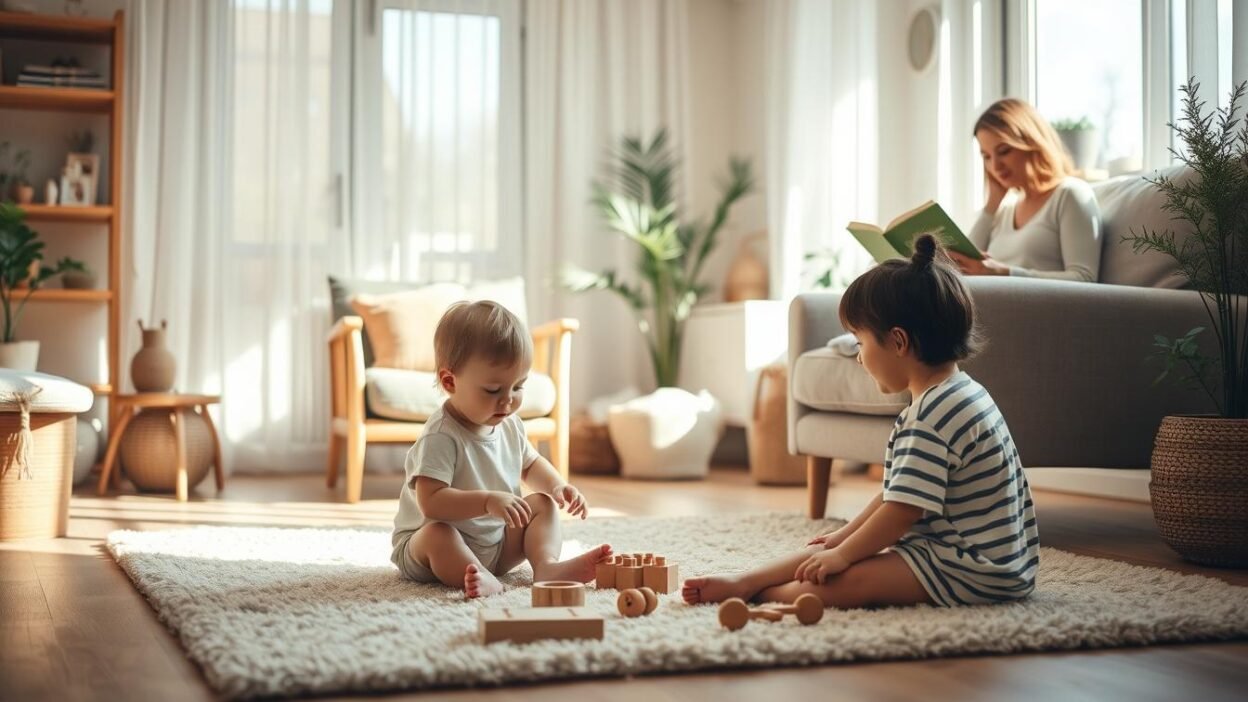
Your home might be secretly harming your family’s health. The World Health Organization found that environmental stressors can cause serious health issues. Noise and chaos can lead to high blood pressure, sleep problems, and anxiety.
Where families live greatly affects their well-being. A peaceful home is more than just pretty. It’s a sanctuary where family members can relax and recharge.
Studies show that messy spaces increase stress and scatter focus. Organized homes help clear the mind and balance emotions.
Calm parenting strategies don’t need perfect behavior or costly changes. They focus on managing emotions and setting predictable care routines. Parents can learn to create peaceful homes, no matter their current situation.
Viewing home tranquility as a skill helps transform living spaces. This approach builds stress-free family dynamics, even when facing challenges or past difficulties.
Parenting a child with unique developmental or learning needs can feel overwhelming, but informed guidance can make the journey more empowering. The Parenting & Family section provides practical strategies for communication, behavioural support, emotional connection, and building a calm home environment. Parents can explore related insights in the Special Needs Awareness category to better identify early signs and understand underlying needs. For clarity about developmental progress, the Developmental Milestones resources offer age-specific benchmarks that help caregivers set realistic expectations. When learning challenges arise, the Learning Disabilities category provides targeted support strategies for school and homework. For emotional wellbeing—both for children and parents—PsyForU.com offers mental-health tools rooted in psychology. Those wanting to build stronger routines, reduce stress, or cultivate intentional family habits can enhance their journey with guidance from IntentMerchant.com. These connected platforms ensure that parents never feel alone and always have trusted support at every step.
Key Takeaways
- Environmental stressors in homes directly impact family health, causing elevated blood pressure, sleep problems, and anxiety disorders
- Organized, thoughtfully designed spaces reduce mental distraction and promote psychological well-being for all household members
- Peaceful home environments function as protective sanctuaries that buffer families against external stressors
- Household tranquility emerges from intentional practices and consistent emotional regulation rather than material resources
- Parents can learn techniques to create supportive atmospheres regardless of their current stress levels or previous experience
Understanding the Foundation of a Peaceful Home Environment
A peaceful home is more than a physical space. It’s an emotional ecosystem where stress-free parenting and secure attachment thrive. This foundation goes beyond aesthetics to create genuine tranquility.
Peace at home is about feeling safe, calm, and serene. It doesn’t depend on size or expensive furnishings. Instead, it comes from how the environment makes inhabitants feel deep down.
Parents can control their home environment. This control helps build healthy parent-child relationships. These relationships benefit everyone in the family.

A “peaceful house” differs from a “peaceful home.” The first is about design for serenity. The second focuses on emotional atmosphere and caregiving practices.
Some families find peace in small apartments. Others feel tense in big, beautiful homes. The quality of relationships matters more than the house itself.
| Aspect | Peaceful House (Structural) | Peaceful Home (Relational) |
|---|---|---|
| Primary Focus | Physical environment, design elements, architectural features | Emotional atmosphere, interpersonal dynamics, caregiving quality |
| Key Components | Layout, lighting, acoustic management, spatial organization, aesthetic choices | Attachment security, emotional regulation, communication patterns, co-regulation practices |
| Measurement | Objectively assessed through design principles and environmental standards | Subjectively experienced through feelings of safety, connection, and calm |
| Implementation | Requires financial investment, professional design, structural modifications | Requires emotional intelligence, relationship skills, consistent practice |
| Sustainability | Maintains peace through consistent environmental conditions | Maintains peace through ongoing relational effort and adaptation |
Peaceful homes are based on attachment theory and environmental psychology. These show how children’s nervous systems interact with their caregivers’ emotions. Parental calmness can physically affect children in many ways.
Gentle speech tones help children feel less stressed. Harsh tones can trigger defensive reactions. Facial expressions also matter a lot.
Even young babies can read caregiver facial cues. This skill keeps developing as they grow. The way parents move also affects children’s emotions.
“The parent-child relationship is the most powerful mental health intervention known to mankind.”
Good parent-child relationships are key to stress-free parenting. This creates a positive cycle. When children feel secure, parents feel less stressed too.
Peace feels different for everyone. Temperament differences affect how people respond to their environment. Culture and personal history also play a role.
Some people are more sensitive to their surroundings. They process sensory information more deeply. These individuals need calmer spaces and routines.
Introverts need alone time to recharge. Homes with introverts benefit from quiet zones and scheduled solitude.
Creating peace at home involves managing the environment and emotions. Neither works well alone. Both physical spaces and relationships matter.
Effective peaceful home creation addresses both areas. This approach recognizes how environments affect emotions and vice versa. The next sections will provide practical strategies.
Understanding these concepts helps parents grasp why certain practices work. It shows that creating peace takes time, consistency, and a holistic approach.
A peaceful home emerges from many elements working together. It’s not about quick fixes. Instead, it requires patience and a big-picture view.
Assessing Your Current Family Dynamics
Every family has unique interaction patterns. Some support calm, while others create chaos and tension. To understand these patterns, step back from daily routines. Observe your household with objectivity and curiosity.
This assessment forms the foundation for calm-creating strategies. It involves examining conflicts and subtle factors that accumulate daily. Environmental stressors trigger fight-or-flight responses in parents and children.
Repeated unresolved stress keeps hormone levels high. This leads to anxiety, emotional exhaustion, and less patience. An audit of your home reveals what contributes to peace or undermines it.
Studies show disorganization wastes time and raises stress. Physical clutter creates distraction and reduces focus for everyone. This evaluation clarifies where to direct energy for maximum impact.
Mapping Stress Activation Points
Identify situations that reliably activate tension. Create a stress map – a visual or written inventory. Document when, where, and how household peace deteriorates most often.
This mapping brings unconscious patterns into awareness. It makes them addressable rather than inevitable. Temporal patterns reveal critical information about family functioning.
Morning routines often generate conflict as multiple demands collide. Evening transitions, when parents return from work, can become flashpoints for managing anger.

Spatial factors contribute to household tension levels. Certain rooms accumulate more conflict due to design issues or clutter. Kitchens become battlegrounds when cabinet organization makes meal prep frustrating.
Bedrooms generate resistance when toy overflow makes cleanup overwhelming. Bathrooms spark sibling conflicts when morning routines overlap without clear protocols.
Examine interpersonal dynamics carefully. Some parent-child pairs may experience more friction due to temperament clashes. Sibling relationships often follow predictable patterns of provocation and response.
Transitional moments deserve attention, as they often produce friction. Consider these common stress triggers:
- Shifting from independent play to structured activities like homework
- Leaving engaging environments (playgrounds, friends’ homes) to return to routine responsibilities
- Transitioning from high-energy activities to calm-down periods before bed
- Moving from weekend flexibility to weekday structure
- Adjusting expectations when plans change unexpectedly
Subtle contributors accumulate to exceed stress-tolerance thresholds. Ambient noise creates background tension. Visual clutter overwhelms sensory systems. Scheduling pressure compresses family time into rushed interactions.
Technology intrusion fragments attention and prevents genuine connection. These chronic low-level stressors explain disproportionate reactions to minor provocations.
Detecting Cyclical Interaction Sequences
Recognizing disruptive patterns requires developing keen observational skills. Families often establish maladaptive interaction patterns that become self-reinforcing. These cycles operate automatically, activated by familiar triggers.
A common disruptive pattern: parental stress leads to shortened patience and sharp corrections. Children respond with increased dysregulation or defiance. This intensifies parental frustration, escalating the interaction further.
The cycle creates amplification of distress where each reaction magnifies the next. This moves the family further from calm with each exchange. Conscious parenting tools help identify personal contributions to these patterns.
This approach moves beyond blaming towards systemic understanding. What automatic responses do you bring to moments of stress? Do you raise your voice, issue threats, or withdraw emotionally?
Family systems theory provides valuable perspective here. Individual behaviors function within larger relational contexts. Each person’s actions influence and are influenced by others. A child’s “difficult” behavior may respond to unaddressed parental stress.
Reflection exercises illuminate inherited parenting scripts that may perpetuate tension. Many parents replicate approaches their own parents used, even if those methods produced negative experiences. Questions worth exploring include:
- What phrases do I hear myself repeating that echo my childhood?
- Which of my reactions feel automatic rather than chosen?
- What beliefs about children and discipline am I operating from unconsciously?
- How do my expectations align with my children’s developmental capabilities?
This assessment phase is crucial. Effective change requires accurate understanding of current baseline functioning. Without knowing what needs modification, interventions remain generic rather than targeted.
Honest evaluation of environmental factors and personal patterns creates a foundation. This allows for meaningful, sustainable transformation toward household peace.
Mastering Emotional Regulation for Parents
Parents must master their own emotions before guiding children through emotional storms. A parent’s ability to regulate emotions greatly impacts the household’s emotional climate. Children learn self-regulation mainly by watching adults, not just through verbal instructions.
Parenting under stress can lead to burnout, even for resilient people. When a parent’s nervous system is constantly activated, minor issues can trigger big reactions. This can escalate conflicts instead of resolving them.
Developing self-regulation skills requires attention to three areas. These are recognizing personal warning signs, using real-time intervention techniques, and creating support systems. Each area builds on the last, forming a complete approach to emotional mastery.
Recognizing Your Anger Signals
The brain’s amygdala triggers threat responses before we’re consciously aware of emotional shifts. This explains why anger seems to appear suddenly for parents. However, the body sends signals during this process, but most people aren’t trained to notice them.
Learning to notice internal body states is key for early intervention. This skill helps parents identify anger early when regulation strategies work best. Trying to intervene after reaching peak arousal is much less likely to succeed.
“Between stimulus and response there is a space. In that space is our power to choose our response. In our response lies our growth and our freedom.”
Physical Warning Signs
The body acts as an early warning system for rising emotions. Recognizing these physical signs gives you time to use regulation strategies. This can help prevent reaching reactive thresholds.
| Body System | Early Warning Signs | Advanced Indicators |
|---|---|---|
| Muscular | Jaw tightening, shoulder tension, fist clenching | Widespread rigidity, trembling, aggressive posturing |
| Cardiovascular | Increased heart rate, facial warmth, chest pressure | Pounding heartbeat, facial flushing, visible pulsing |
| Respiratory | Breathing acceleration, shallow chest breathing, breath holding | Rapid panting, difficulty catching breath, hyperventilation |
| Temperature | Warmth in face and neck, slight perspiration | Intense heat sensation, significant sweating, chills |
Parents should practice body scans during calm times to build awareness. This creates brain pathways for automatic signal detection during stressful times. Building this awareness pays off throughout your parenting journey.
Emotional Escalation Patterns
Anger usually follows a predictable pattern through identifiable stages. Understanding this sequence allows for effective intervention at the right time. Knowing when to step in can make a big difference in managing emotions.
The typical pattern starts with mild irritation, which is easy to manage. Without intervention, this can grow into mounting frustration. This stage involves increased physical arousal and narrowed focus.
The third stage, active anger, involves strong emotions and less rational thinking. The final stage, rage, represents complete emotional takeover. At this point, the thinking part of the brain is barely engaged.
Implementing Self-Regulation Skills in Real-Time
Knowing about emotional regulation isn’t enough. Parents need practical techniques they can use during stressful moments. The following methods offer immediate ways to calm the nervous system when used consistently.
Creating calming practices helps prevent burnout and reduce stress. These techniques can be used anywhere, making them valuable tools for unpredictable family life.
The 4-7-8 Breathing Technique
This breathing pattern uses the breath to calm the nervous system. The specific timing activates relaxation responses that counteract stress. Following these steps can help you get the most benefit:
- Exhale completely through the mouth, making a whooshing sound to empty the lungs
- Inhale quietly through the nose for a mental count of four seconds
- Hold the breath for a count of seven seconds without strain
- Exhale completely through the mouth for eight seconds with the whooshing sound
- Repeat the cycle three to four times for optimal nervous system shift
The long exhale is particularly important. It stimulates the vagus nerve, signaling the brain to start calming responses. Regular practice during calm times makes this technique more effective during stressful moments.
Grounding Exercises for Immediate Calm
When emotions are intense, grounding techniques can help. These methods focus attention on the present moment. They interrupt negative thought cycles and reconnect you with your surroundings.
The 5-4-3-2-1 sensory awareness method provides systematic grounding through these steps:
- Identify five things you can see in your immediate environment
- Acknowledge four things you can physically touch or feel touching you
- Notice three things you can hear in this moment
- Recognize two things you can smell or favorite scents you enjoy
- Name one thing you can taste or a taste you appreciate
Physical grounding is another approach. Press your feet firmly into the floor or place your hands on solid surfaces. This creates body awareness that reinforces present-moment focus and bodily control.
Creating Your Personal Calm-Down Toolkit
Different nervous systems respond to various regulation strategies. Creating a personal collection of effective techniques ensures you have tools for diverse stressful situations. Using sensory items can encourage peaceful responses in your body.
Olfactory tools use scent’s direct connection to the emotional brain. Fragrance from scented candles can influence mood and brain responses. Essential oils like lavender can have calming effects. Keep a small vial of your preferred scent for quick use.
Auditory resources might include noise-canceling headphones with calming sounds. Nature recordings or specific beats can promote relaxed brain states. Sleep sound machines can mask household noise during parental calm-down moments.
Tactile objects provide immediate sensory feedback. Stress balls, textured stones, or fidget tools can interrupt escalating emotions. Even briefly holding an ice cube creates strong sensory input that can shift your focus.
Visual anchors could be photos of loved ones or peaceful places. Some parents find that looking at nature views reduces stress quickly. This can work even through windows or in photographs.
The best calm-down toolkit combines techniques from multiple categories. This ensures options for any situation. You might use breathwork while driving, scent while cooking, and tactile objects during bedtime routines.
Regularly evaluate and update your toolkit as life changes. Self-regulation skills develop through consistent practice. The goal is to build nervous system resilience that turns reactivity into responsive presence.
Building a Predictable Environment for Family Stability
A predictable environment turns chaotic homes into safe spaces. Children thrive and parents maintain consistency in these settings. Structured routines meet basic brain needs, helping kids develop emotional regulation.
Predictability doesn’t mean rigid schedules. It provides a framework for creativity and flexibility. Kids in consistent environments show better problem-solving and emotional control.
Constant uncertainty drains mental resources. Predictable environments free up these resources for learning and bonding. Simple routines keep homes running smoothly with little effort.
Establishing Consistent Daily Routines
Daily routines guide behavior without constant parental direction. They focus on sequence rather than strict timing. This allows families to stay consistent while adapting to natural pace variations.
The key is doing tasks regularly to prevent overwhelming build-up. When routines become habits, they require less mental energy. This creates automatic behaviors that support household functioning.
Planning for busy times makes managing these periods easier. Being organized reduces stress and wasted time. This allows families to enjoy special occasions without feeling overwhelmed.
Morning experiences set the tone for the entire day. Good morning routines prevent rushed, conflictual starts. Evening preparation eliminates morning decision-making stress.
Adequate time buffers prevent rushing that triggers stress. This acknowledges that kids move slower than adults. Unexpected delays are bound to happen.
Consider this morning sequence:
- Wake-up period with gentle lighting and calm interaction
- Personal care routines completed in consistent order
- Breakfast as a brief connection opportunity rather than rushed consumption
- Final preparation tasks with visual checklists for independence
- Departure ritual that provides closure and positive send-off
Brief exchanges during morning routines strengthen parent-child bonds. Sharing breakfast or offering help creates positive associations with mornings.
Evening Wind-Down Sequences
Evening routines help transition from day to night. Our nervous system can’t switch instantly from alert to sleepy. It needs gradual changes through decreasing stimulation.
Good wind-down sequences reduce stimulation across multiple senses. This includes lowering noise, dimming lights, and decreasing physical activity. These changes signal the body to prepare for sleep.
Comfort activities provide security while supporting relaxation:
- Bathing with warm water to trigger temperature-related sleep mechanisms
- Changing into sleep clothing as a symbolic transition
- Reading together to provide connection and calm focus
- Singing or listening to gentle music for auditory soothing
- Brief reflection or gratitude practice to process daily experiences
These sequences become powerful anchors that children associate with safety. Consistent evening routines are especially helpful during stressful times.
Creating Visual Schedules That Work
Visual information is often easier to process than verbal instructions. Visual schedules reduce the need for reminders. They also decrease power struggles and promote independence.
Age-appropriate schedules vary in complexity. Toddlers benefit from photos of family members doing activities. Preschoolers can use simple drawings or symbols.
Visual schedules help everyone know what to expect. This creates a predictable environment that reduces anxiety. Placing schedules at child eye-level in relevant locations increases their usefulness.
Involving children in schedule creation increases buy-in. When kids help make schedules, they understand their purpose better.
| Age Group | Visual Format | Placement Strategy | Update Frequency |
|---|---|---|---|
| Toddlers (1-3 years) | Actual photographs of child doing activities | Low wall placement in each relevant room | Update as routines change or quarterly |
| Preschoolers (3-5 years) | Simple drawings or universal pictograms | Sequence charts in high-traffic areas | Seasonal adjustments or as needed |
| School-Age (5-8 years) | Icons with text labels | Personal charts in child’s space plus central family calendar | Weekly review with monthly planning |
| Older Children (8+ years) | Text-based with minimal graphics | Digital or physical planners they maintain | Daily personal management with parental check-ins |
Designing Transition Rituals
Transitions often cause family conflict. Moving from fun to less-fun activities is hard for kids. Transition rituals provide predictable bridges that ease these changes.
These rituals address cognitive and emotional challenges. Kids often struggle to stop tasks due to executive function limits. They may feel anxious about upcoming activities.
Good transition rituals give warnings to allow mental preparation. A five-minute warning, then a two-minute notice, helps kids reach stopping points.
Physical rituals create memorable markers of change. Examples include:
- Specific songs that accompany particular transitions (cleanup songs, departure songs)
- Special handshakes or physical gestures that mark activity changes
- Visual timers that make abstract time concepts concrete
- Transition objects that move with the child between activities
- Consistent phrases or countdowns that signal impending changes
The power of transition rituals lies in their predictable familiarity. When kids know what to expect, resistance decreases. The ritual becomes comforting even as activities change.
Families benefit from rituals for their toughest transitions. A park departure ritual can turn battles into manageable routines.
This approach to predictability creates family harmony through clear structures. These reduce uncertainty and conflict triggers. Both kids and parents experience less stress and greater emotional resources.
Implementing Calm Parenting Strategies That Transform Your Household
Calm parenting strategies are key to peaceful family life. They replace reactive patterns with intentional responses. These methods create an environment where cooperation thrives naturally.
Mastering specific techniques addresses the neurological basis of parental reactions. Parents who use structured response strategies see less household conflict. These approaches focus on teaching and connection over punishment.
The Pause-and-Breathe Technique
The pause-and-breathe technique is crucial for calm parenting. It creates space between triggers and responses. This interrupts automatic reactions and engages rational thinking.
This technique works well for various parenting challenges. It helps parents respond thoughtfully instead of reacting emotionally. The pause allows for better decision-making in stressful situations.
Use the pause technique when feeling angry or noticing harsh words forming. It’s also helpful during high-stress times like transitions or bedtime routines. Physical strategies include stepping back or moving to a different room.
Mental techniques involve counting, self-talk reminders, or body scans. Combining physical and mental strategies makes the pause more effective. Even a short pause can greatly improve your response.
Modeling This Skill for Children
Show children how to use the pause-and-breathe technique. Explain your process out loud. This teaches them emotional regulation and normalizes managing feelings.
Children learn that strong emotions don’t require immediate action. They see that adults feel intensely but maintain control. This example is more powerful than verbal instructions about emotional management.
Lowering Your Voice to Raise Cooperation
Lowering your voice is more effective than raising it. Raised voices trigger defensive reactions in children. Soft tones activate the social engagement system instead of fight-or-flight responses.
A calm, firm whisper often achieves what shouting can’t. This technique works for all ages. It respects the listener’s nervous system rather than overwhelming it.
Using Positive Discipline Techniques
Positive discipline teaches rather than punishes. It maintains a child’s dignity while setting clear boundaries. This approach sees misbehavior as a chance to teach, not a flaw to correct.
Discipline means instruction, while punishment focuses on discomfort. Positive discipline strengthens the parent-child relationship while addressing behavioral concerns.
Redirecting Instead of Punishing
Redirection guides children towards acceptable behavior. It recognizes the need behind actions and offers alternatives. This technique teaches new behaviors instead of just stopping unwanted ones.
For example, give a toddler balls instead of books to throw. Teach a frustrated preschooler to use words. Offer teenagers age-appropriate decisions to support their independence.
Natural and Logical Consequences
Consequences teach cause-and-effect relationships. They differ from punishments, which are arbitrary negative experiences. Natural consequences occur without parental intervention, allowing reality to teach.
Logical consequences are parent-structured and relate directly to the behavior. For example, a child who misuses a toy loses it temporarily. This teaches careful handling without arbitrary punishment.
| Technique | Application Method | Expected Outcome | Developmental Stage |
|---|---|---|---|
| Pause-and-Breathe | Insert 5-10 second buffer before responding to triggering behavior | Reduced parental reactivity, increased intentional responses | All ages (parent skill) |
| Lowered Voice | Speak quietly and firmly instead of raising volume during conflicts | Increased child attention and cooperation without defensive reactions | Toddler through adolescent |
| Behavioral Redirection | Acknowledge impulse and offer acceptable alternative expression | Child learns appropriate behavior while maintaining dignity | Infancy through elementary |
| Natural Consequences | Allow safe, real-world results to teach without parental intervention | Child experiences cause-effect relationship, develops responsibility | Preschool through adolescent |
| Logical Consequences | Structure outcomes that relate directly to the problematic behavior | Child understands connection between actions and results | Preschool through adolescent |
Implementing calm parenting strategies takes time and consistency. Expect gradual improvement as new patterns replace old habits. These techniques reshape neural pathways that support reactive responses.
Positive discipline creates homes where children feel respected and parents maintain authority. This balance is key for long-term family harmony. Children develop better emotional regulation and cooperation skills.
Parents using these strategies report less stress and improved child behavior. The techniques reduce emotional exhaustion from constant battles. Focusing on teaching builds skills that yield long-term benefits.
Practicing Mindful Parenting Approaches Daily
Modern parenting often pulls attention in many directions, creating disconnection within families. Mindful parenting shifts from autopilot to conscious awareness in every interaction. This approach transforms how parents experience and respond to family life.
Parental presence significantly influences child development outcomes. It affects emotional regulation, secure attachment, and behavioral cooperation. However, digital distractions and work pressures can compromise parent-child connections.
Mindful parenting doesn’t require extra time or meditation. It involves bringing awareness to daily family routines. This practical approach makes conscious parenting tools accessible to busy parents.
Present-Moment Awareness With Your Children
Children are sensitive to parental attention quality. They can detect when parents are physically present but mentally elsewhere. This perceived unavailability often leads to attention-seeking behaviors.
Present-moment awareness starts with recognizing where attention has gone. Parents often find their minds drifting to past regrets or future worries. This causes them to miss the actual experience unfolding before them.
Genuine presence involves specific practices that anchor attention to current experiences. These include single-tasking, intentional transitions, regular check-ins, and sensory anchoring.
- Single-tasking: Choosing to focus on one activity at a time rather than attempting to simultaneously manage multiple demands
- Intentional transitions: Pausing between activities to consciously shift attention rather than carrying mental residue from one context into another
- Regular check-ins: Brief internal assessments throughout the day asking “Where is my attention right now?” and gently redirecting when it has wandered
- Sensory anchoring: Using physical sensations—the weight of a child on your lap, the sound of their voice, the warmth of their hand—to ground awareness in the present moment
When parents give full attention, children feel truly seen and heard. This deep connection often reduces behavioral difficulties more effectively than discipline. Children who feel consistently noticed have less need for challenging behaviors.
Conscious Response vs. Automatic Reaction
Many parenting responses are automatic patterns from personal upbringing and stress responses. These patterns activate instantly when triggered by child behavior. They bypass conscious choice, leading to unintended reactions.
Conscious responses come from higher-order brain processing. These allow for perspective-taking, value alignment, and intentional choice. Accessing these capacities requires creating space between triggering events and parental actions.
Breaking the React-Regret Cycle
Many parents react harshly, regret it, but repeat the same response in similar situations. This cycle persists because regret doesn’t alter the underlying automatic pathway. Breaking it requires intervening at the moment of activation.
Parents often lack alternative responses even when they pause. Building a repertoire of options during calm moments provides accessible tools during stress. This approach helps break the cycle of reactive parenting.
Creating Space Between Trigger and Response
The key skill in conscious parenting is inserting brief pauses between triggers and responses. This space allows the nervous system to calm down and higher-order thinking to engage. Several techniques can facilitate this critical pause.
| Technique | Method | Outcome |
|---|---|---|
| Emotional Labeling | Internally naming the emotion arising: “I notice I’m feeling angry” or “There’s frustration present” | Creates observer perspective that reduces identification with emotion, decreasing its intensity |
| Interpretation Questioning | Asking “Is there another way to understand this situation?” or “What might my child be experiencing right now?” | Disrupts automatic meaning-making and opens alternative perspectives |
| Best-Self Inquiry | Briefly considering “What would I do if I were at my best right now?” or “How would I handle this if I were calm?” | Accesses values and intentions rather than conditioned reactions |
| Physical Reset | Taking three deep breaths, briefly stepping away, or changing physical position | Activates parasympathetic nervous system to reduce physiological activation |
These techniques need practice during calm moments to be accessible during stress. Parents can rehearse these responses mentally and visualize using them in challenging situations. Reflecting after difficult interactions helps identify where pause points could have been inserted.
Integrating Mindfulness Into Everyday Activities
The idea that mindfulness requires dedicated meditation time can be a barrier for busy parents. Sustainable mindful parenting involves transforming routine activities into opportunities for present-moment awareness. This approach doesn’t add separate practices to already-full schedules.
Everyday family activities provide natural contexts for cultivating attention and presence. Meals become chances to notice tastes and textures. Bath time transforms into sensory exploration. Commute times offer valuable opportunities for breath awareness.
Bedtime routines provide rich opportunities for present-moment connection. Slowing down and bringing full awareness to bedtime stories creates profound moments of connection. This approach strengthens relationships and eases the transition to sleep.
Integration also involves noticing small moments throughout the day. Waiting in line becomes a chance to take conscious breaths. Folding laundry transforms into a tactile meditation. These micro-practices accumulate over time, gradually shifting default attention patterns.
The goal is to increase the percentage of time spent in conscious awareness. Even small shifts significantly transform family dynamics and parental experience. This incremental approach is more sustainable than attempting dramatic changes.
Parents who practice conscious parenting tools report improved child behavior and greater personal satisfaction. They experience more enjoyment in family time and feel more connected to their children. These benefits extend beyond immediate family impact, modeling valuable life skills for children’s futures.
Developing Effective Communication With Children
Good parent-child communication creates family harmony. It shapes relationship strength and children’s emotional growth. Most family issues stem from poor communication, not conflicting needs.
Childhood communication patterns affect lifelong social skills. Kids with good home dialogue develop better emotional intelligence. These skills extend to friendships, school, and future work relationships.
Healthy parent-child bonds need more than just information sharing. They require specific skills most adults never learned. These techniques help build meaningful dialogue and teach kids valuable communication skills.
Active Listening Techniques That Build Connection
Active listening involves full attention, empathy, and understanding. Parents must set aside their own agenda. This shows kids their thoughts and feelings matter.
True active listening goes beyond just hearing words. It includes eye contact, focus, and observing body language. These create an experience of being truly heard.
Reflective Listening Strategies
Reflective listening mirrors back what children say. It shows understanding and lets kids feel heard. This technique works well when kids need acknowledgment more than advice.
Parents can use specific phrases for reflective listening:
- Content reflection: “You’re telling me that…” or “It sounds like what happened was…”
- Emotion reflection: “You seem really frustrated about…” or “I can see you’re feeling disappointed because…”
- Combined reflection: “So you’re upset that your friend didn’t invite you, and that made you feel left out”
- Clarifying reflection: “Let me make sure I understand—you’re worried about…”
Match the emotional intensity of reflections to the child’s expression. Strong feelings need strong reflections. Mild concerns need gentle responses.
Validating Feelings Before Problem-Solving
Acknowledge emotions before trying to fix problems. Rushing to solutions can make kids feel dismissed. Emotional validation creates space for constructive talks.
Validation shows feelings make sense given the situation. Use phrases like “That does sound frustrating” or “I understand why you’d feel disappointed”.
Validation doesn’t mean you agree with your child’s interpretation or approve of their response—it simply recognizes that their feelings are real and understandable from their viewpoint.
After validation, kids are more open to guidance and problem-solving. The order matters: validate first, then problem-solve.
Speaking at Your Child’s Level
Adjust your physical position and language for effective child communication. Get down to eye level to show respect. This helps create a genuine connection.
Match your words to your child’s age. Use simple language for young kids. Older children can handle more complex ideas.
Parents should match communication to their child’s developmental stage:
- Toddlers (2-3 years): Simple sentences with concrete language. “Hitting hurts. We use gentle hands.”
- Preschoolers (3-5 years): Short explanations with clear cause-effect. “When toys stay on the floor, people can trip and get hurt.”
- Early elementary (6-8 years): More detailed reasoning with beginning abstract concepts. “Your brother feels sad when you exclude him because he wants to spend time with you.”
- Older children (9+ years): Complex discussions including abstract reasoning and multiple perspectives.
Watch your child’s reactions to see if they understand. Blank stares or repeated questions may mean your language is too complex.
Using “I” Statements Instead of Accusations
How parents phrase statements affects children’s reactions. “You” statements can sound accusatory and trigger defensiveness. “I” statements express needs without blame.
“I” statements describe personal feelings and needs. They reduce defensiveness by focusing on experience, not fault. This teaches kids to express needs without attacking others.
Compare these accusatory and constructive communication examples:
| Accusatory “You” Statement | “I” Statement Alternative | Why It Works Better |
|---|---|---|
| “You never listen to me!” | “I feel frustrated when I need to repeat myself several times.” | Describes personal experience without character attack |
| “You’re being so selfish!” | “I need you to consider how your choice affects the family.” | Focuses on behavior and impact rather than character judgment |
| “You always make such a mess!” | “I feel overwhelmed when the kitchen is left messy because I need a clean space to prepare dinner.” | Explains the specific impact and personal need |
| “You don’t care about this family!” | “I feel hurt when commitments aren’t kept because reliability matters to me.” | Expresses emotion without mind-reading or assumption |
Effective “I” statements have three parts: feeling, specific behavior, and reason. Use this format: “I feel [emotion] when [behavior] because [reason]”. It’s clear and respectful.
These skills need practice. Parents must pause to rephrase their words. The effort pays off with less conflict and better cooperation.
Managing Toddler Tantrums With Gentle Discipline Techniques
Toddler tantrums challenge parents but offer chances to teach emotional control. Gentle discipline keeps parent-child bonds strong during stressful times. These methods see tantrums as normal growth, not bad behavior needing punishment.
Young kids feel emotions strongly but can’t manage them alone. They lack words to express complex feelings. This mismatch often leads to meltdowns during the toddler years.
To handle tantrums well, parents must understand what causes them. Knowing the patterns helps turn tough moments into teaching opportunities. This builds lifelong emotional skills.
Understanding the Tantrum Cycle
Tantrums follow clear stages parents can learn to spot. They often start when a child is denied something or feels tired or hungry. These frustrations trigger the child’s stress response before the tantrum shows.
The tantrum builds as the child’s distress grows. Signs include whining, crying, or tension. Parents who notice early signs can sometimes redirect the child.
At peak intensity, the child loses all control. Screaming, crying, or throwing things may happen. The child can’t reason at this point.
As the tantrum winds down, the child starts to calm. During recovery, the child can reconnect and talk about what happened. Knowing these stages helps parents respond better.
| Tantrum Stage | Child Behaviors | Effective Parent Response | Ineffective Approaches |
|---|---|---|---|
| Triggering Event | Initial frustration, minor protest | Acknowledge feelings, offer choices | Dismissing concerns, rigid demands |
| Escalation | Whining, crying, raised voice | Calm presence, distraction, humor | Lengthy explanations, bargaining |
| Peak Intensity | Screaming, physical expression | Safety monitoring, calm proximity | Reasoning, consequences, demands |
| De-escalation | Reduced intensity, slower breathing | Gentle comfort, simple language | Immediate discipline, questioning |
| Recovery | Baseline emotional state returns | Reconnection, brief discussion | Lengthy lectures, shaming |
Tantrums often happen during activity changes, which toddlers find hard. Hunger or tiredness make controlling emotions tougher. Too much noise or activity can overwhelm a young child’s system.
Toddlers crave independence. When adults stop them for safety reasons, it can trigger a tantrum. Reducing common triggers can help lessen tantrums overall.
Staying Calm When Your Child Loses Control
Keeping cool during a child’s meltdown is really hard. A child’s intense emotions can stress parents out. The screaming and wild behavior can trigger protective instincts or frustration.
Research shows kids need calm adults to learn self-control. This process, called co-regulation, builds future emotional skills. Parents lend their calm state to help kids settle down.
Co-Regulation Strategies
Good co-regulation starts with the parent staying calm. Deep breaths help activate the body’s relaxation response. Kids pick up on this calm without realizing it.
Some kids calm down with touch, others need space. Parents can learn what works best for their child through watching and trying different things.
Gentle discipline means staying close without overwhelming the upset child. Simple words like “I’m here” or “You’re safe” help without asking too much. Long talks don’t work when a child is very upset.
The parent’s emotional state directly affects how quickly the child calms down. Kids are very sensitive to their caregiver’s stress levels. When parents stay calm, kids calm down faster.
When to Intervene and When to Step Back
Deciding when to step in requires careful thought. Safety concerns demand immediate action if the child might hurt themselves or others. Hitting people or pets needs firmer limits than crying or yelling.
How the child responds affects what to do. Some kids get more upset if parents come close. Others need physical closeness to feel safe.
Age matters too. Younger toddlers usually need more help to calm down. Older preschoolers might benefit from chances to practice calming themselves with parents nearby.
Where the tantrum happens is important. Public tantrums often need more active management for safety. At home, kids can express emotions more freely with parents watching nearby.
Validating Emotions While Setting Boundaries
A key skill in handling tantrums is accepting feelings while keeping rules. This shows that all emotions are okay, but some actions are not. Teaching this difference helps build emotional smarts.
To validate feelings and set limits, use a three-part approach. First, name the emotion. Second, acknowledge the reason for it. Third, state the rule and offer other options.
For example: “You’re angry we have to leave the park. Hitting is not okay. You can stomp or say ‘I’m mad!’ instead.” This teaches that feelings matter without letting go of important rules.
Children need to know that feelings are always acceptable, but certain behaviors are not. This distinction forms the foundation of emotional intelligence and self-regulation.
Accepting feelings helps kids avoid shame about emotions. When parents always acknowledge feelings without judgment, kids learn emotions give useful info. This acceptance actually helps reduce emotional intensity over time.
Setting limits during tantrums is still important. Rules about hitting or breaking things show parents are in control. Consistent rules actually make kids feel more secure.
Timing matters when validating feelings and setting limits. During peak tantrums, keep it brief. Expand on the lesson later when the child is calmer. This respects the child’s brain limits while still teaching important ideas.
Offering safe ways to express feelings teaches kids to handle emotions well. Stomping, squeezing a pillow, or using words are good options. These skills become more important as kids grow and face situations needing emotional control.
Setting Consistent Boundaries Without Power Struggles
Consistent boundaries create predictable frameworks that foster autonomy. They show parental leadership and care through guidance, not control. Clear expectations help children develop security without exhausting confrontations.
Consistent boundaries reduce power struggles by making expectations clear. Kids thrive in structures with safety and age-appropriate freedom. Parents must decide which boundaries are firm and which allow choices.
Establishing Non-Negotiable Rules
Non-negotiable rules are firm boundaries that don’t change. They cover physical safety, respect for others, and core family values. Parents must separate true non-negotiables from personal preferences.
Safety rules are clearly non-negotiable. These prevent kids from playing in traffic or touching hot stoves. Respect rules stop physical or emotional harm. Value-based rules reflect family principles like honesty.
Fewer, clearly-defined non-negotiable rules prove more enforceable than many flexible ones. Research shows families with 3-5 core rules have fewer power struggles. Kids quickly learn which rules are absolute.
Explaining why rules are non-negotiable reduces arguments. When kids understand the reasons, they’re more likely to cooperate. This turns compliance into teamwork rather than submission.
The more clear you are about what you will and won’t do, the less your child will test you. Children are very smart. They will continue to test if the answer is maybe.
Offering Choices Within Limits
Offering choices within limits meets kids’ need for independence while keeping parental authority. This prevents power struggles by giving real decision-making chances. Kids feel in control without parents giving up responsibility.
Good choice-offering means all options are truly okay with parents. False choices lead to arguments when kids pick the secret bad option. Real choices show respect while keeping structure.
Choices should relate to areas with flexibility in set boundaries. Kids might pick clothes colors but not weather-inappropriate outfits. They can choose meal parts from healthy options but not replace dinner with dessert.
Age-Appropriate Decision-Making Opportunities
A child’s age determines what choices they can handle. Toddlers do well with simple choices like “red shirt or blue shirt?” These build decision-making skills without overwhelm.
Elementary kids can handle more complex choices. They might decide homework timing or piano practice scheduling. These teach time management and responsibility while respecting growing independence.
Teens need even more complex decisions with natural results. They might plan weekends if homework is done first. Or manage clothing budgets. These prepare them for adult choices with parental guidance.
| Age Range | Choice Complexity | Example Decisions | Learning Outcomes |
|---|---|---|---|
| Toddlers (2-3 years) | Binary selections between two options | Which cup to use; which book to read; red or blue shirt | Basic decision-making; preference identification; autonomy experience |
| Preschoolers (4-5 years) | Multiple options with clear parameters | Which activity during free time; order of routine tasks; snack selection | Prioritization skills; consequence awareness; preference refinement |
| Elementary (6-11 years) | Sequence and method choices | Homework timing; chore completion methods; activity scheduling | Time management; responsibility; planning skills |
| Adolescents (12+ years) | Complex decisions with accountability | Weekend planning; budget management; extracurricular selection | Independence; consequence evaluation; adult preparation |
Following Through With Natural Consequences
Consistent follow-through with stated consequences is key for effective boundaries. Kids adapt to consistent rules but struggle with random enforcement. Reliable follow-through shows that boundaries matter and parents keep their word.
Natural consequences teach responsibility best. They happen automatically from choices without parental action. Forgotten lunch means hunger. No coat means cold. Poor time management means unfinished homework.
Parents using positive discipline techniques know natural consequences differ from punishments. Natural consequences logically connect to choices without lectures. The consequence itself teaches without parental emphasis.
Following through requires emotional control from parents. It means allowing kids’ temporary discomfort for long-term learning. This builds the ability to link choices with outcomes, an essential life skill.
Inconsistent follow-through teaches kids to push boundaries. When parents don’t enforce stated consequences, kids learn rules are just suggestions. This leads to exhausting power struggles as kids constantly test limits.
Natural consequences should fit the action. Minor rule-breaking gets minor consequences. Serious violations have bigger outcomes. This teaches kids about the weight of different choices and responsibilities.
Fostering Family Teamwork and Cooperation
Family teamwork builds a foundation where teamwork replaces conflict. It creates shared responsibility and develops critical life skills. Delegating tasks to all family members spreads the workload and teaches children valuable lessons.
Everyone who makes messes should help clean up. This approach creates fairness and accountability. It transforms the family dynamic into mutual support and collective problem-solving.
Positive child behavior strategies based on teamwork are more effective than top-down orders. They create lasting change in family dynamics.
Creating Collaborative Problem-Solving Sessions
These sessions address family challenges through structured talks that include all viewpoints. They move beyond parental orders to solutions that reflect everyone’s needs. The process starts by defining the problem without blame.
Parents guide sessions by asking all family members for ideas. Children often come up with creative solutions adults might miss. The family then evaluates suggestions based on fairness, practicality, and addressing everyone’s needs.
After choosing a solution, families set a follow-up meeting to check progress. This teaches critical thinking and shows that plans can change. The collaborative approach increases children’s commitment to solutions they helped create.
Good topics include morning conflicts, tech use disputes, and chore distribution. These sessions teach perspective-taking, compromise, and problem-solving. They also reduce parents’ burden of solving all family issues alone.
Implementing Family Meetings
Regular family meetings provide forums for communication, planning, and connection. These gatherings turn family teamwork into reality. Consistent meetings show that every family member’s voice matters.
Setting Up Effective Meeting Structures
Effective meetings need several key elements. Weekly meetings work best for most families. Choose a time when everyone can join without rushing.
The agenda should include various parts, not just problems. Include appreciations, problem-solving, planning, and fun activities. This creates a well-rounded meeting.
Rotating leadership roles teaches skills to all age groups. When kids lead parts of meetings, they gain confidence. The leader ensures everyone is heard and no one dominates.
| Meeting Component | Purpose | Time Allocation | Facilitation Approach |
|---|---|---|---|
| Appreciations | Acknowledge positive contributions and build connection | 5-10 minutes | Round-robin sharing with specific examples |
| Problem-Solving | Address current challenges collaboratively | 15-20 minutes | Structured process with solution brainstorming |
| Planning | Coordinate schedules and upcoming activities | 5-10 minutes | Review calendar and assign responsibilities |
| Fun Planning | Strengthen family bonds through shared activities | 5-10 minutes | Democratic selection of family activities |
Age-Appropriate Participation Strategies
Adapt meetings for different ages to ensure everyone can join in. Use visual aids and simple language for preschoolers. Keep their participation short, about 10-15 minutes.
Elementary kids can handle more complex talks about daily issues. They can join problem-solving with some help. Giving younger kids choices between set options works well.
Teens can discuss rules and privileges as their independence grows. They value being treated as capable contributors. These strategies show respect while maintaining parental guidance.
Building a “We’re in This Together” Mentality
Create a team mindset where the family faces challenges together. Language choices greatly impact how family members see their roles. Phrases that stress collective identity strengthen cooperation.
Use “our family” language to create shared ownership. Say things like “Our family values helping each other.” This builds a stronger group identity.
Share responsibility with phrases like “We all need to keep our home comfortable.” This shows that everyone must help. Kids respond better when they feel like valued team members.
Use supportive language like “Let’s help each other with this challenge.” This teaches kids that families support each other through tough times.
This approach to teamwork creates households based on cooperation, not conflict. Families using these methods have fewer power struggles and stronger connections. Parents feel less stressed when everyone shares responsibilities.
Practicing Peaceful Conflict Resolution
Family harmony grows from peaceful conflict resolution strategies, not from avoiding disagreements. Conflicts between parents and children are normal parts of family life. Families seeking calm environments should focus on developing skills for respectful conflict navigation.
Research shows that conflict itself doesn’t harm children’s development or family bonds. The way family members handle disagreements matters most. Families practicing peaceful resolution create environments where children learn to value different opinions.
Parents need to practice and model conflict navigation skills intentionally. Children learn from watching how adults handle disagreements. When parents approach conflicts calmly and respectfully, children learn to manage challenges well.
Teaching Children Emotion Vocabulary
Peaceful conflict resolution starts with children’s ability to express feelings through words. Young kids without enough emotion words often use tantrums or aggression instead. Parents can help by teaching children to identify and name their feelings.
Parents can build emotional literacy by labeling children’s emotions during everyday experiences. Simple comments like “You look disappointed” help children connect feelings with specific words. This practice makes abstract emotions easier to communicate.
Emotion vocabulary grows as children develop. Toddlers learn simple emotion categories that match their thinking abilities:
- Happy: feelings of pleasure, satisfaction, or joy
- Sad: experiences of loss, disappointment, or sorrow
- Mad: sensations of anger, frustration, or irritation
- Scared: responses to perceived danger or uncertainty
As children grow, parents introduce more complex emotion words. School-age kids can understand differences between frustration and anger. Teens can grasp complex emotions like ambivalence and insecurity.
Practical ways to expand emotional literacy include reading books about emotions and using emotion charts. Parents can model by saying things like “I’m feeling frustrated because of the heavy traffic.”
Modeling Healthy Disagreement
How parents handle adult disagreements teaches children the most about managing conflicts. Kids who see respectful problem-solving learn that conflict is normal, not relationship-ending. These observations shape how children handle their own relationships.
Healthy disagreement modeling includes several key parts. Parents show emotional regulation by managing their reactions before addressing the conflict. They use respectful communication, avoiding behaviors that damage relationships.
Effective conflict modeling also includes considering both sides’ views. Parents who find compromises and work together on solutions teach valuable problem-solving skills. This approach shows that disagreements can lead to creative outcomes.
Repairing Relationship Ruptures
Attachment theory highlights the importance of rupture and repair in relationships. Ruptures are normal moments of disconnection or conflict. These don’t harm relationships when followed by effective repair processes.
The repair process involves specific actions that rebuild trust. Emotion coaching for parents focuses on these repair steps:
- Acknowledgment: recognizing one’s contribution to the conflict without excessive self-blame or defensiveness
- Genuine apology: expressing sincere regret for harm caused, distinguished from manipulative or coerced apologies
- Behavioral amends: making changes in actions rather than relying solely on verbal apologies
- Reconnection: rebuilding emotional closeness through quality attention and time
Letting children see parents repair conflicts teaches that relationships can survive disagreements. This knowledge builds resilience and security in children’s relationships. It shows that temporary disconnection doesn’t mean permanent damage.
The Repair Process After Conflicts
Parent-child conflicts need special attention due to power differences. Parents should initiate repair to model accountability and respect. Adults who wait for children to apologize first miss teaching opportunities.
Some parents worry that apologizing to children might weaken their authority. Research shows the opposite is true. When parents admit mistakes and apologize, children see them as trustworthy and fair.
Effective parent-child repair uses age-appropriate communication. For young children, repairs might include hugs or shared activities. The message is “We had a hard moment, but we’re okay now.”
Older children benefit from more direct repair conversations. Parents might say, “I’m sorry for yelling. Next time I’ll take a breath before speaking.” This approach models accountability and commits to change.
The timing of repair is important. Immediate attempts during high emotions often fail. A short cooling-off period helps. However, waiting too long makes reconnecting harder.
Peaceful conflict resolution creates families where disagreements become learning opportunities. Children in these environments develop emotional intelligence and relationship skills. These practices turn family conflicts into moments of growth and connection.
Reducing Parental Stress Through Self-Care
Parental stress reduction requires viewing self-care as a necessity, not a luxury. Constant caregiving depletes parents physically, emotionally, and mentally. Without recharging, even resilient individuals face burnout.
Neglecting self-care limits a parent’s ability to care for their children. Self-care is essential infrastructure for sustainable parenting, not selfish indulgence.
Stress-free parenting through self-care addresses multiple aspects at once. It offers realistic strategies that fit busy schedules. Small, consistent practices often work better than infrequent extended interventions.
Identifying Your Non-Negotiable Self-Care Needs
Effective self-care starts by distinguishing between preferences and genuine needs. Preferences enhance enjoyment but aren’t vital. Non-negotiable needs are essential for health, emotions, and caregiving capacity.
Parents must honestly assess what they truly require. This goes beyond what others expect or what they think they should want.
- Physical needs: Adequate sleep duration and quality, nutritious food consumption, regular movement or exercise, preventive healthcare appointments, management of chronic conditions
- Emotional needs: Adult conversation beyond logistics, creative expression opportunities, solitude or social connection based on individual temperament, processing space for feelings
- Intellectual needs: Mental stimulation through learning, purposeful work that engages cognitive abilities, problem-solving activities, exposure to new ideas
- Spiritual needs: Meaning-making practices, nature connection, meditation or prayer for those who find these meaningful, alignment with personal values
Guilt, time scarcity, and financial limits often prevent parents from meeting their needs. Lack of practical support can leave parents without backup.
Creative problem-solving is key. Parents might swap childcare with friends or reframe activities to meet needs. For example, involving kids in active play can fulfill a parent’s need for movement.
Building Micro-Moments of Calm Into Your Day
Small moments of calm throughout the day are more practical than waiting for large blocks of time. Brief, strategic practices can provide genuine restoration. These micro-moments are effective through quality of attention and cumulative effect.
Even brief practices reduce stress when applied consistently. The key is full presence during these moments, not multitasking. Parents can use natural transition points in their routines for intentional calm practices.
Five-Minute Reset Practices
These techniques offer quick stress relief when done with focused attention:
- Mindful breathing sequences: Practice deliberate breathing while waiting at traffic lights, in pickup lines, or during children’s activities. Count four beats inhaling, hold for four, exhale for six.
- Sensory savoring: Drink morning coffee or tea with complete sensory attention. Notice temperature, aroma, taste, and texture without distraction from devices or planning.
- Nature micro-doses: Step outside for brief exposure to natural elements. Feel sunlight, observe weather, notice seasonal changes, or simply breathe outdoor air.
- Movement breaks: Perform gentle stretches, shoulder rolls, or brief walking. Physical release supports mental clarity and reduces tension accumulation.
- Audio restoration: Listen to a favorite song with full attention, or engage in brief creative activities like doodling or journaling single thoughts.
These practices add up over multiple daily applications. Three five-minute resets throughout the day provide fifteen minutes of restoration. This approach fits realistically within busy parenting schedules.
Asking for and Accepting Help
Many parents struggle to request and receive assistance, even when it’s available. Perfectionism, guilt, and fear of judgment create barriers. Cultural messages about parental self-sufficiency reinforce isolation.
To overcome these barriers, start by listing tasks causing the most stress. Make clear, specific requests for help instead of vague statements. Practice accepting offered help graciously instead of automatically refusing.
Building reciprocal support networks creates sustainable systems. Well-resourced parents create calmer households and model self-care for their children. This approach recognizes that stress-free parenting becomes more achievable with community support.
Creating Physical Spaces That Promote Calm
Our surroundings deeply affect our emotions and behavior. Organized, well-designed spaces help reduce stress and improve mood. This connection works both ways. Calm environments foster emotional balance, while chaos increases stress.
Parents can use this knowledge to create homes that support calm parenting. By understanding how spaces impact emotions, families can build atmospheres that encourage connection and cooperation.
Decluttering High-Traffic Areas
Visual clutter raises stress hormones and makes it harder to focus. This is especially true in busy areas like entryways and kitchens. Without good systems, these spaces quickly become messy.
The key to decluttering is giving everything a home. This simple rule makes it easier to keep things tidy. When items have a place, there’s less mental work involved.
Here are some practical ways to keep high-traffic areas neat:
- The “one in, one out” rule: For every new item entering the home, one existing item must be donated or discarded to prevent accumulation
- Regular purging schedules: Monthly or seasonal reviews of children’s clothing, toys, and household items identify outgrown or unused possessions
- Adequate storage solutions: Baskets, bins, and shelving systems provide specific locations that match the volume of possessions
- Clear surface maintenance: Keeping countertops, tables, and floors clear of everything except actively used items reduces visual chaos
- Transition stations: Designated areas near entryways for shoes, bags, and outerwear prevent dispersal throughout the home
For people sensitive to their environment, decluttering is crucial for reducing stress. A simpler space helps these family members stay calm and focused.
Designing a Family Calm-Down Corner
A calm-down corner gives family members a place to manage tough feelings. It’s not a punishment, but a helpful tool. When everyone uses it, including parents, it becomes a normal part of self-care.
Good calm-down corners have comfy seating, soft lighting, and simple decor. These elements help the body and mind relax. Privacy is important too, but the space shouldn’t feel isolated.
Sensory Tools and Comfort Items
Different people find different things calming. It’s good to have a variety of tools in the calm-down corner. This way, everyone can find what works best for them.
| Sensory Category | Tools for Regulation | Primary Function |
|---|---|---|
| Visual | Glitter jars, hourglasses, calming images, nature photographs | Provides focal point for attention redirection and breathing pacing |
| Auditory | Noise-canceling headphones, calming music playlists, white noise machines | Blocks overwhelming sound or provides soothing auditory input |
| Tactile | Stress balls, textured fabrics, therapy putty, soft blankets | Engages hands and provides sensory feedback through touch |
| Proprioceptive | Weighted blankets, resistance bands, push toys | Provides deep pressure input that calms nervous system |
| Comfort Objects | Stuffed animals, family photos, favorite books, journal | Offers emotional security and connection during distress |
The tools in the calm-down corner should fit each family member’s age and needs. It’s good to talk about what helps most and change things as needed.
Using Sensory Elements Strategically
Colors can affect our mood. Soft blues, greens, and earth tones often create a peaceful feeling. These colors work well in bedrooms and living rooms.
Strategic lighting design is important for mood and sleep. Natural light during the day helps us feel alert and happy. Softer, warmer light in the evening helps prepare for sleep.
Scents can also change how we feel. Lavender and vanilla often help people relax. Citrus scents can boost energy and mood.
Here are some ways to use helpful scents:
- Essential oil diffusers that disperse fragrance throughout rooms without flame hazards
- Scented candles during supervised family time or parental relaxation periods
- Fresh flowers or herbs that provide natural fragrance and visual appeal
- Linen sprays applied to bedding for sleep-supportive scents in bedrooms
Soft textures like blankets and rugs can make a space feel cozy. Natural materials like wood can help us feel grounded. Using different textures adds interest without being overwhelming.
By designing calm spaces, parents make it easier for everyone to stay balanced. This approach to calm parenting strategies can reduce conflicts and create a more peaceful home.
Maintaining Long-Term Consistency for Harmony
Creating a peaceful home takes ongoing effort and realistic expectations. Progress happens slowly, not overnight. Parents often start with enthusiasm, hoping for quick changes. However, lasting change comes from steady effort over time.
Moving from crisis-driven parenting to calm takes patience. It’s a journey, not a destination. This view helps avoid giving up when quick results don’t happen. Consistent habits create predictability, which helps kids feel secure.
Tracking Progress Without Perfection
Measure family progress without unrealistic goals. Set baselines for conflicts, emotional outbursts, and daily interactions. Use these to learn, not judge. They show what works, not parental success or failure.
“Good enough” parenting is key for keeping up efforts. Research shows that responsive care, not perfect parenting, helps kids grow. Children need steady, caring responses more than flawless techniques.
Celebrate small wins to stay motivated. Progress counts, even with challenges:
- Successfully implementing a calming technique during one conflict
- Completing a single peaceful transition between activities
- Constructively resolving a disagreement without escalation
- Maintaining composure during a challenging moment
- Noticing improvements in sibling cooperation
Be kind to yourself when mistakes happen. Harsh self-judgment drains motivation for change. Parents who treat themselves kindly during tough times stick with new approaches better.
Adjusting Strategies as Children Grow
What works for one age may not for another. Keep core principles, but adapt techniques. This keeps parenting effective as kids develop. Flexibility ensures strategies work across childhood and teen years.
Developmental Considerations
Different ages need different approaches. Keep respect, validation, and boundaries consistent. Know typical abilities for each age to set realistic expectations.
| Developmental Stage | Communication Approach | Regulation Support | Boundary Setting |
|---|---|---|---|
| Toddlers (1-3 years) | Simple language, concrete terms, immediate feedback | High parental regulation, physical comfort, distraction techniques | Clear limits, immediate consequences, physical redirection |
| Elementary Age (4-10 years) | Reasoning explanations, cause-effect connections, emotional labeling | Coaching self-regulation, co-regulation during stress, skill modeling | Logical consequences, collaborative problem-solving, consistent follow-through |
| Adolescents (11-18 years) | Respectful dialogue, acknowledgment of perspective, mutual discussion | Supporting independent regulation, availability during difficulty, skill reinforcement | Negotiable boundaries, natural consequences, gradual autonomy transfer |
Adapt techniques for each age, but keep core principles steady. This mix provides relevant support and builds trust over time.
Flexibility Within Structure
Consistency provides security and credibility. It shows kids that rules matter. But rigid rules can cause needless conflict. Teach judgment, not just compliance.
Too much flexibility makes boundaries seem weak. Find a balance between firm rules and flexibility. Keep core expectations, but adjust for special situations. This helps kids feel secure.
Know which rules are safety-related and which are preferences. This helps avoid confusion about when flexibility is okay.
Building Patience Through Practice
Patience is a skill you can learn. It’s not fixed. Use patience-building techniques to change how you react to frustration. Seeing patience as learnable helps you keep trying.
Know what’s normal for each age. This prevents frustration from unrealistic expectations. A two-year-old’s poor impulse control is normal, not bad parenting.
Focus on the present moment. This reduces stress about slow progress. Mindfulness helps you engage with now instead of worrying about the future.
Try these patience-building techniques:
- Reframing challenges as learning opportunities: Viewing difficult moments as skill-building occasions rather than failures reduces frustration and supports persistence
- Extending compassion to yourself: Treating personal struggles with kindness rather than criticism maintains emotional resources necessary for patience
- Celebrating effort over outcomes: Finding satisfaction in consistent practice rather than only in results sustains motivation during gradual progress
- Taking perspective breaks: Stepping back mentally to view situations from broader temporal and contextual perspectives reduces intensity of immediate frustration
- Connecting with other patient parents: Observing and learning from others who demonstrate patience provides models and normalization of ongoing practice
Remember, building patience takes time for everyone. Be kind to yourself as you learn. Patience with the patience-building process itself helps create lasting family change.
This approach to long-term consistency for harmony helps create lasting family change. It combines progress tracking, age-appropriate strategies, and patience-building. These tools help families move from crisis mode to peaceful, connected living.
Conclusion
Creating a calm home through effective parenting strategies is achievable for all families. These practices are learnable skills that strengthen with consistent use. Parents can greatly influence the household’s emotional climate through intentional strategy implementation.
Gentle parenting methods work together, not in isolation. Emotional regulation supports effective communication. Consistent boundaries reinforce predictable routines. Mindful presence enhances conflict resolution. Each practice strengthens the others, building a comprehensive approach to stress-free family dynamics.
Start with small, manageable changes instead of attempting a complete household overhaul. Choose one or two strategies that address your current challenges. Practice these approaches until they become natural responses. Sustainable change comes from small shifts, not dramatic transformations.
Setbacks are normal when learning new patterns. They’re not failures. The journey to calmer family life requires returning to core principles during stressful times. This ongoing practice yields profound rewards.
The benefits include deeper parent-child connections and improved household harmony. It also leads to enhanced developmental outcomes and family cultures of mutual respect. Your home becomes a safe, joyful refuge where every family member can thrive.
FAQ
What exactly does “calm parenting” mean, and does it require me to be perfectly calm all the time?
Calm parenting focuses on emotional control and thoughtful caregiving. It’s not about being serene 24/7. This approach acknowledges that parents feel anger and stress. The key is learning to spot emotional build-up early. It’s about using self-control methods before losing your cool. When mistakes happen, it’s crucial to model how to make amends. Calm parenting favors mindful responses over knee-jerk reactions. It uses techniques like pause-and-breathe to break the cycle of automatic reactions.
How can I stay calm when my toddler is having a massive tantrum in public?
Public tantrums are tough due to social pressure and limited options. Understanding the tantrum cycle helps you respond better at each stage. Focus on safety first by moving to a calmer spot if possible. Kids need help regulating their emotions. Stay calm in your voice and body language. Your child will mirror your state. Use deep breathing to activate your own calming system. Offer physical closeness if your child accepts it. Some kids calm better with space, others need closeness. Avoid lecturing during peak intensity.
What if my partner and I have completely different parenting styles—how can we create a calm home when we disagree?
Parenting differences are common but don’t have to prevent a calm home. Start by acknowledging that both views have value. Schedule time to discuss parenting philosophy away from the kids. Research shows consistency matters more than the specific approach. Kids adapt to different styles if applied predictably. Focus on agreeing on core safety and respect rules. Use “I” statements to share your concerns without attacking. Try to understand the reasons behind your partner’s preferences. Consider reading parenting books together or attending workshops as a couple.
How do I establish routines without making our family life feel rigid and stressful?
Effective routines provide structure for spontaneity, not minute-by-minute plans. They create consistent rhythms while allowing flexibility in timing and activities. Start by identifying your most challenging daily transitions. Design routines for high-conflict times like mornings and bedtime. Involve kids in creating routines through problem-solving sessions. Use visual schedules to make expectations clear. Build in time buffers to prevent rushing. Include brief positive interactions in routines, like sharing favorite parts of the day at breakfast.
What should I do when I completely lose it and yell at my kids despite knowing better?
Parental outbursts, while upsetting, can teach valuable lessons about accountability and repair. First, recognize that losing control occasionally is normal, especially given parenting stress. Be kind to yourself; harsh self-judgment makes things worse. Once you’re calm, start the repair process. Acknowledge your behavior without excessive self-blame. Take responsibility without making excuses. Apologize sincerely and explain what you’ll do differently next time. This process teaches kids important skills like naming emotions and taking responsibility. Don’t force kids to accept your apology right away. They need time to process their feelings.
How can positive discipline be effective without traditional punishments—won’t my children just do whatever they want?
Positive discipline isn’t permissiveness. It sets clear boundaries but uses teaching instead of punishment. The key difference is in how we respond to rule-breaking. Punishment imposes unrelated consequences, while positive discipline uses natural or logical outcomes. Natural consequences happen on their own, like feeling cold after refusing a coat. Logical consequences are parent-guided and directly related to the behavior. For example, misusing a toy means losing it temporarily. Positive discipline also redirects behavior. It acknowledges the underlying need while guiding towards acceptable expression. This approach maintains dignity while teaching, unlike shaming punishments that damage self-esteem.
My child is highly sensitive and seems to get overwhelmed easily—how do I create a calm environment for their specific needs?
Highly sensitive kids process sensory information deeply. They react strongly to their environment. Start by observing your child’s specific sensitivities. Some are visual, others auditory, tactile, or movement-related. Modify the environment based on their needs. For visually sensitive kids, reduce clutter and use soft colors. For sound-sensitive children, create quiet zones and use noise-canceling headphones when needed. Design a calm-down corner with tools matched to their needs. Set up predictable routines, as sensitive kids stress more with uncertainty. Manage social schedules carefully, allowing for recovery time after stimulating experiences.
How do I get my partner to help more with parenting responsibilities so I’m not so stressed and reactive?
Unequal parenting duties are a major stress source, especially for moms. Addressing this requires clear communication and challenging role assumptions. Start by listing all parenting and household tasks, including mental labor like planning and organizing. Approach the conversation as problem-solving, not blaming. Use “I” statements to share your experience. Be specific about needed changes. Discuss fair task division based on skills and schedules. Create clear agreements about responsibilities. Implement a trial period for new arrangements. Schedule follow-up talks to assess and adjust. Be prepared to accept different approaches to tasks you’ve handed over.
When should I be concerned that my stress and anger issues need professional help?
Several signs suggest parental stress and anger need professional help. These include frequent explosive anger, inability to calm down quickly, physical aggression towards kids, verbal abuse, or thoughts of self-harm. Other red flags are increasing substance use to cope, withdrawing from activities you used to enjoy, persistent sleep issues, or feeling hopeless about parenting. If you notice your anger damaging relationships with your kids, seek help. Professional support might include individual therapy, parent coaching, couples therapy, or support groups. Seeking help shows strength and commitment to family well-being. Early intervention prevents problems from escalating.
Can these calm parenting strategies work with teenagers, or are they just for younger children?
Calm parenting strategies work well with teens, though they need adapting. Recognize that teens are forming identities and seeking autonomy. This isn’t personal rejection, it’s normal development. Engage teens in discussions about rules and consequences. Use collaborative problem-solving in family meetings. Adjust boundaries to allow more autonomy in appropriate areas. Offer complex choices with natural accountability. Pay extra attention to tone and respect when communicating. Teens are sensitive to being talked down to. Practice active listening to show genuine interest in their views. Maintain connection through quality time that respects teen preferences.
How long does it typically take to see real changes in family dynamics after implementing these strategies?
The timeline for family changes varies based on many factors. These include how consistently you apply new strategies and how severe initial problems were. Change usually isn’t smooth. Families often see quick improvement, then regression as kids test new boundaries. Some changes happen fast. Parental emotional control can improve within days or weeks. Routines often show effects in two to four weeks. Deep changes in family patterns can take months or years. Research suggests new habits become automatic after about 66 days on average. For families with big challenges, expect three to six months for noticeable improvements. It may take one to two years before new patterns feel natural.
What if I grew up in a chaotic or harsh environment—can I still create a calm home for my children?
Parents from difficult backgrounds can absolutely create calm homes. It takes effort, self-compassion, and often professional support. Many peaceful homes are created by parents determined to provide different experiences for their kids. Start by acknowledging how your childhood affects your parenting. Consider therapy to process childhood experiences. Learn about child development to set realistic expectations. Actively build new family models by observing admirable families and using positive parenting resources. Practice self-compassion during this journey. Use the repair process when you slip into old patterns. Consider joining support groups for parents healing from childhood trauma. Remember, your history doesn’t have to determine your children’s future.
Should I explain to my children that I’m trying new parenting approaches, or just implement changes without discussion?
Whether to discuss parenting changes depends on kids’ ages and the nature of changes. For older kids, explaining new approaches is often beneficial. It shows respect and models growth. It can increase cooperation with new expectations. For young kids, lengthy explanations aren’t helpful. They adapt better to consistent new patterns. Brief, concrete explanations of specific changes can help: “We’re using this picture schedule for our morning jobs.” Be ready for initial testing when you announce changes. Kids often challenge new approaches to see if they’ll stick. Maintain your commitment through this phase. Involve older kids in the process by discussing family goals together.
What are the most important strategies to start with if I can’t implement everything at once?
Start with parental emotional regulation. Learn to spot your anger signals and use self-control skills in real-time. This foundation enables all other strategies. Next, establish routines for challenging transitions like mornings and bedtimes. Then focus on basic positive discipline techniques. Practice redirection and logical consequences instead of punishment. Work on improving communication by using active listening and “I” statements. Throughout this process, prioritize self-care and support-seeking. Depleted parents struggle to implement any strategies consistently. Start with one or two specific changes rather than trying to transform everything at once. Celebrate small wins to stay motivated.