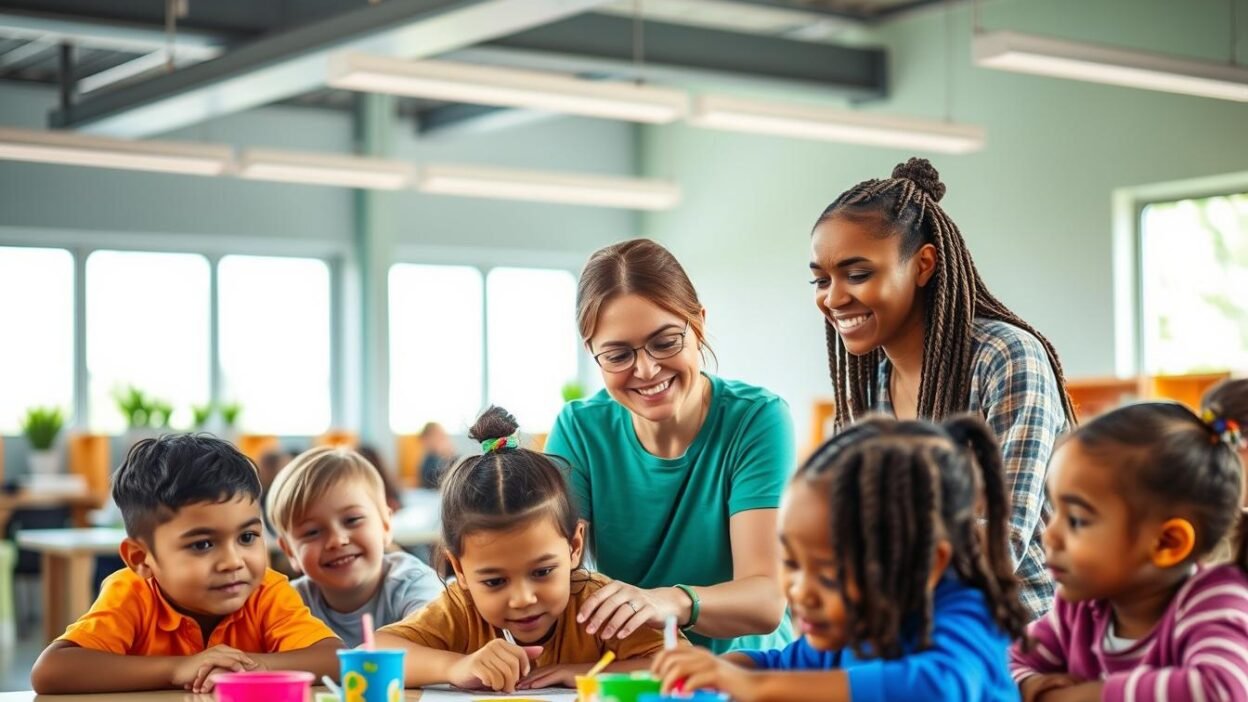
By 2020, only about 10 percent of countries had fully inclusive laws, reports the World Bank. This striking fact shows we have a long way to go to achieve educational equality. In the United States, the question of What Is Inclusive Education? serves as a practical guide. It helps schools ensure every student is present, participates, and progresses.
Inclusive education mixes a legacy of civil rights with effective classroom strategies. It ties legal rights to daily teaching from landmark cases and laws like Brown v. Board of Education and the Individuals with Disabilities Education Act. This approach benefits all students by promoting shared experiences, using teaching aids, and setting high standards.
Inclusion means more than just being in the same space. Norman Kunc believes schools should embrace human diversity instead of forcing everyone to be “normal.” Luanne Meyer sees inclusion as a core value: a belief that everyone belongs and is welcome. This perspective is backed by decades of research, showing inclusion’s benefits for students’ academic and social development, and their future success.
For teachers and families, inclusive education offers hope. It combines proven strategies with respect and access for all. When people ask what is inclusive education?, they find it’s more than a concept. It’s a legal requirement and a compilation of practices that help everyone feel they belong.
Creating an inclusive learning environment begins with understanding the diverse needs of children and the supports required to help them thrive. The Inclusive Education category on SpecialNeedsForU connects parents and educators with practical insights on adapting classrooms, promoting equal participation, and fostering a supportive school culture. To identify early developmental differences that influence inclusion, families can explore Special Needs Awareness and track age-appropriate growth through Developmental Milestones. For learners who face academic challenges, the Learning Disabilities section offers targeted strategies and evidence-based interventions. Parents seeking emotional and behavioural guidance to support inclusion at home can visit PsyForU, while caregivers aiming to build stronger routines, communication, and stress-free learning environments can rely on the mindset and productivity resources available at IntentMerchant. Together, these interconnected platforms help families and educators create classrooms where every child feels welcome, understood, and empowered to learn.
Key Takeaways
- Inclusive education merges civil rights and effective teaching to support educational equality.
- Legal cases and laws set the foundation for learning together with the necessary support.
- The true focus of inclusive education is on being present, participating, and progressing—not just being there.
- Norman Kunc and Luanne Meyer emphasize that inclusion means welcoming and valuing everyone.
- Inclusion benefits all students by improving their academic, social, and communication skills.
- Discussing What Is Inclusive Education? helps schools merge ethical principles with practical actions for every student.
Inclusive Education Definition, Meaning, and Importance
Inclusive education ensures that all students are welcomed and supported in school. A clear definition focuses on making sure everyone can join in, participate, and progress just like their peers. It’s about fairness in learning and respecting each student’s worth.
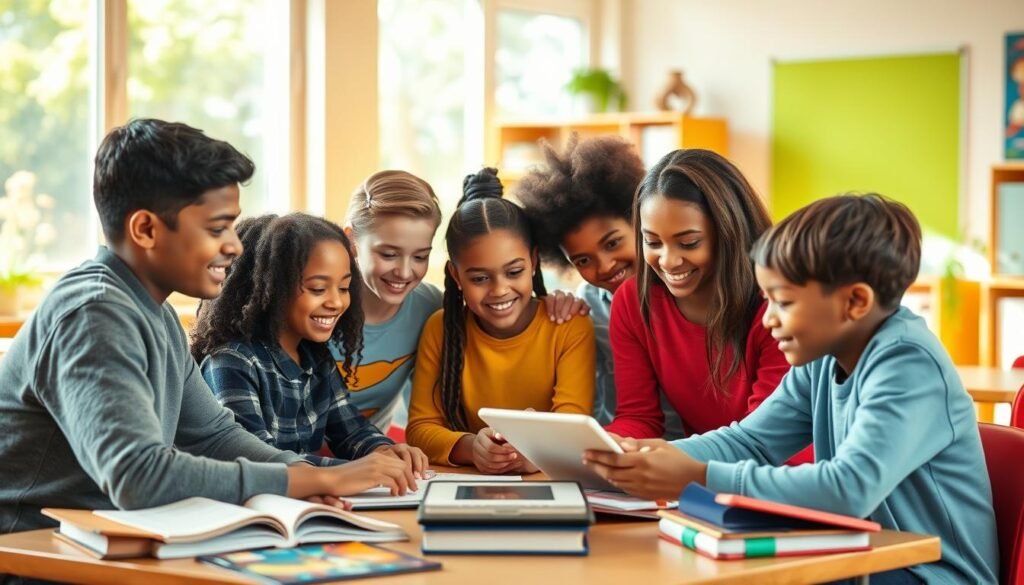
Inclusive education meaning and inclusive education definition
Inclusive education means students of all abilities learn together with the right support. It says that being there and doing well goes hand in hand: students should attend classes that match their age, mix with classmates, and reach goals with the right materials and teaching methods.
This idea comes from thinking first about changing schools to fit students. It sees the different backgrounds students bring as a benefit. It links learning to being part of the community and treating others with respect.
Inclusion as a philosophy, legal mandate, and evidence-based practice
In the U.S., inclusion means everyone belongs and opposes separation. It’s supported by law under the IDEA, following the idea from Brown v. Board of Education against different treatment.
Years of studies show that being inclusive helps all students—those with and without disabilities. They do better in school, communicate more, and get along better with each other when they learn together properly.
Importance of inclusive education for all students and educational equality
Inclusive education’s value is double. Firstly, it gives students the social and academic skills for a varied society. Secondly, it boosts fairness by cutting down on separation and making sure everyone gets to the same level of learning together, with big ambitions.
Planning for different needs leads to equal chances for all. This is what matters in inclusive education: everyone learning side by side with respect.
Diversity in schools and authentic belonging
School diversity includes language, culture, disability, gender, and economic background. Inclusion turns this mix into an advantage, not a problem. Teaching changes through extra help, different ways to show what you know, and family teamwork.
True belonging is seen in day-to-day activities, help from classmates, and common aims. With inclusive thought in mind, classrooms boost individuality, speaking up, and getting involved. This supports both learning and fairness in education.
What Is Inclusive Education?
Inclusive education means every student is a valued member of the classroom. It sees diversity as a strength. Every student gets the help they need right in their classroom, ensuring they can learn and show what they know alongside their peers.
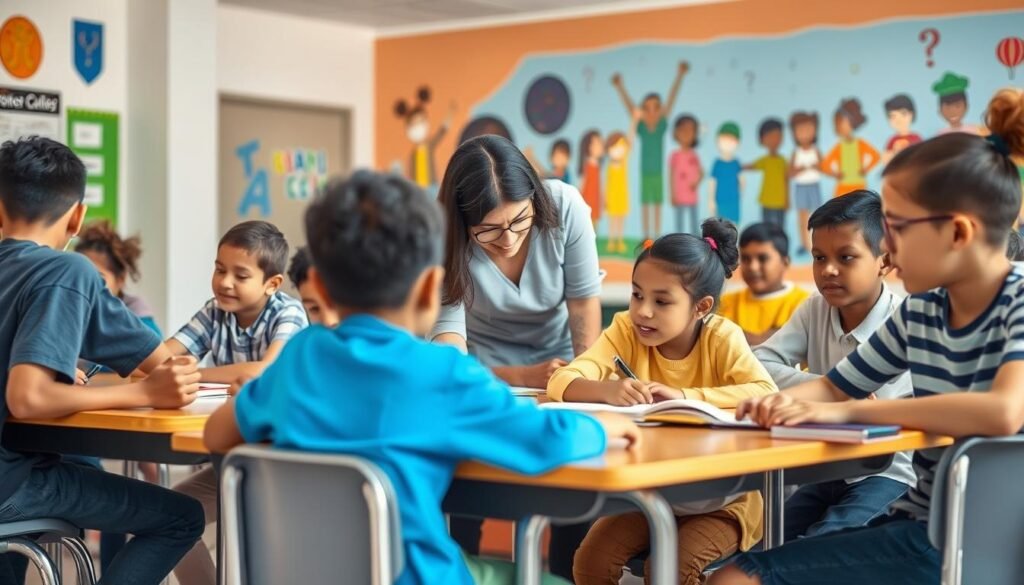
Valuing diversity: “everyone belongs, and everyone is welcome”
Inclusive education is all about belonging. It’s about planning for everyone’s needs from the start, not just reacting when issues arise. Classrooms become communities where every student’s background and abilities are seen as strengths.
Inclusion isn’t an extra part of education; it’s essential. Students learn and grow together, appreciating each other’s differences. This approach turns those differences into tools for learning.
Inclusive education vs. mainstream education: beyond placement to supports
Inclusion is more than just putting students in general education classes. It means giving them the right support to succeed. This includes things like co-teaching and assistive devices.
This support helps everyone participate fully, not just be there. It’s about making sure all students can engage with lessons and show their progress.
Universal design for learning and differentiated instruction as core practices
Universal Design for Learning (UDL) and differentiated instruction are key to inclusive education. UDL offers different ways to learn, while differentiated instruction tailors learning to each student. Together, they make classrooms work for everyone.
These strategies ensure all students, no matter their needs, can reach their potential. They bring fairness and equity to daily lessons, helping everyone learn together.
The Civil Rights Roots and Legal Foundations in the United States
Inclusive education in the U.S. has both a legal and pedagogical basis. The courts and Congress have set strong guidelines. These guidelines shape how inclusive education, special education, and daily practices are designed across America.
The throughline is simple: students with disabilities are protected equally. IDEA turns this principle into action with the Least Restrictive Environment (LRE) standard.
From Brown v. Board of Education to IDEA and the Least Restrictive Environment
Brown v. Board’s verdict was clear: separate schools are not equal. This reasoning guided U.S. policy for students with disabilities, leading to the IDEA. IDEA links access and rights in education.
With IDEA, schools aim to educate students with their peers as much as possible. The LRE guideline favors general education first. It ensures the necessary supports for learning, socializing, and communication.
Inclusion as a civil right: Oberti, Holland, Greer, and Daniel R.R.
Federal cases like Oberti and Sacramento City USD v. Rachel Holland confirm inclusion as a right. They strongly favor keeping students in general education, with needed aids and services.
Judges saw the real-world skills gained in inclusive settings. They said schools must try proper supports before looking at more restrictive alternatives.
Placement in general education with supplementary aids and services
Inclusive policies push for initial support plans: things like co-teaching and assistive tech. These strategies are in line with IDEA’s call for the LRE.
- Start with general education placement and add needed supports.
- Use data to adjust instruction, communication, and social goals.
- Document why each support enables progress in the chosen setting.
Prohibitions on removal for non-educational reasons
IDEA and courts say no to removing students for non-educational reasons. Decisions should be about educational needs. They should consider if services can support learning well in general education.
Following this guideline makes special education a support service, not a separate place.
| Legal Source | Core Principle | Implication for Schools | Classroom Application |
|---|---|---|---|
| Brown v. Board of Education | Separate is inherently unequal | Presumption against segregation | Plan for shared learning experiences and peer access |
| IDEA | Education in the Least Restrictive Environment | General education first, with supports | Co-teaching, accommodations, and assistive technology |
| Daniel R.R.; Greer; Oberti; Holland | Inclusion in education as a civil right | High bar for removal from general education | Try supplementary aids and services before considering separate settings |
| IDEA Placement Rules | No removal for non-educational reasons | Decisions based on individualized need | Use data on progress, participation, and behavior supports |
Benefits of Inclusive Education for All Learners
When classrooms mirror real-life communities, students develop lasting skills. They learn together, using strategies that work for everyone. They also apply what they learn in different situations. This shows how important and beneficial inclusive education is. It gives all students fair chances and leads to success.
Inclusive education benefits for students with and without disabilities
Inclusive education sets high goals and removes obstacles. It helps students with disabilities learn grade-level content with the right support. At the same time, their peers learn about teamwork, empathy, and leadership. These benefits increase school attendance, motivation, and effort in tackling hard tasks.
Learning in a general education classroom helps students apply what they learn more broadly. Skills like planning, solving problems, and speaking up for oneself get stronger. This is key across all school levels, from K-12 to college.
Social, communication, and academic skill development in inclusive classrooms
In a well-run inclusive classroom, students work on key skills every day. Group talks improve speaking, sharing turns, and understanding different viewpoints. Getting feedback from classmates helps make every student better at writing, math, and science.
Teachers use methods that create a sense of belonging. For instance, visual schedules and choice boards help everyone listen and speak clearly. Over time, students become better at communicating and show solid progress in their studies.
Inclusive education examples that foster participation and progress
- Co-teaching: a general educator and a special educator design tiered tasks so every learner meets the same standard with varied paths.
- Universal Design for Learning: units offer multiple ways to access content, show understanding, and stay engaged.
- Differentiated materials: leveled texts, captioned media, and scaffolded problem sets support learners with disabilities, English learners, and advanced students in one lesson.
- Portable supports: tools such as graphic organizers, speech-to-text, and manipulatives follow students across subjects to sustain momentum.
These examples of inclusive education match the 4Ps—placement, presence, participation, and progress. They ensure students learn together in a balanced way. This approach puts inclusive education at the center for all students. It also highlights how inclusive education shapes respectful and high-achieving classrooms.
Inclusive Classroom Strategies and Practices
Effective classrooms plan for learner variability from the start. They mix inclusive classroom approach with every day routines. This lets all students reach tough content. The goal is an inclusive learning environment where expectations are high and pathways are flexible.
Inclusive education practices need teamwork. General educators, special educators, and support staff work together on goals. They share data and tweak lessons as needed. The outcome is effective inclusive classroom strategies that work for all subjects and grades.
Inclusive teaching strategies: UDL, differentiated instruction, collaboration
Universal Design for Learning provides many ways to engage and understand. Differentiated instruction changes content, process, and product but keeps standards high. Collaboration, through joint planning and teaching, aligns supports with class and IEP goals.
- Use tiered tasks with clear rubrics to keep high standards for everyone.
- Offer different kinds of materials: texts, pictures, audio, and hands-on tools.
- Add clear language supports, like glossaries and sentence starters.
- Carry out quick assessment cycles to plan what comes next.
- Implement peer learning for more practice and feedback.
Inclusive classroom practices and inclusive classroom approach
Daily inclusive classroom practices start with building a positive culture. Rules highlight strengths, make accommodations normal, and celebrate progress. An inclusive classroom approach uses easy routines, visible goals, and flexible groups to improve access and keep challenges high.
Teams of educators look at evidence of student progress and improve inclusive teaching strategies. They focus on how everyone takes part and the demands of tasks, not just grades. This makes teaching better fit the real needs of learners.
Creating an inclusive learning environment and support for diverse learners
Classrooms show they welcome everyone with easy-to-understand signs, clear directions, and stable routines. To create an inclusive learning environment, teachers explain new words, help with notes, and show how to think about thinking.
Specific support for diverse learners offers captioned videos, graphic helps, spoken text, and choices in showing what they know. These aids lower hurdles and open more chances to get involved and succeed.
Portable supports and natural proportions in general education settings
Support moves with the student. Portable aids—like coaching, assistive devices, and routines—stay in the usual classroom instead of pulling students away. This keeps lessons consistent and community strong.
Schools try to have natural mixes so no class has too many students needing extra help. Even class lists keep inclusive classroom strategies going and ensure role models for all.
Inclusive education practices are most effective when teams often reflect, change teaching, and share successes. This helps keep planning, instruction, and support closely linked.
Implementing Inclusive Education in Schools and Programs
Inclusive education succeeds when vision touches daily life. Leaders must set clear goals, unite everyone’s efforts, and get the right resources. This ensures students start learning in general ed classes. Our aim is that inclusive education becomes the norm in schools, not something unusual.
Whole-school approach: leadership, staffing, and resource alignment
Leaders in districts and schools believe every student belongs in main classrooms. Their schedules show times for team teaching, planning together, and giving extra help during the school day. They place special educators and therapists right where learning happens. They also make sure help can move to where students are.
They plan ahead for resources. Budgets pay for materials and tools everyone can use, and training for staff. Teams look at data on student placement and progress. Then, they quickly adjust the help they give.
Inclusive education programs, models, and resource center approaches
Schools pick inclusive programs focused on reaching grade-level topics with extra help. They use models like team teaching across the school, services that come to the classroom, and support systems. Resource centers on campuses give out advice, materials, and training.
This setup means teachers get to use inclusive resources without separating students from their classmates. Over time, schools get better by sharing what works.
Itinerant teachers, coaching, and peer mentoring for educators
Traveling teachers give advice on reading, behavior, and technology. Coaching helps teams make lessons that work for everyone, change tasks to fit students, and see the results. Teachers team up to watch, plan, and think together. This helps spread good ideas and makes teachers feel less alone.
Quick learning sessions help teachers get better fast. As teachers get more skilled, schools keep up the good work with regular checks and team discussions.
Inclusive education policy alignment and accountability
Clear rules make sure schools only use the most inclusive settings. Policies link money, staff, and schedules to support inclusion. Systems keep an eye on four important areas: placement, being there, joining in, and getting better. This lets teams act fast to help students.
Plans for spending focus on getting more staff and keeping access to materials. Open reports make sure inclusive education stays at a high level.
| Focus Area | Action in Practice | Primary Outcome | Key Resources | Leadership & Vision |
|---|---|---|---|---|
| Set campus-wide expectations for co-teaching and push-in supports; schedule common planning | Consistent delivery of grade-level instruction with supports | Inclusive education policy guides, staffing maps, master schedule templates | ||
| Instructional Models | ||||
| Adopt inclusive education models like UDL-aligned co-teaching and MTSS integration | Higher participation and progress in core classes | Inclusive education programs, lesson banks, progress-monitoring tools | ||
| Professional Learning | ||||
| Provide coaching cycles, itinerant support, and peer mentoring | Improved teacher efficacy and strategy fidelity | Coaching rubrics, observation protocols, inclusive education resources | ||
| Policy & Accountability | ||||
| Embed LRE requirements; monitor placement and supports; report on 4Ps | Reduced unnecessary removals; stronger access to core | Data dashboards, procedural safeguards, inclusive education policy checklists | ||
| Finance & Staffing | ||||
| Fund assistive tools, accessible materials, and workforce pipelines | Sustained capacity for inclusive education in schools | Budget frameworks, procurement lists, recruitment pathways |
Family, Teacher, and Community Collaboration
Teamwork is key to making education inclusive for all in schools. When families, teachers, and community members work together, wonderful things happen. They create solid plans, share feedback, and support students who learn differently. This teamwork makes sure education is fair and reaches every student properly.
Building partnerships with students and families around goals and strengths
Great teams begin by understanding what each student is good at. Teachers work with students and their families to set goals and priorities. They focus on what supports students need in regular classrooms to promote fair education for everyone.
Starting with what each student does best helps pick the right educational resources. These choices respect the student’s background and build trust. Trust is essential for schools with students from different backgrounds to teach everyone fairly.
Personalized learning and support plans with meaningful, dignified assessment
Plans for Personalized Learning and Support make goals into real lessons and help. Each plan changes lessons, help, and tests to meet student needs while keeping expectations high.
Testing is thorough and respects each student: it shows what students understand, not just what they can write or say. This approach supports all students and incorporates fair education tools in all subjects.
Collaborate with teachers, SLSOs, and allied professionals
Working together is smoothest when everyone knows their part. Teachers, Support Officers, and health experts plan lessons and help together, guided by what they learn from watching and data.
Teachers help each other by sharing what works through activities like joint teaching. This helps everyone use the best teaching methods and supports fair education at every level.
Promoting inclusive education through stakeholder engagement
Getting everyone involved keeps the momentum going. Parents, groups, and community leaders help set goals, track progress, and push for better services. Their insights make sure schools meet the needs of their communities and treat every student fairly.
Through meetings and feedback, everyone can see the results and take action. Open data and clear talks help the team work together, get resources, and help more students, making sure education is fair for all.
Inclusive Education for Students with Disabilities and Other Marginalized Learners
Public schools in the U.S. must teach students with disabilities alongside their peers. This rule comes from the Individuals with Disabilities Education Act. It makes schools create an inviting space for all students, right from the start. Effective inclusion mixes strong policies with changes in daily teaching.
When inclusion is the norm, support becomes portable. Here, support tags along with the student into the classroom. This change needs clear strategies, coaching for teachers, and working with families.
Inclusive education for special needs students and students with disabilities
Education that includes everyone focuses on being there, taking part, and making progress in the same classrooms as everyone else. For students with disabilities, it starts with the regular curriculum, then adds extra help. U.S. courts want schools to try this kind of support before thinking of removing a student. This strengthens inclusive education everywhere.
Good inclusion might use team teaching, help from classmates, and Universal Design for Learning. This lets all students, including those who speak multiple languages or are bouncing back from a hospital stay, understand lessons better.
Twin-track approach: system-wide inclusion plus targeted supports
A twin-track method follows two paths: wide reforms and specific assistance. This includes making courses accessible, flexible tests, and time for teachers to work together. The specific part brings in just-right help and tools for one-on-one needs.
- System-wide: clear rules, inclusive strategies, and ongoing learning for teachers.
- Targeted: tools for talking, sign language help, and plans for special sensory needs.
Using both paths ensures that inclusive education reaches everyone with true dedication and meets personal goals.
Addressing intersecting vulnerabilities: poverty, gender, language, and location
Some students face extra hurdles like poverty, gender discrimination, struggling with English, or living in remote areas. Issues like hard-to-reach schools, fees, and judgment can sideline or exclude these students.
Schools can offer help like waiving fees, safe ways to get to school, language help, and partners in the community. These steps are key in opening doors and welcoming families to help make decisions.
Accessible materials, reasonable accommodations, and assistive supports
First, learning materials should fit different needs: digital texts that can be read out loud, pictures you can feel, videos with captions, and simple words. Then, fair adjustments like more time, quieter rooms, or different ways to answer help students show their knowledge without altering the goals.
Tools that help learning should be handy and used in regular classes: software that turns speech into text, devices that read text out loud, boards for communication, hearing aids, and programs that read screens. These tools, as part of inclusive teaching, help everyone learn better.
Key insight: Inclusion does best when leaders, use of data, and everyday classroom activities sync up. With a solid plan for inclusive education, schools can keep going strong and adjust help as what students need changes.
Global Perspectives, Research, and Policy Directions
Inclusive education research unites court decisions with classroom actions. Judges and experts believe that regular classrooms help develop vital skills. Studies over years show that this benefits everyone, shaping inclusive education policies and practices.
Inclusive education research and evidence from courts and classrooms
Research into inclusive education shows better social skills, reading abilities, and higher graduation rates. Courts back up using common classes with extra help over separation. This guides policies and helps pick the right inclusive education methods.
Schools adopt these insights with team teaching, Universal Design for Learning, and solid evidence supports. Leaders boost inclusive education with resources that enhance staff capabilities and ensure ongoing success.
World Bank guiding principles: meet contexts, enable systems, support practices, collaborate
Change starts by understanding local needs and adapting plans. Systems need to support inclusion with training, accessible tools, and services for everyone and for those with specific needs.
They also focus on what works best in classrooms. Investing in educators spreads effective methods. Broad teamwork—linking students, families, and societies—matches education policy with facts and people’s needs.
4Ps framework: placement, presence, participation, progress
The 4Ps framework makes checking inclusion easy. “Placement” looks at where students spend their day. “Presence” measures if they regularly attend and are enrolled.
“Participation” sees if students actively join in learning and school activities, keeping their choices in mind. “Progress” observes their academic and social development. Teams use the 4Ps to improve education models and align resources.
Data, monitoring, and scaling inclusive education models
Expanding inclusion relies on clear data. Systems must gather detailed info on all students and review it against inclusion targets. Money then supports what’s effective, focusing on training for inclusivity.
Clear goals and frequent check-ins ensure policies are working. Many learners globally still don’t attend school, and few places fully support inclusion. Research and planning are key to moving forward fairly and effectively.
Conclusion
The idea of inclusive education is solid and rooted in U.S. law, including landmark decisions like Brown v. Board of Education. It ensures that students with disabilities have the right to learn in general education settings. Cases like Oberti and Holland prove that, unless there’s a good non-educational reason, students should learn together.
This approach isn’t just good in theory. Studies show that being in regular classrooms helps students develop important life skills. They learn to communicate better, make friends, and understand different perspectives. This prepares them for life in our diverse world.
Making this theory work requires effort. Teachers use strategies like Universal Design for Learning to meet everyone’s needs. They work together and use supports that don’t single out students with disabilities. When the whole school is on board, and families are involved, everyone benefits.
Around the globe, the need for inclusion is clear. The World Bank suggests tailored planning and supporting schools directly. They also recommend working together with all stakeholders. This approach aims at making sure every student can learn, participate, and progress.
In conclusion, inclusive education links civil rights and effective teaching methods. By embracing diversity, schools create a place where every student belongs. True inclusion means all students are learning, active, and making progress. This approach benefits everyone and is backed by strong evidence and a shared understanding of inclusion.