
Why do inclusive education myths still exist in American schools? Decades of research prove their benefits. The answer lies in deep-rooted assumptions that resist change.
Organizations like RAND Europe and TASH provide compelling evidence. Yet these myths persist.
UNESCO defines inclusive education as removing barriers to learning. These barriers limit learner presence, participation, and achievement. Yet myths about educational inclusion persist across schools nationwide.
These false beliefs create obstacles for students with disabilities. They prevent access to quality education alongside their peers.
The arguments supporting inclusive practices rest on equity and human rights principles. Moving from segregated models to integrated learning represents more than methodology. It embodies a fundamental reimagining of educational philosophy.
This article examines persistent disability education misconceptions that hamper implementation efforts. We will explore how these barriers develop. Evidence-based research consistently demonstrates benefits for all learners.
Understanding these false narratives is the first step. It leads toward creating truly welcoming educational spaces.
Creating an inclusive learning environment begins with understanding the diverse needs of children and the supports required to help them thrive. The Inclusive Education category on SpecialNeedsForU connects parents and educators with practical insights on adapting classrooms, promoting equal participation, and fostering a supportive school culture. To identify early developmental differences that influence inclusion, families can explore Special Needs Awareness and track age-appropriate growth through Developmental Milestones. For learners who face academic challenges, the Learning Disabilities section offers targeted strategies and evidence-based interventions. Parents seeking emotional and behavioural guidance to support inclusion at home can visit PsyForU, while caregivers aiming to build stronger routines, communication, and stress-free learning environments can rely on the mindset and productivity resources available at IntentMerchant. Together, these interconnected platforms help families and educators create classrooms where every child feels welcome, understood, and empowered to learn.
Key Takeaways
- Persistent myths continue to create barriers to implementing inclusive educational practices despite extensive research evidence
- UNESCO defines inclusive education as removing obstacles to learner presence, participation, and achievement
- Research from RAND Europe and TASH establishes strong arguments for inclusion based on equity and human rights
- The transition from segregated to inclusive models represents a fundamental philosophical shift in education
- Understanding common misconceptions is essential for creating effective inclusive learning environments
- Evidence consistently shows benefits of inclusive education for all students, not just those with disabilities
Understanding Inclusive Education in Modern American Schools
Inclusive education goes beyond placing students with disabilities in regular classrooms. It represents a complete educational philosophy that values diversity as strength. This approach shifts focus from fixing students to improving learning environments.
UNESCO defines inclusive education as removing barriers to learning for all students. This view emphasizes that inclusion addresses systemic obstacles rather than student problems. The focus moves from student deficits to environmental factors affecting learning.
TASH, a disability advocacy group, provides a detailed framework for inclusion. They describe inclusive learning environment as educating all students together in general classrooms. This approach ensures every student belongs, meets high expectations, and builds meaningful relationships.
Schools once isolated students with disabilities in separate facilities or classrooms. This segregation reflected the medical model of disability. Early approaches viewed differences as deficits requiring treatment in controlled settings.
The Individuals with Disabilities Education Act changed everything in 1975. This landmark law established legal rights for educational access. Later updates strengthened requirements for educating students in the least restrictive environment.
Modern inclusive education uses a social model of disability instead. This model sees environmental and systemic barriers as the main obstacles. Schools can enable full participation by removing architectural, instructional, and attitudinal barriers.
True equity in educational settings requires more than physical placement. Students need meaningful participation in academics, social activities, and extracurriculars. They deserve access to grade-level curriculum with proper support.
| Educational Approach | Philosophical Foundation | Student Placement | Curriculum Access |
|---|---|---|---|
| Traditional Segregation | Medical model viewing disability as deficit | Separate classrooms or facilities | Modified curriculum with reduced expectations |
| Superficial Inclusion | Compliance-focused without systemic change | Physical presence without support | Access without accommodations or modifications |
| Authentic Inclusion | Social model addressing environmental barriers | General education with comprehensive supports | Grade-level content with differentiated instruction |
| Universal Design | Proactive design benefiting all learners | Flexible learning environments for everyone | Multiple means of engagement and expression |
Educators must recognize the difference between real and fake inclusion. Superficial inclusion places students in regular classrooms without proper support. This approach meets legal requirements but denies students real opportunities.
Authentic inclusion transforms the entire classroom for everyone. Teachers use collaborative planning and differentiated instruction. Support services integrate smoothly rather than pulling students out for separate interventions.
Today’s inclusive learning environment treats diversity as an advantage, not a problem. Teachers know that flexible strategies help all students learn better. Research shows that designing instruction for diverse learners improves outcomes for everyone.
Equity means giving each student what they specifically need to succeed. This differs from treating everyone exactly the same. Some students need assistive technology or extended time as necessary supports.
Schools implementing disability inclusion in schools create communities where differences feel normal. Students learn alongside peers with varied abilities and backgrounds. This exposure builds empathy and prepares students for diverse workplaces.
The move toward inclusion reflects broader civil rights movements. Educational inclusion parallels efforts to integrate other historically marginalized groups. Segregation perpetuates inequality and denies individuals their right to full participation.
Authentic inclusion requires sustained commitment beyond initial placement decisions. Schools need professional development, collaboration time, and specialized expertise. Without these elements, inclusion efforts become superficial compliance exercises.
History & Evolution of Inclusive EducationInclusive vs Integrated EducationPrinciples of Inclusion Every School Should FollowTools That Help: AAC & More
Common Misconceptions About Inclusive Classrooms
Inclusive education faces many misconceptions rooted in outdated historical practices. These special education myths create barriers to evidence-based practices in American schools. Understanding these myths requires examining differences between educational models and their historical context.
Many misunderstandings reflect old beliefs about how students with disabilities learn. They support segregation practices that research shows are less effective than inclusive approaches. Inclusive education now addresses discrimination based on disability, race, ethnicity, gender, sexual orientation, and more.
These myths affect policy decisions, resource allocation, and classroom practices across the United States. Educators, administrators, and parents often make decisions based on assumptions rather than evidence. This gap between perception and reality undermines efforts to create equitable educational environments.
Defining Inclusive Education vs. Traditional Segregation Models
The inclusion vs segregation debate centers on different philosophies about student learning and belonging. Traditional segregation models emerged from beliefs about limited educability of students with disabilities. These models assumed students with similar challenges needed specialized instruction away from typically developing peers.
Segregated classrooms operated on homogeneous grouping and deficit-based thinking. Educators grouped students by disability category rather than individual strengths or interests. This approach positioned disability as a problem requiring remediation in separate spaces.
Inclusive education represents a paradigm shift in how schools view difference and diversity. This model recognizes that all learners benefit from heterogeneous grouping and diverse perspectives. Inclusive education reduces barriers to learning for everyone.
The fundamental principles distinguishing these approaches include:
- Placement philosophy: Segregation removes students from general education; inclusion brings support services to students in general education settings
- Instructional approach: Segregation emphasizes specialized, deficit-focused instruction; inclusion uses universal design and differentiated instruction
- Social integration: Segregation limits peer interactions; inclusion promotes natural relationships and social learning
- Expectations: Segregation often lowers academic expectations; inclusion maintains high standards with appropriate supports
- Service delivery: Segregation concentrates services in separate locations; inclusion embeds specialized support within general education classrooms
Research since the 1970s shows better outcomes for students in inclusive settings. These improvements extend beyond academics to include social skills, employment rates, and community integration. The evidence demonstrates that inclusion vs segregation comparison overwhelmingly favors inclusive approaches.
| Characteristic | Traditional Segregation Model | Inclusive Education Model |
|---|---|---|
| Core Philosophy | Students with disabilities need fundamentally different instruction in separate environments | All students benefit from diverse learning communities with differentiated support |
| Learning Environment | Self-contained classrooms isolated from general education peers | General education classrooms with embedded specialized services and supports |
| Instructional Approach | Deficit-focused remediation targeting specific disability-related skills | Universal design for learning with accommodations and modifications as needed |
| Expected Outcomes | Functional skills development with limited academic expectations | Grade-level standards achievement with appropriate scaffolding and support |
The Evolution of Inclusion in American Educational Settings
The shift from segregation to inclusion reflects broader civil rights movements and evolving disability understandings. The deinstitutionalization movement of the 1960s and 1970s challenged removing individuals with disabilities from community life. This social shift created momentum for questioning similar segregation practices in schools.
Landmark federal legislation transformed the inclusion vs segregation debate from philosophy to legal requirement. The Education for All Handicapped Children Act of 1975 established the right to education. This principle legally mandated that students with disabilities be educated alongside their peers.
The 1980s and 1990s witnessed gradual implementation of mainstreaming practices. Students with disabilities might attend art, music, or physical education with general education peers. Academic instruction remained in separate classrooms.
Contemporary inclusive education evolved from simply placing students to ensuring meaningful participation in academic instruction. This evolution required shifts in teacher preparation, classroom organization, and service delivery models. The transition moved from a medical model to a social model recognizing environmental barriers.
Several pivotal developments accelerated this evolution:
- Research evidence: Studies consistently demonstrated superior academic and social outcomes for students in inclusive settings
- Advocacy movements: Self-advocates with disabilities and parent organizations demanded equal educational opportunities
- Legal precedents: Court cases clarified schools’ obligations to provide services in general education environments
- Professional standards: Teaching organizations embraced inclusive practices as best practice standards
- Technological advances: Assistive technology reduced barriers that previously necessitated segregated instruction
This historical context explains why certain special education myths persist despite contradictory evidence. These misconceptions represent vestiges of outdated educational paradigms. Understanding this evolution helps educators recognize that resistance often stems from deeply ingrained assumptions.
The expansion of inclusive education beyond disability reflects growing recognition of diverse learning communities. Educational settings that embrace difference as an asset create richer learning experiences for everyone. This comprehensive approach positions American schools to better prepare students for diverse democratic societies.
Myth: Inclusive Classrooms Only Benefit Students with Disabilities
A widespread but unfounded assumption continues to plague inclusive education. Many believe classroom diversity benefits only students with special needs. This persistent myth suggests inclusive classrooms function as charitable arrangements.
Research evidence paints a dramatically different picture. The reality is that inclusive education benefits extend to every student in the classroom. This happens regardless of disability status.
Multiple studies demonstrate measurable gains for students without special educational needs. They experience academic, social, and developmental growth when learning alongside diverse peers. This misconception undermines support for inclusive practices by framing them as zero-sum arrangements.
Understanding the comprehensive advantages requires examining both immediate classroom impacts and long-term preparation. Students receive valuable training for navigating an increasingly heterogeneous society. These environments hold transformative potential for all learners.
How All Students Gain from Diverse Learning Environments
Diverse learning environments create unique opportunities for all students to develop critical competencies. Traditional segregated settings cannot replicate these benefits. Classrooms with varied abilities become laboratories for developing twenty-first-century skills.
Empathy and perspective-taking abilities flourish in inclusive settings. Students regularly interact with peers who experience the world differently. Research consistently shows exposure to diversity during formative years correlates with reduced prejudice.
Students develop the capacity to recognize multiple valid approaches for solving problems. They learn different ways of interpreting information. This enhanced social understanding benefits them throughout life.
The development of collaborative skills represents another significant advantage of diverse learning environments. Inclusive classrooms require students to work with individuals possessing different strengths. They encounter various communication styles and support needs.
This authentic collaboration mirrors the heterogeneous teams students will encounter professionally. It provides invaluable practice in cross-functional teamwork. These skills become essential in modern workplaces.
Cognitive flexibility strengthens considerably in inclusive settings. This means the ability to adapt thinking strategies and shift between different concepts. Teachers employ multiple instructional approaches to accommodate varied learners.
All students benefit from exposure to diverse representations of content. A concept explained through visual, auditory, kinesthetic, and digital modalities provides more neural pathways. This approach surpasses single-mode instruction.
Students in inclusive classrooms develop enhanced communication skills. They learn to adjust their language and explanations based on their audience. Peer teaching opportunities help them clarify their thinking.
These metacognitive and communication competencies transfer across all academic disciplines. They also apply to real-world contexts. Students ask questions that deepen rather than merely confirm understanding.
Furthermore, classroom diversity benefits extend to moral and ethical development. Students who learn alongside peers with disabilities develop more nuanced understandings of fairness. They recognize that equality sometimes requires different supports for different individuals.
Academic and Social Benefits for Typically Developing Students
Compelling research evidence demonstrates that students without disabilities maintain their academic performance in inclusive settings. They often achieve at higher levels than peers in non-inclusive environments. A comprehensive meta-analysis examined studies from North America and Europe.
The analysis revealed that students without special educational needs achieve higher academic attainments in inclusive classrooms. This finding challenges the assumption that including students with disabilities dilutes educational quality. Several mechanisms may explain these positive academic outcomes.
First, inclusive classrooms necessitate more explicit instruction and clearer learning objectives. Teachers cannot rely on implicit understanding in these settings. They cannot assume all students will grasp concepts through single explanations.
This pedagogical rigor benefits all learners. It helps those who might struggle silently in traditional classrooms without receiving appropriate support. Clear instruction creates better outcomes for everyone.
Second, the differentiated instructional approaches required in inclusive settings provide multiple entry points to content. Research on early childhood education shows important findings. Inclusive services could be of higher global quality than non-inclusive services.
This suggests the instructional strategies necessary for inclusion elevate overall educational quality. All students benefit from these enhanced teaching methods. The entire classroom environment improves.
Third, peer teaching opportunities abundant in inclusive classrooms deepen understanding for students providing explanations. Typically developing students explain concepts to peers who learn differently. They must organize their knowledge and identify essential components.
They must articulate relationships between ideas. These processes strengthen their own mastery. Teaching others reinforces learning.
The social benefits for typically developing students equal or exceed academic gains. Students in inclusive classrooms develop authentic friendships across lines of difference. These relationships provide emotional richness and broaden understanding of human experience.
Importantly, multiple research studies confirm critical findings. The performance of students without disabilities is not compromised by the presence of students with disabilities. This finding directly refutes concerns that inclusion harms typically developing students academically.
The evidence suggests that thoughtfully implemented inclusive education benefits all learners. It does this without creating academic trade-offs. Everyone wins in well-designed inclusive classrooms.
Behavioral outcomes also improve in inclusive settings. Schools with strong inclusive practices report reduced bullying. They see increased prosocial behaviors and enhanced classroom community.
Diversity becomes normalized rather than exceptional. Students develop healthier attitudes toward difference. They demonstrate greater acceptance of peers who deviate from perceived norms.
| Benefit Category | Students with Disabilities | Typically Developing Students | Classroom-Wide Impact |
|---|---|---|---|
| Academic Achievement | Higher literacy and numeracy skills through peer modeling and increased expectations | Enhanced academic attainment through explicit instruction and multiple representations | Overall elevation of instructional quality and pedagogical rigor |
| Social Competence | Development of age-appropriate social skills through natural peer interactions | Increased empathy, perspective-taking, and understanding of human diversity | Reduced bullying and strengthened sense of classroom community |
| Communication Skills | Exposure to diverse communication models and authentic language contexts | Enhanced ability to adapt communication style and explain concepts clearly | Development of shared communication strategies and inclusive language practices |
| Long-Term Outcomes | Improved post-secondary and employment opportunities through increased academic preparation | Better preparation for diverse workplaces and heterogeneous adult environments | Creation of more inclusive and equitable communities beyond school settings |
The cumulative evidence demonstrates that framing inclusion as benefiting only students with disabilities fundamentally misrepresents reality. It contradicts both the research literature and the lived experiences of diverse classrooms. Inclusive education creates learning environments where all students thrive academically, socially, and developmentally.
The question is not whether inclusion benefits students without disabilities. The research confirms it does. The real question is how educational systems can more effectively implement inclusive practices to maximize these universal benefits.
Myth: General Education Teachers Aren’t Equipped to Handle Inclusion
Many believe general education teachers cannot manage inclusive classrooms successfully. This misconception often justifies keeping special education programs separate. Research shows the real issue isn’t teacher ability but lack of proper support.
Teachers need adequate preparation, ongoing training, and collaborative support structures. The problem is systemic, not individual. Most quality education practices require preparation, training, leadership, and creative resource use.
Investigation reveals that teachers have not received appropriate training in many failing situations. Schools often don’t provide required aids and services under IDEA. This represents a resource problem, not an impossible teaching challenge.
Successful inclusive education needs more specialized support than traditional models. Special education teacher employment is growing by 3% from 2018 to 2028. Specialists now work alongside classroom teachers, combining expertise to help all students.
Professional Development and Support Systems Available
General education teachers have access to comprehensive professional development opportunities nationwide. University programs now include special education, differentiated instruction, and universal design principles. Modern educators enter the profession ready to accommodate diverse learners.
Districts provide ongoing learning opportunities that strengthen inclusive teaching strategies. Many schools use coaching models that deliver classroom-based support. Coaches observe instruction, model techniques, and help teachers refine their practices.
Collaborative learning communities offer powerful support. Teachers share successful strategies and solve challenges together. These groups help educators feel supported when addressing complex instructional needs.
Research shows properly prepared teachers demonstrate remarkable competence in diverse classrooms. The key is not expecting general educators to become special education experts. Instead, they develop foundational skills and collaborate with specialized professionals.
Technology platforms have expanded access to training resources significantly. Teachers can access webinars, online courses, and video libraries nationwide. Even rural or under-resourced districts now access high-quality training previously unavailable.
Collaborative Teaching Models in Practice
Collaborative teaching transforms how schools deliver instruction to diverse student populations. These models integrate specialized support directly into general education classrooms. Students maintain access to grade-level curriculum and peer interactions.
Effective collaboration requires intentional planning and clear communication protocols. Schools establish regular co-planning time and define complementary roles. These structures ensure educators work as genuine partners.
Multiple collaborative configurations exist, each offering distinct advantages. Team teaching involves both educators delivering instruction simultaneously to the entire class. Parallel teaching divides the class into two groups for the same instruction.
Station teaching creates multiple learning centers where students rotate through activities. Alternative teaching allows one teacher to provide targeted instruction to small groups. These flexible approaches meet varied learning needs without stigmatizing students.
Co-Teaching Strategies That Work
Research-validated co-teaching strategies show how teachers combine expertise effectively. The best approaches involve strategic role differentiation where educators use their strengths. Both maintain equivalent professional status in students’ perception.
Special education teachers contribute knowledge of learning processes and intervention strategies. General education teachers bring content expertise and curriculum knowledge. This complementary knowledge creates more powerful instruction.
Co-planning represents the foundation of effective collaboration. Partners allocate dedicated time to design instruction jointly. They analyze student data, anticipate learning barriers, and design accommodations proactively.
Co-instruction requires careful choreography. Effective partners develop smooth transitions between activities. Both educators regularly assume primary instructional roles, reinforcing their equal status.
Co-assessment involves collaborative analysis of student work and progress data. Partners review assessment results together. This reflective practice strengthens both educators’ capacity over time.
| Co-Teaching Model | Implementation Structure | Primary Benefits | Optimal Applications |
|---|---|---|---|
| Team Teaching | Both teachers lead instruction simultaneously to entire class | Models collaboration; maximizes diverse expertise; maintains instructional pace | Introducing complex concepts; engaging discussions; demonstration lessons |
| Parallel Teaching | Class divided into two groups receiving same instruction separately | Reduces student-teacher ratio; increases participation; allows differentiated pacing | Practice activities; guided reading; skill development requiring close monitoring |
| Station Teaching | Students rotate through multiple learning centers with varied activities | Provides hands-on learning; accommodates learning style differences; enables targeted support | Multi-step processes; review activities; integrated skill application; laboratory work |
| Alternative Teaching | One teacher instructs large group while other works with small targeted group | Enables intensive intervention; provides enrichment; allows re-teaching without disruption | Pre-teaching concepts; re-teaching for mastery; assessment accommodations; enrichment extensions |
Resource Allocation and Support Staff Roles
Strategic deployment of support staff is critical for successful inclusive education. Effective classrooms use paraprofessionals, service providers, coaches, and behavioral specialists. The challenge involves providing support while avoiding student dependency.
Paraprofessionals serve vital functions when their roles are clearly defined. Rather than assigning permanent “shadows” for individual students, effective models position them as classroom resources. This approach distributes assistance naturally while building students’ independence.
Related service providers increasingly deliver services within classroom contexts. Integrated service delivery embeds therapeutic interventions into natural learning activities. This model requires careful scheduling and strong communication between providers and teachers.
Instructional coaches work directly with teachers to strengthen their inclusive teaching strategies. Coaching relationships focus on professional growth through observation and feedback. Coaches help teachers analyze what works and refine their approaches.
Resource allocation decisions significantly impact inclusive education success. Schools must creatively examine how they deploy personnel and structure schedules. Some have reduced separate special education classrooms and distributed special educators across grade-level teams.
Technology represents an increasingly important resource in inclusive classrooms. Assistive devices, accessible software, and digital platforms enable personalized learning pathways. Appropriate technology multiplies teachers’ capacity to provide differentiated instruction efficiently.
Professional development resources require strategic investment as well. Successful schools allocate funding for ongoing teacher training. They provide substitutes so teachers can observe exemplary classrooms and attend conferences.
Myth: Inclusive Settings Lower Academic Standards for Everyone
Many people worry that inclusive education forces schools to lower academic standards. This fear comes from misunderstanding how strong teaching works in diverse classrooms. Research shows students without special needs actually achieve higher academic attainments in inclusive classrooms.
The concern about lower standards reflects old ideas about teaching and learning. Traditional models assumed all students should learn identical content at the same speed. Modern inclusive practices maintain high expectations while offering different paths to success.
Inclusive classrooms recognize that children learn at different rates and through different methods. Teachers use inclusive instructional strategies to help all students access challenging material. Achievement improves across all student groups in schools that embrace inclusive education.
Universal Design for Learning Principles Explained
Universal Design for Learning came from architectural concepts that prioritized accessibility from the start. This framework creates learning environments that challenge the widest possible range of learners. Understanding universal design for learning misconceptions starts with knowing UDL benefits every student.
The UDL framework rests on three foundational principles that transform how educators approach instruction. Each principle addresses a different aspect of learning. Together, they create flexible, responsive teaching environments.
- Multiple Means of Representation: This principle addresses the “what” of learning through varied formats. Students encounter concepts through text, video, diagrams, hands-on activities, or discussion. Information reaches learners through visual, auditory, and kinesthetic modalities.
- Multiple Means of Action and Expression: This principle focuses on the “how” of learning. Students demonstrate knowledge through written essays, oral presentations, digital projects, or artistic representations. Assessment options provide different pathways to show mastery.
- Multiple Means of Engagement: This principle considers the “why” of learning. Engagement strategies include connecting content to student interests and providing authentic learning contexts. Learners select topics or approaches that resonate with them.
These principles show that flexibility actually increases rigor. Teachers design lessons with built-in variability. All students engage with complex content at appropriately challenging levels.
Consider a high school history class studying the American Revolution. A traditional approach requires all students to read identical textbook chapters. A UDL approach maintains high standards while offering varied pathways.
Students access information through primary sources, historical fiction, documentaries, or interactive timelines. They demonstrate understanding through essays, multimedia presentations, dramatic reenactments, or annotated visual timelines. Learning goals remain rigorous while students engage through their strengths.
Research shows UDL implementation raises achievement across demographic groups. Students benefit from multiple ways to access challenging content. Struggling learners receive necessary supports while advanced learners pursue deeper complexity.
How Differentiated Instruction Raises Achievement for All
Differentiated instruction represents the practical application of responsive teaching in diverse classrooms. This approach addresses learner variance through strategic instructional decisions. Teachers use differentiated instruction to provide appropriate challenge while maintaining consistent learning objectives.
Several key strategies characterize effective differentiation in practice. Flexible grouping allows students to work with different peers based on learning goals. Tiered assignments provide varied complexity while targeting the same essential understandings.
Implementation often encounters obstacles related to planning time and classroom management. Schools that address these differentiated instruction obstacles through collaborative planning see remarkable results. Administrative support and professional development prove essential for success.
One concern involves whether differentiation creates separate tracks that limit student potential. Quality differentiated instruction maintains high expectations for all learners. Teachers adjust scaffolding, pacing, or entry points while students work toward rigorous standards.
| Traditional Approach | Differentiated Approach | Impact on Standards |
|---|---|---|
| Single textbook for all students | Multiple texts at varied complexity levels on same topic | Standards maintained through varied access points |
| Uniform pacing regardless of readiness | Flexible pacing with acceleration and support options | Deeper mastery as students move when ready |
| One assessment format for entire class | Multiple ways to demonstrate mastery | More accurate measurement of true understanding |
| Whole-class instruction only | Varied groupings and individual conferences | Targeted instruction raises all achievement |
Evidence from schools implementing inclusive education shows achievement improves for all students. The instructional strategies required for successful inclusion represent excellent teaching. Clear learning objectives, varied approaches, and ongoing assessment benefit every learner.
Advanced learners benefit through opportunities to explore content more deeply. These students often demonstrate higher achievement in inclusive settings. Teachers design instruction with built-in extensions rather than assuming a single ceiling.
Students performing at grade level benefit from exposure to varied perspectives and approaches. They develop stronger collaborative skills through peer interaction. Varied instructional strategies provide multiple entry points that solidify learning.
Teachers using lesson accommodations and curriculum modifications create access without lowering expectations. An accommodation might provide audiobook access while maintaining the same analysis requirements. A modification might adjust problem quantity while preserving complexity level.
The myth that inclusive settings lower academic standards crumbles under research evidence. Schools embracing inclusive practices report improved achievement across all student groups. Quality inclusive instruction represents sophisticated pedagogy that honors both excellence and equity.
Myth: Inclusion Means Eliminating All Specialized Support
Many people wrongly believe inclusive education means removing all specialized instruction. This misunderstanding worries parents whose children need intensive help to learn. True inclusive education keeps specialized services but changes where they happen.
Inclusive education shifts special education integration by bringing experts into general classrooms. Specialized teachers work with students where they learn alongside their peers. Schools don’t remove students to separate rooms anymore.
The Individuals with Disabilities Education Act requires schools to provide extra aids and services. These supports help students with disabilities join general education classes successfully. The Gaskin case confirmed schools must provide specially designed instruction in inclusive settings.
Inclusion combines general teachers’ content knowledge with special education experts’ teaching skills. Students with disabilities get intensive support while accessing challenging academics. They also enjoy social opportunities with their classmates.
The difference isn’t whether specialized support exists. The key is how smoothly it fits into the classroom environment.
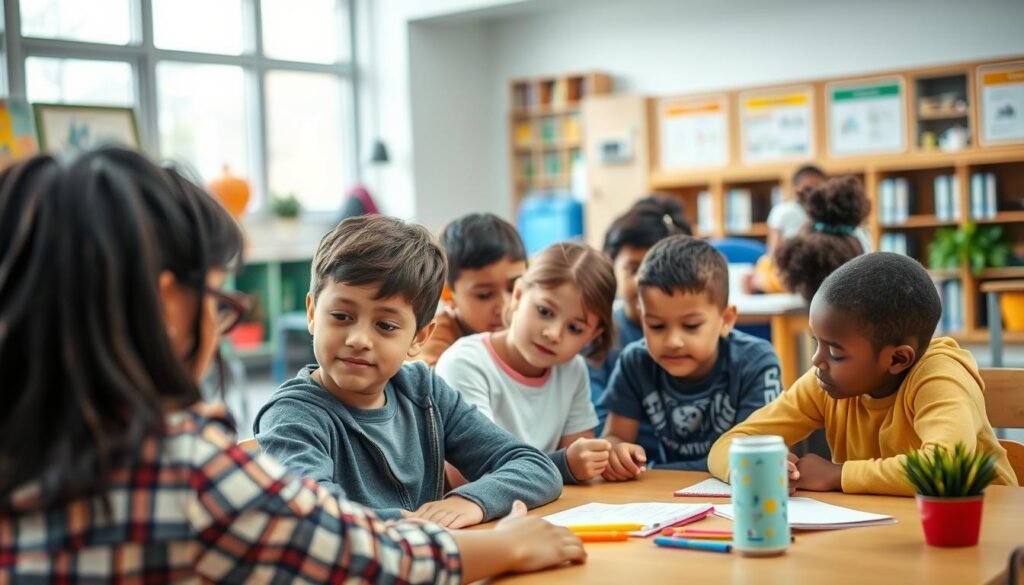
Understanding Accommodations and Modifications in Practice
Accommodations and modifications are different but both support mainstreaming students in inclusive classrooms. Accommodations change how students learn without changing what they learn. These adjustments remove barriers while keeping the same learning goals.
Common accommodations include extended time on tests and assignments. Students might use text-to-speech software or graphic organizers. Preferential seating helps minimize distractions.
Alternative response formats let students show knowledge in different ways. A student might use speech-to-text to write an essay. The topic and complexity stay the same as classmates’ work.
Modifications alter what students learn by changing content complexity or depth. These adjustments reduce the number of concepts covered. They might provide simpler curriculum or adjust performance expectations.
A modified assignment might ask for five vocabulary words instead of fifteen. Students might match terms instead of writing explanations. The learning expectations differ from peers’ assignments.
IEP teams decide between accommodations and modifications based on individual student needs. They examine assessment data and consult specialists. Teams consider each student’s performance levels and future goals.
This careful process ensures students get the right amount of support. Students receive enough help to succeed without unnecessary limits on grade-level content.
The Role of Special Education Services Within Inclusive Classrooms
Special education services remain essential in inclusive settings. The location and delivery method differ from traditional separate classrooms. Inclusion repositions specialized expertise to help students within general education.
This approach addresses many special education inclusion barriers effectively. Specialized support becomes visible and accessible without removing students. Students stay connected to their learning community.
Special education teachers bring critical knowledge about learning disabilities and behavioral interventions. They understand assistive technology and differentiated instruction strategies. Their expertise improves outcomes for diverse learners.
These professionals work directly in general classrooms providing immediate support. They model effective teaching strategies for general education teachers. They adapt instruction in real-time based on student responses.
Pull-Out Services vs. Push-In Support Models
Pull-out service models remove students from general classrooms for specialized instruction. Students receive help in resource rooms or therapy offices. This approach allows intensive, individualized instruction with minimal distractions.
Special education teachers can address specific skill gaps using specialized materials. Pull-out services work well for foundational skills requiring extensive practice. Some instruction needs explicit teaching or privacy considerations.
Push-in support models deliver specialized services within general education classrooms. Teachers use co-teaching arrangements or in-class interventions. Related service providers work with students during typical classroom activities.
Speech therapists and occupational therapists help students without removing them from class. This approach maintains students’ connection to grade-level curriculum. It preserves social relationships with peers.
Push-in support reduces the stigma of leaving class for special services. Students participate in regular lessons while receiving needed help. They see themselves as part of the classroom community.
Research shows each approach offers distinct advantages depending on student needs. Some students benefit from combining both models. They receive certain services in class while accessing pull-out support for intensive skills.
The choice depends on individual student goals and service types. Teams consider whether services can work effectively in general education environments. Decisions should stem from individualized consideration of each student’s needs.
| Support Feature | Pull-Out Services | Push-In Support | Hybrid Approach |
|---|---|---|---|
| Service Location | Separate resource room or therapy space outside general education classroom | Within general education classroom during typical instructional time | Combination of both settings based on skill and student needs |
| Primary Advantages | Intensive individualized instruction, minimal distractions, specialized materials and equipment readily available | Maintains access to grade-level curriculum, preserves peer relationships, reduces stigma of removal | Maximizes benefits of both approaches while minimizing limitations of each model |
| Potential Limitations | Student misses general education instruction, possible stigma, fragmented learning experience | Potential classroom distractions, less intensive instruction, scheduling complexities for service providers | Requires careful coordination and scheduling, demands clear communication among team members |
| Best Used For | Foundational skill building, highly specialized interventions, services requiring privacy or specialized equipment | Supporting participation in grade-level content, social skill development, generalization of learned skills | Students needing both intensive skill instruction and meaningful general education participation |
Individualized Education Plans in Inclusive Settings
Individualized Education Plans determine appropriate goals, services, and placement for students with disabilities. The IEP process starts with the least restrictive environment presumption. Students should have maximum interaction with peers without disabilities while meeting their needs.
This presumption establishes inclusion as the starting point. Students don’t need to earn inclusion through demonstrated readiness. Inclusion is their right from the beginning.
Well-designed IEPs specify what services students receive and how they’re delivered. The document maximizes both specialized support and meaningful peer participation. It outlines present achievement levels and functional performance.
IEPs establish measurable annual goals and identify needed accommodations. They determine time spent in various educational settings. Each component ensures students get appropriate support without unnecessary removal.
IEP teams include parents, teachers, administrators, and related service providers. Students join when appropriate. These teams make collaborative decisions about service delivery in inclusive contexts.
Teams examine whether supplementary aids and services can enable successful general education participation. They consider program modifications and support for school staff. More restrictive placements are considered only when necessary.
Removal from inclusive settings happens only when disability severity prevents satisfactory progress. Schools must first try appropriate supplementary aids and services. This decision-making process protects students’ rights to inclusion.
IEP effectiveness depends on ongoing communication and regular progress monitoring. Teams must adjust supports as students’ needs change. They schedule periodic reviews to assess whether current services remain appropriate.
Teams consider whether changes in placement, goals, or delivery methods would better support growth. This dynamic approach recognizes inclusion as an ongoing commitment. It’s not a single placement decision but continuous support.
Recognizing and Overcoming Barriers to Inclusive Education
Implementing inclusive education successfully demands recognition of complex challenges that hinder progress in schools today. Despite compelling research evidence and clear legal mandates, significant barriers to inclusive education continue to impede full implementation. These obstacles exist at multiple levels, from deeply embedded structural policies to individual beliefs and attitudes.
Understanding these educational equity barriers is not about justifying continued segregation. Instead, it provides educators and advocates with knowledge necessary to address obstacles strategically. This understanding helps create meaningful change in schools and districts.
The commitment to inclusive education requires more than philosophical agreement. It demands concrete action to dismantle systemic, attitudinal, and resource-based barriers. These barriers prevent students with disabilities from accessing their rightful place in general education classrooms.
Systemic Challenges Embedded in Educational Structures
Educational systems often contain structural elements that create invisible barriers to inclusive practices. These systemic challenges operate at the policy and organizational levels. They make segregated placements the path of least resistance even for educators who philosophically support inclusion.
Funding mechanisms represent one of the most significant inclusive education barriers. Many state and district funding formulas inadvertently incentivize segregated placements by allocating additional resources based on restrictive educational settings. This creates a perverse incentive structure where schools receive more funding for removing students from general education classrooms.
Scheduling structures prioritize administrative convenience over student needs in many schools. Traditional master schedules often separate special education services from general education instruction. This makes co-teaching and collaborative models logistically difficult to implement.
Accountability systems sometimes create disincentives for including students with disabilities in general education settings. Schools face pressure to maintain test score averages and graduation rates. Administrators may view students with significant disabilities as threats to their performance metrics.
Physical infrastructure designed around segregated service delivery models presents another structural barrier. Many school buildings contain separate special education wings, resource rooms, and self-contained classrooms. The architecture itself reinforces the assumption that students with disabilities belong in separate spaces.
District policies that default to restrictive placements create additional systemic obstacles. Individualized education program teams must justify inclusive placements rather than requiring justification for removal from general education. This reverses the legal presumption under IDEA that students with disabilities should be educated in least restrictive environments.
Addressing these systemic barriers requires policy-level intervention and leadership commitment. School and district leaders must examine how their funding requests, scheduling practices, and accountability measures either support or undermine inclusion. Sometimes creative problem-solving allows educators to work within existing constraints while simultaneously advocating for structural change.
Confronting Attitudinal Obstacles Among Educational Stakeholders
Attitudes often prove more intractable than practical obstacles. The beliefs, assumptions, and biases held by various stakeholders create significant barriers to inclusive education. Research consistently shows that commitment, agency, and collective efficacy are pivotal in successful implementation of inclusion.
General education teachers frequently express doubts about their competence to teach students with disabilities. Many feel they lack the specialized training and skills necessary to meet diverse learning needs. This perceived inadequacy creates anxiety and resistance to inclusive placements.
When we dig deeper into situations where people say “Inclusive education doesn’t work,” we usually find that teachers have not been taught what to do, and supplemental aids and services have not been provided, as required by IDEA.
Special education teachers sometimes harbor concerns that their expertise will be devalued in inclusive settings. They may view the shift toward inclusion as diminishing their professional identity. These attitudinal barriers can create resistance to collaborative teaching models.
Administrators often view inclusion as risky or resource-intensive. Concerns about parent complaints, teacher satisfaction, and potential litigation can make administrators hesitant to pursue inclusive reforms. Their ambivalence permeates the entire school culture.
Parents of students both with and without disabilities harbor concerns based on misconceptions or previous negative experiences. Parents of children with disabilities may fear their children will be neglected or bullied. Parents of typically developing children sometimes worry that inclusion will slow academic progress.
Community members and policymakers may hold outdated beliefs about disability and capability. These broader societal attitudes influence school board decisions, budget allocations, and political will for inclusive education reforms. Changing community attitudes requires sustained effort and visible demonstrations of successful inclusive practices.
Strategies for addressing attitudinal barriers include:
- Creating exposure to successful inclusive practices through school visits and video examples
- Sharing research evidence demonstrating benefits for all students in inclusive settings
- Developing opportunities for stakeholder collaboration that build relationships and shared understanding
- Establishing communities of practice where participants develop collective vision and efficacy
- Providing platforms for students with disabilities to share their own perspectives and experiences
The challenge is less about defending the need to accommodate learner differences. It is more about sharing a compelling vision for inclusive education. Attitudinal barriers begin to dissolve when stakeholders develop shared belief that inclusion is both morally imperative and practically achievable.
Addressing Resource and Training Constraints
Resource and training limitations create legitimate practical obstacles to implementing inclusive education. While these barriers to classroom inclusion should not justify continued segregation, acknowledging them honestly allows for strategic planning. It also supports advocacy for necessary investments.
Insufficient professional development opportunities leave teachers unprepared for inclusive instruction. Many teacher preparation programs provide minimal coursework on disability, differentiation, and collaborative teaching. Ongoing professional learning often focuses on general pedagogical strategies rather than specific skills for inclusive classrooms.
Inadequate time for co-planning and collaboration undermines inclusive teaching models. Effective co-teaching requires shared planning time for general and special education teachers to design coordinated instruction. Many schools schedule teachers without providing the collaborative time necessary for inclusive practices to succeed.
| Resource Challenge | Impact on Inclusion | Evidence-Based Solution |
|---|---|---|
| Limited professional development | Teachers feel unprepared and anxious about inclusive instruction | Job-embedded coaching and collaborative learning communities |
| Insufficient planning time | Co-teaching partnerships lack coordination and shared vision | Creative scheduling and protected collaborative planning periods |
| Personnel shortages | High caseloads prevent individualized support and consultation | Alternative staffing models and paraprofessional training programs |
| Technology gaps | Students lack assistive technology and curriculum adaptations | Technology lending libraries and universal design principles |
Shortages of qualified special education teachers and related service providers create staffing challenges. High caseloads prevent special educators from providing adequate consultation support to general education teachers. Speech-language pathologists, occupational therapists, and other specialists struggle to serve all students effectively.
Limited access to assistive technology and curriculum adaptations restricts student participation. Many schools lack the devices, software, and adapted materials that enable students with disabilities to access general education curriculum. The process for acquiring these tools often involves bureaucratic delays that leave students waiting for essential supports.
Competing demands on educator time and attention create bandwidth limitations. Teachers already managing large class sizes and diverse student needs may feel overwhelmed by additional demands of inclusive instruction. This resource scarcity can lead to burnout and resistance.
Evidence-based approaches to maximizing existing resources include:
- Implementing peer support and peer tutoring programs that leverage student assets
- Using paraprofessionals strategically to support all students rather than hovering over individuals
- Applying universal design for learning principles that reduce the need for individual adaptations
- Creating teacher leadership opportunities that allow skilled practitioners to mentor colleagues
- Leveraging community partnerships with universities, nonprofits, and businesses for additional support
Schools have successfully implemented inclusion even within resource-constrained environments by prioritizing creative problem-solving. Educators view resource limitations as challenges to overcome rather than insurmountable barriers. They discover innovative solutions that advance inclusive practices.
Advocacy for increased investment in inclusive education infrastructure remains essential. Educators and families must communicate to policymakers that adequate funding represents not additional expense but fundamental requirements. Professional development, collaborative planning time, appropriate staffing ratios, and assistive technology are necessary for legal compliance and educational quality.
Recognizing barriers to inclusive education provides the foundation for strategic action. By identifying systemic challenges, confronting attitudinal obstacles, and addressing resource limitations directly, educational communities can move forward. They can systematically dismantle barriers and create truly inclusive learning environments for all students.
The Reality of Mainstreaming Effectiveness: What Research Shows
Scientific inquiry into mainstreaming effectiveness reveals consistent patterns that challenge persistent misconceptions about segregated education. For nearly five decades, researchers have examined outcomes of students in inclusive versus separate settings. The evidence has accumulated into a comprehensive body of work with remarkable clarity.
This research foundation addresses fundamental questions about educational quality, student achievement, and post-school success. The findings consistently demonstrate that inclusive practices produce measurable benefits across multiple domains. Understanding this evidence base requires examining both immediate educational outcomes and longer-term life trajectories.
Let’s explore the empirical data supporting inclusive education, moving beyond anecdotal observations to examine rigorous studies. These studies were conducted across diverse populations and settings. This evidence provides the foundation for informed decision-making about educational placement and instructional approaches.
Evidence-Based Outcomes of Inclusive Practices
A striking finding emerges when examining the research literature on mainstreaming effectiveness. No credible studies since the 1970s have demonstrated superior outcomes for students with significant disabilities educated in segregated classrooms. This absence of evidence supporting segregation represents a powerful statement about mainstreaming realities.
Multiple respected research studies have documented positive correlations between time spent in general education classrooms and various outcome measures. These correlations hold true regardless of disability severity. Students who spend more time in inclusive settings demonstrate better results across academic, social, and behavioral domains.
The academic benefits of inclusive education extend across fundamental skill areas. Research has documented improvements in several critical domains:
- Reading skills: Students with disabilities in general education classrooms show greater gains in reading comprehension and fluency compared to peers in segregated settings
- Mathematics achievement: Inclusive placements correlate with improved problem-solving abilities and computational skills
- Communication development: Exposure to diverse language models enhances both expressive and receptive communication
- Social competencies: Peer interactions in inclusive settings build relationship skills that transfer across environments
- Behavioral regulation: Students demonstrate improved self-control and reduced problem behaviors when included with appropriate supports
One particularly compelling outcome involves school attendance. Students with significant disabilities educated in inclusive classrooms have fewer absences from school. This attendance pattern suggests higher engagement and sense of belonging within the educational community.
Almost 30 years of research and experience has demonstrated that the education of children with disabilities can be made more effective by having high expectations for such children and ensuring their access to the general education curriculum in the regular classroom, to the maximum extent possible.
This research foundation addresses many mainstreaming misconceptions. The benefits documented extend beyond students with disabilities to include positive outcomes for typically developing students as well. Studies consistently show no adverse academic effects on students without disabilities in inclusive classrooms.
Meta-analytic reviews examining dozens of studies have calculated effect sizes that demonstrate the magnitude of these benefits. The positive effects remain significant even after controlling for various factors. These factors include socioeconomic status, disability category, and resource availability.
Research methodologies have evolved to address initial concerns about selection bias and implementation quality. Longitudinal studies following students across multiple years provide stronger evidence than earlier cross-sectional designs. These rigorous investigations confirm that inclusion itself, when implemented with fidelity, produces beneficial outcomes.
The evidence also reveals important implementation factors. Quality matters significantly—inclusive placements paired with appropriate supports, accommodations, and instructional modifications yield far better results. This finding emphasizes that inclusion represents a comprehensive approach rather than a single intervention.
Long-Term Benefits for All Student Populations
Perhaps the most compelling evidence for inclusive education comes from longitudinal research tracking students into adulthood. These studies examine post-school outcomes that matter profoundly to students, families, and society. The patterns emerging from this research provide powerful validation of mainstreaming effectiveness.
Students with disabilities who experienced inclusive education demonstrate substantially better employment outcomes. They secure competitive employment at higher rates than peers educated in segregated settings. These jobs typically offer better wages, benefits, and opportunities for advancement.
Post-secondary education participation represents another area where inclusive education shows long-term impact. Students educated in general education classrooms enroll in college and vocational training programs more frequently. This pattern holds across disability categories and severity levels.
Community integration outcomes reveal significant differences based on educational placement history:
- Independent living: Higher rates of independent or semi-independent residential arrangements
- Social networks: More diverse friendships and social connections beyond family members
- Community participation: Greater involvement in civic activities, recreation, and volunteer work
- Self-determination: Enhanced ability to make choices and advocate for personal needs
- Quality of life: Higher self-reported satisfaction across multiple life domains
The mechanisms underlying these long-term benefits become clearer when examining the inclusive education experience. Students gain exposure to rigorous academic content that builds foundational skills for lifelong learning. High expectations communicated through inclusive placement shape self-concept and aspirations.
Diverse social networks developed during school years provide ongoing support and opportunities in adulthood. Students who build friendships with peers without disabilities maintain these relationships beyond graduation. These connections open doors to employment, housing, and community involvement.
Research on self-efficacy helps explain the link between inclusive education and adult success. Students who participate fully in school communities develop confidence in their abilities. This psychological foundation supports risk-taking, persistence, and problem-solving—qualities essential for navigating adult challenges.
The societal benefits of inclusive education extend beyond individual outcomes. Economic analyses demonstrate reduced costs for adult services when individuals achieve greater independence. Increased employment generates tax revenue and reduces dependence on public support systems.
Broader social benefits emerge as well. Communities that embrace inclusion during school years develop reduced stigma and greater acceptance of disability. This cultural shift creates more accessible and welcoming environments for all citizens.
Longitudinal research also documents benefits for students without disabilities who experienced inclusive classrooms. These individuals demonstrate:
- Enhanced understanding of human diversity and individual differences
- Reduced prejudicial attitudes toward people with disabilities
- Greater comfort interacting with diverse populations
- Stronger prosocial behaviors and helping tendencies
- More sophisticated understanding of equity and justice
The consistency of findings across different research methodologies strengthens confidence in these conclusions. Quantitative studies measuring specific outcomes align with qualitative research capturing lived experiences. Parent reports, teacher observations, and student self-reports converge on similar themes.
This robust evidence base addresses common mainstreaming misconceptions by demonstrating that inclusive education benefits all students involved. The “zero-sum” assumption—that supporting some students necessarily disadvantages others—finds no support in the research literature. Instead, evidence reveals that thoughtfully implemented inclusion creates learning environments where diverse students thrive together.
The research on mainstreaming effectiveness ultimately reveals a clear pattern. Inclusive education, when implemented with appropriate supports and high expectations, produces superior outcomes. These outcomes span academic, social, and long-term life domains for students with and without disabilities.
Creating Successful Inclusive Classrooms: A Step-by-Step Guide
Educators need practical guidance to implement inclusive practices in their classrooms. Moving from traditional teaching to environments that honor diversity requires systematic planning. This guide provides concrete steps for creating classrooms where every student can access rigorous curriculum.
Successful inclusive education is an ongoing process, not a destination. Teachers must reflect regularly on their practices while staying responsive to student needs. The strategies here draw from evidence-based research and proven classroom applications across the United States.
Assessing Your Current Classroom Environment
Before implementing changes, educators must assess their current classroom practices and environment. This evaluation identifies strengths to build upon and gaps that need attention. A comprehensive assessment examines physical accessibility, instructional methods, social dynamics, and available support systems.
Effective assessment involves gathering input from multiple stakeholders who experience the classroom differently. Students with and without disabilities offer valuable insights into what supports their learning. Families provide information about their children’s experiences and needs that may not be visible during school hours.
Paraeducators who work directly with students observe interactions and challenges that teachers might miss. Related service providers contribute specialized knowledge about student needs and effective interventions.
Assessment tools provide structured frameworks for this evaluation process. Environmental checklists help educators examine physical accessibility features including doorway widths and furniture arrangement. These checklists also address the availability and positioning of assistive technology devices students need.
Instructional practice rubrics enable teachers to evaluate their current teaching methods against best practices. These rubrics assess how well instruction incorporates Universal Design for Learning principles. Teachers can use these rubrics for self-assessment or as part of peer observation processes.
Stakeholder surveys gather perceptions about classroom climate, sense of belonging, and effectiveness of current supports. Surveys for students use age-appropriate language to capture their experiences with peer relationships. Parent surveys explore communication effectiveness and satisfaction with accommodations.
After collecting assessment data, educators should analyze findings to identify patterns and priorities. Common areas needing attention include limited flexible seating options and insufficient collaborative planning time. The assessment process also reveals existing strengths that can serve as foundations for further development.
Creating an action plan based on assessment results ensures improvement efforts address the most significant classroom diversity challenges. Effective action plans establish specific, measurable goals with realistic timelines and clearly identified responsibilities. Plans should prioritize changes that will have the greatest impact on student access and achievement.
Implementing Inclusive Teaching Strategies
Once educators understand their current classroom context, they can implement targeted strategies that promote equity. Successful implementation requires attention to both the physical learning environment and instructional approaches. These two dimensions work together to create spaces where all students can access curriculum.
Classroom Environment and Physical Setup Considerations
The physical arrangement of classroom space significantly influences student engagement, interaction, and independence. Teachers should design environments that accommodate multiple instructional configurations including whole-group instruction and small-group collaboration. Flexible furniture arrangements enable smooth transitions between these different learning formats.
Creating distinct learning zones helps students understand behavioral expectations for different activities. A classroom might include a whole-group instruction area with clear sightlines to the board. Quiet independent work spaces with reduced visual distractions help students focus.
Strategic placement of materials and resources promotes student autonomy and reduces reliance on adult assistance. Frequently used supplies should be accessible to all students regardless of mobility limitations. Labels with both text and pictures help students locate and return materials independently.
Assistive technology and adaptive equipment must be integrated seamlessly into the classroom rather than segregated. Positioning augmentative communication devices alongside standard classroom materials normalizes them as tools that support diversity. This integration reduces stigma while ensuring students can access their supports throughout the school day.
Sensory considerations address the varying sensory processing needs of students in inclusive classrooms. Some students benefit from reduced visual clutter and neutral color schemes that minimize distractions. Others need access to sensory input through fidget tools or alternative seating options.
Visual supports benefit all students by making abstract concepts concrete. Daily schedules displayed prominently help students anticipate transitions and manage their time. Step-by-step visual instructions for routine tasks promote independence.
Instructional Strategies for Accommodating Diverse Learners
Instructional strategies form the core of inclusive education practice. Teachers use Universal Design for Learning (UDL) as their primary framework for planning lessons. UDL provides multiple means of engagement to activate student interest and motivation.
Lesson accommodations maintain grade-level standards while adjusting how students access information or demonstrate learning. Common accommodations include extended time on assignments and preferential seating near instruction. These accommodations remove barriers without lowering expectations for what students should learn.
Curriculum modifications involve changes to what students are expected to learn. Modifications might include alternative assignments addressing different learning objectives or reduced assignment length. Teachers implementing modifications must ensure students continue to access meaningful academic content.
Co-teaching approaches bring general and special education expertise together to support equity in classroom settings. In the one teach, one assist model, one teacher leads instruction while the other circulates. Station teaching divides students into groups that rotate through different learning activities.
Formative assessment strategies provide ongoing feedback about student understanding that guides instructional adjustments. Teachers use techniques such as exit tickets, quick writes, and think-pair-share activities. This real-time data enables teachers to reteach concepts or modify activities.
Flexible grouping configurations prevent stigmatizing special education students while providing targeted instruction at appropriate levels. Teachers group students based on current skill levels, learning preferences, or interest areas. Regular changes to grouping patterns ensure students work with various peers.
Systematic data collection monitors student progress toward individualized education program (IEP) goals and grade-level standards. Teachers collaborate with paraeducators and related service providers to gather data on academic performance. This information informs team discussions about the effectiveness of current supports.
Building a Culture of Acceptance and Educational Equity
Physical inclusion and instructional access remain insufficient without intentional cultivation of classroom culture. Teachers must actively build communities where all students experience belonging and develop positive peer relationships. This cultural foundation transforms inclusive classrooms into spaces where diverse students genuinely thrive.
Explicitly teaching about diversity and disability helps students understand and appreciate human differences. Teachers can incorporate children’s literature featuring characters with disabilities and invite guest speakers. These lessons normalize disability as part of human diversity while challenging stereotypes.
Facilitating peer relationships and friendships requires more than proximity. Teachers can use structured activities such as peer buddies programs and cooperative learning groups. Circle of Friends interventions explicitly build support networks for students who experience social isolation.
Addressing bullying and exclusionary behaviors demands immediate and consistent responses. Teachers must establish clear expectations that exclusion or harassment of any student will not be tolerated. Creating safe reporting mechanisms ensures students feel comfortable bringing concerns to adult attention.
Promoting self-advocacy and self-determination empowers students to communicate their needs. Teachers can teach students about their disabilities and the purpose of their accommodations. Self-advocacy instruction includes helping students understand their strengths and challenges.
Involving students in creating inclusive classroom norms and expectations builds collective ownership of the classroom community. Teachers can facilitate discussions where students identify values important to them such as respect and kindness. Students then generate specific behavioral expectations that align with these values.
Ensuring that classroom discourse, curriculum materials, and celebrations reflect diversity requires ongoing attention. Teachers should audit their classroom libraries and instructional materials to ensure diverse representation. Classroom celebrations should honor various cultural traditions rather than exclusively focusing on dominant culture holidays.
Addressing issues of bias, privilege, and equity extends beyond disability to encompass all forms of human diversity. Teachers working to create truly inclusive environments must examine their own biases. These conversations can be challenging but remain essential for building diversity in learning environments.
The cultivation of inclusive classroom culture represents continuous work rather than a completed task. Teachers must remain vigilant about exclusionary dynamics and responsive to student feedback. Educators who commit to this ongoing work create classroom communities where diversity is genuinely valued.
Moving Forward: The Future of Inclusive Education in America
American education’s future depends on changing educational equity misconceptions into evidence-based inclusive practices. Nearly thirty years of research shows students with disabilities do better alongside their peers. Yet myths continue shaping school decisions, creating barriers that contradict research and equity principles.
This moment in education presents major challenges and opportunities. Strong research, evolving laws, and growing advocacy create conditions for real change. Realizing inclusive education’s potential requires coordinated action across the educational system.
Inclusive education extends beyond classrooms to reflect broader movements toward equity and social justice. The Autistic Self-Advocacy Network emphasizes that educating students with disabilities equally reflects democracy’s fundamental principle. Progress in inclusive education reflects and contributes to cultural shifts regarding disability and human rights.
Shifting from Myths to Evidence-Based Practice
Moving from myth-based decisions to evidence-driven practice is critical for American education today. Despite research proving inclusive education works, inclusion myths in education still influence placement decisions. This happens not from lacking evidence but from attitudes, systems, and institutional resistance.
Research must reach practitioners and policymakers effectively. Simply presenting findings isn’t enough. Educational research needs translation into actionable guidance addressing educators’ daily realities.
This translation requires researchers and practitioners working together. Evidence-based recommendations must account for implementation challenges and resource constraints. They must address contextual variables shaping classroom practice.
Several promising approaches facilitate this critical shift:
- Demonstration sites provide educators with opportunities to observe successful inclusive practices in action, moving beyond theoretical understanding to concrete application
- Mentorship programs connect educators beginning inclusive implementation with experienced practitioners who can offer guidance, troubleshooting support, and encouragement through challenges
- Research-practice partnerships bridge the gap between educational research and classroom application by bringing researchers and educators together in collaborative problem-solving
- Advocacy initiatives elevate the voices of individuals with disabilities and families in educational policy discussions, ensuring that those most affected by educational decisions contribute to shaping practices
Building evidence-based cultures requires more than individual educator commitment. Systemic approaches embedding data-informed decisions into organizational structures prove essential. This includes reviewing placement data to identify segregation patterns.
Schools must examine outcome data by disability and placement type. They need processes incorporating research findings into professional development and strategic planning.
The shift demands addressing attitudes that perpetuate myth-based practices. Many educators hold sincere beliefs about appropriate education for students with disabilities. Changing these convictions requires examining assumptions and experiencing successful inclusive practices.
Policy Changes Supporting Classroom Diversity
Policy reform at federal, state, and local levels can advance inclusive education significantly. Policy change alone can’t guarantee practice transformation. However, it establishes expectations, allocates resources, and creates accountability structures driving systemic change.
The legal principle that inclusion is a right, not a privilege requires translation into effective policies.
Special education funding formulas represent a critical leverage point for reform. Current funding structures often create fiscal incentives for restrictive placements. Many states allocate higher reimbursement rates for segregated settings.
These perverse incentives can lead districts to place students restrictively based on finances. Reforming funding formulas to reward inclusive practices could fundamentally shift placement patterns.
Accountability system reforms offer another avenue for advancing inclusive education. Current accountability measures often fail to capture inclusive education quality. Enhanced frameworks should measure academic achievement and access to general education curriculum.
The economic argument for inclusive education strengthens the policy case considerably. Providing inclusive programs proves considerably less expensive than building new segregated facilities. This cost-effectiveness stems from maximizing existing general education resources.
| Policy Area | Current Challenge | Reform Direction | Expected Impact |
|---|---|---|---|
| Funding Formulas | Financial incentives favor segregated placements | Weight funding toward inclusive services and supports | Reduced fiscal barriers to inclusion implementation |
| Accountability Systems | Limited measurement of inclusion quality and access | Expand metrics to include placement data and participation indicators | Increased transparency and institutional motivation for change |
| Teacher Preparation | Separate training pathways for general and special educators | Require inclusive education competencies for all teaching licenses | Expanded capacity of general education teachers to support diverse learners |
| Civil Rights Enforcement | Inconsistent monitoring of least restrictive environment compliance | Strengthen oversight and intervention for non-compliant districts | Greater accountability for fulfilling legal mandates |
Teacher preparation and licensure requirements represent another critical policy domain. All educators should enter the profession with foundational knowledge of inclusive practices. This creates the workforce capacity necessary for successful implementation.
Many states now require inclusive education competencies for initial licensure. However, significant variation persists in preparation depth and quality.
Several states have demonstrated success with comprehensive inclusive education initiatives. These combine policy reform with technical assistance and professional development. State-level initiatives reveal meaningful progress requires alignment across multiple policy domains.
Various stakeholders prove essential in advancing inclusive education’s future. Educators must commit to continuous learning and implementing evidence-based practices. Administrators need to prioritize inclusive education in strategic planning and resource allocation.
Policymakers should craft legislation supporting inclusive implementation. Families and self-advocates bring irreplaceable perspectives to educational decision-making. Their lived experiences provide insights research alone cannot capture.
Researchers contribute by investigating remaining questions and evaluating implementation approaches. They translate findings into accessible formats for multiple audiences. Community members shape inclusive education through school governance participation and attitudes toward disability.
Meaningful progress requires coordinated action across diverse groups sustained over time. It must be grounded in recognizing inclusive education benefits all students and society.
The path forward demands courage to challenge classroom diversity misunderstandings that persist despite evidence. It requires wisdom to learn from successes and setbacks. Every student deserves access to high-quality education preparing them for full participation in society.
The evidence base now exists to support this vision. The question is whether American education will meet this moment with required boldness and persistence.
Conclusion
Research shows that inclusive classrooms help all learners when schools provide proper support. Students with disabilities access grade-level curriculum and build meaningful friendships. Their classmates develop empathy and skills for navigating diverse communities.
Inclusive education needs commitment from many people. Teachers need professional development programs for differentiated instruction. Administrators must allocate resources wisely and remove barriers.
Policymakers should reform funding and teacher preparation standards. These changes support inclusive practices on a larger scale.
Inclusion represents a shift toward educational equity, not a temporary trend. Evidence spans decades of research across different contexts. Every child has dignity and deserves full participation in school.
Moving past misconceptions takes courage to challenge old assumptions. Schools must prioritize equity even when change feels uncomfortable. Families can advocate for inclusive practices while working with educators.
Self-advocates with disabilities bring essential perspectives to policy and classroom practice. Their voices inform better decisions for everyone.
Creating inclusive schools prepares all children for diverse society. This work requires sustained effort and questioning familiar structures. The investment builds communities that value every member’s contributions.