


What if ignoring a “phase” is really a sign your child needs help? Sometimes what we think is just a stage is actually a cry for assistance.
Parents wonder when to consider therapy for their child as moods and behaviors change quickly. According to the National Institutes of Health, around 20% of U.S. children have a mental or behavioral disorder. It’s key to recognize these signs early, before they become harder to manage.
Psychologist Kristen Eastman, PsyD, suggests trusting your gut when problems appear in different areas of life—like school and home. Look for big shifts in sleep, cleanliness, or eating habits; lots of negative self-talk; harmful actions like pulling hair or picking skin; too much worrying that messes up daily routines; avoiding friends; or extreme behaviors to get attention. Also watch for scary talk about feeling worthless, thoughts of running away, self-harm, acting very defiant, or eating problems. These signs don’t mean something is definitely wrong, but they’re clues to pay attention to.
Getting therapy doesn’t always mean medication or staying in a hospital. Many kids get better with simple supports like learning new skills, managing their time better, and finding ways to deal with tough situations. If things get really serious, like if a child thinks about suicide, families in the U.S. can call the 988 Suicide and Crisis Lifeline or go to an emergency room. Acting early can make seeking help feel more okay and protect a child’s future happiness.
This part talks about the main signs your child might need therapy and gives clear advice for caregivers. Moving forward, we’ll turn research into steps you can take now and explain therapy for kids in easy-to-understand language.
Key Takeaways
- Trust consistent patterns across settings; repeated concerns signal meaningful child mental health signs.
- Watch for major changes in sleep, appetite, hygiene, mood, or social behavior as early indicators.
- Self-harm, disordered eating, and statements about worthlessness are urgent red flags.
- Early, low-intensity care can prevent escalation and build coping skills for the whole family.
- Use 988 in the U.S. for crisis support; seek emergency care if safety is at risk.
- Understanding how to know if child needs therapy empowers timely, compassionate action.
Understanding Children’s Mental Health
Kids feel and react to stress and change based on how old they are. Spotting signs of mental health issues early means families can help with care. Parents often wonder when to get therapy for their kid. The best time is based on what happens at home, school, and with friends. Watching carefully and acting quickly can make therapy more helpful for kids.
Look at daily life for hints. How kids sleep, eat, focus, and play shows how well they’re coping. If changes last and happen in different places, talking to a professional can help. Working with a doctor and school helps make sure therapy fits the child’s life.
Importance of Early Intervention
Acting early builds strength and lowers the risk of serious problems. Handling mental health signs early can improve how kids behave, learn, and get along with others. Parents unsure about therapy can start with a check-up and learning about the child’s development.
- Functional impact: Issues that mess up sleep, school, or friends need a quick look.
- Duration and spread: Problems lasting weeks or happening in more than one place need attention.
- Family partnership: The best care happens when families learn skills with their children during therapy.
Treatment fits the child’s age and what they need. Young kids do well with play. School kids benefit from learning coping skills. Teens improve with help in handling feelings, solving problems, and dealing with friends.
| Age Group | Primary Goals | Modalities | Typical Provider |
|---|---|---|---|
| Preschool | Emotion labeling, routine support | Play therapy, parent coaching | Licensed professional counselor, child psychologist |
| School-Age | Coping skills, behavior shaping | CBT, play, art-based activities | Child psychologist, clinical social worker |
| Adolescence | Emotion regulation, healthy thinking | CBT, DBT skills, group work | Clinical psychologist, psychiatrist (as needed) |
Common Mental Health Issues in Children
Many kids face issues like ADHD, anxiety, OCD, depression, trauma, bad behavior, eating disorders, and self-harm. Signs include being too active or sad, worrying a lot, or avoiding things suddenly. Physical signs like headaches, stomach aches, sleep problems, or not wanting to go to school are also clues to mental health problems.
- Emotional challenges: sadness, anger, stress, worry, grief, low self-esteem
- Situational stressors: family fights, bullying, health issues, school pressure
- Decision points: looking at what happens in different places helps decide when to get therapy for kids
Working together—families, doctors, and schools—helps focus the therapy for kids. They check on progress by watching mood, behavior, and daily life over time.
Behavioral Changes to Watch For
Children’s behavior often changes before they can talk about their feelings. Noticing patterns helps families see early signs for needing therapy. Look for sudden anger, quietness, or a drop in interest. These can be signs of emotional trouble at home, school, and online.
If these behaviors happen a lot, are strong, and in different places, talk to a doctor or therapist. Look for these signs consistently over weeks, not just on one bad day.
Increased Aggression or Anger
More irritation, big outbursts, or more fights show stress. Signs like losing temper often, bullying, or not listening despite rules point to needing therapy. This is true when bad behavior happens at home, school, and in sports.
- Pattern: getting worse over time
- Context: happens with adults, teachers, and friends
- Function: looking for attention or escaping stress
Help can teach kids to control themselves, be patient, and listen while finding the main problem. This reduces the risk to them and others.
Withdrawal from Friends and Activities
Pulling away from friends, not going to clubs, or not liking hobbies anymore can mean stress. Look for less play, quietness at meals, or not wanting to go to practices that used to be fun.
- Loss of interest: music, sports, reading, or games aren’t fun anymore
- Social retreat: less texting, calling, or hanging out
- Energy shift: more alone time, less drive to do things
This pulling back guides families on when therapy might help, especially when sleep or grades drop. Spotting these signs early helps families act before things get worse.
Emotional Indicators of Distress
Feelings come before words in shaping behavior. Caregivers see mood changes first: quick tears, irritability, or avoiding favorite routines. These signs can point to a child’s emotional distress. They help families seek help, like therapy for kids, when life gets tough.
Persistent Sadness or Irritability
Look for sadness or crankiness that stays for over two weeks. Signs are frequent crying, anger over small things, and repeating negative thoughts. When these conditions cause tiredness, mess with sleep, or pull kids from friends, they clearly signal emotional distress.
Experts use special methods to help. They use play and art with younger kids, and cognitive therapy for teenagers’ negative thoughts. Skills like dialectical behavior teach kids to handle distress. These methods show when therapy is needed to improve child well-being before it gets worse.
Excessive Fear or Anxiety
Big worries show in different ways: stomach pains before school, avoiding tests, or endless night thoughts. If this fear interrupts school and causes fights or panic, it’s time to look into therapy. Therapy helps kids make coping plans and learn to calm their bodies.
Getting help involves learning to face fears, think realistically, and practice calm breathing. This guidance helps routines become smoother and boosts confidence. Catching these issues early helps figure out when therapy is needed. It stops anxiety from hurting school or friendships while tackling emotional distress signs in children.
Academic Struggles as a Warning Sign
School performance often shows how a child feels inside. When easy tasks become hard, it might mean they’re stressed, anxious, or have a learning difference. Notice these little changes to catch mental health signs early and provide the right support.
What to notice: Projects turned in late or not at all, work done in a rush or not finished, and not wanting to go to school. If you see these signs, therapy and talking with teachers can help figure out the problem.
Decline in Grades or Performance
Grades going down can point to anxiety, depression, ADHD, or bullying. Kids might skip groups, not do homework, or be scared of tests. These signs need action, they’re not bad behavior.
Therapy can find what’s behind the drop: learning issues, social stress, or feeling unsure. Therapists teach how to plan, organize, and handle stress. Parents and teachers should support these routines at home and school.
- Signs: grades falling, undone work, late work, avoiding school
- Immediate steps: talk to the teacher, see a pediatrician, ask the school for an evaluation
- Support options: therapy, tutoring that fits learning needs, set study habits
Difficulty Concentrating or Following Instructions
Having trouble staying focused, remembering steps, or listening can signal attention issues or too much stress. Some kids can’t sit still; others daydream and miss important info. These are common signs that need attention.
In therapy, kids work on skills like taking turns, controlling themselves, keeping on trying, and following steps. Families get strategies to help at home, enhancing classroom learning.
- Observe: note when attention drops—morning or afternoon, quiet or loud places
- Clarify: check with a doctor for vision, hearing, sleep, or health issues
- Support: combine therapy with classroom help and steady routines
| Academic Indicator | Possible Root Cause | Home & School Supports | Therapeutic Focus |
|---|---|---|---|
| Falling grades | Anxiety, depression, learning difference | Check-ins with teacher, adjusted workload, quiet study space | Goal-setting, self-efficacy, problem-solving |
| Incomplete assignments | Executive-function gaps, avoidance | Task chunking, visual schedules, timers | Organization, planning, task initiation |
| Distractibility | ADHD, stress, environmental noise | Preferential seating, movement breaks | Attention training, impulse control |
| Difficulty following directions | Working-memory limits, overload | Step-by-step instructions, checklists | Sequencing, rehearsal, persistence |
| School avoidance | Bullying, test anxiety, low confidence | Safety plan, gradual return, teacher liaison | Coping skills, exposure, emotional regulation |
Physical Symptoms of Emotional Issues
Body signals often show up before a child can talk about their feelings. Recurrent aches, sleep problems, or changes in eating may point to stress. These patterns, when they keep happening, could mean a child needs therapy to help them in specific ways.
First, make sure there’s no illness. If the child is physically healthy but shows signs like avoiding school, increased worries, or mood changes, it’s time to consider emotional issues. A mix of doctors’ visits, therapy, and stable home life helps a lot.
Frequent Complaints of Stomachaches or Headaches
Regular complaints about stomach pain or headaches can be linked to anxiety or feeling down. A child might say their stomach feels tight before school or their head hurts after feeling stressed. Not wanting to go to school, trying to be perfect, or being easily upset can also be signs.
Good care looks at both physical and mental health: drinking water, eating regularly, light exercise, and learning to calm down. Therapy helps kids understand their worries and deal with them. Parents also learn how to keep up a stable routine and not feed into the worries too much.
Changes in Sleep Patterns
Trouble sleeping, waking up a lot, or sleeping more than normal can show that something is bothering the child. Struggling to go to bed, having bad dreams, and using screens late at night are signs to look for. These, along with eating differently or weight changes, point to emotional issues.
To improve sleep, stick to a routine, make the room dark and cool, and plan a calming bedtime routine without screens. If fears are keeping the child awake, therapy can help by facing those fears slowly and learning to relax. Including the whole family in these routines makes therapy more effective.
| Symptom Pattern | What Caregivers Observe | Possible Emotional Drivers | Helpful First Steps |
|---|---|---|---|
| Recurrent stomachaches | Morning pain before school; relief on weekends | Anticipatory anxiety; school avoidance | Medical check; structured mornings; CBT coping plan |
| Frequent headaches | After social events or homework | Stress overload; perfectionism | Hydration, breaks, task chunking; relaxation training |
| Insomnia or delayed sleep | Long sleep latency; nighttime worries | Generalized anxiety; rumination | Consistent bedtime, device curfew; worry journal then lights out |
| Hypersomnia | Sleeping in; low energy most days | Depressive symptoms; low motivation | Fixed wake time; morning light exposure; activity scheduling |
| Appetite shifts | Skipping meals or increased snacking | Stress response; mood disturbance | Regular meal times; pediatric consult; nutrition guidance |
| Somatic complaints plus avoidance | Requests to stay home; escalating worry | Conditioned fear; safety behaviors | Pediatric clearance; CBT with gradual exposure; caregiver coaching |
Key takeaway for families: pay attention to how often and under what situations these symptoms happen. This information helps find the right steps, spot therapy needs early, and adjust care based on each child’s unique challenges.
Social Skills and Interaction Challenges
A child’s social behavior often mirrors their feelings. Signals like avoiding group activities or sudden issues with friends can show stress. These ongoing patterns suggest a child needs therapy attention and a careful plan.
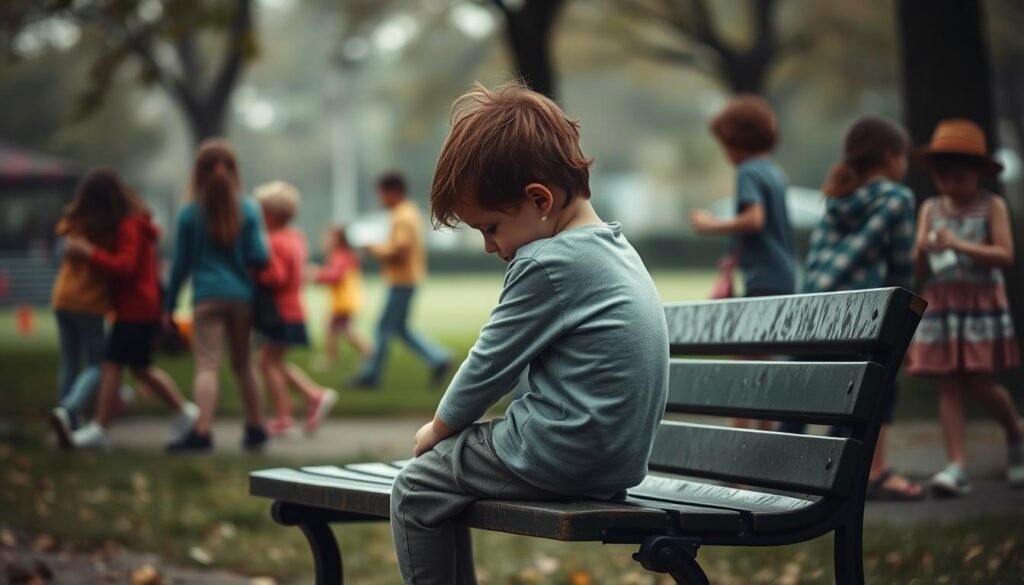
Schools, doctors, and families should observe the child’s environment, the friends involved, and how the child feels after tough moments. With these insights, therapy can focus on improving weak skills and enhancing strengths.
Difficulty Making or Maintaining Friendships
Signs of trouble may be fleeting friendships, little interest in getting together with friends, and difficulty understanding facial expressions or voice tones. A child might talk over others, control play, or pull away after small disagreements. These behaviors are therapy indicators of stress or lack of skills.
For younger kids, therapy involves learning to share and think flexibly through play. Older kids might work on empathy, seeing things from others’ perspectives, and confidence through different therapies including CBT, role-play, and group activities.
- Younger ages: Play-based coaching, visual supports, and practice at home with parents.
- Older ages: Role-play, feedback exercises, and peer groups for real-life practice.
- At home and school: Keeping routines, praising good behavior, and knowing how to make amends after issues.
Intense Reactions to Social Situations
Overreactions, like crying over simple teasing, feeling panic in groups, or anger over small mistakes, can be a big problem. These can come from social fears, trauma, autism, or mood issues, showing up as signs a child might need therapy.
Structured therapy teaches kids to name their feelings, breathe to relax, and think differently about situations. Therapists often slowly expose kids to stress with plans for coping, while teaching parents to help with calm problem-solving.
| Challenge | Observable Indicators | Likely Skill Targets | Helpful Interventions |
|---|---|---|---|
| Making Friends | Limited invitations, brief play, frequent misunderstandings | Initiation, turn-taking, perspective-taking | Play therapy; social scripts; coached playdates |
| Maintaining Friendships | Escalating conflicts, black‑and‑white thinking | Flexibility, repair language, empathy | CBT role-play; emotion coaching; parent reinforcement |
| Intense Social Reactions | Panic, tears, or anger in routine peer moments | Emotion regulation, distress tolerance | Gradual exposure; coping skills; school accommodations |
| Reading Social Cues | Missed sarcasm, misread faces, awkward timing | Nonverbal decoding, conversational rhythm | Modeling; video feedback; small-group practice |
Regular communication between caregivers, teachers, and therapists helps make sure therapy works in everyday life. Dr. Benjamin Eastman says if a child is really isolated from friends and family, it’s crucial to find out why and get the right support.
Changes in Family Dynamics and Their Impact
Family rhythms help children handle stress. Changes in routines, roles, or rules can make a child feel unsafe. Caregivers observe kids’ mental health closely during these times.
They decide if therapy is needed for the child. Therapy can help kids feel more stable.
Parental Stress and Its Effects on Children
When parents are stressed, it affects the home. Voices may get sharper, patience might wear thin, and schedules can break down. Kids might become irritable, regress in behavior, or not want to go to school.
Starting conversations with “I see this is hard for you.” can help. Praising even small tries can boost their confidence. If stress lasts weeks or affects sleep, eating, or learning, therapy could be necessary.
Family therapy can help everyone respond better, set clear rules, and make life predictable again.
Significant Family Changes (Divorce, Relocation)
Big changes like divorce or moving are tough. Kids may complain about physical pains, become overly clingy, or do worse in school. These signs show they’re struggling.
Keeping routines the same and explaining changes simply can help. Teachers should also know what’s going on. If kids keep having a hard time, therapy might be needed. Short therapy sessions can teach kids how to cope with their new situations better.
- Watch patterns: if issues last more than two weeks, affect daily life, or are intense in different places.
- Engage supports: doctors can help understand if it’s normal and what to do next.
- Align caregivers: having the same plan reduces confusion and stress at home.
Coping Mechanisms and Their Importance
Kids use coping skills to handle intense emotions in small steps. When families see their child struggling emotionally, they can help prevent lasting problems. They do this through therapy and counseling, creating a plan with clear ways to talk about feelings, simple routines, and lots of practice.
Why it matters now: Coping skills get better with use. Achieving little victories, like naming an emotion, taking a moment to breathe, or picking a productive action, adds up. We aim for children to use these skills everywhere: home, school, and play.
Healthy vs. Unhealthy Coping Strategies
Healthy coping reduces stress and helps kids function better. It involves identifying emotions, solving problems, staying mindful, breathing calmly, and being active. These strategies allow a child to express their needs, decide what to do next, and get back to learning or playing.
- Healthy examples: deep breathing for four counts, a quick body scan, making “if-then” plans, and expressing feelings before acting.
- Practice methods in therapy for children: guided exercises, practicing during sessions, and cheering on their efforts. Families practice these steps at home to reinforce progress.
Unhealthy coping avoids the real problem and might seem effective at first. Warning signs include hurting oneself, avoiding school or friends, eating disorders, abusing substances, and seeking too much attention. These issues, as Dr. Michael Eastman notes, might mean a child needs counseling to get back to using their coping skills safely.
| Coping Approach | Short-Term Effect | Long-Term Outcome | Home Support Tactics |
|---|---|---|---|
| Emotion Labeling + Calm Breathing | Lowers arousal within minutes | Improved self-regulation and focus | Model feeling words; rehearse four-count breaths before homework |
| Problem-Solving (“If-Then” Plans) | Creates a clear next step | Greater confidence and task completion | Write two-step plans on a card; praise specific attempts |
| Behavioral Activation | Boosts energy and mood | More engagement with school and friends | Schedule brief, enjoyable, active breaks after study blocks |
| Avoidance or Withdrawal | Temporary relief | Worse anxiety and reduced resilience | Set gentle time limits; prompt one small approach behavior |
| Self-Injury or Substance Use | Numbs intense feelings | High risk and impaired functioning | Seek immediate professional support; ensure close supervision |
Recognizing Over-Reliance on Technology
Screens can be comforting, but relying on them too much might signal emotional issues in a child. When kids choose screens over sleep, homework, or in-person interactions, it’s often a sign of escaping stress. This could be hiding feelings of sadness, fear, or anger.
- Signs to watch for include using devices late at night, getting upset when devices are taken away, missing meals or chores, and dropping grades.
- A balanced approach: set times when devices should be off, make areas without screens, and reward tech time after tasks are done.
- How families can help: keep therapy consistent, do coping exercises before using screens, and give supportive, specific compliments for small successes.
By sticking to routines and being active in guiding them, kids learn to put skills before screens. This helps improve sleep, focus, and relationships, keeping technology use in check.
Signs of Trauma and Its Effects
Childhood trauma can be from a one-time event or ongoing stress. Noticing early signs of trauma is key to helping children before problems get worse. Families often see changes in sleep, less interest in food, or new fears. These are signs that it might be time for child therapy.
Understanding Childhood Trauma
Experts identify four main effects of trauma: hyperarousal, avoidance, negative thoughts, and problems with relationships. A child might seem overly alert or scared by small sounds. They might also complain about headaches or stomachaches.
Children might avoid places or topics that remind them of the trauma. If these behaviors last, therapy can help. Therapists use play for younger kids and teach teens coping skills.
Negative thoughts, like guilt or feeling unsafe, can take hold. Having a routine and resolving conflicts calmly can help children heal and keep away bad thoughts.
Behavioral Responses to Traumatic Events
Children might act out when they can’t find the words. Signs include aggression, risky behavior, or sad talk about not wanting to live. They might also pull away from friends, get easily upset, or argue more. These are signs the child is feeling stressed.
If a child thinks about harm, it’s crucial to ensure their safety right away. This includes calling crisis lines like 988 in the US. Therapy can help them cope and rebuild trust through group activities or play.
Changes in behavior at home, school, or elsewhere can show if therapy is working. Keeping track of these changes helps understand a child’s needs and plan how to help them best.
The Role of Parenthood in Mental Health
Parents help shape how a child feels and acts. They teach the brain to manage emotions by being calm, having routines, and listening well. When they show how to breathe steadily, talk about emotions, and keep to simple routines, everyone feels better. It’s key to show kids that therapy is a tool for learning, not just a last choice.
Open Communication About Feelings
Start by saying you’ve noticed they’re having a tough time. Ask questions that are open yet clear, then wait for them to speak. Giving them a moment to think helps them find the right words. Let them know you understand—like saying, “It seems like math is really tough”—so they feel understood, not judged.
Make time each day to check in. Doing this ten minutes after school or before bed can build trust. Use easy tools: a mood scale, a feelings chart, or a “rose, thorn, bud” talk. These habits help lessen shame and make it easier to talk about getting help if needed.
Trust what you feel. You know what’s normal for your child. Watch for behaviors that don’t change, no matter where they are—at home, school, or in sports. These signs often show it’s time to think about therapy without waiting.
Creating a Supportive Home Environment
Keep a balance between kindness and rules. Having clear rules, consistent outcomes, and using calm words reduces fights. Use a simple schedule to show what happens when, like in the morning, for homework, and bedtime. This makes things predictable, eases worry, and helps kids learn planning skills.
- Connection rituals: Spend time together like reading, cooking, or going for walks. These moments strengthen your bond and help practice handling emotions.
- Coaching language: Encourage with phrases like, “You can take three breaths, then we’ll figure it out together.” This changes correction into guidance.
- Therapy partnership: If your child is seeing a therapist, talk to them often, ask how to help at home, and use the same language for skills everywhere.
Think of getting help as practice, not punishment. Tell kids that therapy is like coaching—it helps with focusing, sleeping better, and handling stress. This view encourages getting help early for better results.
If you notice big changes in their mood, sleep, eating, or how they do in school, act quickly. Talk to a doctor and the school to decide if therapy is needed, then make sure home life supports what they’re learning in therapy.
When to Seek Professional Help
Parents often wonder when to get therapy for their child, especially when their moods and behaviors change quickly. They should look for issues that pop up in different places, like home, school, and in other activities. If problems show up in all these areas, it might be time to do something. Making a quick call to a pediatrician can sort out what’s normal and what’s not.
Evaluating the Need for Therapy
To figure out if your kid needs therapy, watch how they act and feel. Keep an eye on changes in sleep, personal care, or eating habits. Look for constant self-doubt, lots of worry, or if they’re suddenly avoiding friends. Notice if they seek more attention, say worrying things, show more anger, or hurt themselves. What happens over weeks is more important than one bad day.
Start by seeing a doctor. A pediatrician can check for health issues like thyroid problems or side effects from medicines. They can also suggest if therapy might help your child. You might end up with a plan that includes therapy once a week for a few months. This plan might change from sessions just for your child, to ones that include you, to help everyone learn how to deal with problems together.
Finding the Right Therapist for Your Child
Make sure the therapist has experience with kids and see if they’re a good match. Choose the right kind of therapy based on the problem and how old your child is. For example, play therapy is great for younger kids, and other types are better for dealing with anxiety or learning how to manage emotions. You can start with a meeting to see if you both like the therapist and agree on what to work on.
Ask therapists about their training and how they track progress. Letting your child make some choices, like what the therapy room feels like or what goals to work on, can make them more willing to participate. After a few weeks, you can look again at how often therapy sessions happen and if they’re working, keeping an eye on everyday life.
| Indicator | What to Observe | Why It Matters | Next Step | Multi-Setting Problems |
|---|---|---|---|---|
| Struggles at home, school, and activities | Cross-domain patterns signal deeper distress | Call pediatrician for screen and referrals | ||
| Biological Shifts | ||||
| Sleep, hygiene, or appetite changes | Can reflect anxiety, depression, or medical issues | Rule out medical causes; consider therapy for children | ||
| Persistent Negative Self-Talk | ||||
| Harsh self-criticism and hopeless comments | Linked to mood disorders and risk | Prioritize evaluation; ask about CBT options | ||
| Heightened Anxiety or Withdrawal | ||||
| Avoidance, panic, or isolation from peers | Maintains fear and reduces coping | Explore exposure-based CBT or group work | ||
| Aggression or Self-Harm | ||||
| Outbursts, threats, or self-injury | Safety concern requiring prompt action | Seek urgent assessment; clarify safety plan | ||
| Therapy Fit | ||||
| Child comfort, clear goals, measured progress | Strong alliance predicts outcomes | Adjust modality; revisit cadence weekly or biweekly |
To know if your child needs therapy, keep a close watch, track what you notice, and ask for help. Deciding to seek therapy becomes easier as patterns show up and experts give advice. With the right therapy match, your child can learn skills that help in everyday life.
Frequently Asked Questions About Child Therapy
Parents often ask how to tell if their child needs therapy and what to do first. Starting early is key: the right therapy helps kids handle emotions, feel steadier, and do better in school and life. In the U.S., families find practical, proven approaches that fit a child’s specific needs.
How Can Therapy Help My Child?
Therapy can really help kids manage their feelings, talk better, and feel good about themselves. Therapists teach ways to cope, think positively, and build healthy routines. It helps with things like ADHD, anxiety, depression, eating issues, and more. Depending on their age, kids might play, do art, or talk through their thoughts in therapy. It helps families too, by creating clearer rules and routines.
What to Expect During the First Session
The first visit is a planned talk. The therapist gets to know the child and parent, talks about worries, and makes a plan. They’ll explain how therapy works, discuss goals, and talk about privacy. Future visits mix chat with activities like drawing or practicing mindfulness. Kids learn to share, control themselves, be patient, listen, keep trying, and deal with disappointment. Parents should go to meetings, help at home, and keep a loving, stable environment. If there’s a risk of harm, call 988 Suicide and Crisis Lifeline or emergency services.
It becomes clearer your child might need therapy if their emotions, behavior, or school work stays tough despite your support. Good therapy builds on a child’s strengths, offers useful skills, and shows progress in all areas of life. Early therapy that fits a child’s growth stage fosters bouncing back and overcoming challenges.