
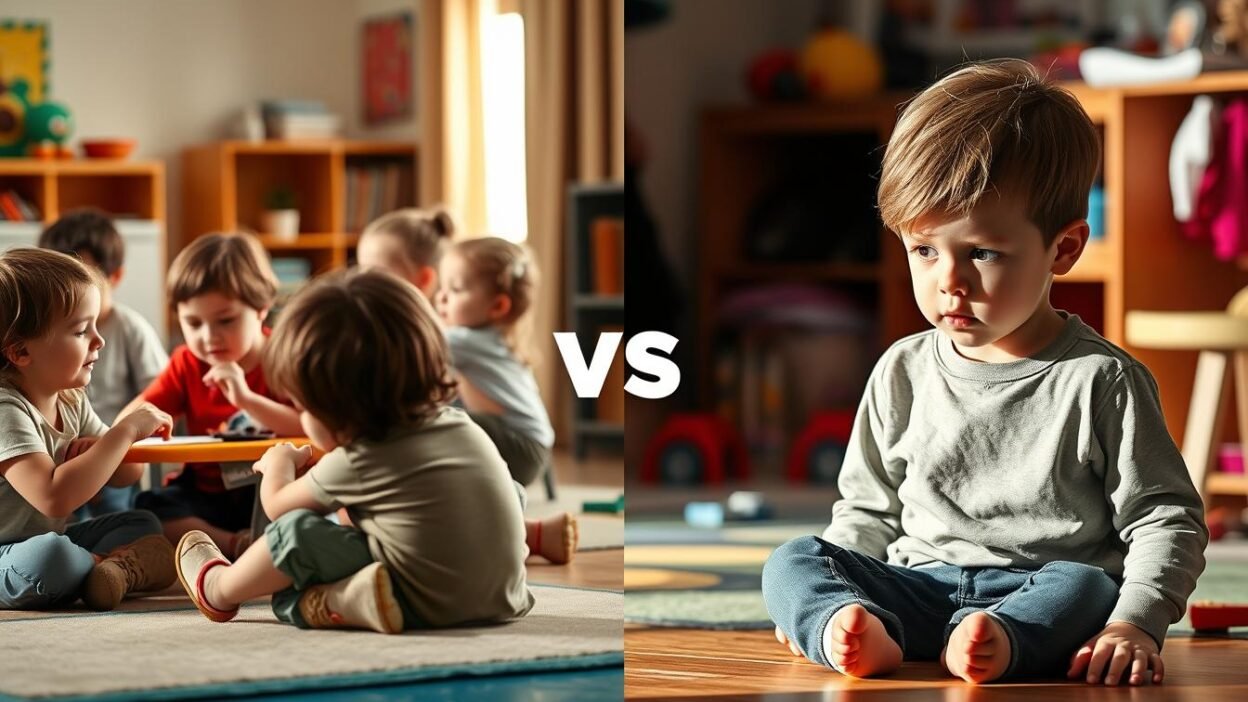
Is a child’s silence during story time a sign of strong focus or a problem needing attention?
This article explains normal and unusual child behaviors. It uses easy definitions, examples, and studies. You’ll learn how kids’ actions should match their age. And when some behaviors don’t fit those age norms, we tell about delays and disorders. Delays are when skills show up late. Disorders mean skills are very different.
Kids develop in known ways: they learn more words, follow directions better, and improve at writing and playing. But, kids are different from one another. Some may be good at understanding language but not great at using it. It’s important not to wrongly blame culture or where they grow up.
Creating an inclusive learning environment begins with understanding the diverse needs of children and the supports required to help them thrive. The Inclusive Education category on SpecialNeedsForU connects parents and educators with practical insights on adapting classrooms, promoting equal participation, and fostering a supportive school culture. To identify early developmental differences that influence inclusion, families can explore Special Needs Awareness and track age-appropriate growth through Developmental Milestones. For learners who face academic challenges, the Learning Disabilities section offers targeted strategies and evidence-based interventions. Parents seeking emotional and behavioural guidance to support inclusion at home can visit PsyForU, while caregivers aiming to build stronger routines, communication, and stress-free learning environments can rely on the mindset and productivity resources available at IntentMerchant. Together, these interconnected platforms help families and educators create classrooms where every child feels welcome, understood, and empowered to learn.
We look at things through four views: how kids reach milestones, their culture, if they were born early, and any special needs. Keeping good notes on when things happen, how often, and under what circumstances helps us. This way, we know if something is just a one-time thing or if it’s an early sign of a problem. Good notes also mean we can help sooner, reducing risks later in school and with friends.
Key Takeaways
- Typical vs Atypical Behaviour in Kids is defined by age norms, sequence, and context, not single moments.
- Childhood behavior characteristics vary across language, motor, social, and self-regulation domains.
- Behavioral differences in children can reflect culture, prematurity, or special needs—avoid quick labels.
- Document timing, frequency, and settings to distinguish delay from disorder.
- Early, accurate observation guides effective support and lowers future academic and social risk.
- Interpret strengths and lags together; profiles are uneven yet meaningful.
Understanding Typical Behaviour in Children
Typical behaviour shows patterns based on how kids act at certain ages. Researchers watch how kids develop skills in a set order. This helps families and schools understand how kids are doing and appreciate their individual growth.
Children act differently depending on where they are and their culture. So, when we watch them, we think about their daily life and language. We look for progress over time, not just how they are on one day.
Defining Typical Behaviour
Typical behaviour means acting in ways expected for a child’s age, whether at home, school, or play. Skills develop step by step: moving well helps with play, talking helps make friends, and paying attention helps with learning. Children’s behavior might vary but still be normal.
Culture influences how kids act. For example, some kids may wait to speak until spoken to or might not make eye contact, following their family’s way. We should understand these behaviors with respect for cultural differences.
Examples of Typical Actions
At four years old, many kids like pretend play, get along with others, and talk about what they like. They can use simple grammar, sing songs, and tell short stories. They know colors, some numbers, and can guess what’s next in a story.
By five years, kids often try to make friends happy and follow rules. They speak clearly and can talk about the future. They count items, copy shapes, and write some letters. These behaviors show how playing, talking, and solving problems grow together.
Developmental Milestones
Milestones help track growth in social, language, thinking, and physical areas. They make it easier to see how kids are doing and accept differences. Kids learning two languages might use play or drawing to show they understand as they learn the language of their classroom.
Educators and parents watch if kids’ actions meet age-based expectations. They focus on progress and practice in different activities. What matters most is how small steps lead to becoming more confident.
| Age | Social-Emotional | Language/Communication | Cognitive | Movement/Physical |
|---|---|---|---|---|
| 4 years | Enjoys new activities; engages in parent-role pretend play; prefers playing with peers; cooperates; shares interests | Uses he/she; sings familiar songs; tells simple stories; says first and last name | Names some colors and numbers; understands counting and same/different; remembers stories; predicts next events; uses scissors; copies some capitals; plays board/card games; draws a person with 2–4 parts | Hops and stands on one foot up to 2 seconds; catches a bounced ball; pours and cuts with supervision; mashes food |
| 5 years | Wants to please and be like friends; agrees with rules; shows concern; recognizes real vs make-believe; shows more independence | Speaks clearly; tells stories in full sentences; uses future tense; states name and address | Counts 10+ items; draws a person with 6+ parts; prints some letters/numbers; copies a triangle; identifies common items such as money and food | Stands on one foot for 10+ seconds; hops and skips; does a somersault; uses fork and spoon (sometimes knife); uses toilet independently; swings and climbs |
Note: Milestones guide decisions when looked at over time and in different places. They fit with normal growth and respect the many ways kids can be different.
Recognizing Atypical Behaviour in Kids
Families and teachers first notice clues during play, sleep, eating, and schoolwork. When these patterns keep happening, they might point to unusual behavior in kids. We want to help spot these behaviors with clear guidelines and easy tracking.
What Constitutes Atypical Behaviour?
Atypical behavior is when actions don’t match a child’s age or the situation. It might be signs of being behind in development or conditions like autism or ADHD. Spotting these early can help a lot.
To systematically identify these behaviors, look at “three T’s”: timing, trajectory, and type. When did the skill appear? Is it getting better? How does it compare in real situations? This method helps identify atypical behaviors more accurately.
- Timing: Being late in walking, talking, or self-care signals delays.
- Trajectory: Skills not improving as expected needs attention.
- Type: Actions like toe-walking or unusual speech hint at deeper issues.
Keep good records to make better judgments: note the time and date, how often and how long, what activity was happening, where, and who was there. This helps tell if a bad day is just a bad day or something more.
Signs and Symptoms to Watch For
Knowing what signs to look for can help at home and school. Here are key signs of delays to watch for.
- 18 months–2 years: Not walking at 18 months, toe-walking, fewer than 15 words, no two-word phrases, doesn’t follow simple directions, can’t understand everyday things.
- Age 3: Falling often, trouble with stairs, can’t build with four blocks, struggles with small items or drawing a circle, not using short phrases, really upset when away from caregivers, doesn’t care about other kids.
- Age 4: Can’t jump, throw, or ride a tricycle; unclear or short speech; can’t remember things just happened; doesn’t listen to unknown adults; not playing “pretend”; won’t use the toilet or needs help dressing; always trouble sleeping.
- Age 5: Hardly concentrates; can’t recall own name; either very scared or too bold; doesn’t talk to others; often sad; needs help with cleaning themselves.
- Ages 6–8: At 6½, short sentences, only follows simple directions, needs help in the bath, plays with younger kids. By 8, might have big tantrums, needs to be watched all the time, keeps away from other kids, and learns differently.
Different behaviors might mean different needs. ADHD shows as not sitting still, acting without thinking, and easily distracted. Autism might mean trouble with talking to others or strict routines. Opposition defiance is about not listening and always arguing. Seeing these behaviors clearly helps get the right help.
If you’re not sure, compare how kids act at home, on the playground, and at school. Watch if these behaviors make everyday tasks hard. Over time, this can show if it’s just the usual ups and downs or signs of a delay needing professional checkup.
Factors Influencing Child Behaviour
To understand how kids behave, it’s important to look at their biology, surrounding environment, and culture. Children’s actions often change as their genes interact with what happens to them daily. This approach helps us tell the difference between normal developmental changes and behaviors that need extra support.
Genetic Considerations
Genetics influence a child’s ability to learn, pay attention, and their overall temperament. For example, individuals with Down syndrome carry an extra chromosome, which can lead to slower growth, learning challenges, and shorter height in adulthood. These kids may also act on impulse, make poor decisions, and struggle to focus, affecting their behavior over time.
Autism and ADHD also show that genetics play a big role, combined with environmental factors. Autism affects how children communicate and interact from a very young age. ADHD is common in the U.S., making it hard for many kids to stay focused and control their impulses. These conditions are examples of how genetics impact behavior in different settings.
Environmental Impacts
What happens before a child is born can shape their brain. For instance, exposure to alcohol before birth might cause learning issues, speech and movement delays, and trouble with social skills. Being exposed to methamphetamine increases the chance of being born early, having growth problems, attention deficits, and sudden anger. These early impacts can lead to marked behavioral challenges.
Being born too early is another factor. For example, a brain at 34 weeks of pregnancy is much lighter than one at 40 weeks. Babies born just a few weeks early may face slight delays in school and motor skills. Things like health and mood matter too. For example, Seasonal Affective Disorder can make kids feel very tired, need more sleep, or get irritated easily in winter.
Bedwetting may link to medical issues or stress from major life changes. Also, the family environment has a big impact. Stress from money problems, unpredictable schedules, and parents arguing can lead to behavior problems. Having parents who agree on rules, stable care, and good relationships with educators builds resilience in children.
Cultural Differences
Culture affects how we see a child’s actions. In some cultures, not making eye contact is a sign of respect, but others might see it as being shy or distant. Also, in some homes, kids are taught to speak only when spoken to. This might be misunderstood as a language delay instead of respecting cultural practices. Understanding these differences is key in recognizing why kids behave differently.
Expectations about taking initiative can vary too. In some cultures, kids wait for permission before they act, which might seem like hesitation in places that encourage jumping right in. For those learning a second language, tools like visual aids and pictures help them understand better. This prevents wrongly labeling them based on how they behave.
| Influence | Key Features | Potential Classroom Impact | Supportive Responses |
|---|---|---|---|
| Genetic | Down syndrome: slower learning; ADHD: inattention/impulsivity; Autism: social communication differences | Difficulty with focus, transitions, and pace | Structured routines, visual schedules, short instructions, predictable feedback |
| Prenatal/Medical | Fetal alcohol syndrome; prematurity; seasonal affective disorder; enuresis | Variable energy, delayed skills, stress-related behavior | Flexible pacing, sensory breaks, health coordination with pediatric care |
| Family Context | Economic stress, parenting incongruence, divorce-related adjustment | Acting out, mood shifts, attendance issues | Consistent rules, home–school communication, community mentoring |
| Cultural | Eye contact norms, speaking only when addressed, permission-seeking, multilingual learning | Misread as shy, oppositional, or unmotivated | Modeling, nonverbal demonstrations, culturally responsive expectations |
By carefully observing, we can tell the difference between normal behavior changes and those requiring extra help. Keeping a balanced perspective helps us understand child behavior within its context. This ensures we offer the right support when it’s truly needed.
The Importance of Early Intervention
Early action is key in guiding children in learning and behavior. It involves watching children’s progress in motor skills, talking, thinking, and how they deal with emotions. By keeping track of these milestones, we can spot any unusual patterns. Keeping detailed records on these observations helps us understand if these changes are just passing phases or something more lasting.
Looking at daily routines gives us valuable insights. We take notes on how kids follow instructions, talk, pretend play, and concentrate. If there are continuous differences from what’s typical for their age, getting help quickly can lessen the chance of problems in school and with friends later on.
Benefits of Identifying Behavioural Issues
Finding issues early means we can give the right support when kids learn and grow the fastest. For instance, specific types of therapy can help improve how well children talk and understand others, control their movements, or manage their behavior. This kind of help is really effective.
Kids who get this help between ages 4 and 8 do better in school, participate more in class, and can take care of themselves more easily. This is especially true for children who face more challenges, like those born a bit too early or those with certain health conditions. Getting the right help early can make a big difference for these children.
Available Support Services
There are many ways families can get help, starting with keeping up with doctor visits and getting referrals when needed. Early help programs offer screening, advice for parents, and different therapies. These services work together to help children improve in areas where they’re having trouble.
- Medical: Routine visits with a pediatrician for ongoing surveillance, standardized screening, and referrals to audiology, speech-language pathology, or neurology as indicated.
- Educational: School-based services with modified curricula, small-group or one-on-one instruction, and accommodations for attention, language, and motor needs, especially in the early grades.
- Therapeutic: Speech-language therapy, occupational and physical therapy, and behavior interventions that translate goals into daily practice.
- Parent-focused: The National Center for Learning Disabilities offers guidance on early warning signs and a toll-free information and referral line at 1-888-575-7373.
Good record-keeping helps a lot. It includes noting down who made the observation, where, and how often. This makes it easier to see if a child’s behavior is different from what’s typical for their age. With accurate records, services can be tailored to fit each child’s needs precisely.
The Role of Parents in Behavioural Development
Parents help shape their child’s behavior through everyday interactions. These interactions build a sense of security and trust. When parents consistently respond, kids often develop strong self-control and find it easy to get along with others.
Being in tune with their needs helps understand kids better. This is because kids’ behaviors can be influenced by their mood, culture, and where they grow up. Understanding these aspects allows for support that truly fits what they need.
Strategies for Nurturing Positive Behaviours
Building a strong bond starts with reliable care. This means speaking gently, making eye contact, and comforting them right when they need it. These actions lower stress and connect emotions to language. As a result, kids face fewer behavior problems because they feel safe.
It’s important to match expectations with what kids can do at their age. We should also respect cultural norms and the rate at which each child grows. Saying “First shoes, then coat” and using gestures or pictures helps, especially in homes where more than one language is spoken.
- Structure: Stick to routines for morning, homework, and bedtime; use visual schedules and practice changing activities.
- Clarity: Have a few firm rules and explain the reasons behind them simply.
- Consistency: Make sure all adults are on the same page with rules; big differences can worsen a child’s behavior.
- Language scaffolds: Teach useful phrases, offer choices, and use signals that involve seeing, hearing, and touching to help kids learn, even if they struggle with speaking.
- Seasonal check‑ins: Pay attention to changes in mood or energy when days are shorter and increase exposure to light as needed.
Following these steps makes it easier to see the difference between kids who need help learning skills and those who are just being stubborn. This way, we can better understand and support each child’s unique needs.
When to Seek Professional Help
If small problems aren’t addressed, they can turn into bigger issues. It’s wise to get an evaluation if a child consistently struggles in various situations over time.
- By ages 4–5: if they can’t follow multi‑step directions; their speech is difficult to understand; they use very short sentences.
- If they don’t play pretend much or show interest in other kids; if they are very aggressive or extremely shy and these behaviors don’t improve with routine and coaching.
- If they lose skills they once had; regress in toilet training without a physical reason; or can’t do basic self-care tasks by age 5.
- By age 8: if they always need close watching to do basic tasks or to stay safe.
- If their schoolwork requires frequent changes to the curriculum or they only progress in small groups.
Seek out specialists if a child might have ADHD, oppositional defiant disorder, autism, global developmental delays like Trisomy 21, enuresis due to medical or emotional issues, or problems caused by prenatal factors. Keeping detailed records of routines, triggers, and reactions can help professionals understand a child’s behavior better. This allows them to provide care that’s tailored to each kid’s specific needs.
Educational Settings and Behaviour
Schools play a big role in shaping kids’ actions, focus, and how they get along with each other. We look at how kids normally behave and grow. Also, we spot behaviors that are not typical by watching and teaching them regularly.
Impact of Classroom Environment
Sometimes, if a child doesn’t know English well, they might seem behind even though they’re not. Teachers can help by showing how to do things, using fun and varied materials, and accepting gestures until the child’s English improves.
Having a regular routine and clear changes help kids pay attention and finish tasks. Using organized areas, pictures to show the schedule, and short activities help kids who get distracted easily or can’t focus long. These methods show normal behavior patterns and help spot behaviors that aren’t typical.
- Key supports: visual clues, first-then signs, hands-on activities, and quick breaks for moving around.
- Intensive responses: teaching in small groups or one-on-one, and watching closely during lots of outbursts or aggressive acts.
Teacher Observations and Reports
Telling details in school reports can turn everyday things into helpful information. When teachers carefully watch and note how kids behave, specialists can track progress and identify behaviors that aren’t typical in different places.
| Documentation Element | What to Record | Why It Matters |
|---|---|---|
| Dates, Times, Frequency, Duration | Exact times and how long behaviors happen | Shows patterns and what triggers behaviors over time |
| Activity Type and Setting | Different tasks and places, like language, fine-motor skills, group activities, and play areas | Helps understand where skills match or don’t match with expectations |
| Peer Interaction and Adult Prompts | How well kids work together, conflicts, and the cues or help they need | Helps figure out when kids can do things on their own or need help |
| Milestone-Related Competencies | Skills like following directions, holding and drawing, pretend play, counting, and copying shapes | Links what’s observed to known markers of development |
| Home–School Collaboration | Notes shared between teachers and parents and when skills start to show | Makes classroom observations and home observations come together for a complete view |
By keeping track of these details, teams can understand how teaching methods, language needs, and how kids get along affect behavior. This helps spot behaviors that aren’t typical without mistaking them for normal differences in development.
Seeking Professional Help for Atypical Behaviour
Some behaviors need quick help from experts. When a child acts unusually at home, school, and play, a plan is needed. It helps to write down what happens, when, and where. This info makes choosing the next step easier.
When to Consult a Pediatrician
Talk to a doctor if a child shows signs of being behind in their development from 2 to 5 years old. This includes walking late, speaking little, or having trouble with movement. It’s urgent if the child loses skills they once had.
Get help if your child can’t follow simple instructions by age 4 to 5, or can’t tell fantasy from reality by 5. Sudden bedwetting, frequent infections, or hormone issues need a doctor’s look too.
If your child seems too active, can’t focus, or acts against rules, see a doctor. A good check-up looks at sensory and brain function, growth, and birth history. The child might be referred to specialists like speech therapists or audiologists.
Psychological Evaluations and Assessments
An in-depth check uses tests and scales to understand a child’s thinking, talking, and coping skills. It studies how kids react to others and their surroundings. This helps figure out what’s normal and what’s not.
Detailed reports talk about how often and in what situations behaviors happen. They show if a skill is developing as it should. This helps tell if a child’s behavior is just unique or something more.
The findings help shape learning and care that suits real-life settings. They lead to personalized teaching and more help where needed. When a child’s behavior matches known issues, schools and families work together better.
Coping Strategies for Families
Families can handle kids’ behavior by using clear routines and practical tools. By working together, it’s easier to deal with behavior issues. Small steps lead to big changes.

Tips for Managing Atypical Behaviour at Home
- Unify routines and rules: Have a daily schedule for waking up, eating, doing homework, and sleeping. This helps prevent confusion and behavior issues.
- Use visual schedules: Use checklists for morning and evening routines. Provide simple, step-by-step instructions to help kids focus and become more independent.
- Coach through play: Use play to teach social skills and behavior. This can include pretend play, counting games, and storytelling with pictures.
- Support bilingual communication: Combine words with gestures and pictures. This helps kids understand better and reduces their frustration.
- Track seasonal mood shifts: If winter affects a child’s energy, try getting more morning light. Keep up with fun activities and regular sleep schedules.
- Handle enuresis with empathy: Check with a doctor for any medical reasons. Avoid punishment, use waterproof bedding, and calmly deal with it while considering any recent stress.
Success comes from being consistent, clear, and caring every day.
Resources for Parents
When you need extra help at home, there are services to understand and support different behaviors.
- Early Intervention Support: State programs offer help for young kids to address behavior early on.
- National Center for Learning Disabilities: Provides resources and a help line at 1-888-575-7373; located at 381 Park Avenue South, Suite 1401, New York, NY 10016.
- KidsHealth (Down syndrome): Offers easy-to-understand info on Trisomy 21 and how to help with care, school, and routines.
- American Academy of Pediatrics pathways: Families can get referrals for therapies and developmental help through their child’s pediatrician.
- Community supports: Parent groups for autism and ADHD provide education, support, and help with navigating challenges.
These resources help families work together with schools and doctors. This way, they can confidently support their child’s behavior.
Misconceptions About Child Behaviour
Many misunderstandings affect how families and schools see kids’ behavior. It’s important to look closely at the timing, sequence, and quality of their skills. This approach helps us not to wrongly label unusual behaviors in children. By considering the setting—like home, school, and culture—we can better identify kids who display atypical behaviors.
Common Myths Debunked
Some people think all children develop the same way. But in reality, development varies. For instance, a child might excel in fine-motor skills but develop language skills slower. This variation is natural and doesn’t always signal a problem.
Another myth is that if a child avoids eye contact or is quiet, they have a social issue. The truth is, cultural norms often dictate these behaviors. What might seem odd in one culture can be a sign of respect in another.
There’s also a belief that children learning two languages will be delayed. In fact, they might struggle to express themselves in a second language but understand it well. Teachers can help by using body language and activities to support learning.
Some think children from single-parent families exhibit more behavior issues. However, what’s most important is having a stable environment. Routine, discipline, and social support can lead to healthy development.
It’s mistaken to assume all aggressive or defiant behavior is just a phase. If such behavior is intense and frequent, it might need professional attention rather than just waiting it out.
Understanding Variability Among Children
Children develop at their own pace. For instance, boys might achieve certain milestones later than girls. Having an older sibling talk for a younger one can delay speech development. Even babies born a bit early might show mild delays. These occurrences are typical and don’t suggest a problem by themselves.
It’s crucial to know the difference between a delay and a disorder. A delay means a child is slowly gaining skills, while a disorder might show through lost skills or needing lots of help at school. Recognizing these differences helps identify children who need extra support.
To understand a child’s development, keep detailed records of their progress in different settings. Consider the impact of culture and language. By doing so, we can avoid false concerns and ensure children get the right help when they need it.