

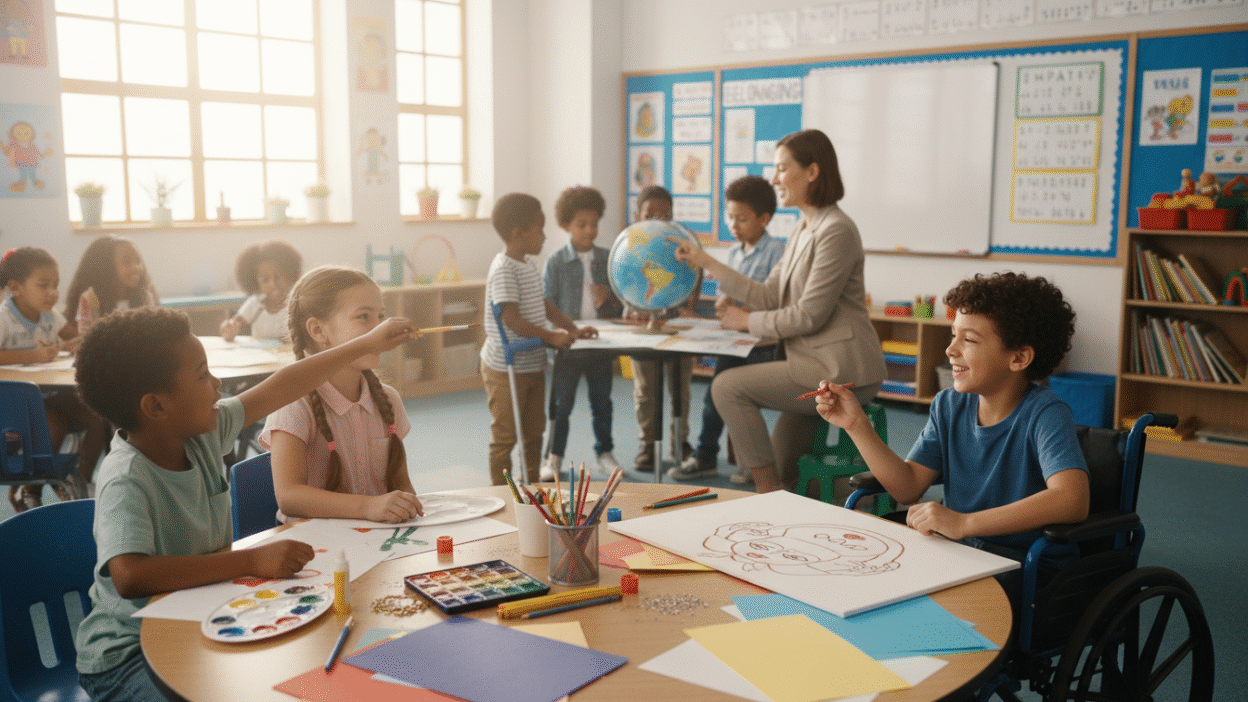
Did you know that 1 in 5 children worldwide has some form of disability? This makes inclusive education very important in today’s schools.
Inclusive education means all students get the same chance to learn, no matter their abilities or background. It’s getting more attention worldwide because it helps bring people together and celebrate differences. The existing examination system is frequently criticized for procedural weaknesses and learning distortions (Singh, 2015), which strengthens the policy case for reform.
Learning about inclusive education helps us see its value in today’s schools. It’s good for students, teachers, and the whole community.
Key Takeaways
- Inclusive education promotes equal access to quality learning for all students.
- Diversity in the classroom is a key aspect of inclusive education.
- Inclusive education fosters social cohesion and promotes understanding among students.
- The approach has gained global recognition for its benefits.
- Understanding the principles of inclusive education is key to making it work.
Understanding Inclusive Education Practices
Implementing inclusive education practices is essential for fostering a supportive learning environment for all students.
Inclusive education aims to remove barriers and make all students feel included. It focuses on the diverse needs of students. This creates a welcoming and supportive learning environment.
Definition and Key Concepts
Inclusive education uses inclusive teaching strategies for all learners. It makes sure every student feels valued and supported. Key ideas include flexible curriculum, diverse assessments, and special education in regular classrooms.
The table below shows important features of inclusive education:
| Feature | Description | Benefits |
|---|---|---|
| Diverse Teaching Methods | Using various teaching strategies to engage students | Enhances student engagement and understanding |
| Flexible Curriculum | Adapting the curriculum to meet diverse needs | Promotes inclusivity and equity |
| Support Services | Providing additional support for students with disabilities | Fosters a supportive learning environment |
Importance of Inclusion in Education
Inclusion in education is very important. It helps create a supportive learning space. This promotes social cohesion and reduces inequality.
Inclusive education benefits all students, not just those with disabilities. It fosters a culture of acceptance and respect for everyone.
To implement inclusive practices, educators must understand and meet the diverse needs of students. This ensures all students can reach their full potentials.
The Benefits of Inclusive Education
Inclusive education offers many benefits. It improves academic results, social interactions, and emotional health. It creates a supportive space for all students to succeed, leading to a fairer society.
Academic Advantages
Inclusive education boosts academic performance for all. It ensures equitable education opportunities for students with different needs. Studies show inclusive classrooms build a sense of community, boosting engagement and motivation.
A study found inclusive education leads to better grades and social skills. Here are some key findings:
| Academic Outcome | Inclusive Setting | Segregated Setting |
|---|---|---|
| Average GPA | 3.2 | 2.8 |
| Standardized Test Scores | 85% | 75% |
| Graduation Rate | 95% | 90% |
Social and Emotional Growth
Inclusive education aids in social and emotional growth. Students learn empathy and social skills by interacting with peers from different backgrounds. This prepares them for a diverse world.
Culturally responsive teaching practices are key. They make students feel valued and understood. This boosts their self-image and emotional well-being.
Long-term Impact on Communities
Inclusive education has a lasting impact on communities. It fosters a cohesive and fair society. It breaks down social barriers, promoting acceptance and understanding.
More inclusive communities benefit from diverse perspectives. This leads to a vibrant, prosperous place where everyone can thrive.
Legal Framework Supporting Inclusive Education
It’s key for educators and policymakers to know the legal support for inclusive education. This support ensures all students, no matter their abilities or backgrounds, get quality education.
Key Federal Laws
The Individuals with Disabilities Education Act (IDEA) and the Americans with Disabilities Act (ADA) are vital. The IDEA makes sure students with disabilities get free, public education that fits their needs. This is through Individualized Education Programs (IEPs).
IDEA Overview
The IDEA stresses the need for education in the least restrictive environment (LRE). This means students with disabilities should learn with their peers as much as possible.
| Provision | Description | Impact on Inclusive Education |
|---|---|---|
| Free Appropriate Public Education (FAPE) | Ensures students with disabilities receive education tailored to their needs. | Promotes individualized education plans. |
| Least Restrictive Environment (LRE) | Requires students with disabilities to be educated with non-disabled peers. | Fosters inclusive classroom environments. |
| Individualized Education Programs (IEPs) | Customized plans for students with disabilities. | Ensures tailored educational support. |
State Regulations and Policies
State laws and policies also shape inclusive education. They often add details to federal laws and have extra rules for schools.

For example, some states require teacher training in inclusive methods. Others push for using universal design for learning (UDL) in school plans.
By using both federal and state laws, educators and policymakers can make schools more welcoming for all students.
Strategies for Implementing Inclusive Education
To make a classroom inclusive, we need to use teamwork, different teaching methods, and teaching that respects all cultures. These steps help make sure every student feels welcome and supported.
Collaborative Teaching Models
Teachers working together is key to an inclusive classroom. This means planning and teaching together. Co-teaching models are great because they offer more personal help and learning.
There are a few ways teachers can co-teach:
- One Teach, One Assist: One teacher leads while the other helps students as needed.
- Station Teaching: Teachers split the class into groups and move around, teaching and helping.
- Parallel Teaching: Teachers teach the same thing to two groups at once.
Differentiated Instruction Techniques
Different teaching methods are needed for students with different needs. This means changing what, how, and what students do to learn. Differentiated instruction is vital for inclusive classrooms, as it meets each student’s unique needs.
| Differentiated Instruction Technique | Description | Example |
|---|---|---|
| Content Differentiation | Changing what students learn based on their readiness and interests. | Offering texts at different levels on the same topic. |
| Process Differentiation | Changing how students learn through different activities and tasks. | Using learning centers or stations for different learning styles. |
| Product Differentiation | Letting students show what they’ve learned in different ways. | Allowing choices between essays, presentations, or projects. |
Culturally Responsive Teaching
Teaching that respects students’ cultures and backgrounds is essential. This makes learning more fun and inclusive. Culturally responsive teaching practices include using diverse materials, incorporating students’ languages and cultures, and building a respectful classroom community.
By using these strategies, teachers can create a supportive and inclusive space. This space helps all students grow academically, socially, and emotionally.
Creating an Inclusive Classroom Environment
In today’s diverse educational world, making a inclusive classroom environment is key for student success. It supports the varied needs of all students, making them feel valued and supported.
Physical Classroom Setup
The way a classroom is set up greatly affects its inclusivity. Teachers should arrange the classroom to help students move and interact easily. This includes:
- Flexible seating for different learning styles
- Materials and resources within everyone’s reach
- A clean space to reduce distractions
Fostering a Supportive Atmosphere
A supportive atmosphere is vital for an inclusive classroom. Teachers can create this by:
- Building positive student relationships through team activities
- Encouraging open communication and respect
- Being open to students’ concerns and needs
Tools and Resources for Teachers
To build and keep an accessible learning environment, teachers need the right tools. These include:
- Educational technology for diverse learning needs
- Training on inclusive teaching and managing diverse classrooms
- Working with other teachers to share knowledge and resources
By focusing on these areas, educators can make a supportive learning environment. This environment meets the needs of all students, improving their learning experience and results.
Professional Development for Educators
The success of inclusive education relies on teachers’ ongoing learning. As schools change, teachers need to keep learning to help all students. This ensures everyone gets the education they deserve.
Training Opportunities and Workshops
Teachers can join training and workshops on inclusive education. These focus on teaching methods, classroom management, and technology. For example, learning about Universal Design for Learning (UDL) helps teachers make learning spaces for all.
“Teachers who participate in ongoing professional development are better equipped to address the complex needs of their students.” Studies show that well-trained teachers do a better job of teaching inclusively.

Building Knowledge of Diverse Needs
Understanding different learning styles, cultures, and abilities is key. Training on cultural awareness, language, and disability helps teachers create welcoming classrooms. This way, teachers can better support students with various needs.
“Professional development is not a one-time event, but a continuous process that supports educators in their mission to provide high-quality, inclusive education.”
Schools can help by giving teachers access to learning resources. This includes journals, online courses, and peer mentoring. These tools keep teachers up-to-date and help them share knowledge with others.
Engaging Families and Communities
Building strong partnerships between educators, families, and communities is key for supporting diverse learners. Inclusive education is not just for teachers. It needs everyone involved in a child’s education to work together.
Importance of Family Involvement
Family involvement in education greatly affects a student’s success and educational journey. When families are involved, they can offer important support to teachers. They can also help make educational plans fit each student’s needs and create a welcoming home environment.
Key benefits of family involvement include:
- Enhanced student motivation and engagement
- Improved academic performance
- Better teacher-family communication
- Increased parental satisfaction with the educational system
Schools can encourage family involvement in many ways. They can hold regular parent-teacher conferences, offer volunteer chances, and host workshops. These help families learn how to support their children’s learning at home.
Community Partnerships in Education
Community partnerships are also essential for inclusive education. Working with local businesses, organizations, and groups can bring in more resources and support. This can make learning better for diverse learners.
Effective community partnerships can provide:
- Mentorship programs for students
- Access to specialized resources and facilities
- Opportunities for service-learning and community engagement
- Enhanced support for teachers through professional development opportunities
For example, a local business sponsoring a school event or providing internships for students can make a big difference. Such actions not only improve learning but also build a sense of community and social responsibility.
By working together with families and communities, schools can make education more inclusive and supportive. This teamwork ensures diverse learners get the support they need to do well in school and life.
Assessing Student Needs for Inclusion
Inclusive education starts with understanding each student’s needs. It’s about creating plans that help them succeed. This means knowing what each student needs and making sure they get the right support.
Individualized Education Programs (IEPs)
IEPs are key in helping students with different needs. They are special plans for students with disabilities or special needs. These plans outline goals, accommodations, and services needed for each student.
Creating an IEP is a team effort. Teachers, parents, and other experts work together. They start by assessing the student’s strengths and needs. Then, they set goals and figure out what help is needed.
Utilizing Assessments for Diverse Learners
Assessments help us understand what each learner needs. There are many ways to check how students are doing. This includes tests, observations, and project evaluations.
Teachers use different methods to help all learners. This might include using technology, giving extra time, or making tests more inclusive. It’s about finding ways to make sure everyone can learn.
By using IEPs and various assessments, teachers can support students well. This approach improves learning for everyone. It makes schools more welcoming and effective for all students.
Overcoming Challenges in Inclusive Practices
Starting inclusive education can be tough, but there are ways to get past these hurdles. Resistance and common obstacles can make it hard to succeed. It’s key to tackle these issues head-on.
Strategies for Building Support
Getting educators, families, and communities on board is vital for inclusive education. We can do this through training, outreach, and building empathy. By engaging everyone and showing the value of inclusive education, we help create a better learning space for all.
Addressing Common Barriers
Barriers like limited resources, poor training, and outdated buildings can hold us back. Teachers and leaders can find new ways to teach, like team teaching and using technology. By supporting all learners and overcoming resistance, we make sure everyone gets a great education.
Singh, H. (2015). Envisioning the examination reforms in higher education system. International Journal of Research in Economics and Social Sciences, 5(6), 1–7. https://www.researchgate.net/profile/Harshvardhan-Singh-14/publication/283054998_ENVISIONING_THE_EXAMINATION_REFORMS_IN_HIGHER_EDUCATION_SYSTEM/links/5627e8d008ae22b1702d9b09/ENVISIONING-THE-EXAMINATION-REFORMS-IN-HIGHER-EDUCATION-SYSTEM.pdf