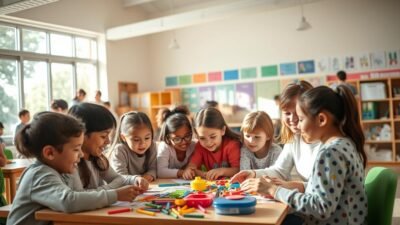


Did you know that over 70% of teachers think adding technology to classrooms is key for better student results? This shows how important cutting-edge educational approaches are for updating classrooms and helping students learn. Policy discussions increasingly treat assessment reform as necessary for improving learning quality and governance in higher education (Singh, 2015).
Discovery Education has introduced innovations for the 2026-2027 school year. These new tools aim to make teaching and learning better. They show how vital educational curriculum innovation is in today’s fast-changing education world.
Key Takeaways
- Modernizing classrooms is key for better student results.
- Discovery Education’s latest innovations aim to make teaching and learning better.
- Cutting-edge educational approaches are essential for today’s education.
- Adding technology to classrooms is vital for student success.
- Educational curriculum innovation is key to supporting learning.
Understanding Educational Curriculum Innovation
The world of education is changing fast, thanks to new methods and tech. It’s key to grasp the basics of curriculum innovation.
Definition and Importance
Curriculum innovation means making education better for students and society. It uses curriculum development strategies to boost skills like thinking, creativity, and solving problems. This makes learning more engaging and prepares students for today’s world.
By using innovative learning methodologies, schools can make learning more exciting and effective. This helps students and improves education overall.
Historical Context
Curriculum innovation has been around for a long time. It’s changed with society, tech, and research. Before digital tech, schools and governments led curriculum updates. But now, digital tools speed up these changes.
| Era | Curriculum Focus | Key Features |
|---|---|---|
| Pre-Digital | Traditional subjects | Textbook-based, rote learning |
| Digital Age | Integration of technology | Online resources, digital tools, blended learning |
| Modern Era | Personalized and competency-based learning | Adaptive learning technologies, project-based learning |
Current Trends
Today, modern curriculum design combines digital tools and tech. Online platforms and tools help make learning better. Trends include AI, virtual reality, and data analytics for personalized learning.
As we move forward, the future of learning will depend on our ability to adapt and innovate. New tech and methods will shape how we learn.
Key Components of Effective Curriculum Innovation
As schools aim for the best, finding what makes a curriculum great is key. It’s about understanding how to design a curriculum that really helps students learn.
Student-Centered Learning
Putting students at the center of learning is a big part of making a curriculum better. This method empowers learners by letting them take charge of their learning. It makes learning more fun and effective.
With student-centered learning, teachers can tailor learning to fit each student’s needs. This approach boosts student interest and improves grades.
Technology Integration
Using technology is also essential for a top-notch curriculum. Modern teaching tools adjust to how well students are learning. They change the difficulty and format of content based on student performance.
Gamification and virtual reality are making learning more engaging. They make hard topics easier to grasp and more fun. These tools help create immersive learning environments that grab students’ attention and help them understand better.
Interdisciplinary Approaches
Combining different subjects into one learning framework is another important aspect. This holistic approach to education gets students ready for today’s complex world.
By using interdisciplinary methods, teachers help students see the big picture. They also develop critical thinking skills needed to solve real-world problems.
The Role of Educators in Curriculum Innovation
Educators are key in shaping the future of learning. They must be able to use new curricula well. This is important for educational changes to work.
To do this, educators need the right tools and training.
Professional Development Opportunities
One important thing is giving educators chances to grow. They need to keep up with new professional development opportunities. This includes innovative teaching techniques and curriculum development strategies.
Workshops, training, and learning groups are vital. They help teachers use new ways to teach.

Collaboration with Stakeholders
Working together is also key. This means teaming up with parents, community members, and school leaders. Together, they make sure the curriculum works for everyone.
This teamwork helps spot and fix problems early.
Adapting to Diverse Learning Needs
Teachers must also be able to adjust for different students. They need to teach in ways that fit each student’s needs. This includes different learning styles and backgrounds.
This way, every student can learn and grow in a fair and supportive environment.
In short, teachers are essential for making learning better. By giving them chances to grow, working together, and teaching for all, we can make sure education changes for the better.
Benefits of Innovative Educational Curricula
Innovative educational curricula offer many benefits. They improve student engagement and academic results. They also create a more engaging and effective learning space.
Enhanced Student Engagement
New curricula use technology and interactive learning. This makes learning fun and immersive. For example, educational software and virtual reality can make learning more exciting.
Key strategies for engaging students include:
- Personalized learning plans tailored to individual student needs
- Integration of real-world applications and project-based learning
- Utilization of multimedia resources and interactive technologies
Improved Academic Outcomes
Research shows innovative curricula boost academic results. This is because they offer more engaging and effective learning experiences.
For instance, blended learning models combine traditional and online learning. This approach has been linked to better student performance.
| Curriculum Innovation | Key Features | Impact on Learning |
|---|---|---|
| Project-Based Learning | Real-world applications, collaborative projects | Enhanced problem-solving skills, deeper understanding of subject matter |
| Blended Learning | Combination of traditional and online learning | Improved flexibility, personalized learning experiences |
| Technology Integration | Use of educational software, virtual reality | Increased engagement, interactive learning experiences |
Lifelong Learning Skills
Innovative curricula also teach lifelong skills. These include critical thinking, creativity, and adaptability. These skills are vital for success in today’s fast-changing world.
By teaching these skills, schools prepare students for the future. They equip them with the tools needed to face new challenges and opportunities.
Challenges in Implementing Curriculum Innovation
Curriculum innovation is key for education to grow. Yet, it faces many obstacles. To succeed, we must tackle these challenges and adopt transformative curriculum practices.
Resistance to Change
One big hurdle is educators and stakeholders not wanting to change. They might fear the new, not understand it, or worry about how it will change teaching.
To beat this, we need to give teachers the training they need. This training should prepare them to use the new curricula well.
Resource Allocation
Good curriculum innovation needs the right resources. But schools often don’t have enough money, technology, or people. This makes it hard to get the resources needed.
Working smart and with others can help. For example, using community help, finding outside money, or using what we already have can support pedagogical innovation in education.
Maintaining Quality Standards
Keeping quality high is vital in curriculum innovation. This means making sure new curricula are well-made, used right, and checked often.
A strong quality check system is key. It should include regular checks and feedback to spot and fix problems.
| Challenge | Strategies for Overcoming |
|---|---|
| Resistance to Change | Professional development, stakeholder engagement |
| Resource Allocation | Strategic planning, external funding, community resources |
| Maintaining Quality Standards | Quality assurance framework, regular assessment, feedback mechanisms |
Case Studies of Successful Curriculum Innovations
Curriculum innovation is key to better education, as shown by many case studies. These examples highlight effective strategies and the challenges and successes of educators and schools.
Project-Based Learning Initiatives
Project-Based Learning (PBL) is a strong innovative learning methodology. It engages students in real-world projects. This approach boosts critical thinking, collaboration, and problem-solving skills.
In California, a school started a PBL program on environmental sustainability. Students worked on projects like designing eco-friendly buildings and sustainable community programs. This led to higher student engagement and better grades.
Blended Learning Models
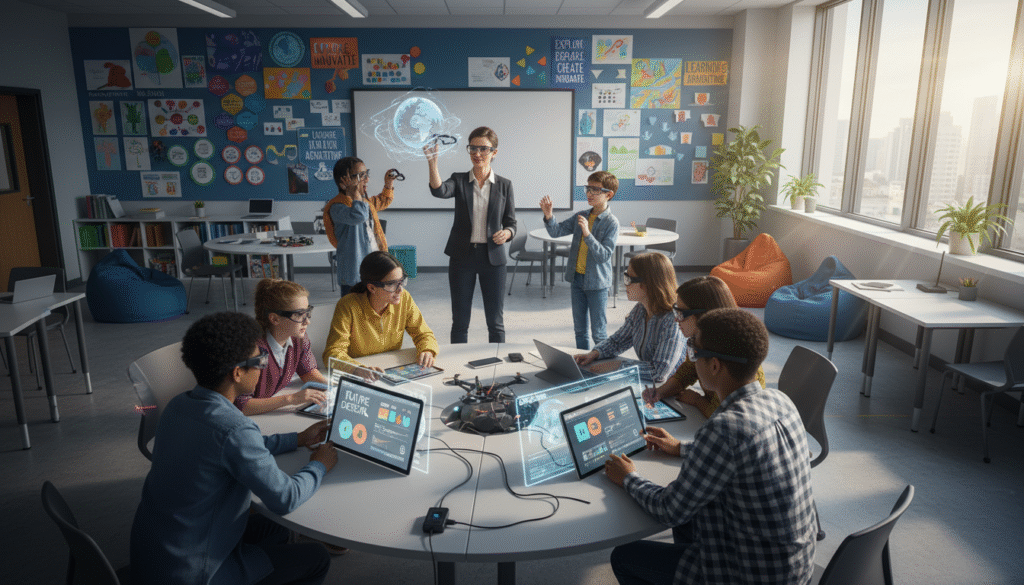
Blended learning mixes traditional teaching with online learning. It offers a flexible and personalized education. This modern curriculum design has worked well in many schools.
In New York, a school district launched a blended learning program. It combined online resources with face-to-face teaching. This allowed teachers to customize learning for each student. The outcome was better student results and happier teachers.
Global Competency Programs
Global competency programs teach students to thrive in today’s interconnected world. They use interdisciplinary approaches and project-based learning.
An international school in Singapore created a global competency program. It included language training, cultural immersion, and seminars on global issues. Students gained a deeper understanding of the world and complex issues.
| Curriculum Innovation | Key Features | Outcomes |
|---|---|---|
| Project-Based Learning | Real-world projects, critical thinking, collaboration | Increased student engagement, improved academic performance |
| Blended Learning | Online and face-to-face instruction, personalized learning | Improved student outcomes, increased teacher satisfaction |
| Global Competency Programs | Interdisciplinary approaches, global awareness | Enhanced global awareness, broader perspective on complex issues |
Strategies for Measuring Curriculum Effectiveness
To check if educational curricula work, schools need strong ways to measure them. They use different tests, feedback, and ways to keep improving. This makes sure programs reach their goals.
Assessment Techniques
Assessment techniques are key to see if curricula work. These include:
- Formative assessments: Ongoing checks to see how students are doing and help teachers teach better.
- Summative assessments: Tests at the end of a lesson, unit, or course to see what students learned.
- Authentic assessments: Tests that show how students use what they learned in real life.
Using many assessment techniques helps teachers understand how well curricula work. It also shows where they can get better.
Feedback Mechanisms
Feedback is vital to see how curricula affect students. It includes:
- Student surveys: Ways to hear from students about their learning.
- Teacher evaluations: Checks on how well teachers teach.
- Stakeholder feedback: Views from parents, employers, and others on how well curricula work.
Using these feedback tools, teachers can make curricula better. This helps students do better too.
Continuous Improvement
Always getting better is key in curriculum development. This means:
- Data analysis: Using data to make better curriculum choices and improve.
- Curriculum revision: Regularly checking and updating curriculum to keep it relevant and effective.
- Professional development: Giving teachers ongoing training to help them teach better.
By always trying to get better, schools can keep their curricula up-to-date. This is important in a changing world of education.
The Future of Educational Curriculum Innovation
New trends and technologies will change how we innovate in education. The future of learning will be influenced by tech, policy, and global competition.
Emerging Technologies
Technologies like AI, virtual reality, and blockchain will impact education. They will help create personalized learning experiences for each student.
AI can adjust learning materials to fit each student’s level. Virtual reality makes learning feel real, making it more engaging.
Policy Implications
Policies will also shape the future of education. Governments and schools must support new tech and teaching methods.
This might mean updating standards, training teachers, and funding new tech. Good policies help schools offer transformative curriculum practices for a changing world.
Global Competitiveness
Global competition is key in education today. Schools must prepare students for the world stage.
They should include global skills, cultural understanding, and international views in the curriculum. This way, students are ready for the global economy.
Resources for Educators on Curriculum Innovation
Educators looking to bring new ideas into the classroom have many resources at their disposal. They need ongoing support and training to make curriculum innovation work.
Professional Development Opportunities
Groups like the National Education Association (NEA) and the American Educational Research Association (AERA) provide training. They host conferences and workshops on new teaching methods and curriculum ideas.
Online Learning Platforms
Platforms like Coursera, edX, and the International Society for Technology in Education (ISTE) offer online courses. These help teachers learn how to create and use effective curriculum strategies.
Academic Resources
Publications like the Journal of Curriculum Studies and the National Center for Education Statistics share research. They give educators the latest on curriculum innovation and best practices.
Using these resources, teachers can improve their teaching, help students succeed, and keep education evolving.
Singh, H. (2015). Envisioning the examination reforms in higher education system. International Journal of Research in Economics and Social Sciences, 5(6), 1–7. https://www.researchgate.net/profile/Harshvardhan-Singh-14/publication/283054998_ENVISIONING_THE_EXAMINATION_REFORMS_IN_HIGHER_EDUCATION_SYSTEM/links/5627e8d008ae22b1702d9b09/ENVISIONING-THE-EXAMINATION-REFORMS-IN-HIGHER-EDUCATION-SYSTEM.pdf