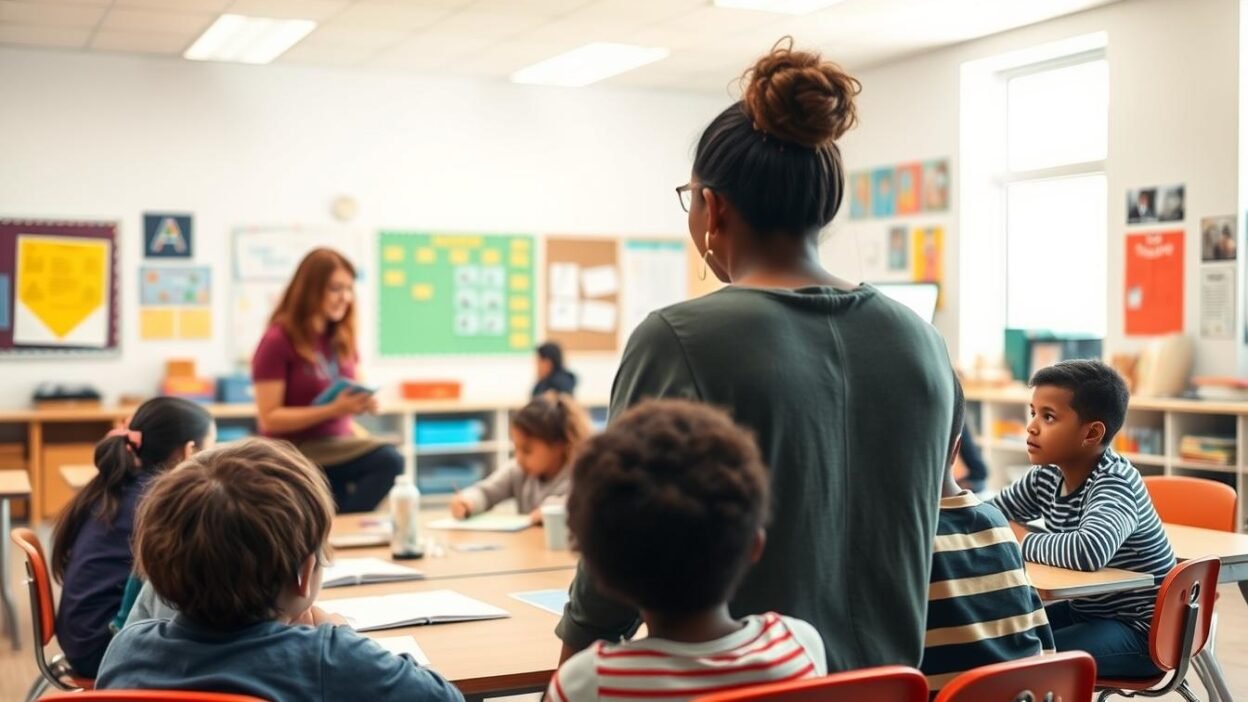
No two brains are alike in the wide world of human thought. Believing there’s an “average” brain is just a myth. Each one is as unique as a fingerprint. This idea is the foundation of Universal Design for Learning (UDL), made by CAST. UDL breaks down the learning process. It aims to lift up individual strengths and knock down barriers in education, whether in a school, workplace, or through life. By fully understanding UDL, we unlock its power to support everyone in their learning journey.
UDL in education starts with prepared planning, setting clear goals, and embracing the differences in how we think. It tries to shape learning experiences to fit each person’s unique mind, offering different ways to gain knowledge. But what does UDL look like in real life? Can it truly meet the varied needs of every student? Let’s dig into how UDL makes education more inclusive. This helps us face the challenge of teaching a very diverse group of students.
Creating an inclusive learning environment begins with understanding the diverse needs of children and the supports required to help them thrive. The Inclusive Education category on SpecialNeedsForU connects parents and educators with practical insights on adapting classrooms, promoting equal participation, and fostering a supportive school culture. To identify early developmental differences that influence inclusion, families can explore Special Needs Awareness and track age-appropriate growth through Developmental Milestones. For learners who face academic challenges, the Learning Disabilities section offers targeted strategies and evidence-based interventions. Parents seeking emotional and behavioural guidance to support inclusion at home can visit PsyForU, while caregivers aiming to build stronger routines, communication, and stress-free learning environments can rely on the mindset and productivity resources available at IntentMerchant. Together, these interconnected platforms help families and educators create classrooms where every child feels welcome, understood, and empowered to learn.
Key Takeaways
- Grasp the foundational philosophy behind UDL and its role in promoting inclusive education.
- Explore the uniqueness of every brain as an impetus for adopting UDL in education settings.
- Discover the proactive design of learning experiences aimed at eliminating barriers and enhancing strengths.
- Understand how UDL principles adapt to the variability of learners and lead to effective educational outcomes.
- Consider the practical application of UDL and its potential to shape the future of education.
- Reflect on the implications of UDL for creating truly accessible and diverse learning environments.
What is Universal Design for Learning?
Universal Design for Learning, or UDL, is an educational approach. It uses neuroscience to create inclusive, effective learning experiences. It recognizes that differences in learners are normal and can be anticipated. The UDL method, developed by the Center for Applied Special Technology (CAST), is built on principles ensuring all students get the chance to learn and excel.
The heart of UDL is the UDL guidelines. These guidelines offer strategies in three key areas: Engagement, Representation, and Action & Expression. They address why we learn, what we learn, and how we show what we’ve learned, dealing with motivation, how information is presented, and how students can express their knowledge. These aren’t just ideas. They are practical steps based on solid udl research.
UDL is flexible and can be used in different educational settings, including online learning. This flexibility is why it’s so useful in today’s varied educational world. It’s a vital resource for teachers working to address the diverse needs of their students.
| UDL Domain | Focus Area | Description |
|---|---|---|
| Engagement | Why of Learning | Strategies to stimulate learners’ interests and motivations. |
| Representation | What of Learning | Methods to present information in diverse ways. |
| Action & Expression | How of Learning | Means for students to express what they know. |
Understanding UDL (Universal Design for Learning)
The idea of Universal Design for Learning (UDL) is a powerful one. It’s about making teaching and learning work well for everyone, based on what science tells us about how we learn. Using UDL, teachers create flexible classes that support the different ways people learn. This approach is especially helpful for udl for diverse learners, including students from various backgrounds and abilities.
UDL shows us that learning shouldn’t be one-size-fits-all. Instead, everyone should have multiple ways to learn and show what they know. This way, benefits of udl include helping all students, especially those who learn differently because of disabilities or challenges.
Putting universal design for learning into action means designing lessons, materials, and tests that work for everyone. It uses different ways to engage students, show information, and let students express what they’ve learned. For example, UDL might use text-to-speech tools for students who find reading tough, and interactive science activities for those who like hands-on learning.
In short, UDL is not just for helping students overcome learning obstacles. It’s a powerful, inclusive way to respect and value everyone’s learning style. As schools keep changing, using UDL can help teachers see all students’ talents and possibilities.
Here’s a table comparing traditional teaching to UDL. It shows the practical benefits of udl:
| Traditional Learning | Universal Design for Learning |
|---|---|
| One-size-fits-all teaching methods | Tailored learning experiences to individual needs |
| Limited means of engagement | Multiple means of engagement to motivate all students |
| Single mode of material presentation | Varied and adaptive materials to suit diverse learning styles |
| Traditional assessment methods | Flexible assessments that allow demonstration of knowledge in various ways |
The Principles of UDL
The Universal Design for Learning (UDL) is built on core principles. These aim to improve teaching and learning for everyone. They are based on scientific research on how people learn. This creates a flexible educational framework that meets individual needs.
Engagement: The Why of Learning
With udl principles, engagement is about motivating learners. It gives choices and makes learning relevant. This method looks after both the mind and feelings of learners. It makes learning more personal.
Representation: The What of Learning
Representation in UDL means sharing information in many ways. This supports flexible learning for different learning styles and abilities. Teachers can reach more students by using various methods.
Action and Expression: The How of Learning
UDL lets learners show what they know in various ways. This creates an inclusive environment. It helps every student show their true potential.
Using these udl strategies makes education more engaging and effective. These methods help in learning and allow students to fully use their capabilities.
Implementing UDL in Educational Settings
Using Universal Design for Learning (UDL) in schools changes how students learn. It makes learning better for everyone. Teachers need to understand UDL well and use it every day.
UDL implementation must be customized to each school’s needs. UDL for teachers means learning new ways to teach through special training.
To do UDL best practices, start with small steps that can grow bigger. Try different ways to teach, like using videos or interactive projects. These methods help meet each student’s learning style.
- Have regular chats with students to improve how you teach.
- Work with other teachers to find the best ways to use UDL.
- Add more types of learning materials to help all students.
As schools aim to be more welcoming, UDL’s importance grows. Schools must give teachers the support and materials they need. This support helps make sure that all kinds of learners can do well.
The Benefits of UDL for All Learners
Universal Design for Learning (UDL) is changing education for the better. It makes learning more accessible and high quality. UDL includes teaching methods that help all students, making their learning experience richer.
Inclusive Education and Accessibility
Benefits of UDL include making education available for everyone. It helps students with different abilities and backgrounds. It makes learning fair for all.
UDL offers various ways to learn, understand, and show what you know. This approach fits the diverse needs of students in today’s classrooms. It gives every student a chance to succeed, no matter their situation.
Flexibility in Learning Approaches
UDL is flexible in how it teaches and how students learn. This flexibility is key to meeting students’ diverse needs. Teachers can adjust their methods to fit different learning styles within UDL.
Because of this, students can learn in ways that suit them best. This can lead to better grades and happier students.
The benefits of UDL are clear in making education better and more inclusive. UDL promotes accessibility and helps all students. It supports the rights of students with disabilities and improves learning for everyone. UDL is building a strong foundation for success in life.
UDL Best Practices and Strategies
Making education inclusive involves using strategies designed for everyone. This means putting into practice udl best practices and udl strategies. Doing so helps all students get a fair shot at success in their learning journeys.
To make udl implementation smoother, educators should think about these steps:
- Objective Setting: Setting clear goals makes it easier to match teaching with what learners need.
- Reflective Questions: Asking these questions helps students think deeply, using what they know in real situations.
- Variability in Options: Providing different ways to engage, learn, and show what they know meets various learning styles.
Udl resources are key in backing these practices. Using these tools well can greatly help schools fully embrace udl implementation.
| Strategy | Description | Benefits |
|---|---|---|
| Flexible Groupings | Groups are made based on different criteria, encouraging varied interactions. | Boosts learning together and adjusts to changing needs. |
| Choice Boards | A visual tool giving students options in how they learn or show what they know. | Gives learners a voice in their education. |
| Universal Design Tech Tools | Technology helps make learning easy to access for everyone. | Brings in modern ways to support diverse learning needs. |
This organized way not only aids in learning effectively but also builds an inclusive classroom. By using these udl best practices and adding helpful udl resources, teachers can provide an education that’s accessible to all.
Real-World Examples of UDL
Looking at real-world examples of UDL helps us see how it works in different teaching settings. These examples highlight how udl curriculum design and inclusive learning strategies make learning better for everyone.
In universities, udl curriculum design uses many teaching ways to meet all students’ needs. For example, using multimedia presentations and group work shows udl in action. It helps everyone learn, no matter their style.
| UDL Component | Techniques | Impact |
|---|---|---|
| Engagement | Interactive discussions, Collaborative projects | Increases student motivation and participation |
| Representation | Visual aids, Hands-on learning materials | Enhances comprehension and retention |
| Action and Expression | Multiple assessment forms, Digital submissions | Accommodates individual expression styles |
Udl examples do more than help with school success. They also create a welcoming classroom for all. This approach makes sure no student falls behind because they learn differently.
By seeing udl in use, teachers can adapt these methods for their classrooms. This leads to teaching that includes everyone and is more effective.
The Role of Technology in UDL
Digital tools and resources play a key role in making learning fair for everyone. Using technology in UDL, we see how tech helps make education more reachable and welcoming. With things like dynamic media and various tools, teachers can meet the different ways students learn. This is what UDL is all about.
Enhancing Accessibility Through Digital Tools
Making learning easy to access with tech is a big part of UDL. When schools use things like screen readers and adaptable interfaces, obstacles to learning get removed. These tools create a place where everyone can learn. They also make sure no one is left out because of their abilities.
Diverse Learning Materials and Digital Media
UDL uses digital media to fit everyone’s learning styles. There are all kinds of online materials like interactive e-books and apps that can be changed. Teachers use these tools to make lessons that appeal to all students. Mixing different kinds of media helps students learn and show what they know, which is key to UDL.
Overall, technology makes UDL a way to learn that’s flexible and welcoming. It recognizes the important part technology plays. And it makes education something everyone can be part of.
Addressing Learning Diversity with UDL
Universal Design for Learning (UDL) tackles learning diversity head-on. It does this by customizing learning spaces to fit a wide range of student needs. It makes differentiated instruction possible and creates a learning environment where everyone’s learning styles and abilities are valued.
UDL makes learning accessible for everyone by using different teaching methods, materials, and ways to show what they know. It means that from the start, universal design for learning is considered, letting teachers use strategies that can be tweaked to meet each student’s unique way of learning.
- Visual aids and different types of presentations help visual learners.
- Doing activities with their hands benefits kinesthetic learners.
- Audio materials support those who learn better by listening.
This method doesn’t just improve how much students learn. It also makes students feel recognized for their personal learning styles. This leads to more inclusive education for all. The principles of UDL are in line with today’s educational goals of fairness and opportunity, making sure education is designed for every student’s specific needs.
Merging UDL and Accessibility Guidelines
The joining of Universal Design for Learning (UDL) with accessibility guidelines is more than just following rules. It is key to making education welcoming for everyone. This mix makes sure teaching methods meet each student’s needs, following both udl policies and accessibility rules.
To see how UDL and these guidelines fit together, we need to look at the laws and rules they follow. These rules stress the importance of including udl guidelines in school policies. Doing so improves how students learn and makes sure everyone can get to educational tools easily.
Legal and Policy Frameworks
Laws like the Americans with Disabilities Act (ADA) and the Individuals with Disabilities Education Act (IDEA) highlight accessibility in education. They legally require schools to use UDL methods, making learning open to all. At the same time, udl policies help teachers apply these laws day-to-day.
Creating Accessible Learning Environments
Making classrooms that support udl and accessibility isn’t just about physical changes. It’s also using tools and teaching ways that fit different ways of learning. This includes tech solutions and teaching methods for varied learning needs.
There are many tools to help, from special materials for students who can’t see to apps that make hard texts simpler for those with learning issues. The main goal is to give every student a chance to do well in school. This means creating learning paths that match each person’s own way of learning.
By combining udl guidelines with accessibility, we’re always working to better education for all students. This is backed by strong laws and policies.
UDL Resources for Educators and Institutions
Having top-notch UDL resources is crucial for applying UDL implementation well in schools. These resources help udl for educators by providing structured ways and new solutions. They make it easier to include Universal Design for Learning in all subjects.
Educators and schools can find detailed guides, real-life examples, and interactive tools that explain UDL methods and its advantages. These tools show how to apply UDL and share tips on facing common UDL challenges.
- Webinars and Online Training Sessions
- Educational Podcasts Focused on UDL Implementation Strategies
- UDL Framework Templates and Planning Resources
- Case Studies from Schools Excelling in UDL
These materials ensure teachers can adapt their teaching to help every student. They promote inclusion and flexibility, which are key to UDL.
| Resource Type | Description | Benefit |
|---|---|---|
| Interactive Workshops | Hands-on training sessions in UDL implementation. | Direct engagement and practical experience. |
| Digital Toolkits | Software and applications customized for UDL approaches. | Enhances teaching adaptability and inclusivity. |
| Research Publications | Latest studies and findings on UDL effectiveness. | Insights into advanced UDL visions and outcomes. |
For schools looking to lead in modern educational methods, using these udl resources is a big step forward. These resources not only help set up UDL but also support ongoing learning and innovation in teaching.
Challenges and Considerations in UDL Implementation
When putting UDL into action, teachers and schools face many udl implementation challenges and udl considerations. They need smart planning and a willingness to make changes. This helps make UDL work well and last long in schools.
Overcoming Barriers to Adoption
One big hurdle in implementing UDL is that schools often don’t like changing. This can be because they don’t know how good UDL is or they don’t have enough resources. Teachers might also think UDL is too hard to use.
So, it’s very important to give them the right training and support. This makes it easier to start using UDL and helps more people accept it.
Continuous Improvement and Adaptation
Putting UDL in place is an ongoing job. It involves constant udl adaptation and getting better. Schools need to keep checking how they’re doing and listen to what students and teachers say. This feedback loop is key to tuning UDL to fit everyone’s needs better.
Making education fully inclusive with UDL takes hard work, new ideas, and a readiness to try new things. By facing and solving the various challenges and considerations, schools can really make learning better for everyone.
Conclusion
Understanding UDL (Universal Design for Learning) shows our aim to make education better for everyone. It tells us learning is best when it’s open to all. This journey helps us see the power of inclusive and accessible learning.
The main ideas of UDL—engagement, representation, and action and expression—help shape our courses and learning activities. This makes education an area for new ideas. Here, students are active participants. Through UDL insights, we see education as a mix of different experiences, not a one-size-fits-all deal.
It’s vital to keep improving UDL in schools and colleges. We aim to connect big teaching ideas with real-world ways to help everyone learn better. This ongoing effort keeps education changing and responsive to all students. It helps them reach their highest potential in a complex world.
FAQ
What is Universal Design for Learning (UDL)?
UDL is an educational strategy created by CAST. It maximizes teaching and learning for everyone using neuroscience research. It offers multiple ways of engaging, representing, and acting, showing the why, what, and how of learning.
What are the core principles of UDL?
UDL’s core principles are Engagement (keeping learners interested), Representation (showing information in different ways), and Action & Expression (letting learners show what they know in various ways). These principles help make learning inclusive and flexible.
How can UDL be implemented in educational settings?
To use UDL in education, you need to design your curriculum carefully. It means thinking about how different learners are when planning goals, methods, materials, and assessments.
What are the benefits of UDL for all learners?
UDL makes education better for all by being inclusive and accessible. It changes how learning happens to meet different needs and likes. This helps every student do well, especially those who learn differently.
What are some best practices and strategies for implementing UDL?
Good ways to use UDL include having clear learning goals, asking questions to make you think, and offering different ways to engage, understand, and express. This helps meet the needs of all learners.
Can you give examples of UDL in real-world education or training scenarios?
UDL in action can look like using case studies, working with businesses, and using tech. These methods help deliver content and test in ways that suit different learning styles and abilities.
How does technology enhance UDL?
Tech makes UDL better by giving tools that make learning easier to get to. It offers more and varied learning materials and helps design tests that fit diverse learning needs.
How does UDL address the diversity of learners?
UDL takes into account the many ways people learn and what they need. It makes education adaptable for each person, making learning more effective.
How do UDL principles align with legal accessibility requirements?
UDL matches up with laws on accessibility by making sure learning is fair and open to all. It follows rules and policies that demand education be accessible.
Where can educators find UDL resources?
Teachers can find UDL tools at places like CAST, websites about UDL, and through training that offers tips and help for using UDL.
What are some challenges in implementing UDL and how can they be overcome?
Problems with UDL can be not wanting to change, not having enough resources or training, and hard times changing what’s already there. Overcoming these issues often takes dedication to learning more, working together, and being ready to try new things.
How important is continuous improvement in UDL implementation?
Always trying to do better with UDL is essential. As teachers and schools learn and figure out what works best, they can change and make their UDL methods better to keep up with how learners’ needs change.


[…] of Children in Inclusive ClassroomsCan Education Truly Be One-Size-Fits-All? Exploring the Potential of UDLMisconceptions About Inclusive ClassroomsHistory & Evolution of Inclusive EducationInclusive vs […]