

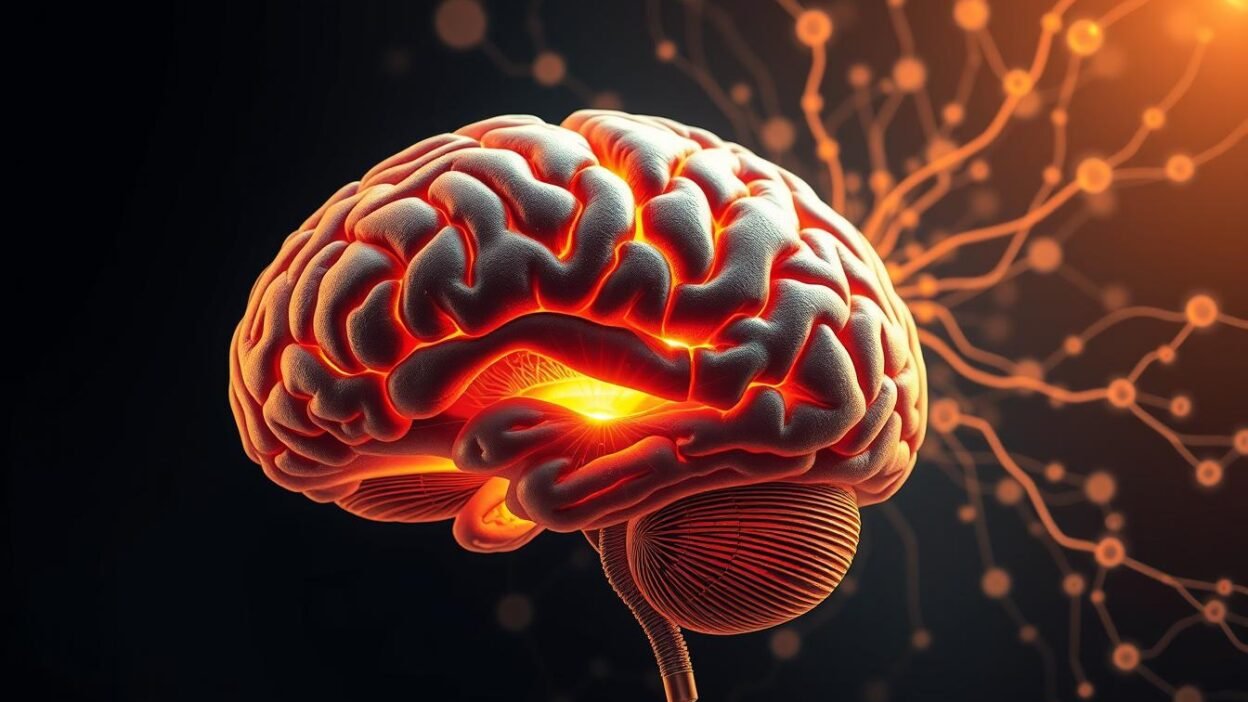
What if our habits, either praised or punished, are not just choices? They might be the sign of how a growing brain is shaping up. It’s like seeing the outline of an invisible blueprint.
Let’s talk about how our brains develop and impact our behavior. Our actions are the result of our brain working, influenced by both biology and our experiences. The early years of life are really important. Conditions before we’re born and our first years fire up quick growth. But, our brains keep fine-tuning until we’re about mid-20s. This is when we can clearly see how our brain’s setup affects our actions. For example, we get better at seeing and talking before we improve at planning and controlling ourselves.
Studies tell us a straightforward fact: our experiences can change our brains. Things like touching, playing, talking a lot, and having little stress make our brain paths healthier. On the other hand, too much stress and lead exposure can harm these paths. Research on bad childhood experiences shows how early bad times can affect us our whole lives. This covers everything from doing poorly in school and feeling depressed to having heart issues. It shows how changes in the brain and behavior go hand in hand over time.
Creating an inclusive learning environment begins with understanding the diverse needs of children and the supports required to help them thrive. The Inclusive Education category on SpecialNeedsForU connects parents and educators with practical insights on adapting classrooms, promoting equal participation, and fostering a supportive school culture. To identify early developmental differences that influence inclusion, families can explore Special Needs Awareness and track age-appropriate growth through Developmental Milestones. For learners who face academic challenges, the Learning Disabilities section offers targeted strategies and evidence-based interventions. Parents seeking emotional and behavioural guidance to support inclusion at home can visit PsyForU, while caregivers aiming to build stronger routines, communication, and stress-free learning environments can rely on the mindset and productivity resources available at IntentMerchant. Together, these interconnected platforms help families and educators create classrooms where every child feels welcome, understood, and empowered to learn.
Teenagers often feel things deeply and quickly because of how their brains develop. The amygdala, which manages our emotions, grows fast. But the frontal cortex, which helps us plan and stop and think, doesn’t keep up as quickly. As we go through high school and college, our brains get better at doing things more smoothly. But, using drugs can mess with this improvement. It’s key to understand this to see how brain development plays a role in our day-to-day actions. This knowledge helps parents, teachers, and doctors provide the right support at the right time.
Taking practical steps is important for a healthy outcome. Things like stable care, talking and responding, playing safely, and limiting screen time help a lot. So, the connection between brain development and behavior goes both ways. Behavior can change the brain, and the brain directs our behavior. Starting early with the right support is an investment for life.
Key Takeaways
- Behavior reflects brain function: experience and biology co-author development.
- Early years are pivotal; effects of prenatal care, touch, play, and stress are long-lasting.
- Adolescence features fast emotion and slower control due to uneven brain maturation.
- ACE research links early trauma to later health, learning, and social outcomes.
- Healthy environments—low toxins, rich language, stable care—improve trajectories.
- The brain structure and behavior correlation evolves as circuits myelinate and prune.
- Change remains possible: actions and habits can remodel neural pathways over time.
Understanding Brain Development Stages
The brain grows through patterned stages. Each phase affects how we focus, feel, and make choices. These early stages set the path for learning, relationships, and behaviors. As time goes on, our brain develops with new connections and changes. This shapes our actions and who we become.
Prenatal Development
Even before we are born, the foundation is being set. A mother’s health and stress levels influence key brain areas. This affects self-control and how we understand social cues. Bad habits like drinking or smoking can change how we sense, learn, and remember.
Fathers play a role too. Supportive environments for dads lead to better brain development in kids. On the other hand, problems like alcoholism in fathers can cause visible changes in children’s brains. Healthy prenatal practices can kickstart positive brain growth and behavior.
Early Childhood Development
In early childhood, the brain creates millions of connections every second. Interactions with caregivers strengthen this process. This helps develop vision, language, and motor skills early on, laying the groundwork for speaking, playing, and problem-solving.
By age five, the brain’s main structure is set. Interaction and play help shape social behaviors and how we react to stress. Consistent, caring environments can shield against negative stress effects. It’s also crucial to limit screen time early on to promote better learning and self-control.
Adolescence and Maturity
The teen years bring emotional and risk-taking behaviors due to brain development. The brain keeps maturing, improving quick thinking and judgment. However, drugs and alcohol can harm this growth, affecting decision-making skills.
Into the mid-20s, the frontal lobe finishes developing, which betters impulse control. Educational support tailored to these changes can lead to smarter decisions and stable behaviors as the brain fully matures.
Understanding Meltdowns vs. Tantrums
The Role of Neurons and Synapses
Neurons are the messengers in our brain, and synapses decide the message path. They are key for learning, remembering, and maintaining self-control. As they organize, we start to see their influence on daily behaviors, like speaking or staying focused. These changes also help the brain mature and shape our actions from childhood to teenage years.
Formation of Neural Connections
In our early years, our brains create millions of connections every second. This process, called synaptogenesis, starts with our senses, moves to language, and ends with decision-making areas. Interacting with our caregivers helps strengthen our ability to speak and socialize.
Another key process, myelination, lets different brain areas talk more quickly and clearly. During our teenage years, this leads to faster thinking and improved memory. These brain developments are why we see certain behaviors in school and with friends.
- Experience-dependent plasticity: Doing the same activities repeatedly can change neural pathways.
- Studying animals shows that those in stimulating environments have more complex brain connections.
- Feeling gentle touches helps sensory and emotional brain areas grow.
Pruning of Unused Synapses
The brain also gets rid of weaker connections, making the remaining ones stronger and less noisy. This makes the brain more efficient, providing a foundation for more complex skills. Failing to develop certain skills early can lead to problems later, unless we get the right support.
Our experiences, stress, and how we’re raised affect which connections our brain keeps. Negative factors like poor caregiving or exposure to harmful substances can impact our brain structure. Proper synaptic pruning enhances our ability to manage ourselves, understand language, and make decisions. When pruning goes wrong, it can affect our attention, emotions, and ability to learn.
| Process | Timing Peak | Primary Effect | Behavioral Correlates | Key Influences |
|---|---|---|---|---|
| Synaptogenesis | Infancy to early childhood | Rapid creation of new synapses | Language bursts, fast learning, rich sensory mapping | Serve-and-return, varied stimuli, nutrition |
| Myelination | Childhood through adolescence | Faster signal conduction between regions | Quicker processing, sustained attention, coordination | Practice, sleep quality, aerobic activity |
| Pruning | Childhood and adolescence | Removal of weak or unused synapses | Sharper focus, better self-control, efficient recall | Stable caregiving, stress load, substance exposure |
The Impact of Environment on Brain Growth
The environment influences how the brain grows through what we experience daily, stress, and how we’re cared for. Routines, feeling safe, and how much language we hear help shape the brain. This affects our ability to focus, remember things, and control our actions. As we grow, good care and learning help guide brain development and behaviors in positive ways.
Socioeconomic Factors
Poverty, not having a stable place to live, neglect, and caregiver depression can disrupt stress responses and harm decision-making. Lead is harmful to the brain’s connections. However, having a supportive and stable caregiver can lessen these risks. This shows how daily life links to brain and behavior development.
Studies by Vincent Felitti and others show that difficult childhood experiences can lead to more addiction and suicide attempts. Risks like failing school, legal problems, and poor health show the connection between brain development, behavior, and social issues.
Making good policy choices early on can reduce harmful stress. Improving housing, supporting families, and keeping communities together helps. Working together in areas like education, health, and housing ensures brains can grow well.
Education and Learning Environments
Studies on animals show that rich environments lead to better learning. There’s evidence that a father’s health and environment before birth can affect a child’s brain. For kids, early reading and talking help develop skills in speaking, understanding, and feeling—showing the close link between brain development and behavior.
Good preschools and daily activities like reading, telling stories, and singing help children’s brains grow. Limiting screen time and encouraging play and interaction with others are crucial. This helps with attention and managing emotions, shaping how children learn and behave both at school and at home.
- Prioritize interaction: back-and-forth conversation, questions, and narration during daily tasks.
- Build print-rich spaces: labels, picture books, and shared writing to anchor vocabulary and concepts.
- Protect play: collaborative games and outdoor exploration to train planning, focus, and empathy.
These activities match developmental stages, helping keep the brain flexible. They also help reduce gaps related to family income and where one lives.
The Influence of Genetics on Behaviour
Genes lay the groundwork for how our brains develop. Experiences then fine-tune this development. Together, these elements help us understand how our brain’s structure and our behavior are linked from childhood through our teenage years. We see how thinking skills and behavior interact as the brain’s networks mature. They react differently to what we encounter every day.
Hereditary Traits
Differences in brain development can be seen between girls and boys. For example, girls’ brains mature earlier, affecting their ability to plan and control impulses. Girls also start speaking earlier, while boys use more areas of their brains for communication. Imaging studies show these differences in brain structures.
Hormones play a big role in how our brains organize cells and form connections. These processes affect attention, memory, and emotions. As the brain changes, we can see its impact on how kids behave in school, with friends, and in managing their emotions.
Gene-Environment Interactions
Our environment and how we’re treated can influence our genes, even though our DNA stays the same. Things like love and routine can make us less stressed, but disorder can make stress worse. Over time, this mix shapes the connection between our brain’s structure and how we behave.
Things like eating the right food and avoiding harmful substances while pregnant are important. They help develop the brain correctly. The way we are raised, what we learn, and our exposures also shape how we act. This shows how our built-in tendencies are affected by our experiences.
Neuroplasticity and Behavioural Adaptation
Brains change when we use them. Their circuits get stronger with practice, while unused ones disappear. This ability explains how we grow and behave, from childhood to adulthood. When we change our daily routines, our brains and habits change too.
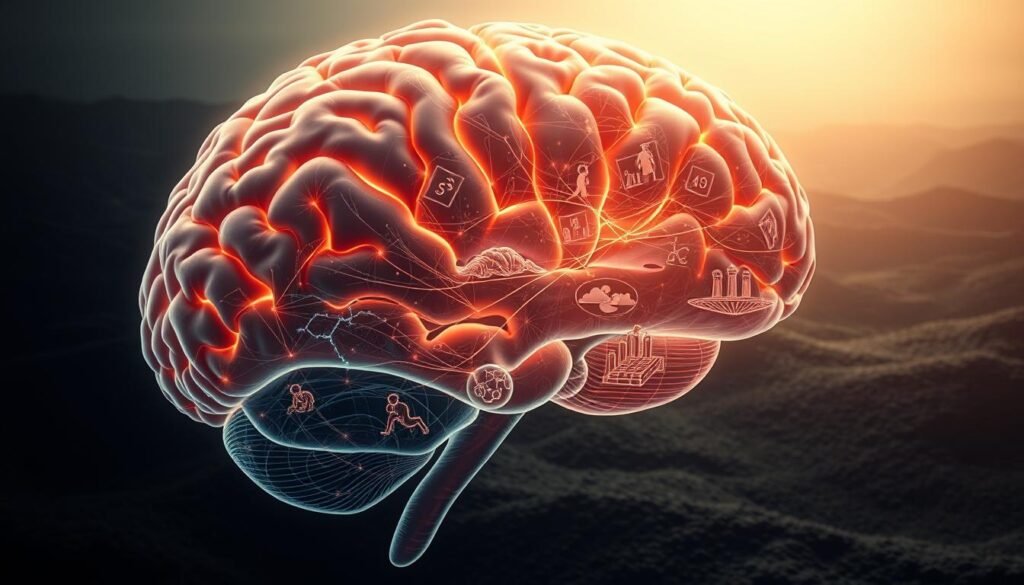
What is Neuroplasticity?
The brain can change itself based on new experiences. It forms new connections and gets rid of old ones. This shows how our brain grows and affects our behavior throughout our lives.
As kids, our brains change quickly, but they keep changing until we’re about 25. Doing things over and over, like reading or practicing music, changes our brains. This makes us better at learning and behaving in different situations.
Examples of Behavioural Changes
Practice makes athletes and musicians better at what they do. Being in a place where you can explore and learn helps with focus and talking to others. This is because our brains and actions are closely linked.
Talking back and forth while reading helps kids learn to talk and interact. But, if they don’t get consistent responses, it can hurt this growth. As teenagers, they are still learning how to plan and take chances. Drinking alcohol or smoking can harm their brains, making it hard to make good choices.
| Plasticity Mechanism | Developmental Window | Observable Behavior | Practical Example |
|---|---|---|---|
| Synaptogenesis | Infancy to early childhood | Rapid language and social gains | Daily serve-and-return conversation during meals |
| Myelination | Childhood through mid-20s | Faster processing and planning | Gradual increase in complex tasks, like multi-step projects |
| Pruning | Childhood and adolescence | More efficient decision-making | Consistent routines that reinforce useful study strategies |
| Experience-Driven Rewiring | Across the lifespan | New habits and refined skills | Repetition of targeted drills for sports, music, or coding |
Critical Periods in Brain Development
Throughout infancy, childhood, and teenage years, the brain has special times when it learns a lot from experiences. These stages help shape how we pay attention, control ourselves, and learn to socialize. As we grow, making changes to our brain gets harder but not impossible.
Definition of Critical Periods
Early in life, our brains go through phases called critical periods. This is when parts of our brain that handle seeing, talking, moving, and thinking are most open to learning. The earliest years are super important for developing how we see the world and handle stress. After that, learning to talk and move happens in early childhood. Our abilities to plan and stop ourselves from doing things mature by our mid-20s.
Early experiences are key because they shape our brain responses that last a long time. Even though our brains keep growing, early lessons set the stage, while later ones make small tweaks.
Long-term Effects on Behaviour
Bad things happening in childhood can lead to more risk of addiction or feeling very sad. Stress before birth can mess with certain brain areas, changing how we play and think as adults. Boys and girls might be affected differently by the same experiences.
Teen years offer another chance for growth. Trying substances in these years can hurt decision-making but getting better at regulating our actions is typical as we grow. Having a supportive start, with caring adults, plenty of talking, and safe surroundings, helps us deal well with feelings and decisions throughout life.
| Window | Dominant Brain Changes | Key Experiences | Potential Long-term Effects | Related Mechanisms |
|---|---|---|---|---|
| Prenatal | Neural proliferation; migration | Maternal nutrition; stress load | Altered stress reactivity; sensory baselines | Hormonal milieu; neurodevelopmental factors in behavior |
| 0–3 Years | Synaptogenesis; early pruning | Caregiving stability; speech exposure | Attachment style; language readiness | Experience-expectant input; brain maturity and behavior patterns |
| Early Childhood | Network specialization | Play; motor practice; reading aloud | Attention and self-regulation capacity | Myelination; selective pruning |
| Adolescence | Frontostriatal tuning | Peer context; substance exposure | Risk-taking; decision quality | Dopamine shifts; neurodevelopmental factors in behavior |
| Early Adulthood | Prefrontal integration | Goal-setting; complex learning | Planning, impulse control | Long-range connectivity; brain maturity and behavior patterns |
The Connection Between Emotion and Brain Development
Our emotions and brain grow together. This shapes how we understand cues, make plans, and form bonds. The link between brain development and behavior gets clearer when we see how parts of the brain interact while we grow. As brain pathways develop, we see better decision-making and clearer emotional signals.
In the early years, the amygdala quickly responds to threats and new things. The frontal cortex, however, learns to stop and think things over. During puberty, hormones increase the desire for rewards, and this happens at different times for boys and girls. With practice and steady routines, the brain gets better at thinking and acting, showing better daily decision-making.
Emotional Regulation
Self-control relies on thinking skills like stopping impulses, changing tasks, and remembering. Since the frontal lobes keep developing into our mid-20s, teens might act quickly, misinterpret expressions, or focus too much on short-term rewards. Doing things repeatedly, getting enough sleep, and physical activity improve brain connections. This results in better self-control.
Stress can change the brain’s structure. Ongoing stress or unpredictable care can make it tough to manage emotions. Stable routines, supportive adults, and being mindful help build resilience. Over time, this support helps lead to calm reactions and better planning.
Social Interactions and Empathy
Playing helps the social part of our brains develop. Through games, taking turns, and pretending, children learn about others’ intentions and how to adapt. Interactions like eye contact and talking back and forth make language and empathy better. This helps with getting along in school.
Teens might misinterpret sarcasm or threats because emotional reactions are faster than thoughtful judgment. Support from parents and teachers, like showing how to understand others, talking about feelings, and fixing conflicts helps show the connection between brain development and behavior. This leads to better understanding of social cues and friendlier choices.
| Domain | Key Brain Systems | Typical Challenges | Effective Supports | Behavioral Outcome |
|---|---|---|---|---|
| Emotional Regulation | Amygdala, prefrontal cortex, anterior cingulate | Impulsivity, mood swings, misreading emotion | Consistent routines, sleep, mindfulness, aerobic exercise | Improved inhibition, steadier mood, adaptive coping |
| Empathy and Social Skills | Temporoparietal junction, superior temporal sulcus, limbic network | Misinterpreting cues, peer conflict, withdrawal | Serve-and-return, guided play, perspective-taking practice | Accurate cue reading, cooperative play, prosocial acts |
| Stress Responsivity | Hypothalamic–pituitary–adrenal axis, hippocampus | Hyperarousal, avoidance, rigid routines | Predictable caregiving, breathing drills, safe spaces | Faster recovery, flexible problem-solving, reduced reactivity |
Mental Health and Brain Maturity
As the brain matures, it gets better at controlling attention, impulses, and emotions. This happens because the brain’s pathways become more efficient. Early life experiences and biology play a big role in this. They help shape how a person behaves later in life. Understanding the link between brain structure and behavior is key. It shows why the timing of experiences and the context they occur in are crucial for mental health.
Adolescents see a boost in reward-related brain activity before their prefrontal cortex fully matures. This mismatch increases risk-taking and stress. When combined with unstable environments, these effects can worsen across school, family, and community life.
Development of Mental Disorders
Many mental health conditions develop over time. Early minor differences in how a child pays attention, communicates, or interacts socially can hint at issues that might arise later. These signs point to the role of neurodevelopmental factors in shaping behavior. Genes, caregiving quality, and nutrition all interplay over time.
Exposure to alcohol, nicotine, or cannabis before birth can affect brain growth and learning abilities later on. Experiencing violence or neglect early in life increases the risk for addiction and suicidal behavior. An early brain injury can make these risks even greater. This backs up the strong connection between how the brain is structured and how someone behaves, especially regarding memory, planning, and controlling emotions.
In teenagers, a more sensitive amygdala and underdeveloped frontal areas affect decision-making. Using substances in this critical period can slow brain development. It makes teens more prone to anxiety, depression, or psychosis. This is especially true if stressful conditions continue.
Strategies for Support and Intervention
Caring for a child starts before they are born. Regular doctor visits, taking folic acid and DHA, and avoiding harmful substances like alcohol and cigarettes help the brain form properly. After the baby arrives, giving them attention and following a steady routine prepares their brain to manage stress better.
Talking, reading, and singing to children every day helps their language skills grow. Following a doctor’s advice on nutrition and limiting screen time, especially before age two, keeps their attention and sleep on track. Going to a high-quality preschool at ages three to four boosts their ability to manage their thoughts and actions, showing again the link between brain structure and learning.
- Family and school supports: predictable schedules, warm feedback, and safe spaces for practice and repair.
- Adolescent scaffolding: adults anticipate impulsive choices, set boundaries, and coach decision-making without shaming.
- Community and policy: reduce lead exposure, expand mental health screenings, and align health, education, housing, and justice services.
- Early therapeutic inputs: tactile stimulation, speech and occupational therapy, and evidence-based counseling to shift trajectories.
| Developmental Window | Key Risks | Protective Actions | Expected Brain/Behavior Gain |
|---|---|---|---|
| Prenatal | Alcohol, nicotine, cannabis; toxin exposure; limited prenatal care | Folic acid, DHA, regular checkups; avoid substances; reduce environmental toxins | Healthier cortical layering; steadier arousal systems; improved birth outcomes |
| Infancy–Toddler | Neglect, chronic stress, inconsistent caregiving | Nurturing routines; talk-read-sing; safe sleep; tactile stimulation | Stronger stress regulation; richer language pathways; secure attachment |
| Preschool (3–4) | Limited enrichment; high screen time | High-quality preschool; guided play; capped screen time; balanced nutrition | Better executive function; attention and working memory gains |
| Adolescence | Substance use; unsupervised high-risk settings | Adult scaffolding; clear limits; mentoring; access to counseling | Improved judgment; safer choices; resilient emotion regulation |
Layered supports at different stages can change life patterns. When families, schools, and public systems work together, they promote healthier development. They create a strong relationship between brain structure and behavior that supports wellbeing.
Technology’s Influence on Brain Development
Digital tools shape our attention, memory, and how we see others. What families and schools decide about tech use can change how a child’s brain develops. This affects their behavior too. As kids grow, their brains adjust according to what they do regularly.
Screen Time and Cognitive Skills
The early years are key. Talking face-to-face, reading together, and singing help build language skills. But screens can’t do this. Pediatric experts suggest no screen time for kids under two. They say older kids should have limited screen time with adult involvement. A good balance is essential for healthy sleep and staying active. This also boosts attention and memory.
What kids watch and do on screens is important. Interactive activities that make them think can be good if they also play and talk in the real world. Too much watching without talking can harm self-control. Setting limits can steer brain growth towards positive outcomes.
Impact of Social Media on Behaviour
Social media changes how teens see rewards through likes and comments. Teenagers often act on feelings because their brains are still developing. Having adults guide them can turn online interactions into positive outcomes.
Meeting friends and playing in person is crucial for learning empathy and solving disagreements. Too much online time can mess up these skills. A mix of offline friendships, rest, exercise, and monitored online use can lead to a healthier brain and better behavior. This supports both school success and getting along with others.
Future Directions in Brain Research and Behaviour
Next-gen studies in labs and clinics are connecting life experiences to changes in brain circuits. They look at how stress, what we eat, and drugs change genes and can affect future generations. This research helps us understand how brain growth affects our decisions by studying brain networks and behavior over time.
Emerging Trends in Neuroscience
New imaging tools and long-term studies are changing how we see critical periods for developing vision, language, and control over our actions. Scientists are exploring how brain connections shift during the teen years and how this can be affected by stress or substances like alcohol or cannabis. By combining personal histories of childhood adversity with brain scans, we might better understand how tough experiences alter our brain, guiding better predictions for growth and behavior.
Implications for Education and Therapy
It’s essential to start strong support systems early, as they grow over time. This includes getting the right nutrients before birth, reducing exposure to harmful substances, and guiding parents on interactive child care. Access to quality early education and engaging social environments prepares children for a healthier mental future. School and legal systems should consider that teens’ brains are still developing, aiming to balance growth and responsibility.
In therapy, the focus will be on creating safe, enriching environments that reduce stress and prevent drug use among teens, safeguarding brain development. A combined approach across different sectors, like health and education, is like investing in our future, leading to better learning, wellness, and behavior in adulthood.
FAQ
How Brain Development Affects Behaviour
Our actions are shaped by both our biology and our experiences. The early years of life, including before birth and the first few years, are very important. They set the stage for how we act into our mid-20s. The link between our brains growing and how we behave shows the importance of good care, less stress, and lots of learning.
What happens during Prenatal Development, and why does it matter for behaviour?
Before we’re born, our brain starts to form its basic structure. Getting enough folic acid and DHA is key, while avoiding alcohol and toxins is critical. Stress in the mother can affect the baby’s brain, making it more sensitive to stress later. Dads’ lifestyles and their environment can also change their future child’s brain.
Why are the early years so critical in Early Childhood Development?
In the first few years, the brain is super busy making connections. Things like talking, reading, and playing with kids help build strong brains. By age five, most of the brain’s growth has happened. Good touch and play, and having someone consistent to look after them, helps kids learn how to act, while too much stress can cause issues.
How does Adolescence and Maturity shape behaviour and decision-making?
During the teen years, emotions often rule because the brain’s emotion center develops faster than the part that controls planning. As young people reach their 20s, they get better at thinking ahead and controlling impulses. But, things like drinking or using drugs can slow this down. Boys and girls develop at different rates, so education and rules should take this into account.
How do neurons and synapses form the basis of behaviour (Formation of Neural Connections)?
Neurons grow, connect, and get wrapped in protective coverings to create fast pathways for messages. Doing things repeatedly and having rich experiences strengthen these pathways. This shows how action, playing, and caring interactions help develop focus, memory, and self-control.
What is synaptic pruning, and how does it affect behaviour (Pruning of Unused Synapses)?
Pruning cuts out weaker brain connections, making the strong ones faster and better. Good pruning helps with self-control and making decisions. But, missing out on good experiences or facing too much stress can mess up this process, causing problems with attention and emotions.
How do Socioeconomic Factors influence brain growth and behaviour?
Hardships like poverty, neglect, and depression can change the brain’s structure. Research shows that tough times early in life can lead to problems in school, addiction, and even health issues later. Having a stable and loving caregiver and community support can protect and help improve behavior.
How do Education and Learning Environments shape behavioural outcomes?
Being in a place that encourages talking and playing helps brain circuits grow strong. Going to preschool and having lots of chances to play and talk with others teaches kids about getting along and caring for others. Getting to these enriching environments early and equally helps kids learn self-control and how to act with others.
What role do Hereditary Traits play in behaviour?
Our genes set the stage, but our experiences shape how we turn out. Hormones play a part too, with girls and boys developing at different rates. It’s important for schools and support to match these developmental timelines without making assumptions about what each child can achieve.
How do Gene-Environment Interactions shape behaviour over time?
The things we go through can adjust our genes in subtle ways. Care from others can make us less stressed, while bad experiences before we’re born can change our brains. Even a dad’s environment before a child is born can affect the child. All these interactions can either guard us against risks or make them worse.
What is Neuroplasticity, and why is it central to behaviour?
Neuroplasticity is how the brain changes through what we experience. This ability is highest when we’re young but goes on into our 20s. Doing things over and over, getting therapy, and having rich experiences can change our brain circuits and how we act.
Can you give Examples of Behavioural Changes driven by plasticity?
Practicing movements sharpens them; interacting back and forth boosts talking skills. Playing and caring touch lower stress. Hanging out with friends teaches us about getting along. But, hard times early on can make us more alert to danger or lead to risky choices. Using substances as a teenager can slow the brain’s development.
What are Critical Periods in Brain Development?
Some times are super important for how our brains develop. The start of our lives is very sensitive for learning senses, language, and how to handle stress. These periods go in a row: seeing, talking, moving, and finally, making plans. What happens during these times can affect us for a long time.
What are the Long-term Effects on Behaviour of early experiences?
Tough times early can lead to big problems: doing poorly in school, having kids too early, breaking the law, feeling very sad, getting addicted, having heart and blood sugar problems, and even losing memory earlier. But strong support from the start can help kids manage themselves, learn well, and get along with others.
How does Emotional Regulation emerge with brain development?
The part of the brain that reacts quickly is fast to develop; the part that helps us plan and control ourselves takes more time. This is why teens might act on impulse or get emotions wrong. As they grow, practice and less stress help them get better at managing their feelings.
Why are Social Interactions and Empathy so dependent on early experiences?
Interacting with others and playing teaches us how to take turns, understand others, and follow rules. Love and consistent care help us respond to others’ feelings better. Not hanging out with others can make these skills weak unless we also get a lot of good real-life practice.
How do Mental Disorders relate to brain maturity?
A lot of mental health issues start with changes when we’re young. Stuff like exposure to harmful things before birth and high stress can change our path, even leading to issues like schizophrenia later. Teens being more emotional and trying substances can also up the risk for mental health problems.
Which Strategies for Support and Intervention work best?
Start with good care early on: prenatal care, avoiding bad stuff like alcohol, talking and reading every day, not too much screen time, good preschool, and safe places to live. Doing these can help guide us toward better behavior.
How does Screen Time affect Cognitive Skills?
Kids younger than two should stay away from screens. After that, keep it limited and make sure it’s good stuff. Screens can’t take the place of talking and playing that help with learning and being social. Too much screen time cuts into sleep, activity, and being with others, but educational content can be helpful if adults help guide it.
What is the Impact of Social Media on Behaviour, especially in teens?
Social media makes feelings and peer pressure even bigger. Teens may act without thinking or get things wrong because their control center is still growing. Having adults help, setting time limits, and making sure there’s lots of face-to-face friendship and activities can keep things balanced.
What Emerging Trends in Neuroscience will shape our understanding of behaviour?
Science is getting better at knowing when the brain is most open to learning, understanding teenage brain changes, and how hard times affect the brain. Looking into how experiences before and right after we’re born change us is also important. This work helps link how our brains grow with how we act.
What are the key Implications for Education and Therapy?
We need to use what we know: teaching caregivers to interact back-and-forth, making sure kids can get to early education, encouraging structured play, creating teen-friendly schools and policies, and preventing substance use in teens. Putting money into health, education, homes, and communities supports lasting changes in how we think and act.