

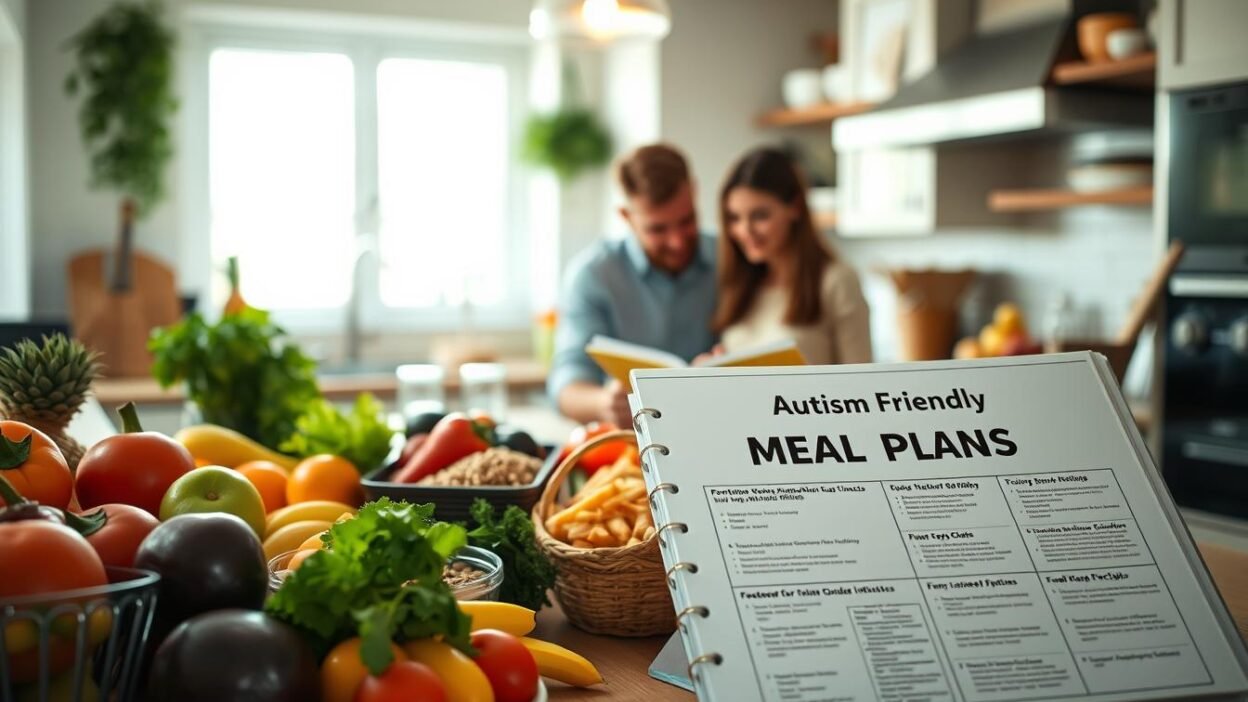
Families raising children with unique sensory needs face daily food challenges. Autism meal planning offers a chance to improve these situations. It combines sensory processing differences with nutritional needs, creating complex issues.
Families face multiple hurdles in this area. They need predictable meals for security. Sensory sensitivities limit food choices. Restricted diets can lead to nutritional problems.
These issues stem from neurological differences, not behavior. Understanding this helps create better strategies.
Core meals provide a helpful framework. These reliable recipes offer consistency while meeting individual needs. Sensory-friendly foods form the base of sustainable nutrition systems.
This method combines food selectivity science with practical cooking skills.
Autism nutrition needs special knowledge but remains approachable. Evidence-based solutions can reduce stress and improve nutrition. We can create flexible systems that respect sensory differences and support growth.
Key Takeaways
- Successful family nutrition systems require understanding neurological differences in sensory processing and food acceptance patterns
- Core meals provide consistent, reliable options that reduce daily decision-making stress for households
- Sensory sensitivities represent neurological realities rather than behavioral preferences or parenting challenges
- Evidence-based strategies combine scientific knowledge with practical cooking techniques for sustainable implementation
- Systematic approaches to dietary restrictions can improve nutritional outcomes while decreasing family tension
- Predictability in food offerings creates security and gradually expands acceptance possibilities over time
1. Understanding the Unique Nutritional Needs of Autistic Children
Autism nutrition needs differ from those of neurotypical children. This is due to sensory, physiological, and behavioral factors. These unique requirements stem from neurological differences and daily food intake challenges.
Autistic children face multiple barriers to proper nutrition. These issues go beyond simple food preferences. Understanding these challenges helps create effective meal planning strategies.

Common Nutritional Deficiencies in Autism Spectrum Disorder
Autistic children often consume fewer critical nutrients than their peers. Calcium deficiency is common, with 20-30% getting less than recommended. Many avoid dairy due to texture issues or special diets.
Vitamin D insufficiency is another widespread concern. Many autistic children spend less time outdoors due to sensory issues. This, combined with restricted diets, can affect bone development and immune function.
Vitamin B12 and omega-3 fatty acids are often low in autistic children’s diets. B12 deficiencies may result from eating less animal protein. Low omega-3 intake typically comes from avoiding fish and certain plants.
Some deficiencies stem from metabolic differences, others from limited food choices. Understanding this distinction is key for effective interventions. Some children have trouble absorbing nutrients, while others avoid nutrient-dense foods.
How Sensory Processing Affects Food Intake and Nutrition
Sensory processing differences greatly impact how autistic children experience food. Hyper-responsiveness can make mild flavors overwhelming. Hypo-responsiveness may lead to seeking intense flavors for adequate sensory input.
The gustatory system processes taste differently in many autistic individuals. Bitter flavors may seem stronger, while sweet or savory ones weaker. This affects food acceptance and nutrition intake.
Texture sensitivities strongly influence food acceptance. Mixed textures often cause strong aversions. The sensory system struggles to handle multiple tactile inputs at once.
Visual processing of food can create more barriers. Some children have strict rules about food appearance. They may reject items with “wrong” colors or foods touching on the plate.
Smell sensitivities can trigger avoidance before tasting. This can eliminate entire food categories. Understanding these sensory interactions helps create better nutrition strategies for autistic children.
The Connection Between Diet and Behavioral Regulation
Research shows links between nutrition and behavior in autism spectrum disorder. The gut-brain axis affects neurotransmitter production, inflammation, and brain function. Gut microbiome imbalances, common in autism, can worsen digestive and behavioral issues.
Nutritional deficiencies directly impact brain function. Low B vitamins can reduce serotonin and dopamine production. These neurotransmitters are crucial for mood and attention. Omega-3 deficiency affects brain cell communication.
Blood glucose stability greatly affects behavior and attention. Irregular meals or high-sugar diets cause blood sugar swings. This can increase irritability and reduce focus.
Regular, balanced meals help stabilize energy levels throughout the day. This supports better emotional regulation. Many families see improved attention and fewer meltdowns with proper nutrition.
Diet affects more than individual nutrients. It impacts overall patterns and meal consistency. Well-nourished children often show more behavioral flexibility and less anxiety. This highlights nutrition’s importance in comprehensive autism support.
2. Identifying and Managing Food Aversions and Sensory Sensitivities
Sensory food issues create unique challenges for autism meal planning. Understanding which sensory traits trigger aversions is crucial. Families who identify these patterns gain insights that transform food refusals into manageable preferences.
Food aversions in autism differ from typical childhood pickiness. These responses stem from neurological differences in sensory processing. Sensory-based food rejection is the brain’s protective response to overwhelming input.
The identification process begins with focused observation across multiple sensory domains. Parents must document patterns without judgment. This approach reveals the logic within seemingly chaotic food preferences.
Recognizing Texture Sensitivity Patterns in Your Child
Texture sensitivity is the most common sensory barrier to food acceptance. The oral sensory system processes complex information about food texture. Some children find certain textures uncomfortable or even painful.
Food textures exist along multiple dimensions simultaneously. Children may accept foods within narrow textural ranges. They often reject items that fall outside their comfort zone.
[Table content remains unchanged]
Systematic texture mapping involves offering foods across different textural categories. Parents should observe acceptance patterns. It’s important to note when during eating rejection occurs.
The distinction between texture preference and sensitivity is crucial for intervention planning. Preferences are choices among tolerable options. Sensitivities indicate genuine discomfort that may require gradual desensitization.
Understanding Color and Visual Food Preferences
Visual presentation greatly influences food acceptance for many autistic children. Color often serves as a primary selection criterion. “Beige food preference” describes children who mainly accept foods in neutral color ranges.
Color intensity affects perceived palatability through complex neurological pathways. Bright colors may signal unfamiliar flavors or suggest negative sensory experiences. Some children develop associations between specific colors and rejection.
Food arrangement is as important as color itself. Many autistic children need visual separation between different foods. When foods touch, the visual predictability disappears, triggering anxiety or refusal. Compartmentalized plates or bento-style containers can help.
Visual consistency plays a critical role in food acceptance. A child may reject a familiar food if it appears different. This response stems from reliance on visual cues to predict sensory experiences.
Families can use visual preferences to their advantage:
- [List content remains unchanged]
Temperature and Consistency Considerations
Temperature sensitivity affects food acceptance through multiple sensory channels. Some children only accept foods at specific temperatures. Others require items served either very hot or very cold.
The relationship between temperature and texture adds complexity. Many foods change consistency as temperature shifts. Children may accept a food at one temperature while rejecting it at another.
Consistency refers to the uniformity throughout a food item. Many autistic children prefer consistent foods because predictability reduces sensory uncertainty.
Strategies for managing temperature and consistency preferences include:
- [List content remains unchanged]
Understanding individual tolerance windows helps families plan meal timing and portion sizes. A child may refuse to continue eating as food temperature changes during the meal.
Managing Smell Sensitivities at Mealtime
Olfactory sensitivities are challenging because smells can’t be confined. Cooking odors permeate shared spaces. The anticipation of overwhelming smells can trigger anxiety before meals begin.
Many autistic individuals report heightened olfactory sensitivity. They experience smells as much more intense than others do. This stems from differences in sensory filtering.
Smell sensitivities include specific odor categories that trigger strong aversions. Common problematic categories include:
- [List content remains unchanged]
Environmental modifications can significantly reduce olfactory overwhelm during meals. Improved ventilation and air purifiers help manage cooking odors. Some families establish designated cooking times to allow odors to dissipate.
The link between smell anticipation and mealtime anxiety requires attention. Creating positive associations with the eating space helps separate the environment from smell-based distress.
Strategic meal planning can reduce problematic cooking odors. Cold meals, foods needing minimal cooking, and low-odor preparation methods help. Batch cooking strong-smelling items when the sensitive child is away is another useful strategy.
Document specific triggering odors, intensity thresholds, and temporal patterns. Some children tolerate cooking smells but refuse to eat when strong odors remain. Others manage better when they can see the smell source.
3. Building a Foundation for Successful Autism Meal Planning
Creating a meal plan for autistic children requires careful assessment and gradual implementation. This approach turns mealtime challenges into manageable processes through observation and data collection. It creates stability while allowing for increased food acceptance over time.
Families who take time to build this foundation see better long-term results. The process respects the child’s current food preferences. It also creates paths toward better nutrition and more food variety.
Here are four steps to start autism diet considerations. Each step builds on the previous one, creating an integrated system.
Step 1: Assess Your Child’s Current Food Preferences and Patterns
Thorough assessment is key for effective food aversion management. Families must document more than just accepted and rejected foods. They should note when, where, and how the child eats.
Keep detailed food logs for at least two weeks before making changes. Record what the child eats and the circumstances around each meal.
This process reveals patterns you might miss. A child may eat chicken nuggets at home but not at restaurants. Another might eat vegetables at breakfast but refuse them at dinner.
- Record specific brand names and preparation methods for accepted foods
- Document texture preferences across different food categories
- Note color patterns in accepted versus rejected items
- Track temperature preferences and consistency requirements
- Observe eating patterns during different emotional states
- Identify environmental factors that support or hinder eating
This phase also helps identify nutritional gaps. You may find your child’s diet lacks certain food groups. Knowing these gaps helps set realistic goals for change.
| Assessment Category | Key Observations | Documentation Method | Planning Application |
|---|---|---|---|
| Food Acceptance | Specific items consistently eaten across contexts | Daily food log with brand names and preparation details | Forms foundation of safe foods list |
| Sensory Preferences | Texture, temperature, color, smell patterns | Sensory characteristic checklist for each food | Guides food introduction strategies |
| Environmental Factors | Location, noise level, social context influences | Contextual notes in food diary | Informs mealtime environment design |
| Nutritional Balance | Food group representation in current diet | Weekly nutrient intake summary | Establishes priorities for variety expansion |
Step 2: Create a Comprehensive Safe Foods List
The safe foods list is the foundation for autism meal planning. It includes every food the child consistently accepts. This list should have details that ensure the same results each time.
Include exact brands, cooking methods, serving temperatures, and presentation styles. These details matter for children with heightened sensory awareness.
Organize the list by food category to see strengths and gaps. This shows if the child’s diet provides enough variety or needs supplements.
Look for patterns in the safe foods. Does your child prefer crunchy foods or beige colors? Understanding these can help find new foods to try.
The safe foods list also helps during stressful times. You can rely on these foods without guilt when life gets busy.
- Document exact brand names and product variations
- Record specific preparation requirements and cooking methods
- Note serving temperature preferences and acceptable range
- Describe presentation requirements including plate color and food arrangement
- Identify acceptable accompanying foods and problematic combinations
Step 3: Set Realistic Goals for Meal Variety and Nutrition
Goals for autism diet considerations should balance nutrition with reality. Avoid setting big goals that increase stress. Focus on small, measurable progress over months.
Remember, expanding food acceptance takes time. Try adding one new food per month instead of several per week. This respects your child’s sensory needs while moving forward.
Aim for adequate nutrition, not perfection. A child eating from three food groups with supplements is healthier than one facing constant mealtime battles.
Set both process and outcome goals. Process goals focus on behaviors you can control. Outcome goals address desired results.
- Identify one to three priority areas for gradual expansion
- Set specific, measurable objectives with clear timelines
- Establish acceptable progress indicators beyond immediate consumption
- Create contingency plans for setbacks and regression periods
- Define circumstances that warrant goal adjustment or temporary suspension
Track your progress to stay motivated. Visual systems showing gradual improvement help recognize success. They also show when goals need adjustment.
Step 4: Involve Your Child in the Planning Process
Including your child in meal planning builds important life skills. Adapt methods to fit their communication style and decision-making abilities. Some children do well with limited choices, while others need different approaches.
Younger children might point to foods in picture schedules. Older ones may help with shopping or cooking. The process itself provides valuable information about food preferences.
Watching which foods a child chooses during shopping can reveal likes and dislikes. Cooking together lets children explore food without pressure to eat.
Children who help plan and prepare meals are more likely to try new foods. They also show more flexibility with food presentation.
Structure involvement to ensure success. A child who helps wash vegetables is participating, even if they don’t eat them. This exposure is progress in food aversion management.
Technology can help children participate in planning. Apps let nonverbal children show preferences. Shared digital lists allow older kids to add requested items.
- Assess the child’s current communication abilities and decision-making tolerance
- Identify age-appropriate participation opportunities across planning stages
- Create visual supports that facilitate meaningful input and choice-making
- Establish participation routines that build predictability and reduce anxiety
- Celebrate involvement efforts regardless of immediate food acceptance outcomes
These four steps create a stable foundation for autism meal planning. Families who invest time in this process build systems that adapt as their child grows. This supports current nutrition needs and develops skills for future independence.
4. Establishing Structured Mealtime Routines
Structured mealtime routines are crucial for autism meal planning. They provide predictability, reducing resistance and anxiety. Consistent timing and clear expectations create a safe framework for autistic children.
Routine effectiveness in autism relates to how autistic brains process change. Predictable patterns reduce cognitive load associated with new experiences. Structured food routines create neural pathways that link mealtimes with safety, not stress.
Meal planning shifts decision-making to calmer times of day. This proves valuable for families managing autism spectrum disorder. It reduces stress during high-pressure evening periods.
Creating Consistent Meal and Snack Schedules
Consistent meal and snack schedules are key for autistic children. Regular timing supports natural hunger-satiety rhythms. It creates predictability that matches psychological expectations.
Optimal meal spacing is typically three to four hours apart. This allows hunger to develop without triggering behavioral issues. For autistic children with reduced hunger cues, consistent timing provides helpful external structure.
Eliminating grazing between meals is important. Constant snacking interferes with appetite at mealtimes. This increases the chance of food refusal and conflict.
Implementing a structured mealtime routine requires careful planning. Some families use visual schedules with clock faces. Others link meals to activities, like “breakfast after dressing.”
Recommended daily structure includes:
- Breakfast: Within one hour of waking to establish morning routine and provide energy for the day
- Morning snack: Mid-morning, particularly for younger children or those with higher caloric needs
- Lunch: Midday, allowing 3-4 hours after breakfast
- Afternoon snack: Positioned to prevent excessive hunger before dinner but not too close to evening meal
- Dinner: Consistent evening time that accommodates family schedules while allowing 2-3 hours before bedtime
Keeping schedules consistent during non-school periods is challenging. Weekends and holidays can disrupt eating patterns. Families who maintain meal timing even on less structured days report better results.
Designing a Calm, Sensory-Friendly Eating Environment
The eating environment greatly impacts an autistic child’s mealtime experience. Good design reduces competing stimuli. It allows focus on eating and helps manage food’s sensory challenges.
Lighting is crucial. Harsh fluorescent lights can disturb sensitive individuals. Natural or warm LED lighting creates a more comfortable setting. Dimmer switches allow adjustments based on preferences.
Managing sound is important. Background noise from TVs or appliances can make focusing difficult. Even small sounds like dish clatter can overwhelm sensitive children.
Strategic environmental changes include:
- Designating a specific eating location away from high-traffic areas
- Using sound-absorbing materials like tablecloths or placemats to reduce dish clattering
- Turning off televisions, radios, and other electronic noise sources
- Implementing quiet conversation guidelines during meals
- Considering noise-canceling headphones for children with severe auditory sensitivities
Proper seating supports stable positioning throughout the meal. Footstools or adjustable chairs ensure feet rest flat. This provides body awareness and promotes calm.
Visual organization reduces overwhelming stimuli. Cluttered tables or busy patterns can distract. Simple, solid-colored dishes and clear surfaces support focus on eating.
Temperature control is key. Uncomfortable heat or cold adds stress. A comfortable room temperature helps manage food-related sensory experiences.
Using Visual Timers and Transition Cues
Visual supports help autistic children understand mealtime expectations. They reduce anxiety about meal duration and sequence. Visual timers make abstract time concepts concrete and easy to grasp.
Time Timer products are excellent visual aids. A red disk disappears as time passes. This gives a clear picture of remaining time without needing number skills.
Digital timers on tablets or phones offer alternatives. Some apps have color changes and custom alerts. These features can help children track time passage.
Traditional kitchen timers provide sound cues. However, they lack ongoing visual feedback. Sudden alarms may startle sensitive children, creating negative associations.
First-then visuals clarify event order. A simple “First: eat dinner / Then: playtime” board reduces uncertainty. This can lessen resistance to meals.
Transition warnings prepare children for changes. Notices at 10, 5, and 1 minute before mealtime help. Visual countdowns with numbers or colors show approaching transitions clearly.
Implementation strategies for visual supports include:
- Introduce visual timers during preferred activities first to build positive associations
- Maintain consistency in which visual tools are used for meals to establish pattern recognition
- Position timers within the child’s visual field but not so prominent as to become a distraction
- Pair visual cues with brief verbal reminders for multi-modal support
- Honor the timer when it expires to build trust in the system’s reliability
Visual supports help beyond immediate behavior management. Over time, children internalize these patterns. This improves their understanding of time and transitions in various settings.
Managing Challenging Mealtime Behaviors
Mealtime challenges stem from various factors. These include sensory issues, communication problems, and anxiety. Effective management requires understanding the behavior’s underlying cause.
Functional behavioral assessment identifies four main behavior motivations. Sensory-driven refusals avoid unpleasant food experiences. Anxiety-based avoidance relates to fear or uncertainty. Attention-seeking behaviors aim for adult engagement. Escape-motivated responses try to end meals entirely.
Each type of behavior needs a different approach:
| Behavioral Function | Identifying Characteristics | Effective Response Strategy | Ineffective Response |
|---|---|---|---|
| Sensory-Driven | Gagging, pushing food away, covering nose, immediate rejection upon touching/smelling food | Respect sensory boundaries, offer alternatives with similar nutrition, gradual desensitization through play | Forcing contact with rejected food, insisting child “just try it,” minimizing sensory experience |
| Anxiety-Based | Verbal protests before seeing food, rigid adherence to specific brands/preparations, distress with changes | Increase predictability through visual supports, introduce changes gradually with preparation, maintain safe food availability | Surprise presentations of new foods, removing all familiar options, pressure to eat novel items |
| Attention-Seeking | Behaviors intensify with adult focus, laughter or smiling during refusal, watching for reactions | Provide positive attention for appropriate behaviors, minimize reaction to refusal, ensure adequate attention outside mealtimes | Extended negotiations, coaxing, making meals the primary interaction time |
| Escape-Motivated | Leaving table, throwing food, extreme tantrums, behaviors that successfully end meal | Clear expectations with visual supports, consistent consequences, ensuring escape doesn’t succeed, breaking meals into shorter segments initially | Allowing escape when behavior escalates, inconsistent expectations, meals that extend beyond tolerance |
Proactive adjustments can prevent many challenging behaviors. Ensure proper meal spacing for hunger. Reduce sensory overload in the eating area. Provide clear expectations with visual aids.
When challenges occur, stay calm and consistent. Avoid power struggles while maintaining reasonable expectations. Statements like “You don’t have to eat it, but it stays on your plate” respect autonomy.
Document behavior patterns to identify trends. Note food triggers, timing, and environmental factors. Many families find behaviors cluster around specific circumstances.
Seek professional help if behaviors limit nutrition or cause family stress. Specialists can provide tailored intervention plans addressing specific behavior drivers.
Effective approaches build self-regulation skills and expand sensory tolerance. They create positive mealtime associations. This supports long-term food acceptance better than short-term control through pressure.
5. Implementing Visual Meal Schedules and Recipe Supports
Kids with autism often understand pictures better than words. Picture-based meal planning helps families eat better together. These visual aids reduce stress and help kids be more independent during meals.
Families using visual supports report fewer mealtime fights. Kids cooperate more too. These tools make abstract ideas like “dinner soon” easy to understand.
Visual meal plans on fridges are great reference points. Kids can check them on their own. This reduces the need for constant reminders from parents.
Creating Picture-Based Weekly Menu Boards
Picture-based menu boards help make mealtimes predictable. They show upcoming meals using photos or clear drawings. This eliminates the constant “what’s for dinner” question before anxiety builds up.
Some kids like seeing the whole week’s meals at once. Others prefer daily or next-meal-only displays. Choose what works best for your child.
Place visual schedules where everyone can see them easily. Kitchen entryways or dining room walls are good spots. Put them at your child’s eye level to encourage independent checking.
Get kids involved in updating menu boards. This creates routine participation and ownership. Here are some ways to involve them:
- Selecting picture cards for preferred safe foods
- Placing meal images in corresponding day slots
- Removing completed meal cards to track progress through the week
- Choosing between two pre-approved meal options for specific days
Hands-on involvement with visual cards helps kids understand better. It creates positive feelings about meal planning too.
Developing Visual Recipe Cards for Predictability
Visual recipe schedules show how meals are made step-by-step. They help kids know what to expect. These cards also help kids get involved in cooking.
Good recipe cards show photos of each cooking step. This helps kids understand how ingredients become meals. It reduces worry about unfamiliar cooking smells or looks.
Use photos of your family’s actual meals, not generic pictures. Kids recognize their own plates and portion sizes. This makes expectations more accurate.
Make simple, kid-friendly visual instructions. Include these elements:
- Large, clear photographs of each preparation step
- Minimal text with simple action words
- Numbered sequence indicators for step progression
- Estimated time markers for each stage
- Final presentation photograph from multiple angles
Making these cards together can be fun. Let kids photograph their favorite meals. This helps them want to use the visual supports more.
Digital Apps and Tools for Visual Scheduling
Digital meal scheduling apps offer flexible alternatives to physical boards. They’re great for families with changing schedules. Digital formats allow quick updates without replacing physical cards.
Some apps are made just for autism-related visual scheduling. They often have picture libraries, easy scheduling, and reminders. Many also help with grocery planning.
Choose apps that are easy for kids to use. Look for big, clear icons and touchscreens. Voice features can help kids who learn better by hearing.
| Feature Category | Physical Menu Boards | Digital Scheduling Apps | Hybrid Approach |
|---|---|---|---|
| Customization Speed | Requires physical card changes and reorganization | Instant digital updates with drag-and-drop functionality | Digital planning with printed daily schedules |
| Sensory Experience | Tactile manipulation reinforces learning and engagement | Limited to visual and auditory digital feedback | Combines tactile interaction with digital flexibility |
| Accessibility | Always visible without device power requirements | Requires charged devices and technical competency | Physical backup when devices unavailable |
| Grocery Integration | Manual list creation from visual menu | Automatic ingredient list generation from meals | Digital planning exports to shopping lists |
Choose between physical or digital schedules based on your child’s likes. Some families use both. They plan digitally but keep physical displays for easy reference.
Using Social Stories to Introduce New Foods
Social stories are special stories that explain new situations to kids. They describe what will happen and how to cope. These stories can help kids feel less worried about trying new foods.
Good social stories for food have specific parts. They explain the situation, describe feelings, and suggest good responses. Use more explaining sentences than instruction sentences.
Make stories fit your child’s understanding level. Use simple words and pictures for younger kids. Older kids might like more detailed stories.
Here are some ideas for food introduction stories:
- Visual appearance: “Sometimes carrots are bright orange. The orange color means they have vitamins.”
- Texture expectations: “Raw carrots make a crunching sound when people bite them. The crunch means they are fresh.”
- Trying strategies: “I can look at the carrot first. Then I can touch it. When I feel ready, I can try a small bite.”
- Acceptable responses: “If I don’t like carrots today, that’s okay. I can try again another day.”
Reading these stories before meals helps kids prepare mentally. This reduces anxiety when the actual food appears. Many parents say their kids are more willing to try new foods after using social stories.
Include your child’s interests in the stories. A train-loving child might enjoy a story about a “Food Train”. This makes learning about food more fun and less stressful.
6. Understanding Special Dietary Restrictions for Autism
Families and researchers are exploring dietary interventions for autistic children. These interventions aim to support development through food changes. Some families report positive outcomes from elimination diets. However, scientific evidence remains mixed.
Dietary modifications require a balanced approach. Families often encounter various protocols claiming effectiveness. Professional guidance is crucial when considering dietary restrictions for autism. Systematic monitoring and realistic expectations are also important.
Informed decisions should align with a child’s nutritional needs and food preferences. This section examines common dietary approaches. It provides evidence-based analysis to support thoughtful implementation decisions.
The Gluten-Free Casein-Free (GFCF) Diet Explained
The GFCF diet is a popular autism intervention. It eliminates gluten from wheat, barley, and rye, and casein from dairy. Some believe these proteins may affect brain function in autistic individuals.
The “leaky gut” theory suggests increased intestinal permeability in some autistic people. Protein fragments might cross the intestinal barrier and affect neurological function. Some families report improvements after implementing gluten and dairy elimination protocols.
Research on GFCF effectiveness shows mixed results. Some studies find no significant improvements. Others identify subgroups of children who may respond positively. Individual variation in response makes universal recommendations challenging.
Implementing this diet can be challenging. Many autistic children already have limited food choices. Eliminating major food groups can further restrict options. GFCF-friendly foods include rice, corn, potatoes, fruits, vegetables, and meats.
Financial implications are significant. Gluten-free and dairy-free products often cost more. Nutritional concerns arise when eliminating dairy and grains. Appropriate supplementation is essential to prevent deficiencies.
Other Common Elimination Diets and Approaches
The Specific Carbohydrate Diet (SCD) eliminates complex carbohydrates and processed sugars. It’s based on theories about bacterial overgrowth and intestinal inflammation. SCD removes grains, starches, and most sugars.
The low-oxalate diet aims to reduce compounds found in many plant foods. High-oxalate foods include spinach, nuts, and chocolate. Some believe reducing oxalates may improve behavior and reduce gastrointestinal discomfort.
“Clean eating” protocols focus on organic foods and eliminating artificial additives. The Feingold Diet targets synthetic additives and certain natural compounds called salicylates.
Evidence supporting most elimination approaches is limited. Distinguishing between dietary effects and other factors remains challenging. Overly restrictive diets may harm children with already limited food acceptance.
Healthcare professionals caution against eliminating multiple food groups without proper assessment. Autistic children often have nutritional vulnerabilities due to food selectivity. Restrictive diets can impact family dynamics and mealtime experiences.
Working with Healthcare Professionals and Nutritionists
Collaborating with qualified professionals is crucial before implementing dietary restrictions. Registered dietitians provide guidance on assessing nutritional status and developing safe strategies. They understand children’s nutritional needs and autism-related food selectivity challenges.
A comprehensive assessment includes growth evaluation, dietary intake analysis, and sometimes biochemical testing. Professionals examine height, weight, and growth trajectory. They analyze current intake patterns and identify potential nutritional gaps.
Nutritionists help families distinguish between evidence-based interventions and unfounded approaches. They provide realistic expectations about outcomes. Professional guidance prevents nutritional inadequacies from eliminating major food groups.
A multidisciplinary approach often involves dietitians, pediatricians, and therapists. This ensures comprehensive evaluation of symptoms and nutritional status. Professionals can identify when dietary interventions may address medical issues.
Insurance coverage for nutritional counseling varies. Families should verify coverage details. Many autism support organizations offer nutritional consultation services.
[Table content remains unchanged]
Monitoring and Documenting Dietary Changes
Systematic monitoring is crucial for making informed decisions about dietary interventions. Families should establish baseline measurements before implementing restrictions. Documentation transforms subjective impressions into analyzable data.
Behavioral tracking should include specific, measurable indicators. Families can monitor sleep, communication, attention span, and challenging behaviors. Using standardized rating scales provides consistency and enables comparison over time.
Symptom tracking is important when targeting gastrointestinal concerns. Record bowel movements, consistency, and discomfort. Document skin conditions and other physical symptoms. Photography can provide visual evidence of skin-related changes.
Nutritional intake documentation is essential when implementing dietary restrictions. Food diaries record consumed items, portions, and meal timing. Smartphone apps can simplify this process. Regular review helps identify potential deficiencies early.
Growth monitoring ensures dietary changes don’t compromise development. Regular height and weight measurements are important. Plotting on growth charts reveals whether children maintain appropriate growth trajectories.
Careful documentation is needed for elimination and reintroduction trials. Implement changes gradually and note observable effects. Reintroduction trials help confirm whether specific foods influence symptoms or behaviors.
Establish appropriate timelines for evaluation. Most professionals recommend minimum periods of 4-8 weeks before assessing outcomes. Avoid continuing ineffective interventions indefinitely. Use documented evidence to guide decisions.
Sharing documentation with healthcare providers facilitates collaborative decision-making. Comprehensive records enable professionals to identify patterns and provide objective recommendations. This approach transforms dietary intervention into evidence-guided therapy.
7. Weekly Planning Tips for Autism-Friendly Family Meals
Switching to weekly meal planning can help manage autism-friendly family nutrition. This method cuts down on daily stress and ensures proper foods are available. Spending 20 to 60 minutes each week can create a solid plan for meals.
Good weekly planning balances nutrition goals with what’s actually possible. It turns daily food struggles into smooth routines. Families who plan report less worry about meals and more food variety over time.
Review Safe Foods and Weekly Nutrition Goals
Start planning by looking at current safe foods. Check which foods were accepted last week and which ones weren’t. Watch for changes in products, as these can cause issues.
Set realistic nutrition goals based on what your child will actually eat. Don’t make plans that ignore sensory needs. Instead, work with current habits and look for small ways to improve.
The review process should document several critical elements:
- Consistently accepted foods that can serve as reliable meal foundations throughout the week
- Foods showing variable acceptance that might depend on preparation methods or presentation contexts
- Nutritional gaps requiring strategic supplementation or gradual food variety expansion
- Brand-specific preferences where product substitutions consistently result in refusal
This review prevents outdated plans and notes how food acceptance may slowly change over time.
Plan Around Sensory Preferences and Textures
Consider sensory preferences for the whole week, not just meal by meal. This helps avoid accidentally serving the same textures too often. Planned variety within safe limits often works better than unplanned repetition.
Sensory needs often change throughout the day. Many kids handle crunchy foods better in the morning. Evening meals might need softer textures. Note these patterns to serve foods when they’re most likely to be accepted.
The planning process should map sensory characteristics across the weekly menu:
- Identify the dominant texture for each planned meal
- Ensure adequate sensory variety without overwhelming the child’s tolerance
- Avoid combinations that historically trigger refusal responses
- Consider visual presentation patterns that support predictability
Also think about temperature preferences during planning. Some kids prefer room-temperature foods. Others eat more variety when foods are a specific temperature. Understanding this helps prevent serving food in a way that leads to refusal.
Create Backup Options and Build in Flexibility
Even well-planned meals might be refused due to small changes or unseen factors. Have backup options ready. These should be safe foods that need little prep. This prevents stress and ensures your child eats enough.
Being flexible isn’t planning to fail. It recognizes that things outside your control can affect meals. Small changes in how food looks or tastes can lead to refusal, even if you follow the usual plan.
Effective backup systems incorporate multiple elements:
- Tier-one backups closely resembling the planned meal in nutritional profile but differing slightly in presentation
- Tier-two backups representing highly reliable safe foods that guarantee some nutritional intake
- Emergency options requiring no preparation that remain consistently available
This approach prevents meal failures while maintaining good nutrition. Having backups visible can actually reduce their use. It creates a calmer mealtime, which helps food acceptance.
Note which backups you use. This info helps improve future meal plans. It can reveal patterns that show why some foods are accepted or refused.
Batch Cooking and Meal Prep Techniques
Batch cooking for autism families keeps meals consistent while saving time. It’s about keeping the exact look and feel of food, not just saving time. Freezing, reheating, and storing must keep texture and temperature just right.
Making individual portions is very helpful. It ensures meals look the same each time. This supports the predictability many autistic children need for comfortable eating.
Effective batch cooking strategies include:
- Testing freezing and reheating methods with small quantities before large-scale preparation
- Labeling all prepared items with preparation dates and reheating instructions
- Organizing freezer systems for quick backup meal access during challenging periods
- Preparing safe-food components in advance while maintaining freshness for assembly
Preparing meal parts separately offers more flexibility. You can mix and match to meet different family members’ needs. This helps families eat together even with different sensory needs.
Use good storage methods to keep food consistent. Vacuum sealing prevents texture changes. Use divided containers for kids who need foods separate. Insulated containers keep food at the right temperature away from home.
Set aside specific time for batch cooking sessions. This works better than trying to fit it into daily cooking. It ensures you have time to keep meals consistent and sensory-friendly.
8. Developing Sensory-Friendly Recipes and Food Preparation Methods
Creating autism-friendly recipes goes beyond nutrition. It tackles sensory issues that affect food acceptance. Mastering these methods can turn mealtimes into positive experiences. Families can enjoy shared meals without battles.
Understanding cooking techniques helps caregivers make sensory-friendly recipes. This knowledge allows for adapting standard recipes. It provides tools for addressing common sensory challenges during meal prep.
Texture Modification Techniques for Preferred Consistencies
Texture is the main sensory factor affecting food acceptance in autistic children. Modifying textures to match preferences requires specific techniques. These changes allow families to adapt recipes while keeping nutritional value.
Pureeing is key for creating smooth, uniform textures. High-powered blenders remove seeds, skins, and fibers. This method works well for vegetables, fruits, and proteins.
Controlling moisture impacts food texture. Adding or removing liquid adjusts consistency from crispy to soft. Crunchy textures need careful moisture management during cooking.
Removing problematic textures expands food acceptance. Peeling fruits and vegetables eliminates unwanted skin textures. Deseeding removes parts that may trigger sensory aversions.
Specific cooking methods reliably produce preferred textures:
- Steaming maintains soft, uniform textures without browning or crisping
- Roasting creates consistent exterior textures with predictable caramelization patterns
- Pressure cooking produces extremely tender results that eliminate challenging fibrous textures
- Breading and baking provides uniform crunchy coatings that mask underlying food textures
- Slow cooking breaks down proteins into fork-tender consistencies without textural variation
Applying food texture accommodations requires troubleshooting when results vary. Temperature, cooking time, and ingredient quality all impact texture. Documenting successful prep methods ensures consistent results.
Safe Food Combinations and Strategic Pairings
Identifying why certain foods are acceptable guides strategic food pairings. This approach introduces new options sharing sensory properties with safe foods. It increases acceptance while expanding dietary variety.
Analyzing safe foods reveals patterns in texture, temperature, and flavor. A child who likes chicken nuggets may accept fish sticks or breaded veggies. These shared properties create bridges to new foods.
- Pasta foundations: Children accepting plain pasta may try similar shapes, then pasta with butter.
- Cracker foundations: Acceptance of specific crackers can expand to similar textured options.
- Fruit foundations: Children eating applesauce might accept other pureed fruits, then soft fresh fruits.
- Protein foundations: Chicken nugget acceptance can bridge to homemade versions, then other breaded proteins.
Color and visual similarity boost pairing success rates. Foods matching accepted items’ colors face less rejection. White or beige foods often serve as effective foundations for expansion.
Temperature pairing is crucial for successful combinations. Serving new foods at the same temperature as accepted ones reduces sensory variables. This consistency creates familiarity that supports acceptance.
Hidden Nutrition Strategies Without Changing Texture
Boosting nutrition without altering sensory properties requires advanced techniques. These autism-friendly recipes maintain texture, appearance, and taste while increasing nutrient content. They provide nutritional support during limited diet periods.
Pureed vegetables can be added to sauces, soups, and baked goods. White vegetables blend into light-colored foods undetected. The puree must be completely smooth to avoid texture changes.
Powdered supplements offer targeted nutrition without sensory impact. Unflavored protein powders and greens blend into smoothies and sauces. Gradual introduction helps find the right amounts.
Substituting ingredients can improve nutrition while maintaining sensory similarity. White whole wheat flour replaces all-purpose flour in many recipes. Greek yogurt can substitute for sour cream, increasing protein content.
Nutrient-dense additions work well in small amounts:
- Ground flaxseed or chia seeds in smooth batters (1-2 tablespoons max)
- Pureed white beans in light-colored baked goods
- Avocado in chocolate-based items
- Bone broth replacing water in grains
- Nutritional yeast in cheese-flavored items
These hidden nutrition approaches should supplement efforts to expand food acceptance. The goal is developing acceptance of whole foods. However, these techniques provide essential support during limited diets.
Preparing Foods with Consistent Results Every Time
Consistency in food prep is crucial for children sensitive to sensory changes. Minor differences can trigger food refusal. Developing systems that produce identical results eliminates this barrier to food acceptance.
Standardizing measurements provides the foundation for consistent outcomes. Digital scales are more accurate than volume measurements. This precision matters for baked goods where ratios impact texture.
Detailed preparation procedures enable reliable replication. Recipes should specify exact temperatures, times, and methods. Photos of each stage help identify when prep deviates from the standard.
Brand consistency significantly impacts outcomes for processed foods. Different brands vary in texture, flavor, and appearance. Maintaining the exact brand prevents rejection triggered by sensory differences.
Common sources of unwanted variation require specific solutions:
| Variation Source | Impact on Results | Standardization Solution |
|---|---|---|
| Oven temperature fluctuation | Inconsistent browning and texture | Use oven thermometer; document actual temperature needed |
| Cooking time variation | Underdone or overdone outcomes | Set precise timers; document exact times for success |
| Ingredient temperature | Different mixing behaviors and textures | Bring ingredients to specified temperature before use |
| Pan material differences | Variable heat conduction and browning | Use identical pan type; document specific pan used |
| Mixing intensity variation | Different gluten development and texture | Count mixing strokes or time mixing precisely |
Equipment calibration ensures tools perform as expected. Oven thermometers reveal actual temperatures for accurate cooking. Documenting specific burner settings produces desired results on stovetops.
Laminated recipe cards with photos support consistent prep. Visual guides show proper mixing, browning, and final appearance. These are valuable for sensory-friendly recipes where consistency determines acceptance.
Standardized prep methods reduce food waste and mealtime stress. When accepted foods meet expectations, children trust mealtimes. This trust creates a foundation for exploring new foods without anxiety.
9. Strategies for Expanding Food Acceptance and Reducing Picky Eating
Expanding food acceptance for autistic children requires patience and proven strategies. Research shows that specific methods can reduce food selectivity when applied systematically. It’s crucial to understand the difference between evidence-based methods and traditional approaches.
Successful expansion recognizes that autistic children process sensory information differently. Traditional approaches using pressure often increase mealtime anxiety. Instead, picky eating strategies based on research honor sensory sensitivities while encouraging gradual exploration.
Evidence-based approaches provide structured frameworks for expanding food acceptance. These methods build on understanding sensory processing differences. They also establish predictability around new food interactions.
Using the Food Chaining Method
Food chaining introduces new options sharing similar characteristics to accepted foods. This method recognizes that children accept new foods more readily when they resemble favorites. It analyzes foods across taste, texture, temperature, appearance, and smell.
Practitioners identify what makes a current food safe, then select new foods matching most attributes. They vary just one element at a time. This gradual approach reduces sensory overwhelm that often triggers food refusal.
Consider a child who only eats chicken nuggets from one brand. A successful chain might progress through these stages:
- Stage 1: Different brands of similar chicken nuggets (maintaining texture, changing subtle flavor variations)
- Stage 2: Breaded chicken strips with similar coating but different shape
- Stage 3: Breaded fish sticks sharing the coating texture but introducing new protein
- Stage 4: Homemade breaded chicken with controlled ingredients
- Stage 5: Chicken tenders with lighter breading
- Stage 6: Eventually progressing toward plain grilled chicken
The pace of chain progression varies among children. Some may move through stages quickly, while others need months at each level. Rushing can increase resistance, making slower progress more effective.
Successful implementation requires detailed observation of what makes foods acceptable. Does the child prefer uniform color? Is the crispy texture essential? Answering these questions guides appropriate chain selection.
Non-Pressure Exposure Techniques That Work
Non-pressure techniques reduce demands around food interaction. This approach increases long-term acceptance likelihood. These picky eater strategies separate food familiarity from eating requirements, allowing children to develop comfort through exposure.
The division of responsibility model sets clear boundaries between parent and child roles. Parents decide what foods are offered, when meals occur, and where eating happens. Children choose whether to eat and how much.
This framework eliminates power struggles while maintaining parental authority over food availability. Parents offer varied options, including safe foods alongside new items. They trust children to gradually expand acceptance as familiarity increases.
Systematic desensitization provides structured exposure without eating demands. The technique progresses through these levels:
- Visual exposure: New foods appear on the table without touching the child’s plate
- Proximity tolerance: Foods move closer, eventually onto the child’s plate
- Interaction allowance: The child may touch, examine, or play with foods without eating expectations
- Sensory exploration: Smelling, feeling texture, or tasting tiny amounts occurs voluntarily
- Voluntary tasting: The child initiates tasting attempts without prompting
Research shows children need 15-20 neutral exposures before willingly tasting new foods. Autistic children often require 30-50 exposures. Understanding this timeline prevents premature discouragement when progress seems slow.
Creating opportunities for incidental exposure helps build familiarity. Cooking together, grocery shopping, and having varied foods visible during meals all contribute to comfort development.
Incorporating Sensory Play with Food
Sensory play with food bridges avoidance and acceptance by removing eating pressure. These activities reduce anxiety around new foods by making them interesting play materials. The approach recognizes that comfortable interaction precedes willing consumption.
Age-appropriate sensory activities vary in complexity. Younger children benefit from simple exploration, while older children may prefer structured cooking projects. Effective sensory play activities include:
- Food art projects: Creating pictures with fruits, vegetables, or other ingredients without eating expectations
- Cooking involvement: Measuring, mixing, or arranging ingredients during meal preparation
- Gardening experiences: Growing vegetables from seeds, observing plant development, harvesting produce
- Texture exploration bins: Supervised play with dry pasta, beans, rice, or other safe sensory materials
- Food science experiments: Observing how ingredients change with temperature, mixing, or time
The transition from play to tasting occurs gradually and is child-initiated. Adults facilitate by modeling enjoyment and offering tastes without pressure. Comments focus on descriptive observations rather than eating expectations.
Recognizing readiness indicators helps identify when children approach voluntary tasting. Signs include increased interaction duration and spontaneous comments about food properties. Bringing foods near the mouth during play or asking about taste also signal growing curiosity.
Celebrating Small Wins and Tracking Progress
Celebrating incremental progress maintains family motivation during the extended timeline of expanding food acceptance. Picky eating solutions require weeks or months to show results. Detailed tracking helps recognize gradual improvements that might otherwise go unnoticed.
Comprehensive tracking systems document multiple dimensions of progress beyond simple acceptance metrics. Families should monitor these indicators:
- Willingness to have new foods on the table or plate
- Duration of tolerance before requesting food removal
- Types of interaction (looking, touching, smelling, tasting)
- Frequency of voluntary exploration attempts
- Expansion of accepted food variations or brands
- Reduction in mealtime anxiety behaviors
- Increased participation in food-related activities
Visual tracking methods work well for autistic children who benefit from concrete progress representation. Charts with stickers or photos documenting food interactions provide tangible evidence of advancement. These visual records validate effort during plateaus when progress feels stagnant.
Defining “wins” broadly prevents discouragement during slow periods. Touching a previously avoided food is significant progress, even without tasting. Allowing a new food on the plate is meaningful advancement. Reducing negative reactions when others eat triggering foods shows important regulation development.
Consistency is more valuable than perfection when implementing these strategies. Families will encounter setbacks and temporary regressions. Maintaining intervention approaches during challenges prevents complete loss of previous gains. Patient, persistent application yields results that rushed efforts cannot achieve.
10. Packing School Lunches for Children with Autism
Autistic children face unique challenges when transitioning from home meals to school lunches. This shift requires careful planning to address sensory concerns and food presentation. School lunches must function independently for hours in unpredictable conditions.
Parents must consider how foods change between morning preparation and lunchtime. They need to anticipate cafeteria environments that may overwhelm children with eating challenges. Successful planning bridges the gap between home and school settings.
Families should test solutions at home and communicate specific needs to school staff. Creating portable support systems that work without parental presence is crucial.
Maintaining Temperature and Texture Control in Lunch Boxes
Temperature stability affects whether foods remain within a child’s acceptable sensory range. Foods that shift during transport can trigger refusal, leaving children without proper nutrition. Insulated lunch containers with thermal mass maintain temperatures for 4-5 hours.
For hot foods, preheat the thermos with boiling water before adding the meal. This extends heat retention by 30-45 minutes. For cold items, use frozen gel packs or juice boxes.
Texture changes are also concerning, especially for children with strong preferences. Separate wet and dry foods to prevent sogginess. Pack crispy items in sealed bags to preserve their original texture.
Test potential lunch items at home by packing them in the morning. Serve them at lunchtime to see which options remain acceptable. This helps identify foods that maintain consistent textures during the delay.
Using Compartmentalized Containers for Food Separation
Many autistic children need foods to remain visually and physically separate. Compartmentalized containers are essential for preventing mixing that can trigger food refusal. These lunch boxes provide visual clarity and maintain distinct sensory experiences for each item.
Bento-style containers offer multiple small compartments for autism-friendly food options. When choosing containers, consider the child’s fine motor abilities for opening mechanisms. Simple snap closures work better than complex latches for children with coordination challenges.
Portion sizing within compartments is important. Appropriately sized compartments filled completely may matter to children who rely on consistent presentation. Some families photograph acceptable lunch configurations to maintain visual consistency across days.
| Container Type | Compartments | Best For | Opening Difficulty |
|---|---|---|---|
| Simple Divided Container | 2-3 large sections | Children needing basic separation | Easy snap closure |
| Bento Box System | 4-6 small compartments | Multiple small portions, variety | Moderate lid removal |
| Modular Stackable Sets | 3-5 individual containers | Temperature variety, complete separation | Multiple closures required |
| Sectioned Trays with Lids | 5-7 small sections | Finger foods, grazing eaters | Single lid, very easy |
Durability is key for long-term success. Containers that crack or stain quickly disrupt the consistency autistic children need. Stainless steel options typically outlast plastic while maintaining their appearance through repeated washing.
Including Visual Lunch Schedules and Instructions
Visual supports extend predictability into the school environment. Laminated cards inside lunch box lids guide children through the eating process. These portable schedules compensate for the absence of verbal prompting during family meals.
Effective lunch schedules show the order for consuming lunch components. They might indicate which foods to try first or how many bites to take. This guidance reduces anxiety and provides structure during potentially overwhelming cafeteria periods.
Some families create visual portion indicators showing appropriate amounts of each food. These prevent under-eating and distress from feeling pressured to eat too much. Simple timers help children pace their eating during the lunch period.
Social stories about lunch prepare children for cafeteria environments and routines. These narratives describe events, normalize sensory experiences, and set expectations for social interactions. Regular readings build familiarity and reduce anxiety during actual lunch periods.
Communicating Sensory Needs with School Staff
School staff need specific information about sensory needs and autism-friendly food options. Clear communication prevents misunderstandings about food refusal or unintentional pressure to eat unsuitable foods. Document accommodations through IEPs or 504 plans to protect children’s rights to sensory-appropriate support.
Specify which sensory factors most impact the child’s eating. Include details about texture sensitivities, temperature requirements, and environmental accommodations. Clear descriptions help educators understand these are genuine sensory processing differences, not just preferences.
Different staff members need varying levels of information. Cafeteria monitors need basic understanding and crisis intervention strategies. Teachers managing classroom snacks need info on safe foods and cross-contamination. School nurses should know potential nutrition gaps.
Advocating for accommodations may require persistence. Reasonable modifications might include quieter eating locations or extended lunch periods. These support nutritional intake rather than creating special treatment.
Regular communication ensures strategies remain effective as children develop. Weekly check-ins reveal patterns families might miss and allow collaborative problem-solving. This partnership approach recognizes that successful school lunches require coordination between home and school.
11. Making Family Meals Work with Different Sensory Needs
Creating family meals for varying sensory needs requires flexible frameworks. These should unite family members during dining experiences. It’s challenging to meet an autistic child’s sensory needs while catering to others’ preferences.
Preparing separate meals for each family member is unsustainable. It reinforces feelings of difference during what should be connecting moments. Instead, focus on inclusive meal structures that honor individual sensory profiles.
These approaches create systems where the autistic child’s needs fit naturally within the family’s meal pattern. Authentic accommodation means creating systems where the autistic child’s needs are met naturally within the family’s overall meal pattern rather than requiring special handling.
Creating Deconstructed Meal Options for Everyone
Deconstructed meals involve preparing components separately and arranging them individually. This allows each family member to select preferred combinations and amounts. It reduces the burden of cooking separate meals for different individuals.
Consider a traditional lasagna dinner that presents sensory challenges for an autistic child. The deconstructed version would serve pasta, sauce, cheese, and meat separately. Each person assembles their preferred combination, accommodating individual needs.
This approach works well with meals that naturally have distinct components. Taco nights transform into component bars where proteins, shells, vegetables, and toppings remain separate. Stir-fry dinners become customizable rice bowls with individual selections.
Presentation and preparation efficiency are key to successful deconstructed meals. Use compartmented serving platters or multiple small bowls for visual appeal. Batch preparation techniques allow cooking components once while serving them in various configurations.
Strategic planning helps identify family favorites that work well in deconstructed formats:
- Pasta dishes: Noodles, sauces, proteins, and vegetables served separately allow complete customization
- Breakfast meals: Pancakes, eggs, fruits, and proteins presented individually accommodate morning sensory sensitivities
- Grain bowls: Base grains with separate proteins, vegetables, and dressings provide maximum flexibility
- Sandwich components: Breads, spreads, proteins, and vegetables available separately for individual assembly
Build-Your-Own Meal Strategies for Flexibility
Build-your-own meals create interactive dining experiences where component selection becomes an engaging family activity. These provide control and predictability for autistic children while offering variety that other family members appreciate.
Pizza nights exemplify this strategy effectively. Offer a selection of crusts, sauces, cheeses, and toppings for personalized creations. The autistic child might prepare a simple cheese pizza while siblings experiment with multiple toppings.
Burrito bowl stations offer similar flexibility for autism-friendly recipes. Set out rice, beans, proteins, vegetables, and salsas for options spanning simple to complex flavors. Clear containers provide predictability while the selection process offers appropriate control.
| Build-Your-Own Meal Type | Core Components | Sensory Accommodations | Family Engagement Benefits |
|---|---|---|---|
| Customizable Pizza Bar | Multiple crust options, sauces, cheeses, toppings | Plain cheese option, familiar textures, visual ingredient selection | Creative expression, shared activity, individualized results |
| Taco/Burrito Station | Proteins, shells/tortillas, vegetables, toppings, sides | Separate components, predictable presentations, texture control | Interactive assembly, cultural exploration, flexibility |
| Sandwich/Wrap Workshop | Bread varieties, proteins, spreads, vegetables, cheeses | Ingredient visibility, texture choices, portion control | Independence building, preference expression, skill development |
| Breakfast Creation Bar | Eggs, pancakes/waffles, proteins, fruits, cereals | Morning-appropriate options, familiar morning foods, separate presentations | Positive day start, autonomy, nutritional balance |
Build-your-own approaches offer psychological benefits beyond practical meal solutions. These frameworks validate individual preferences without creating hierarchies of acceptability. When everyone customizes their meal, the autistic child’s choices blend naturally into the broader pattern.
Success depends on thoughtful setup and consistent availability of preferred components. Keep safe food options stocked for the autistic child. Rotate additional components for variety without compromising the foundational structure.
Balancing Multiple Family Members’ Dietary Needs
Balancing an autistic child’s sensory needs with others’ preferences can cause family conflicts. Siblings may resent perceived unequal treatment. Parents might feel guilty about limited dietary variety. Extended family may view accommodations as excessive indulgence.
Address these tensions with direct, age-appropriate communication. Explain sensory processing differences to siblings as genuine neurological needs. Analogies comparing sensory sensitivities to physical conditions like food allergies help children understand why their autistic sibling requires specific considerations.
Hold family meetings to discuss meal planning challenges and develop collaborative solutions. Acknowledge that accommodating one child shouldn’t neglect others’ nutritional or emotional needs. Strive for equitable accommodation strategies.
Consider these approaches for balanced meal planning:
- Rotating meal themes: Alternate between meals that center the autistic child’s preferences and those featuring other family members’ favorites
- Special occasion flexibility: Establish clear expectations that birthday celebrations and holidays may involve additional accommodation efforts from all family members
- Individual food budgets: Allocate specific “choice meals” where each child selects a family dinner within reasonable parameters
- Nutritional equivalency focus: Emphasize that different foods can meet similar nutritional needs, validating varied dietary patterns
Parents should practice self-care when managing complex meal planning. Release guilt about imperfect solutions. Recognize that sustainable approaches serve the family better than unsustainable ideals. Seek professional support if household food tensions persist.
Reducing Mealtime Stress for the Entire Family
The goal is to reduce systemic stress that undermines meal planning efforts. Parent anxiety, sibling tension, and the autistic child’s food-related stress create mutually reinforcing negative cycles.
Environmental modifications support stress reduction across the family system. Establish calm pre-meal transitions. Reduce sensory overload through appropriate lighting and minimal background noise. Create comfortable conditions for all family members to focus on eating and connection.
Manage expectations to prevent meals from becoming battlegrounds. Release rigid rules about seating duration or forced conversation. Flexibility in meal participation—allowing brief breaks, accepting that some family members may eat slightly different foods, or permitting quiet meals without mandatory conversation—reduces pressure that escalates into conflict.
Celebrate small successes and progress rather than focusing on limitations. Acknowledge when the autistic child tolerates a new food. Recognize siblings’ patience with accommodations. Note when meals proceed without major incidents.
Implement stress reduction with meal backup plans. Keep frozen safe meals and quick alternatives on hand. Have pre-approved restaurant options. This flexibility supports better outcomes by reducing tension that contributes to mealtime difficulties.
Recognize that autism-friendly meals require ongoing evolution. Adjust approaches as children develop and family circumstances change. View this adaptability as normal family development. This supports resilience in creating inclusive dining experiences for all household members.
12. Meal Prep and Organization for Spectrum Disorder Families
Families managing autism spectrum disorder face unique organizational challenges. They need specialized systems for consistent nutrition and reduced caregiver burden. Efficient systems are crucial due to therapy appointments, medical consultations, and typical family responsibilities.
Successful meal prep for spectrum disorders goes beyond creating weekly menus. It includes the physical environment, advance preparation, storage methods, and realistic time management. These foundations determine if families can sustain nutrition goals through stressful periods.
Autism families need approaches adapted to their specific circumstances. Generic meal planning advice often overlooks sensory consistency requirements, visual organization needs, and time constraints.
Setting Up an Autism-Friendly Kitchen Layout
Kitchen organization impacts a child’s ability to participate in food-related activities. It also affects caregiver efficiency in meal preparation. An autism-friendly layout prioritizes visual clarity, sensory considerations, and accessibility.
Visually organized spaces help autistic children locate preferred foods independently. Clear labeling systems using photographs support pre-readers and visual learners. Consistent cabinet organization builds predictability and reduces anxiety around food access.
Clear visual boundaries between food zones help children understand different kitchen areas. Designated prep, eating, and storage zones with visual markers create comprehensible spatial organization. Color-coded systems or floor markings can define these boundaries for children.
Minimizing sensory-aversive elements supports comfortable participation in food preparation. Consider reducing visual clutter and organizing tools to streamline meal prep. Position safe foods at child-appropriate heights and create spaces for sensory-challenging items.
- Reducing visual clutter on countertops and open shelving that creates overwhelming visual input
- Organizing cooking tools and ingredients to streamline meal preparation workflows
- Positioning frequently accessed safe foods at child-appropriate heights
- Creating dedicated spaces for sensory-challenging items like strong-smelling spices or visually aversive ingredients
- Implementing drawer and cabinet organization systems that prevent startling noises from shifting contents
Photographic organization systems indicate contents on cabinets or shelves. These visual aids support child independence and consistent item placement. They’re valuable when multiple caregivers access kitchen storage, ensuring items return to their designated spots.
Preparing and Freezing Foods in Advance
Advance preparation through batch cooking and freezing is essential for autism families. Freezer-friendly meals are crucial during busy periods with therapy schedules and medical appointments. Proper freezing techniques vary across food categories.
Crispy foods often lose texture through standard freezing. They can maintain acceptable properties when frozen individually on baking sheets. Foods with high moisture content require different approaches than dry items.
Cooked pasta, rice, and grains benefit from slight undercooking before freezing. Sauces and liquid-based dishes need headspace in containers to accommodate expansion. Proper packaging prevents freezer burn and maintains sensory properties.
Portion control during freezing supports flexible meal assembly and reduces waste. Individual packaging allows thawing exact amounts needed. This approach is valuable for children with variable appetites or unpredictable food acceptance.
Label frozen items with dates, contents, and reheating instructions. Include photographs of finished dishes on labels. This helps autistic children anticipate what they’ll receive, reducing anxiety around unfamiliar appearances.
Storage Solutions for Maintaining Sensory Consistency
Specialized storage solutions address the challenge of maintaining sensory consistency over time. Standard methods often fail to preserve textures, temperatures, and appearances that make foods acceptable. Moisture-control systems prevent sogginess in crispy foods.
Place paper towels in containers to absorb excess moisture. Use ventilated containers to allow air circulation. For texture-sensitive children, store crispy components separately and combine them just before serving.
Airtight containers prevent moisture loss in baked goods and cooked meats. Adding small moisture sources can restore humidity without wetting foods. Prevent ice crystal formation in frozen items to maintain smooth textures.
Organize storage systems to keep foods consistently available in preferred forms. Use transparent containers for visual inventory. Implement first-in-first-out rotation systems to prevent items from aging. Create dedicated zones for different food categories.
| Food Category | Primary Storage Challenge | Recommended Solution | Expected Consistency Duration |
|---|---|---|---|
| Crispy breaded items | Moisture absorption causing sogginess | Ventilated containers with paper towel layers | 2-3 days refrigerated |
| Baked goods | Drying and staleness | Airtight containers with moisture retention | 4-5 days room temperature |
| Fresh-cut produce | Oxidation and browning | Submerged in water or lemon solution | 1-2 days refrigerated |
| Cooked pasta/grains | Clumping and texture changes | Light oil coating in sealed containers | 3-4 days refrigerated |
Time-Saving Strategies for Busy Caregivers
Caregivers need meal planning approaches that minimize time investment while maximizing positive outcomes. Realistic strategies acknowledge competing demands rather than imposing unrealistic preparation expectations. Selective use of convenience foods can match sensory profiles and save time.
Delegate preparation tasks to the autistic child or siblings. This creates skill-building opportunities while reducing caregiver burden. Break complex preparations into manageable steps to enable participation at appropriate developmental levels.
Utilize quiet periods for meal preparation instead of stressful evening windows. Morning prep during calm times is often more productive. Weekend batch cooking can supply weekday meals when schedules intensify.
Maintain perspective about which standards truly matter versus internalized pressure. Focus on consistent nutrition, reduced mealtime stress, and sustainable family routines. Measure success by outcomes that matter to your family, not external expectations.
Implement organizational systems gradually to increase the likelihood of sustained adoption. Select one element to improve each week. Small improvements compound over time into substantial efficiency gains that impact family functioning.
13. Troubleshooting Common Meal Planning Challenges
Meal planning for autism requires flexible strategies. Families often face obstacles that need adaptive solutions. Understanding these challenges helps prevent setbacks and identify when professional help is needed.
Autism meal planning should include flexibility and self-compassion. Families can pursue easier options without guilt. This approach maintains progress while acknowledging perfect adherence isn’t necessary for improvement.
Handling Meltdowns and Food Refusal Situations
Food refusal and meltdowns are emotionally challenging for families. These situations need immediate de-escalation strategies. The focus shifts from eating to emotional regulation and trust maintenance.
Effective responses include removing expectations and offering sensory regulation tools. Caregivers should have signals to end meals or offer alternatives. This helps distinguish between avoidance and genuine needs.
Analyzing refusal patterns reveals underlying causes. Documenting refusal circumstances helps identify actionable patterns. This approach distinguishes between occasional variations and consistent patterns needing strategy changes.
Families using gfcf meal prep may face initial resistance. Children often refuse modified foods at first. Distinguishing between preference and sensory distress guides appropriate responses.
Managing Restaurant and Social Eating Scenarios
Restaurants and social eating present unique challenges. Families can’t control preparation, environment, or timing. Successful navigation requires advanced preparation and flexible expectations.
Preview menus online to identify acceptable options. Visit restaurants during off-peak hours to assess the environment. This helps determine if venues match the child’s tolerance levels.
Communicate needs clearly to restaurant staff. Prepare scripts to convey essential information without over-explaining. Most establishments accommodate when families communicate respectfully.
Bring supplemental foods for inadequate restaurant options. Manage social pressures by educating others without defensiveness. Maintain boundaries that protect the child’s wellbeing.
Dealing with Food Jags and Extremely Limited Diets
Food jags are common in autism. These phases cause anxiety but are often developmentally appropriate. Determine if jags pose nutritional concerns or remain acceptable.
Brief jags usually require accommodation rather than intervention. Allow the jag to run its course if foods provide nutrition and growth continues. This reduces stress and trusts that variety will return.
Extended jags or very limited diets need active management. These may compromise nutrition and require expansion techniques or professional assessment. Monitor growth, energy, and health to guide intervention decisions.
Children on a gluten-free autism diet may experience intensified food jags. Creative approaches maintain variety within restrictions. Careful planning and supplementation ensure nutritional completeness.
| Challenge Type | Intervention Approach | Professional Support Indicator | Expected Timeline |
|---|---|---|---|
| Occasional Food Refusal | Maintain routine, offer backup options, document patterns | Refusals occur more than 50% of meals for 2+ weeks | Self-resolves within 1-2 weeks |
| Restaurant Anxiety | Preview menus, environmental preparation, bring supplemental foods | Anxiety prevents all outside eating for 3+ months | Gradual improvement over 2-3 months |
| Food Jags (Brief) | Accommodate preferred foods, maintain nutritional adequacy | Jag persists beyond 8 weeks with declining nutrition | Natural resolution within 4-8 weeks |
| Severe Diet Limitation | Systematic expansion, nutritional supplementation, health monitoring | Fewer than 10 accepted foods for 6+ months | Requires professional guidance timeline |
When to Seek Professional Support from Therapists
Recognizing when family interventions aren’t enough is responsible caregiving. Specific indicators suggest professional support is necessary. These include consistent meal refusal affecting growth or extreme sensory responses preventing adequate nutrition.
Different professionals address distinct feeding challenges. Feeding therapists focus on sensory-motor aspects. Dietitians ensure nutritional adequacy and guide specialized diet plans. Behavioral specialists address learned patterns affecting eating behaviors.
Professional intervention begins with comprehensive assessment. Treatment plans incorporate family routines and build on existing strengths. Families should expect collaborative relationships combining professional expertise with caregiver knowledge.
Access services through medical systems, educational systems, or private practice. Insurance coverage varies, so investigate benefits and available resources. Early consultation prevents escalation of feeding difficulties.
Professional support enhances family efforts. Therapists provide specialized assessment and evidence-based strategies. Families implement recommendations in daily routines. This model respects family expertise while incorporating professional knowledge.
Conclusion
Autism meal planning involves multiple interconnected areas. Families must grasp food selectivity’s neurological basis while addressing sensory processing differences. Success means balancing nutrition with acceptance and creating predictable environments.
Effective planning is an evolving skill, not a fixed goal. Children’s preferences and sensitivities change over time. Family circumstances also shift, requiring ongoing strategy refinement.
Even thorough planning can’t solve every food challenge. Autism nutrition involves complex interactions between sensory processing, anxiety, behavior, and physiology.
The methods in this guide provide a solid foundation. They reduce daily decisions, improve nutrition gradually, and turn meals into connection opportunities.
Understanding texture modification, visual presentation, and consistent preparation makes sensory-friendly foods more accessible.
Families should set realistic expectations and be kind to themselves. The goal is sustainable systems that nourish children and preserve family wellbeing.
Progress, not perfection, is the aim. Success means maintaining positive mealtime relationships that support food acceptance throughout development.