
Education stands at a critical point. Educational equity determines both academic success and the future of entire communities. Educators, administrators, and policymakers across India face an important question today.
Do learning environments truly serve all students? Or do they merely accommodate some while marginalizing others? Genuine education must extend beyond physical access to include meaningful participation and achievement.
According to the U.S. Department of Education, all students deserve safe, supportive, and fair learning environments. Research shows that inclusive education practices lead to better academic outcomes. These practices also increase student engagement and improve teacher retention.
The Learning Disabilities Association of America emphasizes a key point. Placement decisions must prioritize individual student needs rather than administrative convenience.
Implementing the principles of inclusion every school should follow requires comprehensive transformation. Schools must change their infrastructure, pedagogy, curriculum, and culture. These frameworks represent evidence-based strategies that recognize the dignity and learning potential within every child.
Schools that embrace equitable learning approaches create environments where diverse learners thrive together. The entire educational community benefits through enriched perspectives and strengthened social cohesion.
Creating an inclusive learning environment begins with understanding the diverse needs of children and the supports required to help them thrive. The Inclusive Education category on SpecialNeedsForU connects parents and educators with practical insights on adapting classrooms, promoting equal participation, and fostering a supportive school culture. To identify early developmental differences that influence inclusion, families can explore Special Needs Awareness and track age-appropriate growth through Developmental Milestones. For learners who face academic challenges, the Learning Disabilities section offers targeted strategies and evidence-based interventions. Parents seeking emotional and behavioural guidance to support inclusion at home can visit PsyForU, while caregivers aiming to build stronger routines, communication, and stress-free learning environments can rely on the mindset and productivity resources available at IntentMerchant. Together, these interconnected platforms help families and educators create classrooms where every child feels welcome, understood, and empowered to learn.
Key Takeaways
- Inclusive education ensures equal access to quality learning for all students regardless of background or ability
- Research links inclusive practices to improved academic performance, higher engagement, and better health outcomes
- Educational placement decisions must be based on individual student needs, not administrative ease
- Successful implementation requires systemic changes in infrastructure, teaching methods, and school culture
- Equitable learning environments benefit all students by creating supportive, diverse educational communities
- Evidence-based inclusive strategies represent fundamental requirements for educational excellence, not optional enhancements
Understanding the Foundation of Inclusive Education in Indian Schools
Inclusive education in India is both a legal requirement and an educational shift. This approach changes how schools think about learning environments. It moves from traditional separated models to integrated systems that value every student.
The foundation recognizes that educational excellence requires equity. True learning communities grow stronger when they embrace differences rather than exclude them.
This foundation has multiple dimensions worth examining. These include classroom implementation, legal frameworks, and documented benefits. Each part helps educators, administrators, and policymakers create welcoming learning spaces.
Defining Inclusive Education Beyond Physical Co-location
Inclusive education means more than putting diverse students in one classroom. It represents a comprehensive reimagining of educational environments for meaningful participation. This approach celebrates what makes each student different while emphasizing teamwork.
Teachers using inclusive education strategies modify instruction as standard practice, not occasional accommodations. A genuine inclusive classroom features flexible seating arrangements. It offers multiple content delivery modes and varied assessment methods.
The distinction between integration and inclusion proves critical. Integration means fitting students into existing systems with minimal changes. Inclusion, conversely, transforms the system itself to welcome all learners from the start.

Consider a typical Indian school classroom with students speaking different home languages. They possess varying levels of academic preparation and bring diverse cultural perspectives. Inclusive practice acknowledges these differences explicitly rather than expecting conformity.
Teachers might incorporate multilingual resources and provide visual and auditory learning options simultaneously. They design group activities that leverage students’ varied strengths.
Inclusive education is not a marginal issue of how some learners can be integrated into mainstream education, but an approach that looks at how to transform education systems to respond to the diversity of learners.
Legal Framework: The Rights of Persons with Disabilities Act
The Rights of Persons with Disabilities Act, 2016, provides the legal architecture for accessibility for all students. This legislation operationalizes Articles 14, 15, and 21A of the Indian Constitution. The Act represents India’s commitment to the UN Convention on the Rights of Persons with Disabilities.
Specific educational mandates require schools to provide reasonable accommodations without additional charge. These accommodations include appropriate support services and accessible learning materials. Schools must ensure physical accessibility through ramps, accessible restrooms, and barrier-free pathways.
The Act defines “reasonable accommodation” as necessary modifications that don’t impose undue burden. This legal standard recognizes resource constraints while establishing minimum requirements. Schools cannot cite financial limitations to deny basic accessibility provisions.
The legislation mandates appropriate education for children with disabilities in neighborhood schools. This provision challenges historical practices of segregating students with disabilities. The Act’s Chapter III specifically addresses education rights.
Enforcement mechanisms include complaint procedures through designated authorities and penalties for non-compliance. Educational institutions failing to provide mandated accommodations face potential legal consequences. The Chief Commissioner and State Commissioners for Persons with Disabilities monitor implementation.
Documented Benefits Across Multiple Stakeholder Groups
Research consistently demonstrates that inclusive education strategies benefit all participants, not just students with disabilities. These benefits extend beyond academic metrics to social-emotional development and civic preparation. Evidence contradicts myths that inclusion dilutes educational quality.
For students with disabilities, inclusive settings provide access to age-appropriate curricula and peer modeling. Studies indicate improved literacy and mathematics outcomes compared to segregated placements. Inclusion fosters social skill development and friendship formation that segregated settings cannot replicate.
Students without disabilities gain substantial benefits from diverse learning environments. Exposure to diversity in schools promotes empathy and reduces prejudice. Academic research shows no negative impact on achievement while documenting enhanced problem-solving skills.
These students develop understanding that disabilities represent natural human variation rather than deficits. This perspective shift creates future adults more likely to support inclusive policies. They become more likely to hire diverse employees and advocate for accessibility for all students.
| Stakeholder Group | Academic Benefits | Social-Emotional Benefits | Long-Term Outcomes |
|---|---|---|---|
| Students with Disabilities | Improved literacy and numeracy; Access to grade-level curriculum | Enhanced self-esteem; Increased peer relationships | Better employment outcomes; Greater community integration |
| Students without Disabilities | Maintained achievement levels; Enhanced critical thinking skills | Increased empathy and tolerance; Reduced prejudice | Preparation for diverse workplaces; Democratic citizenship skills |
| Teachers | Expanded pedagogical repertoire; Improved differentiation skills | Greater professional satisfaction; Enhanced problem-solving abilities | Career advancement opportunities; Leadership development |
| Communities | Higher overall educational attainment; Reduced achievement gaps | Decreased social segregation; Stronger community bonds | Economic benefits from inclusive workforce; Reduced long-term support costs |
Teachers implementing inclusive practices report expanded professional competencies and increased job satisfaction. While initial implementation demands effort, educators develop differentiation skills applicable across all student populations. Professional growth accompanies the intellectual challenge of meeting diverse needs.
Collaborative models involving special educators, therapists, and general education teachers create professional learning communities. These partnerships reduce teacher isolation and distribute expertise more effectively throughout schools.
Broader communities experience reduced social segregation when schools model inclusive practices. Research documents economic benefits including reduced long-term social welfare costs. Communities embracing inclusion demonstrate enhanced collective capacity to address challenges.
The evidence base supporting inclusive education extends across cultural contexts, including studies within Indian schools. Meta-analyses synthesizing decades of research confirm benefits while acknowledging that quality implementation requires adequate resources. The question facing Indian educators is not whether inclusion works, but how to implement it effectively.
Creating Physically Accessible Learning Environments
Schools across India face a critical challenge. They must transform existing buildings into spaces where all students can learn and thrive. Physical accessibility represents the foundational layer of inclusive education.
This accessibility establishes conditions for all other inclusive practices. Students encounter architectural barriers like steep stairways and narrow doorways. Their ability to participate fully becomes compromised regardless of teaching innovations.
Creating accessible learning environments extends beyond minimum compliance. It embraces universal design principles that enhance functionality for everyone. Research shows that modifications for students with disabilities benefit all learners.
Wider pathways, improved lighting, and clear signage help everyone. Flexible spatial arrangements create more comfortable educational spaces. These changes make schools more navigable and effective.
This systematic approach requires careful planning and resource allocation. It demands ongoing attention to how buildings affect educational participation. The following framework provides schools with actionable steps.
Step 1: Conduct an Accessibility Audit of School Infrastructure
The accessibility audit serves as the essential diagnostic tool. It reveals the current state of school infrastructure. This assessment examines where students learn, socialize, and move throughout the day.
An effective audit engages multiple stakeholders. Students with disabilities, parents, and special educators should participate. Occupational therapists and facilities managers provide valuable perspectives.
Many schools in India discover barriers they hadn’t recognized before. Including students with lived disability experience on evaluation teams helps. These students identify usability issues others might miss.
The audit process should systematically evaluate the following infrastructure components:
- Entrance and egress points: Assess all building entrances for level thresholds. Check door widths for 36-inch minimum clear opening. Evaluate functional door hardware and weather protection.
- Horizontal circulation paths: Measure corridor widths for 48-inch minimum. Evaluate surface materials for wheelchair maneuverability. Identify protruding obstacles and assess lighting adequacy.
- Vertical circulation: Document staircases and identify need for ramps or elevators. Examine gradient ratios and landing dimensions. Check handrail specifications and tactile warning indicators.
- Restroom facilities: Evaluate stall dimensions and fixture heights. Check grab bar placement and faucet accessibility. Assess turning radius space for wheelchair users.
- Instructional spaces: Assess classroom accessibility including door widths. Check aisle clearances and floor surfaces. Evaluate visual and acoustic conditions.
- Specialized facilities: Examine accessibility of libraries and laboratories. Check computer rooms and art studios. Evaluate vocational training spaces.
- Outdoor areas: Evaluate playground accessibility and sports facilities. Check assembly grounds and pathways. Ensure connections between different campus areas.
- Emergency egress routes: Ensure evacuation plans accommodate students with mobility limitations. Check routes for students with visual impairments. Verify accessibility for students with other disabilities.
Documentation of audit findings should include photographs and measurements. Priority rankings should be based on safety and usage frequency. Estimated costs for remediation help with planning.
This systematic inventory creates the foundation for strategic planning. Resource allocation can address the most critical barriers first. Safety and frequent-use areas receive top priority.
Step 2: Install Ramps, Handrails, and Accessible Restrooms
Following comprehensive assessment, schools must prioritize installation. Fundamental accessibility features enable independent navigation for students. These modifications address the most common architectural barriers.
Multi-story buildings without elevators present challenges. Steep staircases and inadequate restroom facilities exclude students. These barriers frequently appear in Indian schools.
Ramp installation requires careful attention to engineering standards. The Rights of Persons with Disabilities Act 2016 mandates accessibility features. The Harmonised Guidelines provide technical specifications.
Ramps should feature gradients no steeper than 1:12 ratio. This means one unit of rise for every twelve units of run. Level landings every 30 feet provide rest points.
Edge protection prevents wheels from slipping off sides. Non-slip surfaces must function effectively in monsoon conditions. These weather considerations matter across India.
Handrails constitute another essential safety feature. They support students with various mobility challenges. Installation on both sides of ramps and staircases provides stability.
Rails should extend beyond the top and bottom of slopes. Heights should accommodate standing users at 34-38 inches. Wheelchair users who pull themselves along rails need this support.
The following table outlines key specifications for essential accessibility features in Indian schools:
| Feature | Standard Specification | Critical Considerations |
|---|---|---|
| Ramps | 1:12 gradient ratio maximum; 36-inch minimum width; landings every 30 feet | Weather-resistant non-slip surface; adequate drainage; contrasting edge marking for visibility |
| Handrails | 34-38 inch height; circular profile 1.25-2 inches diameter; both sides of ramps/stairs | Extensions 12 inches beyond top/bottom; secure mounting; smooth surface without sharp edges |
| Accessible Restrooms | 60-inch turning diameter; 32-34 inch toilet seat height; grab bars on both sides | Lever-style faucets; accessible paper dispensers; adequate signage; emergency call buttons |
| Doorways | 36-inch minimum clear width; lever or push-plate hardware; 18-inch clearance beside latch | Maximum 5-pound opening force; color-contrasted door frames; vision panels at appropriate heights |
Accessible restroom facilities deserve particular attention. Their absence forces students to depend on others for personal care. This compromises dignity and independence.
Each floor should include at least one accessible restroom. Adequate space for wheelchair turning requires a 60-inch diameter circle. Appropriately positioned grab bars provide support.
Accessible sinks with lever faucets work better than twist handles. Toilet seat heights should facilitate transfers. Many schools find universal design restrooms more practical.
Budget constraints facing many Indian schools require phased implementation. Priority should go to creating one fully accessible route. This route should connect entrance through primary instructional areas.
Restrooms, library, and assembly spaces need accessibility first. This ensures students with mobility limitations can participate in core activities. Comprehensive accessibility improvements can continue over time.
Step 3: Design Inclusive Classroom Layouts
Even within accessible buildings, classroom arrangements matter greatly. They can either facilitate or impede meaningful participation. Inclusive classroom design recognizes that accessibility extends beyond physical navigation.
Visual access to instruction matters. Acoustic clarity helps students hear and understand. Appropriate lighting supports learning for everyone.
The spatial organization should reflect universal design for learning principles. These principles benefit all students. They specifically accommodate those with physical disabilities and sensory processing differences.
Flexibility emerges as the central design principle. Teachers can reconfigure spaces for varied instructional approaches. Whole-group instruction, small-group collaboration, and individual work all need space.
Arrange Furniture for Wheelchair and Mobility Device Access
Furniture arrangement is immediately modifiable. Yet many educators lack specific guidance. Creating layouts that accommodate wheelchairs, walkers, and crutches requires planning.
The fundamental principle involves ensuring clear pathways of adequate width. Students should move independently to any classroom area. Learning activities occur throughout the space.
Main circulation routes through classrooms need 36-inch minimum widths. Pathways to individual work areas require at least 32 inches. Aisles between desk rows work better at 42-48 inches.
Teachers should verify that students using mobility devices can access all zones. The front board area, collaborative work stations, and computer terminals must be reachable. Laboratory benches, reading corners, and material storage need accessibility too.
Desk and table selection significantly impacts accessibility. Traditional desks with attached chairs create barriers for wheelchair users. Schools should provide tables with adequate knee clearance.
Minimum clearance should be 27 inches high and 30 inches wide. Depth should reach 19 inches. Adjustable-height tables prove particularly valuable.
The arrangement pattern itself matters considerably. Traditional row configurations often limit mobility and interaction. Many inclusive educators favor clustered arrangements.
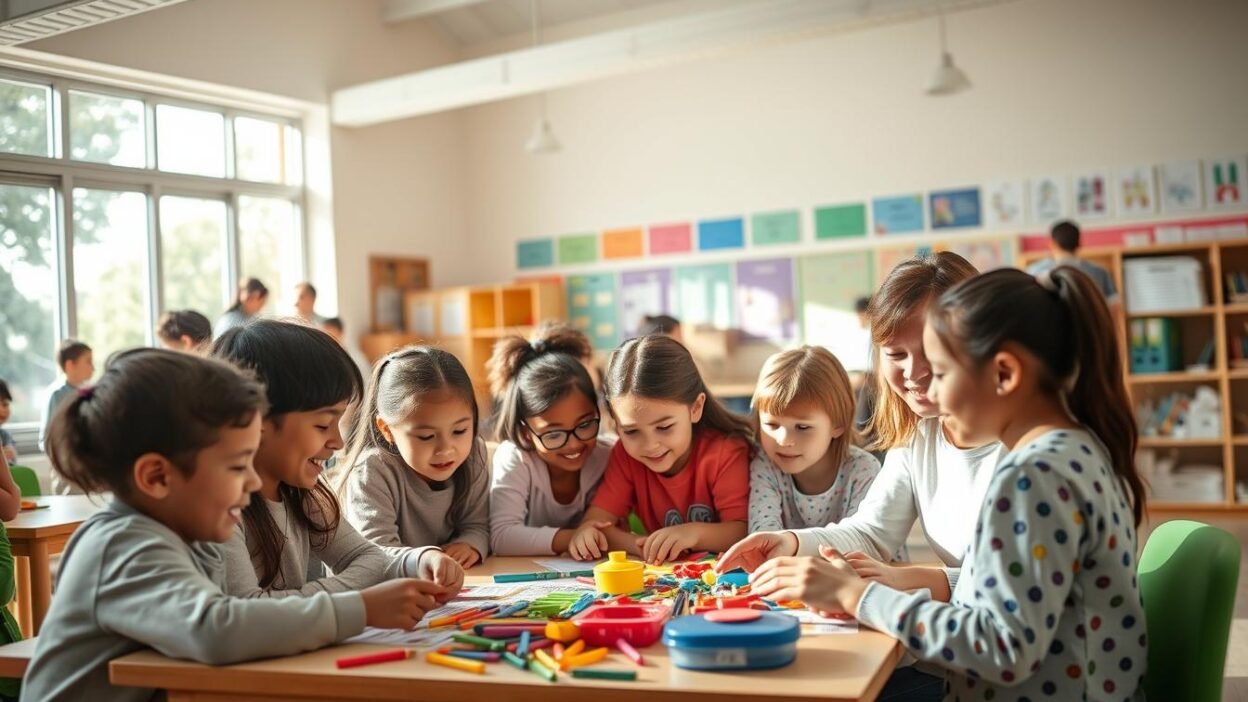
Groups of 4-6 students at tables work well. This configuration allows wheelchair users to join groups without displacing others. It creates natural opportunities for peer interaction.
Storage accessibility requires equal attention. Frequently used materials should be positioned within reach ranges. Students using wheelchairs can reach items 15-48 inches from floor.
High shelves and low cabinets requiring bending create barriers. Color-coded or pictorially labeled storage helps students with cognitive disabilities. Students with reading challenges can access materials independently.
Establish Sensory-Friendly Quiet Zones
Physical accessibility encompasses more than mobility considerations. It includes sensory accessibility for students with autism spectrum disorders. Students with sensory processing differences need support too.
These students often experience typical classrooms as overwhelming. Fluorescent lighting, ambient noise, and visual clutter create challenges. Constant social interaction can impede their ability to focus.
Sensory-friendly quiet zones provide designated spaces within or near classrooms. Students can retreat temporarily when feeling overstimulated. These areas should not function as punishment spaces.
Design elements for effective quiet zones include controlled lighting. Dimmer switches or natural light work better than harsh fluorescent fixtures. Sound dampening through acoustic panels or soft furnishings helps.
Reduced visual stimulation comes from neutral wall colors. Minimal decorations prevent overwhelm. Comfortable seating options include bean bags and floor cushions.
Some schools create tent-like structures. Study carrels offer visual privacy while remaining open for teacher monitoring. These enclosed spaces provide proprioceptive input.
The inclusion of sensory tools gives students concrete strategies. Fidget objects, stress balls, and weighted lap pads help. Noise-canceling headphones block distracting sounds.
Visual timers help students understand duration. They know how long they’ll remain in the quiet zone. Clear protocols should establish when students may access these spaces.
These refuge spaces benefit students beyond those with identified disabilities. Any learner experiencing temporary overwhelm can use them. Students needing sensory breaks find support.
Many teachers report that providing quiet zones decreases behavioral disruptions. Students develop greater awareness of their sensory needs. Self-regulation capabilities improve over time.
The zones communicate that different students have different needs. Accommodating those differences represents thoughtful recognition of human diversity. This isn’t special treatment but rather inclusive practice.
Physical accessibility establishes the tangible foundation for inclusive practices. Mobility access, sensory accommodation, and thoughtful spatial design matter greatly. Schools that invest systematically send powerful messages about who belongs.
Implementing Universal Design for Learning (UDL) Principles
Universal Design for Learning shifts education from reactive fixes to flexible, inclusive planning. This framework provides multiple ways to present information and engage students. Research shows UDL principles benefit all learners by offering various pathways to learning.
UDL addresses diverse learning needs within Indian classrooms. It helps students respond and demonstrate their knowledge in different ways. The approach makes education more accessible for everyone.
The foundation of UDL rests on neuroscience research about learning. Three distinct neural networks work together during learning. Recognition networks process information, strategic networks execute tasks, and affective networks drive motivation.
Optimal learning happens when instruction addresses all three networks. Flexible approaches acknowledge that learner variability is normal. This framework transforms how educators think about teaching.
Instead of asking “How can we accommodate this student?” teachers ask different questions. They focus on designing instruction that works for everyone from the start. This shift makes diversity an expected part of every classroom.
Provide Multiple Means of Representation
Information presented through diverse methods ensures all students can access content. Multiple means of representation addresses the recognition networks of the brain. This approach helps students with sensory disabilities while supporting different learning preferences.
A single presentation mode creates barriers for some learners. Lectures benefit auditory learners but may exclude students with hearing impairments. Text-heavy materials help strong readers but challenge students with dyslexia.
Use Visual, Auditory, and Tactile Learning Materials
Visual materials form a cornerstone of multimodal instruction. Diagrams, videos, and charts provide visual representations of concepts. For math instruction, visual fraction bars help students grasp abstract ideas.
Auditory delivery includes lectures, discussions, and audio recordings. These methods benefit students who process information effectively through listening. Teachers can record lessons for students to review later.
Tactile experiences engage students through physical interaction with materials. Math manipulatives and science models create hands-on learning. Building models or conducting experiments goes beyond simple observation.
Digital tools enhance accessibility while offering engagement benefits for all learners. Text-to-speech software converts written content into spoken words. Screen readers enable navigation of digital content for blind students.
Multimedia presentations combine text, images, audio, and video together. Interactive simulations let students manipulate variables and observe outcomes. Virtual labs enable experiments that might be impossible due to resource limits.
Indian schools can use smartphones and tablets to implement these strategies. Apps translate content into regional languages and provide educational videos. Technology integration democratizes access to quality educational materials across urban and rural settings.
Offer Multiple Means of Action and Expression
Traditional assessments often measure a narrow range of skills. Paper tests may not capture understanding for students with learning disabilities. Multiple means of expression recognize that students differ in demonstrating knowledge.
This principle values different forms of intelligence as equally valid. A student struggling with writing might excel at oral presentation. Another might show deep understanding through a portfolio of work over time.
Allow Varied Assessment Formats
Diversified assessment formats measure student learning beyond standardized testing. Oral presentations let students demonstrate knowledge through spoken communication. Video demonstrations show procedural knowledge and practical application of concepts.
Portfolio compilations showcase student growth over time through collected work samples. Collaborative projects assess teamwork and problem-solving abilities. Artistic representations allow students to express understanding through creative mediums.
Indian schools might offer students options for presenting social studies projects. Students could create written reports, oral presentations, documentary videos, or illustrated timelines. This flexibility acknowledges that different formats reveal different dimensions of student understanding.
Enable Students to Demonstrate Learning in Different Ways
Daily classroom activities should provide multiple pathways for showing understanding. Students might respond through written answers, verbal contributions, or visual representations. Teachers can offer choice boards with several options for completing assignments.
After studying Indian independence, students might choose different project formats. They could write an essay, create a timeline, or conduct recorded interviews. Each option requires deep engagement with content while honoring different strengths.
Assistive technologies expand expression possibilities for students with disabilities. Speech-to-text software enables students to produce written work through dictation. Alternative keyboards allow students with physical disabilities to access computers easily.
Engage Students Through Multiple Means of Motivation
Engagement is not a fixed trait but a dynamic state. Students differ in what motivates them—some respond to competition, others prefer collaboration. The affective networks of the brain govern motivation and emotional engagement.
Optimizing student interest requires attention to relevance, authenticity, and appropriate challenge levels. Students engage more when learning connects to their lives and cultures. Tasks should offer appropriate challenge—neither too easy nor too difficult.
Relevance emerges when curriculum connects to students’ cultural backgrounds and interests. Indian schools can incorporate local examples and address community issues. Teaching math through local market problems makes abstract concepts tangible.
Authenticity involves engaging students in tasks that mirror real-world challenges. Project-based learning addresses genuine community needs and increases motivation. Students recognize when learning matters beyond grades.
Choice and autonomy foster intrinsic motivation in learners. Options regarding topics, formats, or partners communicate trust in students. This approach respects individual differences in interests and learning preferences.
Collaboration opportunities recognize that many students learn better with peers. Structured cooperative learning and group problem-solving provide social contexts for learning. These activities develop critical skills in communication and teamwork.
| UDL Principle | Neural Network Addressed | Implementation Examples | Benefits for Indian Classrooms |
|---|---|---|---|
| Multiple Means of Representation | Recognition Networks | Visual aids, audio recordings, hands-on materials, digital tools | Addresses linguistic diversity, sensory differences, and varied learning preferences |
| Multiple Means of Action and Expression | Strategic Networks | Varied assessment formats, choice boards, assistive technology, portfolios | Accommodates students with learning disabilities, motor impairments, and diverse strengths |
| Multiple Means of Engagement | Affective Networks | Culturally relevant content, authentic tasks, collaboration, student choice | Increases motivation across diverse student populations and cultural backgrounds |
Implementation of UDL in Indian schools requires systematic planning and flexibility. Teachers examine existing lessons through the UDL lens to identify barriers. Gradual incorporation of alternatives builds instructional skills over time.
Professional learning communities within schools support this transition effectively. Collaborative planning sessions focused on UDL-aligned units distribute the work. This collective approach builds capacity for sustaining inclusive strategies.
The promise of UDL lies in recognizing that effective teaching helps everyone. Strategies designed to support students with disabilities benefit all students. This inclusive approach transforms classrooms where variability is expected and celebrated.
Developing Cultural Responsiveness and Sensitivity
Schools must recognize that students bring rich linguistic, religious, and regional identities. These diverse backgrounds shape how each student learns and grows. India’s schools serve learners from hundreds of languages and multiple faith traditions.
This diversity creates opportunities for enriched learning experiences. Schools can honor these differences as valuable educational assets. Recognizing and leveraging diversity strengthens the entire learning community.
Research shows culturally relevant education improves students’ social and emotional wellbeing. Academic outcomes strengthen when schools engage authentically with student cultures. Students develop stronger community connections and deeper feelings of belonging.
Cultural responsiveness in schools depends on validating students’ lived experiences. Educational quality requires incorporating students’ cultural knowledge into learning. Institutions must move beyond curriculum content to honor diverse perspectives.
Recognize and Honor India’s Linguistic Diversity
India’s Constitution recognizes 22 scheduled languages across the nation. Yet hundreds of additional languages and dialects flourish in communities. This linguistic richness shapes how students think and process information.
Language represents more than a communication tool for students. It carries cultural knowledge, identity, and cognitive patterns. These elements directly influence how students learn and engage.
Cultural responsiveness in classrooms starts with acknowledging home languages as valuable resources. Students who receive initial instruction in their mother tongue show superior development. They demonstrate stronger academic achievement across all subject areas.
Bilingual education research reveals important cognitive benefits for students. Mother tongue instruction enhances metalinguistic awareness in learners. This awareness helps students learn additional languages more effectively.
Educators should create environments where multiple languages coexist naturally. Display multilingual word walls throughout classroom spaces. Encourage students to share vocabulary in different languages.
Validate code-switching as a normal linguistic practice among students. Teachers who respect linguistic diversity signal that all backgrounds hold value. This respect strengthens the entire learning community.
Incorporate Multilingual Resources and Mother Tongue Support
Mother tongue support requires deliberate resource allocation and instructional design. Schools should audit current materials to identify representation gaps. This assessment examines textbooks, library collections, and communication materials.
Effective strategies for incorporating multilingual resources include:
- Bilingual signage systems that help students and families navigate school spaces in familiar languages
- Multilingual library collections featuring books in regional languages alongside English and Hindi materials
- Translation support protocols for essential communications with families, ensuring accessibility of important information
- Peer tutoring networks that leverage students’ linguistic strengths to support classmates learning new languages
- Technology integration using translation apps and multilingual educational software to bridge language gaps
Teachers should build upon students’ home language competencies while developing new skills. Allow students to discuss complex concepts in their mother tongue first. Then students can express ideas in the instructional language.
These practices honor students’ natural thinking processes and cognitive development. They avoid restricting engagement to languages students are still acquiring. This approach strengthens both comprehension and confidence.
Address Caste, Religion, and Regional Differences Sensitively
Historical social divisions can reproduce themselves within educational settings through subtle practices. Cultural sensitivity in schools demands examination of hidden curricula and unspoken messages. Classroom examples, celebrations, and interactions may inadvertently privilege certain groups.
Schools must address how caste, religious identity, and regional origins influence experiences. This requires moving beyond superficial diversity acknowledgment to address systemic patterns. These patterns affect access to opportunities, teacher attention, and peer acceptance.
Educators need frameworks for recognizing their own implicit biases and assumptions. Understanding how these unconsciously shape interactions proves essential for change. This awareness helps teachers create more equitable learning environments.
Addressing sensitive dimensions involves examining multiple aspects of school life. Food policies should accommodate diverse dietary practices without stigmatizing students. Dress codes must respect religious and cultural norms appropriately.
Classroom examples and textbook content should represent diverse communities positively. Avoid stereotypes that reinforce historical prejudices against any group. Positive representation builds respect and understanding across differences.
Create Inclusive Celebration Calendars
Traditional school calendars often reflect only dominant cultural and religious perspectives. Students from minority backgrounds may feel invisible or marginal. Creating inclusive celebration calendars requires thoughtful planning and authentic representation.
Effective approaches include:
- Collaborative calendar development involving students, families, and community members in identifying significant dates and appropriate ways to acknowledge them
- Educational framing that helps all students understand the historical and cultural significance of various celebrations, building cross-cultural knowledge
- Equitable representation ensuring that celebrations from minority communities receive comparable attention and resources as those from majority groups
- Student-led presentations allowing students to share their cultural traditions in authentic ways that build pride and peer understanding
These celebrations should educate rather than merely entertain students and staff. Learning about India’s heritage through respectful engagement develops cultural competence. This competence prepares students for participation in democratic, multicultural society.
Establish Bias-Free Communication Practices
Language carries subtle markers that signal inclusion or exclusion to students. Names, accent discrimination, and regional stereotypes communicate whether students truly belong. Establishing bias-free communication requires sustained attention to educator language patterns.
Practical strategies for cultural responsiveness in classrooms include:
- Name pronunciation practices where teachers invest effort in learning correct pronunciations and encouraging peers to do likewise
- Inclusive question formation that avoids assumptions about students’ home lives, family structures, or community practices
- Diverse example selection ensuring that hypothetical scenarios and illustrations represent varied cultural contexts rather than defaulting to dominant group norms
- Equitable interaction patterns consciously distributing attention, praise, and challenging questions across all students regardless of background
- Accent acceptance valuing diverse linguistic patterns rather than treating regional or class-based speech differences as deficits requiring correction
Cultural competence training provides educators with frameworks for developing communication skills. However, training must extend beyond one-time workshops to ongoing development. Teachers need opportunities for sustained reflection and dialogue across differences.
Feedback on evolving practices helps teachers grow in cultural responsiveness. Professional learning communities should embed cultural competence training into regular practice. This sustained approach develops the depth of understanding necessary for transformation.
Building cultural responsiveness in schools represents an ongoing developmental journey for institutions. It requires commitment to examining power dynamics and redistributing resources equitably. Schools must maintain conversations about privilege and marginalization.
Cultural responsiveness serves as foundational to educational quality for all students. Genuine inclusion enhances learning outcomes while advancing social justice. This commitment benefits students within educational institutions and throughout society.
Accommodating Special Educational Needs Effectively
Students with special educational needs represent a diverse population. Their success depends on early identification systems and personalized learning plans. Collaborative professional support is also essential.
These learners need more than generic interventions. They require systematic approaches that recognize individual strengths. These approaches must address specific challenges and provide specialized resources.
Special education integration involves multiple interconnected components. These components work together to create meaningful curriculum access. They also maintain high expectations for achievement.
Research shows that 37% of school-aged students with disabilities have specific learning disabilities. This represents over 2.3 million learners in educational systems. Schools must move beyond compliance-focused approaches toward genuine commitment.
Effective support structures balance legal mandates with philosophical dedication. This enables every student to reach their full potential.
Identify Students Requiring Additional Support Early
Early identification systems serve as the critical first step. They provide appropriate educational support before difficulties become deeply entrenched. Schools must establish comprehensive screening protocols.
These protocols should systematically evaluate students across multiple developmental domains. This includes literacy skills, mathematical reasoning, and social-emotional functioning. Speech and language development and physical coordination are also important.
Assessments should occur at regular intervals throughout a child’s educational journey. They should begin in early childhood programs. They must continue through primary and secondary grades.
Teacher observation frameworks provide invaluable insights. Standardized assessments cannot capture everything. Educators who interact daily with students notice important patterns.
These patterns appear in learning behaviors and social interactions. They also show up in attention capacity and task completion. These may signal underlying difficulties requiring investigation.
Structured observation tools help teachers document concerns systematically. This is better than relying on subjective impressions alone.
Family input mechanisms constitute another essential component of early identification. Parents and caregivers possess unique knowledge about their children. They understand developmental histories, home behaviors, and responses to learning challenges.
Creating accessible channels for families to share concerns is crucial. Regular conferences, anonymous concern forms, or community liaison programs work well. This ensures that special needs accommodations begin with comprehensive understanding.
The identification process must balance early intervention benefits against potential labeling harms. Schools should emphasize that recognition of learning difficulties triggers support rather than lowered expectations. Many students experience temporary challenges requiring short-term intervention.
Initial identification should maintain flexibility for students whose needs change over time.
Develop and Implement Individualized Education Plans (IEPs)
Individualized Education Plans serve as legally mandated roadmaps for special needs accommodation. These comprehensive documents transform abstract commitments to inclusion into concrete strategies. They specify present performance levels across academic and functional domains.
IEPs establish baseline understanding of student capabilities. From this foundation, IEPs articulate measurable annual goals that define expected progress. They include specialized instruction methods that address specific learning needs.
Related services such as speech therapy or occupational therapy are part of IEPs. Classroom accommodations enable access. Curriculum modifications are included when necessary, along with placement decisions.
The IEP development process operates as collaborative rather than administratively driven. Effective teams include parents as equal partners. General education teachers understand grade-level curriculum expectations.
Special education teachers bring expertise in disability-specific instructional strategies. Related service providers address therapeutic needs. School administrators ensure resource allocation, and students participate when appropriate.
This multidisciplinary approach ensures that plans reflect comprehensive understanding of student strengths, needs, and contexts. It avoids standardized protocols applied uniformly.
Implementation challenges frequently undermine even well-designed IEPs. Recent research reveals that 70% of reviewed IEPs included only instruction in general education settings. This occurred despite students having documented needs in basic skills.
This gap between planning and execution has several causes. Schools may lack sufficient special education personnel. General educators may receive inadequate training in accommodation implementation.
Monitoring systems may fail to track progress toward goals consistently.
Effective IEP implementation requires regular progress monitoring. This includes curriculum-based measurements, work sample analysis, and standardized assessments. Teams must convene periodically to review data.
They must adjust goals based on student growth. They should modify instructional strategies when progress stalls. Service delivery models need revision as needs evolve.
This dynamic approach treats IEPs as living documents rather than static compliance paperwork.
Provide Assistive Technologies and Adaptive Tools
Technological advances have dramatically expanded possibilities for students with disabilities. These students can now access curriculum and demonstrate learning more effectively. Assistive technologies range from low-tech solutions to sophisticated digital platforms.
Low-tech solutions include pencil grips and graphic organizers. Sophisticated platforms transform how students interact with educational content. Schools must systematically evaluate, acquire, implement, and maintain these tools.
The selection of appropriate assistive technologies begins with thorough assessment. Technology specialists, occupational therapists, and special educators collaborate. They match tools with specific challenges.
They consider factors such as student age and technical proficiency. Curriculum requirements and portability needs are also important. Trial periods allow students to experiment with options before making final selections.
Screen Readers, Text-to-Speech, and Audio Materials
Screen reading software converts digital text into synthesized speech. This enables students with visual impairments or significant reading disabilities to access written content. These programs navigate websites, documents, and educational platforms through keyboard commands.
Modern screen readers offer customizable speech rates and voice options. Students adjust navigation preferences according to personal needs.
Text-to-speech applications provide similar functionality with broader accessibility. They transform any digital text into audio output through simple highlighting. Students with dyslexia, attention difficulties, or processing challenges benefit from hearing content.
Hearing content while simultaneously viewing text supports comprehension through multi-sensory input. Many text-to-speech tools include highlighting features that track reading position visually. This reinforces word recognition skills.
Audio materials extend beyond computer-based solutions. They include audiobooks, recorded lectures, and podcast-style content presentations. Digital libraries now offer extensive collections of curriculum-related audiobooks.
Students with print disabilities can access literature simultaneously with peers. The availability of audio materials in multiple languages particularly benefits Indian schools. Students can access content in languages they comprehend best while building proficiency.
Modified Learning Materials in Braille and Large Print
Students with visual impairments require tactile and enlarged materials. These provide equivalent access to printed content. Braille production involves specialized transcription processes that convert standard text into tactile dot patterns.
Schools must coordinate with Braille production centers well in advance. This ensures simultaneous availability with materials for sighted peers. It prevents delays that disadvantage students with visual disabilities.
Large print materials serve students with low vision. These students retain some functional sight but cannot access standard print sizes. These adaptations typically employ 18-24 point fonts.
High-contrast formatting and simplified page layouts reduce visual clutter. Digital materials offer advantages over printed large print versions. Students can adjust text size, spacing, and contrast according to individual preferences.
Quality considerations extend beyond mere production. Mathematical equations, scientific diagrams, maps, and charts require specialized adaptation techniques. These maintain content accuracy while providing tactile or enlarged access.
Collaboration between content experts and materials production specialists is essential. This ensures that special needs accommodations do not inadvertently simplify or distort curriculum content.
Collaborate with Special Educators and Therapists
Effective special education integration depends fundamentally on collaboration. General educators work with specialized professionals who bring expertise in disability-specific instructional strategies. They also provide therapeutic interventions and behavioral supports.
This multidisciplinary approach recognizes that accommodating diverse needs requires specialized knowledge. No single professional possesses all necessary skills. Synergistic relationships enhance educational quality for all students.
Resource room teachers provide specialized instruction in foundational skills. They maintain connections to general education curriculum. These professionals work with small groups or individual students on targeted interventions.
Effective resource programs balance pull-out services with push-in support. Special educators co-teach in general education classrooms. They also provide consultation to classroom teachers implementing accommodations.
Related service providers address non-academic needs that significantly impact educational access. Speech-language pathologists support students with communication disorders. Occupational therapists develop fine motor skills and sensory processing strategies.
Physical therapists address gross motor development and mobility needs. School psychologists conduct assessments and provide counseling. Each specialist brings unique expertise that complements general educators’ pedagogical knowledge.
Structured collaboration time enables these professionals to coordinate services. Regular team meetings facilitate information sharing about student progress. They enable problem-solving around implementation challenges.
Co-teaching models position special educators and general educators as equal partners. They combine content expertise with differentiation skills. This serves diverse learners simultaneously.
Consultative relationships extend specialized knowledge to general educators. Special educators demonstrate accommodation strategies in classroom contexts. They observe general educators implementing new techniques and provide feedback.
They develop modified materials that classroom teachers can use independently. This capacity-building approach ensures that special needs accommodation becomes embedded in general education practice.
The Indian educational context presents unique collaboration challenges. Limited availability of specialized professionals in rural areas is one issue. High student-to-specialist ratios and insufficient allocation of collaborative planning time are others.
Schools must advocate for adequate staffing. They should leverage technology for remote consultation when specialists cannot be physically present. Prioritizing collaborative time as essential for educational quality is crucial.
Applying Differentiated Instruction Strategies
Classroom diversity demands instructional strategies that adapt to individual student needs. Differentiated instruction provides a systematic framework for responding to this diversity through careful planning. Research shows that modifying content, process, and products boosts student engagement and achievement.
Effective teaching requires understanding not only what students know but how they learn best. Teachers must gather comprehensive information about each learner’s strengths, challenges, and preferences. The goal is creating multiple pathways to learning within a coherent curriculum.
Assess Individual Student Readiness and Learning Profiles
Effective differentiation begins with thorough assessment of where students currently stand in their learning journey. Teachers need to understand both academic readiness and individual learning profiles. This assessment process differs from evaluation for grading purposes—its aim is gathering actionable information.
Formal assessment tools provide structured data about student capabilities and preferences. Diagnostic tests reveal current knowledge levels and identify gaps in prerequisite skills. Learning style inventories help teachers understand whether students process information through visual, auditory, or kinesthetic channels.
Interest surveys uncover what topics motivate students and capture their attention. Previous performance data from earlier grades shows patterns of strength and struggle over time. These formal instruments create a foundation of understanding about each learner.
Informal assessment strategies complement structured tools by providing real-time insights into student thinking. Classroom observation reveals how students approach tasks and interact with materials. Strategic questioning during lessons exposes misconceptions and levels of understanding that written tests might miss.
Work samples demonstrate actual application of skills in authentic contexts. Conversations with students about their learning experiences provide perspective that no test can capture. Together, these informal approaches enable teachers to adjust instruction responsively.
Modify Content, Process, and Products Based on Needs
Once teachers understand their students’ varied needs, they can strategically modify three key elements of instruction. Student-centered learning emerges when these modifications align with individual profiles while maintaining high expectations. This approach ensures accessibility and challenge for all learners.
Content modification addresses what students learn by providing multiple entry points to the same concepts. Teachers might offer texts at varied reading levels that address identical themes and ideas. Advanced learners receive extension activities that deepen their exploration of concepts.
Students with gaps in prerequisite knowledge receive additional foundational instruction before or alongside new content. This approach ensures access without lowering standards—all students work toward the same learning objectives. Each student engages with appropriately challenging materials.
Process modification varies how students engage with and make sense of content. Some learners benefit from direct instruction that explicitly teaches strategies and procedures. Others thrive through discovery learning that allows them to construct understanding through investigation.
Collaborative investigation harnesses peer interaction to build comprehension. Teachers provide varied scaffolds—graphic organizers, worked examples, sentence frames—matched to individual needs. Pacing adjustments allow students who need additional processing time to develop deep understanding.
Product modification enables students to demonstrate learning through formats that leverage their strengths. Written reports work well for some learners, while oral presentations allow others to showcase understanding. Visual displays, performances, and digital creations provide additional options for demonstrating mastery.
This variety ensures that assessment reflects actual learning rather than simply measuring comfort with formats. Students develop skills across modalities while having opportunities to excel through preferred approaches. Assessment becomes more accurate and meaningful.
Implement Flexible Grouping Strategies
Strategic use of varied grouping configurations allows teachers to provide targeted instruction while maintaining heterogeneous classroom communities. Flexible grouping avoids the tracking systems that have historically limited opportunities for students from marginalized backgrounds. Grouping patterns shift based on instructional purpose and student needs.
Classroom diversity requires thoughtful decisions about when and how to group students. Each configuration serves specific instructional and social objectives. Teachers who understand these purposes can design learning experiences that balance skill development with community building.
| Grouping Type | Primary Purpose | Optimal Use | Key Benefits |
|---|---|---|---|
| Whole Class | Introducing new concepts and building community | Launch lessons, shared experiences, class discussions | Establishes common knowledge base and inclusive culture |
| Small Homogeneous | Targeted skill instruction | Addressing specific learning needs or extending mastery | Allows precise matching of instruction to readiness level |
| Small Heterogeneous | Peer learning and problem-solving | Complex tasks requiring diverse perspectives and skills | Develops collaboration skills and appreciation for differences |
| Partner Work | Focused collaboration | Practice activities, peer feedback, shared investigation | Maximizes active engagement and accountability |
| Individual Study | Independent skill development | Personalized practice, reflection, assessment | Builds self-direction and allows work at individual pace |
Use Peer Learning and Collaborative Groups
Carefully structured cooperative learning enhances achievement across ability levels while developing essential social skills. Research demonstrates that student-centered learning through peer interaction benefits all participants when properly designed. Students explain concepts to each other, gaining deeper understanding through teaching.
Specific structures maximize these benefits while minimizing potential problems like unequal participation. Think-pair-share gives every student time to formulate ideas individually before discussing with a partner. This approach ensures that quieter students have voice and that all thinking is valued.
Jigsaw activities make each student responsible for becoming an expert on one aspect of a topic. This structure creates positive interdependence—the group’s success depends on each member’s contribution. Reciprocal teaching engages students in predicting, questioning, clarifying, and summarizing texts through collaborative dialogue.
Peer tutoring pairs students strategically to support skill development. The tutor benefits by consolidating their own understanding through explanation. The tutee receives individualized support in a less intimidating context than teacher-directed instruction.
Balance Whole Class, Small Group, and Individual Instruction
Effective differentiated instruction requires strategic variation among grouping patterns rather than defaulting to any single configuration. Whole class instruction builds shared knowledge and classroom community that provide the foundation for all learning. These experiences ensure that every student accesses core content and participates in collective meaning-making.
Small group instruction allows teachers to target specific needs with appropriate materials and scaffolding. Groups should remain flexible, changing based on assessment data and instructional goals. Students might work in a skills-focused group for one subject while joining a mixed-ability group for another.
Individual instruction and independent work develop self-direction and allow students to progress at appropriate paces. Some learners need extended time with concepts while others benefit from acceleration. Individual conferences provide opportunities for personalized feedback and goal-setting that strengthen student ownership of learning.
The key is intentional planning that considers which configuration best supports the learning objective. Teachers who master this balance create classrooms where students experience appropriate challenge and meaningful collaboration. This creates essential conditions for inclusive education in Indian schools serving diverse populations.
Establishing Anti-Bias and Anti-Bullying Frameworks
Strong anti-bias and anti-bullying frameworks create safe schools where all students learn without fear. These approaches go beyond punishment to build cultures of respect, empathy, and belonging. Schools in India face unique challenges like caste discrimination, religious bias, language prejudice, and disability harassment.
Research shows that anti-bias education frameworks help create belonging by making students feel safe and valued. Clear policies, bias education, safe reporting systems, and restorative approaches prevent bullying and promote respect. These elements transform school climate from tolerance to genuine inclusion and mutual respect.
Develop Clear, Enforceable Anti-Bullying Policies
Effective anti-bullying policies start with clear definitions covering multiple forms of harassment. Schools must list prohibited behaviors like physical aggression, verbal abuse, social exclusion, cyberbullying, and identity-based harassment. Policies should define bullying as repeated, intentional behavior involving a power imbalance.
Policies must name protected categories to show institutional commitment. Indian schools should address discrimination based on caste, religion, region, language, gender, disability, socioeconomic status, and appearance. Clear categories educate the community while providing grounds for intervention.
Consequences in anti-bullying policies should focus on behavior change rather than just punishment. Progressive discipline might include educational interventions for first offenses and parent conferences for repeated incidents. The emphasis should be on accountability, understanding impact, and preventing recurrence.
U.S. Department of Education data shows that LGBTQ+ students report being suspended at twice the rate of their non-LGBTQ peers, often for dress code violations or school offenses related to identity expression.
This data shows how policies can perpetuate bias when enforcement disproportionately impacts marginalized students. Indian schools must examine whether discipline practices reflect unconscious bias. Schools should ensure policies protect all students equally.
Implementation challenges often create gaps between written policies and actual practice. Administrator commitment proves essential for policy credibility. Staff training ensures teachers understand their responsibilities for intervention and documentation.
Teach Students to Recognize and Challenge Bias
Policies alone cannot create inclusive climates. Education about prejudice, stereotyping, discrimination, and inequality helps students create just school communities. Age-appropriate bias education should start in primary grades and continue throughout students’ educational journeys.
Elementary approaches might explore fairness, similarities, differences, and kindness through stories and discussions. Middle school curricula can examine stereotypes in media and analyze historical discrimination examples. Secondary students can investigate systemic inequality, privilege, and structural discrimination in institutions.
Anti-bias education frameworks should include structured activities that build empathy and perspective-taking. These might include:
- Identity mapping exercises where students explore their own social identities and how these shape experiences
- Privilege walks that reveal how social categories create advantages and disadvantages
- Case study analyses of discrimination incidents, exploring impact on targeted individuals and communities
- Media literacy activities examining stereotypical representations in textbooks, films, and advertising
- Bystander intervention training that provides concrete strategies for interrupting bias and supporting peers
This education must address both interpersonal prejudice and institutional discrimination. Students should learn to recognize how bias appears in policies, curricula, and practices. Understanding systemic dimensions empowers students to advocate for institutional change.
Bystander intervention training empowers students to interrupt bias when they witness it. Research shows peer intervention effectively reduces bullying, yet students often lack skills or confidence to act. Training should provide specific phrases and actions that enable students to challenge bias without escalating conflicts.
Create Safe and Confidential Reporting Systems
Many bullying and bias incidents go unreported because students fear retaliation or doubt adults will respond. Safe reporting systems let students, families, and staff report incidents without fear. Multiple reporting pathways accommodate different comfort levels and increase the likelihood incidents get reported.
Designated staff liaisons provide consistent contact points for reporting. These individuals should receive specialized training in trauma-informed response, cultural competence, and investigation procedures. Their visible presence and approachability encourage students to seek help.
Install Anonymous Reporting Mechanisms
Anonymous reporting through online forms, suggestion boxes, or tip lines helps students report without fear of identification. While anonymity complicates investigation, these mechanisms often surface incidents that would otherwise remain hidden. Schools can treat anonymous reports as alerts requiring observation and preventive intervention.
Digital platforms designed for school reporting provide advantages including timestamped documentation and immediate notification to responders. Several Indian educational technology companies now offer such platforms adapted to local contexts. Schools must ensure accessibility for students with varying technology access and digital literacy.
Provide Counseling and Support Services
Fostering belonging in education requires addressing the needs of both targets and perpetrators of bullying. Students who experience harassment often need counseling to process trauma and develop coping strategies. Some may benefit from restorative conversations, while others need protected space.
Students who engage in bullying also require intervention addressing underlying issues. Research suggests bullying behavior often stems from trauma or skill deficits in emotion regulation. Effective intervention explores these root causes and provides skill-building support.
Support services should include individual counseling, small group interventions, peer mediation, and family engagement. Schools may partner with community mental health providers when in-house capacity proves insufficient. This ensures students receive needed support despite resource constraints common in Indian educational settings.
Use Restorative Justice Approaches for Conflict Resolution
Traditional disciplinary responses often fail to repair harm, change behavior, or restore community relationships. Suspension and expulsion remove students from learning without addressing underlying issues. Restorative practices bring together affected parties to understand impact, take accountability, and develop solutions.
Restorative circles provide structured formats for dialogue about conflicts or harms. Participants sit in circles symbolizing equality and take turns responding to prompts. Facilitators guide conversations without imposing solutions, allowing participants to develop their own agreements.
Restorative conferences address more serious incidents involving clear harms. These bring together the person who caused harm, those affected, and supporters for both parties. Through facilitated dialogue, participants explore impact, express feelings, and collaboratively develop agreements for repair.
Peer mediation trains students to facilitate conflict resolution between peers. This approach works well for interpersonal conflicts without clear power imbalances. Student mediators guide parties through structured processes exploring perspectives, identifying needs, and generating solutions.
| Approach | Best Used For | Key Benefits | Implementation Requirements |
|---|---|---|---|
| Restorative Circles | Class-wide conflicts, building community, addressing climate issues | Involves entire community, prevents escalation, builds empathy | Facilitator training, class time allocation, established norms |
| Restorative Conferences | Serious incidents with clear harms and identified parties | Repairs relationships, ensures accountability, addresses root causes | Trained facilitators, private space, voluntary participation |
| Peer Mediation | Interpersonal conflicts without power imbalances | Builds student capacity, timely intervention, peer-driven solutions | Student mediator training, referral system, adult supervision |
| Healing Circles | Supporting trauma recovery, processing difficult events | Collective healing, community support, shared experience processing | Trauma-informed facilitators, safe space, ongoing support |
Implementing restorative approaches requires substantial culture change in schools accustomed to traditional discipline. Staff need training in restorative philosophies and facilitation skills. Students must learn circle norms and develop comfort with vulnerability and authentic dialogue.
The benefits justify this investment. Schools implementing restorative practices report reduced suspension rates and improved school climate. These approaches align with Indian cultural values emphasizing community harmony and collective responsibility.
Creating bias-free, bully-free schools requires comprehensive, sustained efforts encompassing policy, education, and intervention systems. This work enhances learning environments for all members of school communities. It establishes norms of respect, empathy, and collective responsibility—the essential conditions for fostering belonging in education.
Building Teacher Competence Through Professional Development
Schools need to focus on building educator skills through structured professional learning. This helps create truly inclusive environments. Even dedicated teachers need ongoing training to serve diverse student populations effectively.
The U.S. Department of Education stresses that quality teaching requires building educator capacity. This principle matters greatly for Indian schools facing complex inclusion challenges.
Research shows that professional development in cultural competence improves teacher effectiveness. Training in disability awareness and inclusive methods also boosts student outcomes. Single workshops rarely create lasting change in classroom practice.
Educators benefit from comprehensive, job-embedded learning experiences. These programs let them experiment with new approaches. Teachers can then reflect on results and refine their strategies over time.
Organize Cultural Competence and Sensitivity Training
Cultural competence training helps educators recognize their own backgrounds and biases. Teachers learn how assumptions influence their perceptions of students. This professional learning goes beyond superficial diversity awareness.
Teachers examine power, privilege, and systemic inequality within educational contexts. Through critical self-reflection, educators identify practices that marginalize certain students. They learn to interrupt behaviors that privilege some learners over others.
Effective training programs incorporate essential components that address educational equity practices systematically. Teachers examine discipline disparities across different student groups. They analyze curricular representation of diverse communities.
Educators investigate barriers that prevent meaningful family engagement. These activities help teachers understand how systemic factors shape educational experiences. Students from marginalized backgrounds face unique challenges.
Training sessions provide practice with culturally responsive teaching strategies. These methods build upon students’ cultural knowledge as assets for learning. Indian contexts require attention to linguistic diversity and regional variations.
Teachers must understand caste dynamics and religious plurality. Educators learn to create classroom environments where students see their identities reflected. Students should feel valued rather than ignored or stigmatized.
Provide Disability Awareness Workshops
Disability awareness in schools begins with building educators’ understanding of diverse disabilities. Workshops should address learning disabilities, intellectual disabilities, and autism spectrum disorders. Teachers need accurate information about sensory impairments, physical disabilities, and mental health conditions.
Training must counter common misconceptions about what students with disabilities can achieve. Effective disability awareness moves beyond medical-model deficit perspectives. These outdated views locate problems within individual students.
Educators should embrace social-model understandings instead. This perspective recognizes how environments and curricula create barriers to participation. Instructional methods and attitudes also affect learning access.
This shift in perspective empowers teachers to modify their practices. Teachers learn to change systems rather than simply accommodating students. Unchanged systems often create unnecessary obstacles.
Training content should include disability etiquette and appropriate language considerations. Teachers learn about person-first and identity-first language. Workshops introduce familiarity with assistive technologies.
Teachers learn practical accommodation and modification strategies for immediate classroom use. Workshops address collaboration with special educators and therapists. General education teachers understand their role within multidisciplinary support teams.
Legal requirements under the Rights of Persons with Disabilities Act must feature prominently. Educational mandates need thorough coverage in disability awareness in schools training. Educators need to understand what the law requires.
Teachers must also understand why these protections matter for student dignity. This knowledge helps teachers move from compliance-based thinking to rights-based approaches. Student needs and potential should be the center of planning.
Establish Ongoing Support Systems for Educators
Sustained practice change requires ongoing support systems beyond isolated training events. Job-embedded professional learning enables teachers to try new strategies. Educators can reflect on effectiveness and continuously refine their approach.
Schools must create structures that support this iterative process of professional growth. Teachers need opportunities for experimentation. Effective support systems recognize that implementing educational equity practices represents complex work.
Teachers benefit from access to instructional coaches and planning time with colleagues. Resources for adapting materials help implementation. Opportunities to observe exemplary inclusive classrooms provide models.
Administrative support signals that inclusion represents a school priority. This approach prevents teachers from feeling isolated in their efforts.
Create Peer Mentoring Networks
Peer mentoring networks serve as powerful support structures for teachers. Experienced educators share strategies with colleagues. Mentors and mentees co-plan lessons and observe each other’s instruction.
They provide constructive feedback and engage in collaborative problem-solving. This approach builds collective capacity. Communities of practice form around serving all students effectively.
Both mentors and mentees benefit from these collaborative relationships. Mentors articulate their tacit knowledge and receive validation for their expertise. They gain fresh perspectives from their mentees’ questions.
Mentees access practical wisdom and receive encouragement as they try new approaches. Teachers feel less isolated in their inclusion efforts.
Schools should formalize peer mentoring through structured programs. Dedicated time, clear expectations, and recognition support participants’ contributions. Thoughtful matching based on grade levels or subject areas increases relevance.
Matching based on specific inclusion interests also boosts impact. Regular check-ins help ensure that mentoring relationships remain productive and mutually beneficial.
Schedule Regular Training on Inclusive Teaching Methods
Systematic, sequential professional learning builds teachers’ pedagogical skills progressively. This approach avoids overwhelming educators with disconnected strategies. Schools should develop multi-year professional development plans.
These plans should address inclusive education best practices comprehensively. Becoming an expert inclusive educator requires time, practice, and ongoing learning.
Effective training schedules balance different formats to meet diverse learning needs. Intensive summer institutes provide deep dives into foundational concepts. Teachers can focus without the pressures of daily teaching.
Monthly sessions during the school year enable teachers to implement new strategies. Educators return to discuss their experiences with colleagues. This ongoing dialogue supports continuous improvement.
Grade-level or subject-area team meetings focused on inclusion address specific challenges. These sessions relate directly to teachers’ contexts. Individual coaching cycles provide personalized support.
Coaching aligns with each teacher’s current practice and learning edge. This combination of large-group, small-group, and individual learning maximizes professional growth.
Training topics should build logically across time. Programs begin with foundational concepts and progress to sophisticated applications. Early sessions might address universal design for learning principles.
Teachers learn differentiation basics first. Subsequent training explores advanced topics such as co-teaching models. Behavior intervention strategies and assessment adaptations follow.
Building teacher competence represents an investment in professional growth. This work honors the complexity of teaching diverse learners. Schools provide educators with comprehensive knowledge, practical skills, and sustained support.
Teachers can then enact their commitments to educational equity practices effectively. Professional development becomes an essential component of educational quality. Training supports inclusive education best practices rather than serving as optional enrichment.
This approach creates pathways for continuous improvement. All students benefit from well-prepared, supported teachers.
Designing Inclusive Curriculum and Learning Materials
What students learn shapes their sense of belonging and academic engagement. Research shows that culturally relevant education builds stronger teacher relationships and better outcomes. Students see themselves in the curriculum and feel more engaged across all subjects.
Inclusive curriculum development means more than adding diverse content to existing frameworks. It requires examining whose knowledge has been privileged and how different perspectives shape understanding. This work influences both academic outcomes and identity formation for all students.
Creating educational equity strategies through curriculum design involves systematic review and intentional action. Schools incorporate multiple perspectives and adapt materials for diverse learners. They ground concepts in culturally relevant contexts that validate every student’s experience.
Audit Existing Curriculum for Diverse Representation
The curriculum audit process provides the foundation for inclusive development. This systematic review examines textbooks, literature, historical narratives, and visual representations. Schools analyze representation regarding gender, caste, religion, region, language, ability, and socioeconomic status.
Educators can use analytical frameworks to conduct thorough audits. These questions reveal whose perspectives dominate the curriculum and whose remain invisible. The examination uncovers implicit messages about whose knowledge matters in creating diversity in school environment.
Critical audit questions include:
- Whose stories are told and whose are absent from historical accounts and literature selections?
- Who appears in positions of authority and expertise versus who is depicted as needy or problematic?
- Whose cultural practices are presented as normal and universal versus exotic or deficient?
- Which historical events and perspectives receive detailed attention and which are marginalized or erased?
- What patterns emerge regarding gender representation in leadership roles, scientific achievement, and artistic contributions?
- How are caste, religious, and regional identities portrayed across different subjects and grade levels?
Curriculum audits often reveal that dominant group perspectives appear as neutral or universal. Upper caste, Hindu, northern Indian, male, able-bodied, middle-class views dominate textbooks. Marginalized groups are either invisible or depicted through stereotypical frames.
The audit process should examine both explicit content and implicit messages. Schools can create audit teams that include teachers, parents, and students. This collaborative approach ensures multiple perspectives inform evaluation and increases support for curriculum changes.
Incorporate Multiple Perspectives and Voices
Moving beyond token inclusion requires substantive integration of diverse experiences and knowledge systems. This approach enriches understanding for all students while validating marginalized communities. Educational equity strategies demand that schools center voices that conventional curricula have historically excluded.
The incorporation process challenges educators to question whose knowledge has been privileged. It examines how knowledge is constructed, validated, and transmitted across generations. Expanding perspectives creates more complete understanding of human experience and natural phenomena.
“Schools can foster positive environments by creating authentic engagement with respect for cultures represented within the school community.”
Include Stories from Different Indian Communities
Indian schools must incorporate narratives from the full spectrum of communities. Dalit narratives challenge dominant caste perspectives and reveal alternative understandings of social relations. Tribal knowledge systems offer sophisticated understandings of human-environment relationships and community governance.
Muslim and Christian histories reveal the complex interweaving of religious communities throughout Indian history. Regional literature celebrates linguistic and cultural diversity while challenging dominant cultural forms. Women’s experiences across all communities challenge patriarchal historical accounts and expand understanding.
This work requires schools to source materials beyond conventional textbook publishers. Teachers can draw on regional literature, community oral histories, and alternative historical accounts. The goal extends beyond adding diverse content to expanding whose experiences students encounter within diversity in school environment initiatives.
Highlight Contributions of Women, Dalits, and Tribal Communities
Conventional curricula have historically centered upper-caste male achievement while marginalizing other contributions. Correcting this imbalance requires intentional recovery of these histories and contributions. Schools must examine systemic barriers and collective movements for justice.
Effective representation explores how women have shaped literature, science, politics, and social reform movements. It examines Dalit intellectual traditions, political organizing, and cultural production. It investigates tribal contributions to environmental knowledge, sustainable practices, and artistic traditions.
This work involves highlighting specific individuals while examining collective movements and systemic patterns. Students learn about Savitribai Phule’s pioneering work and broader women’s education movements. They study Dr. B.R. Ambedkar’s constitutional contributions and ongoing Dalit activism. This approach connects historical struggles to contemporary movements as part of educational equity strategies.
Adapt Textbooks for Students with Different Abilities
Standard textbook formats create barriers for students with visual impairments and learning disabilities. Ensuring equitable access requires systematic adaptation of learning materials. Schools must create adapted materials that maintain content integrity while removing format-based barriers.
Adaptation strategies include multiple format options that serve different student needs:
- Large print editions with increased font size and enhanced contrast for students with low vision
- Braille transcription for students who read tactilely, requiring specialized production processes
- Audio recordings that provide auditory access to text content with appropriate pacing and expression
- Digital formats with screen reader compatibility that enable technology-mediated access
- Simplified language versions that maintain core concepts while reducing linguistic complexity
- Graphic-enhanced editions that supplement text with visual representations for concept understanding
- Multimedia supplements that provide multimodal engagement with curriculum content
Production of adapted materials requires advance planning, specialized expertise, and quality assurance. Schools should identify students needing adaptations early in the academic year. They must allocate resources for timely production so materials are available when instruction occurs.
| Adaptation Type | Primary Benefit | Production Timeline | Quality Considerations |
|---|---|---|---|
| Large Print | Enhanced visual access for low vision students | 1-2 weeks | Font size consistency, contrast ratios, image clarity |
| Braille Transcription | Tactile reading access for blind students | 4-6 weeks | Accurate translation, formatting conventions, diagram adaptation |
| Audio Format | Auditory access for print-challenged learners | 2-3 weeks | Clear narration, appropriate pacing, accurate pronunciation |
| Digital/Screen Reader | Technology-enabled flexible access | 1-2 weeks | Proper tagging, alt text for images, navigation structure |
Collaboration with special educators and assistive technology specialists ensures high-quality adaptations. Schools can establish partnerships with organizations specializing in accessible materials production. This systematic approach exemplifies inclusive curriculum development that removes barriers to learning.
Use Culturally Relevant Examples from Indian Contexts
Grounding abstract concepts in culturally relevant examples makes learning more meaningful and accessible. Curriculum that connects to students’ lived experiences increases engagement and comprehension dramatically. This contextualization represents a powerful educational equity strategy that validates home cultures.
Mathematical instruction benefits significantly from culturally relevant contextualization. Problems can reference local markets where students and families shop. A geometry lesson might explore patterns in rangoli designs rather than abstract shapes.
Science instruction gains relevance through investigation of regional environmental issues and traditional ecological knowledge. Students studying water systems can examine local water sources and conservation challenges. Botany lessons can explore plants used in regional cuisine and traditional medicine.
Literature study becomes more inclusive when it includes regional and community oral traditions. Students encounter poetry, folktales, and narratives in their mother tongues and regional languages. They explore how different communities use storytelling to transmit values across generations.
Historical inquiry gains depth when it examines local and family histories alongside national narratives. Students conduct oral history projects with elders in their communities. They investigate historical sites and events in their regions.
Throughout curriculum design, schools must recognize that culturally relevant examples enrich rather than dilute standards. This approach enables all students to see themselves as knowledge-producers and inheritors of valuable traditions. It develops understanding of diverse perspectives while building rigorous academic skills as part of diversity in school environment initiatives.
Fostering Supportive Learning Communities and Belonging
Supportive learning communities grow when schools focus on relationships, shared decisions, and real partnerships across diverse backgrounds. Research shows that positive school climates with strong connections improve academic results, student engagement, and health outcomes. These communities need careful work to show every student their value in the learning environment.
The social-emotional foundation of inclusive education goes beyond curriculum and tests. It includes daily interactions, communication patterns, and relationships that welcome or exclude students from meaningful participation. Educators who build cultures of acceptance create spaces where taking intellectual risks becomes normal rather than scary.
Students feel stronger belonging and achievement when educators show care, challenge growth, and share power. These relationship-building dimensions prove especially important for students from marginalized backgrounds. Many of these students have faced exclusion or negative messages in previous schools.
Build Classroom Cultures of Mutual Respect and Acceptance
Classroom climate grows through intentional work on norms, practices, and relationships that communicate belonging to every learner. Teachers create inclusive environments by building community agreements with students rather than imposing rules. This collaborative process honors diverse communication styles and cultural norms while setting shared behavioral expectations.
Morning meetings and circle practices provide structured times for relationship-building across differences. Students share experiences, express feelings, and develop perspective-taking skills through regular participation. Indian classrooms might use practices like satsang or community gatherings that connect with local cultural values.
Cooperative learning structures require positive teamwork and individual responsibility, ensuring every student contributes meaningfully to group success. These approaches benefit students whose home cultures emphasize working together over individual competition.
- Teaching and practicing conflict resolution skills through role-play and real-time coaching
- Addressing bias incidents immediately and transforming them into learning opportunities
- Celebrating diversity through explicit recognition of different festivals like Diwali, Eid, Christmas, and regional harvest celebrations
- Modeling inclusive language through consistent attention to pronoun usage and accurate name pronunciation
- Creating equitable participation patterns that prevent dominant voices from overshadowing quieter students
- Responding respectfully to all contributions regardless of perceived correctness or sophistication
These practices show that classrooms function as safe spaces for authentic engagement. Students learn that expressing confusion, making mistakes, and asking for help are essential parts of learning. This psychological safety proves foundational for building inclusive school communities where academic risk-taking flourishes.
Teachers also establish visual representations of diversity through classroom displays, library selections, and digital resources. Seeing themselves reflected in learning materials validates students’ identities while exposing all learners to new perspectives.
Implement Student-Centered and Collaborative Learning
Student-centered teaching positions learners as active agents rather than passive recipients of knowledge. This approach especially benefits students whose cultural backgrounds emphasize collaborative problem-solving and collective achievement. Schools advancing school diversity programs recognize that teaching methods themselves communicate inclusion or exclusion.
Project-based learning engages students in investigating real questions relevant to their lives and communities. Rather than memorizing isolated facts, learners develop deeper understanding by creating meaningful products that address real-world problems. An Indian classroom might investigate local water quality issues, document oral histories, or design accessible public transportation solutions.
Inquiry-based learning begins with student questions and curiosities rather than predetermined content sequences. Teachers guide investigation while allowing learners to pursue interests within curriculum frameworks. This approach validates diverse knowledge and experiences students bring from their homes and communities.
| Instructional Approach | Core Characteristics | Inclusion Benefits | Indian Context Example |
|---|---|---|---|
| Project-Based Learning | Authentic problems, extended investigation, public products | Multiple entry points, diverse contributions valued | Designing sustainable farming solutions for local agricultural communities |
| Service Learning | Curriculum connected to community needs, student agency | Positions all students as contributors to social good | Teaching digital literacy skills to elderly neighbors or organizing community health awareness campaigns |
| Discussion-Based Pedagogy | Student thinking central, peer dialogue emphasized | Honors diverse perspectives, builds listening skills | Facilitated conversations about contemporary social issues affecting Indian youth |
| Choice-Based Learning | Student decision-making within learning objectives | Respects individual interests and strengths | Allowing students to demonstrate understanding through performance, writing, or visual arts |
Service learning connects curriculum to community needs and positions students as contributors rather than consumers. Learners from diverse backgrounds who collaborate on projects benefiting their neighborhoods develop appreciation for different skills and perspectives. A class might organize literacy programs, document traditional art forms, or create accessible recreational spaces.
Student-centered learning does not abandon teacher guidance or academic rigor. Instead, educators strategically support student agency, decision-making, and peer interaction to develop content mastery and learner identity.
Choice-based learning allows students to pursue interests while meeting learning objectives. Offering options for how students demonstrate understanding honors diverse strengths and cultural forms of expression. This flexibility proves essential for supporting learning communities where multiple ways of knowing receive validation.
Engage Parents and Families as Partners
Meaningful family engagement requires schools to examine and remove barriers that historically exclude families from marginalized backgrounds. Research shows that families from all backgrounds want their children to succeed. Yet those facing economic hardship, limited language skills, or previous negative school experiences often encounter obstacles to participation.
Schools must recognize that families possess valuable knowledge about their children’s strengths, interests, learning patterns, and cultural contexts. Deficit perspectives that blame families for student difficulties prevent productive partnerships. Asset-based approaches acknowledge families’ funds of knowledge and cultural wealth as resources supporting student learning.
Barriers to family engagement include work schedules incompatible with school hours, lack of transportation or childcare, and language differences. Schools committed to inclusion strategically address these obstacles through multiple access points and communication channels.
Organize Accessible and Inclusive Parent-Teacher Meetings
Traditional parent-teacher conferences often exclude families who cannot attend during standard school hours or who feel uncomfortable in formal settings. Inclusive alternatives transform these interactions into genuine partnership opportunities.
- Providing translation and interpretation services in languages spoken by families, including regional Indian languages like Tamil, Telugu, Bengali, Marathi, and Gujarati
- Scheduling meetings at varied times including early mornings, evenings, and weekends to accommodate diverse work schedules
- Offering childcare and meals so that attending meetings does not create additional burdens for families
- Conducting meetings in community locations such as religious centers, libraries, or neighborhood spaces rather than requiring families to come to school
- Creating welcoming physical environments with comfortable seating, refreshments, and culturally appropriate hospitality
Communication approaches during meetings emphasize strengths rather than deficits. Teachers share specific examples of student progress, assets, and contributions before discussing challenges. This positive framing builds trust and positions families as partners rather than problems to be managed.
Schools also expand beyond traditional conferences by hosting family learning nights, cultural celebration events, and informal gatherings. These occasions allow families to connect with educators and other families in low-pressure settings.
Build Trusting Relationships with Families from All Backgrounds
Sustained relationship-building occurs through multiple touchpoints rather than isolated annual conferences. Teachers initiate positive phone calls and messages home about student successes. These proactive contacts establish goodwill and open channels for collaborative problem-solving when challenges arise.
Informal conversations at pickup and drop-off times allow educators to learn about families’ priorities, concerns, and cultural practices. Participation in community events demonstrates respect and genuine interest in students’ lives beyond school walls.
Home visits, when culturally appropriate and welcomed by families, provide powerful opportunities for understanding students’ environments and building authentic relationships. Teachers approach these visits with curiosity rather than judgment. They recognize that all families possess strengths and resources even when circumstances differ from educators’ personal experiences.
Schools advancing school diversity programs train staff in cultural humility. This is the ongoing process of self-reflection and learning about diverse cultures without assuming expertise. Educators ask questions, listen actively, and remain open to adjusting practices based on family input.
Trusting relationships position families as essential partners whose perspectives inform educational decision-making. Educators actively seek family input and incorporate their knowledge. This collaborative approach respects families’ understanding of their children while contributing professional expertise.
Schools also recognize that families from historically marginalized communities may approach institutions with warranted skepticism. Building trust requires consistency, transparency, and demonstrated commitment over time. Educators prove trustworthiness through follow-through on commitments, honoring confidentiality, and advocating for students.
The shift from deficit to asset-based perspectives fundamentally transforms family engagement. Rather than viewing families as lacking resources or investment in education, schools recognize diverse forms of capital. These include linguistic knowledge, cultural traditions, community connections, survival skills, and resilience developed through navigating marginalization.
Family advisory committees that include representatives from diverse backgrounds ensure institutional decisions reflect community needs and values. These groups provide authentic voice and influence rather than token representation. Schools demonstrate respect for advisory input by implementing recommendations and explaining when constraints prevent particular changes.
Throughout all engagement efforts, schools examine their own practices for implicit bias and exclusionary messaging. Simple details communicate whether all families truly belong. These include office staff greeting all visitors warmly, signage in multiple languages, and diverse images displayed prominently.
Fostering supportive learning communities requires recognizing that relationships and community building serve as foundational conditions enabling rigorous learning. Students cannot engage fully in challenging intellectual work without psychological safety, sense of belonging, and trusted adult support. These social-emotional foundations prove especially critical for students who face marginalization.
Schools that successfully build inclusive communities demonstrate sustained attention to relationships, communication, shared decision-making, and creation of belonging across difference. They recognize that democratic citizenship in diverse societies requires social-emotional competencies developed through authentic practice.
Principles of Inclusion Every School Should Follow: Implementation Roadmap
Schools can bridge the gap between inclusive policies and real practice through careful planning. Research shows that successful inclusion needs systematic frameworks, not isolated efforts. Schools using structured processes achieve better equity results than those with disconnected initiatives.
Turning inclusion principles into reality requires planning across multiple areas. This approach ensures commitments become measurable outcomes. The roadmap gives schools concrete steps to create genuinely inclusive environments.
Step 1: Conduct a Comprehensive Inclusion Audit
Effective implementation starts with understanding current realities through thorough assessment. A comprehensive audit examines multiple school functions to identify strengths and gaps. This baseline establishes the starting point for measuring progress.
Physical accessibility assessment evaluates infrastructure against established standards. Auditors examine entrance access, classroom layouts, restrooms, playgrounds, and emergency routes. Many Indian schools need significant modifications to serve students with mobility challenges.
Curricular audits examine representation in learning materials across subjects and grades. This process identifies whose stories appear in textbooks and whose remain absent. Schools often find materials overrepresent certain communities while marginalizing others.
Pedagogical observation documents instructional practices and classroom interactions actually used. Observers note how teachers accommodate special needs and engage diverse learners. This reveals gaps between stated inclusive school policies and daily realities.
Discipline data analysis identifies disparities in exclusionary practices across student populations. Schools examine suspension rates and behavior referrals by demographics. These patterns often reveal unconscious biases in disciplinary systems.
Climate surveys gather perceptions from students, families, and staff about safety and belonging. Anonymous questionnaires create space for honest feedback about school culture. Marginalized students frequently report exclusion experiences invisible to administrators.
Achievement gap analysis examines performance differences across demographic groups. This data reveals which students the system serves well. It highlights where equity in education remains unrealized.
Step 2: Form a Diverse Inclusion Committee
Effective implementation requires collective leadership representing the community’s full diversity. An inclusion committee brings together stakeholders with different perspectives and expertise. This structure prevents top-down mandates that lack community support.
Committee composition should include administrators who authorize policy changes and resource decisions. Teacher representatives bring classroom experience and understand practical challenges. Support staff offer valuable perspectives often overlooked in decision-making.
Parent representatives provide family perspectives essential for culturally responsive initiatives. Schools should ensure parent members reflect the community’s demographic diversity. Students themselves bring firsthand experience of school climate.
Community members provide external perspectives and connections to resources beyond school. This might include disability advocates, cultural leaders, and social workers. Their involvement strengthens connections between school initiatives and community values.
Committee formation requires authentic rather than token representation. Schools must provide training that enables all members to participate meaningfully. Clear roles and equitable structures ensure every voice receives genuine consideration.
Regular communication maintains transparency with the broader community. The committee publishes meeting summaries and solicits feedback on proposed initiatives. This openness ensures inclusive school policies reflect collective priorities.
Step 3: Set Clear, Measurable Goals with Timelines
Vague aspirations rarely translate into concrete progress without specific targets. Effective goals provide focus and enable accountability. The committee develops objectives that are ambitious yet achievable.
Strong goals follow SMART criteria: specific, measurable, achievable, relevant, and time-bound. For example, “install ramps at all entrances by December 2025.” This beats vague statements like “improve accessibility.”
Goals should address multiple inclusion dimensions identified through the audit. Schools might set targets for reducing discipline disparities. They can expand accommodating special needs services and diversify curriculum representation.
| Goal Category | Specific Target | Measurement Method | Timeline |
|---|---|---|---|
| Physical Access | Complete infrastructure modifications per accessibility standards | Facility audit checklist completion | 18 months |
| Discipline Equity | Reduce suspension rate disparities by 50% across demographic groups | Quarterly discipline data analysis | 24 months |
| Language Support | Provide mother tongue resources in five languages for grades 1-5 | Material inventory and usage tracking | 12 months |
| Curriculum Diversity | Ensure 40% of historical figures studied represent marginalized communities | Curriculum content audit | 15 months |
Both outcome goals and process goals deserve attention. Outcome goals focus on student experiences like improved belonging and reduced achievement gaps. Process goals focus on implementing specific practices like teacher training.
Public commitment to specific targets creates accountability that sustains effort. Schools display goals prominently and report progress regularly. This transparency shows that inclusive school policies represent genuine priorities.
Step 4: Allocate Budget and Resources Strategically
Implementing equity in education requires financial investment in infrastructure, personnel, and materials. Schools must prioritize these investments within constrained budgets. Strategic allocation demonstrates genuine commitment and enables sustainable changes.
Essential budget categories include assistive technologies like screen readers and hearing systems. Infrastructure modifications for physical accessibility require substantial investment but create lasting benefits. Specialized personnel provide crucial support services.
Professional development investments build teacher capacity to implement inclusive practices effectively. Quality training in Universal Design for Learning benefits all students. Ongoing coaching supports teachers as they refine new approaches.
Curriculum materials require investment in diverse resources reflecting India’s pluralistic society. This includes multilingual books and culturally relevant materials. Digital resources can increase access while managing costs.
Schools can leverage multiple funding sources to support comprehensive inclusion efforts. Government allocations for disability services provide foundational support. Corporate partnerships connect schools with businesses committed to educational equity.
Creative resource allocation strategies extend limited budgets further. Schools share specialized equipment across nearby institutions through collaborative arrangements. University partnerships provide access to expertise through research collaborations.
Advocacy for increased public funding strengthens long-term sustainability. Schools present compelling cases showing how investments produce returns. Data from successful initiatives builds evidence supporting policy changes.
Step 5: Monitor Progress and Adapt Based on Feedback
Continuous improvement requires regular assessment of implementation progress. Effective monitoring examines whether initiatives unfold as planned. This ongoing evaluation distinguishes schools that achieve lasting transformation.
Multiple data types provide comprehensive understanding of progress. Quantitative indicators track discipline rates and achievement scores against baseline measurements. Qualitative data from observations reveal nuanced experiences and unintended consequences.
Regular review cycles maintain momentum and enable timely corrections. Monthly committee meetings examine recent data and discuss emerging challenges. Quarterly reports update stakeholders on progress and solicit feedback.
Annual evaluations examine overall progress and determine strategic adjustments. These reviews celebrate successes and identify persistent challenges. The committee updates implementation plans to reflect lessons learned.
Monitoring serves to inform adaptive problem-solving rather than judge success. Schools investigate root causes and experiment with alternative approaches. This learning orientation sustains commitment despite inevitable setbacks.
Student voice remains central throughout monitoring processes. Schools create mechanisms for students to share experiences confidentially. Youth-led focus groups ensure those most affected shape inclusion efforts.
Transparency about progress and challenges builds community trust. Schools honestly acknowledge when implementation proves difficult while demonstrating continued commitment. This authenticity strengthens collective resolve.
Implementation of inclusion principles requires sustained commitment and strategic thinking. Schools following systematic roadmaps transform values into operational realities. This positions inclusion as an organizational identity embodied through daily practices.
Conclusion
Schools committed to excellence must follow key principles of inclusion. These frameworks include physical accessibility, universal design, cultural responsiveness, and community building. They work together as connected elements, not separate initiatives.
Research shows that inclusive education benefits all students. It creates richer learning environments where students develop empathy and intercultural skills. These practices also prepare students for diverse workplaces.
Indian schools have unique opportunities given constitutional commitments to equality. The country’s extraordinary diversity provides a strong foundation. Resource constraints and structural barriers present challenges, but strategic action makes them surmountable.
The implementation roadmap provides concrete starting points for schools. Conducting audits, forming diverse committees, and setting measurable goals initiate transformation. Change occurs incrementally through consistent effort.
Educators, administrators, and policymakers serve as agents of social transformation. Daily work implementing inclusive principles builds the equitable society envisioned in India’s constitutional ideals. This work honors each student’s inherent worth and potential.
Creating inclusive schools represents meaningful work for educators. It disrupts cycles of marginalization and expands opportunities for historically disadvantaged communities. The journey toward full inclusion continues, guided by commitment to human flourishing for all learners.