

What truly separates survival from recovery when you’re standing at the edge of personal crisis? The answer lies not in grand transformations or sweeping life changes. It’s in establishing immediate baseline stability through a carefully structured timeframe.
The 14-day framework is a critical intervention period for crisis prevention. This two-week window matches neurobiological recovery patterns during acute stress responses. It gives enough time for meaningful psychological shifts without overwhelming someone in a vulnerable state.
Stabilization must come before transformation. A thorough safety plan acts as your foundational anchor, not your final destination. This approach follows trauma-informed care principles, recognizing the need to secure immediate well-being before tackling deeper issues.
This article offers actionable, evidence-informed strategies for building your personal safety strategy. We acknowledge the distress you may be experiencing. We provide clear direction through this essential first phase toward complete well-being.
Key Takeaways
- The 14-day framework provides an optimal timeframe for achieving baseline stability during personal crisis without causing overwhelm
- Stabilization must always precede transformation when addressing acute psychological distress or vulnerability
- A structured intervention period aligns with natural neurobiological recovery patterns and cognitive processing capacities
- Effective crisis management requires actionable strategies, not just theoretical approaches, during vulnerable states
- The two-week safety net serves as a foundational phase, not a permanent solution, in the journey toward well-being
- Trauma-informed care principles emphasize securing immediate stability before addressing underlying issues
Why 14 Days Creates Real Stability
When you’re in a crisis, it’s not about solving everything right away. It’s about setting up a solid foundation in a short time. The 14-day plan is based on science and years of experience in crisis management.
This method is different from long-term therapy. It focuses on stabilization and harm reduction in the first two weeks. It knows that crises are urgent and that our brains can only handle so much stress.

The Science Behind the Two-Week Timeline
Studies on brain changes show that short-term actions can make a big difference. Actions done for 10-14 days start creating new brain paths. While it takes longer to fully change habits, the first steps happen faster.
Stress hormones like cortisol also play a role. Research shows that the right safety steps can start to normalize cortisol levels in two weeks. This happens if people stick to their new habits.
It’s important to know the difference between stabilization and habituation. Stabilization is the first step where symptoms start to get better and risks decrease. Habituation is deeper and takes more time and effort.
The two-week plan uses the acute adaptation window. This is when our brains are most open to change. This window is key for quick, effective safety measures.
What Makes a Safety Net Different from a Long-Term Plan
A safety net is like emergency scaffolding—it’s temporary support. It’s different from building a strong foundation that takes more time and resources. Trying to change too much during a crisis can be harmful.
Long-term plans need a lot of mental and emotional resources. They involve understanding the root causes of problems and changing thought patterns. These tasks are too much for someone in crisis.
Safety protocols focus on immediate risk reduction. They create simple routines and basic support systems. They’re not about creating perfect habits or social networks.
Let’s look at the main differences:
| Safety Net (14 Days) | Long-Term Plan (3-12 Months) | Primary Focus |
|---|---|---|
| Basic sleep schedule establishment | Comprehensive sleep hygiene optimization | Immediate stabilization vs. sustainable wellness |
| Emergency contact list activation | Deep relationship building and therapy | Crisis intervention vs. therapeutic growth |
| Minimum nutrition maintenance | Nutritional healing and dietary transformation | Survival functioning vs. optimal health |
| Harm reduction strategies | Root cause resolution and pattern change | Risk management vs. recovery completion |
This approach recognizes our limits during crises. Trying to change too much can fail and make things worse. The safety net respects our limits while helping us.
Knowing that these measures are temporary makes them easier to follow. Committing to two weeks feels doable, even when longer changes seem hard. This makes it more likely that we’ll stick to the plan and see better results.
Realistic Expectations for Crisis Stabilization
Being clear about what we can achieve in 14 days helps us avoid disappointment. In this time, we can reduce risks, start new routines, build support, and practice basic self-care.
But, we can’t fix everything in two weeks. This time won’t solve deep mental health issues, heal trauma, or change long-term behaviors. It won’t make us perfect or fully emotionally stable.
Effective crisis stabilization means:
- Less frequent and severe crises
- Good communication with support people
- A daily routine that feels stable
- Strategies to reduce high-risk behaviors
- Access to professional help when needed
These achievements are important, even if they seem small. They lay the groundwork for deeper healing. Without this initial step, deeper changes are unlikely to succeed.
Research shows that people who go through structured stabilization do better in later treatments. The safety net is a stepping stone, not the final goal.
By day 14, we can see if the safety measures are working. This helps decide what to do next, like starting therapy or continuing with safety protocols.
Managing expectations means being honest about ongoing mental health work. The safety net gives us a solid start, but we need to keep working to stay stable. The skills and structures from the first 14 days help us manage risks and care for ourselves long after the crisis is over.
Assessing Your Current Crisis Level
Crisis situations need quick and honest checks of threat levels to find the right help. The process of checking psychological distress is different from regular self-reflection. It needs structured ways that account for common thinking errors during crises. Accurate risk assessment is key to managing threats effectively, helping match the right help with the crisis level.
As crisis intensity grows, self-evaluation gets harder. This makes it tough for those needing help the most to get an accurate assessment. This calls for outside checks and clear decision paths that don’t rely on judgment during a crisis. Below are structured ways to evaluate crisis levels in different areas of life and safety.
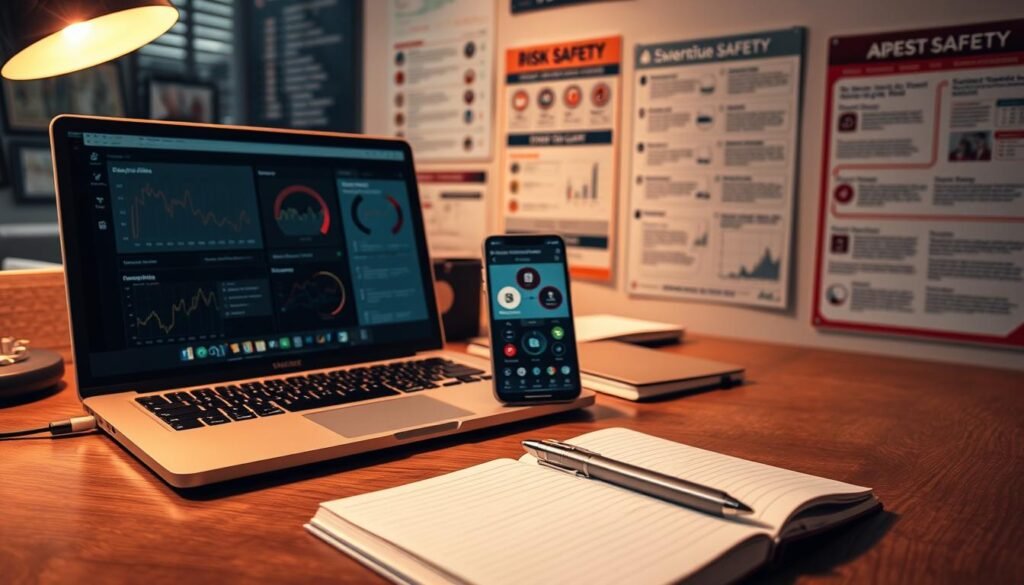
Risk Assessment for Personal Safety
Systematic risk assessment looks at five main areas to figure out crisis severity and the right response. These areas are psychological distress, how well you can function, social support, environmental stressors, and immediate physical safety. Each area needs its own check, as high risk in one doesn’t mean the same in all.
The psychological distress area looks at how intense and long-lasting emotional pain is. It asks if distress is getting worse, if you can’t concentrate or make decisions, and if you have thoughts of harming yourself or escaping. Functional impairment assessment looks at signs like missing work or school, not taking care of yourself, pulling away from things you used to enjoy, and big changes in sleep or eating for more than three days.
Having people you can talk to during a crisis is a big help. It’s important to know if you have someone to reach out to, if others are worried about you, and if you’re feeling more alone than usual. Environmental stressors include things like money problems, relationship issues, unstable housing, or legal troubles that make you more vulnerable.
| Crisis Level | Psychological Indicators | Functional Impact | Recommended Action |
|---|---|---|---|
| Mild Distress | Manageable worry, intact concentration, emotional regulation possible | All daily activities maintained, slight efficiency decrease | Implement personal safety net, monitor progression |
| Moderate Crisis | Intrusive thoughts, impaired focus, emotional lability, passive death wishes | Missing 1-2 daily obligations, self-care declining, social withdrawal beginning | Activate support network, schedule professional consultation within 72 hours |
| Severe Crisis | Active suicidal ideation, planning behaviors, dissociation, inability to experience hope | Unable to maintain basic self-care, complete work/school absence, extreme isolation | Immediate professional intervention required, crisis hotline contact, emergency services if needed |
| Acute Emergency | Intent with plan and means, command hallucinations, psychotic features, imminent self-harm | Complete functional collapse, immediate danger present | Call 988 Suicide & Crisis Lifeline or 911, do not delay for emergency psychiatric evaluation |
Identifying Immediate Threats to Your Well-Being
Immediate threats are different from ongoing stress because they can cause serious harm quickly. Physical danger includes situations like domestic violence, unsafe living conditions, or substance withdrawal. These situations need to be prioritized because they can lead to serious harm.
Psychological risks are threats when they affect your ability to think clearly, control impulses, or stay safe. Severe dissociation, command hallucinations, or sudden psychotic episodes are emergencies that need quick help. The difference between manageable distress and a psychiatric emergency is whether you can make rational decisions and control your actions.
Functional deterioration is a threat when basic needs like food, water, or medication are not met for a long time. Not eating or drinking for more than 48 hours, missing essential medication, or being exposed to extreme temperatures without protection are urgent situations. It’s important to admit when you can’t handle things on your own and need outside help.
When Professional Intervention Is Necessary
Professional help is needed when self-help measures don’t stop a crisis from getting worse or when specific high-risk signs appear. Professional help becomes necessary when you realize you can’t make safe decisions, when others are seriously worried about you, or when crisis symptoms get worse despite your efforts. Delaying help often comes from thinking you deserve the distress, that no one can help, or that asking for help is weak.
Clear rules help avoid these thinking traps by setting clear criteria for when to seek professional help. These criteria include suicidal thoughts, self-harm behaviors, not being able to function for five days, or others noticing a big change. Money worries or scheduling issues shouldn’t stop you from getting help, as many places offer emergency mental health services and resources.
Suicide Prevention Warning Signs
Suicide prevention experts look for specific behaviors and feelings that show a high risk of suicide. Active suicidal ideation with a plan and means, or detailed planning, is the highest risk and needs emergency help. Previous suicide attempts, even if they were a long time ago, also raise the risk, as do feelings of regret for surviving.
Behavioral warning signs include giving away important things, suddenly feeling better after a long depression, using more substances, acting recklessly, and saying you’re a burden or have no reason to live. Pulling away from friends and family, and talking about saying goodbye or organizing your affairs, also need quick action. The 988 Suicide & Crisis Lifeline is available 24/7 in the United States for these situations.
- Talking about wanting to die or expressing no reason for living
- Researching suicide methods or acquiring lethal means
- Dramatic mood changes including sudden calmness after severe depression
- Withdrawing from activities and isolating from relationships
- Giving away possessions or finalizing affairs
- Increasing alcohol or drug use as self-medication
- Expressing feelings of being trapped with no solution
- Experiencing unbearable emotional or physical pain
Physical Safety Concerns
Physical safety concerns are about situations where you might get hurt, either with or without a crisis. Domestic violence situations that are getting worse, including more frequent or severe incidents, or if the abuser has access to weapons, need quick safety planning and might require leaving the situation. The National Domestic Violence Hotline offers confidential help and shelter referrals when leaving is necessary.
Medical emergencies can look like just a mental health crisis, like heart problems that feel like panic attacks, brain issues causing strange behaviors, or metabolic problems that seem like mental symptoms. Sudden confusion, severe headaches, chest pain, trouble breathing, or losing consciousness always need emergency medical help, not just mental health support. Withdrawal from alcohol or benzodiazepines can be dangerous and needs medical care during detox.
Environmental dangers like extreme weather, unsafe housing, or lack of clean water and sanitation are also physical safety concerns. When a crisis happens with these dangers, fixing the physical situation first is key to stabilizing mental health. Resources like 211 can help find emergency housing, utility help, and other practical support to address these dangers.
Building Your Personal Safety Plan
Creating a personal safety plan turns abstract risks into real actions. It gives a clear plan when thinking gets hard and decisions are tough. A good emergency plan helps prevent problems and fixes them when they happen.
Unlike just reacting to problems, a full safety plan tackles issues at many points. It knows crises often start with clear signs. With planning, you can stop these crises before they start.
Being ready for a crisis can mean the difference between surviving and thriving. Safety plans need quick actions and long-term strategies that work together.
Core Components of an Effective Safety Plan
A strong safety plan has seven key parts. Trigger identification is the first step, looking at what causes you stress. Knowing these triggers helps prevent crises.
Warning signs are next, showing when you’re starting to get really stressed. These signs can be physical, emotional, or behavioral. For example, changes in sleep or mood are warning signs.
Behavioral changes, like pulling away from friends, are also signs. So are changes in how you think or feel. These can include racing thoughts or feeling numb.
Internal coping strategies are ways to handle stress on your own. These can be breathing exercises or changing how you think. The key is to find what works for you.
Social support is also key. This includes friends, family, and mental health professionals. Each one plays a role in helping you.
Professional resources are important too. This includes therapists and crisis hotlines. Keeping their contact info handy is a must.
Environmental safety is about making your space safe. This means removing things that could harm you and making your space calm.
Means restriction is very important if you’re thinking about harming yourself. This means making sure you can’t get to things that could hurt you. Studies show this can save lives.
| Safety Plan Component | Primary Function | Implementation Examples | Review Frequency |
|---|---|---|---|
| Trigger Identification | Prevention through awareness | List specific situations, relationships, or stressors that historically precede crisis episodes | Monthly |
| Warning Sign Recognition | Early intervention timing | Document physical, emotional, behavioral, and cognitive changes that signal deterioration | Bi-weekly |
| Internal Coping Strategies | Immediate self-regulation | Breathing exercises, grounding techniques, sensory tools, cognitive reframing methods | Weekly practice |
| Social Support Network | Graduated external assistance | Tiered contact list from casual support to emergency intervention with specific roles | Quarterly |
| Professional Resources | Expert intervention access | Current contact information for therapist, psychiatrist, crisis lines, emergency services | Quarterly verification |
Personalizing Your Emergency Protocol
Generic safety plans don’t work for everyone. Personalization makes plans work for you by considering your unique needs and situation. It’s about finding what really works for you.
Cultural background affects how you cope and who you turn to for help. Some people find spiritual practices helpful, while others prefer secular mindfulness.
Family involvement can be a big help in some cultures but not in others. A good emergency plan respects these differences.
Where you live and how much money you have also affect your plan. Urban areas have different resources than rural ones. Money can limit access to some interventions.
Living situation impacts environmental safety. A good plan makes your space safe and calming. It’s about finding solutions that work for you.
Personal preferences and past experiences guide your safety plan. If you’ve had good experiences with therapy, you might want to reach out to professionals early. But if medical settings have been traumatic for you, you might need different first steps.
The goal is to create a plan you’ll actually use. This means trying different approaches and being open to change.
Creating Your Crisis Prevention Strategy
Prevention is better than just reacting to crises. Prevention stops crises before they start by recognizing early signs. It’s about interrupting the crisis process before it gets worse.
Prevention starts with being stable and strong. This means taking care of yourself, sleeping well, staying active, and staying connected. These habits build resilience against stress.
When warning signs appear, it’s time to act. This means monitoring yourself more, using coping strategies, and reaching out for help. Early action can prevent bigger problems.
As distress grows, so does the need for more help. This might mean using stronger coping strategies, talking to more people, or getting professional help. The goal is to match the right help with the level of distress.
Creating a prevention plan means mapping out these stages and what to do at each one. This creates a plan that matches the level of distress with the right help. It’s about knowing when to take action and how.
Documentation and Accessibility
Even the best safety plan is useless if you can’t find it when you need it. Writing it down helps when stress makes memory unreliable. Having multiple copies in different places increases chances of finding it when needed.
Keep physical copies in easy-to-reach places like beside your bed or in your car. Digital versions on phones and computers are backups that can be updated easily. Cloud storage is good for when devices are lost or broken.
Make sure your safety plan is easy to understand, even when you’re stressed. Use clear language and simple lists. Bullet points and bold text help keep it clear.
Review your safety plan regularly to keep it up to date. Numbers and addresses change, and what works for you can change too. Check it monthly to avoid outdated information.
Sharing Your Plan with Trusted Contacts
Deciding who to share your safety plan with is tricky. On one hand, having trusted people know can help. They can spot warning signs and help in emergencies. On the other hand, there’s the risk of stigma, privacy issues, and misuse.
Choose people you trust, who care about you, and who can help without overreacting. Not everyone needs to know everything. A tiered approach can work, giving different people different levels of access.
Be clear about what you expect from them. They need to know when to help and when not to. This avoids misunderstandings and keeps everyone safe.
Getting consent for sharing your plan is important. It protects you and your contacts. It’s about knowing who can see your information and when.
Days 1-2: Establishing Your SOS List
Connecting with others is key in the first two days of your crisis plan. Studies show that having a sos list helps you get through tough times faster. It makes you feel safe knowing help is just a call away.
At first, focus on writing down your contacts. It’s important to have their info ready when you need it most. This can be when you’re feeling overwhelmed or can’t think clearly.
Having the right people in your life is important. But having a plan for when you need help is even more critical. This plan can make a big difference in how well you handle a crisis.
Identifying Your Emergency Contacts
Choosing the right emergency contacts is not just about who you’re close to. It’s about who can help you in a crisis. Look for people who are always there for you, reliable, and can handle your feelings without judgment.
It’s good to have a few people in mind for different situations. Your first line of defense should be people you can count on right away. They might be family, friends, or a partner.
For when your first choices are not available, have others ready. These people can offer different kinds of help. They might be friends, family, or even professionals.
Don’t forget about professional help and community resources. They can provide specialized support. This way, you’re covered no matter what you need.
Make sure you have all ways to reach your contacts. Use phone numbers, texts, emails, and social media. Where they are matters, but don’t rule out people who can help from far away.
Creating a Mental Health Support Network
A mental health support network is more than just emergency contacts. It includes friends, groups, and even online communities. These connections help you feel supported and understood.
Isolation can make things worse. It’s important to reach out and build your network. Even small steps can help.
There are many ways to grow your network. Join groups, use online forums, or reconnect with old friends. Find places where you feel safe sharing your feelings.
Your support network does more than help in emergencies. It provides ongoing support and reduces stigma. It helps you feel less alone and more connected.
Setting Up Crisis Hotline Information
Crisis hotlines are key to your safety plan. They offer help from trained counselors when you need it most. They’re there when your network can’t help.
Keep hotline info easy to find. Save it in your phone, write it down, and share it with trusted people. This way, you can get help quickly when you need it most.
National Suicide Prevention Lifeline
The National Suicide Prevention Lifeline is available 24/7. Call 988 to talk to a counselor. They can help you with your crisis and connect you to local resources.
Knowing what happens when you call can help you feel more comfortable reaching out. Counselors are trained to listen and help, not to judge.
They start by checking if you’re safe, then talk about what’s causing your crisis. They help you find ways to cope and connect you to resources. Most calls don’t need emergency services.
Crisis Text Line and Local Resources
The Crisis Text Line offers help through texts. It’s great for those who prefer texting or have trouble talking during a crisis. Text HOME to 741741 to start a conversation with a counselor.
Texting can be helpful because it’s less stressful and allows you to communicate privately. You can also review the conversation later. Local resources can offer more specific help and face-to-face support.
Look up local crisis resources and save their info in your sos list. This way, you can get help quickly when you need it most.
Workplace Safety Contacts
Work can be a source of stress and crisis. Having resources at work can help. Employee Assistance Programs (EAPs) offer free counseling and support.
EAPs are private and separate from your boss and HR. They can help with work and personal issues. This shows how important your well-being is at work.
Other workplace contacts might include mental health advocates or occupational health nurses. They can provide immediate help and connect you to resources. This is important because crises can happen at any time, not just outside of work.
Days 3-4: Sleep Reset Protocol
Sleep and mental health are closely linked. Poor sleep can make mental health issues worse. This creates a cycle that harms our thinking, feelings, and body.
Starting a sleep reset in days three and four is key. It helps break the cycle of poor sleep and mental health problems. This is the base for other self-care steps.
Why Sleep Is Your First Line of Defense
Sleep loss makes us more sensitive to threats. This is because our brain’s fear center, the amygdala, gets more active. Even a little sleep loss can make us see neutral things as threats.
Our brain’s thinking part, the prefrontal cortex, also gets worse with sleep loss. This makes it hard to control impulses and make good decisions. When we’re in a crisis, this makes things feel even more overwhelming.
Not sleeping well messes with our stress system. Our stress hormone, cortisol, stays high all day. This affects our immune system, heart, and metabolism, all important for our mental health.
But, getting a bit more sleep can really help. Just one good night can make us less emotional, better at solving problems, and more open to therapy. This makes sleep reset a very important part of crisis care.
Implementing a Basic Sleep Routine
Keeping a regular sleep schedule is important, even when we’re stressed. Our body’s clock likes routine, including weekends. Waking up at the same time every day helps our sleep cycle.
Light affects our sleep too. Being in bright light in the morning tells our body it’s time to be awake. Natural sunlight is best, but light therapy boxes work well too.
It’s also important to dim lights at night. This helps our body make melatonin, the sleep hormone. Blue light from screens can stop melatonin production, so use blue-light blocking glasses or apps.
Keeping your bedroom cool is also key. Our body temperature needs to drop to sleep. A cool room and a warm bath before bed can help.
Having a calming routine before bed is important. It tells our body it’s time to relax. These routines should be calming and different from our day.
- Consistent timing: Do the same things every night
- Low-stimulation activities: Reading, stretching, or listening to calm music
- Environmental preparation: Make your sleep space comfortable, quiet, and cool
- Cognitive transition: Write down worries earlier in the day, not at night
Starting these habits takes effort and may not work right away. But, doing them for three to four days can really help your sleep and how you feel during the day.
Dealing with Crisis-Related Insomnia
Insomnia during a crisis has different causes. Rumination insomnia makes it hard to stop thinking when we try to sleep. The mind keeps going over worries or fears.
Hyperarousal insomnia makes us wake up a lot and have trouble sleeping again. Our body stays in a state of alertness, making it hard to relax. Even small things can wake us up.
Nightmares can also disrupt sleep. These dreams can wake us up with strong feelings. Early morning wake-ups can be due to stress hormones being out of balance.
| Insomnia Pattern | Primary Mechanism | Targeted Intervention | Expected Timeline |
|---|---|---|---|
| Sleep Onset Difficulty | Cognitive rumination | Worry scheduling, thought stopping techniques | 3-5 nights |
| Middle-Night Awakening | Sympathetic hyperarousal | Progressive muscle relaxation, stimulus control | 4-7 nights |
| Nightmare Disruption | Trauma processing during REM | Imagery rehearsal therapy, safety rituals | 1-2 weeks |
| Early Morning Awakening | Cortisol dysregulation | Light exposure timing, sleep restriction | 5-10 nights |
Cognitive techniques help with insomnia. Worry scheduling lets us worry at a set time, not at night. Thought stopping uses a cue to stop worries.
Behavioral strategies change how we act and our environment. Stimulus control makes our bed only for sleep and intimacy. If we can’t sleep, get out of bed and do something quiet until we’re tired.
Sleep restriction means sleeping as long as we actually do, then more as we sleep better. This helps our sleep feel more solid. But, start this carefully, as it can make sleep worse at first.
Choosing sleep aids needs careful thought. Over-the-counter sleep aids can make us groggy the next day. Melatonin is safer and helps our body clock. Prescription sleep aids might be needed for severe insomnia, but talk to a doctor first.
Grounding Techniques for Bedtime
Grounding helps us relax and sleep by focusing on our body. It stops our mind from worrying and keeps us in the present.
Body scan meditation focuses on each part of our body, noticing feelings without judgment. It takes 10-15 minutes and helps us relax and focus.
Progressive muscle relaxation makes our muscles relax by tensing and then releasing. This helps with tension and distracts us from worries.
The 4-7-8 breathing pattern calms our nervous system. It involves breathing in for four counts, holding for seven, and breathing out for eight. This helps us relax and feel safe.
Sensory awareness exercises keep us in the moment by focusing on our senses. This helps with intrusive thoughts and flashbacks that keep us awake.
- Guided imagery: Imagine peaceful scenes to engage your imagination
- Gratitude reflection: Think of three positive moments from the day
- Loving-kindness phrases: Repeat kind words to calm your nervous system
- Counting meditation: Count your breaths backward from 100 to help you sleep
Using these grounding techniques takes practice. They might feel awkward at first, but they get better with time. After three to four nights, most people find it easier to fall and stay asleep, helping with overall recovery.
Days 5-6: Nourishment Basics and Hydration
As you enter the second phase of your two-week safety net, proper nutrition and hydration are key. They help keep your mind stable. Crisis states often mess with how you eat and take care of yourself.
This messes with your body and mind, making things worse. It creates a cycle where not enough nourishment basics makes emotional problems worse.
Food and mental health are linked through many ways. Blood sugar changes can make you feel anxious. Not drinking enough water can mess with your thinking and choices.
Days five and six focus on simple but good eating habits. These habits help you cope without using up too much mental energy. It’s about being enough, not perfect.
Minimum Nutrition Requirements During Crisis
In a crisis, eating goals change. You aim to keep your body stable, not to eat perfectly. This makes food choices easier when you’re not thinking clearly.
Enough calories stop your blood sugar from dropping. This drop can make you feel shaky, anxious, and hard to focus. It adds to the stress of being in a crisis.
Protein helps make mood-regulating chemicals in your brain. Even a little protein, about 50-60 grams a day, helps keep these chemicals going during tough times.
Omega-3 fats are good for your brain and help with inflammation. You can find them in fish, nuts, and seeds. B vitamins, magnesium, and zinc also help with stress and brain function.
The goal is to meet basic needs, not to be perfect. Here’s what you should aim for:
- Eat three small meals or five small ones throughout the day to keep your blood sugar steady.
- Have a protein source with each meal, even if it’s just a handful of nuts or a cheese stick.
- Eat foods rich in omega-3s every other day.
- Take a multivitamin if eating whole foods is too hard.
- Choose nutrient-dense foods over big portions when you’re not hungry.
This approach helps keep you safe by avoiding extra stress. It’s about being enough, not perfect.
Simple Meal Planning for Survival Mode
Planning meals during a crisis needs simple strategies. You want to eat well without using too much brain power or time. The goal is to keep it simple.
Ready-to-eat foods are helpful, even if they’re not always the best choice. They save time and effort. Options like frozen meals and pre-cut veggies make cooking easier.
Choose foods that are easy to prepare but full of nutrients. Here are some ideas:
- Hard-boiled eggs are easy to grab and go.
- Greek yogurt with granola or berries needs no prep.
- Nut butter on whole grain bread or crackers is simple.
- Canned fish is ready to eat or on crackers.
- Pre-washed salad greens with bottled dressing are easy.
- Frozen veggies microwaved with protein are quick.
- Meal replacement shakes are a last resort.
Batch cooking helps when you have more energy. Make big batches of soup or casseroles. This way, you have meals ready when you need them.
Food delivery services can help when you’re too stressed to cook. They save you from having to shop or cook. This is a big help during a crisis.
Comfort foods have a place in crisis eating. It’s about finding balance. Include foods that comfort you, but also eat foods that are good for you.
Hydration Tracking Methods
Drinking enough water is key for your brain and body. Dehydration can make you tired, have headaches, and feel off. It makes crisis symptoms worse.
Drinking water helps with stress hormones and keeps your brain working right. Not drinking enough can make stress worse. It also affects how well your brain gets what it needs.
Drink at least half your body weight in ounces of water a day. For a 150-pound person, that’s about 75 ounces or nine cups. This is a basic goal, not the best, because crisis times are hard.
Here are ways to track your water intake that are easy:
| Tracking Method | Implementation | Best For |
|---|---|---|
| Marked water bottle | Time markers or volume measurements on reusable bottle showing hourly goals | Visual learners who benefit from concrete progress indicators |
| Smartphone reminders | Hourly alerts prompting water consumption with simple yes/no tracking | Individuals who respond well to external prompts and digital tracking |
| Glass counting system | Moving objects (coins, stones, paperclips) from one container to another with each glass consumed | Tactile learners who benefit from physical manipulation and visible accumulation |
| Habit stacking | Linking water consumption to existing routines (drink glass after bathroom use, upon waking, before meals) | Those who maintain some routine structure and benefit from behavioral anchoring |
Choose drinks that help you stay hydrated and calm. Herbal teas can be soothing. Electrolyte drinks help when you sweat a lot.
Watch how much caffeine and alcohol you drink. They can make you dehydrated and anxious. If you can’t cut them out, drink two glasses of water for every one of these drinks.
Check your urine color to see if you’re drinking enough water. If it’s pale yellow, you’re good. Dark yellow means you need more water. This is easy and doesn’t need any special tools.
Drinking enough water helps you focus on the rest of your safety plan. It also keeps you from feeling worse. Staying hydrated is a big part of getting through a crisis.
Days 7-8: Movement Snacks and Physical Grounding
Movement is like medicine for the mind during tough times. Days 7-8 of our plan use simple, short physical activities to help. These activities are designed for people who feel low in energy or struggle to connect with their body.
By adding physical activity, we build on the sleep and nutrition from earlier days. Even a little movement can make a big difference in how our nervous system works. Studies show that moving helps break the cycle of crisis response, making it easier to cope when our minds are foggy.
What Movement Snacks Are and Why They Work
Movement snacks are short, frequent activities that last from one to five minutes. They’re spread out throughout the day, not all at once. This approach is easier to stick to when we’re feeling drained.
These snacks work because they trigger important changes in our body. Cortisol levels decrease after just a few minutes of movement. They also release endorphins, which help us feel better without needing to do a lot.
Muscle tension goes down when we move on purpose. This helps with the physical tension that builds up when we’re stressed. Plus, moving improves how our body responds to rest and relaxation, helping us feel more stable.
The body keeps the score: if the memory systems are activated in an environment of relative safety, we can tolerate them better than if we are in a state of chronic threat.
Traditional exercise and movement snacks differ in how they help during crisis. Here’s why snacks are better:
| Factor | Traditional Exercise | Movement Snacks |
|---|---|---|
| Duration Required | 30-60 minutes continuous | 1-5 minutes intermittent |
| Energy Threshold | Moderate to high baseline | Minimal baseline sufficient |
| Planning Demands | Scheduling, preparation, location | Spontaneous, no preparation |
| Failure Risk | High when resources depleted | Low due to minimal commitment |
| Psychological Barrier | Often feels overwhelming | Accessible during distress |
By seeing movement as a quick fix, we make it easier to use during crisis. When we know that just three minutes of wall push-ups can help, we’re more likely to do it.
Five-Minute Grounding Exercises
Grounding exercises help during Days 7-8 by combining movement with focus on the present. They help with the physical and mental symptoms of crisis. These exercises don’t need special equipment or a lot of space.
Wall push-ups are a good alternative to floor exercises. Stand close to a wall, place your hands on it, and push up slowly. This helps release tension in your shoulders and chest.
Seated stretching sequences are great for when you’re feeling really tired. Do gentle neck rolls, shoulder shrugs, and twists while sitting. You can also lift each leg individually to stretch your calves.
Stair climbing is a good way to get some cardiovascular exercise in small doses. Climbing one flight of stairs slowly can help regulate your breathing and calm your nervous system.
Residential walking circuits let you move around without leaving your home. Walking from one room to another can be enough. Counting your steps or focusing on the floor can help you stay grounded.
Desk yoga adaptations make stretching and posture awareness easy to do at your desk. Simple poses like seated cat-cow, chair pigeon, and standing forward fold can help release tension. Hold each pose for 30-60 seconds to get the most benefit.
Progressive muscle relaxation combines movement with body awareness. Tense each muscle group for five seconds, then release. This helps interrupt chronic tension and focuses your attention on your body.
Physical Activities That Reduce Crisis Response
There are many ways to move that can help during crisis, not just formal exercises. These activities can be adapted for people who find it hard to exercise or have been through trauma. The key is to find movements that help you feel grounded and present.
Music-based movement and dancing use rhythm and movement to calm the mind and body. Dancing to your favorite music for a few minutes can help you feel more stable. It’s a way to express yourself and feel better without worrying about how you look.
Cleaning and organizing activities help in two ways during crisis. They provide physical activity and help you feel more in control of your environment. The repetitive motions can also help you relax and feel a sense of accomplishment.
Gardening and plant care combine physical activity with nurturing. Taking care of plants requires sustained effort and can help you feel more connected to nature. If you have outdoor space, touching the soil can add to the grounding effect.
Pet interaction that involves physical activity is beneficial. Activities like walking a dog or playing with a cat can help you move and feel more connected. Caring for pets also adds structure and responsibility to your day.
Interactive video games that use motion controls can turn screen time into physical activity. Games that require you to move can help you exercise while staying engaged. This is great for kids who might find it hard to get moving.
Trauma-Informed Movement Practices
For people dealing with trauma, movement needs to be adapted to ensure safety. Trauma changes how we experience our bodies, making some movements potentially triggering. Trauma-informed practices focus on giving people control and gradually helping them reconnect with their body.
Choice and control are key in trauma-informed movement. You should decide what, how hard, for how long, and where you move. Using “you might” instead of “you should” helps respect people’s boundaries and agency.
Positional awareness is important to avoid triggering memories or defensive responses. Avoid positions that feel vulnerable or recreate traumatic experiences. Standing and seated exercises are often safer than lying down.
Internal sensation orientation focuses on how movement feels inside, not how it looks. This helps rebuild the connection between mind and body that trauma can disrupt. Paying attention to sensations like tension and release is more important than how you look.
Bilateral movement patterns engage both sides of the body, which helps regulate the nervous system after trauma. Activities like cross-crawl or swimming motions activate neural pathways that support integration and regulation. The alternating pattern helps process and reduce hyperarousal.
By following these trauma-informed principles, movement becomes a safe and empowering way to cope. When we honor our boundaries and focus on our internal experience, movement can be a powerful tool for stabilization during crisis.
Days 9-10: Digital Boundaries and Mental Space
By days nine and ten, setting digital boundaries is key to keeping your mind clear. The world of information can greatly affect how we feel, more so when we’re feeling vulnerable. How much we use digital tools can help or hurt our efforts to stay calm.
Studies show that too much digital use can make us feel more stressed and use up our brain power. Our brains work hard to deal with digital stuff, which can make us feel on edge. When we’re in a crisis, it’s harder to control what we see and hear online, so we need to take steps to protect ourselves.
Establishing Protective Parameters for Online Engagement
Digital boundaries help keep our minds safe from the stress of the world. They need to be specific and measurable, not just vague plans to use less tech. To set good boundaries, we need to figure out which online activities make us feel bad or anxious.
One good way to protect ourselves is to limit how much news we check. Setting a timer for fifteen minutes twice a day helps us stay focused and avoid getting lost in bad news. This way, we can avoid getting caught up in a cycle of worry.
Controlling notifications is also important. Too many alerts can make us feel stressed and distracted. Turning off non-essential notifications helps us stay calm and focused.
Setting limits on how much time we spend on screens helps us stay on track. Taking breaks from technology, like before bed, helps us get better sleep. This is part of taking care of our overall well-being.
Managing Information Flow During Vulnerable Periods
Too much information during a crisis can be very harmful to our mental health. Our brains can only handle so much, and the internet gives us way too much to think about. This can make it hard to stay calm when we’re already feeling overwhelmed.
Learning to sort out what information is really important helps us stay focused. We need to know what’s urgent and what can wait. This way, we can avoid getting caught up in things that don’t matter right now.
Having set times to check the news helps us avoid getting stuck in a cycle of worry. This way, we can stay informed without feeling overwhelmed. It’s about finding a balance that works for us.
Trusted sources and summaries can help us get the information we need without feeling overwhelmed. These can be professional digests or people we trust who can filter out the bad stuff. This way, we can stay informed without losing our mental health.
Constructing Supportive Digital Environments
Creating safe online spaces is important. The things we see and do online can affect how we feel. When we’re going through a tough time, it’s important to have online spaces that support us.
Being careful about who we follow online is key. Following people who make us feel bad or anxious doesn’t help us. Using tools like mute, unfollow, and block is a way to protect ourselves, not a sign of weakness.
Joining online communities that are safe and supportive is also important. These communities have rules to keep things positive and help us feel less alone. They provide a safe space for us to connect without the risks of toxic online interactions.
| Digital Boundary Type | Implementation Method | Primary Benefit | Common Obstacles |
|---|---|---|---|
| Time-Limited News Consumption | 15-minute blocks twice daily with timer | Reduces anxiety while maintaining awareness | Fear of missing critical information |
| Notification Restrictions | Disable all non-essential push alerts | Decreases interruption-driven stress | Perceived need for immediate responsiveness |
| Technology-Free Periods | One hour before sleep, during meals | Protects sleep quality and mindful activities | Habitual checking behaviors |
| Curated Social Feeds | Unfollow triggering accounts, follow supportive content | Creates emotionally safer digital environment | Social obligation feelings toward certain connections |
Learning new skills or getting guidance online can be helpful. It turns screen time into something productive. This can help us feel better and more in control.
Choosing content that makes us feel good is important. It’s about finding things that bring us joy or help us relax, not just scrolling mindlessly. This can help us feel more grounded and less stressed.
Keeping our digital spaces safe is an ongoing task. We need to be careful about what we expose ourselves to. By managing our online interactions, we can help ourselves stay safe and stable during tough times.
Days 11-12: Professional Triage and Support Systems
Professional triage is key in moving from personal coping to getting help during a crisis. The first days focused on self-care. Now, we look at when and how to get help from experts.
Seeking help is a sign of strength, not weakness. Many delay because they don’t know what help is or when they need it. We aim to clear up these misconceptions and show how to find the right help.
When to Seek Professional Help
Knowing when to get help is about being honest with yourself. If your symptoms don’t get better with self-care, it’s time to seek help. Signs like persistent symptoms or worsening despite safety measures mean you need more support.
When crisis symptoms affect your daily life, like work or family, it’s time for professional help. Not being able to take care of yourself or reach out for support also signals the need for expert advice.
Using substances to cope is a serious issue that needs immediate help. It’s a sign of deeper problems that require professional treatment. Any thoughts of suicide need quick professional evaluation.
Many barriers stop people from getting help, even when they need it. Stigma, cost, and not knowing where to start are common obstacles. But, there are many low-cost options and resources to help.
Seeing help as a strength is the first step. Professional support offers tools and perspectives that complement your own strength. Many places offer help without worrying about cost.
Types of Mental Health Professionals
There are many mental health professionals, each with their own skills and training. Knowing who to turn to for help is important. Psychiatrists are doctors who can prescribe medication and provide therapy.
Psychologists have doctoral degrees and focus on therapy and assessment. They can’t prescribe medication but offer deep expertise in therapy. Their training emphasizes research and complex mental health issues.
Clinical social workers and licensed professional counselors have master’s degrees and provide therapy. They specialize in connecting people with community resources and understanding social factors that affect mental health.
Psychiatric nurse practitioners have advanced training in mental health. They can diagnose, prescribe medication, and provide therapy. Their nursing background adds a holistic approach to care.
Peer support specialists have personal experience with mental health issues. They offer support and hope based on their own recovery. Their experience complements clinical help and reduces feelings of isolation.
Navigating Emergency Mental Health Services
Emergency mental health services provide immediate help when needed. They offer crisis intervention outside regular hours. Knowing how to access these services is key during emergencies.
There are many ways to get emergency mental health support. Crisis hotlines offer phone support, mobile crisis teams provide in-person help, and hospital emergency departments assess psychiatric emergencies. Each option has its own role in providing care.
Crisis Intervention Teams
Crisis Intervention Teams (CIT) pair law enforcement with mental health professionals. They are trained to handle psychiatric emergencies without using force. This approach emerged from recognizing the need for a more therapeutic response.
CIT teams focus on connecting individuals with treatment, not the justice system. They can assess mental health, use de-escalation techniques, and help with voluntary transport to crisis services. Many communities have seen improved outcomes with CIT programs.
Accessing CIT services usually starts with a 911 call. Mentioning mental health concerns increases the chance of CIT dispatch. Not all areas have CIT programs, so availability varies.
Emergency Room Mental Health Protocols
Hospital emergency departments offer 24/7 mental health services when other options are not available. Understanding what to expect in these situations can reduce anxiety. Knowing what to expect is part of emergency preparedness.
When you arrive, triage nurses assess your situation. Those with suicidal thoughts or severe symptoms get priority. Waiting times can vary, sometimes taking hours for less urgent cases.
The psychiatric evaluation looks at symptoms, safety concerns, substance use, and more. Mental health professionals decide if you need hospitalization or can be treated as an outpatient. Possible outcomes include discharge, short-term treatment, or longer-term hospital care.
Emergency departments may have safety protocols that feel uncomfortable. These measures are in place to ensure safety during crises. Understanding this can help manage expectations.
Telehealth Options for Immediate Support
Telehealth has made mental health support more accessible. It includes video therapy, online psychiatry, crisis apps, and text-based counseling. These options help overcome barriers like distance, transportation, and scheduling.
Video therapy connects you with licensed therapists through video calls. Many offer same-day or next-day appointments. Online psychiatry provides evaluation and medication management virtually. These formats work best for those with reliable internet and private spaces.
Crisis apps offer tools like safety planning and coping strategies. They connect you with crisis counselors through text or chat. Several apps provide cognitive-behavioral tools and mindfulness exercises for managing crises.
Telehealth has its limits, like technology barriers and reduced nonverbal cues. Some find it less personal or struggle with distractions. Despite these, telehealth increases access to timely support during crises.
Choosing the right professional resources depends on your needs and options. Days 11 and 12 focus on identifying and preparing for these supports. This way, when you need help, you know where to turn.
Days 13-14: Distress Tolerance and Coping Strategies
Distress tolerance skills are key to your emergency plan. These last two days focus on handling painful emotions without harming yourself. The goal is not to get rid of all pain but to learn to live with it.
This change in how you see emotional pain is important. Instead of trying to get rid of it right away, you learn to handle it. This way, you stay safe during tough times.
Building Distress Tolerance Skills
Dialectical behavior therapy helps you develop these skills. It teaches you to deal with painful feelings without letting them control you. This way, you can get through hard moments without making things worse.
Radical acceptance is a key skill. It means accepting things as they are, without judgment. This helps you focus on solving problems instead of fighting what can’t be changed.
Radical acceptance reduces suffering by stopping the extra pain from resisting reality. It frees up your mind for solving problems and coping.
Self-soothing through senses is another important skill. It uses your senses to find comfort when you’re upset. You might listen to calming music or smell nice scents. These things help you feel better and stay present.
Distractions can also help when you’re feeling overwhelmed. They take your mind off the pain without ignoring it. Things like doing something fun or helping others can be good distractions.
When you’re feeling like acting out, thinking about the pros and cons can help. It helps you make choices that are good for you in the long run, not just for a quick fix.
Immediate Coping Strategies That Work
There are specific ways to deal with immediate distress. Knowing how these work helps you pick the right strategies for different situations. Here’s a table that shows some strategies and when to use them:
| Mechanism | Strategy Type | Example Techniques | Best Used When |
|---|---|---|---|
| Physiological Regulation | Body-based interventions | Deep breathing, cold water immersion, intense exercise | Experiencing panic, rage, or physical tension |
| Cognitive Redirection | Attention-shifting activities | Puzzles, reading, counting exercises, mental games | Stuck in rumination or obsessive thoughts |
| Emotional Expression | Release-focused practices | Crying, journaling, artistic creation, music | Feeling emotionally overwhelmed or numb |
| Social Connection | Interpersonal support | Calling trusted contacts, crisis helplines, support groups | Isolated, alone with distressing thoughts |
Deep breathing protocols calm you down by activating your parasympathetic nervous system. The 4-7-8 technique can calm you down in minutes. It’s great for anxiety and panic.
Cold water immersion quickly calms you down by triggering the dive reflex. It lowers your heart rate and emotional intensity. It’s a good emergency response when you’re feeling overwhelmed.
Exercising intensely burns stress hormones and releases endorphins. Running or doing jumping jacks for 10-15 minutes can shift your mood. It turns emotional energy into physical activity.
Crisis helplines offer professional support during emergencies. They provide trained listeners who can help you without judgment. Having their numbers ready ensures you can get help when you need it.
Creating Your Personal Comfort Kit
A comfort kit is a collection of items that help you feel better during distress. It’s your emergency resource when you can’t regulate your emotions. Include things that engage your senses and connect you to loved ones.
Photos of loved ones remind you of your connections and reasons to keep going. Handwritten notes from supportive people offer comfort when you feel isolated. These items make your support network available even when you can’t reach people directly.
Meaningful objects that represent your values and identity help you stay grounded during identity threats. A religious symbol, a memento from an achievement, or something that represents a cherished relationship can reconnect you with your core self.
Sensory Grounding Tools
Choose items for your comfort kit based on their sensory properties. These tools help you stay present by demanding your attention:
- Ice packs or cold gel packs provide intense sensory input that grounds attention immediately
- Scented lotions or essential oils engage the olfactory system, which directly connects to emotional processing centers
- Textured objects like stress balls, smooth stones, or fidget tools give hands something to manipulate
- Sour or strong-flavored candies create taste sensations that demand present-moment awareness
- Calming sound recordings or music playlists curated for emotional regulation
Choose items that comfort you personally. What comforts one person might distress another. Try them out when you’re calm to find what works best for you.
Emergency Self-Soothing Techniques
For the most intense moments, you need techniques that don’t require preparation or materials. The 5-4-3-2-1 grounding exercise is one such technique. It anchors you in the present moment.
To do this exercise, find five things you can see, four things you can touch, three things you can hear, two things you can smell, and one thing you can taste. Say them out loud or to yourself. This exercise interrupts distressing thoughts and grounds you in reality.
Bilateral stimulation through alternating tapping or eye movements activates both brain hemispheres. Tap your knees alternately, cross your arms and tap your shoulders, or move your eyes from left to right repeatedly. This technique reduces emotional intensity while maintaining awareness.
Self-compassion phrases counteract self-criticism during distress. Simple statements like “This is difficult, and I’m doing my best” or “I deserve kindness during hard times” provide internal support. These phrases are your emergency response when you can’t get help from others.
Emergency mindfulness practices focus your attention on a single object or sensation. Choose something like your breath, a sound, or a visual point. Return your attention to it whenever your mind wanders. This practice strengthens your ability to focus and helps with distress tolerance over time.
By day 14, you’ll have a solid toolkit for managing emotional crises. You’ve moved from just surviving to building skills that support your ongoing well-being. These skills don’t eliminate pain, but they prevent it from destroying your stability.
Setting Micro-Goals for Sustainable Progress
Stable progress comes from small wins, not big dreams. In tough times, our brains struggle with big plans. This makes old goal-setting methods fail.
Micro-goals fit our current abilities better. They help us make small steps towards big goals. This way, we don’t get overwhelmed.
The Power of Tiny Achievements
Small wins have a big impact in hard times. They make us feel good and want to keep going. Our brains reward us for finishing tasks, big or small.
Every small goal we achieve shows us we can do more. It fights against negative thoughts that come with crisis. It proves we can take action and see results.
Success in small tasks boosts our confidence. This makes us believe we can tackle bigger challenges. It’s a cycle of growing confidence and ability.
Big tasks can paralyze us. Breaking them down makes them feel doable. This lets us start, even when we’re not at our best.
Breaking Down Safety Measures into Manageable Steps
Breaking down big goals into small steps is key. It works for all safety needs. Start with the big goal and then find the smallest first step.
For example, making a list of emergency contacts seems big. But, we can break it down into smaller tasks. This makes it easier to start and keep going.
Here’s how to do it:
- Day 1: Pick one person to contact in an emergency
- Day 2: Write down their phone number somewhere easy to find
- Day 3: Tell them they’re your emergency contact
- Day 4: Add another contact to your list
- Day 5: Check if their phone number is right by sending a test message
Each step is simple and doesn’t use up too much brain power. Finishing each task makes us feel accomplished and moves us closer to our goal.
This method works for many safety areas. Improving sleep or eating well can be broken down into small steps. This makes it easier to start and keep going.
The key is to make each step feel easy. If it’s too hard, break it down even more. This way, we match our goals to what we can really do.
Tracking Your Daily Wins
Keeping track of our small wins is important. It helps us stay on track, shows us patterns, and proves we’re making progress. It fights against negative thoughts that come with crisis.
Using simple tools like checkboxes or calendars works well. Seeing our progress motivates us to keep going. It makes us feel good about what we’ve accomplished.
Writing down our experiences adds more value. It helps us see how we’re doing and what works best. This helps us stay on track and make better choices.
Digital tools can also help track our progress. They offer reminders and show our progress in a fun way. The most important thing is to find a method that works for you and stick to it.
Tracking our wins helps us see that our efforts are worth it. It shows us that we’re making progress, even when it feels like we’re not. This keeps us motivated and helps us stay on track.
Reviewing our progress regularly helps us see what’s working and what’s not. This lets us adjust our goals and strategies. It helps us stay focused and make progress towards our safety goals.
| Safety Domain | Overwhelming Goal | Micro-Goal Sequence | Tracking Method |
|---|---|---|---|
| Emergency Contacts | Create a full emergency support network | Day 1: Name one contact | Day 2: Write phone number | Day 3: Inform contact | Day 4: Add second contact | Checkbox list in phone notes app |
| Sleep Routine | Get a consistent healthy sleep schedule | Day 1: Set bedtime alarm | Day 2: Turn off screens 10 minutes before alarm | Day 3: Add one relaxation technique | Day 4: Move alarm 15 minutes earlier | Sleep journal with time stamps |
| Nutrition Support | Keep up with good nutrition during crisis | Day 1: Drink water upon waking | Day 2: Eat one fruit | Day 3: Prepare one simple meal | Day 4: Keep healthy snacks accessible | Daily food log with checkboxes |
| Movement Practice | Make regular physical activity a part of your routine | Day 1: Stand and stretch once | Day 2: Walk to mailbox | Day 3: Complete 5-minute movement video | Day 4: Repeat favorite movement twice | Calendar marks with completion times |
| Digital Boundaries | Set good technology use habits | Day 1: Identify most stressful app | Day 2: Delete app for 24 hours | Day 3: Set one-hour time limit | Day 4: Create phone-free zone in bedroom | Screen time app data review |
Micro-goals change how we tackle tough times. They respect our limits and help us make progress. Each small win builds on the last, helping us reach goals that seemed impossible.
Tracking our progress keeps us motivated and shows us we’re getting better. With the right approach, safety measures become achievable steps. They help us stabilize, even in crisis.
Common Mistakes When Building Your Safety Net
Understanding common mistakes in safety planning helps avoid frustration and setbacks. Building a personal safety net during crisis periods is prone to errors. These errors come from psychological patterns like anxiety, avoidance, and cognitive rigidity.
Knowing these pitfalls helps protect the safety planning process. We look at three major errors that can derail crisis stabilization efforts. We explore their psychological roots and practical effects.
Attempting to Change Everything at Once
Trying to make sweeping changes right away is a big obstacle. People in crisis often want to “fix everything now.” This comes from the intense discomfort of crisis, which demands quick relief.
Anxiety can lead to too much activity. The mind tries to release tension through action. This can include trying to change sleep, diet, exercise, social life, and seeking professional help all at once.
This approach has big problems. Human resources are limited, and crisis makes them even tighter. Trying to change too much at once is too much for anyone to handle.
When the initial energy fades, people can’t keep up. Giving up on many changes at once feels like a total failure. This can make people feel worse and harder to help.
This framework suggests a staged, incremental approach. Start with one or two changes every two days. This way, you work within your limits and make lasting changes without burning out.
Skipping the Risk Assessment
Another mistake is skipping the risk assessment. This is often because people want to do something immediately. They might avoid facing their situation or underestimate how different everyone’s risks are.
Effective safety planning needs to be tailored to your specific situation. Generic plans don’t work well because they don’t fit your unique needs. This can lead to either not enough protection or too much restriction.
Risk assessment is key. It helps reduce anxiety by making fears more concrete. It also helps respond in the right way to dangers, not too much or too little.
Skipping this step is like failing to address specific hazards in other safety areas. Just as workplaces need to address specific risks, personal safety planning needs to too. The risks for someone in crisis are different from those for someone facing severe but non-lethal anxiety.
| Risk Assessment Component | Purpose | Consequence of Skipping | Implementation Timeline |
|---|---|---|---|
| Immediate Safety Evaluation | Identify life-threatening risks requiring immediate intervention | Potential for catastrophic outcomes due to unrecognized danger | Within first 24 hours |
| Environmental Hazard Analysis | Assess external stressors and trigger identification | Continued exposure to preventable crisis escalators | Days 1-3 |
| Support System Inventory | Map available resources and identify gaps | Isolation and missed opportunities for assistance | Days 3-5 |
| Coping Mechanism Audit | Distinguish effective from harmful strategies | Reliance on counterproductive behaviors | Days 5-7 |
This structured approach to assessment mirrors workplace safety protocols. It shows that effective safety planning needs to understand specific risks before acting.
Keeping Safety Plans Static
Another error is treating safety plans as fixed documents. Crisis situations change all the time. New stressors appear, old coping strategies fail, and living situations shift.
Static plans quickly become outdated. What works during the crisis may not be right for later. And what’s right for early stabilization may not tackle new challenges as things improve.
Not updating safety plans comes from being too busy and feeling like the initial changes are enough. It’s hard to admit that more changes are needed, even when it’s clear.
Regular safety plan review must be built into the crisis management framework itself. Weekly reviews during acute crisis and monthly assessments during stabilization help keep plans relevant and effective.
Signs that safety measures need updating include big changes in living situations, new relationships, altered risk profiles, changes in coping skills, and shifts in external stressors.
This ongoing approach is like regular safety audits in other safety areas. Construction sites and workplaces regularly review their safety plans. Personal crisis safety planning needs the same flexibility and adaptability.
Seeing safety planning as an ongoing process helps avoid sticking with outdated plans. This balanced approach supports real stabilization, not just following old frameworks.
Maintaining Your Safety Net Beyond 14 Days
After the first 14 days, keeping your safety systems strong is key. This period lays the groundwork, but ongoing care is needed. It’s like how workplace safety needs constant checks, not just a one-time setup.
Going from a 14-day plan to lasting safety is a big step. Many think safety ends once the immediate danger is gone. But, studies show that keeping up with safety plans helps avoid future crises and builds resilience.
Transitioning from Crisis to Stability
Going from crisis mode to stability is a big change. In crisis, you focus only on survival. But, this can’t last forever without causing burnout.
Stability lets you start improving your life again. You can fix relationships and find activities that bring joy. But, do it slowly to avoid getting overwhelmed.
Signs you’re ready to move on include better sleep and regular self-care. Thoughts of harming yourself should also decrease. These are signs you’re getting stronger.
Having a reliable support system is also important. Being able to ask for help shows you’re getting better at taking care of yourself. This is like how good employee protection plans encourage open communication.
Don’t think you’re done with safety just because you’re stable. Your safety plan should evolve, not stay the same. It’s about moving from emergency mode to regular maintenance.
Weekly Safety Check-In Protocol
Checking in weekly helps you stay safe. It’s like regular safety checks at work. This 15-20 minute check helps you see if your safety plan is working.
Start by checking how you feel compared to last week. Use a scale to measure your mental state. This helps you spot any changes or problems.
Then, see if your safety strategies are working. Find out what’s helping and what’s not. This helps you make your safety plan better.
Look for new stressors or triggers. Life changes a lot, and so do your needs. Catching these early helps you stay safe.
| Assessment Area | Key Questions | Action Threshold | Response Protocol |
|---|---|---|---|
| Risk Level | How does current distress compare to last week? Any suicidal ideation present? | Increase of 2+ points on 10-point scale | Contact therapist within 24 hours; activate crisis support |
| Strategy Effectiveness | Which coping techniques worked best? What failed to provide relief? | Three or more strategies ineffective | Schedule session to develop alternative approaches |
| New Stressors | What challenges emerged this week? Any unexpected triggers identified? | Major life change or significant new stressor | Revise safety plan to address new factors; increase support contact |
| Support System | Did I reach out when needed? Are support contacts | Unable to access support when needed | Expand emergency contact list; identify backup resources |
Check if your support system is working well. Are your contacts available and helpful? Your safety plan should reflect your current relationships.
Keep a record of your weekly checks. This shows your progress over time. It’s like how employee safety systems track incidents to learn and improve.
Adapting Your Personal Security Measures
Your safety plan needs updates as your life changes. What worked in a crisis might not be needed anymore. New situations might require new safety steps.
Seasonal changes can also affect your safety. Some people need more help during certain times of the year. Remember to adjust your plan for these changes.
Life changes, big or small, mean your safety plan needs a review. New jobs, relationships, or even good news can bring new challenges. Being ready for these changes helps you stay safe.
Workplace safety plans need updates too. What worked before might not now. Changing your safety plan shows you’re adapting, not failing.
Monthly Risk Management Reviews
Monthly reviews help you see the big picture. They look at patterns that weekly checks might miss. This helps you find new ways to stay safe.
Look for common triggers. Are there certain times or situations that make you anxious? Knowing this helps you plan better.
Don’t forget about the good things in your life. What supports your well-being? Building on these strengths helps you face challenges better.
Make sure your safety plan fits your current life. Don’t keep using crisis plans when you’re stable. It’s time to move to regular safety checks.
Check if your therapy is working. Has it helped reduce your risk? Adjust your treatment as needed to stay safe.
Lastly, consider if your safety plan needs a change. Maybe it’s not working as well as it used to. Your plan should always support you, not the other way around.
Looking at your progress over time helps you see how far you’ve come. It also helps you catch problems before they get worse. This keeps you safe and helps you stay strong.
When to Escalate Your Emergency Protocol
Some warning signs mean you need to step up your safety plan. The basic 14-day plan is good for small crises. But, some situations need professional help, not just your own efforts.
Knowing when to ask for help is key. It’s about spotting when your current safety steps aren’t enough. This is different from the daily checks you do in the first 14 days.
Having a clear security protocol for when to ask for help helps a lot. It makes sure you get the right help, even when you’re not thinking clearly.
Red Flags That Require Immediate Action
Some signs mean you can’t handle things on your own anymore. These signs are more serious than what your safety plan is for. Spotting these signs early helps prevent things from getting worse.
Suicidal thoughts with a plan are a big red flag. This is different from just thinking about death or wanting to escape. If you have a plan and the means to do it, you need help right away.
Hearing voices telling you to harm yourself or others is another sign you need help fast. These voices are too much for your safety plan to handle. Even if you think you can ignore them, you should get help.
Feeling so disconnected that you can’t see danger is also a sign you need help. If you can’t recognize threats or take care of yourself, you need emergency help.
The table below shows the difference between manageable distress and danger that needs immediate action:
| Indicator Category | Manageable Distress | Imminent Danger | Required Response |
|---|---|---|---|
| Suicidal Thoughts | Passive ideation without plan or intent | Specific plan with access to means and intent to act | Contact crisis hotline immediately; activate emergency contacts |
| Self-Care Capacity | Difficulty maintaining routines; reduced functioning | Complete inability to meet basic needs; severe neglect | Seek same-day professional evaluation; consider hospitalization |
| Reality Contact | Mild dissociation; feeling detached but aware | Severe dissociation; loss of orientation; command hallucinations | Call 988 or 911; do not remain alone |
| Substance Use | Increased use as coping mechanism | Acute intoxication creating immediate danger | Emergency medical evaluation; potentially detoxification |
Other signs that mean you need help right away include being very drunk and dangerous, wanting to hurt others, and not being able to take care of yourself for more than 48 hours. These situations need immediate action and not just waiting for an appointment.
It’s hard to see when you need help because of fear or shame. But, knowing early on can help a lot. Getting help early is better than waiting until things get worse.
Activating Your Crisis Response Plan
When you need to take action, you need a plan. The plan you made earlier will guide you. It helps you act even when you’re not thinking clearly.
The first step is to call your emergency contacts. You should have a list of people you can count on. Tell them what’s happening so they can help you.
When you call for help, tell them what’s going on. This includes how you’re feeling and what you need. This way, they can help you better.
If you need to leave your home fast, you need a plan. This plan should include where to go and how to get there. Having a plan helps you stay safe.
Having a plan for emergencies means you’re ready for anything. This includes knowing how to get help and what to do when you’re in danger.
Emergency Preparedness for Worst-Case Scenarios
Being ready for the worst is important. It helps you act fast when you need to. This way, you can stay safe and get help when you need it.
Having important documents ready is a big part of being prepared. Keep copies of your medication list, insurance, and other important papers. This way, you can get help fast if you need to.
Having an emergency kit is also important. It should have things you need to stay safe, like medication and a phone charger. Make sure to check your kit often to keep everything up to date.
Evacuation Procedures
Knowing how to leave your home quickly is important. This is for situations like domestic violence or natural disasters. Having a plan helps you stay safe and get help fast.
Your evacuation kit should have important documents, medication, and money. It should also have clothes and things that make you feel safe. Keep your kit in a place that’s easy to get to and tell your friends and family where it is.
Having a place to go is important. This could be a friend’s house or a shelter. Having options helps you stay safe and get help when you need it.
Telling your friends and family what to do is important. Let them know how to reach you and what to do if they can’t. This way, they can help you stay safe.
Knowing how to get out of your home safely is key. This includes knowing different ways out and how to get help. Having a plan helps you stay safe and get help fast.
Keeping your important documents safe is important. You can store them online or in a safe place. This way, you can get to them if you need to.
Hospitalization Considerations
Going to the hospital is sometimes necessary. It’s not a failure, but a way to keep you safe. Understanding when you need to go and what to expect can help.
Going to the hospital is needed when you can’t take care of yourself. This includes when you’re in danger or need help with your medication. The hospital can help you get better and stay safe.
Going to the hospital on your own is an option. This way, you can help plan your treatment. It’s often shorter and you get to go home sooner.
Going to the hospital when you don’t want to is sometimes necessary. This is when you’re in danger and can’t see it. The hospital can help you get better and stay safe.
Staying in the hospital usually lasts from three to ten days. It’s to help you get better and stay safe. The hospital can help you with your treatment and make a plan for when you go home.
Being prepared for the hospital includes a few things. Make sure you know what your insurance covers and have a list of hospitals you can go to. Also, have a plan for when you go home and who will help you.
Knowing your rights in the hospital is important. You have the right to know what’s happening and to help plan your treatment. This helps you feel more in control and get the help you need.
Planning for when you go home is important. This includes getting your medication and going to therapy. The hospital can help you make a plan for when you go home.
Seeing hospitalization as a way to stay safe is important. It’s not a failure, but a way to get better. Understanding this can help you feel better and get the help you need.
Conclusion
The 14-day plan is just the start, not the end. It lays the groundwork for real recovery. Each step, from making emergency contacts to learning to handle distress, adds layers of protection.
Putting these steps into action during tough times takes a lot of work. It’s okay if it’s hard. It shows you’re facing real challenges when you’re feeling overwhelmed.
This plan starts with building connections and taking care of basic needs like sleep and food. It then moves to managing your environment, getting professional help, and learning to cope with your feelings. Each step builds on the last, creating a strong foundation.
After the first two weeks, focus shifts to keeping up these habits and improving your life. Professional help is always available. Crisis prevention becomes a part of your daily life, making it easier over time.
Keeping safe and functioning during a crisis is a big win. It opens the door to growth and change when things get better. Staying stable first allows for progress later on.