


What if the quiet pause between your child’s outburst and your reply is the single most powerful tool you have as a parent?
Patience in parenting means staying steady and calm under stress. It’s about keeping your cool and choosing not to yell or act impulsively. It doesn’t mean being perfect. Every parent has their limits, and it’s normal to lose patience sometimes. In this piece, we connect research with practical tips. Families can learn about positive parenting, handling emotions wisely, and being mindful to create a peaceful home.
Neuroscience explains why this works. Calm responses help improve brain function, particularly in areas that control impulses and make decisions. Being warm and consistent increases oxytocin. This hormone strengthens bonds of trust and attachment. Using the Wise Mind skill from Dialectical Behavior Therapy, parents can show kids how to balance feelings and thoughts. This teaches children how to manage their emotions by watching their parents.
Creating an inclusive learning environment begins with understanding the diverse needs of children and the supports required to help them thrive. The Inclusive Education category on SpecialNeedsForU connects parents and educators with practical insights on adapting classrooms, promoting equal participation, and fostering a supportive school culture. To identify early developmental differences that influence inclusion, families can explore Special Needs Awareness and track age-appropriate growth through Developmental Milestones. For learners who face academic challenges, the Learning Disabilities section offers targeted strategies and evidence-based interventions. Parents seeking emotional and behavioural guidance to support inclusion at home can visit PsyForU, while caregivers aiming to build stronger routines, communication, and stress-free learning environments can rely on the mindset and productivity resources available at IntentMerchant. Together, these interconnected platforms help families and educators create classrooms where every child feels welcome, understood, and empowered to learn.
We set practical, research-based goals: know what triggers you, think of how to respond, and say sorry when you mess up. These strategies, along with being mindful and taking care of yourself, help both kids and adults think clearly and feel secure. The steps are simple: pause, notice, choose, and connect.
Key Takeaways
- Patience is steady perseverance: calm action over impulse during stressful moments.
- Consistent calm strengthens the prefrontal cortex, improving self-control and decisions.
- Warm, patient care supports oxytocin, deepening trust and secure attachment.
- Wise Mind from DBT balances emotion and reason, modeling emotional regulation in parenting.
- Mindful parenting and self-care turn pauses into thoughtful, effective responses.
- Repair matters: brief, sincere apologies rebuild connection after losing patience.
- Positive parenting and targeted parenting tips make patience a daily, repeatable practice.
Understanding Patience in Parenting
Parents face challenges like late bedtimes and spilled milk. Why patience matters in parenting is about how we react under stress. Through mindful actions, we turn hard moments into teaching ones, keeping our bond with our kids strong.
What is Patience in the Context of Parenting?
Being patient with kids means responding calmly when they test limits. It’s about sticking it out through many small issues, not just one big one. When we control our emotions, we notice signs like rapid breathing or a hot face and then choose a calm response.
Careful caregivers watch for these signs and stop things from getting worse. They talk slower, quieter, and think before they act. This pause from mindful parenting lets us make smarter choices that make everyone feel safe and valued.
- Monitor body signals: breath, pulse, muscle tension.
- Name thoughts that make us react strongly, like black-and-white thinking.
- Shift mindset with quick self-talk: “This is tough; I can take it slow.”
This careful approach builds trust and a strong connection. Kids see a parent’s calm as a sign of safety, helping them to talk and solve problems together.
The Difference Between Patience and Frustration
Frustration is a sudden strong feeling. Things like being tired, hungry, or rushed can make it worse. Patience, on the other hand, is deciding to manage that feeling and turn it into positive action. It helps us act on our values, not just impulses.
When we start thinking things like, “She never listens,” our clarity and connection can break. Managing our emotions helps us replace that with a moment to think and breathe. Mindful parenting focuses us on what’s happening now, not the worst situation.
- Figure out what’s bothering you and name the emotion.
- Take a breath to calm down before speaking.
- Give the child a clear, simple task.
Doing this regularly keeps our relationships warm and structured. The value of patience in parenting shows in everyday life. Being patient helps keep talks with our children open and their solutions doable.
Benefits of Practicing Patience
Patience transforms how families act every day. It makes us slow down our reactions and think about our choices. This change is vital for good parenting. It helps us talk effectively with our kids and put patient parenting ideas into action. When grown-ups remain calm, kids feel safe. They learn to adjust their behavior too.
Emotional Benefits for Parents
Taking a moment before reacting reduces stress and leads to better decisions. This sense of control helps parents avoid quick, regretful reactions in tough times. Practicing mindfulness, like deep breathing or a quick body check, brings back focus and keeps our voice even.
Feelings become more stable and energy levels go up over time. Parents see fewer fights for control and more smooth daily routines. This makes it easier to reach our parenting goals.
Developmental Benefits for Children
Showing patience teaches kids to handle their emotions, wait their turn, and not give up after making a mistake. Not rushing them lets children explore and become more independent. It helps them deal with things calmly. With steady guidance, we teach important skills instead of just pointing out what’s wrong.
Such an approach boosts children’s self-confidence. They start doing things out of pride for their accomplishments, not fear of getting blamed.
Building Trust and Security
Being patient and steady builds a sense of security and a strong bond. Recognizing kids’ feelings and working through issues together makes communication better. These calm, supportive moments increase the love hormone, oxytocin, and make everyone more open. Being consistent in how we respond builds trust.
This trust helps everyone work together better, at home and school. It keeps the family strong, matching the goals of patient parenting.
| Domain | Key Mechanism | Observable Parent Outcome | Observable Child Outcome | Practical Micro-Action |
|---|---|---|---|---|
| Emotion Regulation | Prefrontal pause before response | Lower reactivity; steadier tone | Fewer meltdowns; faster recovery | Inhale 4 counts, exhale 6 before speaking |
| Attachment & Security | Consistent calm presence | Greater confidence in limit-setting | Secure base; increased exploration | Kneel to eye level and reflect the feeling |
| Skill-Building | Positive discipline with coaching | Clear guidance without power struggles | Practice of coping and problem-solving | Model “try again” steps after mistakes |
| Self-Esteem | Process-focused feedback | Aligned expectations; calm follow-through | Rising mastery and pride | Praise effort, strategy, and persistence |
Common Parenting Challenges That Require Patience
Every day brings stressors that test caregivers. We meet these challenges by regulating our emotions. Also by setting clear routines and talking effectively with our kids. We aim to guide them steadily, not quickly. The steps are simple: prepare, regulate, and repair. These tips help build trust between parents and kids.
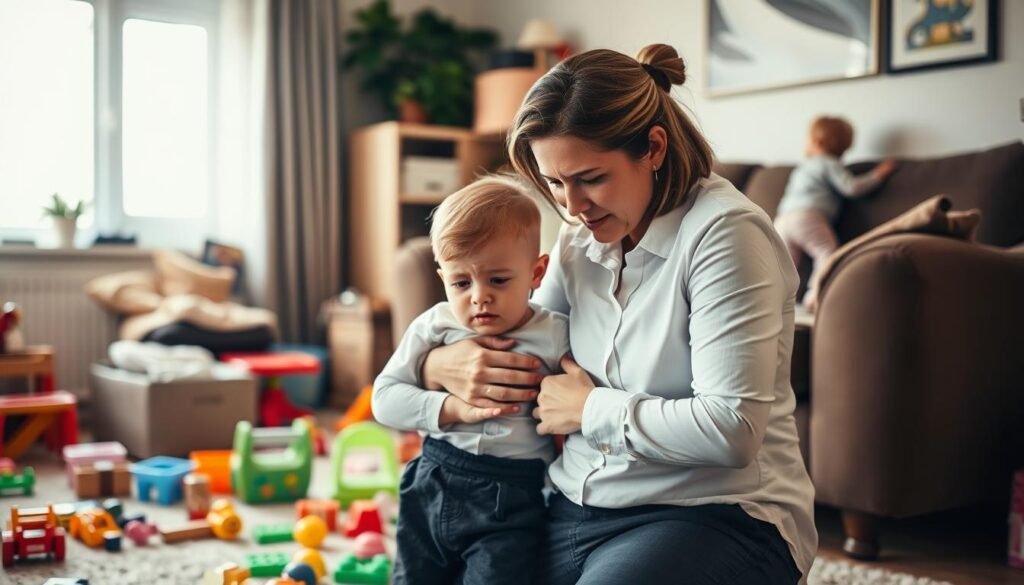
Dealing with Tantrums and Meltdowns
Tantrums often arise from fatigue, hunger, or rushing. Before you react, check your heart rate and muscle tension. This is your sign to pause, breathe, and lower your voice.
Stay out of power struggles. Say calm things like “I’m here. Let’s take our time.” After calming down, talk about what happened. Then, decide on one small change for the future. This shows kids patience and teaches them to manage their feelings.
- In the moment: Take deep breaths, feel grounded, and stay gentle.
- Afterward: Go over what happened, solve one problem, and do something reassuring, like hugging or drinking water.
Navigating Homework and Learning Issues
Evenings are busy with commutes, dinner, and homework. Things get better when families have a schedule, with clear start and stop times. Being patient helps kids handle hard efforts and setbacks better.
Talk to kids to find the main problems: confusing instructions, missing skills, or just being tired. Ask a few clear questions to help them figure out what to do next. These tips keep the focus on moving forward, not on punishments.
- Choose a quiet place to work with not too many gadgets around.
- Use a timer to break work into short periods with little breaks.
- Wrap up by reviewing what worked and what to tweak for the next day.
Managing Sibling Rivalry
Dealing with fights between siblings is hard on everyone. Start by making sure everyone is safe, then talk about feelings without picking sides. This helps manage everyone’s emotions and prepares for fair solutions.
Once things are calmer, teach skills like taking turns, using “I” statements, and making up. Get kids to share each other’s viewpoint before coming up with a plan together. These tips help change fights into chances to learn respect.
- Stop and ensure safety: separate if you have to.
- Understand each kid’s view in one sentence.
- Make a small plan together and check back soon.
| Challenge | Common Triggers | Regulation Tactic | Repair Step |
|---|---|---|---|
| Tantrums | Fatigue, transitions, hunger | Slow down, speak softly, ask less | Talk about what caused it, plan a change |
| Homework Friction | Too much to do, confusion, distractions | Make a schedule, limit task time, clarify goals | Look at successes, adjust plans |
| Sibling Rivalry | Not enough attention, shared toys, space issues | Understand feelings, take a time-out, clarify needs | Practice taking turns, set rules together |
Developing Patience as a Parent
Patience is something you develop through practice, not just by chance. By blending mindful parenting with everyday habits, families can turn their values into actions. The importance of patience is seen when small changes make tense moments into opportunities for learning.
Goal: create simple routines that reduce stress, make things clearer, and promote positive parenting. Here are some parenting tips that are practical for busy lives.
Mindfulness Techniques
Mindfulness means training your attention. It means noticing a thought, naming it, and then coming back to the present moment. Take a slow breath out to calm your nervous system and choose a gentler response.
These techniques help you react with less stress and stay focused on what matters. They help keep mindful parenting practical, especially in challenging times.
Setting Realistic Expectations
Let go of trying to be perfect. Kids grow in their own time and way, so expect ups and downs. Look at things through the lens of development: skills take time and practice to appear.
- Focus on what skill your child is learning, instead of the mistake (“You’re learning to wait”).
- Break it down: give one clear step, then build on it.
- Be kind to yourself when plans don’t work out; just adjust and keep going.
This approach reduces frustration and helps positive parenting. It encourages making choices that favor growth over quick fixes.
Practicing Self-Care
Energy is essential for parents. Make time for short, sure ways to recharge. Think of self-care as necessary, not just a treat.
- Take a quick break: five minutes for some sunlight or stretching.
- Get moving: a quick walk or workout can help shift your mood and focus.
- Stay connected: talking with a friend can help you feel grounded.
- Prepare for busy times: give yourself a ten-minute buffer first.
When you have energy, patience stretches further, and parenting techniques become easier to apply.
| Trigger Pattern | Bodily Cue | Prepared Toolkit | How to Iterate |
|---|---|---|---|
| Whining during homework | Tight jaw, shallow breath | Two box-breath cycles; one-sentence instruction; quiet timer | Review what worked; simplify next steps; commend effort |
| Morning rush delays | Racing heart | Five-minute buffer; visual checklist; a calm mantra: “Slow is smooth” | Find time-wasting habits; organize tasks the night before; update alarms |
| Sibling conflicts | Warm face, clenched hands | Step back; name feelings; set one rule, give one choice; quick calm-down time | Identify triggers; practice responses; alternate sharing items |
| Bedtime resistance | Shoulder tension | Stretch; dim the lights; predictable routine; soothing narration | Simplify steps; play a cue song; track sleep habits |
By applying these strategies consistently, mindful parenting becomes a regular part of daily life. It reinforces positive parenting and keeps the importance of patience in parenting in mind, through practical and repeatable tips.
The Role of Patience in Discipline
Discipline is more effective when it slows things down. Patience in parenting is not about doing nothing; it’s a strategy. By taking a moment to pause, adults can think clearly. They can set solid boundaries and keep the connection with their kids strong. This pause is key to positive and fair parenting.
Using a calm voice makes kids feel safe and ready to listen. Being calm helps parents control their emotions and lead by example. We can guide kids to make better choices this way. Everyone is treated with respect, making communication better.
Positive Discipline Strategies
Guide children instead of scaring them. Be clear about rules and explain them simply. Tell them what comes next and why it matters. Then, stick to your plan calmly and kindly.
- Plan ahead: Write down the rules and what happens if they’re broken. Talk about them when things are calm so kids know what to expect.
- Respond, don’t react: Take a deep breath, speak softly, and express your feelings using “I” statements. This shows kids how to handle their emotions.
- Validate and invite: Acknowledge your child’s feelings—“You seem upset about this rule”—and ask for their input. This approach keeps the conversation open and solves problems together.
- Repair and review: Once things are calm, go over the situation again. Say sorry if needed. It shows you’re responsible but still in charge.
Good communication with kids means using brief sentences, clear requests, and a kind tone. This builds a loving and structured environment.
How Patience Affects Behavior Outcomes
Patience in discipline tackles the real issues, not just the surface problems. Being thoughtful in responses eases conflicts and helps them end sooner. Kids learn self-control by watching adults. This helps them build healthy habits.
Science backs this up. Regular patience helps kids learn to plan and control urges. It also strengthens their emotional bonds, encouraging more teamwork and easier problem-solving.
- Short-term: less conflict, clearer decisions, and a safe place to learn from mistakes.
- Long-term: lasting changes in behavior, improved self-control, and trust in the family’s rules.
By practicing patience in parenting, we establish a consistent routine. This routine supports good parenting, helps parents manage their emotions, and improves how we talk to our kids. It makes every day better.
Patience in Communication
Talking calmly and slowly helps us really connect with our kids. When we are mindful, we give meaning a chance to show up. By doing this, we make patience a big part of talking to our kids every day.
We can show them how to be calm by waiting a bit before we speak, using easy words, and keeping our voice gentle. Taking short breaks in conversation makes room for thinking. This makes everyone feel safer, things clearer, and working together easier.
Active Listening Techniques
To listen well, we need to stop everything: look at our child, put away our phones, and take a deep breath. Next, we repeat what they said and how they feel: “You wanted more time; it feels like there’s too much rush.” This shows we respect them and are ready to find solutions together.
Being patient helps us see what our kids really need. It’s key for talking to them well and being positive parents. When kids feel understood, they’re more open to listening and learning.
Encouraging Open Dialogue
For a good talk, we need to feel safe. Start sentences with “I” to avoid blaming: “I need a plan we both can follow.” Ask them for their thoughts with clear questions: “What would make homework easier?”
In mindful parenting, we wait a moment before we answer and don’t get down on ourselves when we get upset. These steps help us avoid falling into old, unhelpful habits and remind us why being patient is important.
Using Non-Verbal Communication
Our body language speaks volumes. Stay relaxed, keep eye contact kind, and don’t fidget. Speak softly and warmly. If you start feeling tense, take a one-minute break and breathe slowly to calm down.
These actions make kids feel safe and heard without words. Along with clear speaking, these actions show strong, positive parenting and are part of being mindful parents.
Trust dividends come from listening patiently and being consistently there. Kids then talk more openly, resist less, and respect boundaries better. Over time, these efforts show the value of patience in every chat.
Patience During Early Development Stages
Early development moves fast but not evenly. When kids grow or learn new things, there can be crying, loudness, and messiness. Mindful parenting makes these times into lessons. It also builds a strong, patient bond with kids.
Infancy and Toddlerhood Challenges
Babies and toddlers have times when they can’t sleep well, cling more, or have sudden outbursts. To stay calm, try taking a deep breath, counting to five, or stepping away if it’s safe. These actions help adults be peaceful and responsive. They teach self-control and are good tips for tough times.
Having a routine helps. A regular pattern of eating, sleeping, and playing calms them. When they get upset, speak softly and say: You’re tired; we’re here. This approach shows you’re patient and helps kids feel better about their emotions.
Being tired or rushed can make it hard. Planning ahead—like leaving earlier, having snacks ready, or bringing a favorite toy—can help you stay calm. Mindful parenting means keeping things warm and gentle, even when things get busy.
Preschooler Behavior Responses
As kids start doing things on their own, being clear and understanding helps guide them. Tell them what will happen, why it’s important, and what they can choose to do. This way, everyday issues teach skills instead of causing fights.
Being consistent is key for positive discipline: stick to what you say, praise their effort, and help fix mistakes. These tips help with self-control and talking about feelings. Over time, this patient teaching helps kids solve problems and listen better.
Letting kids try things, like zipping up their coats or putting shoes by the door, shows you trust them. This trust builds their self-esteem and keeps them moving forward. With mindful parenting, we give them time to get good at new things without rushing.
| Stage | Common Challenge | Calm Response | Skill Built | Why It Works |
|---|---|---|---|---|
| Infancy | Night waking | Quiet check-in, gentle touch, predictable routine | Self-soothing cues | Repetition pairs comfort with sleep, reinforcing safety through patience with children |
| Toddlerhood | Tantrums | Stay nearby, validate feeling, offer one simple choice | Emotion labeling | Validation lowers stress; choice restores control within limits using mindful parenting |
| Preschool | Defiance during transitions | Advance warning, visual cue, consistent follow-through | Executive function | Predictability reduces resistance and supports fostering self-esteem in children through success |
| Preschool | Sibling conflict | Pause, describe facts, guide turn-taking | Negotiation | Neutral coaching teaches fair play and models effective parenting tips |
Long-Term Effects of Patience on Children
The Importance of Patience in Parenting is key at school, home, and play. It helps shape a child’s inner compass. Through calm guidance and consistent presence, positive parenting helps young minds organize feelings, reflect before acting, and try again after a setback. This approach boosts autonomy and confidence in daily life.
When adults model balance—feeling with clarity and thinking with care—children learn to do the same. This balance builds strong confidence over time. It also helps develop problem-solving skills that adapt to the real world.
Building Resilience in Children
Patience can turn stress into a learning moment. When parents stay calm and steady in tense moments, kids learn to regulate themselves. They watch and learn, building resilience by overcoming small failures and facing new tasks confidently.
A mix of warm validation and clear limits keeps kids focused on goals. This strategy strengthens secure attachment and persistence. Plus, it boosts self-esteem in children because it values effort and progress over perfection.
- Model a brief pause before reacting to missteps.
- Name the feeling, then name the next step.
- Praise strategy use, not just outcomes.
Enhanced Problem-Solving Skills
Patient coaching teaches a valuable process: plan, stay calm, then review. Kids learn to explore options, pick a strategy, and adjust to challenges. This process improves working memory and flexibility over time.
Quick talks after conflicts help kids learn: What worked? What’s next? These conversations, based on positive parenting, change setbacks into planning opportunities. They also help build self-esteem in kids by showcasing their growing skills.
| Parental Practice | Child Skill Strengthened | Daily Example | Long-Horizon Payoff |
|---|---|---|---|
| Calm verbal labeling of emotions | Self-regulation | “You’re frustrated; let’s count to five.” | Fewer outbursts during homework |
| Pre-plan, regulate, review cycle | Executive function | Set steps before a project; recap after | Improved task initiation and follow-through |
| Validation plus clear limits | Resilience and persistence | “It’s tough, and you can try again at 4 PM.” | Greater stamina with challenging subjects |
| Focus on strategies over grades | Growth mindset | “Your outline made the essay clearer.” | Steady progress across school years |
“Patience is the companion of wisdom.” — Saint Augustine
When families embrace these habits, building resilience in kids becomes part of daily life. These habits also improve reflective thinking in various settings. That means the benefits of patience extend to classrooms, teams, and friendships.
By consistently taking small, calm steps, children learn problem-solving skills without getting discouraged. This steady effort helps them form a strong sense of self, aligned with positive parenting. It keeps building their self-esteem through visible, well-earned achievements.
Cultural Perspectives on Patience in Parenting
Across cultures, families show patience in ways that reflect their local values and honor child development. In places like the United States, Japan, and Norway, caregivers practice mindful parenting. This means they slow down their reactions, make sense of the situation, and control their tone.
These actions help communicate effectively with children. They also showcase the importance of patience in parenting as both a value and a skill.
Positive parenting can look different in each home: some value calm independence, while others stress working together. But the goal is the same—to build strong bonds and promote consistent learning. When caregivers set clear rules and stick to them, kids see this as safety rather than control.

Influences of Different Cultures
Cultures around the world influence how adults communicate, how long they wait before speaking, and how they show respect. For example, in many Indigenous communities, not speaking is seen as giving space for thought. This helps improve communication with children. In South Korea, being patient often means being diligent, while in Italy, showing warmth goes hand in hand with setting clear boundaries.
- Communication norms: pause length, eye contact, and turn-taking guide mindful parenting during conflict.
- Independence vs. interdependence: some families coach self-advocacy; others stress teamwork under pressure.
- Discipline style: calm repetition and routine help children predict outcomes, a core of positive parenting.
Despite these cultural differences, the benefits to the nervous system are the same. Things like slow breathing, using a soft voice, and following routines reduce stress for both adults and children. These practices show the importance of patience in parenting in everyday life.
Global Views on Parenting Patience
Patience is seen as a key value around the world. When adults validate children’s feelings and keep expectations clear, kids learn to pause. They can name their feelings and make better choices. This builds effective communication and trust with children.
Some practical steps can be used across different countries. Identifying what bothers us, taking a moment to pause, and apologizing sincerely after mistakes are helpful. These actions fit into many cultures and highlight mindful parenting without forgetting about local traditions.
| Region | Patience in Practice | Communication Focus | Discipline Approach | Developmental Benefit |
|---|---|---|---|---|
| United States | Mindful pauses before correction | Direct talk with child input | Consistent rules with choice | Self-regulation and voice |
| Japan | Modeling calm perseverance | Attentive listening and silence | Routines that teach responsibility | Emotional restraint and harmony |
| Norway | Low-reactivity coaching | Collaborative problem-solving | Natural consequences | Autonomy with empathy |
| Mexico | Warm patience during correction | Respectful tone and stories | Family-centered guidance | Belonging and cooperation |
| India | Calm authority with flexibility | Deference balanced with care | Expectation plus gentle follow-through | Delay of gratification |
In all these places, positive parenting works best when adults mix firm rules with kindness. The Importance of Patience in Parenting becomes practical through daily routines, taking time to reflect, and kindly fixing mistakes. This forms the common language of mindful parenting around the globe.
Tips for Cultivating Patience Daily
Patience grows from doing little things every day. Each day is a chance to start fresh at home and be more mindful as a parent. We’re aiming for steady improvement, not being perfect. This helps us manage our emotions better. Plus, it keeps our daily routines simple and clear.
Simple Daily Practices: Start with quick check-ins in the morning and evening. Identify what sets you off, like being tired or rushed, and plan ways to ease these moments. Practice being mindful for just 60–90 seconds at a time through deep breathing, short meditations, or pausing to think before reacting. Have routines that everyone knows about, with clear rules and consistent outcomes that you talk about when things are calm. When things get heated, take a break from the argument, remind yourself to stay calm, and then come back to solve the issue. If things went wrong, talk it over and say sorry if you need to. Doing this every day helps our kids become more resilient.
The Importance of Support Networks: Being patient isn’t just about us. It also means taking care of ourselves by spending time with friends or getting help when needed. This reduces feeling alone and helps us stay calm as parents. Join groups where you can learn from other parents on how to stay patient and positive. Watching helpful videos can also boost your skills in being mindful. By learning with others, we become better parents and feel more confident, even when stressed.
Keeping a patient mindset is key: see it as a discipline. Stick to a “Wise Mind” that balances feelings and logic. By doing little things over time, we train our brains to regulate our emotions better. This strengthens our bonds with our kids and creates a peaceful home. These tips also help our children learn to be resilient.


