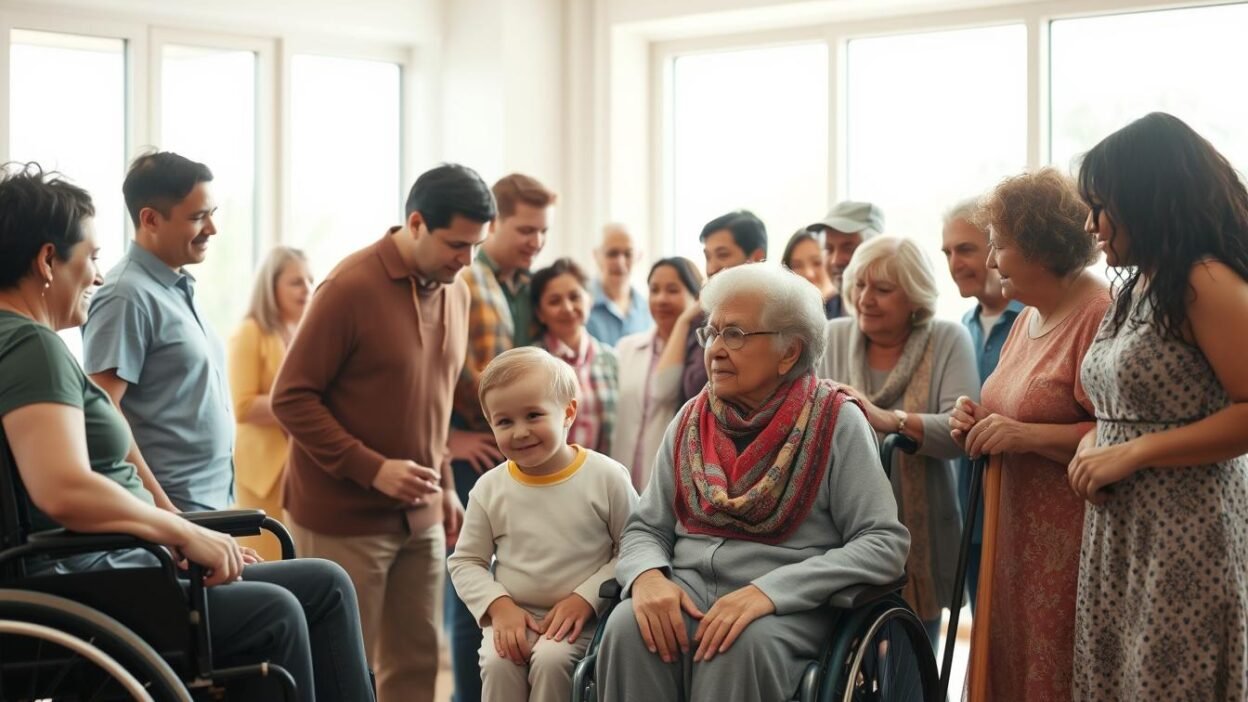
How do we know when someone needs individualized care beyond standard support? This question helps us understand special needs better. Special needs covers many physical, emotional, behavioral, and learning conditions.
Building awareness around special needs begins with understanding early signs, developmental differences, and the importance of timely intervention. The Special Needs Awareness section on SpecialNeedsForU provides clear, accessible guidance to help parents and educators identify concerns early and respond with confidence. To explore how a child’s growth unfolds across age levels, readers can also visit the Developmental Milestones resources, which offer practical benchmarks and red-flag indicators. For families seeking deeper insights into behavioural patterns, cognitive differences, or emotional wellbeing, PsyForU.com offers expert-backed psychological explanations and mental-health strategies. Additionally, for parents looking to build stronger routines, enhance family communication, or reduce stress at home, articles on IntentMerchant.com can support intentional living and caregiving. Together, these platforms empower families to create environments where every child feels understood, supported, and valued.
Each person’s needs differ based on their unique circumstances. Their challenges shape what kind of support works best.
The scope of this topic is bigger than most people think. As of 2018, 19.4 percent of all children under 18 in the United States had special health care needs. That’s more than 14 million young people across the country.
This statistic shows the widespread prevalence of disabilities today. It highlights why disability awareness matters so much in our society.
Merriam-Webster defines special needs as physical, emotional, behavioral, or learning difficulties. These difficulties mean a person needs additional or specialized services. They may also need specific accommodations to thrive.
Cornell Law School’s Wex offers a legal view of the term. It defines special needs as individualized care a person with a disability requires. This care ensures their safety, access to public spaces, and success.
This guide connects theory with real-world practice. It offers clear, solid information for educators and parents. Healthcare professionals and anyone wanting to understand special needs will find it useful.
The information covers educational, social, and legal frameworks. These frameworks help create supportive environments for everyone.
Key Takeaways
- Special needs represent a spectrum of conditions requiring individualized accommodations across physical, emotional, behavioral, and learning domains
- Nearly one in five American children (19.4%) requires specialized health care services, affecting over 14 million young people
- Both medical and legal definitions emphasize the importance of personalized support to ensure safety, access, and success
- Understanding special needs involves recognizing diverse requirements ranging from learning disabilities to physical conditions
- Contemporary approaches prioritize person-first language that emphasizes the individual rather than the disability
- This knowledge serves educators, parents, healthcare professionals, and policymakers in creating inclusive environments
Understanding Special Needs
Special needs represent a complex framework of human differences. Educators, healthcare providers, and communities must understand these differences comprehensively. The term encompasses individuals who require specialized assistance for medical, mental, or psychological disabilities.
These conditions affect how people learn, communicate, move, and interact with the world. Recognizing the full spectrum of human diversity is essential. This knowledge forms the foundation for creating supportive environments where all individuals thrive.
Clinical and Educational Definitions
In clinical contexts, special needs refers to individuals requiring assistance for disabilities across multiple domains. The Diagnostic and Statistical Manual of Mental Disorders (DSM) provides standardized guidelines for clinical diagnosis. The International Classification of Diseases 9th edition (ICD-9) establishes specific criteria professionals use to identify conditions.
The medical model approach focuses on individual impairments and biological factors that create functional limitations. This perspective emphasizes diagnosis, treatment, and rehabilitation through clinical interventions. Medical professionals use this framework to document conditions and prescribe appropriate therapies.
The social model perspective examines how environmental barriers and societal attitudes create disability. Limitations often result from inaccessible buildings, discriminatory policies, and negative perceptions. The social model has transformed how communities design inclusive spaces and develop supportive policies.
Educational definitions emphasize how conditions affect learning and academic performance. In parts of the United Kingdom, special needs usually refers to special educational needs (SEN). Scotland uses the term additional support needs, while Wales adopted additional learning needs (ALN) terminology in 2021.
The severity of conditions varies significantly among individuals. Students with severe special needs typically have IQ scores between 20 and 35. These individuals require intensive support services and highly specialized educational programming.
Categories and Characteristics
The types of special needs encompass a broad spectrum of conditions. Each category presents unique challenges and requires tailored intervention strategies. Organizing these conditions into classifications helps professionals develop appropriate support plans.
Developmental disabilities include conditions that appear during childhood and affect ongoing development. Autism spectrum disorder impacts social communication and behavior patterns. Down syndrome results from chromosomal differences affecting cognitive and physical development.
Learning disabilities affect how individuals process information and acquire academic skills. Dyslexia creates challenges with reading and language processing. Dyscalculia impacts mathematical reasoning and number sense.
| Category | Example Conditions | Primary Impact Areas | Common Interventions |
|---|---|---|---|
| Developmental Disabilities | Autism, Down Syndrome | Social communication, cognitive development | Behavioral therapy, specialized instruction |
| Learning Disabilities | Dyslexia, Dyscalculia, Dysgraphia | Reading, mathematics, writing skills | Multisensory instruction, assistive technology |
| Attention/Behavioral | ADHD | Focus, impulse control, organization | Behavioral strategies, medication, structure |
| Physical Disabilities | Cerebral Palsy, Missing Limbs | Movement, mobility, physical tasks | Physical therapy, adaptive equipment |
| Sensory Impairments | Blindness, Deafness | Vision, hearing, environmental access | Assistive devices, alternative communication |
Attention and behavioral conditions like ADHD affect focus, impulse control, and executive functioning skills. Students with these conditions may struggle to maintain attention during instruction. Structured environments and behavioral interventions help these individuals succeed.
Physical disabilities impact movement and mobility. Cerebral palsy affects muscle control and coordination. These conditions often necessitate modifications to physical environments and specialized equipment.
Sensory impairments affect how individuals perceive their environment. Blindness limits visual information processing, while deafness impacts auditory communication. Both conditions require alternative methods for accessing information and communicating with others.
Chronic health conditions like cystic fibrosis affect overall health and may require ongoing medical treatment. These conditions can impact school attendance, energy levels, and participation in physical activities. Understanding these needs helps schools provide appropriate accommodations and support.
Building Comprehensive Awareness
Disability awareness constitutes a fundamental competency for educators, healthcare professionals, parents, and community members. Comprehensive knowledge about special needs enables early identification of concerns. This proactive approach significantly improves outcomes for individuals requiring support.
Awareness reduces stigma by replacing misconceptions with accurate information. Special needs reflect neurological, physical, or developmental differences rather than personal failings. This understanding creates more welcoming environments where individuals feel valued and supported.
Early identification and intervention depend on widespread understanding of special needs indicators. Teachers who recognize signs of learning disabilities can refer students for evaluation. Healthcare providers who understand developmental milestones can identify delays and recommend early intervention services.
Inclusive environments emerge when communities prioritize disability awareness. Schools implement universal design principles that benefit all learners. Workplaces adopt flexible policies that accommodate diverse needs.
Appropriate allocation of resources requires understanding the specific needs of different conditions. Budget decisions become more informed when administrators comprehend required support services. Policy makers develop more effective legislation when they understand challenges faced by individuals with disabilities.
Professional development in disability awareness enhances service delivery across sectors. Educators gain strategies for differentiating instruction and supporting diverse learners. Healthcare providers improve their ability to communicate with patients who have various needs.
Identifying Special Needs
Identifying special needs starts with watching developmental patterns and behavioral signs across many areas. Recognition is the first step toward getting support services and interventions that improve outcomes. Understanding special needs means knowing typical developmental milestones and spotting variations that signal additional help is needed.
Identification isn’t about labeling or limiting potential. It opens pathways to resources, accommodations, and specialized instruction that help individuals thrive. The earlier these needs are recognized, the sooner targeted interventions can begin.
Recognizing Developmental Indicators
Special needs show up through observable patterns that differ from typical developmental paths. These indicators appear across several connected areas, each providing valuable information about an individual’s unique profile. Cognitive markers often include difficulty processing or retaining information and challenges with problem-solving tasks.
Linguistic development frequently reveals important clues about underlying needs. Speech delays, articulation difficulties, or comprehension challenges that extend beyond age-appropriate expectations warrant attention. Some children understand language well but struggle to express themselves.
Social-emotional indicators represent another critical dimension of disability awareness. Difficulty forming peer relationships, challenges regulating emotions, or unusual responses to social cues may suggest developmental differences. These patterns become particularly noticeable in group settings where social demands increase.
Physical manifestations include motor skill delays that affect coordination, balance, or fine motor control. Sensory sensitivities—either heightened or diminished responses to sounds, textures, lights, or movement—also provide important diagnostic information. Some individuals exhibit sensory-seeking behaviors while others actively avoid certain stimuli.
Academic red flags emerge when students experience persistent struggles with reading, writing, or mathematics despite receiving adequate instruction. The key distinction lies in the persistence and severity of these challenges. Temporary difficulties during the learning process are different from ongoing struggles.
Early identification consistently correlates with more favorable long-term outcomes across cognitive, academic, and social domains.
Several factors influence how and when signs become apparent:
- Age and developmental stage: Some conditions present obvious indicators from infancy, while others become noticeable only when academic or social demands increase during school years
- Condition severity: Mild manifestations may remain undetected without careful observation, whereas significant challenges typically prompt earlier concern
- Environmental context: Structured settings often reveal difficulties that remain masked in familiar, supportive home environments
- Individual strengths: Compensatory strategies can temporarily conceal underlying challenges, particularly in highly capable individuals
Determining Appropriate Timing for Evaluation
Knowing when to pursue professional evaluation represents a common concern for parents and educators. Understanding special needs includes recognizing that seeking assessment demonstrates responsible advocacy. Persistent developmental delays that extend beyond typical variation warrant professional attention, particularly when they affect multiple skill areas.
Regression in previously acquired skills always merits immediate evaluation. If a child loses abilities they once demonstrated—whether language, motor skills, or social engagement—this signals a need for prompt assessment. Significant discrepancies between ability areas, such as advanced verbal skills combined with severe motor delays, suggest comprehensive evaluation is needed.
Behaviors that substantially interfere with learning, social functioning, or daily activities require professional input. These may include extreme difficulty following instructions or inability to maintain attention for age-appropriate periods. Even without obvious markers, persistent parental or educator concerns justify seeking evaluation.
Common barriers prevent families from pursuing timely evaluation:
- Fear of labeling: Concerns that diagnosis will limit opportunities or define a child’s identity
- Cultural factors: Different cultural perspectives on disability and help-seeking behaviors
- Process uncertainty: Lack of knowledge about where to begin or how to navigate systems
- Financial concerns: Worries about evaluation costs or ongoing service expenses
Addressing these barriers requires recognizing that identification represents the beginning of a support process rather than a limiting diagnosis. Early identification through professional evaluation enables access to evidence-based interventions during critical developmental periods. This is when neuroplasticity and learning potential are greatest.
Initial steps toward evaluation include consulting with pediatricians who can conduct developmental screenings and provide referrals to specialists. Schools offer evaluation services through special education departments when academic or behavioral concerns emerge. Community resources, including early intervention programs and disability service organizations, provide additional assessment pathways.
The evaluation process typically involves multiple professionals assessing different developmental domains. This comprehensive approach ensures accurate identification of needs and appropriate recommendations for support. Results guide the development of intervention plans tailored to individual strengths and challenges.
Types of Disabilities
Disabilities fall into three main groups: intellectual, physical, and sensory. Each type affects people differently and needs specific support. Understanding these categories helps families and teachers provide better care.
This system helps identify the right support for each person. However, many people have more than one type of disability. Each person’s needs are unique and may change over time.
Knowing about different disabilities helps communities build better support systems. These categories guide resource planning while respecting each person’s individual experience.
Cognitive and Developmental Conditions
Intellectual disabilities involve significant limitations in thinking and adaptive behavior that start during childhood. These conditions affect how people learn, solve problems, and handle daily tasks. Doctors look at IQ scores and daily living skills to determine support needs.
There are four severity levels based on IQ scores. Mild disabilities range from 50 to 70 IQ points. Moderate cases fall between 35 and 50, while severe range from 20 to 35.
Profound disabilities score below 20 on IQ tests. However, IQ scores tell only part of the story. Daily living skills matter just as much for planning support.
| Severity Level | IQ Range | Adaptive Functioning | Support Requirements |
|---|---|---|---|
| Mild | 50-70 | Can achieve academic skills at elementary level; may live independently with minimal support | Intermittent guidance in complex tasks; vocational training |
| Moderate | 35-50 | Basic self-care skills achievable; requires structured environments for learning | Limited ongoing support in daily activities; supervised living arrangements |
| Severe | 20-35 | Limited communication abilities; requires assistance with most daily activities | Extensive continuous support; specialized educational programs |
| Profound | Below 20 | Minimal understanding; complete dependence for self-care | Pervasive support across all life domains; medical supervision often needed |
Down syndrome is caused by extra chromosome material that creates distinct physical features. People with Down syndrome learn best through repeated practice and hands-on activities. They may also need medical care for heart or thyroid problems.
Other conditions include autism, which affects social skills and behavior patterns. Dyslexia impacts reading, while dyscalculia affects math skills. Dysgraphia influences writing, and dyspraxia impairs movement coordination.
Teaching focuses on practical skills for daily life and real-world situations. Teachers avoid limiting students based on labels alone. The goal is building independence through proper support and high expectations.
Mobility and Physical Conditions
Physical disabilities affect body structure, movement, or coordination. These conditions may be present at birth or develop from injury or illness. Physical challenges do not mean a person has cognitive limitations.
Cerebral palsy is a group of movement disorders caused by early brain damage. It can cause stiff muscles, involuntary movements, or balance problems. Some people need only minor support, while others require wheelchairs and extensive help.
Cleft lip and palate affect facial structure and may impact speech and eating. Spina bifida involves incomplete spinal development that can cause paralysis. Muscular dystrophy causes progressive muscle weakness over time.
Other physical disabilities affecting daily functioning include:
- Cystic fibrosis, a genetic condition affecting respiratory and digestive systems
- Juvenile arthritis causing joint inflammation and mobility limitations
- Osteogenesis imperfecta resulting in fragile bones prone to fractures
- Spinal cord injuries creating temporary or permanent paralysis
Understanding whether a condition is stable or progressive helps with long-term planning. Assistive technology and environmental modifications greatly increase independence. Wheelchairs, adaptive tools, and accessible buildings remove barriers to participation.
Schools must provide physical accommodations while maintaining high academic standards. Students with physical disabilities often have typical or above-average intelligence. They need appropriate challenges and opportunities for success.
Vision and Hearing Conditions
Sensory impairments affect how people gather information through sight or sound. These disabilities range from mild reductions to complete loss of a sense. They impact communication, learning methods, and social interactions.
Visual impairments include low vision and total blindness. Causes include birth defects, genetic disorders, injuries, and diseases. Students benefit from Braille, audiobooks, screen readers, and mobility training.
Hearing impairments range from mild loss to profound deafness. The age when hearing loss occurs affects language development significantly. Support includes sign language, hearing devices, captions, and strategic classroom seating.
Many Deaf people view deafness as a cultural identity rather than just a disability. American Sign Language is a complete language with its own grammar and culture. This perspective challenges views that see deafness only as something to fix.
The greatest barrier to learning is not the absence of sight or sound, but the absence of accessible information and inclusive environments that recognize diverse ways of perceiving the world.
People who are both deaf and blind face unique challenges requiring specialized support. They rely on touch-based communication and need intensive help accessing information. Moving through environments safely requires careful training and support.
Technology continues improving accessibility for sensory impairments. Screen magnification, cochlear implants, and FM systems expand educational and work opportunities. Sensory impairments require alternative access methods, not lower expectations.
These categories provide a foundation for individualized support, not limits on potential. Each person combines unique strengths, challenges, and abilities beyond any label. Effective support addresses specific needs while fostering dignity, independence, and full participation.
Education for Students with Special Needs
Special needs education includes many supports that ensure fair access to learning. The 1990 Individuals with Disabilities Education Act changed how schools work. Now, schools cannot exclude or discriminate against students with disabilities.
This law transformed educational practices across the United States. Students with special needs deserve meaningful participation in academic environments. They should learn alongside their peers.
Modern special needs education goes beyond just placing students in classrooms. It involves sophisticated planning processes and coordinated service delivery. Educators, specialists, and families work together continuously.
Understanding special needs requires examining three connected elements. These are inclusive practices, individualized planning, and comprehensive support services.
Creating Inclusive Learning Environments
Inclusive education is both a philosophical commitment and a practical framework. It educates students with disabilities alongside typically developing peers in general education settings. This approach moves beyond simply placing students in mainstream classrooms.
Schools must fundamentally rethink how they design instruction to meet diverse learning needs. The principle recognizes that all students benefit from exposure to diversity. Segregation limits opportunities for growth.
Research shows substantial benefits of inclusive practices. Douglas Marston conducted a pivotal study examining integrated learning environments. Students in integrated settings experienced greater improvements in reading skills.
These findings provide empirical support for policies promoting inclusion. Inclusion is academically beneficial, not merely socially desirable.
Inclusive classrooms offer significant social benefits beyond academic advantages. Students with disabilities develop friendships with typically developing peers. They improve interpersonal skills and experience greater acceptance.
Surrounding students receiving accommodations for special needs with diverse peers helps them. They are exposed to age-appropriate social models. This reduces stigma associated with disability.
Effective inclusion requires more than physical proximity. Schools must implement differentiated instruction that addresses varying ability levels. They apply universal design for learning principles.
Collaborative teaching models are essential for successful inclusion. Special educators and general educators work together. Successful integration depends on intentional planning, adequate resources, and school-wide commitment.
International trends reflect growing commitment to inclusive practices. In Europe, more students with special needs join regular classrooms. Placement in segregated special education classrooms declines.
This shift represents broader recognition of inclusion’s value. Properly supported inclusion produces superior outcomes across academic, social, and developmental domains.
Individualized Education Programs as Planning Tools
The Individualized Education Program is the cornerstone of special needs education. This legally mandated document serves dual purposes. It functions as both a comprehensive planning tool and a binding commitment.
The IEP ensures each student receives educational services tailored to their unique needs. Students don’t receive generic programming based solely on disability category.
An IEP contains several essential components that create a complete picture. The document begins with present levels of academic achievement and functional performance. This establishes baseline data about what the student currently knows.
From this foundation, the team develops measurable annual goals. These goals target specific areas for growth and improvement.
| IEP Component | Purpose | Key Elements | Review Frequency |
|---|---|---|---|
| Present Levels of Performance | Establish baseline abilities and needs | Academic skills, functional capabilities, impact of disability | Annual or as needed |
| Measurable Annual Goals | Define specific learning targets | Objective criteria, evaluation methods, progress monitoring | Quarterly progress reports |
| Special Education Services | Specify instructional supports | Service type, frequency, duration, location | Annual review |
| Accommodations and Modifications | Ensure access to curriculum | Testing accommodations, instructional modifications, assistive technology | Ongoing with formal annual review |
| Participation with Nondisabled Peers | Maximize inclusion opportunities | Percentage of time in general education, justification for removal | Annual consideration |
The IEP also details accommodations for special needs that enable students to access curriculum effectively. Accommodations might include extended time on tests or preferential seating. Use of assistive technology is another common accommodation.
The document specifies the extent students will participate with nondisabled peers. Inclusion represents the default unless the IEP team determines otherwise. Decisions are based on individual needs.
Development of an IEP involves a structured process. Schools conduct comprehensive evaluations to determine eligibility for services. Then they convene a team meeting.
The team includes parents, general education teachers, special education teachers, and relevant specialists. This collaborative approach ensures multiple perspectives inform planning. Families maintain meaningful involvement in educational decision-making.
For older students, IEPs incorporate transition planning. This prepares them for post-secondary education, employment, and independent living. These provisions recognize that effective special needs education extends beyond academic instruction.
Annual reviews ensure IEPs remain responsive to changing needs. Schools must fulfill their legal obligations.
Comprehensive Support Services
Students with special needs may receive an extensive array of support services. These are determined by individual requirements rather than disability label. Special education instruction delivered by credentialed teachers represents the foundation.
Many students benefit from additional related services that address specific developmental needs. These services work together to provide holistic support. They target academic, functional, social, and behavioral domains.
Related services encompass specialized interventions like speech-language therapy to address communication disorders. Occupational therapy develops fine motor skills and daily living abilities. Physical therapy improves gross motor function and mobility.
Counseling services support emotional and behavioral health. Transportation ensures students can access specialized programs. Assistive technology provides tools that compensate for disabilities.
Schools may also provide paraprofessional support. Trained aides work under teacher supervision to assist students with disabilities. Behavioral intervention services help address challenging behaviors through systematic, evidence-based approaches.
Transition services for adolescents connect students with community agencies. They prepare students for post-school life. The range of available supports reflects recognition that special needs education must address the whole child.
Service delivery occurs through various models. Push-in services bring specialists into general education classrooms. This supports students in natural contexts.
Pull-out services provide intensive intervention in separate settings for focused skill development. Collaborative models involve special educators working alongside general educators. They co-teach and support all students.
Effective accommodations for special needs require thoughtful decisions about service delivery models. These must balance intensive support with inclusion opportunities.
Coordination among service providers ensures coherent and effective support. Multiple specialists may work with a single student. Communication and collaboration prevent fragmented services and conflicting approaches.
Regular team meetings help align efforts toward common objectives. Shared documentation systems support coordination. Integrated goal-setting processes ensure services interact and reinforce one another.
Contemporary special needs education represents a mature system built on decades of development. Through inclusive practices, individualized planning via IEPs, and comprehensive support services, schools provide access. Students with disabilities can access challenging curriculum and achieve meaningful educational outcomes.
Legal Protections
The journey from historical marginalization to contemporary legal protection represents a major shift. American society now recognizes and accommodates individuals with disabilities. For centuries, people with disabilities faced systematic exclusion.
Many were confined to institutions or subjected to inhumane treatment. Society viewed them as embarrassments rather than valued community members. In some countries, individuals with disabilities endured torture and even execution.
The late 20th century brought transformative change through comprehensive civil rights legislation. These laws established that disability awareness must translate into concrete protections and actionable rights. Federal statutes now prohibit discrimination across multiple domains of public life.
This legal framework ensures that individuals with disabilities can participate fully. They gain access to education, employment, and community activities.
Two landmark pieces of legislation form the cornerstone of disability rights in the United States. These laws create enforceable obligations for schools, employers, and service providers. They transform abstract principles of equality into practical accommodations for special needs.
Landmark Federal Legislation Prohibiting Discrimination
The Americans with Disabilities Act (ADA) was enacted in 1990. It stands as one of the most comprehensive civil rights laws in American history. This legislation prohibits discrimination against persons with disabilities in public life.
The ADA extends protection far beyond educational settings. It encompasses employment, transportation, government services, and commercial facilities.
The ADA operates through five distinct titles that address different aspects of public accessibility. Title I governs employment practices, requiring workplaces with 15 or more employees to provide reasonable accommodations. Employers cannot discriminate in hiring, promotion, or termination based on disability status.
These accommodations for special needs might include modified work schedules or assistive technology. Physical workspace adaptations also help employees succeed.
Title II ensures accessibility of state and local government programs, services, and transportation systems. Public transit authorities must provide accessible vehicles and paratransit services. Government buildings must meet architectural standards that allow individuals with mobility impairments to access services.
Title III addresses public accommodations operated by private entities. Restaurants, retail stores, schools, recreational facilities, and service providers must ensure their facilities are accessible. This includes both physical accessibility and communication accommodations.
Title IV mandates accessible telecommunications services. Title V contains miscellaneous provisions regarding the law’s relationship to other statutes.
The ADA defines disability as a physical or mental impairment. It must substantially limit one or more major life activities. Major life activities include walking, seeing, hearing, speaking, breathing, learning, and working.
The definition also covers individuals with a history of such impairments. It includes those perceived as having disabilities.
Reasonable accommodations represent modifications or adjustments that enable qualified individuals with disabilities. They help people perform essential job functions or access services. However, entities need not provide accommodations that impose undue hardship.
Undue hardship means significant difficulty or expense relative to the organization’s resources. This balance ensures special needs support while recognizing practical limitations.
The ADA’s accessibility standards extend to digital platforms and emerging technologies. Websites, mobile applications, and electronic information must be accessible. Individuals using screen readers or other assistive technologies must have equal access.
Educational Rights and Services Legislation
The Individuals with Disabilities Education Act (IDEA) specifically addresses educational services. It covers children and youth with disabilities. Originally enacted as the Education for All Handicapped Children Act in 1975, this legislation underwent subsequent reauthorizations.
These changes strengthened and expanded its protections. IDEA established that students with disabilities cannot be excluded or discriminated against in the education system.
IDEA’s core principle guarantees a free appropriate public education (FAPE). Students receive services in the least restrictive environment (LRE). FAPE means individualized services provided at no cost to families.
LRE requires that students with disabilities be educated alongside their nondisabled peers. This happens to the maximum extent appropriate. Removal to separate classrooms or schools occurs only when necessary.
Separation happens when the nature or severity of the disability prevents satisfactory education. Regular classes with supplementary aids and services are preferred.
Six foundational principles structure IDEA’s approach to special needs support. The zero reject principle mandates that all children with disabilities must receive education. This applies regardless of the severity of their disability.
Nondiscriminatory evaluation requires fair, comprehensive assessments. These assessments avoid cultural or linguistic bias.
The procedural due process principle establishes protections ensuring parental participation in educational decisions. Parents have the right to examine records and receive written notice of proposed changes. They can participate in meetings about their child’s education.
Families can request mediation or due process hearings when disputes arise. Parent and student participation in decision-making ensures meaningful input. Those most affected shape educational planning.
IDEA identifies thirteen disability categories under which students qualify for services. These categories include autism, deaf-blindness, emotional disturbance, hearing impairments, and intellectual disabilities. Others include orthopedic impairments, specific learning disabilities, speech or language impairments, traumatic brain injury, and visual impairments.
Each eligible student receives an individualized education program tailored to their unique needs.
The legislation provides services across age ranges through different parts. Part C addresses early intervention services for infants and toddlers from birth to age three. These services support developmental progress during critical early years.
Part B governs special education and related services for students ages three through twenty-one. This comprehensive age span ensures continuity of accommodations for special needs throughout a child’s educational journey.
IDEA requires that schools provide related services necessary for students to benefit from special education. These services may include transportation, speech-language pathology, psychological services, and physical therapy. Occupational therapy, counseling, and orientation and mobility services are also available.
The scope of services reflects recognition that educational access requires addressing multiple dimensions of student needs.
| Legal Framework | Primary Focus | Key Protections | Populations Served |
|---|---|---|---|
| Americans with Disabilities Act | Civil rights across public life domains | Prohibits discrimination in employment, government services, public accommodations, telecommunications | All individuals with disabilities in employment, commerce, civic participation |
| Individuals with Disabilities Education Act | Educational services and supports | Guarantees free appropriate public education in least restrictive environment with individualized services | Infants, children, and youth ages birth through 21 with qualifying disabilities |
| Section 504 (Rehabilitation Act) | Nondiscrimination in federally funded programs | Prevents exclusion and ensures accessibility in schools, workplaces receiving federal funds | Individuals with disabilities in federally funded entities |
These legal frameworks transform abstract principles of equality and inclusion into enforceable rights. They create practical implications for schools, employers, and service providers. Educational institutions, employers, and service providers face legal obligations grounded in civil rights principles.
Accommodating individuals with disabilities represents not merely good practice but mandatory compliance with federal law.
The existence of these protections reflects decades of advocacy by disability rights activists. They challenged historical exclusion and demanded recognition as full citizens. Their efforts created a legal infrastructure that supports disability awareness and mandates systemic change.
While challenges remain in implementation and enforcement, these laws establish a foundation. They support continued progress toward genuine inclusion and equal opportunity.
Understanding these legal protections empowers families, educators, and advocates. It ensures that individuals with disabilities receive appropriate special needs support. Knowledge of rights under the ADA and IDEA enables effective self-advocacy.
It allows informed participation in educational and employment decisions. These laws represent a collective commitment to recognizing the inherent worth and potential of every individual.
Support for Families
Parenting children with special needs requires multiple types of support. Families need accurate information, community resources, and financial stability. They face challenges beyond daily caregiving tasks.
These challenges include coordinating healthcare and education services. Parents must advocate for proper accommodations. They manage emotional responses to diagnoses and setbacks while addressing financial concerns.
Family well-being directly affects outcomes for individuals with disabilities. Adequate resources help families become better advocates and caregivers. This section explores essential support systems available to families.
Successful navigation requires educational resources, peer connections, and financial assistance programs. These elements work together to support families effectively.
Educational and Informational Resources
Parents need accurate information to understand their children’s diagnoses. They must navigate complex service systems effectively. National organizations provide foundational resources for specific conditions and broader disability concerns.
The National Center for Learning Disabilities offers research-based information. The Autism Society of America provides guidance for families navigating autism spectrum disorders. United Cerebral Palsy and the National Down Syndrome Society offer specialized knowledge bases.
These organizations serve as trusted sources for medical information. They provide educational strategies and advocacy guidance. Their resources help families understand diagnostic terms, treatment options, and evidence-based interventions.
Parent Training and Information Centers (PTIs) represent another critical resource. These federally supported centers operate in every state under the Individuals with Disabilities Education Act. PTIs help families understand special education rights and processes.
PTIs provide workshops on Individualized Education Programs. They explain procedural safeguards and help parents become effective advocates. These centers bridge the gap between legal requirements and practical implementation.
Online platforms have dramatically expanded access to family resources. Websites, forums, and social media communities connect parents across geographic boundaries. These digital spaces offer curated information from experts and experiential knowledge from other families.
Educational resources include workshops, webinars, conferences, and publications. These build parental knowledge in behavioral strategies and communication development. They also help parents understand accommodations for special needs.
Culturally responsive resources recognize that families represent diverse structures and languages. Materials available in multiple languages improve accessibility. Resources that acknowledge varying family configurations ensure broader relevance.
Community Connections and Peer Networks
Community support groups fulfill vital functions that informational resources alone cannot address. Peer support reduces the isolation many families experience. Support groups provide emotional validation by connecting families with others who understand their challenges.
This shared experience creates safe spaces for expressing frustrations and fears. Families can celebrate triumphs without judgment.
Support networks take various forms to meet different family needs. Condition-specific groups focus on particular disabilities like autism or Down syndrome. Broadly inclusive groups welcome families regardless of specific diagnoses.
Format options have expanded to accommodate diverse preferences. In-person support groups facilitate face-to-face connections and local resource sharing. Online communities remove geographic barriers and time constraints.
Parent-to-parent mentoring programs pair experienced families with those newly navigating diagnoses. These programs provide valuable guidance and support.
Sibling support groups address the unique experiences of brothers and sisters. These programs recognize that siblings face distinct challenges. Support networks facilitate practical knowledge exchange about effective strategies and reliable service providers.
Economic Support and Financial Programs
Financial implications of disability-related expenses create significant burdens for many families. Medical care, therapeutic services, and specialized equipment generate substantial costs. Multiple financial assistance programs exist to help families manage these economic challenges.
Supplemental Security Income (SSI) provides monthly payments to children with disabilities from low-income families. This federal program requires children to meet specific disability criteria. Family income must fall below established thresholds.
SSI benefits help cover basic needs. They often trigger automatic eligibility for Medicaid coverage, which extends healthcare access significantly.
Medicaid programs offer critical health insurance coverage for children with disabilities. Home and Community-Based Services (HCBS) waivers allow states to provide services in home settings. These waivers often cover services not typically included in standard Medicaid plans.
State-specific programs provide additional financial assistance for disability-related expenses. These vary significantly across jurisdictions. Families should research their state’s developmental disabilities agency for available programs.
Adoption assistance programs address the substantial population of children with special needs awaiting permanent homes. The Adoption and Safe Families Act of 1997 increased focus on finding families for these children. Financial supports through adoption assistance help facilitate permanency by offsetting disability-related costs.
The Adoption Assistance and Child Welfare Act of 1980 established important protections. Research indicates that special needs adoption disruption rates range between ten and sixteen percent. A 1989 study by Richard Barth and Marianne Berry found important insights.
The study showed that 86% of parents whose adoptions disrupted would likely adopt again. Notably, 50% indicated they would adopt the same child with better preparation.
Special needs trusts allow families to set aside funds for individuals with disabilities. These legal arrangements ensure beneficiaries can receive inheritances while maintaining public benefits. ABLE accounts provide tax-advantaged savings options for disability-related expenses.
| Program Name | Eligibility Requirements | Benefits Provided | Application Process |
|---|---|---|---|
| Supplemental Security Income (SSI) | Disability criteria and low family income | Monthly cash payments and automatic Medicaid eligibility | Apply through Social Security Administration offices or online |
| Medicaid HCBS Waivers | Disability determination and state-specific criteria | Home-based services, respite care, therapies, equipment | Contact state Medicaid agency for waiver programs |
| Adoption Assistance | Adopting child with special needs from foster care | Monthly subsidy, medical coverage, reimbursement for expenses | Negotiate agreement before adoption finalization |
| ABLE Accounts | Disability onset before age 26 | Tax-advantaged savings for qualified expenses | Open account through state ABLE program |
Education-specific funding through the Individuals with Disabilities Education Act ensures schools provide necessary services. Schools must provide accommodations at no cost to families. Private insurance considerations include understanding coverage limitations and appealing denied claims.
This comprehensive approach to family support encompasses information access, community connections, and financial resources. When support systems function cohesively, families maintain their well-being while navigating disability services. The integration of these support dimensions creates sustainable frameworks throughout the lifespan.
Therapeutic Approaches
Professional therapeutic services form a cornerstone of comprehensive special needs support. They address specific developmental and functional limitations through evidence-based interventions. These specialized approaches represent individualized services delivered by credentialed professionals who collaborate with educators, families, and individuals.
Therapeutic interventions frequently serve as related services under the Individuals with Disabilities Education Act. This happens when necessary to enable students to benefit from special education.
The individualized nature of these accommodations for special needs ensures targeted interventions. Each intervention focuses on specific functional goals identified through comprehensive assessment. Therapists analyze how various types of special needs affect daily functioning.
They then develop strategies to build skills, modify tasks, or alter environments. This promotes successful participation in daily activities. The collaborative process involves ongoing communication among professionals, families, and individuals.
Related services available within educational settings may include speech-language therapy and occupational therapy. Physical therapy, counseling, and transportation are also provided. These essential support services address barriers that might prevent students from accessing curriculum.
The delivery of therapeutic interventions extends beyond clinical settings. Services reach into homes, schools, and communities where individuals apply newly developed skills. This happens in natural contexts where learning truly matters.
Building Skills for Daily Living
Occupational therapists address competencies necessary for daily living and school participation. They also focus on eventual vocational functioning across multiple developmental domains. These professionals conduct detailed assessments to identify limiting factors.
They examine how physical, sensory, cognitive, or psychosocial factors affect engagement. The scope of occupational therapy encompasses diverse skill areas. These impact functional independence and quality of life.
Fine motor skills represent a primary focus area for occupational therapists. This includes handwriting legibility and manipulation of small objects like buttons and zippers. Tool use such as scissors or utensils also receives attention.
Therapists analyze the underlying components affecting performance. These include hand strength, finger dexterity, and visual-motor coordination. Interventions might involve therapeutic exercises, adaptive equipment, or compensatory strategies.
Gross motor skills and coordination receive attention when individuals demonstrate difficulties. These challenges may include balance, bilateral coordination, or movement planning. Occupational therapists address how these challenges affect playground participation and physical education activities.
Structured activities build core strength and improve body awareness. They develop motor planning abilities essential for physical participation. These skills help students navigate school environments safely.
Sensory processing and integration interventions help individuals with atypical sensory responses. Some children demonstrate sensory over-responsivity to textures, sounds, or movements. Others show under-responsivity, seeking intense sensory experiences or appearing unaware.
Therapists develop individualized sensory diets with scheduled activities providing appropriate sensory input. These help regulate arousal levels and attention throughout the day.
Activities of daily living interventions address self-care skills. These include dressing, feeding, grooming, and toileting. Occupational therapists break complex tasks into manageable steps and teach specific techniques.
Examples include:
- Weighted vests providing proprioceptive input for sensory regulation and improved attention
- Adaptive pencil grips facilitating proper grasp patterns and reducing hand fatigue during writing
- Raised toilet seats or grab bars promoting independence in bathroom routines
- Systematic desensitization protocols for children with tactile defensiveness affecting self-care
- Visual schedules supporting task completion and transition management
Therapists analyze task demands and environmental factors systematically. They then develop interventions that build upon individual strengths while addressing specific limitations. This approach ensures that accommodations for special needs promote genuine skill development.
Enhancing Communication Abilities
Speech-language pathologists address communication disorders affecting how individuals understand and express language. These professionals recognize that communication represents a fundamental human need and right. It proves essential for expressing needs, building relationships, and accessing curriculum.
Comprehensive evaluations identify specific areas of difficulty. These inform targeted intervention planning for each individual.
Expressive language interventions focus on producing speech and language effectively. Children may demonstrate limited vocabulary or difficulty formulating grammatically correct sentences. They may also face challenges organizing thoughts into coherent narratives.
Speech-language pathologists employ language stimulation activities and modeling techniques. They provide structured practice opportunities that expand expressive abilities systematically.
Receptive language interventions address understanding spoken and written language. Individuals with receptive language disorders may struggle following multi-step directions. They may have difficulty comprehending complex sentence structures or extracting meaning from written texts.
Therapists develop strategies enhancing comprehension. These include visual supports, simplified language, and explicit instruction in language concepts.
Articulation and phonology interventions target speech sound production. These help when individuals demonstrate difficulty producing specific sounds or sound patterns. These disorders affect speech intelligibility, potentially impacting social interactions and academic performance.
Speech-language pathologists conduct detailed phonological analyses. They then implement systematic practice routines addressing error patterns through auditory discrimination training.
Fluency interventions support individuals who stutter. Therapy helps them develop strategies for managing speech flow. Speech-language pathologists address both physical aspects of stuttering and emotional responses.
They teach techniques such as controlled breathing, gentle onsets, and self-monitoring. These build communication confidence over time.
Augmentative and alternative communication systems provide essential special needs support. These help nonverbal individuals or those with severe speech limitations. Systems range from low-technology options like picture boards to high-technology speech-generating devices.
Speech-language pathologists assess communication needs and recommend appropriate systems. They provide training ensuring effective use across environments.
Social communication interventions address pragmatic language skills including:
- Conversational turn-taking and topic maintenance
- Perspective-taking and understanding others’ thoughts and feelings
- Interpreting nonverbal communication such as facial expressions and body language
- Using appropriate language for different social contexts
- Understanding figurative language, idioms, and humor
These competencies prove essential for developing friendships and navigating social situations. They help individuals succeed in collaborative academic and vocational environments. Therapy often occurs in group settings where individuals practice skills with peer support.
Addressing Behavioral Challenges
Behavioral therapy encompasses interventions based on learning principles. These are designed to increase adaptive behaviors and decrease behaviors interfering with learning. These approaches recognize that behaviors serve specific functions, communicating needs or accessing desired outcomes.
Understanding these functions enables development of effective, dignity-affirming interventions.
Applied behavior analysis represents a systematic approach. It involves functional behavior assessment to identify antecedents triggering problem behaviors. Behavior analysts also identify consequences maintaining them.
Behavior analysts develop comprehensive intervention plans including:
| Intervention Component | Purpose | Implementation Strategy |
|---|---|---|
| Positive Reinforcement Systems | Increase desired behaviors | Token economies, praise, preferred activities contingent on appropriate behavior |
| Environmental Modifications | Prevent problem behaviors | Structured routines, visual supports, sensory accommodations, clear expectations |
| Replacement Behavior Training | Teach functional alternatives | Communication skills, emotional regulation strategies, social problem-solving |
| Data Collection Systems | Monitor progress objectively | Frequency counts, duration recording, ABC data documenting behavior patterns |
The application of applied behavior analysis continues evolving. There is increasing emphasis on assent, autonomy, and neurodiversity-affirming practices. Contemporary approaches recognize the importance of building upon individual strengths.
This shift acknowledges that some behaviors serve important self-regulation functions. They deserve accommodation rather than elimination.
Cognitive-behavioral therapy addresses anxiety, depression, and self-regulation challenges. These affect many individuals across types of special needs. This therapeutic approach helps individuals identify connections between thoughts, feelings, and behaviors.
They then develop strategies for managing emotional responses effectively. Techniques include cognitive restructuring, relaxation training, and graduated exposure to anxiety-provoking situations.
Positive behavior interventions and supports provide a school-wide framework. This promotes positive behavioral expectations through systematic instruction and acknowledgment systems. This proactive approach creates supportive environments reducing the occurrence of problem behaviors.
Social skills training addresses specific interpersonal competencies through direct instruction. Modeling, role-playing, and feedback are also used. Groups typically focus on skills such as initiating conversations and interpreting social cues.
Managing conflicts and developing friendships are also addressed. These structured learning opportunities provide safe contexts for practicing skills.
Throughout all therapeutic approaches, professionals emphasize collaboration with families. This ensures skill generalization across home, school, and community environments. Regular communication, parent training, and shared goal-setting create consistency supporting meaningful progress.
This comprehensive, coordinated approach maximizes the effectiveness of therapeutic interventions. It promotes functional independence and enhanced quality of life for individuals receiving special needs support.
Advocacy for Individuals with Special Needs
Progress in special needs services has come through sustained advocacy. This advocacy challenges discriminatory practices and promotes inclusive communities. Legal protections and educational accommodations represent victories from decades of organized efforts.
Understanding special needs extends beyond individual support. It encompasses systemic change driven by passionate advocates. These advocates work at multiple levels to create meaningful transformation.
Special needs advocacy acts as a catalyst for transformation. It influences policies, practices, and attitudes affecting individuals with disabilities. These efforts range from parents advocating at IEP meetings to national organizations pursuing legislative reforms.
Contemporary advocacy builds upon foundations established by disability rights pioneers. These pioneers confronted institutional segregation and societal barriers. Their persistent efforts led to landmark legislation including the Americans with Disabilities Act and IDEA.
Today’s advocates continue this essential work. They address emerging challenges and ensure rights translate into lived realities.
The Power of Organized Advocacy
Advocacy groups function as powerful engines for disability awareness and systemic change. These organizations operate at national, state, and local levels. Each contributes unique expertise and resources.
Their collective efforts shape policy development and legal enforcement. They also influence public education and community inclusion initiatives.
National advocacy organizations like the Disability Rights Education and Defense Fund protect civil rights. The National Disability Rights Network focuses on legal representation and policy analysis. These groups monitor implementation of disability rights legislation.
They pursue legal remedies for discrimination. They provide technical assistance to individuals navigating complex systems. Their work ensures that laws function as intended.
Condition-specific organizations address the unique needs of particular disability communities. The Arc advocates for individuals with intellectual and developmental disabilities. The Council for Exceptional Children focuses on educational concerns.
These specialized groups provide targeted resources. They conduct research and develop expertise in specific areas of special needs advocacy.
The evolution toward self-advocacy organizations represents a critical shift. Groups like Self Advocates Becoming Empowered center the voices of individuals with disabilities. The Autistic Self Advocacy Network does the same.
This approach ensures that policies reflect the actual priorities of those most affected. It moves beyond assumptions made by others.
Advocacy organizations perform multiple essential functions. They conduct public awareness campaigns to reduce stigma and correct misconceptions. They advocate for increased funding to support services and research.
They provide educational resources to families, professionals, and policymakers.
| Advocacy Level | Primary Focus | Key Activities | Impact Scope |
|---|---|---|---|
| Individual Advocacy | Specific person’s services and supports | IEP participation, service coordination, rights protection | Direct benefit to one individual or family |
| Community Advocacy | Local policies and inclusive practices | School board engagement, accessibility improvements, awareness events | Benefits local disability community |
| Legislative Advocacy | Laws and regulations | Testimony, constituent contact, policy analysis | Statewide or national systemic change |
| Organizational Advocacy | Systems-level reform | Litigation, research dissemination, coalition building | Broad impact across multiple communities |
Taking Action Through Advocacy
Individuals can contribute to special needs advocacy through multiple pathways. Parents, professionals, individuals with disabilities, and community members all play vital roles. Effective advocacy emerges from diverse voices working collaboratively.
Individual advocacy begins with ensuring appropriate services for a specific person. Parents learn to navigate educational systems and understand their rights under IDEA. They actively participate in IEP development.
This advocacy requires knowledge of available services. It demands persistence in addressing bureaucratic obstacles. Strategic communication with service providers is essential.
Educational advocacy extends beyond individual cases. It influences school policies and practices. Advocates attend school board meetings to voice concerns about special education programming.
They request evaluations when children show signs of learning difficulties. They pursue dispute resolution processes when schools fail to provide required services.
Legislative advocacy amplifies disability awareness by influencing laws and funding decisions. Citizens contact elected representatives to express support for disability-related legislation. They provide testimony at legislative hearings, sharing personal experiences.
Participation in advocacy days demonstrates collective commitment to specific policy goals.
Community advocacy promotes inclusive practices in everyday settings. Advocates work with local businesses to improve accessibility. They challenge discriminatory policies in recreational programs, places of worship, and civic organizations.
They organize disability awareness events that educate community members and reduce stigma.
Practical steps for getting involved in special needs advocacy include:
- Join advocacy organizations aligned with your interests or your child’s needs, participating in their campaigns and initiatives
- Educate yourself about disability rights laws, available services, and current policy debates affecting the disability community
- Share your story with legislators, media, and community groups to illustrate real-world impacts of policies and practices
- Participate in support groups that combine mutual assistance with advocacy training and collective action
- Volunteer your expertise whether legal, medical, educational, or professional skills that strengthen advocacy efforts
Effective advocacy requires strategic planning and collaboration. Individual voices gain amplification through collective action. Organizations provide training, resources, and coordination that enhance advocacy impact.
Coalition-building across different disability communities creates broader support for systemic reforms.
The ongoing importance of special needs advocacy cannot be overstated. Legal protections establish rights on paper, but advocacy ensures those rights manifest in practice. Gaps in policies and services require continuous attention.
Budget constraints threaten existing programs without vigilant advocacy. Evolving understanding of disability necessitates policy updates that reflect current knowledge.
Nothing about us without us.
This principle underscores that authentic advocacy centers the perspectives of individuals with disabilities. Their lived experiences provide essential insights that shape effective policies and practices. Allies support this advocacy by amplifying these voices rather than speaking over them.
The future of disability awareness depends on sustained advocacy efforts. New challenges emerge as society evolves, requiring adaptive responses. Technological innovations create opportunities that advocacy can help realize.
Policy debates about healthcare, education funding, and employment protections demand ongoing engagement.
Every contribution to special needs advocacy advances the vision of fully inclusive communities. These communities recognize the inherent worth of all individuals regardless of ability. They provide necessary supports while removing systemic barriers.
They celebrate diversity and benefit from the contributions of all members.
Future Trends in Special Needs Services
Special needs support keeps changing through new technology and better policies. These changes create more opportunities for people with disabilities. They also help remove barriers to inclusion and independence.
Technological Innovations
Assistive technology has grown quickly in recent years. Communication devices now use artificial intelligence for natural language processing. Eye-gaze technology helps people with severe physical disabilities communicate and use computers.
Educational platforms now offer adaptive learning systems that personalize instruction. Virtual reality creates safe spaces for practicing social skills. Smart home devices and tablets increasingly include accessibility features.
Policy Changes and Their Impact
Global trends favor inclusive practices in special needs education. More students with disabilities attend regular classrooms in European countries. China has increased funding for disability programs and builds more inclusive schools.
Policy discussions in the United States focus on transition services for adolescents. The COVID-19 pandemic accelerated telehealth options for therapy services. It also highlighted the importance of flexible service delivery models.
Progress requires sustained commitment to funding research and professional development. Future advances depend on viewing individuals with special needs as active participants. They must help shape the systems that affect their lives.
FAQ
What exactly does the term “special needs” mean?
Special needs refers to conditions requiring individualized attention and specialized services. These conditions help individuals participate fully in educational, social, and community settings. This includes developmental disabilities like autism and Down syndrome.
FAQ
What exactly does the term “special needs” mean?
Special needs refers to conditions requiring individualized attention and specialized services. These conditions help individuals participate fully in educational, social, and community settings. This includes developmental disabilities like autism and Down syndrome.
FAQ
What exactly does the term “special needs” mean?
Special needs refers to conditions requiring individualized attention and specialized services. These conditions help individuals participate fully in educational, social, and community settings. This includes developmental disabilities like autism and Down syndrome.
FAQ
What exactly does the term “special needs” mean?
Special needs refers to conditions requiring individualized attention and specialized services. These conditions help individuals participate fully in educational, social, and community settings. This includes developmental disabilities like autism and Down syndrome.
How common are special needs among children in the United States?
FAQ
What exactly does the term “special needs” mean?
Special needs refers to conditions requiring individualized attention and specialized services. These conditions help individuals participate fully in educational, social, and community settings. This includes developmental disabilities like autism and Down syndrome.
FAQ
What exactly does the term “special needs” mean?
Special needs refers to conditions requiring individualized attention and specialized services. These conditions help individuals participate fully in educational, social, and community settings. This includes developmental disabilities like autism and Down syndrome.
FAQ
What exactly does the term “special needs” mean?
Special needs refers to conditions requiring individualized attention and specialized services. These conditions help individuals participate fully in educational, social, and community settings. This includes developmental disabilities like autism and Down syndrome.
What is the difference between the medical model and the social model of disability?
FAQ
What exactly does the term “special needs” mean?
Special needs refers to conditions requiring individualized attention and specialized services. These conditions help individuals participate fully in educational, social, and community settings. This includes developmental disabilities like autism and Down syndrome.
FAQ
What exactly does the term “special needs” mean?
Special needs refers to conditions requiring individualized attention and specialized services. These conditions help individuals participate fully in educational, social, and community settings. This includes developmental disabilities like autism and Down syndrome.
FAQ
What exactly does the term “special needs” mean?
Special needs refers to conditions requiring individualized attention and specialized services. These conditions help individuals participate fully in educational, social, and community settings. This includes developmental disabilities like autism and Down syndrome.
FAQ
What exactly does the term “special needs” mean?
Special needs refers to conditions requiring individualized attention and specialized services. These conditions help individuals participate fully in educational, social, and community settings. This includes developmental disabilities like autism and Down syndrome.
At what age can special needs be identified in children?
FAQ
What exactly does the term “special needs” mean?
Special needs refers to conditions requiring individualized attention and specialized services. These conditions help individuals participate fully in educational, social, and community settings. This includes developmental disabilities like autism and Down syndrome.
FAQ
What exactly does the term “special needs” mean?
Special needs refers to conditions requiring individualized attention and specialized services. These conditions help individuals participate fully in educational, social, and community settings. This includes developmental disabilities like autism and Down syndrome.
FAQ
What exactly does the term “special needs” mean?
Special needs refers to conditions requiring individualized attention and specialized services. These conditions help individuals participate fully in educational, social, and community settings. This includes developmental disabilities like autism and Down syndrome.
FAQ
What exactly does the term “special needs” mean?
Special needs refers to conditions requiring individualized attention and specialized services. These conditions help individuals participate fully in educational, social, and community settings. This includes developmental disabilities like autism and Down syndrome.
FAQ
What exactly does the term “special needs” mean?
Special needs refers to conditions requiring individualized attention and specialized services. These conditions help individuals participate fully in educational, social, and community settings. This includes developmental disabilities like autism and Down syndrome.
What should parents do if they suspect their child has special needs?
FAQ
What exactly does the term “special needs” mean?
Special needs refers to conditions requiring individualized attention and specialized services. These conditions help individuals participate fully in educational, social, and community settings. This includes developmental disabilities like autism and Down syndrome.
FAQ
What exactly does the term “special needs” mean?
Special needs refers to conditions requiring individualized attention and specialized services. These conditions help individuals participate fully in educational, social, and community settings. This includes developmental disabilities like autism and Down syndrome.
FAQ
What exactly does the term “special needs” mean?
Special needs refers to conditions requiring individualized attention and specialized services. These conditions help individuals participate fully in educational, social, and community settings. This includes developmental disabilities like autism and Down syndrome.
FAQ
What exactly does the term “special needs” mean?
Special needs refers to conditions requiring individualized attention and specialized services. These conditions help individuals participate fully in educational, social, and community settings. This includes developmental disabilities like autism and Down syndrome.
FAQ
What exactly does the term “special needs” mean?
Special needs refers to conditions requiring individualized attention and specialized services. These conditions help individuals participate fully in educational, social, and community settings. This includes developmental disabilities like autism and Down syndrome.
How are intellectual disabilities classified by severity?
FAQ
What exactly does the term “special needs” mean?
Special needs refers to conditions requiring individualized attention and specialized services. These conditions help individuals participate fully in educational, social, and community settings. This includes developmental disabilities like autism and Down syndrome.
FAQ
What exactly does the term “special needs” mean?
Special needs refers to conditions requiring individualized attention and specialized services. These conditions help individuals participate fully in educational, social, and community settings. This includes developmental disabilities like autism and Down syndrome.
FAQ
What exactly does the term “special needs” mean?
Special needs refers to conditions requiring individualized attention and specialized services. These conditions help individuals participate fully in educational, social, and community settings. This includes developmental disabilities like autism and Down syndrome.
FAQ
What exactly does the term “special needs” mean?
Special needs refers to conditions requiring individualized attention and specialized services. These conditions help individuals participate fully in educational, social, and community settings. This includes developmental disabilities like autism and Down syndrome.
FAQ
What exactly does the term “special needs” mean?
Special needs refers to conditions requiring individualized attention and specialized services. These conditions help individuals participate fully in educational, social, and community settings. This includes developmental disabilities like autism and Down syndrome.
FAQ
What exactly does the term “special needs” mean?
Special needs refers to conditions requiring individualized attention and specialized services. These conditions help individuals participate fully in educational, social, and community settings. This includes developmental disabilities like autism and Down syndrome.
What does “least restrictive environment” mean in special education?
FAQ
What exactly does the term “special needs” mean?
Special needs refers to conditions requiring individualized attention and specialized services. These conditions help individuals participate fully in educational, social, and community settings. This includes developmental disabilities like autism and Down syndrome.
FAQ
What exactly does the term “special needs” mean?
Special needs refers to conditions requiring individualized attention and specialized services. These conditions help individuals participate fully in educational, social, and community settings. This includes developmental disabilities like autism and Down syndrome.
FAQ
What exactly does the term “special needs” mean?
Special needs refers to conditions requiring individualized attention and specialized services. These conditions help individuals participate fully in educational, social, and community settings. This includes developmental disabilities like autism and Down syndrome.
FAQ
What exactly does the term “special needs” mean?
Special needs refers to conditions requiring individualized attention and specialized services. These conditions help individuals participate fully in educational, social, and community settings. This includes developmental disabilities like autism and Down syndrome.
FAQ
What exactly does the term “special needs” mean?
Special needs refers to conditions requiring individualized attention and specialized services. These conditions help individuals participate fully in educational, social, and community settings. This includes developmental disabilities like autism and Down syndrome.
What is an Individualized Education Program (IEP) and who receives one?
FAQ
What exactly does the term “special needs” mean?
Special needs refers to conditions requiring individualized attention and specialized services. These conditions help individuals participate fully in educational, social, and community settings. This includes developmental disabilities like autism and Down syndrome.
FAQ
What exactly does the term “special needs” mean?
Special needs refers to conditions requiring individualized attention and specialized services. These conditions help individuals participate fully in educational, social, and community settings. This includes developmental disabilities like autism and Down syndrome.
FAQ
What exactly does the term “special needs” mean?
Special needs refers to conditions requiring individualized attention and specialized services. These conditions help individuals participate fully in educational, social, and community settings. This includes developmental disabilities like autism and Down syndrome.
FAQ
What exactly does the term “special needs” mean?
Special needs refers to conditions requiring individualized attention and specialized services. These conditions help individuals participate fully in educational, social, and community settings. This includes developmental disabilities like autism and Down syndrome.
FAQ
What exactly does the term “special needs” mean?
Special needs refers to conditions requiring individualized attention and specialized services. These conditions help individuals participate fully in educational, social, and community settings. This includes developmental disabilities like autism and Down syndrome.
FAQ
What exactly does the term “special needs” mean?
Special needs refers to conditions requiring individualized attention and specialized services. These conditions help individuals participate fully in educational, social, and community settings. This includes developmental disabilities like autism and Down syndrome.
What protections does the Americans with Disabilities Act (ADA) provide?
FAQ
What exactly does the term “special needs” mean?
Special needs refers to conditions requiring individualized attention and specialized services. These conditions help individuals participate fully in educational, social, and community settings. This includes developmental disabilities like autism and Down syndrome.
FAQ
What exactly does the term “special needs” mean?
Special needs refers to conditions requiring individualized attention and specialized services. These conditions help individuals participate fully in educational, social, and community settings. This includes developmental disabilities like autism and Down syndrome.
FAQ
What exactly does the term “special needs” mean?
Special needs refers to conditions requiring individualized attention and specialized services. These conditions help individuals participate fully in educational, social, and community settings. This includes developmental disabilities like autism and Down syndrome.
FAQ
What exactly does the term “special needs” mean?
Special needs refers to conditions requiring individualized attention and specialized services. These conditions help individuals participate fully in educational, social, and community settings. This includes developmental disabilities like autism and Down syndrome.
FAQ
What exactly does the term “special needs” mean?
Special needs refers to conditions requiring individualized attention and specialized services. These conditions help individuals participate fully in educational, social, and community settings. This includes developmental disabilities like autism and Down syndrome.
FAQ
What exactly does the term “special needs” mean?
Special needs refers to conditions requiring individualized attention and specialized services. These conditions help individuals participate fully in educational, social, and community settings. This includes developmental disabilities like autism and Down syndrome.
How does inclusive education benefit students with special needs?
FAQ
What exactly does the term “special needs” mean?
Special needs refers to conditions requiring individualized attention and specialized services. These conditions help individuals participate fully in educational, social, and community settings. This includes developmental disabilities like autism and Down syndrome.
FAQ
What exactly does the term “special needs” mean?
Special needs refers to conditions requiring individualized attention and specialized services. These conditions help individuals participate fully in educational, social, and community settings. This includes developmental disabilities like autism and Down syndrome.
FAQ
What exactly does the term “special needs” mean?
Special needs refers to conditions requiring individualized attention and specialized services. These conditions help individuals participate fully in educational, social, and community settings. This includes developmental disabilities like autism and Down syndrome.
FAQ
What exactly does the term “special needs” mean?
Special needs refers to conditions requiring individualized attention and specialized services. These conditions help individuals participate fully in educational, social, and community settings. This includes developmental disabilities like autism and Down syndrome.
FAQ
What exactly does the term “special needs” mean?
Special needs refers to conditions requiring individualized attention and specialized services. These conditions help individuals participate fully in educational, social, and community settings. This includes developmental disabilities like autism and Down syndrome.
What financial assistance is available for families of children with special needs?
FAQ
What exactly does the term “special needs” mean?
Special needs refers to conditions requiring individualized attention and specialized services. These conditions help individuals participate fully in educational, social, and community settings. This includes developmental disabilities like autism and Down syndrome.
FAQ
What exactly does the term “special needs” mean?
Special needs refers to conditions requiring individualized attention and specialized services. These conditions help individuals participate fully in educational, social, and community settings. This includes developmental disabilities like autism and Down syndrome.
FAQ
What exactly does the term “special needs” mean?
Special needs refers to conditions requiring individualized attention and specialized services. These conditions help individuals participate fully in educational, social, and community settings. This includes developmental disabilities like autism and Down syndrome.
FAQ
What exactly does the term “special needs” mean?
Special needs refers to conditions requiring individualized attention and specialized services. These conditions help individuals participate fully in educational, social, and community settings. This includes developmental disabilities like autism and Down syndrome.
FAQ
What exactly does the term “special needs” mean?
Special needs refers to conditions requiring individualized attention and specialized services. These conditions help individuals participate fully in educational, social, and community settings. This includes developmental disabilities like autism and Down syndrome.
What is the difference between speech therapy and occupational therapy?
FAQ
What exactly does the term “special needs” mean?
Special needs refers to conditions requiring individualized attention and specialized services. These conditions help individuals participate fully in educational, social, and community settings. This includes developmental disabilities like autism and Down syndrome.
FAQ
What exactly does the term “special needs” mean?
Special needs refers to conditions requiring individualized attention and specialized services. These conditions help individuals participate fully in educational, social, and community settings. This includes developmental disabilities like autism and Down syndrome.
FAQ
What exactly does the term “special needs” mean?
Special needs refers to conditions requiring individualized attention and specialized services. These conditions help individuals participate fully in educational, social, and community settings. This includes developmental disabilities like autism and Down syndrome.
FAQ
What exactly does the term “special needs” mean?
Special needs refers to conditions requiring individualized attention and specialized services. These conditions help individuals participate fully in educational, social, and community settings. This includes developmental disabilities like autism and Down syndrome.
FAQ
What exactly does the term “special needs” mean?
Special needs refers to conditions requiring individualized attention and specialized services. These conditions help individuals participate fully in educational, social, and community settings. This includes developmental disabilities like autism and Down syndrome.
FAQ
What exactly does the term “special needs” mean?
Special needs refers to conditions requiring individualized attention and specialized services. These conditions help individuals participate fully in educational, social, and community settings. This includes developmental disabilities like autism and Down syndrome.
FAQ
What exactly does the term “special needs” mean?
Special needs refers to conditions requiring individualized attention and specialized services. These conditions help individuals participate fully in educational, social, and community settings. This includes developmental disabilities like autism and Down syndrome.
Can students with special needs attend college?
FAQ
What exactly does the term “special needs” mean?
Special needs refers to conditions requiring individualized attention and specialized services. These conditions help individuals participate fully in educational, social, and community settings. This includes developmental disabilities like autism and Down syndrome.
FAQ
What exactly does the term “special needs” mean?
Special needs refers to conditions requiring individualized attention and specialized services. These conditions help individuals participate fully in educational, social, and community settings. This includes developmental disabilities like autism and Down syndrome.
FAQ
What exactly does the term “special needs” mean?
Special needs refers to conditions requiring individualized attention and specialized services. These conditions help individuals participate fully in educational, social, and community settings. This includes developmental disabilities like autism and Down syndrome.
FAQ
What exactly does the term “special needs” mean?
Special needs refers to conditions requiring individualized attention and specialized services. These conditions help individuals participate fully in educational, social, and community settings. This includes developmental disabilities like autism and Down syndrome.
FAQ
What exactly does the term “special needs” mean?
Special needs refers to conditions requiring individualized attention and specialized services. These conditions help individuals participate fully in educational, social, and community settings. This includes developmental disabilities like autism and Down syndrome.
FAQ
What exactly does the term “special needs” mean?
Special needs refers to conditions requiring individualized attention and specialized services. These conditions help individuals participate fully in educational, social, and community settings. This includes developmental disabilities like autism and Down syndrome.
What is applied behavior analysis (ABA) and is it effective?
FAQ
What exactly does the term “special needs” mean?
Special needs refers to conditions requiring individualized attention and specialized services. These conditions help individuals participate fully in educational, social, and community settings. This includes developmental disabilities like autism and Down syndrome.
FAQ
What exactly does the term “special needs” mean?
Special needs refers to conditions requiring individualized attention and specialized services. These conditions help individuals participate fully in educational, social, and community settings. This includes developmental disabilities like autism and Down syndrome.
FAQ
What exactly does the term “special needs” mean?
Special needs refers to conditions requiring individualized attention and specialized services. These conditions help individuals participate fully in educational, social, and community settings. This includes developmental disabilities like autism and Down syndrome.
FAQ
What exactly does the term “special needs” mean?
Special needs refers to conditions requiring individualized attention and specialized services. These conditions help individuals participate fully in educational, social, and community settings. This includes developmental disabilities like autism and Down syndrome.
FAQ
What exactly does the term “special needs” mean?
Special needs refers to conditions requiring individualized attention and specialized services. These conditions help individuals participate fully in educational, social, and community settings. This includes developmental disabilities like autism and Down syndrome.
FAQ
What exactly does the term “special needs” mean?
Special needs refers to conditions requiring individualized attention and specialized services. These conditions help individuals participate fully in educational, social, and community settings. This includes developmental disabilities like autism and Down syndrome.
FAQ
What exactly does the term “special needs” mean?
Special needs refers to conditions requiring individualized attention and specialized services. These conditions help individuals participate fully in educational, social, and community settings. This includes developmental disabilities like autism and Down syndrome.
FAQ
What exactly does the term “special needs” mean?
Special needs refers to conditions requiring individualized attention and specialized services. These conditions help individuals participate fully in educational, social, and community settings. This includes developmental disabilities like autism and Down syndrome.
How can I advocate effectively for a child with special needs?
FAQ
What exactly does the term “special needs” mean?
Special needs refers to conditions requiring individualized attention and specialized services. These conditions help individuals participate fully in educational, social, and community settings. This includes developmental disabilities like autism and Down syndrome.
FAQ
What exactly does the term “special needs” mean?
Special needs refers to conditions requiring individualized attention and specialized services. These conditions help individuals participate fully in educational, social, and community settings. This includes developmental disabilities like autism and Down syndrome.
FAQ
What exactly does the term “special needs” mean?
Special needs refers to conditions requiring individualized attention and specialized services. These conditions help individuals participate fully in educational, social, and community settings. This includes developmental disabilities like autism and Down syndrome.
FAQ
What exactly does the term “special needs” mean?
Special needs refers to conditions requiring individualized attention and specialized services. These conditions help individuals participate fully in educational, social, and community settings. This includes developmental disabilities like autism and Down syndrome.
FAQ
What exactly does the term “special needs” mean?
Special needs refers to conditions requiring individualized attention and specialized services. These conditions help individuals participate fully in educational, social, and community settings. This includes developmental disabilities like autism and Down syndrome.
FAQ
What exactly does the term “special needs” mean?
Special needs refers to conditions requiring individualized attention and specialized services. These conditions help individuals participate fully in educational, social, and community settings. This includes developmental disabilities like autism and Down syndrome.
FAQ
What exactly does the term “special needs” mean?
Special needs refers to conditions requiring individualized attention and specialized services. These conditions help individuals participate fully in educational, social, and community settings. This includes developmental disabilities like autism and Down syndrome.
FAQ
What exactly does the term “special needs” mean?
Special needs refers to conditions requiring individualized attention and specialized services. These conditions help individuals participate fully in educational, social, and community settings. This includes developmental disabilities like autism and Down syndrome.
FAQ
What exactly does the term “special needs” mean?
Special needs refers to conditions requiring individualized attention and specialized services. These conditions help individuals participate fully in educational, social, and community settings. This includes developmental disabilities like autism and Down syndrome.
FAQ
What exactly does the term “special needs” mean?
Special needs refers to conditions requiring individualized attention and specialized services. These conditions help individuals participate fully in educational, social, and community settings. This includes developmental disabilities like autism and Down syndrome.