

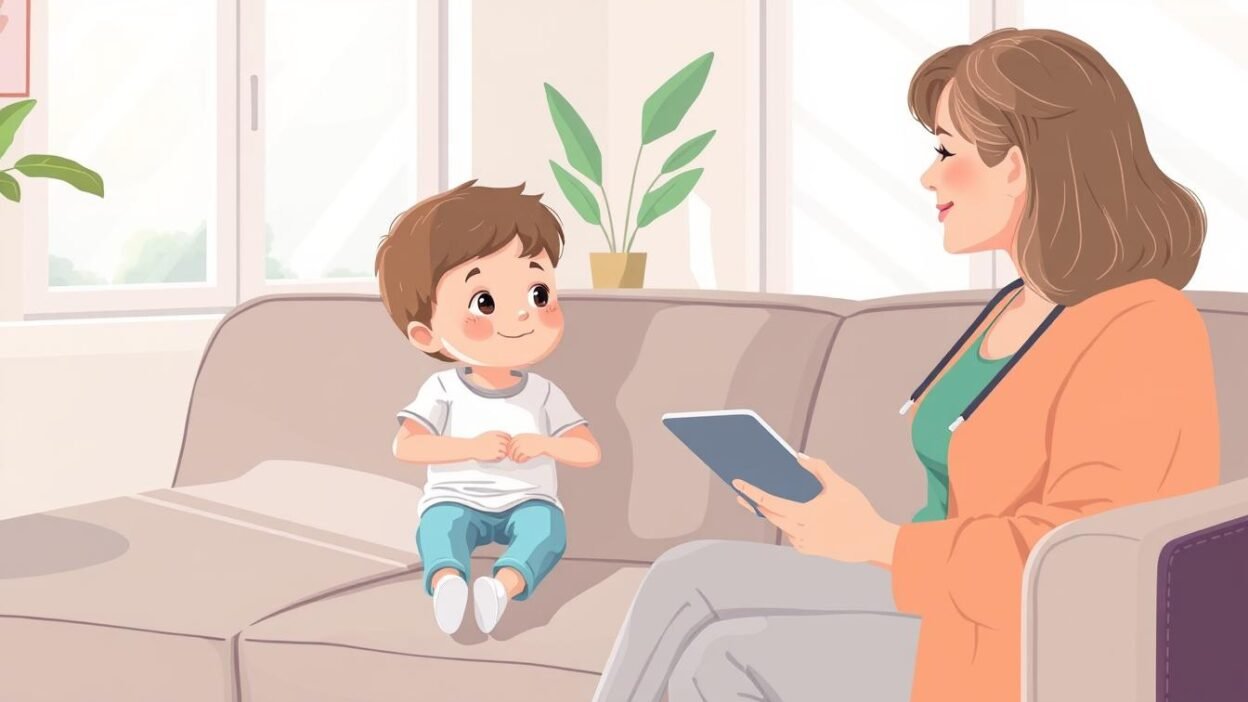
Can a well-timed help in childhood change a life’s path? And what does good child therapy look like?
This guide gives a clear, based-on-evidence summary for those who work with kids. It explains child therapy as a way to fix and prevent problems. These methods help kids control emotions, act better, and become stronger from a young age to teen years.
The article talks about different therapy types—like playing games, thinking strategies, and family therapy. It includes easy tools like worksheets, pictures, and tips for parents. This article makes child therapy easy to understand for beginners, keeping the details professional.
Creating an inclusive learning environment begins with understanding the diverse needs of children and the supports required to help them thrive. The Inclusive Education category on SpecialNeedsForU connects parents and educators with practical insights on adapting classrooms, promoting equal participation, and fostering a supportive school culture. To identify early developmental differences that influence inclusion, families can explore Special Needs Awareness and track age-appropriate growth through Developmental Milestones. For learners who face academic challenges, the Learning Disabilities section offers targeted strategies and evidence-based interventions. Parents seeking emotional and behavioural guidance to support inclusion at home can visit PsyForU, while caregivers aiming to build stronger routines, communication, and stress-free learning environments can rely on the mindset and productivity resources available at IntentMerchant. Together, these interconnected platforms help families and educators create classrooms where every child feels welcome, understood, and empowered to learn.
It gives a quick look at how to check, plan, and measure therapy for kids. Plus, it talks about choosing therapists and working with schools and doctors. The goal is to make complicated psychology ideas practical. This helps children grow and improves health for everyone.
Key Takeaways
- Child therapy is a set of ways to help kids grow emotionally, socially, and in behavior.
- This guide makes it easy for those caring for children to understand therapy methods and tools.
- Good child therapy combines checking on progress, planning for each kid, and having clear goals.
- Early and easy-to-get therapy helps kids be strong over time and lowers future health problems.
- The article highlights working together with families, schools, and health providers.
What Is Child Therapy? Beginner-Friendly Guide

Child therapy is a way of helping young people in a safe and understanding space. They learn new skills to help them think, feel, and act differently. This guide explains what it is and looks at problems like trauma, bad moods, behavior issues, and stress from things like divorce or bullying.
Child therapy isn’t just about solving problems. It also helps kids grow positively. They learn how to express their feelings, get along with others, feel better about themselves, and deal with challenges. Therapists might use games, art, stories, lessons, and help from families to meet each child’s needs.
Definition and scope of child therapy
Child therapy is all about helping kids in a way that’s right for their age. Therapists check how a child is developing, set clear goals, and teach them through fun activities. Goals can be about managing emotions, making friends, feeling less anxious or defiant, and doing better at school and home.
It also deals with different kinds of challenges and health issues. Whether it’s stress from a bad situation, trauma, or conditions like depression or ADHD, the aim is to make kids stronger and keep growing, not just treat symptoms.
How child therapy differs from adult therapy
Child therapy uses different ways to talk and focus compared to adult therapy. It uses play, art, and games to help kids open up and learn. The therapy looks forward more and works on building skills rather than just talking about the past.
Including the family is really important. Helping parents, working with the whole family, and talking to schools makes sure new skills are used in everyday life. Therapists make sure they explain things in a way kids and their caregivers can understand.
Who provides child therapy: child therapist, child psychologist, BCBA and other professionals
A lot of different professionals can provide child therapy. This includes child therapists, psychologists, psychiatrists for medicine needs, and BCBAs for behavior plans.
People like RBTs and behavior technicians do the day-to-day work. Family therapists and school mental health workers help support the family and school. Each professional has their own qualifications and jobs. For instance, a BCBA designs behavior plans and RBTs help kids every day under their guidance.
| Provider | Typical Role | Credential | When to Choose |
|---|---|---|---|
| Child therapist / counselor | Individual and family therapy, skills training | Licensed professional (LPC, LCSW) | Behavioral issues, emotional regulation, parent coaching |
| Child psychologist | Assessment, therapy, diagnostic evaluation | PhD or PsyD, licensed psychologist | Complex diagnostic questions, testing, therapy for mood disorders |
| Child psychiatrist | Medical assessment, medication management | MD or DO, board-certified psychiatry | Medication needs, severe mood or psychotic symptoms |
| BCBA | Designs ABA plans, supervises implementation | Board Certified Behavior Analyst credential | Autism spectrum disorder, behavior programs needing data-based plans |
| RBT / Behavior technician | Implements ABA interventions, collects data | Registered Behavior Technician certification | Daily ABA therapy, skill practice |
| School-based provider | In-school interventions, coordination with educators | School counselor, psychology credential, or licensed therapist | Academic or classroom behavior concerns, 504/IEP support |
Child Therapy Basics: Goals and Core Benefits of Child Therapy
Child therapy sets clear, achievable goals to help kids develop. Experts break these aims into steps. This helps parents and schools see how kids are doing. We’ll discuss the key goals, benefits now and in the future, and why quick access to child mental health care is crucial.
Primary goals: emotional regulation, social skills, behavior change, and resilience
Therapists teach kids how to manage emotions. They use breathing exercises, feeling identification, and age-appropriate mindfulness. These methods help reduce outbursts and boost focus in school.
The focus on social skills includes teaching kids how to share, say hello, use language well, and solve peer issues. Role-playing and coaching help kids get better at interacting with others.
Changing behaviors means working on reducing tantrums, aggression, and breaking bad habits. The therapy plan tracks improvements by counting behaviors and adjusting what triggers them.
Resilience training boosts coping skills, self-confidence, and problem-solving. This helps kids deal with stress and changes better.
Short-term and long-term child therapy benefits for mental health
Soon after therapy starts, kids show fewer symptoms, sleep better, and handle emotions well. They adjust to school faster and understand their feelings better within weeks.
Parents learn how to better manage behavior, making home life better. This support helps keep early improvements going and lowers stress for caregivers.
Over time, child therapy leads to better adjustment, less chance of serious issues, and improved school performance. Starting therapy early often means stronger friendships and better stress management later in life.
Importance of early intervention and accessible pediatric mental health support
Starting early is key, as research and practice show. Issues like autism can be noticed before 18 months. Early help means bigger steps in development.
Easy access to mental health care for kids protects them during important times. Clinics, school programs, and online therapy expand access and cut waiting times.
Adding resources like worksheets, infographics, books, and parent coaching makes therapy benefits last. This brings therapy lessons into everyday life, helping kids and families for longer.
Building Social Communication SkillsSupporting Speech Development
Common Child Therapy Approaches and Child Therapy Techniques
Child therapy uses many proven methods to help with emotional, behavior, and growth needs. This overview shares the main approaches, useful techniques, and common goals. It helps those caring for children choose the best treatment options.
Play therapy and play therapy for kids: how play helps expression
Play therapy is key for young kids who can’t easily talk about their feelings. Through toys, stories, art, and play, therapists reach feelings and memories hard to get at with just talking.
In play therapy, kids enjoy games like the Feeling Word Game, the Mad Game, and the Slow-Motion Game. These games help with understanding emotions, managing anger, and controlling impulses. Kids lead the play, while therapists guide them to learn and cope better.
Cognitive Behavioral Therapy (CBT) and techniques adapted for children
CBT for kids uses basic ideas of cognitive therapy suited to their age. Therapists use metaphors and hands-on activities. This lets kids practice new skills in and out of sessions.
Child CBT involves behavioral experiments, step-by-step exposure, problem-solving training, and identifying thoughts. With added parental guidance and role-play, these skills become part of daily life. Success is tracked through simple tasks and what parents observe.
Family therapy, parent-child interaction therapy (PCIT), and systemic approaches
Family and systemic therapy focus on relationships that affect symptoms. They offer a range from whole family therapy to specific parent guidance.
PCIT coaches parents during time with their children to improve good behavior. Parents get live tips to use clear instructions, praise, and consistent responses. This method is backed by research for behavior issues and stresses learning skills as they happen.
Applied Behavior Analysis (ABA): process, ABCs, reinforcement systems, and when it’s used
ABA therapy relies on data and is mainly used for autism and complex behaviors. It starts with detailed assessment to find what triggers and maintains behavior.
The ABC model is central: Antecedent, Behavior, Consequence. Practitioners break goals into small, teachable moments using various techniques. Positive reinforcement motivates change. Tracking progress ensures that new skills are applied effectively in real-life settings.
- Modality fit: Match child therapy approaches to developmental level and presenting problem.
- Combined strategies: Blending play-based work, CBT for children, PCIT, and ABA therapy can yield complementary gains.
- Data and family involvement: Use measurable goals and caregiver coaching to support maintenance and generalization.
How Child Therapy Works: The Child Therapy Process and Assessments
The child therapy process starts by collecting important info. This info includes the child’s development, health, school, and family background. Experts use interviews and tests to understand the child’s needs. This first step helps monitor the child’s progress later on.
Intake and assessment
Experts gather info from caregivers, teachers, and their observations. They also use special tools to understand behaviors. This helps them know what to focus on during therapy.
Goal setting and team collaboration
A team, including therapists and family, work together to make clear goals. They make sure these goals are clear and doable within a certain time. This makes the therapy more effective.
Creating individualized plans
Therapy plans are tailored for each child, breaking down skills into small steps. They use data to adjust the therapy as needed. Feedback from parents also helps tweak these plans.
Measuring progress in therapy
Therapy success is tracked using data. Reports summarize how well the therapy is going. They also help decide if the therapy plan needs changes.
Typical session structure
Therapy sessions can be one-on-one or include the family. They might involve play, skills training, or parent coaching. Services can also be in schools or homes to help the child use new skills in different places.
The number of sessions and their length can vary. Working with teachers and other therapists helps achieve the best results for the child.
When to Consider Child Therapy: Signs, Symptoms and Common Referral Reasons
Knowing when to seek child therapy involves seeing changes that disrupt a child’s life. If you notice a kid displaying constant changes in mood, sleep, or how they act with friends, it’s important. Early spotting of these signs means quick help and the right support can start.
Behavioral indicators professionals monitor
Signs like frequent, unneeded aggression, long-lasting tantrums, or bed-wetting signal it’s time for an expert look. If a child can’t focus, acts too active to learn, or suddenly does worse at school, these too are red flags. These behaviours might lead experts to suggest therapy.
When a child starts hurting themselves or others, or does dangerous things, it’s very serious. Such actions mean it’s crucial to quickly work with mental health experts to ensure safety.
Emotional indicators and internalizing symptoms
Constant sadness, worry, bad dreams, and trouble sleeping often mean therapy could help. Losing interest in fun activities, eating less or more, or talking of self-harm or suicide are situations that urgent help. These are signs that shouldn’t be ignored.
Hearing voices or seeing things that aren’t there suggests the child needs a mental health check right away. It’s vital to tell apart what is a just a rough patch from what needs more attention.
Situational triggers and contextual risk factors
Experiencing trauma, abuse, neglect, or bullying are major reasons kids might need therapy. Each can deeply affect a child’s feelings and actions. These experiences clearly point towards getting professional advice.
In such cases, experts assess the situation closely and might opt for special treatments focused on trauma. Ensuring safety and working together with different groups is often a key part of the process.
Practical guidance for caregivers and clinicians
Parents and experts should work together during checking and treatment processes. The American Academy of Child & Adolescent Psychiatry advises asking about treatment details, like outcomes and costs. Knowing how the therapy works and staying in touch about progress is crucial.
Talking to kids about therapy should be done calmly, letting them know they’re not at fault. It’s important to listen, be supportive, explain that it’s okay to have feelings, and talk about privacy boundaries. Good teamwork between the family, school, and health professionals leads to better healing.
Child Therapy Techniques for Beginners: Practical Activities and Tools
Starting with child therapy means using activities that help kids talk about their feelings, feel safe, and learn how to calm down. Therapists and parents can repeat easy activities to help children learn how to deal with tough times. They can use play, breathing exercises, and special take-home activities to help kids use what they learn in their daily lives.
Feeling Word Game: This game uses cards with faces and tokens to help kids talk about their feelings. A therapist tells a story and the child uses tokens to show feelings, while parents get a simple version to try at home. It helps children name their feelings and stay calm during disagreements.
Mad Game: Children stack blocks to show their anger and learn safe ways to “take the tower apart.” It helps them express frustration in a healthy way and learn how to control their reactions. This is great for starting therapy sessions.
Slow-Motion Game: Kids do simple things very slowly. It helps them pay attention to their feelings and control their actions. They get praise for noticing small details, which helps them slow down and be more aware of their bodies.
Second Story Technique: Kids hear a story about a tough situation, then share how they would react and cope. It’s a safe way for them to learn they have choices in how they react. The stories are adjusted for their age and what they can understand.
Bubble Breaths teach kids to breathe deeply by blowing bubbles slowly. This links their breathing to something they can see, like keeping the bubble from popping. It’s easy to do this at school or at home, and many therapists recommend it.
Kids learn to relax their muscles through play, like making silly faces or pretending to be a robot. They also practice what to say in scary situations through short, fun scripts. Breaking down fears into small, manageable steps makes overcoming them easier. These activities are quick, fun, and kids can do them over and over.
Clinics often give out worksheets and helpful pictures that summarize what kids learn in sessions. Parents might get a simple guide to breathing exercises, a list of feeling words, and book recommendations. The books often talk about how to understand others’ feelings and how to help kids with ADHD or who get overwhelmed easily.
The following table contrasts core beginner techniques, target skills, and suggested home practice.
| Technique | Target Skill | Home Practice |
|---|---|---|
| Feeling Word Game | Emotion labeling, perspective-taking | One 5-minute card game after dinner, caregiver models |
| Mad Game | Anger externalization, safe expression | Short block builds when frustrated, debrief 2 minutes |
| Slow-Motion Game | Self-regulation, body awareness | 3 quick rounds before homework or transitions |
| Bubble Breaths | Breathing regulation, calming physiology | Use bubbles for 2–3 deep breaths at bedtime or after tantrums |
| Second Story Technique | Narrative processing, agency | Retell a brief story with a new coping ending once weekly |
Good child therapy resources have printable sheets, recommended book lists, and easy-to-understand pictures for parents. Places like the Child Mind Institute and university clinics give out these helpful tools. Using these activities and tips at home and in different places can make what kids learn in therapy stick.
Actionable next steps: start with one new therapy activity, add a single take-home sheet, and note any positive changes. This organized method helps families see progress and keeps therapy focused and helpful from the start.
Therapies for Specific Needs: Tailoring Child Counseling to Diagnosis and Development
Clinicians use evidence and developmental insights to guide their counseling. They aim to set clear goals and track a child’s growth. This approach helps adjust treatments as a child develops.
Autism-focused strategies
For autism, therapy improves communication, social skills, and everyday behaviors. A key method is ABA, which is tailored to each child’s needs. It includes one-on-one sessions, modeling, and positive reinforcement in real-life scenarios.
Beyond ABA, functional communication gets a boost through PECS. This helps lessen children’s frustration and aids in making requests. Speech and occupational therapies blend well with ABA, offering a comprehensive approach when started early.
Targeted interventions for attention, mood, and trauma
ADHD treatment combines behavior management, educating parents, and help at school. If needed, doctors may suggest medication. This plan is tracked with precise data to observe progress.
Kids with anxiety benefit from CBT. It’s tailored to their age, using exposure techniques and thought-challenging exercises. Depression may be treated with CBT or interpersonal therapy, sometimes alongside medication.
For trauma, therapy focuses on safety, processing memories calmly, and learning coping skills. Techniques like TF-CBT and storytelling help children deal with their experiences in a healthy way.
Adapting care by developmental stage
Treatment choices, language, and the format of sessions change with a child’s development. For young kids, play and routines are key, alongside guidance for parents.
With school-aged kids, therapy includes skill-building and solving social problems. It also involves rewards based on progress. Teens work towards goals that matter to them, using therapy that suits their cognitive level and social lives.
Erikson’s stages of development help therapists set accurate and helpful goals. This ensures treatments are meaningful and achievable.
By blending these methods, therapists create adaptive plans. These respect the child’s diagnosis and stage of life, all while aiming for real improvements for both the child and their family.
How Parents and Caregivers Can Support Therapy: Child Therapy for Parents
When caregivers are involved, children do better in therapy. They can get kids ready, support skill use at home, and work with teachers. This guide gives clear steps for families dealing with child mental health.
How to talk to your child about going to therapy and reducing stigma
Pick a quiet time to talk. Use easy words, reassure your child they’re not in trouble, and describe the therapist as a friend who helps and teaches new ways to cope.
Listen well. Make sure their feelings are validated and answer their questions honestly. With teenagers, talk about privacy but explain when you might need to share information for their safety.
Show that getting help is okay by comparing it to seeing a doctor for a physical problem. Suggest books or videos that explain therapy to help make it less scary.
Parent involvement: coaching, consistency, reinforcement systems, and home practice
Parents playing a part in therapy makes a big difference. They can offer regular support, set clear rules, and reward good behavior in ways that work for their child.
Therapists might give homework to help use what’s learned in therapy in real life. Family sessions or PCIT (parent-child interaction therapy) provide a chance to practice these skills with feedback from a therapist.
Use charts, tokens, or checklists to track progress. Meetings between parents and therapists help keep everyone working together and making changes when needed.
Finding child therapist near me, working with schools, and coordinating care with other providers
To find a therapist, look for licensed psychologists, social workers, or BCBAs. Check their qualifications, experience, and if they offer in-person or online sessions.
Working with your child’s school can make therapy more effective. Share therapy goals and updates with the school’s support team, with your permission.
Teams working together across school, home, and therapy settings mean less repeat work and more consistent approaches. Families might get resources like worksheets or book lists to help support their child.
- Select calm timing for conversations with the child.
- Use consistent reinforcement at home and school.
- Request multidisciplinary meetings when coordinating care with schools and other providers.
Choosing the Right Program and Provider: Finding Child Therapist and Programs
Looking for the right care for a child means reviewing options carefully. Parents and experts should weigh up clinical proof, what the family needs, and what is feasible. They should do this when picking child therapist services or child therapy programs. Here are some key things to think about, what makes programs different, and how to measure progress.
First, check the therapist’s qualifications. Ask if the therapist is a licensed psychologist, social worker, psychiatrist, or behavior analyst. Make sure they are trained in child development and methods like play therapy, cognitive therapy, or behavior analysis.
Discuss treatment details next. Find out how long sessions last, how often they happen, and the overall program length. Check if parents are involved in sessions or get coaching. Look into costs, using insurance, payment plans, and the rules for canceling.
It’s important to know how they track improvement. Ask which tools they use to measure progress and how they share results. The American Academy of Child & Adolescent Psychiatry says to ask about the expected timeline and results for set goals.
Compare child therapy programs
Clinic-based options have teams with different specialists. They’re good for complicated cases that need detailed exams and team care.
Home-based programs help use new skills in everyday life. They cut down on travel and let therapists see what triggers behaviors. Options at school blend treatments with learning and help teachers work with therapists.
Teletherapy, or therapy over the internet, helps families in remote areas. It’s flexible and offers steady help even when seeing a therapist in person is tough. Intensive programs might have daily sessions. Think about how much time your family can commit.
| Program Type | Strengths | Typical Use | Considerations |
|---|---|---|---|
| Clinic-based | Multidisciplinary teams, structured assessment | Complex diagnoses, diagnostic clarity, multi-therapy plans | Requires travel, scheduled appointments, higher overhead |
| Home-based | Contextualized intervention, family coaching, convenience | Skill generalization, behavioral interventions, young children | May need therapist travel time; variable control of environment |
| School-based | Direct link to academic supports, teacher collaboration | Behavior supports, social skills, IEP goals | Limited session length; dependent on school schedules |
| Teletherapy | Accessibility, flexible scheduling, continuity of care | Follow-ups, parent coaching, rural access | Requires stable internet; some hands-on techniques limited |
| Intensive ABA | High-intensity, data-driven, multiple settings | Autism spectrum support, behavior reduction, skill acquisition | Family time commitment; needs consistent data systems |
Evaluating therapy progress
Set clear goals with specific baselines and targets. Use metrics like how frequent, long, or intense behaviors are, or standardized scales. For instance, reducing tantrums from ten to three minutes or raising the number of independent greetings.
Ask for regular updates on progress. Expect bi-weekly charts, monthly summaries, or every three months meetings with the treatment team. Use feedback from the family and school to see how things are going.
If the data shows little improvement, the plan should change. Good programs use data to make choices and adjust to get better results.
Making the best choice for child therapy involves checking qualifications, comparing options, and checking progress in a detailed way. This approach helps pick what best meets a child’s needs and what the family can handle.
Conclusion
This guide makes it clear that good child therapy is informed by the child’s development stage and involves experts from different fields. It aims to help children manage their emotions, behave well, get along with others, and bounce back from tough times. They use proven methods like play therapy, CBT (Cognitive Behavioral Therapy) changes, involving the family, and focusing on behavior.
It’s important to start helping early and set clear goals. Parents should be really involved. There are many tools and resources available. These help continue progress outside of therapy and are useful at both school and home.
In therapy, making plans based on data is very important. This includes initial evaluations, watching and recording behaviors, and keeping track of improvements. Using positive reinforcement is a key part of many programs. Choosing the right therapists who match the child’s needs can make a big difference in their progress.
For those who care for children, it’s crucial to ask questions, use the right tools, and choose services wisely. This guide encourages fighting for better mental health care for kids. And it stresses using proven methods to support a child’s well-being over time. Child therapy is very important for kids who need it.