
Have you ever wondered when the optimal moment arrives to begin tracking your child’s developmental progress? This question matters deeply for effective baby development tracking. It forms the foundation of informed caregiving.
The answer is both simple and profound: developmental monitoring begins at birth. The Centers for Disease Control and Prevention defines developmental milestones clearly. These are physical or behavioral signs of growth in infants and children.
Milestones include behaviors like rolling over, crawling, walking, and talking. Caregivers must understand that systematic observation is not a single event. Rather, it constitutes a continuous, dynamic process that evolves alongside each child’s unique growth trajectory.
The American Academy of Pediatrics recommends specific screening times for children. General development should be screened using standardized, validated tools at 9, 18, and 30 months. Additionally, autism screening should occur at 18 and 24 months or whenever concerns arise.
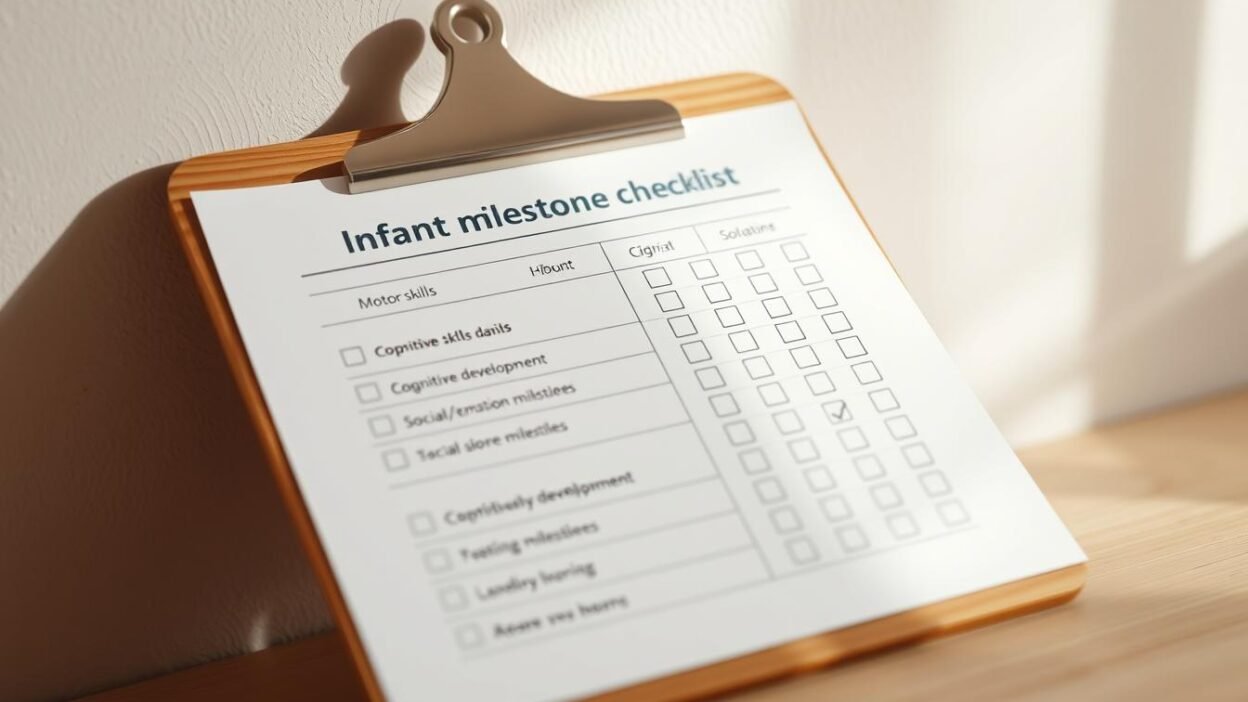
Every smile, every movement, and every interaction represents meaningful data in your child’s developmental narrative. This infant milestone checklist approach is grounded in decades of pediatric research. It transforms everyday moments into valuable insights about your child’s progress through their most formative years.
Tracking developmental milestones is essential for understanding a child’s growth, readiness, and support needs. The Developmental Milestones section provides structured age-wise charts and expert-backed guidance to help parents identify progress or delays with clarity. To complement this understanding, the Special Needs Awareness category offers detailed information on early signs of developmental challenges, helping families recognize when additional assessment may be necessary. When milestones impact learning or academic performance, readers can explore the Learning Disabilities section for targeted strategies and classroom support ideas. For emotional, cognitive, and behavioural insights related to child development, PsyForU.com offers evidence-based explanations. And for parents wanting to build healthier routines, reduce overwhelm, and develop intentional parenting practices, IntentMerchant.com provides powerful tools rooted in behavioural psychology. These interconnected resources support a holistic view of child development, enabling parents to track, understand, and nurture growth at every stage.
Key Takeaways
- Developmental monitoring should begin immediately at birth and continue throughout early childhood as a continuous process
- The CDC defines developmental milestones as physical or behavioral signs including rolling over, crawling, walking, and talking
- Standard developmental screenings are recommended at 9, 18, and 30 months using validated assessment tools
- Autism-specific screenings should occur at 18 and 24 months or whenever concerns emerge
- Every daily interaction provides valuable data points for understanding your child’s unique growth trajectory
- Systematic observation combines evidence-based practices from pediatric research with practical caregiving
- Early identification of developmental variations enables timely intervention and support for optimal outcomes
Understanding Child Development Milestones
Developmental milestones are more than simple checklists. They show how human capabilities emerge throughout childhood. These markers help us understand how children gain skills and behaviors as they grow.
The study of milestones combines observation with understanding. It gives parents and professionals a shared language. This helps everyone discuss how children develop.
Milestones work as descriptive tools and predictive indicators in pediatric science. They show the typical path of human development. They also reveal individual variations that make each child unique.
This dual nature makes milestone observation essential. It matters in both clinical settings and home environments.
What Are Developmental Milestones?
Developmental milestones are observable, measurable behaviors or physical skills that emerge during specific age ranges. These indicators provide evidence of brain maturation and muscle coordination. They also show cognitive advancement.
Rolling over, sitting independently, and speaking first words are milestone achievements. Displaying social reciprocity is another example. All these signal typical development.
Milestones represent critical junctures in the developmental continuum. New capabilities emerge and integrate with existing skills. This integration creates the foundation for increasingly complex behaviors.
Effective child growth monitoring requires understanding that milestones organize into distinct domains. Each domain represents a specific sphere of human capability. Development follows predictable patterns in each area.
- Cognitive Development: Thinking, reasoning, problem-solving, and understanding abstract concepts
- Motor Coordination: Gross motor skills such as walking and jumping, plus fine motor abilities including drawing and manipulating small objects
- Social Interaction: Initiating peer contact, participating in group activities, and demonstrating empathy
- Adaptive Behaviors: Self-care skills including dressing, eating independently, and personal hygiene
These categories help with systematic assessment. They also acknowledge that development occurs holistically. A child learning to walk exercises cognitive planning, emotional regulation, and physical coordination simultaneously.
The domains interact synergistically. Advancement in one area often sparks progress in others.
Understanding early childhood milestones requires recognizing individual variation. Children develop at their own pace. Some advance rapidly in certain domains while taking more time in others.
Some children may skip intermediate steps entirely. Others methodically progress through each stage. This variability falls within typical development and reflects genetic and environmental factors.
“Milestones are different for each age range and are behaviors that emerge over time, forming the building blocks for growth and continued learning.”
The Importance of Tracking Milestones
Systematic milestone observation serves multiple critical functions. Early identification of developmental variations represents perhaps the most important benefit. Consistent tracking helps parents and healthcare providers detect delays or atypical patterns.
The practice of child growth monitoring through milestone tracking establishes a proactive approach. Regular observation enables timely intervention. Children benefit from additional resources or specialized services when needed.
Research consistently shows that early intervention produces better outcomes. This works better than delayed response to developmental challenges.
Milestone tracking facilitates meaningful communication between families and healthcare professionals. Parents gain concrete benchmarks to measure their child’s progress. Abstract developmental concepts transform into observable behaviors.
This shared reference system reduces anxiety by providing clarity. Parents understand what constitutes typical development at various ages.
Healthcare providers use milestone assessments during well-child visits. These evaluations complement physical health examinations. This ensures comprehensive pediatric care addressing both medical and developmental needs.
Understanding early childhood milestones empowers parents to create supportive environments. Families recognize which skills typically emerge at specific ages. They can provide targeted activities, materials, and interactions that facilitate milestone achievement.
This informed engagement optimizes developmental outcomes. It does so without creating undue pressure or competition.
Milestone tracking positions child development as a collaborative endeavor between families, educators, and healthcare systems. This partnership approach ensures all children receive necessary support. It works regardless of their individual developmental trajectory.
Milestone tracking is not about fostering anxiety or creating competitive comparisons. It establishes a framework for celebrating each child’s unique progress. It remains vigilant for patterns that might indicate the need for additional support.
Age Ranges for Key Milestones
Developmental science divides early childhood growth into three age bands. These bands capture remarkable changes during the first five years. The CDC milestone guidelines establish clear benchmarks for typical development.
Each developmental period shows distinct achievements that build on previous skills. Parents can recognize emerging abilities and identify patterns needing professional advice. The following sections detail specific milestones within each critical age range.
The First Year: Remarkable Transformations
The infant period represents the fastest phase of human development. Babies transition from reflexive responses to intentional interactions. At 2 months, infants lift their heads and kick their legs.
They react to environmental sounds and begin focusing their vision. Optimal focus occurs at 8 to 10 inches away. This distance matches the space between a nursing infant and caregiver’s face.
Parenting newborn development requires understanding these early communication attempts. Infants produce cooing sounds and display social smiles. These expressions represent critical precursors to later language development.
By 4 months, infants show increased motor control and emotional expressiveness. Babies squeal and wave arms when excited. They produce varied sounds including “ooh” and “aah.”
Physical capabilities expand as infants push up on their arms during tummy time. They bring both hands to mouth, showing bilateral coordination. The transition to rolling from back to sides marks an important motor milestone.
“The infant brain forms more than one million neural connections every second during the first years of life, creating the foundation for all future learning, behavior, and health.”
At 6 months, infants demonstrate enhanced environmental awareness and physical independence. They track moving objects visually and recognize familiar faces across distances. Babies sit without external support while rolling in both directions.
Reaching and grasping become more purposeful as hand-eye coordination improves. Infants use varied sounds to express different emotional states. They respond consistently to their own names.
By 9 months, motor skills advance dramatically as babies achieve mobility through crawling. They pull to standing positions and use gestures to communicate needs. Object permanence understanding develops as infants explore cause-and-effect relationships.
The 12-month milestone marks the transition from infancy to toddlerhood. Many children begin using recognizable words and pointing to desired objects. They turn pages in books with assistance.
Standing independently becomes achievable, with some children taking their first unassisted steps. These accomplishments represent integrated development across multiple domains. Motor control, language acquisition, and cognitive understanding all advance together.
Toddler Years: Language Explosion and Independence
Early childhood from ages 1 to 3 years witnesses accelerated language development. Physical autonomy increases dramatically during this period. At 18 months, toddlers typically employ eight or more distinct words.
They point to pictures when named in books and produce recognizable scribbles. Social awareness emerges as children show interest in other children. Parallel play remains more common than interactive engagement.
Motor capabilities continue advancing as toddlers walk quickly and navigate obstacles with growing confidence. They climb into chairs independently, demonstrating improved balance. These physical achievements enable greater environmental exploration and learning opportunities.
By age 2, language capabilities expand to include two- and three-word sentence constructions. Children identify body parts when asked and demonstrate emerging self-awareness. Musical engagement increases as toddlers sing and dance to rhythmic stimuli.
Many children begin showing readiness for toilet training during this period. The CDC milestone guidelines emphasize that language development shows substantial individual variation. Cultural and linguistic factors influence vocabulary acquisition patterns.
Preschool Development: Cognitive Sophistication
At age 3, children demonstrate markedly improved social capabilities. They engage in cooperative play with peers rather than merely parallel activity. Physical coordination enables tricycle riding, requiring integrated balance and pedaling skills.
Language sophistication increases substantially, with children constructing four-word sentences and engaging in simple conversations. Cognitive abilities expand to include color recognition and basic numerical understanding. Most 3-year-olds can count to three with comprehension.
By age 4, children use complete sentences with proper grammatical structures. They maintain extended conversations on topics of interest. Artistic capabilities develop as children draw recognizable human figures with distinct body parts.
Color knowledge expands to five or more distinct hues. Tricycle pedaling becomes smooth and coordinated during this period.
At age 5, children demonstrate school-readiness skills including letter recognition and alphabet recitation. They count ten objects with one-to-one correspondence. Children catch thrown balls with reasonable consistency.
Narrative abilities allow children to retell stories with sequential accuracy. They successfully engage in games governed by rules. These achievements represent five years of continuous development across all domains.
| Age Range | Motor Milestones | Language Milestones | Cognitive & Social Milestones |
|---|---|---|---|
| 2 Months | Lifts head on stomach, kicks legs, moves arms | Makes cooing sounds, begins social smiling | Reacts to noises, sees best 8-10 inches away |
| 6 Months | Sits without support, rolls both directions, reaches for toys | Makes emotion sounds, responds to name | Tracks moving objects, recognizes familiar faces |
| 12 Months | Stands alone, may take steps, turns book pages | Uses first words, points to objects | Shows object preferences, explores cause-effect |
| 18 Months | Walks quickly, climbs into chairs, scribbles | Uses 8+ words, points to pictures in books | Shows interest in other children, parallel play |
| 2 Years | Runs, kicks ball, begins toilet readiness | Uses 2-3 word sentences, points to body parts | Sings and dances, shows preferences clearly |
| 3 Years | Rides tricycle, uses toilet independently | Uses 4-word sentences, knows colors | Plays cooperatively, counts to three |
| 4 Years | Pedals smoothly, draws person with body parts | Uses full sentences, maintains conversations | Knows 5+ colors, understands turn-taking |
| 5 Years | Catches ball, demonstrates coordination | Knows letters, sings alphabet, retells stories | Counts 10 objects, plays games with rules |
This overview of age-specific milestones provides parents with detailed reference points for monitoring child development. Individual children progress at unique rates. These benchmarks derived from CDC milestone guidelines offer valuable frameworks for identifying typical developmental patterns.
Major Categories of Developmental Milestones
Early childhood growth unfolds through four distinct but connected developmental categories. These domains help us understand how children gain new abilities across multiple dimensions. Progress in one area often helps advancement in others.
Parents and doctors use these categories to track normal development. They also help spot areas where a child might need extra support. Understanding each category shows the wide range of skills that emerge during childhood’s early years.
Physical Development and Motor Capabilities
Physical milestones cover all body movement and coordination children develop from infancy through early childhood. These achievements reflect brain growth and chances to practice new skills. Motor development follows two parallel paths that represent different types of physical control.
Gross motor skills involve large muscle groups and whole-body movements. Children use these abilities to move through their environment. Early gross motor milestones include rolling over, sitting alone, and crawling on hands and knees.
As children grow, their gross motor skills expand to include complex coordinated movements. Walking typically starts around 12 months. Running, jumping with both feet, and hopping on one foot follow later.
By preschool age, children can throw and catch balls. They navigate stairs with alternating feet. They can also ride tricycles.
Fine motor skills require precise coordination of small muscle groups, especially in hands and fingers. These abilities let children manipulate objects with increasing control. Initial fine motor milestones include grasping objects with the whole hand, then using thumb and forefinger together.
Advanced fine motor development supports essential self-care activities and pre-academic skills. Children learn to feed themselves with utensils. They manipulate small objects like puzzle pieces.
Drawing, stacking blocks, and using scissors represent important fine motor achievements. These skills prepare children for formal schooling.
Cognitive Development and Mental Processes
Cognitive milestones represent the development of mental capabilities. These enable children to understand, process, and respond to information from their environment. This domain encompasses the most complex aspects of human development.
Early cognitive achievements include object permanence. This is the understanding that objects continue to exist even when out of sight. This milestone typically emerges around 8-12 months.
Attention span, memory capacity, and recognizing familiar faces all constitute important early cognitive markers.
As children mature, their problem-solving abilities become increasingly sophisticated. They demonstrate categorization skills by sorting objects by color or shape. They engage in symbolic play where one object represents another.
Puzzle completion, matching games, and pretend play all provide windows into developing cognitive capabilities.
Preschool-age children exhibit dramatic advances in reasoning and conceptual understanding. They can follow multi-step instructions. They understand temporal concepts like “yesterday” and “tomorrow.”
These cognitive milestones form the foundation for academic learning. They represent critical indicators of school readiness.
Social and Emotional Competencies
Social and emotional milestones trace the development of interpersonal skills. They also track the capacity for emotional regulation. These enable children to form relationships and function within social contexts.
The earliest social milestone involves the emergence of the social smile. This typically appears around 6-8 weeks of age. This response demonstrates an infant’s recognition of and engagement with caregivers.
Throughout the first three years, children develop social referencing abilities. They look to caregivers for emotional cues about novel situations. They begin showing preference for familiar people.
Peer interaction skills emerge gradually during toddlerhood and preschool years. Children progress from parallel play to cooperative play. Empathy development allows children to recognize and respond to others’ emotional states.
Emotional regulation represents a critical aspect of this domain. It encompasses the ability to manage strong feelings and behavioral impulses. Children gradually develop strategies for coping with frustration.
These capabilities prove essential for school success and positive peer relationships.
Language Acquisition and Communication
Language milestones encompass the remarkable developmental progression from prelinguistic communication to sophisticated verbal expression. This domain includes both receptive language and expressive language. The trajectory of language development reflects complex interactions between biological preparedness and environmental linguistic input.
Prelinguistic communication begins with crying, cooing, and babbling during the first year of life. Infants demonstrate receptive language abilities by responding to their names. The first true words typically appear around 12 months.
Vocabulary expansion accelerates dramatically during the second year. Children often experience a “word spurt” where new words are acquired rapidly. Two-word combinations emerge around 18-24 months.
By age three, most children use complete sentences with increasingly complex grammar. They ask questions and use pronouns correctly. Language development continues advancing through preschool years.
Children master more sophisticated grammatical forms and expand their vocabulary to thousands of words. They develop pragmatic language skills that enable appropriate communication in various social contexts.
Emergent literacy represents an important extension of language milestones. It encompasses early skills that prepare children for formal reading and writing instruction. These include print awareness, phonological awareness, and letter recognition.
The interconnected nature of these four developmental domains underscores the importance of comprehensive milestone monitoring. Progress across physical, cognitive, social-emotional, and language categories provides a holistic picture of child development. Recognizing that children develop at individual rates helps parents avoid premature concern while remaining appropriately vigilant.
Tools for Monitoring Milestones
Effective milestone monitoring requires access to validated instruments. These tools bridge the gap between parental observation and professional assessment. The landscape includes resources from informal parent observation to formal pediatric screening.
These complementary approaches work together to create a comprehensive monitoring system. This maximizes the likelihood of identifying children who may benefit from early intervention services.
Parents and healthcare professionals now have access to an expanding array of resources. These include both standardized clinical instruments and user-friendly digital tools. Understanding the distinct roles of each tool enables families to engage meaningfully.
The key lies in recognizing that different tools serve different purposes. Each has its place within the broader framework of developmental surveillance.
Professional Screening Instruments
Standardized pediatric developmental screening tools represent scientifically validated instruments. These tools systematically identify children who require further evaluation. They differ fundamentally from diagnostic assessments, which definitively identify specific developmental disorders.
Screening tools function as efficient first-stage filters that determine which children need more evaluation. They help identify who should undergo comprehensive assessment by specialists.
The effectiveness of any screening instrument depends on four critical psychometric properties. Validity ensures the tool accurately measures what it claims to measure. Reliability guarantees consistent results across different administrators and testing occasions.
Sensitivity refers to the instrument’s ability to correctly identify children with developmental delays. Specificity indicates the tool’s capacity to correctly identify typically developing children. This prevents excessive false-positive results.
The American Academy of Pediatrics recommends standardized developmental screening at specific intervals. Healthcare providers should conduct these assessments using validated tools at 9, 18, and 30 months. Additionally, autism-specific screening should occur at 18 and 24 months.
| Assessment Type | Primary Purpose | Administration | Outcome |
|---|---|---|---|
| Screening Tools | Identify children needing evaluation | Trained healthcare providers during well-child visits | Pass or refer for further assessment |
| Diagnostic Assessments | Definitively identify disorders | Developmental specialists in clinical settings | Specific diagnosis and intervention plan |
| Parent Checklists | Support ongoing home observation | Parents between healthcare visits | Information to share with provider |
Professional screening protocols follow standardized administration procedures to ensure accuracy and consistency. Healthcare providers receive specific training in instrument administration and scoring interpretation. This systematic approach distinguishes formal screening from informal developmental observation.
Parent-Accessible Resources
Between scheduled healthcare visits, parents can utilize accessible monitoring resources. These complement professional pediatric developmental screening. The Centers for Disease Control and Prevention offers comprehensive milestone checklists.
The CDC provides these through its “Learn the Signs. Act Early.” initiative. These resources enhance parental knowledge and observational capacity without replacing professional assessment.
The CDC provides multiple formats to accommodate different family preferences and technological access. Parents can access printable checklists or complete assessments through a digital online platform. They can also download the Milestone Tracker mobile application for convenient smartphone-based monitoring.
These tools organize developmental expectations by age. They help parents understand what to observe during daily interactions with their children.
The Milestone Tracker app offers several practical advantages for busy families. The application sends reminder notifications at key developmental periods. It allows parents to document observations with photos and notes.
Users can easily share compiled information with healthcare providers during well-child visits. This facilitates more productive conversations about developmental progress.
Important clarification must be made regarding the appropriate use of parent-facing resources. These tools complement rather than substitute for standardized screening conducted by trained professionals. Parent checklists serve to enhance awareness and facilitate observation.
They prepare families for productive healthcare discussions. They do not provide diagnostic information or replace the clinical judgment of qualified providers.
The collaborative model of developmental surveillance positions parents as essential partners. Their daily observations provide invaluable data. Healthcare providers synthesize parental reports with clinical observations and standardized screening results.
This partnership approach maximizes the effectiveness of milestone monitoring. It respects the distinct contributions of both parents and professionals.
Key resources available to parents include:
- CDC milestone checklists organized by specific age ranges from birth through 5 years
- Digital online assessment tools accessible through web browsers on any device
- Milestone Tracker mobile application available for both iOS and Android platforms
- Educational materials explaining what to observe and when to express concerns
- Guidance on documenting observations and communicating effectively with healthcare providers
These monitoring tools empower parents to engage actively in their children’s developmental journey. The combination of professional screening protocols and parent-friendly tracking resources creates a robust system. This integrated approach represents current best practices in developmental monitoring.
It balances scientific rigor with practical accessibility for families across diverse circumstances.
Signs of Delay in Milestones
Finding developmental delays requires careful observation and knowledge of typical patterns. Individual children reach milestones at different times, which is normal. However, certain patterns need professional attention and evaluation.
Parents watch their children’s daily behaviors and abilities closely. They notice patterns that doctors might miss during short visits. This observation plays a key role in protecting children’s development.
Identifying Warning Signs
Normal developmental variation means children reach the same skills at slightly different ages. Clinically significant delays show major differences from expected patterns. These delays may indicate developmental challenges that need professional review.
Physical development red flags include movement patterns that favor one side of the body. Missing expected motor milestones by the typical age limit is another sign. Loss of motor skills previously shown also raises concerns.
Children with limited interest in their environment need attention. Failing to respond to their name by 12 months is a warning sign. Absent or very limited babbling by 12 months also warrants consultation.
The absence of single words by 16 months or two-word phrases by 24 months signals need for language evaluation.
Social and emotional indicators matter just as much. Warning signs include limited eye contact and no social smiling by 3 months. Lack of interest in playing with other children during toddler years is concerning.
Extreme difficulty with routine changes that exceeds normal adjustment is another red flag. These patterns often connect with autism spectrum considerations, especially when multiple signs appear together.
Regression or loss of previously acquired skills is one of the most serious warning signs. Children who stop using words they once spoke need immediate professional consultation. The same applies to abandoned motor skills they had mastered.
Parental intuition is critically important but often undervalued. Research shows that parental concerns about development match actual developmental challenges. Healthcare providers recognize that parents know their children’s behaviors and patterns best.
When parents express concern that something is not progressing typically, these concerns deserve serious consideration. Formal evaluation should follow, even when initial clinical visits don’t show specific problems.
When to Consult a Pediatrician
The American Academy of Pediatrics recommends formal screening at specific ages. These screenings should occur at 9 months, 18 months, and 30 months during routine well-child care. Autism-specific screening should happen at 18 and 24 months.
These scheduled screenings represent minimum standards, not the only opportunities for discussion. Parents should contact their doctor whenever concerns arise. Early consultation proves better than delayed action because early intervention works best.
Effective communication with doctors requires preparation. Parents should document specific observations rather than general impressions. Note what the child doesn’t do that other children the same age accomplish.
Video documentation of concerning behaviors provides valuable objective evidence. This allows doctors to observe patterns directly. Videos work better than relying only on descriptions or brief office observations.
Completed developmental checklists offer another valuable preparation tool. Many pediatric practices provide standardized questionnaires before visits. Parents can access validated screening tools through the CDC’s “Learn the Signs. Act Early” program.
During consultations, doctors should conduct or review formal developmental screening results. They will ask detailed questions about abilities across multiple areas. They may also observe the child’s interactions and responses directly.
The consultation may result in several outcomes. These include reassurance that development falls within typical ranges. Doctors might recommend enhanced home activities with follow-up assessment scheduled.
Developmental-behavioral pediatricians, pediatric neurologists, speech-language pathologists, occupational therapists, or psychologists may provide specialized assessment. Parents should also contact their state’s early intervention program to check eligibility.
- Prepare specific observations: Document what the child cannot do compared to age-expected milestones rather than general concerns
- Gather video evidence: Record examples of concerning behaviors or absent skills to provide objective documentation
- Complete screening tools: Use validated checklists from CDC or pediatric practice resources before appointments
- Request formal screening: Explicitly ask for developmental screening if concerns exist, even outside scheduled screening ages
- Inquire about next steps: Understand referral processes, timeline expectations, and interim support strategies
The consultation process should never create guilt or blame. Healthcare providers understand that developmental delays arise from complex factors. These include genetic, neurological, and environmental influences rather than parental actions.
Parents should advocate persistently if initial consultations don’t address their concerns. Requesting second opinions or asking for specialist referrals is appropriate. Directly contacting early intervention programs represents responsible parenting, not overreaction.
The principle guiding consultation timing remains clear: early action always proves preferable to watchful waiting when developmental concerns exist.
Early intervention eligibility doesn’t require a formal diagnosis in most states. Children qualify based on measured delays in one or more developmental areas. This means evaluation and service can start even while diagnostic processes continue.
Factors Influencing Milestone Achievement
Child growth monitoring reveals influences from both hereditary factors and environments children encounter daily. Development emerges through dynamic interactions between biological inheritance and contexts shaping their experiences. Understanding these influences helps parents and professionals interpret individual developmental timelines with greater accuracy.
Children develop at their own pace. Some children may skip over milestones, while others take more time. Each child has their own strengths and areas needing improvement.
Genetic Inheritance and Familial Patterns
Biological inheritance establishes the foundation upon which developmental trajectories unfold. Genes passed from parents to children influence physical characteristics and neurological architecture. These hereditary influences operate from typical genetic variation to specific chromosomal conditions.
Heritability of developmental traits explains why certain patterns appear consistently within families. Research shows that temperament, cognitive processing speed, and motor coordination have strong genetic components. Child growth monitoring patterns often reveal that children whose parents achieved language milestones later also tend toward delayed speech development.
Gene-environment interactions add complexity to this picture. Genetic predispositions do not operate in isolation but rather respond to environmental conditions. Epigenetic mechanisms modify how genes express themselves based on nutritional status and stress exposure.
Specific genetic syndromes can significantly impact developmental timelines. Conditions such as Down syndrome and fragile X syndrome present characteristic developmental profiles. Understanding these genetic conditions enables healthcare providers to anticipate specific patterns and implement targeted interventions early.
Familial clustering of developmental patterns warrants attention during child growth monitoring evaluations. Multiple family members often demonstrate similar developmental courses. A toddler who walks at 16 months may simply reflect familial patterns rather than indicating delay.
Environmental Contexts and Developmental Opportunities
Environmental factors operate across multiple ecological levels. The ecological-developmental framework recognizes that children develop within nested systems. These environmental layers interact to create conditions that either support or constrain developmental progress.
Microsystem factors include the immediate environments where children spend their time. Home environments rich in responsive interactions and varied sensory experiences facilitate milestone achievement. Chaotic or unstimulating settings may slow developmental progress even in neurologically intact children.
Nutritional adequacy represents a fundamental environmental determinant of development. Adequate protein, essential fatty acids, iron, and zinc support brain development. Deficiencies during critical periods can produce lasting effects on cognitive and physical milestones.
Linguistic input quality substantially influences language milestone achievement. Children exposed to rich vocabulary through conversational turns demonstrate accelerated language development. The thirty million word gap between children from different socioeconomic backgrounds illustrates how environmental exposure shapes outcomes.
Environmental toxin exposure affects neurological development and subsequent milestone achievement. Lead exposure correlates with delayed cognitive and motor milestones. Prenatal alcohol exposure and air pollution represent additional environmental hazards that can alter developmental trajectories.
| Influence Category | Specific Factors | Primary Impact Areas | Modifiability |
|---|---|---|---|
| Genetic | Inherited traits, chromosomal variations, familial patterns | Baseline developmental potential, processing speed, temperament | Low (fixed at conception) |
| Microsystem | Home environment, caregiver interactions, childcare quality | All milestone domains through direct experience | High (responsive to intervention) |
| Nutritional | Macronutrient adequacy, micronutrient availability, feeding practices | Physical growth, brain development, cognitive function | Moderate to High (resource-dependent) |
| Socioeconomic | Family income, parental education, neighborhood resources | Access to enrichment, healthcare, educational materials | Low to Moderate (systemic factors) |
| Cultural | Child-rearing values, developmental expectations, practice patterns | Prioritization of specific skills, acceptable timelines | Low (deeply embedded beliefs) |
Socioeconomic resources shape developmental opportunities through multiple pathways. Families with greater financial stability typically access higher-quality childcare and healthcare services. These advantages accumulate to produce measurable differences in milestone achievement across socioeconomic groups.
Cultural practices regarding child-rearing influence which milestones receive emphasis. Some cultures prioritize early motor independence, while others emphasize social responsiveness. These cultural frameworks shape parental behaviors and expectations, which in turn influence developmental experiences.
Access to healthcare and early intervention services represents a critical environmental factor. Regular pediatric monitoring enables early identification of delays and timely referral to specialized services. Communities with robust early intervention programs provide therapeutic support that can significantly alter developmental trajectories.
The interaction between genetic predispositions and environmental contexts produces remarkable variability in typical development. Understanding these influencing factors identifies opportunities for support rather than assigns deterministic predictions. Individual resilience and the brain’s neuroplasticity mean children can achieve developmental milestones through varied pathways.
The Role of Play in Development
Play in child development goes beyond fun. It’s the main way early childhood milestones emerge and grow stronger. Research shows play is essential for cognitive, social, physical, and emotional growth.
Through play, children build understanding of their world. They test new ideas and develop skills across all areas. Play is the essential context for cognitive, social, physical, and emotional growth.
This learning method adjusts challenge levels automatically to keep children engaged. Activities become more complex as children’s abilities grow. This provides just the right amount of challenge without too much frustration.
The result is lasting motivation and steady skill building. Formal instruction alone cannot match this natural learning process.
Categories of Play That Support Development
Different types of play help specific areas of development while supporting overall growth. Sensorimotor play dominates infancy and involves exploring through touch and movement. It supports motor development and sensory integration.
During the first months, textured rattles and music boxes help this exploration. Supervised tummy time on cozy blankets also facilitates this process.
From six to nine months, infants benefit from mirrors that build self-awareness. Activity centers encourage reaching and grasping. Squeaky toys establish cause-and-effect understanding.
These materials promote fine motor skills. They also build cognitive connections between actions and outcomes.
Constructive play begins during the second year as children start building with materials. Shape sorters and stacking rings develop spatial reasoning. They also improve hand-eye coordination.
By 18 months to two years, children use building blocks and farm sets. Simple construction activities foster planning abilities and problem-solving strategies.
Symbolic or pretend play represents a major developmental step. It typically emerges around 18 months and grows through preschool years. Teacup sets, dolls, and dress-up costumes allow children to represent absent objects.
This play type develops abstract thinking, language elaboration, and social understanding. Children mentally represent experiences and perspectives beyond what they can see.
The preschool period from three to five years introduces games with rules. More complex building activities also appear. Matching games and simple board games support executive function development.
These games build working memory, cognitive flexibility, and self-control. Playdough, markers, and art materials foster creativity while refining fine motor precision.
Physical play develops gross motor coordination and body awareness. Push-and-pull toys for toddlers and balls for throwing help spatial navigation. Riding toys and tricycles build strength, balance, and movement confidence.
| Age Range | Play Type Focus | Recommended Materials | Developmental Domains |
|---|---|---|---|
| 0-9 months | Sensorimotor exploration | Rattles, mirrors, soft books, activity centers | Motor skills, sensory integration, cause-effect reasoning |
| 1-2 years | Constructive and early symbolic | Blocks, shape sorters, dolls, riding toys | Spatial reasoning, fine motor skills, early representation |
| 3-5 years | Symbolic play and games with rules | Costumes, board games, puzzles, art materials | Abstract thinking, executive function, social cooperation |
The Critical Value of Unstructured Playtime
Unstructured playtime means children direct their own activities without adult structuring. This type of play supports skills that structured activities cannot replicate. Research shows self-directed play strengthens executive function components including planning, cognitive flexibility, and self-regulation.
Children who determine their own play goals develop important thinking skills. They navigate obstacles independently and build metacognitive abilities essential for academic success.
Unstructured play also builds creativity and flexible thinking. Without predetermined outcomes, children generate novel solutions. They combine materials in unexpected ways and explore possibilities beyond conventional uses.
This cognitive flexibility represents a cornerstone of innovative thinking. It also supports adaptive problem-solving.
Over-scheduling and excessive screen time threaten this essential developmental work. Adult-determined programming fills every moment for many children. Passive screen time replaces active exploration.
Children lose opportunities to develop intrinsic motivation and self-directed learning. The mild frustrations during unstructured play build resilience and persistence.
Parents support play-based development by providing appropriate materials, safe spaces, and responsive engagement. The adult role involves enriching the play environment and ensuring safety. Adults should respond to children’s initiatives rather than imposing predetermined learning goals.
This approach recognizes that play represents genuine developmental work. Early childhood milestones naturally emerge through play across all domains.
Neurological research confirms this perspective. Play activates multiple brain regions simultaneously. It strengthens neural connections more effectively than passive learning.
The integration of motor planning, social cognition, and emotional regulation during play creates rich development. Children require this context for optimal growth.
Supporting Your Child’s Development
Genetic programming sets the basic timeline for development. Parental engagement through targeted activities can optimize outcomes across all developmental areas. Research shows that environmental input significantly shapes developmental paths.
Responsive caregiving and enriching interactions speed progress toward milestone achievement. Parents who understand this can transform everyday routines into powerful learning opportunities. You don’t need specialized materials or expertise to support your child’s growth.
Effective baby development tracking extends beyond passive observation to include active participation in fostering growth. The quality of parent-child interactions matters more than the quantity of educational toys. Simple, consistent engagement during daily activities provides the foundation for optimal development.
Engaging Activities for Different Age Groups
Age-appropriate activities form the cornerstone of effective developmental support. Activities must align with a child’s current capabilities and emerging skills. Activities that are too advanced generate frustration, while those too simple fail to provide adequate stimulation.
Understanding the developmental rationale behind recommended activities empowers parents to implement them with intentionality. Parents can adapt activities to their child’s individual interests. This knowledge helps you support your child more effectively.
During the earliest months, infants benefit from activities that establish foundational sensory and social connections. At 2-4 months, singing together supports auditory processing and language development. Talking and smiling while looking at your baby’s face strengthens attachment bonds.
These interactions teach facial recognition skills essential for later social interaction. Letting babies hear different sounds enhances auditory discrimination abilities. Slowly moving objects for babies to watch develops visual tracking skills and hand-eye coordination.
Looking into mirrors together introduces self-awareness concepts. Mirrors provide engaging visual stimulation that captures infant attention. These simple activities lay important groundwork for future development.
As infants transition to 6-9 months, baby development tracking focuses on more interactive engagement. Sharing books together exposes children to narrative structure and vocabulary. Pointing and naming pictures builds vocabulary and establishes connections between words and objects.
Playing on the floor together encourages motor development as babies practice rolling, sitting, and crawling. Making music part of each day supports rhythm recognition and auditory processing. Creating a safe environment for exploration allows babies to develop spatial awareness and problem-solving skills.
The toddler period demands activities that support rapidly expanding language and motor capabilities. At 1 year, reading books together while calling your child by name reinforces identity concepts. Naming objects throughout the day builds vocabulary exponentially during this critical language acquisition window.
Encouraging imitation of words and sounds leverages toddlers’ natural mimicry tendencies to accelerate speech development. Using finger foods promotes fine motor control and hand-eye coordination essential for later writing skills. Praising good behavior establishes positive reinforcement patterns that shape social-emotional development.
Between 18 months and 2 years, interactive reading experiences become more sophisticated as children turn pages independently. Talking about everyday things during routines provides contextualized language learning. Playing dress-up encourages imaginative play and symbolic thinking.
Establishing consistent routines with clear rules provides the predictable structure that supports emotional regulation. Toddlers need boundaries to feel secure while they explore their emerging autonomy. This helps them navigate this challenging developmental phase.
Preschool years from 3-5 require activities that prepare children for formal education. Reading every day builds literacy skills including letter recognition and phonemic awareness. Having conversations with open-ended questions stimulates critical thinking and complex language use.
Talking about colors, shapes, and counting integrates mathematical concepts into daily life without formal instruction. Singing songs together supports memory development and phonological awareness. Emphasizing play over screen time protects attention spans and supports creativity.
Letting children help with age-appropriate chores builds responsibility, sequencing skills, and self-confidence. Exercising together establishes healthy habits while supporting gross motor development. These activities prepare children for success in school and beyond.
| Age Range | Key Activities | Developmental Benefits | Implementation Tips |
|---|---|---|---|
| 2-4 months | Singing, talking face-to-face, varying sounds, moving objects to track, mirror play | Auditory processing, attachment formation, visual tracking, self-awareness | Integrate during diaper changes, feeding, and wake times throughout the day |
| 6-9 months | Sharing books, naming pictures, floor play, music exposure, safe exploration | Language foundation, vocabulary building, motor development, spatial awareness | Create designated safe play areas and incorporate books into bedtime routines |
| 1 year | Reading together, naming objects, encouraging word imitation, finger foods, positive reinforcement | Vocabulary expansion, speech development, fine motor skills, behavioral shaping | Narrate daily activities and respond enthusiastically to communication attempts |
| 18 months-2 years | Interactive reading, everyday conversations, floor play, dress-up, consistent routines | Literacy skills, contextualized language, imaginative play, emotional regulation | Establish predictable daily schedules with clear expectations and natural consequences |
| 3-5 years | Daily reading, open conversations, color/shape/counting practice, singing, active play, simple chores | School readiness, critical thinking, mathematical concepts, responsibility, physical health | Limit screens to under one hour daily and prioritize interactive family activities |
Encouraging Communication and Interaction
Communication represents perhaps the most critical support parents can provide for optimal development. Responsive interaction patterns establish the serve-and-return exchanges essential for healthy brain architecture. These interactions teach children that their actions have meaningful effects.
Following your child’s lead and interests maximizes engagement and learning. When parents observe what captures their child’s attention and join that activity, children remain focused longer. This approach respects children’s intrinsic motivation and supports autonomous learning.
Responding promptly and appropriately to child initiations reinforces communication attempts and encourages continued interaction. When babies babble and parents respond with elaborated language, children learn conversational turn-taking. These exchanges form the foundation for all later communication competence.
Providing rich language input through conversation rather than directive speech accelerates vocabulary development. Instead of limiting language to commands like “sit down,” describe activities and explain reasons. This conversational approach supports both receptive and expressive language development.
Asking open-ended questions stimulates thinking and encourages children to formulate responses. Questions like “What do you think will happen?” require cognitive processing and language formulation. This builds reasoning skills alongside communication abilities.
Providing contingent responses that demonstrate clear connections between child actions and outcomes teaches cause-and-effect reasoning. When parents respond specifically to what children do or say, children learn that their behavior matters. They develop understanding of how their actions influence their environment.
Several common barriers interfere with optimal communication patterns in modern families. Distracted parenting, particularly phone use during child interactions, disrupts the attention necessary for meaningful engagement. Studies using baby development tracking methodology reveal that parental phone use correlates with reduced child language input.
Excessive background noise, especially from constantly running televisions, interferes with clear auditory input. Background media creates a noisy environment that makes it difficult for children to distinguish speech sounds. It also reduces the quantity and quality of parent-child conversation.
Linguistic environments that prioritize behavioral direction over conversational exchange limit language exposure to simple command structures. While some direction is necessary for daily functioning, children need exposure to narrative and explanation. Conversation helps develop sophisticated language abilities that support academic success.
Recognizing diverse family circumstances and cultural practices remains essential. Multiple pathways lead to healthy development, and activities should adapt to fit family values and resources. A family that incorporates children into community gatherings provides rich social-emotional learning.
Parents living in poverty may lack access to commercial toys. They can support development equally well through conversation, household object exploration, and outdoor play. Cultural practices around caregiving vary significantly.
The goal of developmental support is not to impose a single prescriptive model. Rather, ensure all children receive responsive interaction, language exposure, and opportunities for exploration. How families meet these needs will rightfully vary across cultural contexts and individual circumstances.
The Importance of Regular Check-Ups
Regular pediatric appointments form the foundation of comprehensive developmental monitoring. These visits go beyond physical exams. They offer critical chances for professional assessment alongside daily parental observations.
Developmental evaluation is a core part of pediatric primary care. It stands alongside immunizations and growth measurements. Healthcare providers use these visits to guide families through their child’s development.
Healthcare providers track milestones systematically at each visit. They view each appointment as one point on a continuous developmental path. This long-term perspective proves valuable given how much young children vary day to day.
Professional evaluation through pediatric developmental screening provides objective measurement. It validates what parents observe at home. It also identifies subtle concerns that might go unnoticed until delays become more obvious.
Scheduled Well-Child Visits and Developmental Assessment
The American Academy of Pediatrics sets a comprehensive schedule for well-child visits. These appointments align with critical developmental periods. They occur at 2-4 days after birth, then at 1, 2, 4, 6, 9, 12, 15, 18, 24, and 30 months.
Annual visits continue throughout childhood. They provide ongoing developmental surveillance as children grow. Each visit tracks increasingly complex skill acquisition.
Healthcare providers conduct multifaceted assessments during each appointment. The parental interview forms the foundation. Providers gather detailed information about developmental concerns and recent skill acquisition.
Direct observation follows the interview. Providers watch spontaneous child behaviors and parent-child interactions. They note responses to the clinical environment.
Standardized screening instruments are given at specific intervals. These follow CDC milestone guidelines. General developmental screening occurs at 9, 18, and 30 months.
Autism spectrum disorder screening takes place at 18 and 24 months. Additional screening may occur whenever parents or providers express concern. This happens regardless of the scheduled timeline.
Regular visits provide invaluable continuity of care. Healthcare providers track developmental trajectories over months and years. They recognize patterns and progress that single assessments cannot capture.
This long-term view helps providers distinguish between temporary variations and genuine delays. It enables them to identify when intervention is truly needed.
Parents can maximize appointment value through thoughtful preparation. Bring completed milestone checklists and write down specific questions in advance. Document particular observations or concerns to ensure comprehensive discussion.
Request clarification of medical terminology during visits. Ask for written summaries of recommendations. This helps parents leave appointments with clear understanding and actionable guidance.
Professional Evaluation Methods and Assessment Techniques
Healthcare providers use both formal and informal assessment methods during milestone evaluation. They synthesize multiple data sources to form comprehensive developmental pictures. Formal assessment relies on standardized screening instruments with established research backing.
These instruments provide quantitative data that can be tracked over time. They compare against normative developmental standards. This creates reliable identification of children who may benefit from further evaluation.
Informal observational techniques complement formal screening through naturalistic assessment. Providers watch how children explore the examination room. They observe responses to parents and reactions to strangers.
Engagement with age-appropriate toys or activities reveals important information. These spontaneous behaviors often show capabilities and challenges. Structured testing might not capture these natural demonstrations.
Skilled pediatric developmental screening synthesizes information from multiple sources. Providers integrate parental reports with direct clinical observation. They review prior assessments and analyze growth trajectories.
Consideration of risk factors and family history completes the picture. This multidimensional approach reduces false positives and false negatives. It creates more accurate developmental assessment.
Assessment following CDC milestone guidelines provides standardized benchmarks while acknowledging individual variation. Healthcare providers distinguish between slightly different but normal trajectories and genuine delays. This nuanced judgment develops through clinical experience and ongoing professional education.
The partnership between parents and healthcare providers represents the optimal model. Each party contributes essential perspectives and expertise. Parents offer detailed daily observations and intimate knowledge of their child’s behaviors.
Providers bring clinical training and experience with developmental norms. They have access to specialized assessment tools. This collaboration optimizes early identification of concerns and enables timely intervention.
| Age Range | Visit Schedule | Primary Developmental Focus | Screening Components |
|---|---|---|---|
| Birth-6 months | 2-4 days, 1, 2, 4, 6 months | Motor reflexes, sensory responsiveness, early social engagement | Physical examination, parental interview, developmental history |
| 6-12 months | 9, 12 months | Sitting, crawling, object permanence, stranger anxiety | Formal developmental screening at 9 months, observation of mobility |
| 12-24 months | 15, 18, 24 months | Walking, first words, symbolic play, social referencing | General screening at 18 months, autism screening at 18 and 24 months |
| 24-36 months | 30 months, then annually | Running, two-word phrases, pretend play, peer awareness | Comprehensive developmental screening at 30 months, language assessment |
Your child’s pediatrician or nurse practitioner addresses developmental milestones during every well visit. This creates multiple opportunities for assessment throughout the early years. If developmental concerns arise between scheduled appointments, parents should contact their healthcare provider immediately.
Don’t wait for the next visit if you have concerns. Early identification and intervention produce the most favorable outcomes. Timely communication about concerns is essential to optimal developmental support.
Community Resources for Parents
Supporting a child’s development happens within a wider community context. Accessible resources provide parents with essential tools, connections, and intervention services. Child development unfolds within an ecological framework encompassing family networks, community organizations, and coordinated service systems.
Accessing these resources represents proactive advocacy and informed parenting. It does not mean acknowledging inadequacy.
Parents who engage with community-based support systems gain access to collective knowledge. They also get specialized services and professional expertise that complement individual healthcare relationships. These resources become particularly valuable when developmental concerns arise or families seek guidance beyond routine well-child visits.
Understanding available community infrastructure empowers parents to navigate developmental monitoring with greater confidence. It also helps them access appropriate interventions when needed.
Connecting with Peer Networks
Parent support groups provide valuable forums for information exchange, emotional validation, and collaborative problem-solving. These peer networks exist in various configurations, each offering distinct advantages. General parenting groups create broad-based communities where parents share universal challenges of child-rearing.
They normalize common concerns and build social connections that reduce isolation.
Specialized support groups connect families whose children share particular developmental concerns, diagnoses, or therapeutic needs. These targeted communities offer understanding born from shared experience alongside practical strategies. Members exchange information about effective interventions, local service providers, educational accommodations, and advocacy approaches.
The format of these groups varies considerably across communities. In-person meetings facilitated through hospitals, community centers, or religious organizations provide face-to-face interaction. Online communities through social media platforms or dedicated forums offer accessibility regardless of geographic location or scheduling constraints.
Many parents find value in participating across multiple formats, drawing different benefits from each type of engagement.
Parents gain several concrete advantages through support group participation. Emotional benefits include reduced feelings of isolation, validation of experiences, and mutual encouragement during challenging periods. Practical advantages encompass learning specific strategies that have proven effective for other families.
They also discover local resources and service providers. Some groups engage in collective advocacy, working to improve community resources and raise awareness about developmental needs.
Parents should recognize certain limitations inherent in these informal networks. Information shared represents personal experience rather than professional medical advice. Parents should verify recommendations with healthcare providers rather than implementing suggestions based solely on anecdotal reports.
Quality control of shared information varies. Not all advice aligns with current evidence-based practices or clinical guidelines such as WHO growth standards and developmental benchmarks.
Formal Service Systems and Programs
Structured child development programs provide professional evaluation, therapeutic services, and family support through coordinated systems. The most significant of these resources for families with young children are Part C early intervention services. These federally mandated programs are available throughout all states and territories under the Individuals with Disabilities Education Act.
These programs serve children from birth through thirty-six months who demonstrate developmental delays. They also serve children with established conditions likely to result in delays.
Early intervention programs offer comprehensive evaluation to assess children across developmental domains. These include motor skills, cognition, communication, social-emotional functioning, and adaptive behavior. Individualized service plans address identified needs through various interventions.
Services may include developmental therapy, speech-language pathology, occupational therapy, and physical therapy. They also provide family education and counseling, assistive technology, and care coordination.
A critical aspect of Part C services involves their accessibility. Parents can self-refer directly to their state or territory’s early intervention program without physician authorization. This self-referral pathway eliminates delays that might occur while awaiting professional recommendation.
Immediate action involves contacting the local early intervention program for evaluation rather than prolonging observation periods.
The financial structure of these services removes cost as a barrier. Part C programs operate on a no-cost or low-cost basis. Many services are provided at no charge to families, while others may involve sliding-scale fees based on income.
Insurance may cover certain therapeutic services. Lack of insurance does not prevent access to evaluation or intervention.
Parents can locate their local program through the CDC’s Early Intervention locator available at cdc.gov/FindEI. This centralized resource connects families with appropriate state and territorial programs. Taking action promptly upon identifying concerns maximizes the effectiveness of interventions.
Neuroplasticity and developmental responsiveness are greatest during early childhood years.
Additional community resources support child development across various contexts. Public health departments often provide developmental screening, parent education, and connections to services. Head Start and state-funded prekindergarten programs offer early childhood education with embedded developmental support.
Developmental-behavioral pediatric clinics provide comprehensive multidisciplinary evaluation when concerns persist or require specialized assessment. These clinics are often associated with children’s hospitals or university medical centers.
If healthcare providers or parents remain concerned following initial screening, the appropriate next step involves requesting referral to a specialist. Simultaneously, families should contact their state or territory’s early intervention program to determine eligibility for services. These actions proceed concurrently rather than sequentially, ensuring that children access appropriate support without unnecessary delays.
| Resource Type | Primary Services | Access Method | Cost Structure |
|---|---|---|---|
| Part C Early Intervention | Developmental evaluation, therapeutic services, family support, care coordination for children birth to 3 years | Self-referral or professional referral; locate via cdc.gov/FindEI | No-cost or low-cost; sliding scale based on state regulations and family income |
| Parent Support Groups | Peer networking, information sharing, emotional support, practical strategies, collective advocacy | Community organizations, hospitals, online platforms; self-directed participation | Typically free; some organizations may charge nominal membership fees |
| Developmental Clinics | Comprehensive multidisciplinary evaluation, diagnostic assessment, treatment planning, specialist referrals | Physician referral typically required; located through children’s hospitals or university centers | Insurance-based; financial assistance programs often available |
| Public Health Programs | Developmental screening, parent education, resource navigation, preventive health services | Direct contact with local health departments; some services offered through community outreach | Free or reduced-cost based on eligibility; many services universally available |
Navigating these systems may require persistence and advocacy, particularly when coordinating multiple service providers or addressing complex developmental needs. Parents benefit from maintaining organized records of evaluations, service plans, and provider communications. Care coordinators assist families in managing appointments, understanding recommendations, and accessing appropriate resources across fragmented service systems.
They are often available through early intervention programs or medical homes.
The community resource infrastructure supporting child development continues to evolve. There is increasing recognition of the importance of early identification and intervention. Parents who engage proactively with these systems position their children to receive timely, evidence-based support.
Accessing community resources represents an extension of informed parenting. It leverages collective knowledge and professional expertise to support each child’s unique developmental journey.
Conclusion: Being Proactive in Milestone Observation
Monitoring developmental progress starts at birth and continues throughout childhood. Parents who use an infant milestone checklist gain insights into their child’s unique growth. This proactive approach helps families celebrate achievements and identify areas needing support.
Early Response Creates Lasting Benefits
The developing brain shows remarkable neuroplasticity during early childhood. This capacity for change means timely intervention produces better outcomes than delayed action. Research shows that support during infancy yields larger developmental gains than later interventions.
You know your child best. Trust your observations when something seems different. If your child misses milestones or loses skills once achieved, act promptly.
Talk with your child’s doctor and share your concerns. Request developmental screening. Don’t wait when uncertainty arises.
Creating Nurturing Developmental Spaces
Parenting newborn development requires responsive interaction and enriched environments. Each child possesses unique strengths and areas needing support. Development milestones help parents and healthcare providers identify where children might benefit from assistance.
If your child doesn’t hit all milestones, don’t panic. Variability exists within normal developmental ranges. The goal involves providing parenting that meets essential needs rather than pursuing perfectionistic standards.
Combine informal observation with formal tools. Communicate regularly with pediatricians. Participate actively in supporting your child’s developmental potential.