


Nature vs Nurture in Behaviour

Explore the dynamic interplay of genetic and environmental factors shaping our actions in the Nature vs Nurture in Behaviour debate.
Nature vs Nurture in Behaviour

Have you ever thought that your “nature” might actually be a mix of genetics and your life experiences? This mix is always changing, even now.

The debate of Nature vs Nurture begins with an idea: we’re not just born a certain way or only shaped by our surroundings. The truth is, our genes and experiences work together to shape who we are and how we act. We see “nature” as the traits we inherit, and “nurture” as everything around us – like how we’re raised, our friends, culture, and the rules of society.

Famous studies set the scene for this debate. Noam Chomsky suggested we’re born with the ability to learn language. Albert Bandura showed we can learn to be aggressive by watching others. Modern neuroscience tells us that our brains can grow and change with the right training and support. This tells us our behavior is about both our genes and our environment working together.

Creating an inclusive learning environment begins with understanding the diverse needs of children and the supports required to help them thrive. The Inclusive Education category on SpecialNeedsForU connects parents and educators with practical insights on adapting classrooms, promoting equal participation, and fostering a supportive school culture. To identify early developmental differences that influence inclusion, families can explore Special Needs Awareness and track age-appropriate growth through Developmental Milestones. For learners who face academic challenges, the Learning Disabilities section offers targeted strategies and evidence-based interventions. Parents seeking emotional and behavioural guidance to support inclusion at home can visit PsyForU, while caregivers aiming to build stronger routines, communication, and stress-free learning environments can rely on the mindset and productivity resources available at IntentMerchant. Together, these interconnected platforms help families and educators create classrooms where every child feels welcome, understood, and empowered to learn. 

Our history offers lessons, too. Francis Galton introduced “nature versus nurture” and wrongly pushed eugenics. Today, we know things like where you live and the support you get can affect your mental health. Studies of twins show that even if ADHD can be inherited, it doesn’t set your fate in stone. We’re now learning how biology and life experiences come together to shape how we think about education and mental health.

Key Takeaways

  • The Nature vs Nurture Debate is best understood as interaction, not competition.
  • Behavior and Nature vs Nurture Theory integrates genetics, learning, and culture.
  • Heredity vs Environment in Behavior highlights how predispositions meet context.
  • Classics from Chomsky and Bandura show both innate capacities and learned influence.
  • Neuroscience confirms plasticity, keeping change possible across the lifespan.
  • Ethical history cautions against determinism and supports evidence-based practice.

Introduction to the Nature vs Nurture Debate

The Nature vs Nurture Debate explores what part of us is shaped by genes and what part by experience. It looks at how our traits and decisions are influenced throughout our lives. This includes how our surroundings and biology mix in our everyday actions.

Defining Nature and Nurture

Nature involves our genetic makeup, like DNA and personality traits we’re born with. It covers natural responses and characteristics, such as how we handle stress. Traits like eye color are strictly determined by our genes, not by our experiences.

Nurture is about the experiences that shape us. It’s influenced by how we’re raised, our education, wealth, culture, and friends. Manners can be encouraged with rewards, and aggressive behavior can be picked up by watching others. These factors play a key role in our behavior.

The reality of Nature versus Nurture in behavior is complex. Early life care, language exposure, and living in a safe area can influence our genetic potentials. Over time, a unique pattern forms, woven from both genetic and experiential threads.

Historical Context

Early thinkers sparked the initial debate. Plato and Descartes talked about innate knowledge, whereas Locke saw the mind as blank at birth, shaped by experiences. John B. Watson suggested that with the right conditioning, any behavior could be molded, barely acknowledging genetics.

Modern psychology has provided a more detailed map. Biopsychology focuses on the biological aspects like genes, while social psychology examines the influence of our social environment. Chomsky introduced the idea of a built-in language ability, and Bandura showed how kids learn aggression by observation.

There have been warnings from history as well. Francis Galton’s ideas led to unethical eugenics practices, highlighting the dangers in the Nature vs Nurture argument. Neuroscientists like Steven Hyman push for understanding how our biological makeup and experiences work together to define us.

The Role of Genetics in Behaviour

Genes play a role in how our brains work, leading to how we handle stress and learn. Behavioral Genetics explores how these aspects relate to our daily decisions. It shows how nature and nurture work together, framing our actions within certain biological limits.

Genetic Influences on Personality

Our personality traits, like how we react emotionally or think, are somewhat stable. Research points out that genes influence these through inherited patterns. These patterns help manage how we feel and focus, thanks to certain brain pathways. Learning Disabilities in India: Awareness Status

Heritability studies suggest that genes and environment both shape traits. Conditions like ADHD and depression are influenced by many gene variants. Studies by scientists like Thomas Bourgeron show that parents’ genes can affect their children by shaping their home environments. Nature vs Nurture in Development

On a smaller scale, genes direct how brain connections form and change. This variation in gene activity affects how neurons communicate. It’s how Behavioral Genetics links genetic differences to unique personality types.

Nature vs Nurture in Development

Learning Disabilities in India: Awareness Status

Twin Studies and Behavioral Genetics

Twin studies help differentiate genetics from the environment by comparing identical and fraternal twins. They’ve found that traits, emotional states, and health are highly inheritable but also influenced by the environment. This approach helps us understand the role of genetics in our behavior without overlooking environmental factors.

Nowadays, with advanced technology, researchers can study genes and brain connections more closely. This helps identify how genetics link to brain functions. Such progress gives us a finer understanding of Behavioral Genetics and its impact on our behavior.

MethodWhat It EstimatesKey InsightExample Application
Classic Twin DesignHeritability vs. shared and non-shared environmentPartitions genetic and environmental varianceComparing monozygotic and dizygotic twins on attention control
Adoption StudiesGenetic effects independent of rearing contextSeparates biological from household influencesAssessing persistence of impulsivity across adoptive homes
Genome-Wide AssociationPolygenic signal across many variantsIdentifies distributed genetic architecturePolygenic indices predicting variability in cognitive flexibility
Gene Expression and ConnectomicsLinks molecular profiles to brain networksConnects mechanism to behaviorCorrelating cortical gene expression with anxiety-related circuits

Environmental Factors Affecting Behaviour

Our daily environments like home, school, and our neighborhood shape our actions. They do this through things we hear, what we see others do, and how safe we feel. Looking at Heredity vs Environment in Behavior, we see how these factors help shape our habits.

Learning is not only taught; it is caught. Kids copy what they see around them. Good environments help them make positive choices. But, if things around them are messy, they might take more risks or keep to themselves.

The Impact of Upbringing

How parents act and talk to their kids matters a lot. Kind and firm parenting teaches kids to be nice and work well with others. But, if parents react badly or unpredictably, kids might act out or be aggressive. This shows how our environment plays a role in our behaviors.

Kids learn rules by watching how adults act, not just what they’re told. If parents handle disagreements calmly, kids learn to manage their feelings. Seeing violence might make them think it’s okay to act that way. These examples show how our brain grows and learns within our environment.

Things like alcohol, nicotine, and lead can hurt our brain’s ability to focus and stay calm. But, having a supportive family and good learning chances can help kids do better. This is part of the big picture of how our genes and environment work together.

Our brain changes with our experiences. Talking a lot, playing music, and interactive play help our brain grow stronger. When kids don’t get this kind of attention, it can affect their development. Being involved early and often is key to helping kids learn and understand more.

Socioeconomic Status and Behaviour

Where you grow up impacts what chances you have. In well-off places, kids can reach their full potential. Where things are tough, focusing on getting by each day can take over. This is how our surroundings influence us on a bigger scale.

Studies show that good homes and having adults you can rely on make a difference. They help kids focus better, control themselves, and stay on task in school or at work. These things show how our environment helps shape our actions and choices.

Things like enough food can help kids grow as tall as their genes allow. Starting music early can help some kids have perfect pitch. Opportunities like these show the balance between our genes and our environment. Often, it’s about having the chance to use our natural talents.

Environmental FeatureBehavioral PathwayEducational ImpactPractical Support
Consistent caregivingSecure attachment and better emotion regulationImproved attention and classroom cooperationCaregiver coaching and routines
Positive reinforcementRepeat prosocial acts via reward learningHigher engagement and reduced disruptionToken systems and praise ratios
Early enrichment (language, music)Strengthened neural circuits through practiceFaster literacy and auditory discriminationStorytime, lessons, and guided play
Stable housing and safetyLower chronic stress and attentional dragMore consistent attendance and focusHousing support and safe community spaces
Reduced toxin exposureFewer impacts on impulse controlBetter task persistence and planningScreening, remediation, and public health checks

Psychological Perspectives on Nature vs Nurture

Psychology uses special tools to understand the Nature vs Nurture debate. These tools help explain how instincts and learning affect our choices daily. They also make clear how our surroundings influence our behavior in this debate.
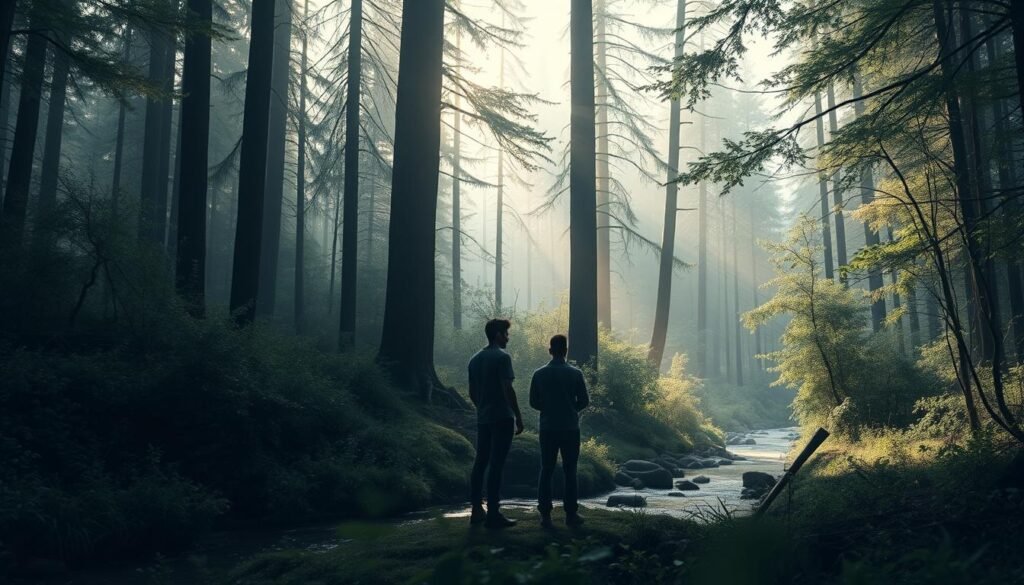
A serene forest landscape, with towering trees and a gentle stream cutting through the undergrowth. In the foreground, two figures stand in contemplation, one representing the innate, the other the environmental. The lighting is soft and diffused, creating a contemplative atmosphere. The scene is captured from a mid-distance, with a shallow depth of field that draws the viewer's focus to the central figures. The overall mood is one of thoughtful introspection, as the two perspectives on human development converge in this natural setting.

Freud’s Theories on Innate Drives

Sigmund Freud believed humans have natural motives, like the life and death drives. These drives want to be expressed, influenced by our first relationships and society’s rules.

Our caregivers, day-to-day routines, and language guide these urges into habits and ambitions. According to Freud, the environment’s role is to mold our natural energy. This shows how inborn desires meet with what we learn.

In modern studies, Freud’s ideas stay relevant. They see behavior and the Nature vs Nurture debate as a mix: basic instincts remain, but how they show up can change based on our family, culture, and habits.

Behaviourism and Environmental Conditioning

John B. Watson said behavior could be shaped through training. He described two types: linking signals to reactions and using rewards or punishments to form behaviors. Environment plays a big role in this idea.

B. F. Skinner explored how reward patterns influence how long behavior lasts. Albert Bandura added that we learn by watching others, seeing what happens, and assessing our own situations. His famous Bobo doll experiment showed how we learn to act by watching and thinking about results.

This thinking challenges the idea of “natural talent” in areas like sports and music. Hard work, feedback, and the right setting often mean more than just talent. It tells us in the Nature vs Nurture debate that conditioning can turn small hints and consistent support into strong abilities.

The Interaction of Nature and Nurture

Human behavior is a mix of our genes and our surroundings. We see Nature vs Nurture not as a battle, but as a continuous cycle. Genes provide possibilities, which life situations can shape.

Epigenetics: The Bridge Between Genes and Environment

Epigenetics reveals how factors like diet, stress, and practice can activate or deactivate genes, without altering the DNA itself. This perspective keeps experiences important in the discussion on genetics. For instance, to develop perfect pitch, early musical training is critical, even with a natural talent for sound.

Height serves as another example of genes interacting with the environment. Our genetic potential for growth interacts with nutrition and health. Our brains adapt through practice and attention, guided by genes that allow learning and change.

Mindfulness and changing our lifestyle can also influence our brain through what’s called neuroplasticity. Nature vs Nurture plays out as a conversation. Our practices can refine genetic settings and vice versa.

Case Studies Demonstrating Interaction Effects

Abilities, like perfect pitch, develop from both training and natural sensitivity to sound. Intelligence and behavior also reflect our genetic make-up and learning environments.

The effects of stress vary with genetic differences, showing how our environment can influence our mental resilience. Alcino Silva’s research on NF1 suggests experiences can modify genetic effects. This indicates targeted activities might adjust future outcomes.

In families with ADHD, habits can shape and be shaped by genetic tendencies. Early intervention can break patterns from one generation to the next. This shows how nurturing can change paths set by genetics.

PhenomenonGenetic ComponentEnvironmental InputObservable Outcome
Perfect PitchAptitude for fine-grained auditory codingEarly, structured musical trainingStable labeling of pitches without reference
HeightPolygenic growth potentialNutrition, illness exposure, sleepPopulation shifts with improved diet and care
Stress ReactivitySerotonin transporter polymorphismsChronic stress, social support, mindfulnessDivergent risk for depression under stress
Learning and MemoryGenes for synaptic plasticity and signalingPractice intensity, feedback, tutoringStrengthened networks tuned to trained tasks
ADHD Across GenerationsHeritable liability influencing attentionSymptom management, classroom structureReduced transmission of disruptive patterns

Cultural Influences on Behaviour

Culture is like a stage for human action, talk, and learning. In the Nature vs Nurture Debate, it’s clear that environment matters in shaping our actions. From childhood to adulthood, culture provides guidance and influence.

How Culture Shapes Behavioural Norms

Culture plays a big role in defining right from wrong. Schools, families, and media help shape our understanding of things like manners and teamwork. These factors limit or expand what we see as normal.

Take language as an example. Kids are born ready to learn to speak, but culture teaches them what words to use. The feedback we get, like praise or rewards, helps us pay attention and try harder.

The brain keeps track of rewards and mistakes, changing as needed. When communities encourage certain activities, those habits get stronger. The environment’s role in our behavior shows in how we manage our time and interact with others.

Global Perspectives on Nature vs Nurture

The Nature vs Nurture debate varies worldwide. Some think our traits are inherited, others say our surroundings are key. History, economy, and law play a part in this debate.

Different cultures discuss topics like intelligence in their own way. Many experts now believe that our genes and environment work together over time. This shows how both nature and nurture are important in development.

Studies from around the world provide evidence on this topic. Although there are common findings, local traditions and norms differ. These variations highlight the environment’s role in our actions, alongside genetic factors.

Nature vs Nurture in Mental Health

Clinical science reveals a mix of brain biology and life experiences. When it comes to Nature vs Nurture in Behaviour, mental health clearly shows how genetics and environment play roles. Genetics shape our risks, while our surroundings influence outcomes over our lives.

Genetic Predispositions to Disorders

Common mental health issues aren’t usually caused by one gene. Instead, many small genetic differences can increase or decrease the chance of depression, bipolar disorder, schizophrenia, autism, and substance misuse. This suggests why it’s important to know our family health history.

Studies on twins show how much of these conditions are inherited. They also reveal important brain chemicals like serotonin and dopamine. This chemistry impacts our mood and focus.

Differences in our genes can affect how we respond to certain medications. This backs up creating personalized treatment plans. These findings highlight the need to consider both genetics and the person as a whole.

The Role of Environment in Mental Health Outcomes

Our environment can bend the path of our mental health risks. Things like prenatal alcohol exposure and early trauma can lead to PTSD and mood issues. Therapy helps people work through these experiences and build ways to cope.

A study in the United States found that where and how we live can affect our mental health. Practicing mindfulness and establishing healthy habits can help change how we manage stress.

Our genes and environment interact, making each person’s reaction to stress unique. Certain genetic variants influence how we handle difficult situations. Treatments often blend medication, psychotherapy, and support to tackle both nature and nurture aspects.

Implications for Education and Parenting

Practical choices in classrooms and homes gain from understanding Environmental Factors in Behavior Development. When we match supports to a learner’s needs, we honor the mix of Behavior and Nature vs Nurture Theory. This way, we can create plans that reflect both genes and environment without sticking to static labels.

Think about how early experiences and daily environments influence skill development. Routines that enrich, structured practice, and feedback build strong habits. Caregivers and teachers can show how to solve problems peacefully and create positive peer environments.

Tailoring Approaches Based on Individual Needs

Teaching that adapts to each student’s strengths works best. For example, a child good at listening might do well with music lessons early on, while right nutrition can help growth. These choices mix Genetic and Environmental Interactions, keeping focus on how environment shapes behavior.

When attention-related traits show up, strategies can tackle both symptoms and environment. Approaches like cognitive-behavioral therapy, organized schedules, and consistent routines respect both Behavior and Nature vs Nurture Theory. This avoids labeling and helps reduce home stress while schools support focus.

How we learn over time is shaped by neuroplasticity: practicing in short bursts, getting feedback right away, and slowly increasing challenges work well. Even though early learning is crucial, adults also benefit from regular practice and clear directions.

The Importance of Positive Reinforcement

Using reinforcement and guidance supports social skills and lessens problem behaviors. When adults handle conflicts with respect, it lessens the chance of aggressive behaviors being copied. Instant, impactful feedback helps encourage the behaviors we’d like to see more of.

  • Define the target behavior in plain language.
  • Use timely, specific praise or tokens tied to that behavior.
  • Fade prompts as mastery grows to maintain autonomy.

Classrooms can use small, meaningful rewards with clear rules. This method uses principles of reward learning. It matches up with Environmental Factors in Behavior Development. By practicing this, Behavior and Nature vs Nurture Theory helps guide consistent improvement.

Conclusion: Finding a Balance Between Nature and Nurture

It’s clear that nature and nurture work together, not against each other. Genes set the stage; environments shape the details. Traits like musical skill, height, and focus are influenced by both. Behavioral genetics tells us genes provide a blueprint, but our surroundings can change our direction. Mental well-being is no different: it’s about how our biological risks interact with what we experience. Both therapy and medication play important roles.

Summary of Key Points

As we learn more, black-and-white views are disappearing. Who we are comes from both our brain’s wiring and our experiences. Research into ADHD and mood disorders shows us that being at risk doesn’t fix our fate. Interventions can put us on a better path. In both therapy and education, we see proof that our experiences mold the brain connections our genes create. This shows the importance of looking at both genetics and environment in understanding ourselves.

Future Directions in Research

Future research aims to uncover more detailed causes. With advanced technologies, we will connect genes, brain networks, and behaviors. Models that predict how we learn and react can help in education and therapy. Studies that combine genetic information with life conditions will tell us how to better adjust our environments. Topics like intelligence and stress need careful and ethical research. This way, the study of nature versus nurture can keep improving, based on solid science and useful findings.

FAQ

What does “Nature vs Nurture in Behaviour” mean?

It’s about how our genes and our experiences work together to shape who we are. Our genetics give us certain traits, like our DNA and biology. Our upbringing and experiences, like how we’re raised and our education, also play a big part. Nowadays, scientists see how both factors interact instead of picking a side.

How do experts define nature and nurture in behavioral science?

“Nature” is about our genes and biology that influence our personality and how our brain develops. “Nurture” covers things like how we were raised, our education, and the culture we grow up in. While some traits are set from birth, others, like how polite we are, are learned by watching others and getting feedback.

What is the historical context of the Nature vs Nurture Debate?

Early thinkers like Plato believed in inborn knowledge. Contrastingly, John Locke thought our minds were shaped entirely by experiences. Watson’s behaviorism argued that behavior could be shaped, while Chomsky and Bandura added to our understanding with ideas about innate abilities and learning by watching.

FAQ

What does “Nature vs Nurture in Behaviour” mean?

It’s about how our genes and our experiences work together to shape who we are. Our genetics give us certain traits, like our DNA and biology. Our upbringing and experiences, like how we’re raised and our education, also play a big part. Nowadays, scientists see how both factors interact instead of picking a side.

How do experts define nature and nurture in behavioral science?

“Nature” is about our genes and biology that influence our personality and how our brain develops. “Nurture” covers things like how we were raised, our education, and the culture we grow up in. While some traits are set from birth, others, like how polite we are, are learned by watching others and getting feedback.

What is the historical context of the Nature vs Nurture Debate?

Early thinkers like Plato believed in inborn knowledge. Contrastingly, John Locke thought our minds were shaped entirely by experiences. Watson’s behaviorism argued that behavior could be shaped, while Chomsky and Bandura added to our understanding with ideas about innate abilities and learning by watching.

What are the genetic influences on personality and behavior?

FAQ

What does “Nature vs Nurture in Behaviour” mean?

It’s about how our genes and our experiences work together to shape who we are. Our genetics give us certain traits, like our DNA and biology. Our upbringing and experiences, like how we’re raised and our education, also play a big part. Nowadays, scientists see how both factors interact instead of picking a side.

How do experts define nature and nurture in behavioral science?

“Nature” is about our genes and biology that influence our personality and how our brain develops. “Nurture” covers things like how we were raised, our education, and the culture we grow up in. While some traits are set from birth, others, like how polite we are, are learned by watching others and getting feedback.

What is the historical context of the Nature vs Nurture Debate?

Early thinkers like Plato believed in inborn knowledge. Contrastingly, John Locke thought our minds were shaped entirely by experiences. Watson’s behaviorism argued that behavior could be shaped, while Chomsky and Bandura added to our understanding with ideas about innate abilities and learning by watching.

How do twin studies inform Behavioral Genetics?

FAQ

What does “Nature vs Nurture in Behaviour” mean?

It’s about how our genes and our experiences work together to shape who we are. Our genetics give us certain traits, like our DNA and biology. Our upbringing and experiences, like how we’re raised and our education, also play a big part. Nowadays, scientists see how both factors interact instead of picking a side.

How do experts define nature and nurture in behavioral science?

“Nature” is about our genes and biology that influence our personality and how our brain develops. “Nurture” covers things like how we were raised, our education, and the culture we grow up in. While some traits are set from birth, others, like how polite we are, are learned by watching others and getting feedback.

What is the historical context of the Nature vs Nurture Debate?

Early thinkers like Plato believed in inborn knowledge. Contrastingly, John Locke thought our minds were shaped entirely by experiences. Watson’s behaviorism argued that behavior could be shaped, while Chomsky and Bandura added to our understanding with ideas about innate abilities and learning by watching.

How does upbringing impact behavior development?

FAQ

What does “Nature vs Nurture in Behaviour” mean?

It’s about how our genes and our experiences work together to shape who we are. Our genetics give us certain traits, like our DNA and biology. Our upbringing and experiences, like how we’re raised and our education, also play a big part. Nowadays, scientists see how both factors interact instead of picking a side.

How do experts define nature and nurture in behavioral science?

“Nature” is about our genes and biology that influence our personality and how our brain develops. “Nurture” covers things like how we were raised, our education, and the culture we grow up in. While some traits are set from birth, others, like how polite we are, are learned by watching others and getting feedback.

What is the historical context of the Nature vs Nurture Debate?

Early thinkers like Plato believed in inborn knowledge. Contrastingly, John Locke thought our minds were shaped entirely by experiences. Watson’s behaviorism argued that behavior could be shaped, while Chomsky and Bandura added to our understanding with ideas about innate abilities and learning by watching.

In what ways does socioeconomic status affect behavior?

FAQ

What does “Nature vs Nurture in Behaviour” mean?

It’s about how our genes and our experiences work together to shape who we are. Our genetics give us certain traits, like our DNA and biology. Our upbringing and experiences, like how we’re raised and our education, also play a big part. Nowadays, scientists see how both factors interact instead of picking a side.

How do experts define nature and nurture in behavioral science?

“Nature” is about our genes and biology that influence our personality and how our brain develops. “Nurture” covers things like how we were raised, our education, and the culture we grow up in. While some traits are set from birth, others, like how polite we are, are learned by watching others and getting feedback.

What is the historical context of the Nature vs Nurture Debate?

Early thinkers like Plato believed in inborn knowledge. Contrastingly, John Locke thought our minds were shaped entirely by experiences. Watson’s behaviorism argued that behavior could be shaped, while Chomsky and Bandura added to our understanding with ideas about innate abilities and learning by watching.

How do Freud’s theories relate to innate drives and environment?

FAQ

What does “Nature vs Nurture in Behaviour” mean?

It’s about how our genes and our experiences work together to shape who we are. Our genetics give us certain traits, like our DNA and biology. Our upbringing and experiences, like how we’re raised and our education, also play a big part. Nowadays, scientists see how both factors interact instead of picking a side.

How do experts define nature and nurture in behavioral science?

“Nature” is about our genes and biology that influence our personality and how our brain develops. “Nurture” covers things like how we were raised, our education, and the culture we grow up in. While some traits are set from birth, others, like how polite we are, are learned by watching others and getting feedback.

What is the historical context of the Nature vs Nurture Debate?

Early thinkers like Plato believed in inborn knowledge. Contrastingly, John Locke thought our minds were shaped entirely by experiences. Watson’s behaviorism argued that behavior could be shaped, while Chomsky and Bandura added to our understanding with ideas about innate abilities and learning by watching.

What does behaviourism say about environmental conditioning?

FAQ

What does “Nature vs Nurture in Behaviour” mean?

It’s about how our genes and our experiences work together to shape who we are. Our genetics give us certain traits, like our DNA and biology. Our upbringing and experiences, like how we’re raised and our education, also play a big part. Nowadays, scientists see how both factors interact instead of picking a side.

How do experts define nature and nurture in behavioral science?

“Nature” is about our genes and biology that influence our personality and how our brain develops. “Nurture” covers things like how we were raised, our education, and the culture we grow up in. While some traits are set from birth, others, like how polite we are, are learned by watching others and getting feedback.

What is the historical context of the Nature vs Nurture Debate?

Early thinkers like Plato believed in inborn knowledge. Contrastingly, John Locke thought our minds were shaped entirely by experiences. Watson’s behaviorism argued that behavior could be shaped, while Chomsky and Bandura added to our understanding with ideas about innate abilities and learning by watching.

What is epigenetics and why is it central to Behavioral Genetics?

FAQ

What does “Nature vs Nurture in Behaviour” mean?

It’s about how our genes and our experiences work together to shape who we are. Our genetics give us certain traits, like our DNA and biology. Our upbringing and experiences, like how we’re raised and our education, also play a big part. Nowadays, scientists see how both factors interact instead of picking a side.

How do experts define nature and nurture in behavioral science?

“Nature” is about our genes and biology that influence our personality and how our brain develops. “Nurture” covers things like how we were raised, our education, and the culture we grow up in. While some traits are set from birth, others, like how polite we are, are learned by watching others and getting feedback.

What is the historical context of the Nature vs Nurture Debate?

Early thinkers like Plato believed in inborn knowledge. Contrastingly, John Locke thought our minds were shaped entirely by experiences. Watson’s behaviorism argued that behavior could be shaped, while Chomsky and Bandura added to our understanding with ideas about innate abilities and learning by watching.

Which case studies best demonstrate genetic and environmental interactions?

FAQ

What does “Nature vs Nurture in Behaviour” mean?

It’s about how our genes and our experiences work together to shape who we are. Our genetics give us certain traits, like our DNA and biology. Our upbringing and experiences, like how we’re raised and our education, also play a big part. Nowadays, scientists see how both factors interact instead of picking a side.

How do experts define nature and nurture in behavioral science?

“Nature” is about our genes and biology that influence our personality and how our brain develops. “Nurture” covers things like how we were raised, our education, and the culture we grow up in. While some traits are set from birth, others, like how polite we are, are learned by watching others and getting feedback.

What is the historical context of the Nature vs Nurture Debate?

Early thinkers like Plato believed in inborn knowledge. Contrastingly, John Locke thought our minds were shaped entirely by experiences. Watson’s behaviorism argued that behavior could be shaped, while Chomsky and Bandura added to our understanding with ideas about innate abilities and learning by watching.

How does culture shape behavioral norms?

FAQ

What does “Nature vs Nurture in Behaviour” mean?

It’s about how our genes and our experiences work together to shape who we are. Our genetics give us certain traits, like our DNA and biology. Our upbringing and experiences, like how we’re raised and our education, also play a big part. Nowadays, scientists see how both factors interact instead of picking a side.

How do experts define nature and nurture in behavioral science?

“Nature” is about our genes and biology that influence our personality and how our brain develops. “Nurture” covers things like how we were raised, our education, and the culture we grow up in. While some traits are set from birth, others, like how polite we are, are learned by watching others and getting feedback.

What is the historical context of the Nature vs Nurture Debate?

Early thinkers like Plato believed in inborn knowledge. Contrastingly, John Locke thought our minds were shaped entirely by experiences. Watson’s behaviorism argued that behavior could be shaped, while Chomsky and Bandura added to our understanding with ideas about innate abilities and learning by watching.

What are global perspectives on the Nature vs Nurture Debate?

FAQ

What does “Nature vs Nurture in Behaviour” mean?

It’s about how our genes and our experiences work together to shape who we are. Our genetics give us certain traits, like our DNA and biology. Our upbringing and experiences, like how we’re raised and our education, also play a big part. Nowadays, scientists see how both factors interact instead of picking a side.

How do experts define nature and nurture in behavioral science?

“Nature” is about our genes and biology that influence our personality and how our brain develops. “Nurture” covers things like how we were raised, our education, and the culture we grow up in. While some traits are set from birth, others, like how polite we are, are learned by watching others and getting feedback.

What is the historical context of the Nature vs Nurture Debate?

Early thinkers like Plato believed in inborn knowledge. Contrastingly, John Locke thought our minds were shaped entirely by experiences. Watson’s behaviorism argued that behavior could be shaped, while Chomsky and Bandura added to our understanding with ideas about innate abilities and learning by watching.

What are common genetic predispositions to mental health disorders?

FAQ

What does “Nature vs Nurture in Behaviour” mean?

It’s about how our genes and our experiences work together to shape who we are. Our genetics give us certain traits, like our DNA and biology. Our upbringing and experiences, like how we’re raised and our education, also play a big part. Nowadays, scientists see how both factors interact instead of picking a side.

How do experts define nature and nurture in behavioral science?

“Nature” is about our genes and biology that influence our personality and how our brain develops. “Nurture” covers things like how we were raised, our education, and the culture we grow up in. While some traits are set from birth, others, like how polite we are, are learned by watching others and getting feedback.

What is the historical context of the Nature vs Nurture Debate?

Early thinkers like Plato believed in inborn knowledge. Contrastingly, John Locke thought our minds were shaped entirely by experiences. Watson’s behaviorism argued that behavior could be shaped, while Chomsky and Bandura added to our understanding with ideas about innate abilities and learning by watching.

How does the environment influence mental health outcomes?

FAQ

What does “Nature vs Nurture in Behaviour” mean?

It’s about how our genes and our experiences work together to shape who we are. Our genetics give us certain traits, like our DNA and biology. Our upbringing and experiences, like how we’re raised and our education, also play a big part. Nowadays, scientists see how both factors interact instead of picking a side.

How do experts define nature and nurture in behavioral science?

“Nature” is about our genes and biology that influence our personality and how our brain develops. “Nurture” covers things like how we were raised, our education, and the culture we grow up in. While some traits are set from birth, others, like how polite we are, are learned by watching others and getting feedback.

What is the historical context of the Nature vs Nurture Debate?

Early thinkers like Plato believed in inborn knowledge. Contrastingly, John Locke thought our minds were shaped entirely by experiences. Watson’s behaviorism argued that behavior could be shaped, while Chomsky and Bandura added to our understanding with ideas about innate abilities and learning by watching.

How can educators and parents tailor approaches to individual needs?

FAQ

What does “Nature vs Nurture in Behaviour” mean?

It’s about how our genes and our experiences work together to shape who we are. Our genetics give us certain traits, like our DNA and biology. Our upbringing and experiences, like how we’re raised and our education, also play a big part. Nowadays, scientists see how both factors interact instead of picking a side.

How do experts define nature and nurture in behavioral science?

“Nature” is about our genes and biology that influence our personality and how our brain develops. “Nurture” covers things like how we were raised, our education, and the culture we grow up in. While some traits are set from birth, others, like how polite we are, are learned by watching others and getting feedback.

What is the historical context of the Nature vs Nurture Debate?

Early thinkers like Plato believed in inborn knowledge. Contrastingly, John Locke thought our minds were shaped entirely by experiences. Watson’s behaviorism argued that behavior could be shaped, while Chomsky and Bandura added to our understanding with ideas about innate abilities and learning by watching.

Why is positive reinforcement important in behavior change?

FAQ

What does “Nature vs Nurture in Behaviour” mean?

It’s about how our genes and our experiences work together to shape who we are. Our genetics give us certain traits, like our DNA and biology. Our upbringing and experiences, like how we’re raised and our education, also play a big part. Nowadays, scientists see how both factors interact instead of picking a side.

How do experts define nature and nurture in behavioral science?

“Nature” is about our genes and biology that influence our personality and how our brain develops. “Nurture” covers things like how we were raised, our education, and the culture we grow up in. While some traits are set from birth, others, like how polite we are, are learned by watching others and getting feedback.

What is the historical context of the Nature vs Nurture Debate?

Early thinkers like Plato believed in inborn knowledge. Contrastingly, John Locke thought our minds were shaped entirely by experiences. Watson’s behaviorism argued that behavior could be shaped, while Chomsky and Bandura added to our understanding with ideas about innate abilities and learning by watching.

What are the key takeaways about Behavior and Nature vs Nurture Theory?

FAQ

What does “Nature vs Nurture in Behaviour” mean?

It’s about how our genes and our experiences work together to shape who we are. Our genetics give us certain traits, like our DNA and biology. Our upbringing and experiences, like how we’re raised and our education, also play a big part. Nowadays, scientists see how both factors interact instead of picking a side.

How do experts define nature and nurture in behavioral science?

“Nature” is about our genes and biology that influence our personality and how our brain develops. “Nurture” covers things like how we were raised, our education, and the culture we grow up in. While some traits are set from birth, others, like how polite we are, are learned by watching others and getting feedback.

What is the historical context of the Nature vs Nurture Debate?

Early thinkers like Plato believed in inborn knowledge. Contrastingly, John Locke thought our minds were shaped entirely by experiences. Watson’s behaviorism argued that behavior could be shaped, while Chomsky and Bandura added to our understanding with ideas about innate abilities and learning by watching.

Where is the Nature vs Nurture Debate headed in research?

FAQ

What does “Nature vs Nurture in Behaviour” mean?

It’s about how our genes and our experiences work together to shape who we are. Our genetics give us certain traits, like our DNA and biology. Our upbringing and experiences, like how we’re raised and our education, also play a big part. Nowadays, scientists see how both factors interact instead of picking a side.

How do experts define nature and nurture in behavioral science?

“Nature” is about our genes and biology that influence our personality and how our brain develops. “Nurture” covers things like how we were raised, our education, and the culture we grow up in. While some traits are set from birth, others, like how polite we are, are learned by watching others and getting feedback.

What is the historical context of the Nature vs Nurture Debate?

Early thinkers like Plato believed in inborn knowledge. Contrastingly, John Locke thought our minds were shaped entirely by experiences. Watson’s behaviorism argued that behavior could be shaped, while Chomsky and Bandura added to our understanding with ideas about innate abilities and learning by watching.

How do Genetic and Environmental Interactions inform policy?

FAQ

What does “Nature vs Nurture in Behaviour” mean?

It’s about how our genes and our experiences work together to shape who we are. Our genetics give us certain traits, like our DNA and biology. Our upbringing and experiences, like how we’re raised and our education, also play a big part. Nowadays, scientists see how both factors interact instead of picking a side.

How do experts define nature and nurture in behavioral science?

“Nature” is about our genes and biology that influence our personality and how our brain develops. “Nurture” covers things like how we were raised, our education, and the culture we grow up in. While some traits are set from birth, others, like how polite we are, are learned by watching others and getting feedback.

What is the historical context of the Nature vs Nurture Debate?

Early thinkers like Plato believed in inborn knowledge. Contrastingly, John Locke thought our minds were shaped entirely by experiences. Watson’s behaviorism argued that behavior could be shaped, while Chomsky and Bandura added to our understanding with ideas about innate abilities and learning by watching.

What is the Impact of Genetics on Behavior in everyday contexts?

FAQ

What does “Nature vs Nurture in Behaviour” mean?

It’s about how our genes and our experiences work together to shape who we are. Our genetics give us certain traits, like our DNA and biology. Our upbringing and experiences, like how we’re raised and our education, also play a big part. Nowadays, scientists see how both factors interact instead of picking a side.

How do experts define nature and nurture in behavioral science?

“Nature” is about our genes and biology that influence our personality and how our brain develops. “Nurture” covers things like how we were raised, our education, and the culture we grow up in. While some traits are set from birth, others, like how polite we are, are learned by watching others and getting feedback.

What is the historical context of the Nature vs Nurture Debate?

Early thinkers like Plato believed in inborn knowledge. Contrastingly, John Locke thought our minds were shaped entirely by experiences. Watson’s behaviorism argued that behavior could be shaped, while Chomsky and Bandura added to our understanding with ideas about innate abilities and learning by watching.

What is the Role of Environment in Behavior across the lifespan?

FAQ

What does “Nature vs Nurture in Behaviour” mean?

It’s about how our genes and our experiences work together to shape who we are. Our genetics give us certain traits, like our DNA and biology. Our upbringing and experiences, like how we’re raised and our education, also play a big part. Nowadays, scientists see how both factors interact instead of picking a side.

How do experts define nature and nurture in behavioral science?

“Nature” is about our genes and biology that influence our personality and how our brain develops. “Nurture” covers things like how we were raised, our education, and the culture we grow up in. While some traits are set from birth, others, like how polite we are, are learned by watching others and getting feedback.

What is the historical context of the Nature vs Nurture Debate?

Early thinkers like Plato believed in inborn knowledge. Contrastingly, John Locke thought our minds were shaped entirely by experiences. Watson’s behaviorism argued that behavior could be shaped, while Chomsky and Bandura added to our understanding with ideas about innate abilities and learning by watching.
Previous Article

Understanding Temperament in Children

Next Article

How Brain Development Affects Behaviour

Write a Comment

Leave a Comment

Your email address will not be published. Required fields are marked *

Subscribe to our Newsletter

Subscribe to our email newsletter to get the latest posts delivered right to your email.
Pure inspiration, zero spam ✨


You have successfully subscribed to the newsletter

There was an error while trying to send your request. Please try again.

specialneedsforu.com will use the information you provide on this form to be in touch with you and to provide updates and marketing.